Selma to Montgomery National Historic Trail

Dallas County Alabama systematically denied its 15,000 African American residents from registering to vote, using poll taxes, literacy tests, white-only primaries, and grandfather clauses, which made registration easier for those whose ancestors voted when only whites could vote. In 1963, with older people intimidated by murderous KKK raids or being fired for speaking out, organizers asked local high school students to protest. They did, meeting in churches—the only places they could safely assemble—and they were trained in non-violent protesting. Students marched by the thousands, staged lunch counter sit-ins, were beaten and arrested. All civil rights meetings were then banned by a local judge in 1964. Then, the Reverend Dr Martin Luther King, Jr came to Selma to speak in defiance of that ban, bringing national media attention. The contrast between black citizens, old and young, assembling peacefully to try to register to vote, and the police who denied their rights violently—criminals with badges—was to play out on TV. 

The teachers marched with their students. The police filled the jails with hundreds of students. Beatings outside churches turned uglier, and on 18 February 1965, while protecting his family, Jimmy Lee Jackson was shot to death by a police officer who was not punished. In response, the people decided to march 54 miles to the state capital in Montgomery. The police responded at the Edmund Pettus Bridge—the first step in the march—with billy clubs, horses and tear gas. Bloody Sunday, 7 March 1965. The TV coverage made the protest national overnight. Dr King organized a second march, but stopped on the bridge to avoid violence and due to a federal injunction. Rev James Reeb was killed on 11 March. LBJ called out the national guard, saying “we shall overcome” in a major speech 15 March. On 17 March, a judge cleared the injunction. Then Dr King led a third march, all the way from Selma to Montgomery from 21 to 25 March. Singers like Sammy Davis Jr, Nina Simone, and Harry Belafonte encouraged 25,000 marchers along the route. Upon arrival at the statehouse, Dr King gave his “How Long, Not Long” speech, including the phrase, “the arc of the moral universe is long, but it bends toward justice”. LBJ signed the Voting Rights Act on 6 August 1965. 

Selma may have been the turning point that enfranchised millions of African Americans, but the city and surrounding ‘black belt’ in central Alabama has suffered economic exclusion. Burned out buildings are common there today. The national park service is currently renovating several historic buildings in Selma including an interpretive center, and there’s also a Voting Rights Museum just across the Edmund Pettus Bridge which has an excellent, detailed display. Selma’s sights include the churches, lodgings and offices used by the organizers, and the jail where they were incarcerated. Halfway on the trail, near where Viola Liuzzo was murdered by the KKK, the park service has another interpretive center with an excellent multimedia film. Along US 80 are the four campsites used by the marchers.  And on the campus of Alabama State University in Montgomery, there’s another interpretive center with a different, also excellent film. And Montgomery sights include the state Capitol, a memorial designed by Maya Lin, and the Rosa Parks Museum, along with various archives and gathering areas. The drive is easy, and I recommend all three stops for the complete experience. 

The King Center in Atlanta gives a broad and deep view into the life and works of Dr King, as well as the ongoing non-violent international justice movement. The Birmingham Civil Rights Institute explores how deeply segregation divided society, how violent the oppression became both across the street in the park and at the 16th Street Baptist Church where four young girls were killed by the KKK in a bombing, and how strong the Civil Rights Movement became. But the Selma to Montgomery trail, with its searing photos and video testimony of foot soldiers, brings history to life. The open racism (see photo) is shocking and revealing. In one of the films, a white woman argues that since Jefferson Davis was their president, Lincoln’s Emancipation Proclamation has no effect, that slavery is still the law. Such vile hatred does not dissipate overnight. Indeed, in both subtle and ugly ways, racism still divides our society. So we must feel this history again to continue fighting more effectively. 
Emmett Till and Mamie Till-Mobley National Monument

”Let the people see what they did to my boy.”

Mamie Till-Mobley

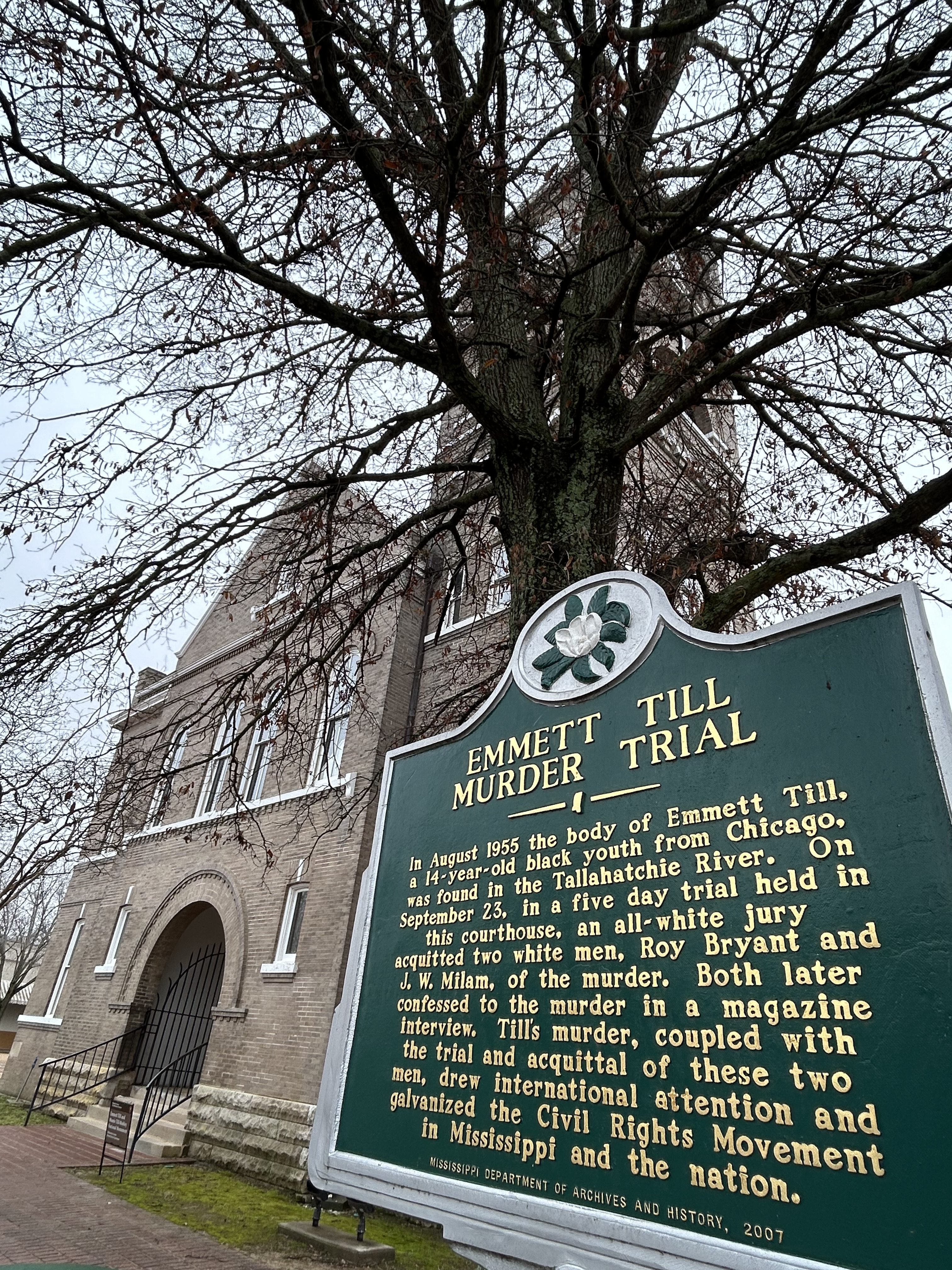
The animosity against African Americans, especially in the Deep South, is hard to comprehend, but it is deep, real, persistent and extremely dangerous. Emmett Till’s mother warned him, but even she underestimated the risk. In late August of 1955, Emmett Till was kidnapped from his great uncle’s home by a shopkeeper’s husband and his half-brother, who accused Emmett of whistling at the shopkeeper, a white woman. From past midnight to pre-dawn, the two men, along with several others, held Emmett, aged 14, in the back of a pickup truck, drove around the county, terrorized him, tortured him, shot him and dumped his body in the river. Witnesses reported hearing Emmett’s screams all over town for hours. His great uncle reported the kidnapping, the men were arrested, and the body was found a few days later. His mother, saying “let the world see what I see”, insisted on an open casket at the funeral in Chicago. Jet magazine published photos of his brutalized body. His mother became a lifetime activist, author and motivational speaker on education, poverty and Civil Rights with the NAACP. Many consider Emmett Till’s killing to be the beginning of the Civil Rights Movement, not least because Rosa Parks cited Emmett as the reason she kept her seat on the bus in Montgomery on 1 December 1955. 

The trial was a foregone conclusion. Outside the courthouse (below) stood a statue dedicated to the “Heroes” of the Confederacy. Inside there was no justice. Instead of jurors, police, court officers and elected officials defending the Law, the courthouse became the focal point of a deep criminal conspiracy, based on racism. Witnesses were intimidated, hidden, immunized and silenced. Emmett’s great uncle testified at the trial, pointing out the kidnappers and murderers, and then he left town immediately and went into hiding under a false name. And for many years afterwards, there has been a concerted effort to conceal the truth. Evidence lost. Signs have been repeatedly shot and torn down. Historic artifacts and structures intentionally left to ruin or demolished. One witness, in hiding for decades under another name, still received death threats demanding silence. The confederate statue still stands in front of the courthouse, just left of the photo. 

But despite the legacy of lies, terror and violence, people still work to tell the truth about Emmett Till. Especially if you’re exploring the new monument’s sites in Illinois and Mississippi, I recommend reading the darkly fascinating stories in the Emmett Till Memory Project app, after being introduced to it by one of the contributors at the Emmett Till Interpretive Center across from the courthouse in Sumner, MS. Emmett Till’s coffin is on display at the National Museum of African American History and Culture in Washington DC. His name was given to the Anti-Lynching Act of 2022. And this new national monument was established by President Biden on 25 July 2023, on what would have been Emmett Till’s 82nd birthday. 

Nicodemus National Historic Site

A promised utopia for ex-slaves, this remarkable small town has also, like my last stop, preserved its cultural heritage. Named for both Nicodemus who asked Jesus the price of rebirth and for the old spiritual ”Wake Nicodemus” who asked to be awakened for the Jubilee, perhaps the best preserved and restored building is the AME Church above. But in the visitor center I met the living exhibits: the 5th, 6th and 7th generation descendants of those resilient settlers who survived in the remote prairie. They explained to me that while the town is extremely small today, every year in the last full week of July, many more descendants return for a reunion and keep the unbroken traditions thriving.

Freedom Riders National Monument

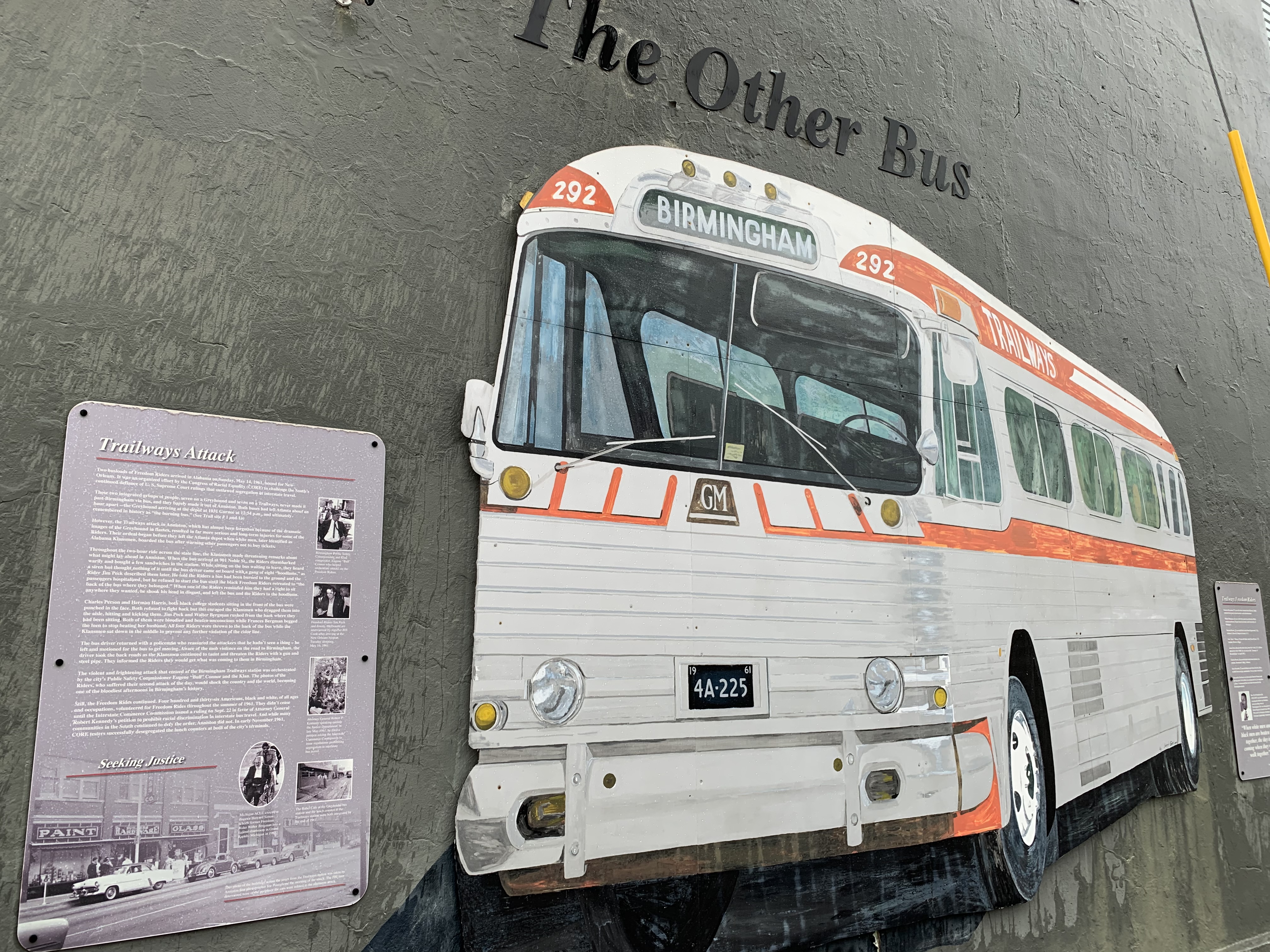
This is another underfunded Civil Rights site. The mural above is one of the few sights I found to see. As part of a systematic campaign to dismantle segregation, a small group of regular people rode buses between states in the south, where race mixing was not allowed under local laws. Since the federal government regulates interstate commerce and travel, they had jurisdiction. The activists exposed the racism, the NAACP lawyers brought cases to court, and eventually the Supreme Court outlawed segregation. Rosa Parks may have started the bus strikes, but it was the Court that integrated buses legally. The freedom riders were brutalized by the Klan, but their cause eventually won.

This may be the worst transition ever, but RV’s get about the same mileage as buses and some are even bus conversions. At a campsite near here, I was asked whether I was afraid of running out of electricity. We compared ”range anxiety” and realized that even with large fuel tanks, the rigs in the campground have less range than my long range model 3 Tesla’s 350 miles. Once loaded, they simply get such bad mileage that they have to go to gas stations more often than I need to charge.

Birmingham Civil Rights National Monument

I had forgotten that it was a children’s march on Palm Sunday that was assaulted by dogs and water cannon. Under city ordinance, it was illegal for children of different races to play together. In my view, the longer a system of injustice is allowed to stand, the more deeply engrained it becomes. The Civil Rights Institute does a powerful job of setting the scene, where African Americans worked in the steel mills and mines and lived in the city behind a color line. People like Bull Connor and the mayor grew up believing that segregation was normal, right and beneficial. They didn’t play with African American children as kids, and as adults they attacked them, peacefully assembled, wearing Sunday clothes, in a park, outside the 16th St Baptist Church, singing songs. The children had learned from Dr King not to fear jail when doing no wrong, but the assault against them was brutal, and televised.

At the time, America was shocked and voiced outrage. This week children were slaughtered in yet another episode of gun violence. I wonder if we’re sufficiently outraged to change the system as those kids in Birmingham did.

“A man dies when he doesn’t stand up for injustice.”

Rev Dr Martin Luther King, Jr. in Selma

Tuskegee Institute National Historic Site

[Updated after 3rd visit, including Oaks tour and Carver Museum.] I admit I was frustrated the first two times I drove here from California, unable to access either Booker T. Washington’s house or George Washington Carver’s Museum and finding incorrect information on the website and app. And I might have ranted about how other sites appear to be better funded. But all is now forgiven.

Like many emancipated slaves, Booker had no surname. When he showed up at school, he just said his last name was Washington. After walking across much of Virginia to go to school near Hampton Roads, he became a teacher at Hampton University, before being hired to run the Tuskegee Institute, now University. Ever hard-working, practical and focused on improvement, his students developed many valuable skills to support their families, including brick making. His students built his impressive mansion, The Oaks, across the street from Tuskegee University, using the design by our nation’s first African American architect, Robert Taylor, who trained at MIT as its first black student. Booker T., ever persuasive, recruited Taylor, who designed many buildings that are now part of both this national historic site and the university.

It is difficult to overestimate the importance Booker T. Washington had in advancing the lives of people who for centuries were not allowed to learn how to read. An advisor to US Presidents, world traveling speaker, practical educator, builder, mentor, and author, his practical focus drew criticism from WEB Du Bois and Frederick Douglass, who focused on ‘higher achievements’, but ultimately, they all worked towards the same goal of progress. All continue to inspire generations to learn, grow and excel. Inside the house on tour, I learned about Booker T’s wives, who also contributed to education. By necessity, black women have often had to assume a role as matriarch, when it was difficult or even impossible to keep families together.

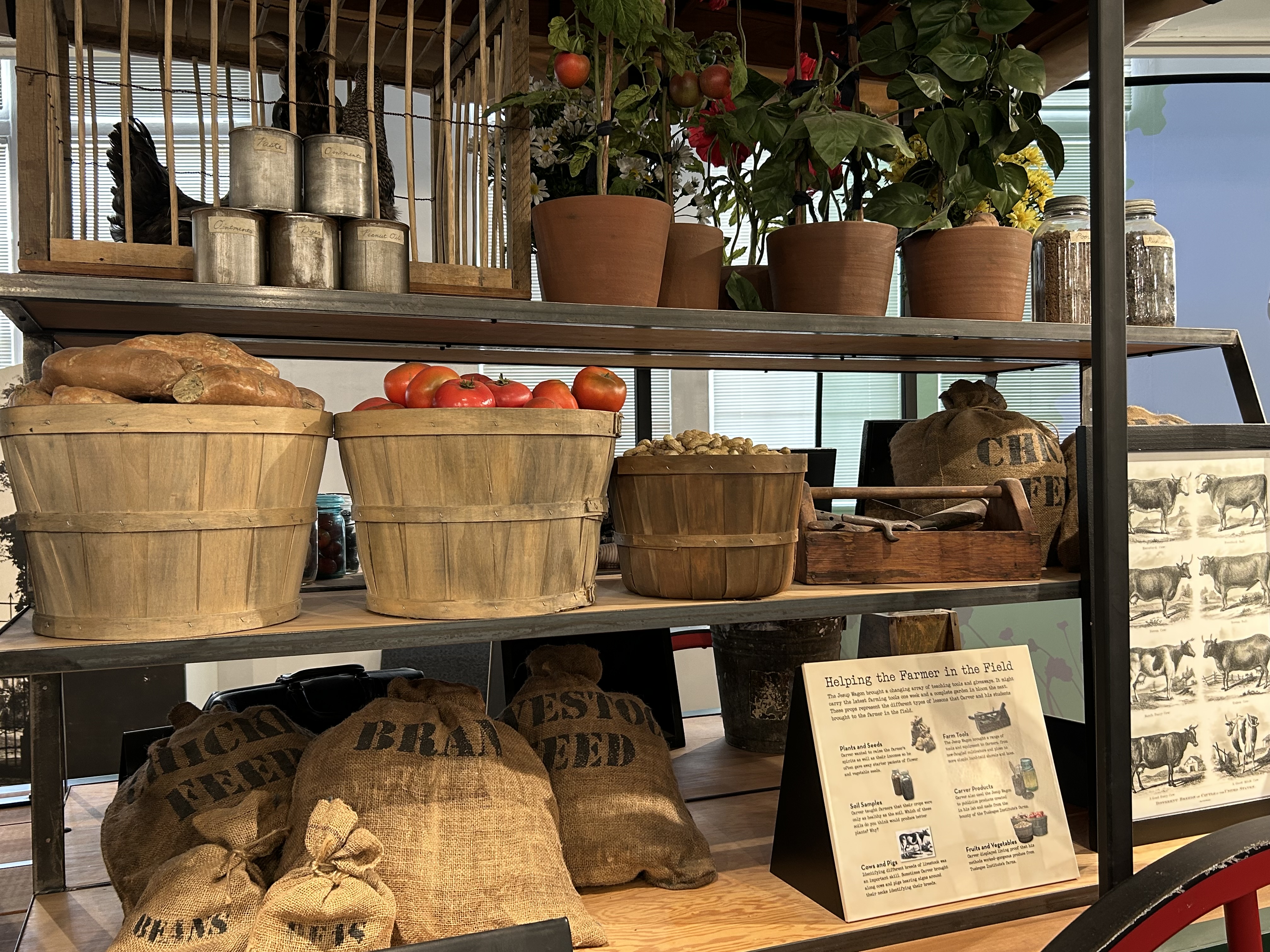
Booker T. Washington also hired George Washington Carver to teach and help improve the lives of African Americans, and the Carver’s museum on campus (see photo below) reveals his broad scientific interests beyond the peanut. Carver was an ecologist, who focused on profitable uses for peanuts in order to improve soil health, a forward-looking view that has only become more important over time. But following Washington’s practical focus, Carver spent much of his time in direct outreach to rural communities, bringing solutions and advice out in wagons.

I’m sure Washington could not have imagined that his institute would have been used by the US government to run a 40 year ”experiment” on black men, neither treating nor disclosing their diagnosis of syphilis. (See ”Miss Evers’ Boys” also set in Tuskegee & starring Laurence Fishburne). He might be pleased to know that there’s a private museum on campus dedicated to teaching the history of that infamous experiment as well as the genetic legacy of Henrietta Lacks. But doubtless Washington would have been out fundraising to develop the broader community of Tuskegee, which shows signs of economic neglect.

Tuskegee Airmen National Historic Site

[Updated after touring the hangars.] Like at Tuskegee Institute, I admit to being frustrated by not being able to tour inside earlier and ranting about unequal funding. But all is forgiven now.

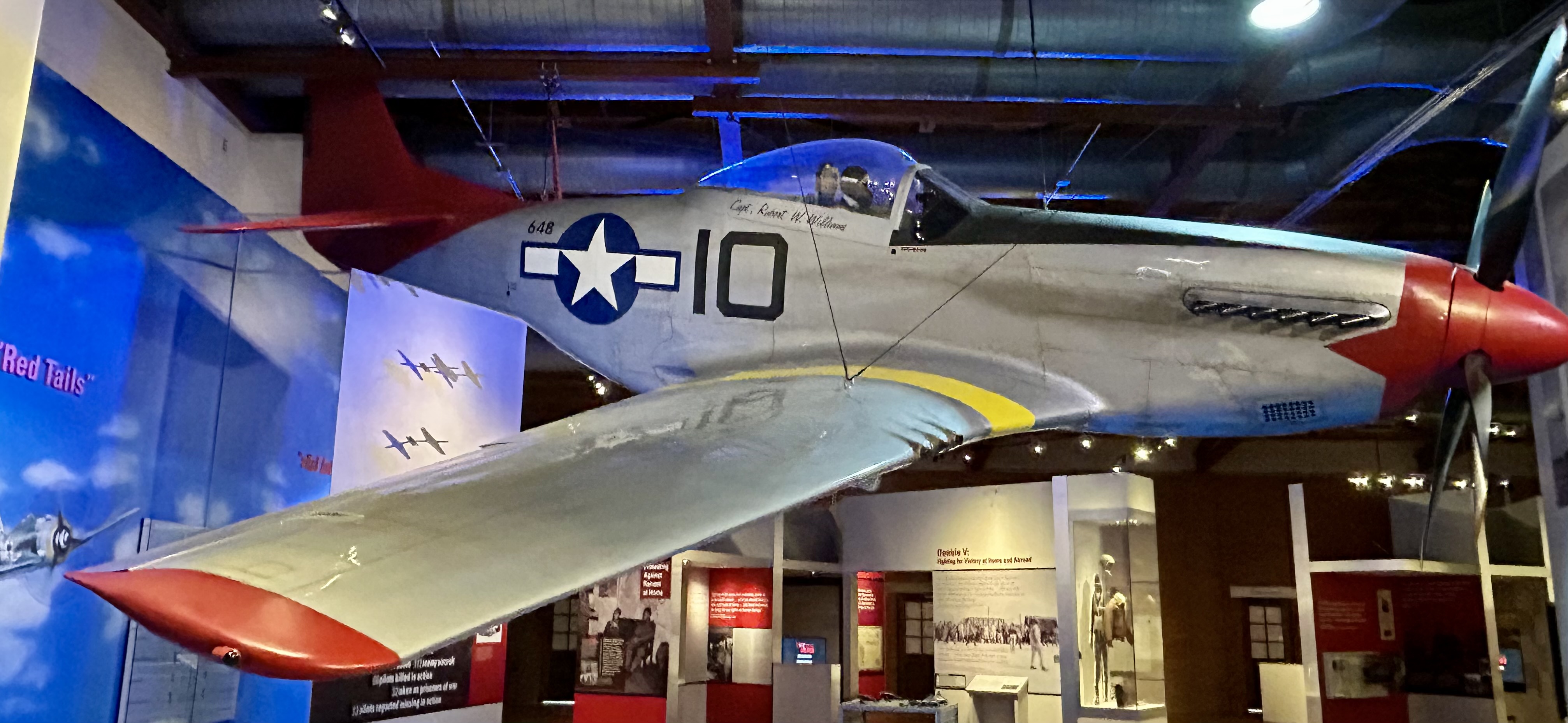
The P-51 Mustang above, known as Duchess Arlene, is just one of the planes on display, along with training planes. The first Tuskegee Airmen fighter group sent to North Africa was the 99th, which proved itself with a record-breaking number of air combat kills in short order. Later, additional units were combined into the 332nd Fighter Group, the famed Red Tails that protected the Flying Fortress bombers to help win the war in Europe. I recommend watching the Tuskegee Airmen movie, starring Laurence Fishburne, to learn more. (For the record, although Fishburne also starred in Miss Evers Boys, none of the Tuskegee airmen were involved in the Tuskegee experiment.)

The park film and exhibits also tell another important story about the Tuskegee Airmen: the Double V. Victory was needed both abroad against Hitler and at home against discrimination. When the decorated pilots and experienced mechanics returned after the war, they were not allowed jobs at US airline companies, despite their proven qualifications, nor were they allowed to vote in many states. Even during the war, a group of over 100 airmen were denied admission to an officer’s club on the basis of their race in direct contradiction with US military regulations against segregated facilities. They refused a direct order to sign away their rights, which, during wartime, potentially risked their execution. The Black Press, a group of newspapers and newsletters that closely followed the Tuskegee Airmen, broke the story of the Tuskegee officers being held prisoner and given less rights than Nazi prisoners of war at the same base. The Freeman Field ‘Mutiny’ became a national scandal, and the commanding officer was eventually removed and the officers freed. Truman eventually ordered complete desegregation of the military. We owe a great debt to these brave men, who fought for our country, despite the discrimination they faced.

Martin Luther King, Jr. National Historical Park

Every year winning poems are chosen from children around the world for visitors to admire along with the roses. The sentiments are moving testimonials to his life, ideals and inspiration, expressed with the moral clarity and unbridled hope of children. This is my favorite Civil Rights site.

The short films & exhibits in the visitor center capture Dr King’s life as the heart and soul of the Civil Rights movement, as well as his wish that we continue. His birthplace, church, center for non-violence and grave are overwhelming, but I was struck by how the community continues to gather here daily for many different events and causes. His passion for justice and righteousness inspire action every day.

Today I’m inspired by one of his thoughts in his letter from a Birmingham jail, about how difficult it is to be told to wait after enduring centuries of suffering. Earth has suffered centuries of pollution, and always the message to environmentalists is to wait. Wait for new technologies, wait for laws, people and society to change, and wait until the polluters have made more money, and then, maybe…. But now we have no more time to wait. We’re moving quickly to catastrophe, wasting precious time on inaction, and extinguishing species without pause. Unless we act to stop burning fossil fuels now, we condemn much life on earth to end.

Medgar and Myrlie Evers Home National Monument

Their home is currently closed to the public. It’s in a residential neighborhood, and the park service is figuring out how to reopen it. The normal setting underscores the shocking assassination of civil rights leader Medgar Evers in June of 1963. They had prepared for a drive by attack (note the door is on the side), but not for a waiting sniper. Two all white juries failed to convict his assassin who sat on the local ”White Citizens Council”, but in 1994 a conviction was won. Myrlie continues to fight for civil rights, and Medgar, a Normandy veteran, is buried at Arlington National Cemetery.

Lyndon B. Johnson National Historical Park

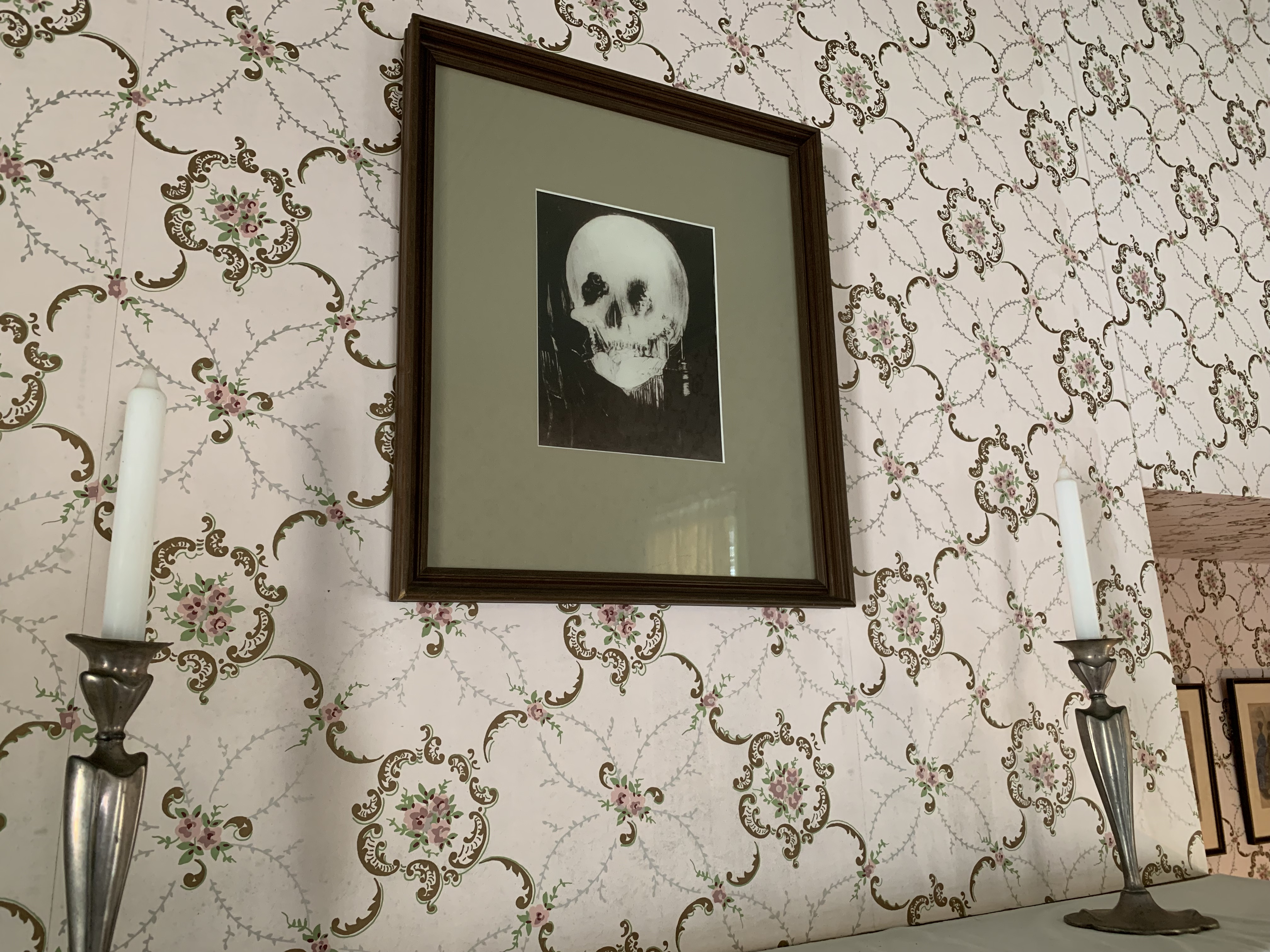
Above the fireplace mantle in the sitting room where LBJ’s mother used to entertain guests is this rather macabre image of a skull. Only after the ranger told me that it was an optical illusion, could I see the image of a young woman looking at her reflection in her dresser mirror. The lesson for Lyndon was to look deeper and try to see things differently. His father was a state representative and taught him the art of politics. His wife, Ladybird, financed his campaign, and under tragic circumstances he becomes President.

The park film on LBJ’s legacy is a bit old but excellent, with recordings from Ladybird Johnson, Vernon Jordan and others. It’s difficult to imagine a time when a Democratic President could win in a landslide on a campaign based on Civil Rights and government spending to alleviate poverty. It also seems strange now to think that his downfall would be being too hawkish militarily in Vietnam. How much the country has changed since then. I wonder what would have been his legacy if LBJ had looked at things differently and decided to abandon the war instead of escalate. Perhaps he would not have withdrawn his candidacy and could have continued his ‘great society’ initiatives.