All Southeast Sites *

The southeast region has more park units (70) than any other region, and I have visited all the units—*except 6 in US Caribbean territories—including all the affiliates, heritage areas and trails in Alabama, Florida, Georgia, Kentucky, Mississippi, North Carolina, South Carolina and Tennessee. Given the large number of states and parks involved, the summary below is organized by theme.

Natural Areas

All of the National Parks in the southeast preserve natural areas, including the reef area of the Florida Keys from Biscayne to the Dry Tortugas, the lowlands of Congaree and the Everglades, the Great Smoky Mountains, and even underground at Mammoth Cave. Other park units, Canaveral, Cape Hatteras, Cape Lookout, Cumberland Island and the Gulf Islands, protect barrier islands. Big Cypress, Big South Fork, Chattahoochee River, Little River Canyon and Obed River all protect diverse riparian areas.

Pre Civil War

Ocmulgee Mounds, Russell Cave and Timucuan stretch back before history, but Horseshoe Bend covers a tragic event in Native American history. Several sites cover early colonial history, including Castillo de San Marcos, De Soto, and Forts Caroline, Frederica, Matanzas and Raleigh. Cowpens, Guilford Courthouse, Kings Mountain, Moores Creek and Ninety-Six cover the Revolution. Blue Ridge, Cumberland Gap, Lincoln Birthplace, Natchez HistoricParkwayTrace, and Pinckney, trace the path of history in the southeast, culminating in the war to abolish slavery.

Civil War and beyond

Andersonville, Brices Cross Roads, Camp Nelson, Chattanooga, Forts Donelson, Pulaski and Sumter, Kennesaw Mountain, Mill Springs, Shiloh, Stones River, Tupelo and Vicksburg are Civil War sites. Johnson, Reconstruction, and Tuskegee Institute cover post war struggles. Carter, Sandburg & Wright Brothers are historic highlights. Birmingham Civil Rights & Freedom Riders, Emmett Till, MLK, Medgar Evers, and Tuskegee Airmen reveal the continuing struggle for Civil Rights.

I learned more traveling in the southeast than any other region, as the area is so rich in history and culture. And the preserved natural areas include some of my favorite park experiences, from underwater and underground, to rivers and shores, and to wildlife experiences in mountain forests. And they can all be explored without traveling in a carbon-burning vehicle.

National Heritage Areas of Alabama

Alabama has two national heritage areas, the Black Belt and Muscle Shoals, neither related to a gym.

Alabama Black Belt NHA includes many Civil Rights sites, reflecting the progress forged by the large African American community that descended from the people brought here and bred against their will to work the rich black soil extending in a belt from the Mississippi River across Alabama. Several of these sites are run by the national park service, including Tuskegee Institute, Selma to Montgomery NHT, and Freedom Riders NM. Two other sites I recommend highly are the National Voting Rights Museum and Institute in Selma and the Legacy Sites in Montgomery. The first is an authentic old place filled with memorabilia, well illustrated stories and contains many important exhibits from the Civil Rights struggle, carefully preserved near where the marchers began their march for voting rights. The second is a much newer series of bold exhibits, perhaps most importantly featuring an artistic memorial dedicated to the victims of lynching.

Muscle Shoals NHA is dedicated to the rhythm & blues soundtrack of many of our lives. In 1959 a local music promoter who failed to make it in Nashville took a big risk and opened the small Florence Alabama Music Enterprises studio across the river from Florence in a less developed area called Muscle Shoals. Rick Hall hired some local talent to who lived closely enough to come in as needed to be the studio band for visiting artists. They were joined by Duane Allman, who just showed up and lived in the parking lot until he got a job there. They recorded a few songs there you may know, including Mustang Sally by Wilson Pickett. Etta James went to FAME to try to revitalize her career and recorded her album, Tell Mama, in which she sang I’d Rather Go Blind just a couple miles away from Helen Keller’s birthplace and childhood home, which is another great place to tour. A trumpet player got a little fresh with a young singer, and her husband was pissed. Rick went to their hotel after, but he got in a new fight with her husband. Rick lost the singer and her label (Atlantic) as a result. Still, Aretha Franklin recorded I Never Loved a Man and Do Right Woman, before she walked out never to return. FAME did pretty well nevertheless, especially with a Mormon family called the Osmonds.

In 1969, Hall’s best house band bought a casket shop nearby and opened their own place, Muscle Shoals Sound Studio. Run by these experienced artists, they also wrote songs and ended up producing more hits than almost any other studio in the world, with most of the work done on the first take. They wrote a song called Old Fashioned Rock and Roll and eventually got Bob Seger to record the vocals over their track, although they accidentally duped the intro. A band called The Rolling Stones illegally recorded Sticky Fingers there, before going to a riotous concert with Hells Angels where they sang Brown Sugar. Another time Lynyrd Skynyrd was stuck with a song until a roadie suddenly announced he could play the piano and gave them the opening to Freebird (demo version). They went on to make the house band famous as the ‘Swampers’ in their song Sweet Home Alabama. Newer singers like Lana Del Rey sometimes just walk in and ask to record there too. The list of songs is too long to mention, so take the tours, maybe watch the Muscle Shoals documentary, enjoy the music and listen to the stories.

I should mention that American Music has its roots along the Natchez Trace and nearby rivers: New Orleans, Nashville, Memphis and Muscle Shoals. The songs of the enslaved, French & Spanish trader influences, back country pickers, gospel music and travelers singing for their supper all came together to form the Blues, Jazz and all the rest. WC Handy was born and grew up in Florence below, before being inspired to write down classic blues songs like St Louis Blues and Beale Street Blues. He preserved his log cabin, and there’s a small but excellent museum there now. This is a fascinating and emotionally moving area of the country to visit, and, if I can mention one more, the Jesse Owens Museum is worth a stop too.

Affiliated Sites in Mid-Atlantic

All Mid-Atlantic NPS affiliate sites done ✓, including important colonial and civil rights history.

  • Benjamin Franklin National Memorial is inside the lobby of a Philadelphia science museum.
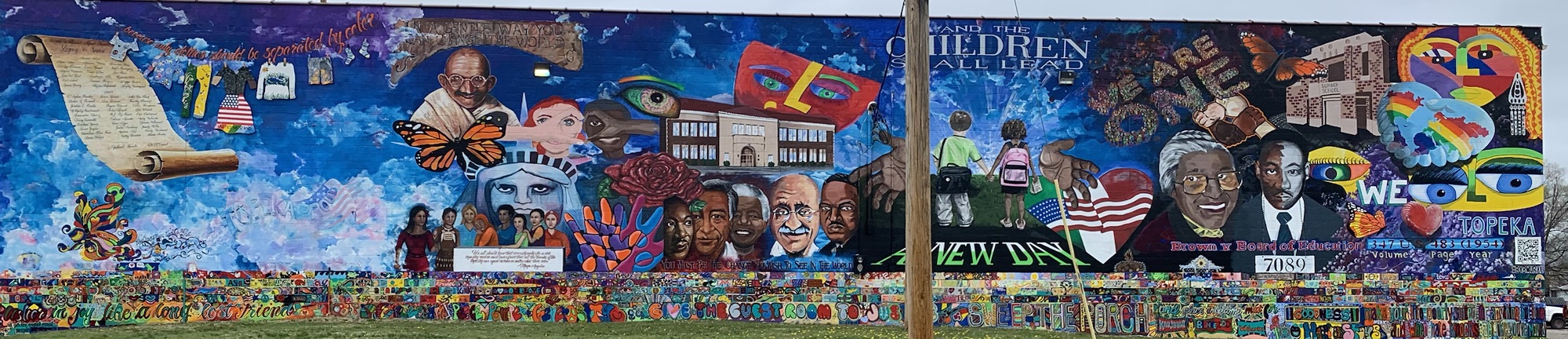
  • Delaware Brown v. Board of Education Civil Rights Sites include several schools.
  • Gloria Dei Church National Historic Site is in Philadelphia and not to be confused with this.
  • Green Springs National Historic Landmark District is a rural area of Virginia.
  • Jamestown National Historic Site is part of a larger park near colonial Williamsburg Virginia.
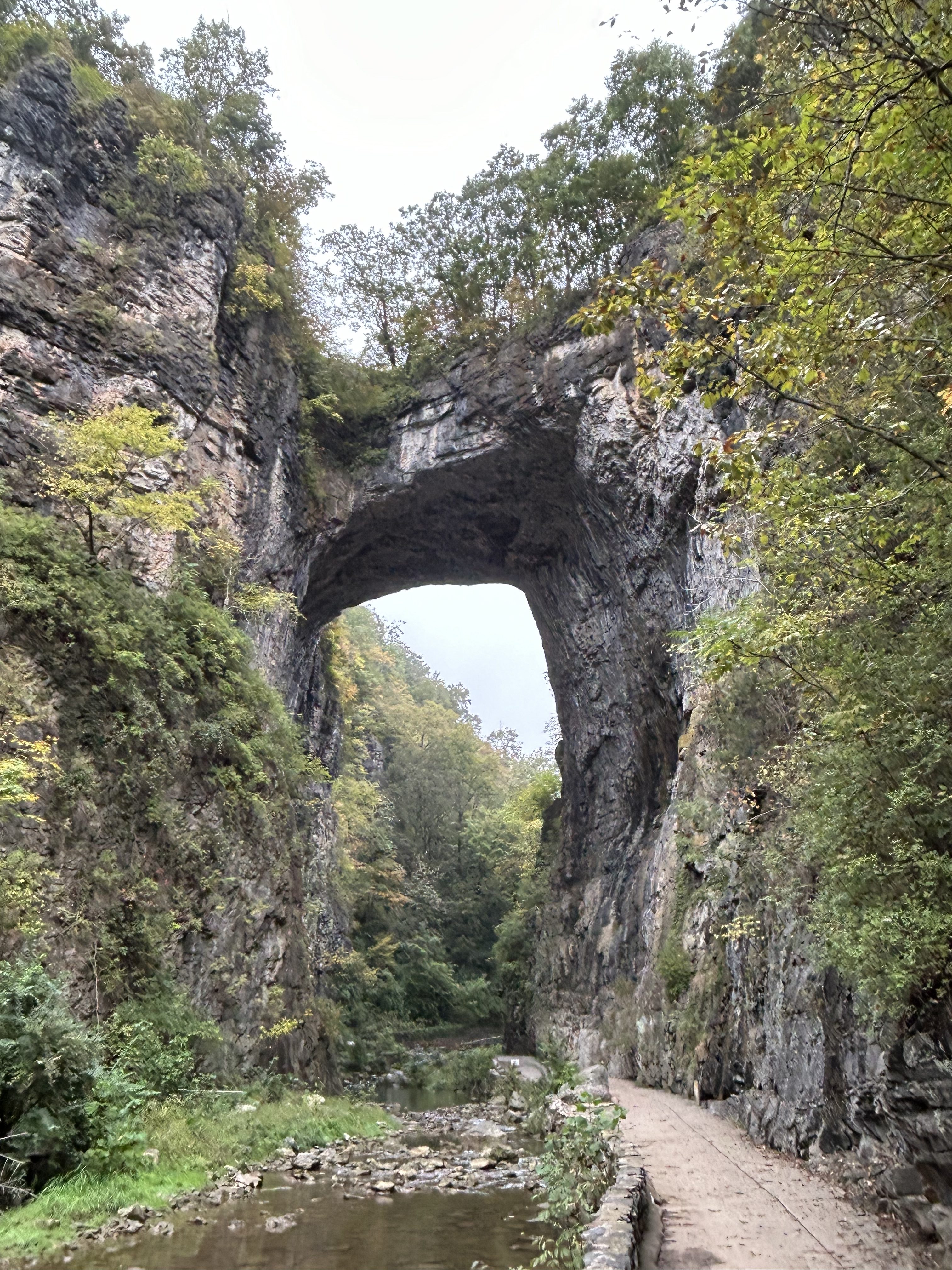
  • Natural Bridge State Park contains the historically important geologic feature below.
  • Pinelands National Reserve is a large forest biosphere in New Jersey.
  • Red Hill—Patrick Henry National Memorial is a large historic estate and museum in Virginia.
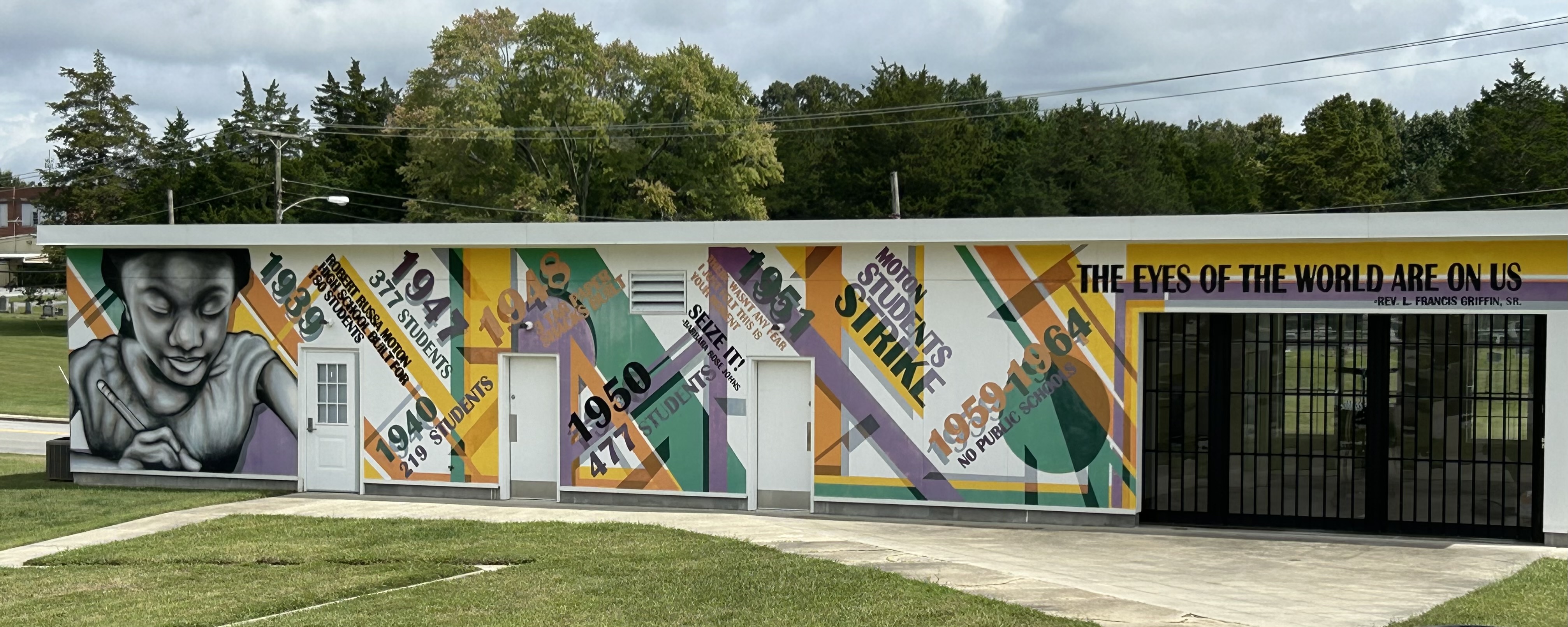
  • Robert Russa Moton is the school site above of a student Civil Rights protest.

Read more about affiliate sites and see those in other regions.

Robert Russa Moton High School

Equality is the ideal we have yet to achieve. Jefferson wrote of equality in our Declaration of Independence. Our Constitution did not recognize it. Lincoln guided the country through a Civil War for equality, but then the country slid backwards again. But we must try.

W.E.B. Du Bois had supported and tracked inequality, progress and hope for schooling in the African American community of Prince Edward County in 1898. The state of Virginia revised their post Civil War Constitution in 1902 to permit racial segregation. In 1951, the inequality had long been unconscionable. While white students had cafeterias, gymnasiums, school busses and laboratories, black students needed warm clothes and umbrellas inside tar paper shacks.

Frustrated by the systemic racism that prevented adults—who faced retribution for asking for change—from fixing the problem, the students decided to act by themselves. 16 year old Barbara Johns addressed her fellow students, banging her shoe on the podium, and called a strike, asking for cooperation and saying “don’t be afraid”. The students all went on strike, and their minister said they should contact the NAACP. Barbara Johns called Richmond lawyer Oliver Hill to help.

Their case, which lost, became part of the Brown v. Board of Education appeal, but the Prince Edward County school district refused to follow the Supreme Court ruling. A new school was built, but rather than comply with integration, even after Little Rock, the Governor of Virginia closed schools for five years. Martin Luther King visited in 1962. JFK and RFK publicly excoriated Prince Edward County in 1963. Finally, the Supreme Court ruled again, saying “time… has run out”.

Every student should know this story, which began with a student walkout to demand a new school building. I was moved to tears listening to Barbara Johns’ recreated speech in the school auditorium and thinking about their courage in the face of terrible injustice. If you can visit, go and listen for yourself. This affiliate site in Virginia is a powerful part of our Civil Rights history.

John Philip Sousa Junior High School

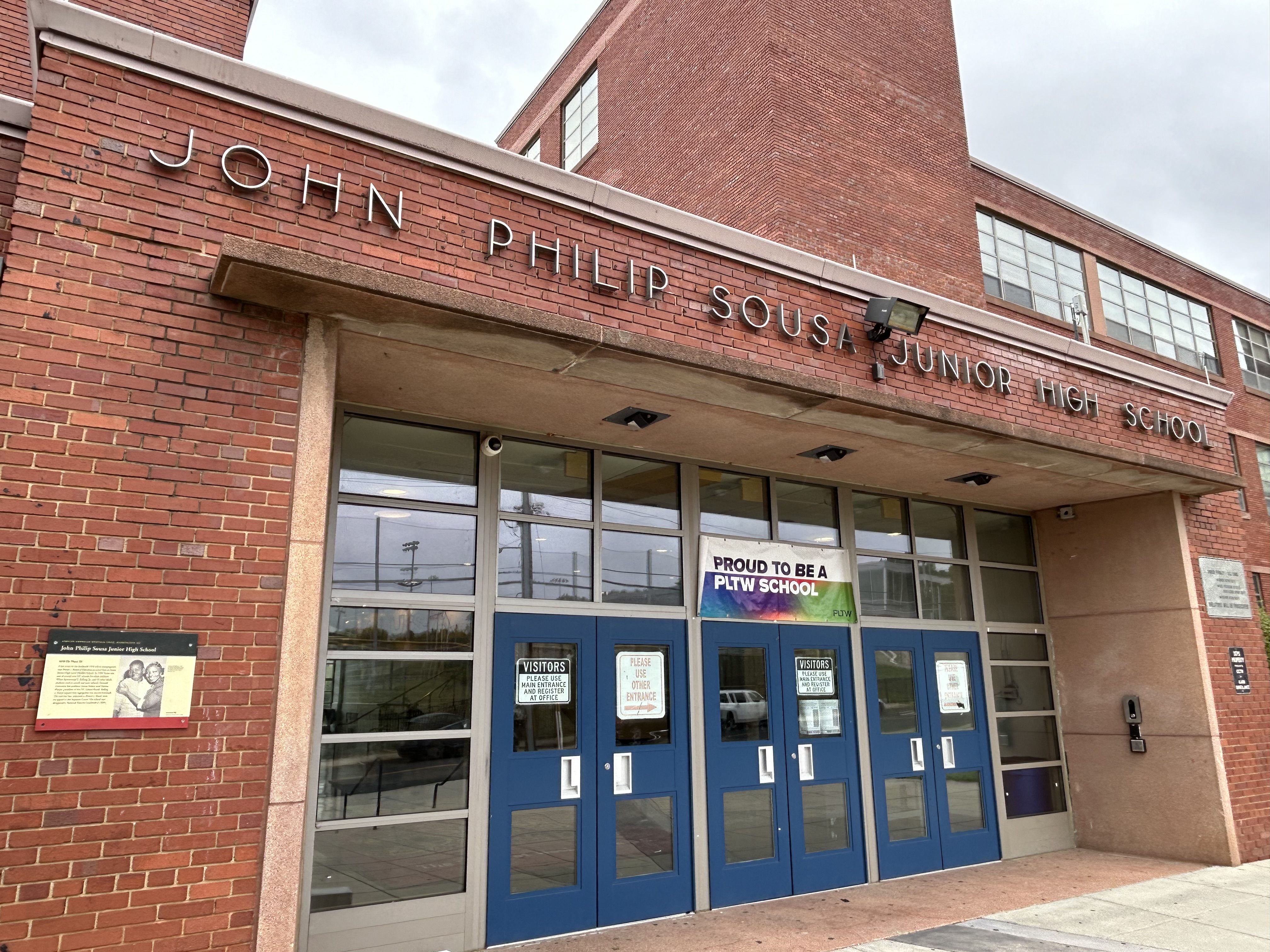
In 1950 a group of black students were denied admission to the then white school above (now a middle school in a predominantly African American neighborhood). At the time, black schools were severely overcrowded, while white schools had plenty of empty seats for students. Integration was proposed to make education more fair. A law professor at Howard University sued the DC school board president on behalf of one of the students, Spottswood Bolling, pictured to the left of the old entrance above. Bolling v Sharpe became part of the landmark Supreme Court case Brown v Board of Education. This park is affiliated with Brown v Board NHP in Kansas, and it is the only NPS affiliate site in DC.