The Moral Case for Climate Action

Rational thinking, which has been engaged in debate about climate changing carbon pollution, imposes certain limitations that often hinder action. Scientists, who warned us of the climate crisis now upon us, rationally recommended reducing carbon emissions quickly to avoid irrevocably changing our climate from the one that sustained us since our ancestors were indistinguishable from chimpanzees. But the rational approach is also to conduct a risk assessment and cost benefit analysis of best options, despite the unprecedented threat to most living species.

The risks are difficult to quantify. Supercomputers forecast weekend weather with varying accuracy, and now we are modeling global climate changes and their effects on equally complex systems over the next century, without any way to check our work. Economics dramatically discounts distant future damages, so we underestimate the costly burden we are leaving for future generations. The scale of the solution is also daunting. Global energy production and use needs to transition quickly away from fossil fuels that have dominated energy for over 100 years. How could legislation pass quickly, broadly, effectively and globally enough to fix the problem? How much would it all cost?

Smart rational thinkers quickly determine that the unknown risks themselves argue for immediate action, that the costs of accelerating our energy transition are logically less than adapting every system to an increasingly hostile climate, and that the long-term benefit of green energy is a cheaper, cleaner, healthier and more abundant future.

But the default position of many mediocre rational thinkers is analysis paralysis, to balk at the scale of both the problem and the solution. When the full extent of a problem’s risks are unknown and the solution is too large, expensive and difficult to execute, then the rational choice appears to be inertia. This suits instinctual thinking too, as we have a natural bias to conserve our limited energy and avoid problems. Do nothing, at least until the problem becomes unavoidable. Then rational thinking is sadly put to use in its most common application, rationalizing a decision already made. Oh, maybe it won’t be so bad. The climate has changed before, and scientists often turn out to get things wrong. We have air conditioning. The excuses are endless.

Moral thinking requires honesty, courage and a bias to act. While rational thinking is selfish, moral thinking is selfless. Moral thinking requires us to do what is right, even at great personal cost. Moral thinking does not discount the value of the lives of our children, grandchildren or future generations. Rationally, we seek ways to benefit financially. Morally, we seek ways to help others. Rationally, we obey the law to avoid punishment. Morally, we know that it is wrong to kill, and carbon pollution is killing the vast diversity of life on earth. Rationally, we weigh the cost of the solution to us. Morally, we weigh humanity’s responsibility for causing the problem. For rational thinkers, the scale of the problem causes hesitancy. For moral thinkers, the global extinction-level-event scale of the climate crisis demands a response great enough to fix the problem we caused. While rational thinkers will not have enough information to make a decision until it is too late to do anything, moral thinkers demand we solve the problem now, before it becomes even worse. We know the scientists are correct, we must take up the burden placed upon our generation, and we must act before it is too late.

Our instincts also hold us back. We distrust that foreigners will cooperate. We look for ways to shift the burden onto others. We are lazy and prone to procrastinate with wishful thinking. ‘Maybe someone somewhere will somehow solve it someday’. Moral thinking has a long history confronting such human weaknesses. An ancient Chinese proverb says that “you can’t put out a fire nearby with distant water”, meaning fix the problem now with what you have on hand, before it becomes worse.

The climate crisis can be depressing and demotivating. But moral thinking teaches us not to give up in adversity and to stand strong for a just cause, despite public apathy or disapproval. Courage is created by the moral certainty of righteousness.

”We are troubled on every side, yet not distressed; we are perplexed, but not in despair;
Persecuted, but not forsaken; cast down, but not destroyed;”

— 2 Corinthians 4:8-9 KJV

Proverbs teaches us that the wicked stay down when they stumble in calamity, “though the righteous fall seven times, they rise again”. The climate crisis is real, our fault, here now, everywhere, worsening, and is catastrophically consequential, so we must act now.

For World Ocean Day this past June 8th, my sister and I watched the premiere of David Attenborough’s Ocean at the Whaling Museum in New Bedford. Although I learned even more about the scale of environmental devastation we are wreaking in our oceans, Attenborough persuasively argued that our positive conservation-oriented actions can still make a difference. He used examples of how marine sanctuaries like the Channel Islands can recover quickly, bringing broad, positive spillover effects far beyond their boundaries, as life finds a way to try to survive. The widespread bleaching of coral reefs can be slowed and mitigated when reefs are protected from overfishing, as healthier ecosystems are more resilient, buying precious time and hope for some species.

We are hardly aware of and barely comprehend all the diversity of life on Earth, yet our actions will either save them or extinguish them forever. What right do we have to end species we don’t even know? Why do we do so little, when we must do so much, to fix what we have already done? How can we justify our inaction to ourselves and to future generations? What comfort is there in a walk through a forest, when we know that it will soon burn, because of the carbon cars we continue to drive? If you claim to love nature, animals, flowers, food, beer, wine, coffee, outdoor sports, fishing, and all the seasons that we enjoy, then you should be taking carbon-reducing action now to protect what you love for the future, or you are a hypocrite.

Maybe we won’t solve the whole problem in time to prevent the worst damage, but we won’t solve anything with a bad attitude. We can improve the odds of survival for species even with small acts. Anyone reading these words is living in humanity’s most perilous time for life on earth. What you choose to do or not do may help determine which forms of life will be on earth ages from now. Act on your carbon choices with the care and consideration deserved, as you carry the future of life on earth in your hands. Morally, we have no choice.

Climate Consequences

The consequences of our carbon pollution provoke an instinctual reaction, but we must consider them rationally. Let’s clearly understand the cause, consider the consequences, and evaluate our options.

Humans have a history of damaging our environment, including driving many species to extinction, from the Wooly Mammoth to the Passenger Pigeon, last observed by Teddy Roosevelt. We have leached deadly chemicals into water supplies, released clouds of cyanide, bleached corals, created toxic fog and smog over cities, poisoned people with mercury, introduced microplastics into most living creatures, burned holes in the ozone, leaked radiation, made rivers burst into flames, filled oceans with garbage, and spilled oil, leaving dead zones. And that’s just pollution, excluding environments and species destroyed by development, drilling, farming, fishing, hunting, logging, mining, ranching, and war.

But our most continuous and consequential pollution is carbon. Especially since Drake’s Well began modern oil drilling, we have extracted fossil fuels of ancient forests that grew 300 million years ago and burned them into our atmosphere, changing our environment into something of which our species has zero survival experience. The last time we had this much carbon in our atmosphere was twice as long ago as when our most primitive ancestors split off from chimpanzees.

  • Heat has been increasing, contributing to fires and killing more people every year.
  • Droughts have been getting worse, contributing to fires and killing more people every year.
  • Glaciers and snowpack have been shrinking, contributing to late season fires and killing vulnerable species.
  • Storms have been getting worse, contributing to fires, floods and tornadoes, killing more people every year.
  • Sea levels have been rising, threatening to flood low lying cities and coasts.
  • Corals have been bleaching—dying en masse—and oceans have been acidifying, killing marine species.
  • Diseases have been increasing, killing more people and species every year.
  • Soil is becoming less healthy, due to erosion, salinization, loss of micro biodiversity and more.
  • Deforestation, melting permafrost and changing water chemistry are reducing carbon sinks and in many cases releasing carbon pollution, like methane, into the atmosphere at increasing rates.
  • Species are going extinct at an increasing rate.
  • Ecosystems are being damaged, where problems with one or more species affect other species, often in unforeseen ways.

These carbon pollution problems are deadly, unprecedented since humans evolved, are synergistic—meaning that they combine and multiply effects—and will affect everyone negatively, at least economically.

We have alternatives to fossil fuel that cause far less damage and risks to life on earth, especially solar and wind power. In many cases, these alternatives are also cheaper.

Hoping that someone will invent some unknown solution that’s cheap, effective and has no side effects is not rational, given how simple and cheap it is to burn carbon fuel. Carbon capture devices are expensive, especially at the scale needed to shrink total carbon in the atmosphere. Geoengineering is unproven, expensive, and will bring unexpected negative consequences. We do not have any inexpensive, reliable way to mitigate the damage of carbon pollution, apart from reducing carbon pollution.

Rationally, the choice to stop burning so much carbon and convert to renewable energy in order to avoid these ill effects is clear and simple. Dishonesty about the causes, effects, alternatives and consequences is part of the problem. Science, including economics, supports reducing carbon emissions before damage and costs worsen. History shows that violent conflicts arise when living conditions deteriorate and governments struggle to feed and house people.

Instinctually, our fear of death should motivate us to stop burning so much carbon. In future posts, I will discuss other ways of thinking about our climate crisis, but I suspect the problem may not simply be how we think. The basic problem may simply be that we aren’t thinking at all.

Ferries

My medium term goal is to visit all the parks in the lower 48 states in my electric car, and that necessarily includes taking an occasional car ferry. I would prefer never to take carbon burning transportation, but I’m neither going to risk my life nor break the law, nor encourage anyone else to do so. Some river roads, coastal highways and islands rely on ferries—such as in the Outer Banks or San Juan Islands above—, without practical alternatives. The only way to visit the Statue of Liberty or Alcatraz is to take the ferry.

My general rule is to arrive at each park by zero emission vehicle but to take park transport as needed to enjoy the park, like at Steamtown. Whenever I can, I encourage park employees to replace their old transport with solar powered electric boats, which would be perfect at Fort Matanzas. And the NPS is slowly converting its transportation to renewable, for example at Zion.

So when the park recommends taking a partner ferry to get to Governors Island, Isle Royale, Perry’s Monument, Boston Harbor Islands or Fire Island, I sit back and enjoy the ride. And I get more out of my visit, especially on narrated tours of wonderful places like the Apostle Islands, Pictured Rocks or Rainbow Bridge.

Which Side Are You On?

We are all on the side of the living. I am as I write this, and you are as you read it. We eat, breathe and have a pulse, and we have a common enemy: death. When we are in nature, we feel an affinity with the living creatures around us. When I was a boy, a large deer jumped out of the brush, stopped on the trail in front and looked, silently assessing me for a few seconds. As I looked into his large brown eyes and listened to his breath, I recognized our shared experience in being alive. We eat, breathe and have a pulse, and we have a common enemy: death. 

When we encounter other forms of life, we share a living affinity, and perhaps we curiously wonder about our differences. Lichen also photosynthesizes, respirates and circulates nutrients, and it constantly clings to life and struggles to survive. Even predators and prey are on the same side, ultimately. The prey understands the predator’s hunger, even as they evade it. The predator benefits when their prey thrives and multiplies. Both are trying to live and avoid death. Even a parasite or pathogen fights to stay alive in a living host. Every living thing contains within it a recipe, the ingredients and the drive to cheat death and stay alive, even if only for a brief time.

Recognition that all living things are ultimately on the same side is a revelation, a comfort and an inspiration. We are alive, akin to all living creatures who eat, breathe and have a pulse. We are human—all of us the same species, fundamentally members of the same tribe and all on the same team—, so we must want humanity to succeed. We may be a newer species, but we, like all living creatures, evolved in a diverse natural world. Nature sustains us, and our future is inextricably linked to how well we sustain nature.

And yet, somehow, we have chosen to stay on a path that will lead to mass extinctions. Many of us now fail to feel a part of the living world. A few of us are broken, fearful, violent and incapable of empathy, even with our fellow humans. Some are greedy, and selfishly don’t care that they are causing the natural world to become unbalanced. Many deny the need to change sufficiently to stop excess carbon pollution, irrationally believing we can ‘adapt’ to a climate in continuous, precipitous decline. Too many just give up, not bothering to make an effort, which perpetuates the problem. These unnatural views are myopic, and the path we are on leads only to regrets.

Each of us wants to live in a better world, with more life and less death. We don’t want more droughts, floods, hurricanes or wildfires. Our human conflicts are transitory tragedies, that we should try to resolve as a family, however distant or estranged we may feel. But our conflict with nature is existential, with consequences that will last forever.

Each one of us should reduce our carbon footprint, saving both money and life on earth. My car costs less to operate than any internal combustion car. Even when I charge in a state that still burns some coal for electricity, it still produces less carbon overall. Every switch to renewable electricity further simplifies our global task of replacing the fossil fuel infrastructure. And yet, people still resist making any effort to change, even though delay only makes the future worse.

So what madness has tricked us into extinguishing most life on earth? Were the coral reefs not beautiful when they still brimmed with colorful creatures? What temporary insanity has convinced us that making our only world uninhabitable for most forms of life is somehow desirable for us? Have we forgotten that we are part of the natural world we evolved within, inhabit and that sustains us? Do we no longer recognize the beauty of trees? Are we now cruel to animals?

As living beings, we eat, breathe and have a pulse, and our common enemy is death. Why are we allying ourselves with our common enemy against life on earth? When did we switch sides? 

”Our survival is affected as the abundance of life is diminished.” 

Unknown

Whale Blubber & Vineyard Wind

Butler Flats Light (above) has marked the entrance to New Bedford Harbor in Massachusetts since 1898. It was a clever bit of engineering by a marine architect using a caisson or box to pump out the water for construction, and every day it’s used for navigation by the famed scallop fleet, ferries, the occasional tall ship, and many other boats passing through the hurricane barrier. When the light was built, New Bedford still dominated the whaling industry, sending ships on long voyages to harpoon whales, melt their blubber into oil and return to fuel America.

Behind the light are two wind turbines, which provide electricity today without extinguishing any species. Despite the preposterous claims of fossil fuel industry funded politicians, there is no such thing as ‘windmill cancer’ and bird strikes are rare. But folks who live near the turbines complain that they cast shadows, are noisy or are ugly, so new wind turbines are now built far offshore, south of Martha’s Vineyard. The current project is known as Vineyard Wind, with 62 turbines each generating 13 megawatts when complete. Currently, there’s a pause after a blade broke, requiring inspections and clean up. Massachusetts recently committed to roughly quadrupling wind projects in the area.

The turbine assembly is based in New Bedford, with final installation of the towers at sea. Interestingly, to protect whales from construction noise, they create a circular curtain of bubbles rising up from around the foundation on the seabed. They got the idea from whales, who create a circular curtain of bubbles underneath schools of fish to herd them together into a bite sized meal. Thousands of locals work on the project, in a boon to the economy, and the first project will provide relatively cheap, green energy to 400,000 homes. I’ve observed the gimbaled tower segments and long blades being transported out to sea by huge construction ships on the same routes once used by whaling ships.

Progress is beautiful, especially when it helps save so many different species on earth from extinction. Back in the day, whalers would have argued that smelly whale oil was ‘indispensable’ and ‘higher quality’ than alternative fuels, and they resisted progress. Today, that seems absurd, although now the fossil fuel industry lies routinely to protect its profits. Ironically, during the Civil War, the US government helped launch the fossil fuel industry by buying their new fuel and taxing alternatives to save the Union. Now we need the government to help us transition quickly to green energy to save life on Earth and leave the smelly old fuels unburned.

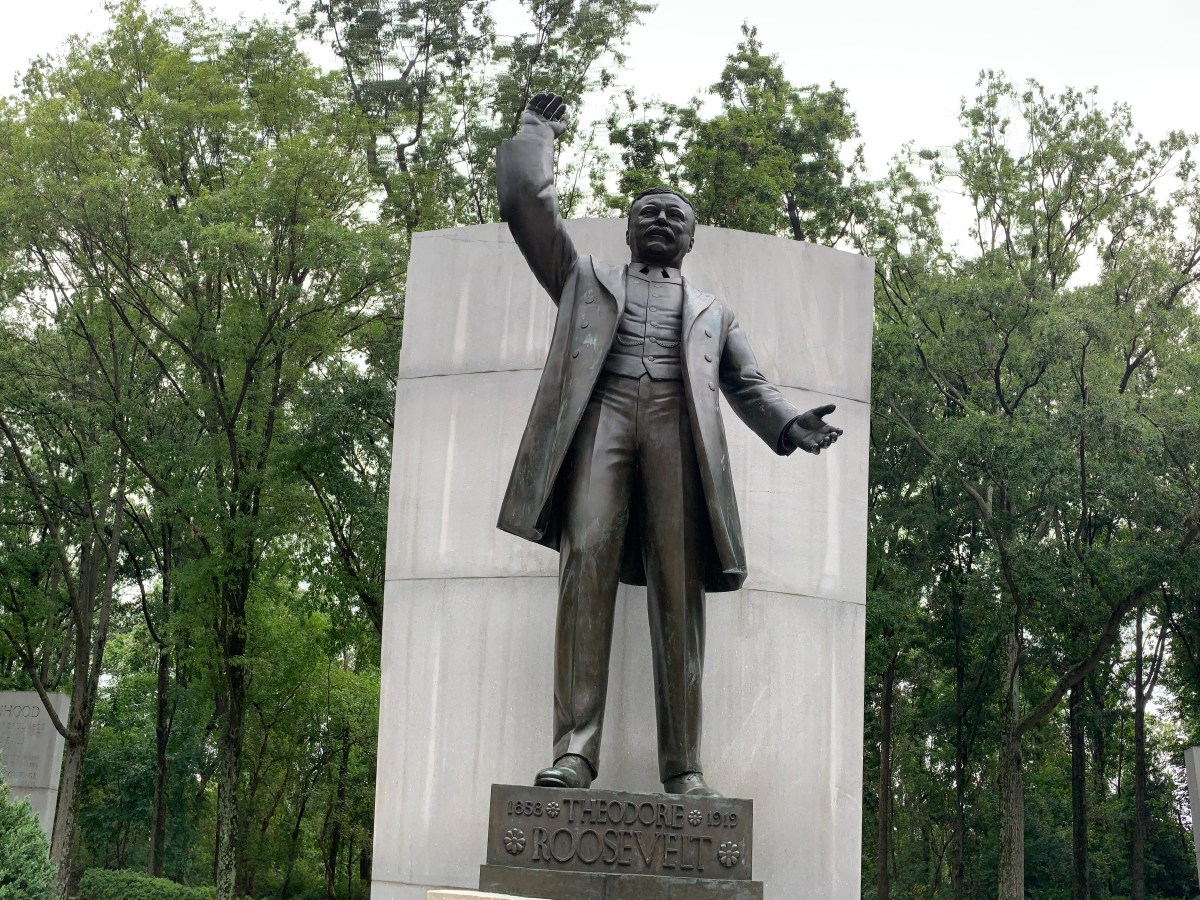
All Teddy Roosevelt Sites

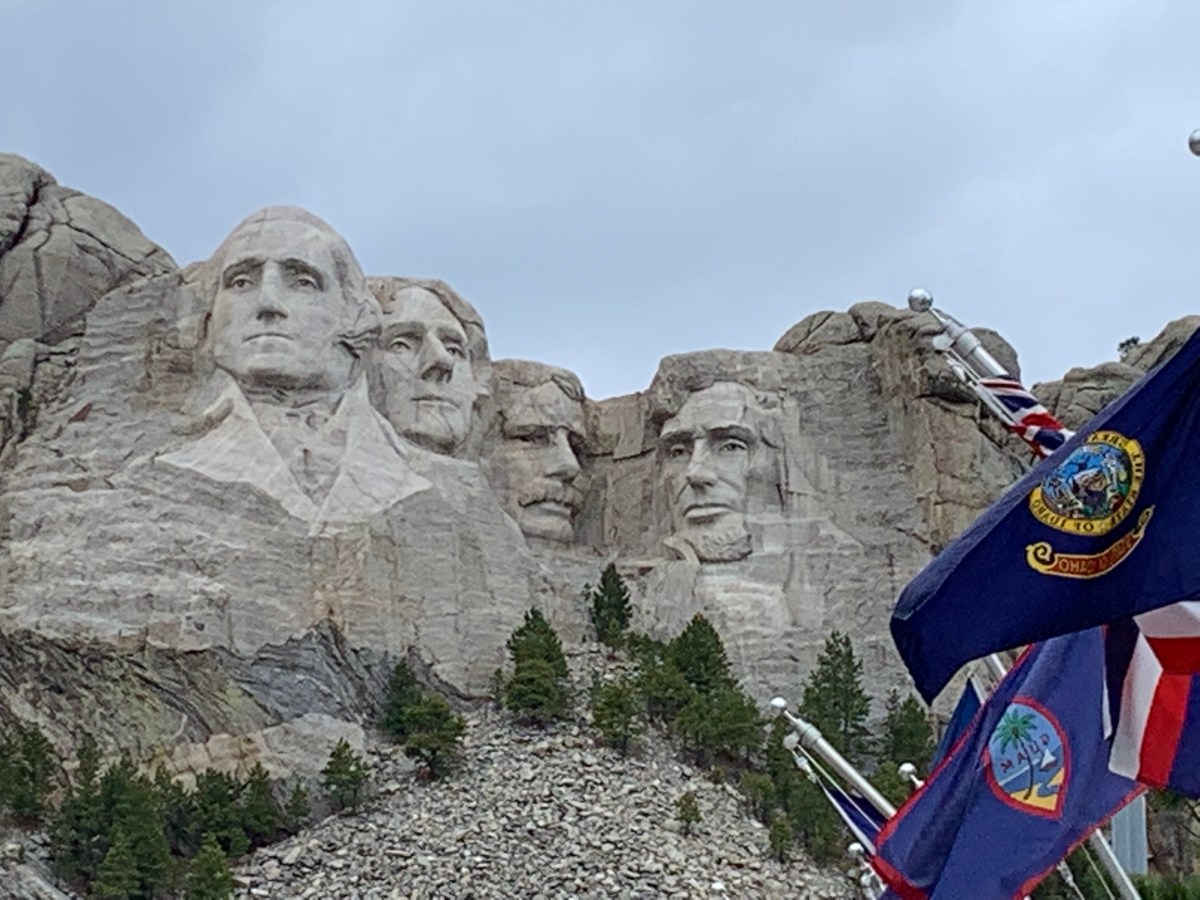
The park service commemorates six parks for Teddy Roosevelt, from his childhood home in NYC, to the ranch in North Dakota where he mourned, to his family home on Oyster Bay, to the room where he was sworn in after an assassination, to the DC island that celebrates his legacy and to the monument that rightly places him among our greatest presidents. The carbon crisis threatens to end the environment Teddy Roosevelt saved for us, so he would want us to switch to electric vehicles to enjoy all his parks, as I did.

At least a dozen current National Parks began with Teddy Roosevelt protecting their land, besides his namesake park above. His friendship with John Muir inspired our entire national park system. We owe a debt that we can only repay by continuing his legacy of preservation for the future.

As President, Teddy Roosevelt protected 230 million acres for us in 20+ states, including national forests, rivers, preserves and more, such as around the beautiful San Luis Valley. He’s directly responsible for all the units listed below, plus others, as well as for signing the Antiquities Act by which presidents still designate national monuments.

“The civilized people of today look back with horror at their medieval ancestors who wantonly destroyed great works of art, or sat by slothfully by while they were destroyed.
We have passed that age, but we are, as a whole, still in that low state of civilization where we do not understand that it is also vandalism wantonly to destroy or to permit the destruction of what is beautiful in nature – whether it be a cliff, a forest, or a species of mammal or bird.
Here in the United States we turn our rivers and streams into sewers and dumping-grounds.
We pollute the air, we destroy forests and exterminate fishes, birds and mammals – not to speak of vulgarizing charming landscapes with hideous advertisements.
But at last it looks as if our people were awakening.
Above all we should realize that the effort toward this end is essentially a democratic movement!
Now there is a considerable body of opinion in favor of our keeping for our children’s children, as a priceless heritage, all the delicate beauty and all the burly majesty of the mightier forms of wildlife.
Surely our people do not understand, even yet, the rich heritage that is theirs!”

Teddy Roosevelt, 1913

Biosphere 2

From 1991 to 1993, eight people lived in this huge sealed greenhouse or giant terrarium in Arizona, growing their own food and attempting to live without outside intervention. Built at a cost of some $250 million, the complex includes the artificial ocean above, multiple tropical growing zones, industrial HVAC, and even a unique, massive ‘lung’ to equalize air pressure at different temperatures. Results were mixed, but there are important lessons to be learned.

Humans like to believe we can control our environment and that we have conquered nature. The truth is that we don’t completely understand nature, and when we try to control it, there are unintended consequences.

The most serious problem was a gradual reduction in oxygen, which threatened to kill the participants by around day 500 and required emergency intervention. Despite all the plants, overall, the system produced too much carbon dioxide. Also, the participants complained of constant hunger, unable to eat enough calories per day, which made it difficult to complete their extensive daily chores. Many plants and pollinators did not survive, but stowaways like cockroaches thrived. Still, they survived for two full years. Others later managed shorter stints, but bickering and mismanagement soon ended fully sealed living experiments.

From 1995 to 2003, Columbia University managed the site and completed groundbreaking research here scientifically proving up to 90% declines in oceanic coral due to artificially high levels of atmospheric carbon dioxide. Unfortunately, the coral later died when the site went back on the market, although there are plans to try to reintroduce it. Today the site is run by Arizona State University, which offers both a general self-guided tour and specialized guided tours, in addition to hosting students and researchers. When fully funded, the semi-tropical desert forests are very well controlled and measured, enabling many scientific experiments on micro ecosystems to be carried out under laboratory conditions. Tracers can be added to water and carbon dioxide, so researchers can figure out exactly what plants are doing in different conditions. Unfortunately, the whole complex is extremely energy intensive, and it is run on diesel and natural gas, which both contribute carbon pollution to exacerbate the climate crisis.

Some believe that technology will allow us to adapt to the worst effects of climate change. The truth is that we need to spend our time, energy and money trying to protect Biosphere 1 (Earth) from carbon pollution. This massive, extremely expensive, carefully engineered and scientifically researched project could barely take care of eight people for two years. That’s neither an efficient nor effective use of resources, but it quickly illustrates how difficult it is to scale environmental technologies to the point that they are practical. How big of a terrarium would we need to feed eight billion people? Far better to take care of the Earth, while we still have hope.

Forest Wildfires

I know it’s winter, but we need to talk about wildfires. There is a common, simple-minded view—popular among those who deny climate change—that overzealous park employees unnaturally suppressed fires, causing wildfires today. End of story. Once we ‘catch up’ on the ‘fire deficit’ everything will be fine. This is bunk.

Last year Canada had a record-smashing year of wildfires, and the frequency of wildfires far exceeds what is normal, considering the naturally slow growth rate of trees in boreal forests. Most of these fires were in remote northern Canada, where historic fires were not even reported, let alone suppressed. The estimated number of fires was not too high, but many of the fires were mega fires, burning over seven times as many acres as the modern historic average. There is only one explanation for the scale of the wildfires last year, and it isn’t Smokey the Bear. The primary cause of increasingly severe forest fires is carbon pollution. 

The first humans to change natural fire ecology in North America were natives who for centuries used fires in the valley for agriculture and to attract game with new grass. The most destructive humans by far were loggers who clear cut whole forests. During the Great Depression, roads and campgrounds were developed in both old and regrown forests, bringing millions of visitors who parked their hot cars on dry grass, dropped their cigarettes on pine needles and left their campfires unattended, causing a dramatic increase in forest fires. Firefighters responded by putting out fires when they threatened nearby communities.

We changed forest fire ecology in complex ways over centuries, so the simple ‘fire suppression’ explanation is false. We don’t know exactly what the forest’s natural ecology was like before man started playing with fire here, but man’s brief experiments for a few decades last century—causing wildfires due to camping and suppressing some fires at the edges—all account for maybe 2% of the life of a Giant Sequoia. Yosemite park rangers tracked all fires within the park since the 1930’s, and for decades none of the fires were large enough to matter to the overall health of the forests until recently. Past fires were often 100 or maybe 1000 acres, but recent forest fires are 100,000 or 1,000,000 acres. Our hotter climate has changed everything. Now we need to change our perspective from our recent past to the consequences of our carbon pollution on the future. Extinction is not a mistake we can correct later. 

California has the most national parks with 28 park units, and about 12 of them have some type of large forest, often wilderness. I’ve been in all of those forest parks in the past year or so, and 9 now have huge swaths of dead trees from recent wildfires. 

Only Muir Woods, a small coastal redwood forest park along a creek surrounded by wealthy suburbs, has been spared. Pinnacles has had multiple wildfires in the past three years, but firefighters managed to contain them quickly. Even foggy Redwood park lost 11,000 acres in 2003 due to the Canoe Fire. 

This level of wildfire is not normal; it is out of control, and it is getting worse. Discussing past firefighting efforts and increasing the rate of manmade fires is not going to fix the problem. If we do not stop our carbon pollution, then 100 years of environmentalists’ efforts to save these forests for future generations will be wasted. 

Glacier National Park

The horizontal line across the Garden Wall on the other side of the valley is the Going-to-the Sun Road, which I finally drove—3rd time’s the charm. This year the dramatically scenic road opened on 13 June with little ice & snow visible in July. Just over the wall in Many Glacier, old photos show the many large glaciers are now very small, rapidly melting glaciers. My son and I rode horseback up in 2018, and the area should be renamed Many Lakes. Combined with its neighbor across the border, Waterton Glacier International Peace Park is still a UNESCO World Heritage Site, despite the obvious melting problem.

Melting ice and glaciers are one of the tipping points that will flip our Climate Crisis into a catastrophe. Consider the Arctic ice cap. Every year recently, the multi-year ice has been shrinking at an accelerating rate. Eventually, the ice will disappear in summer. Then the same energy that currently raises ocean surface temperatures by 1° will raise it by a multiple of that amount. There are two reasons for that. First, the white ice will no longer reflect the sun. Second, the existing ice will no longer be there to act as a temperature break. When you boil water with ice, it takes something like three times the energy as water without ice, because most of the energy goes into melting the ice first. So, not only is it bad that glacial ice is melting due to flooding and dry rivers in the fall, but once the ice is gone, the surface temperature rise will accelerate much more rapidly. Please, reduce your carbon footprint.

César E. Chávez National Monument

I returned here today to see the exhibits, as they were closed when I visited last year. The black & white photos of the Delano grape strike and Chávez’s hunger strike remarks are particularly moving. Pesticides were not regulated at all then, and labor was denied rights by growers. Chávez’s national boycott of grapes helped change both.

Today, growers drain rivers, lakes, wetlands and water tables, even as the western half of the country suffers in drought. In Kern County, where the Monument is, the Kern River no longer flows to the Kern Lake, due to diversion for agriculture. In order to sell more produce, growers are ruining the environment for fish, animals and people. Climate change and some farming practices also exacerbate Valley Fever, a deadly fungal infection spreading in California & Arizona.

Agriculture is a trillion dollar industry in the US, with $150 billion in exports. But Big Ag prefers to blame Democrats, rather than face the fundamental challenge of the climate crisis. Big Ag needs to convert farm equipment to electric, and they need to stop using fossil fuel to ship their produce around the world. They also need to cooperate to restore wetlands to sequester carbon.

César Chávez devoted his life to raise awareness and lead civil disobedience to make change. He acknowledged that in the struggle against the rich and powerful, poor people only have their lives “and the justice of our cause” on their side. Today, we need more people to be just as devoted to stop the climate crisis.

Wisteria, photographed in my previous visit in 2021.

Click to see my photos of all national park units in California, or click to read an updated site visit here.