Constitution Gardens

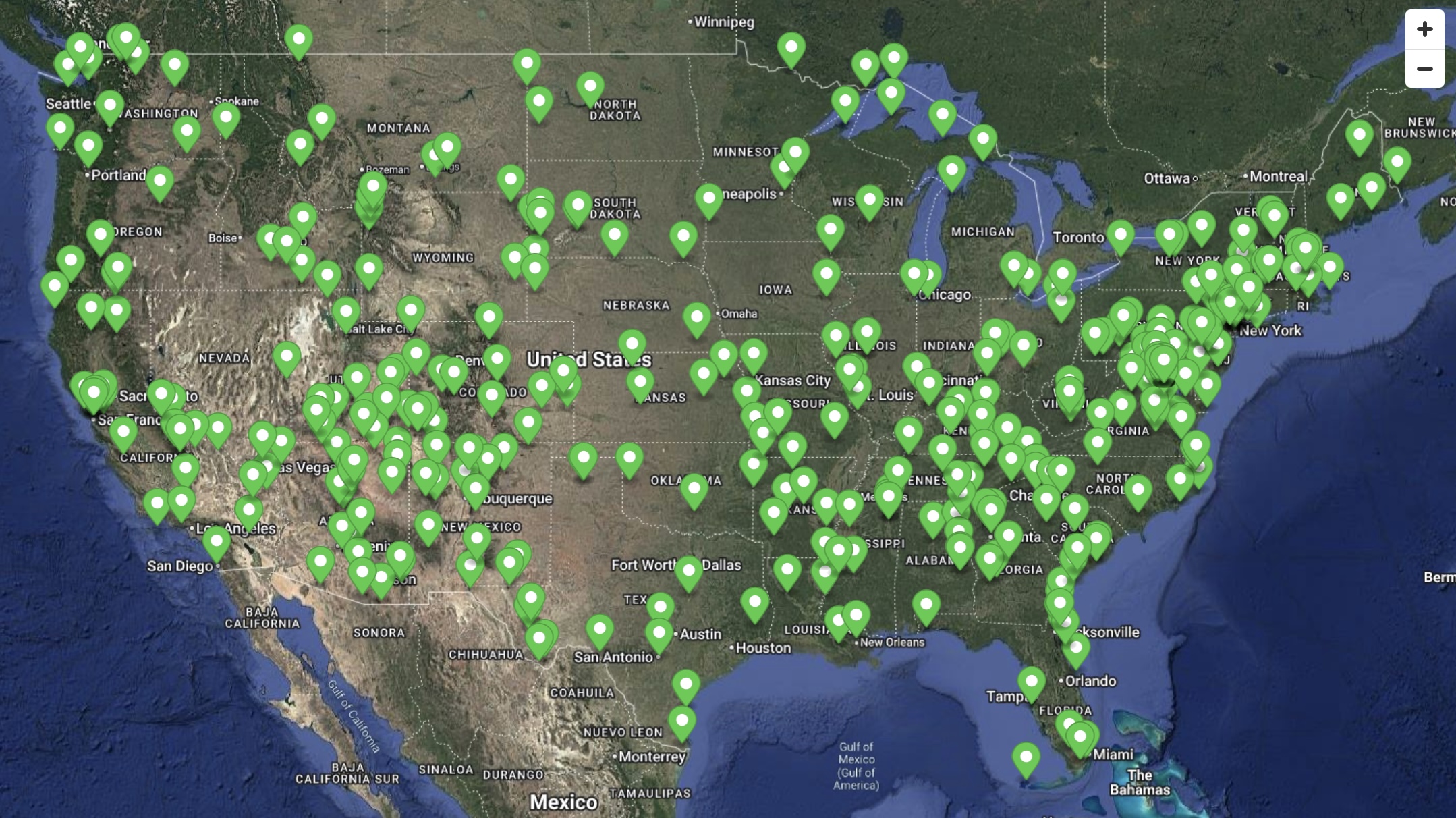
DC is confusing, park-wise. First of all, parks usually have a type (monument, memorial, etc.) but not this one. Second, there are overlapping layers. Constitution Gardens originally referred to a large area, including the National Mall, but now both parks are part of the National Mall and Memorial Parks, which is a grouping but not a park unit. In 1982 the area with a pond next to the Vietnam Veterans Memorial, was established as this park unit in tribute to the Constitution, and it’s signature feature (above) is the semicircle of stones on Signers Island. Which is nice, but, third, these are not signers of the Constitution but rather of the Declaration of Independence.

I know that, because I’m from Concord, Massachusetts and my father was a history major. So I went to the Massachusetts contingent where I saw five names I recognized. John Hancock, John and Sam Adams (yes, the beer guy was a real patriot) didn’t attend the convention. Robert Paine (unrelated to the guy who wrote Common Sense) wasn’t a delegate, and Elbridge Gerry (for whom Gerrymandering is named) was there as a delegate but didn’t sign the Constitution. Only 39 of the 55 delegates actually signed. The important thing was that they had enough votes to pass it and send to the states to ratify.

But, the garden-variety misnomer not withstanding, the signers of the Declaration of Independence did risk their lives, fortunes and sacred honor by signing that document. Their signatures on paper, here captured in stone, meant Treason against the King, punishable by death. 56 brave patriots, including Thomas Jefferson, Benjamin Franklin, Robert Morris, Thomas Stone and the others remembered in this garden signed, and we owe them all our thanks.

Here’s the link to my visits to all parks in the District of Columbia.
Vietnam Veterans Memorial

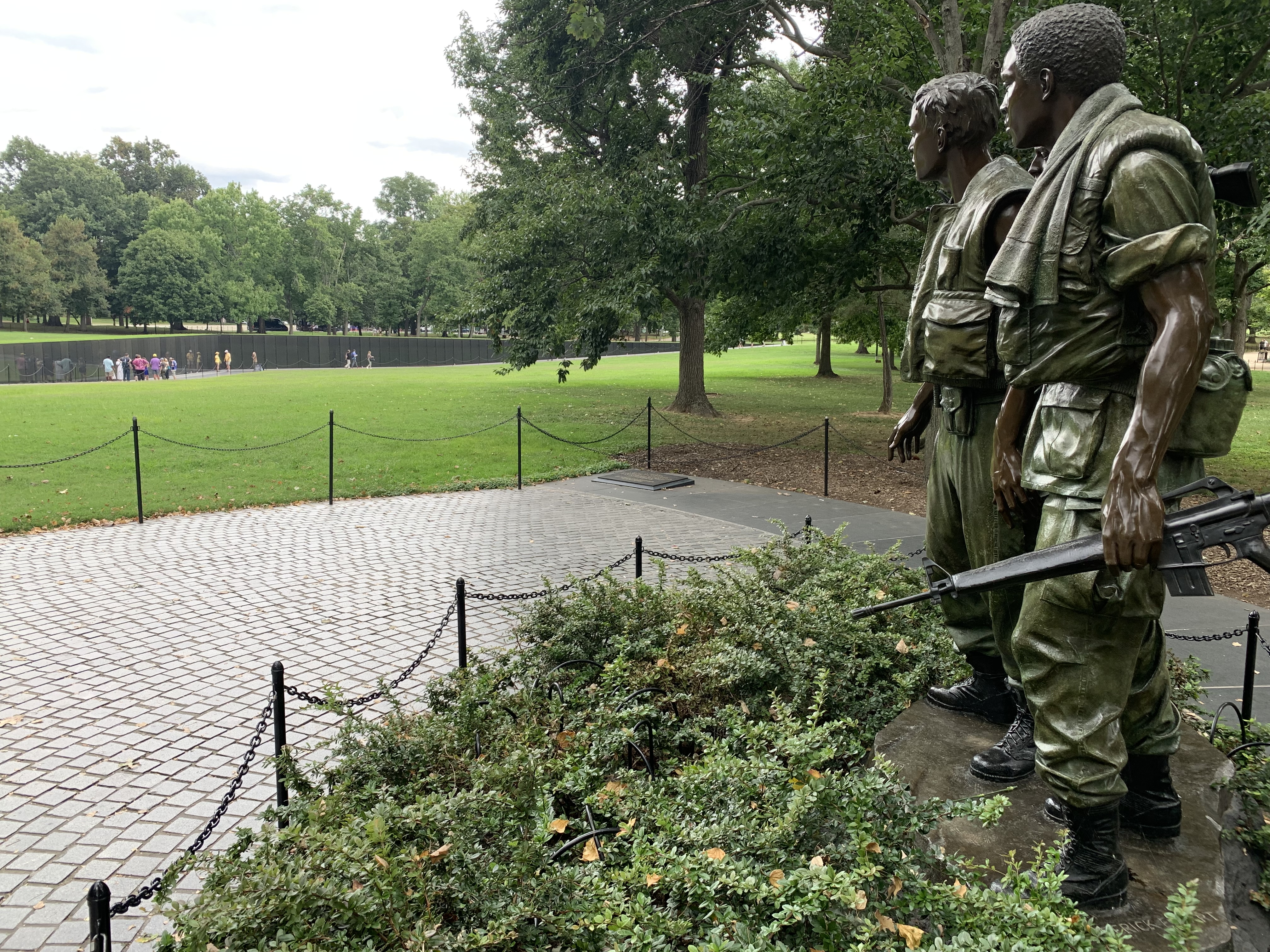
The memorial is effective. As you walk along the wall, gazing at the names engraved chronologically in the reflecting stone wall, you slowly enter the earth like the dead. Visitors can look up names in books, find their panels and etch a copy of a name to bring home with them. Some bring mementos or attend ceremonies if a status changes from MIA to recovered. There’s another statue to women who served and died. The statues of the three servicemen above look over the visitors at the enormous cost of the war. Over 58,000 Americans soldiers died, and over 300,000 were wounded.

Strangely, the memorial’s website doesn’t describe the war itself in any way, so I guess I have to try. Vietnam was both a civil war between the Vietnamese and a proxy war among the great powers at the time. The North, under Ho Chi Minh, had overthrown the French colonial government and wanted to unify the country under Communism. They were supported by China and Russia. The South was set up by France and allies to resist Communism, and we supported them with money, material, and military. Eventually, the weaker, more corrupt and incompetent South Vietnamese government failed, despite our extraordinary efforts to prop them up.

Robert McNamara, the architect of the US war in Vietnam, called the war a mistake in 1995 and said “we were wrong. I believe we were terribly wrong”. In retrospect, Kennedy’s effort to keep Vietnam from being the next ‘domino’ to fall to Communism, Johnson’s stubborn expansion of the war, and Nixon’s machinations were all failures. I have never read a credible analysis of how we could have won the war. Besides US casualties, millions of Vietnamese died and were crippled by Napalm and Agent Orange. About a decade after we left, the Communists had ruined the economy, and the Vietnamese abandoned that system on their own.

The park service has a responsibility to educate the public about history, in addition to memorializing the dead and remembering the sacrifice of veterans, regardless of controversy. Publishing the history of the Vietnam War on their site would be a good start.

Here’s the link to my visits to all parks in the District of Columbia.

Korean War Veterans Memorial

Korea wasn’t just one war. After the North Koreans launched their surprise attack, the allies only controlled one major city, Pusan, and its surroundings in southeastern Korea, near Japan. MacArthur brilliantly counterattacked with an amphibious assault at Inchon to liberate Seoul, and then he swept north as the allies had reinforced South Korea. But then China sent hundreds of thousands of troops across the border, which MacArthur described as an entirely new war.

That second war, with China, almost became a nuclear war, as MacArthur supported using nukes tactically, including using nuclear waste to create an uncrossable border and against (presumably) military targets across the North Korean border in China. President Truman, who had authorized the bombings of Hiroshima & Nagasaki, at first seemed inclined to allow MacArthur to make those calls. Instead, he relieved MacArthur of command and fought the war to achieve a stalemate, which still holds in the armistice (under Eisenhower) and at the (heavily armed) ‘demilitarized zone’ between the two Koreas today.

Freedom Is Not Free

Major Kelly Strong

Here’s the link to my visits to all parks in the District of Columbia.

World War II Memorial

Each of the 4,048 stars on the wall represent 100 American military deaths. 16 million served in the US Armed Forces, and many millions more supported the war effort directly. Appropriately, this classical memorial occupies center ground in the National Mall next to the Washington Monument. There were many veterans (of more recent wars) visiting, as well as international visitors and families all admiring the fountains, statues, monuments and inscriptions.

There are many detailed tributes, especially the bas-relief sculptures of both Atlantic and Pacific theaters. In the Atlantic, the memorial illustrates the Lend-Lease program that supported our allies before we entered the war, the military contributions of women, the industrial contributions of women, the code-breakers, the flying fortresses (later protected by the Tuskegee Airmen), the paratroopers, Normandy, Sherman tanks, medics, the Battle of the Bulge where the allies stopped Hitler’s last gasp advance, and meeting the Russians at the Elbe River as the allies stormed into Germany. In the Pacific, the memorial sculptures show Pearl Harbor, the massive enlistment and mobilization for war, battleships, submarines, aircraft carriers, amphibious assaults, jungle warfare, prison camps, and V-J Day.

“Today the guns are silent. A great tragedy has ended. A great victory has been won.
The skies no longer rain death – the seas bear only commerce –
men everywhere walk upright in the sunlight.
The entire world is quietly at peace.”

General Douglas MacArthur

Here’s the link to my visits to all parks in the District of Columbia.
World War I Memorial

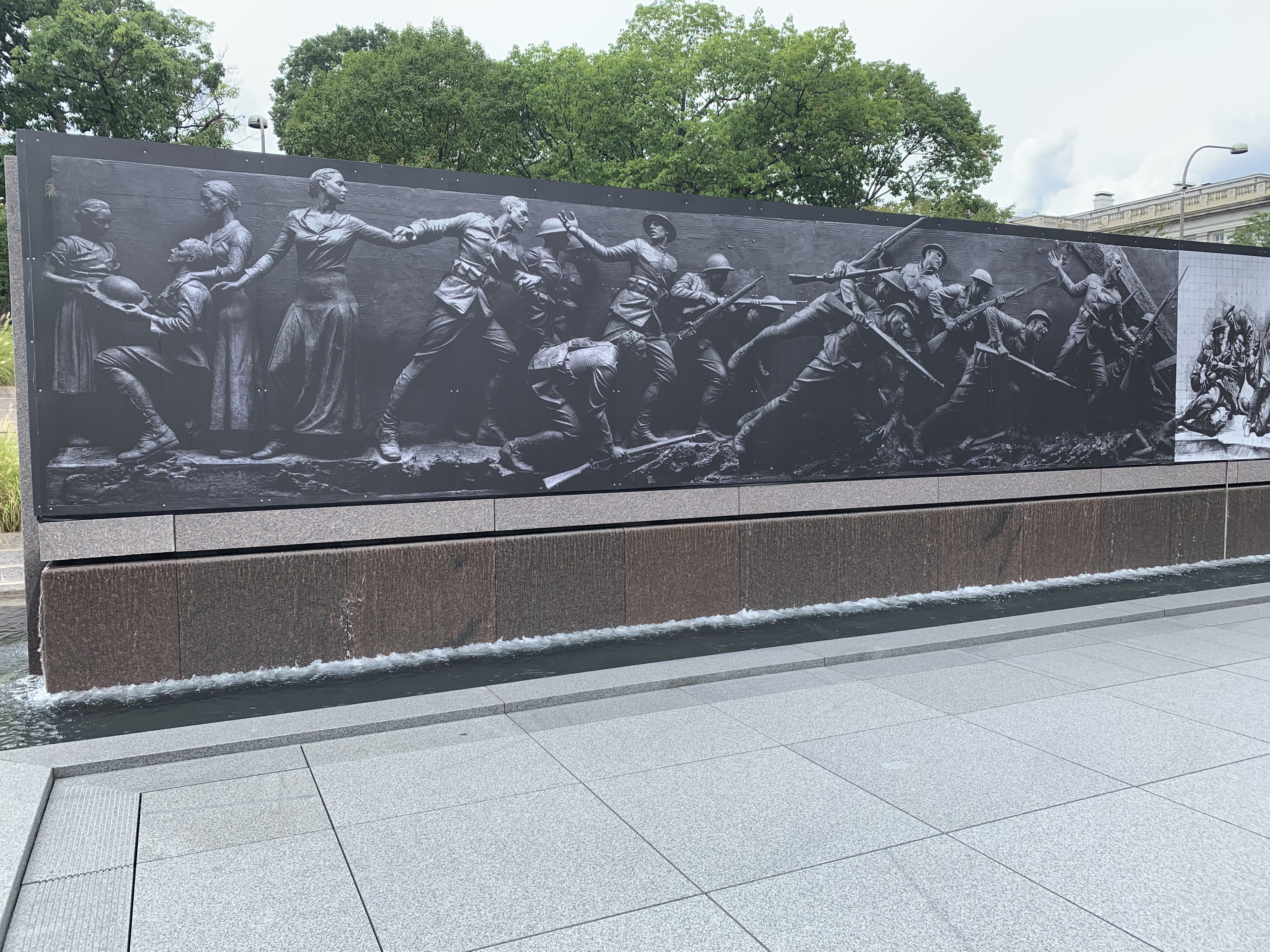
The artwork, “A Soldier’s Journey”, is not yet complete and “will not be installed before 2024”, so what you see above is a photo of the first half of the journey which continues as a drawing to the right. There is a statue of General Pershing in his park too with quotes and maps of the Western Front and the Meuse-Argonne Campaign. Nearby is an outline of L’Enfant’s plan for DC.

Pershing is the one general, besides Washington, to be named as “General of the Armies of the United States” after his success in WWI. He kept our forces together, instead of blending with allied forces, to increase their impact, and they broke the stalemate to win the war. Over the course of his career, the West Point grad commanded the next generation of leaders, including MacArthur, Marshall, Patton and Truman. Many of his earlier commands were much more problematic, including setting the perimeter at Wounded Knee, being called “Black Jack” because he led the 10th cavalry of “Buffalo Soldiers” (African Americans), fighting the Moros in the Philippines and his failed search for Pancho Villa. In all cases, he distinguished himself for his exceptional effort to understand his opponents.

Here’s the link to my visits to all parks in the District of Columbia.
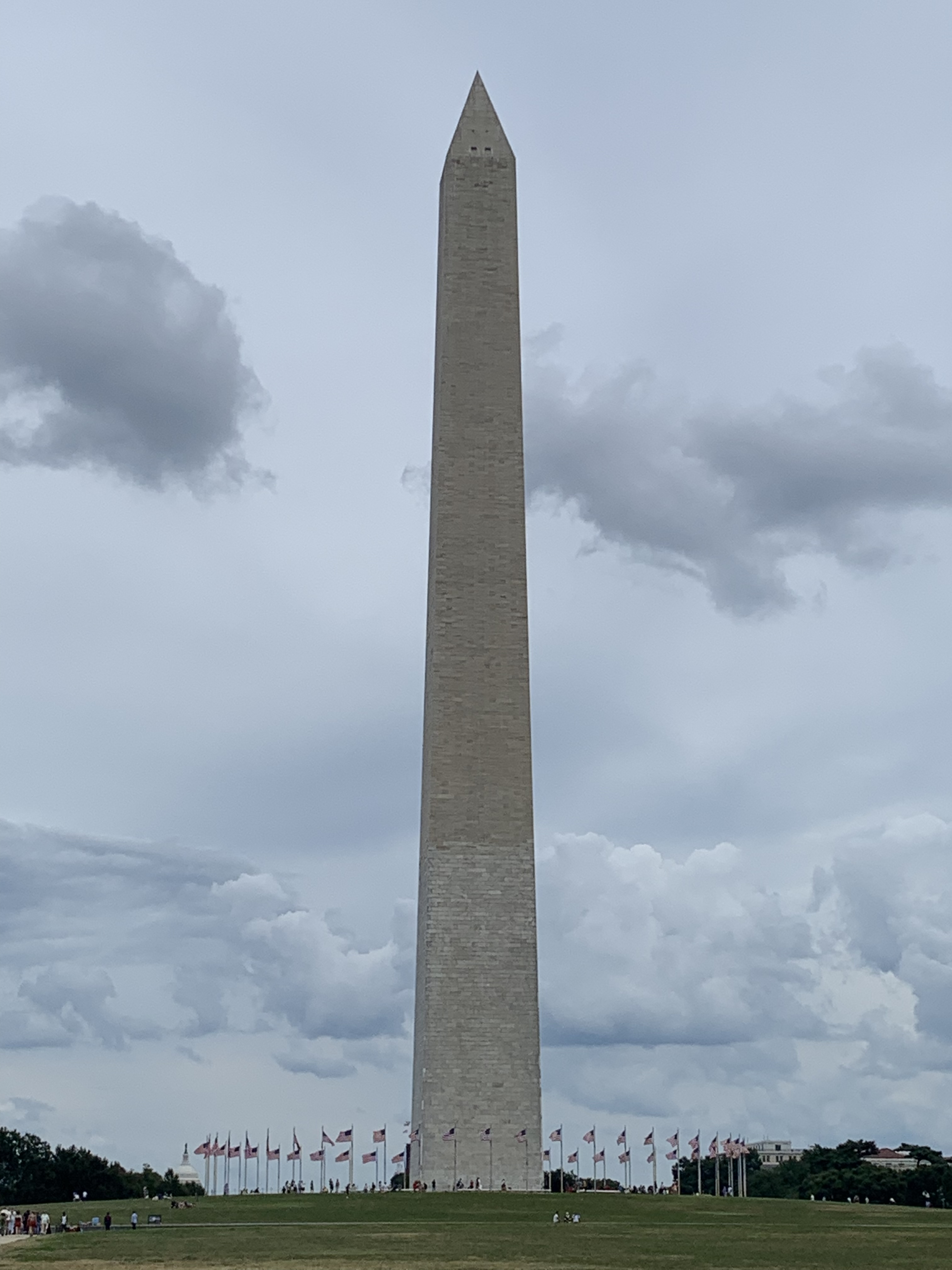
Washington Monument

Welcome to Washington DC! I’m staying with my brother here for a few days, visiting monuments and park sites, on foot and by Metro (electric vehicles only). I won’t have time to see everything, so I’m planning a return trip next year. I’m trying to publish a post per day, so you’ll have something to read while I’m on my way home.

George’s imposing monument above is the tallest structure in the city, and it’s got a great view of the National Mall, from the Lincoln Monument to the Capitol. There are tickets to the top sold at 8:45 each morning, but for $1 per ticket you can reserve up to a month in advance. The windows are small, but it’s still the best way to get a sense of L’Enfant’s Plan. L’Enfant served with Washington as a military engineer, and Washington commissioned him to design the city. His bold vision for the city exceeded the initial instructions from Jefferson, and L’Enfant deserves credit for creating the bold public spaces that define the District of Columbia for both government and the people.

Here’s the link to my visits to all parks in the District of Columbia.
Map of Regions

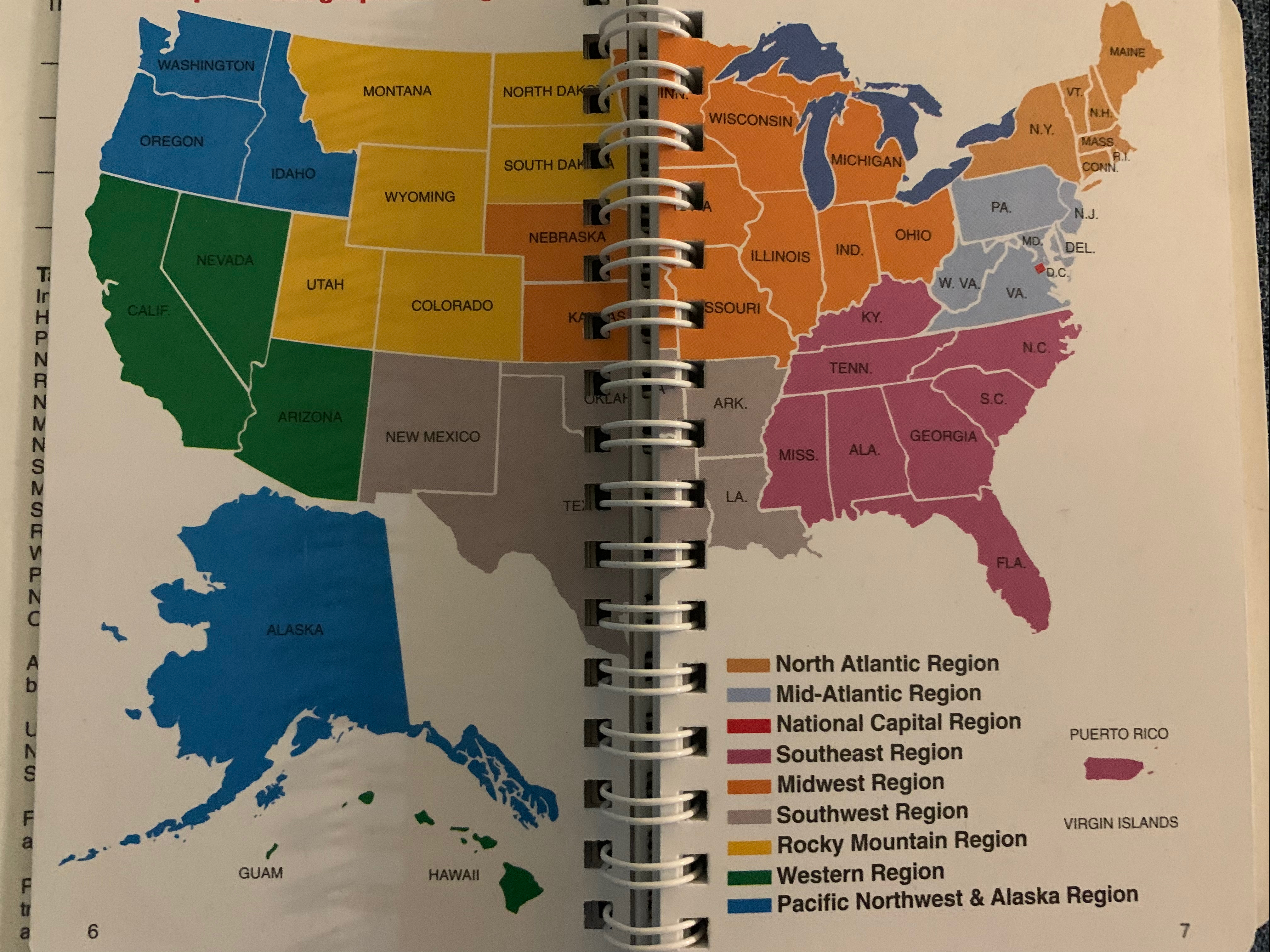
The National Parks Passport (which National Park Travelers Club members use to save visit stamps) divides the units into nine self-explanatory regions. The club has useful information for trip planning, and I log my park visits there too. The US Department of the Interior has reorganized their park unit regions a few times into something less useful for me, so I still use the map above to organize the site geographically. And the NPTC often does a better job keeping their park unit information completely up to date, compared with the NPS.

I visited all national park units in the contiguous 48 states in my electric car in the last four years; see my NPTC map below. Every state has at least one national park unit. If you want to see my visits in your state, ‘Click a State’ above, find your region and click the summaries to explore.

My first region completed was National Capital with 23 units, then Southwest with 42, Mid-Atlantic with 56, Rocky Mountain with 41, Midwest with 47 and North Atlantic with 44. Each of those links takes you to a summary of my park visits there. That leaves three extremely challenging regions to complete. The Western region includes Hawaii. The Pacific Northwest has Alaska. And the Southeast includes US territories in the Caribbean.

As I mentioned in my post on Cumberland Gap, this blog is partly an object lesson to show that traveling in an EV is a great way to visit our national parks. I can travel hundreds of miles per day, stopping briefly to charge, use the restroom and eat, and filling up costs me a fraction of my Prius. I use a CCS and a few RV plug adapters on rare occasions when they’re more convenient than a Supercharger, and I find charging locations with the PlugShare app. When I stay in state park campgrounds, I charge my car overnight without paying extra. Even if I were more concerned with my money than our climate, I would travel this way. And I love driving my Tesla.

I’ve only had range or charging trouble twice. Once in Kansas, I could not reach a park before closing due to poor planning on where to charge, but when I returned, Tesla had opened a new Supercharger nearby. (The car tells me whenever I’m heading out of range from the nearest Supercharger). Another time, the owner of the Dairy Queen in Needles California was blocking 3 out of 4 chargers all day with a truck, because he wanted to change the seasonal advertising on his sign. I called Tesla to let them know, which is what he should have done in advance. I’m not going to say traveling cross-country by EV is idiot proof, but I can do it, so it kinda is.

Screenshot

Edgar Allan Poe National Historic Site

What anxiety or misgivings troubled me so incessantly today, I know not. Perhaps the unseasonable heatwaves dragging on interminably through the nights have robbed me of my wits by denying me the respite of unconsciousness, no matter how much gin I consumed. Even staying in the drafty old seaside cottage that I once played in as an eccentric child, only served to remind me of my age, my lack of gainful employment, my failed marriage, and the solitary road ahead of me. The storms of late have struck frequently with bizarre intensity, with lightning barrages casting ghoulish flashes on the faces of my now elderly acquaintances, as if to taunt me with signs of my own mortality.

The inexorable tides reach higher on the barnacled rocks with each passing year, and the great lawn, strained with drought, is over-crowded with groundhogs, rabbits and even passing deer seeking refuge, so desperate for food that they eat any flowering bud of beauty, no matter how small or hidden. I have long been tormented by the certainty of impending doom that renders me humorless and unappreciative of the banal social events that my family includes me in vain to soothe my awkward, sulking gloom. But now, some fiery rage is stoked in my soul, as avarice and willful neglect threaten all species with mass extinction while casual citizens busily immerse themselves in the capricious and mundane.

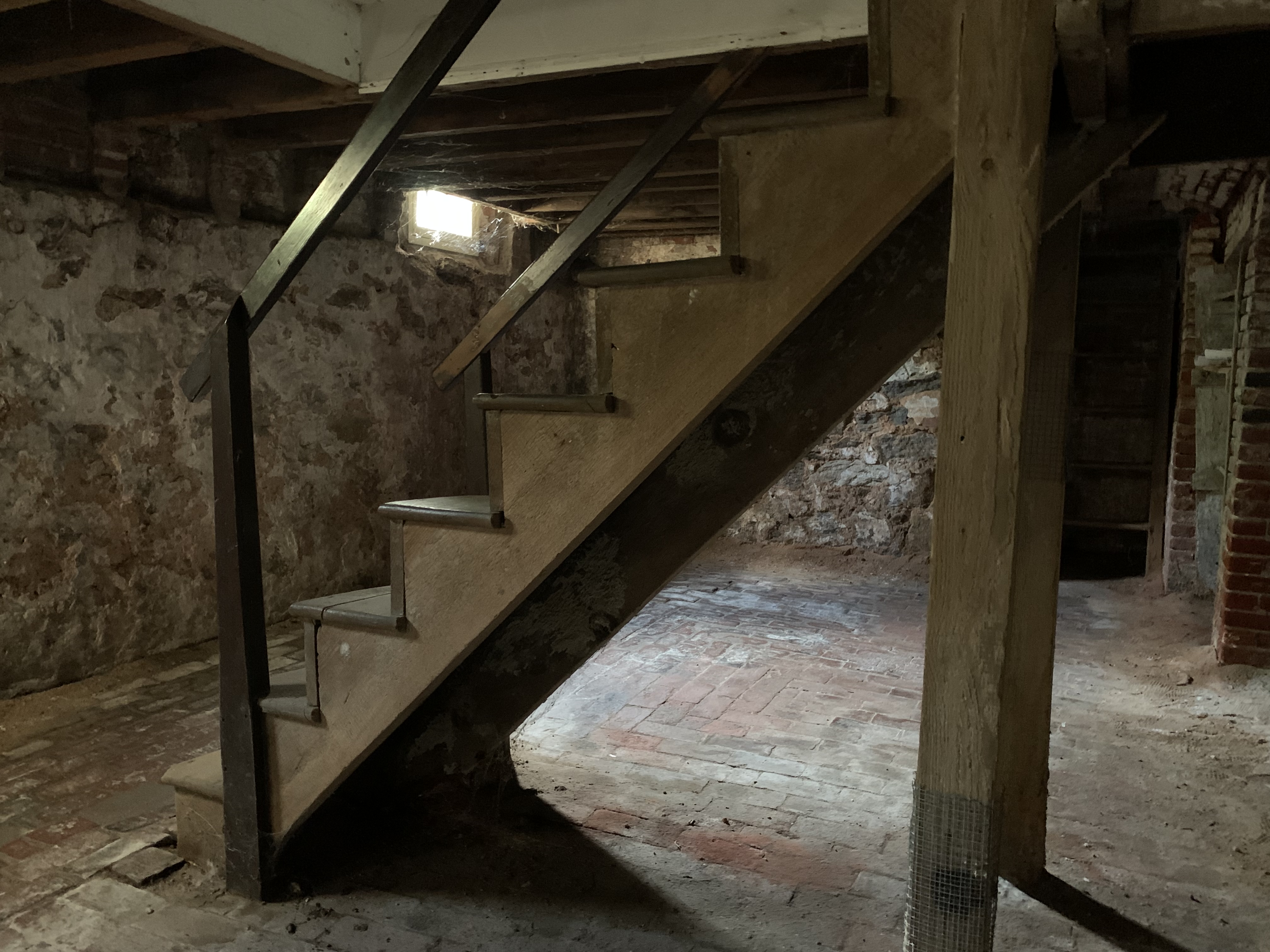
Certainly, knowing the tragic and unexplained death that befell the strange man whose steps I follow from Boston to Philadelphia weighs heavily on my brooding mood. A poet, critic and editor whose genius never quite paid the bills nor protected him from loss. His wife died of consumption at 24, perhaps pre-cognizant of her fate, visualizing her flower surroundings she would not smell. All of their furnishings of course are long gone, so there’s nothing left to do but study the cracks in the walls, read his disturbing writings and let your imagination call you into the basement, where his fevered dreams dwelled too long. The crazed rantings of his characters echo in the cobwebbed corners, some quietly creaking like the stairs too treacherous to climb and some screaming in my head like the gasoline fueled monstrosities on the roads outside. How was one genius able to create the Detective, Horror and Science Fiction genres, I wonder, before once again losing myself in the melancholic realization that our future may yet become a deviously difficult to solve dystopian hell-scape of our own pollution. This is one of my favorite sites, if only in my imagination.

Here’s the link to my visits to all parks in Pennsylvania.

General Grant National Memorial

As General, U.S. Grant won the Civil War, and as President, he saved the Union. He created the Justice Department, supported the 15th Amendment and fought the Ku Klux Klan. Over a million people gathered to watch his funeral procession in 1885, and his mausoleum became one of the top tourist destinations in the nation.

Racists like President Johnson were determined to resist letting African Americans vote, and Grant agreed to run for President in large part to protect those rights. This divide of bigotry, which festered after the Civil War, continues to divide our country. After Grant’s death, the descendants of traitors promulgated the big lie (known as the Lost Cause) that the confederates were honorable, benevolent to slaves, and were the moral victors of the Civil War. To do so, they maligned Grant as a drunk, ignoring his reform efforts and associating him with corrupt officials. The campaign was effective, and Grant was often ranked among the worst Presidents.

Grant’s Indian policy illustrates the problem. Grant appointed the first Native American to be Commissioner of Indian Affairs, and Grant pledged “proper treatment of the original occupants of this land—the Indians.” Supporting peaceful reconciliation, his administration allowed many Quakers and Episcopalians to “help” the natives, instead of continuing genocide. Grant was a firm believer in the separation of church and state, but the religious people believed that converting the Natives was the best way to help them and thus erased so much of their culture. And many people still wanted to take Native American land, so well-intended land policies were similarly corrupted.

Like most of the park rangers I’ve spoken with, I’m a fan of Grant. We believe he was, generally for his time, on the right side of history and does not deserve the vitriol he received in life and death from those on the wrong side of history. I wish he had better understood the depths of and had proposed better solutions against systemic racism, but he was an ally of the Americans who were denied their rights by many white Americans. The struggle to secure the voting rights of African Americans and to restore justice to Native American communities continues over 150 years later. Grant recognized both his own failures of judgement and the moral sins of our nation. But Grant also said victory goes to those who keep fighting.

“Nations, like individuals, are punished for their transgressions.”

Ulysses S. Grant

Here’s the link to my visits to all parks in New York.

Theodore Roosevelt Birthplace National Historic Site

The Roosevelts moved into New Amsterdam (NYC) around the 1640’s, buying 50 acres in the middle of Manhattan, entered politics in the next generation and soon split into what would become the Hyde Park Democratic Roosevelts and the Oyster Bay Republican Roosevelts. Teddy’s financially adept grandfather expanded the family’s fortunes, including gifting this home in Gramercy Park, and his grandmother instilled Quaker virtues of public service in the family. The home, which Teddy did not want preserved “as a shrine”, was rebuilt after his death by Teddy’s sisters who figured he couldn’t complain anymore, and mainly includes original family items, including his crib (on temporary display), mementos of his trip to Egypt, his Rough Riders uniform and the folded speech that helped block an assassin’s bullet.

Teddy lived here until age 14, and learned much from his family about politics, travel, natural history, charity and life. His parents were involved in many charitable works, including establishing the Natural History Museum, and Teddy set up his own “Roosevelt Natural History Museum” as a child with his cousins. A frail asthmatic child, Teddy was encouraged to exercise in a home gym, as his father said, “to do all you can with your mind, you must make your body match it”. Teddy was a dynamo at Harvard, was elected to the NY Assembly, and published Naval War of 1812. Unfortunately, on Valentine’s Day in 1884, both his wife and mother died of illnesses. Feeling cursed, Teddy abandoned politics and withdrew from city life, traveling to the Dakotas to mourn and recover.

I was introduced to Teddy Roosevelt through the beautifully illustrated, humorous tales of The Roosevelt Bears read by my grandfather. The Teddy Bear was invented in response to a true story where Teddy refused to shoot a cornered bear, believing it to be unsportsmanlike. President Roosevelt was a Progressive who fought for “a square deal” “for the plain people” “not politicians” and “not men of great wealth”. He challenged and broke the great monopolies of his day, and he was proudest of his work for conservation, reserving 150 million acres of forest. He credited his family upbringing for his achievements.

“Of all the questions which can come before this nation,
short of the actual preservation of its existence in a great war,
there is none which compares in importance with the great central task
of leaving this land even a better land for our descendants than it is for us.”

Theodore Roosevelt

Here’s the link to my visits to all parks in New York.