All National Capital Parks

My first region completed! There are currently 23 national park sites in our nation’s capital (exclusively), including Presidential memorials, war memorials, historic sites, and parks. The District of Columbia national park sites are the easiest to visit without using a carbon burning vehicle. The DC Metrorail subway cars are all electric, some of the DC Circulator $1 buses are electric, there are bicycles & electric scooters for rent, and most of the sites are in walking distance. I visited most on foot, some by metro and the rest by my Tesla 3 LR, which I drove from California.

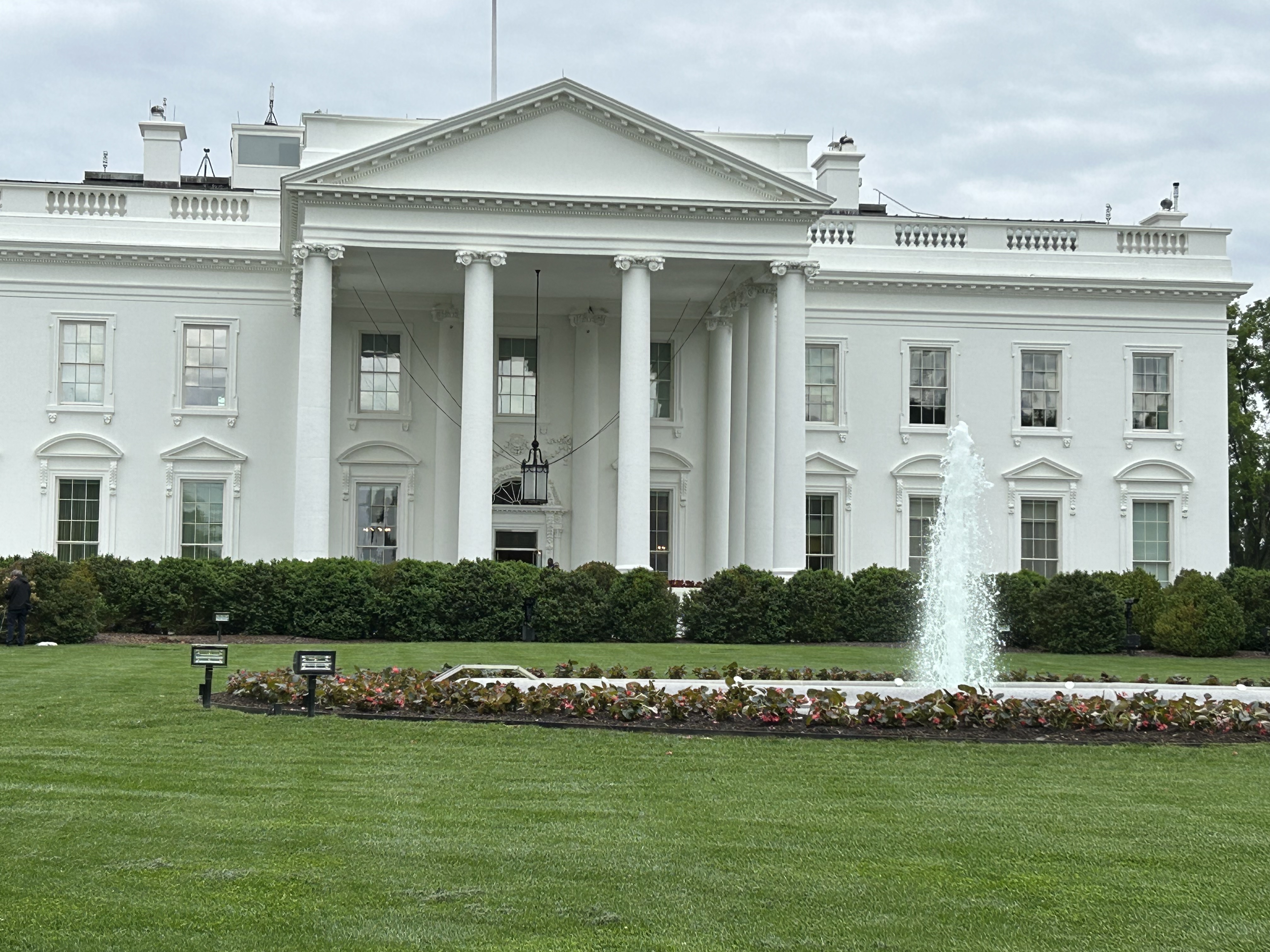
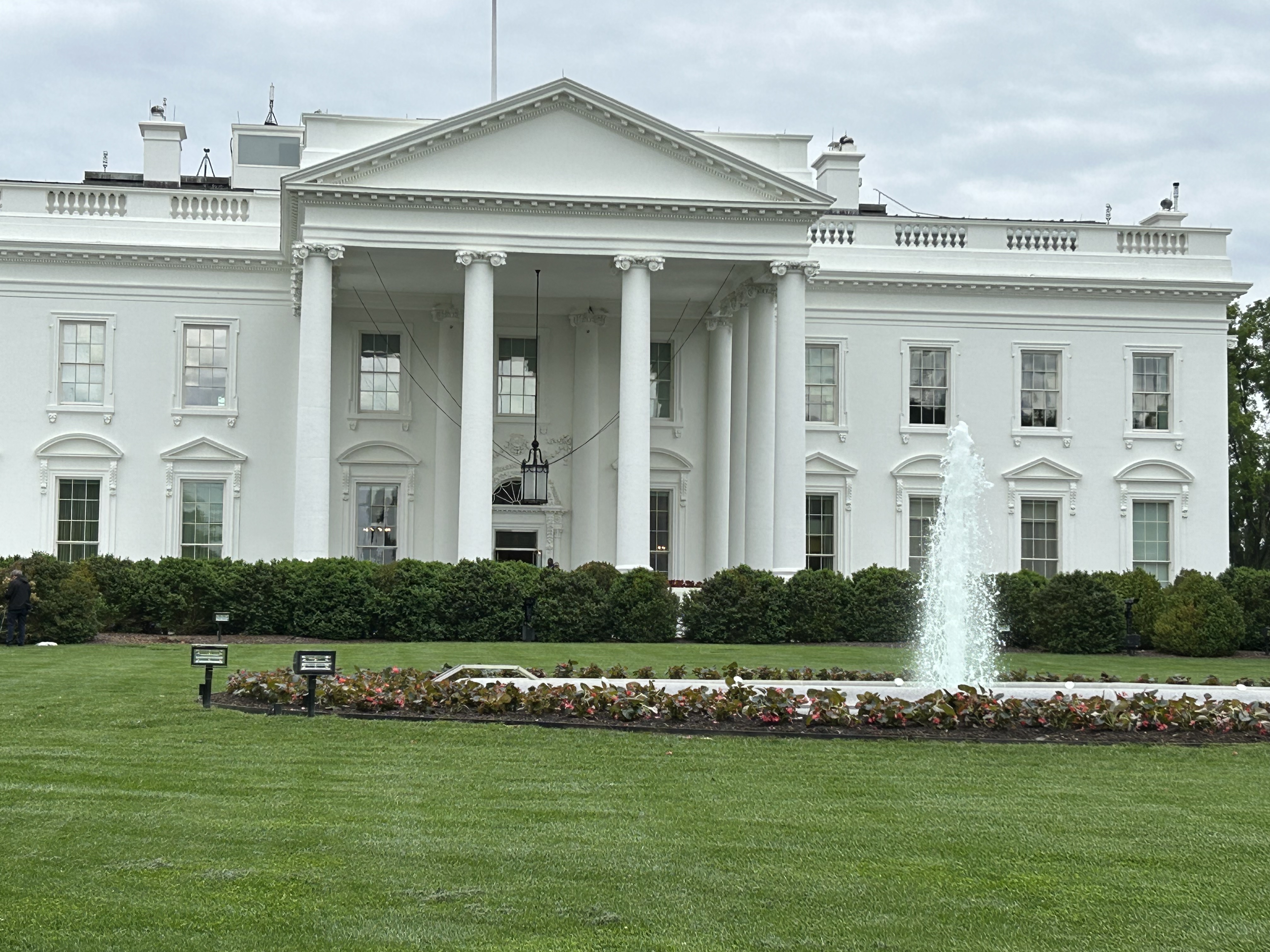
The Presidential sites are The White House (see photo), the Washington Monument, the Thomas Jefferson Memorial, the Lincoln Memorial, the Theodore Roosevelt Island National Memorial, the Franklin Delano Roosevelt Memorial, the Dwight D. Eisenhower Memorial, and the Lyndon Baines Johnson Memorial Grove on the Potomac National Memorial.

The war sites are the National World War I Memorial, the World War II National Memorial, the Korean War Veterans Memorial, and the Vietnam Veterans Memorial.

The only memorial site for a civilian is the Martin Luther King, Jr. National Memorial.

The historic sites are the Belmont-Paul Women’s Equality National Monument, the Carter G. Woodson Home National Historic Site, the Frederick Douglass National Historic Site, Ford’s Theatre National Historic Site, the Mary McLeod Bethune Council House National Historic Site, and the Pennsylvania Avenue National Historic Site. (The first two of these sites have been closed for over a year, so I only visited the front steps).

The parks are Constitution Gardens, National Capital Parks—including Kenilworth Park & Aquatic Gardens—, the National Mall, and Rock Creek Park.

In addition, there are a number of national trails that run through DC. Also, John Philip Sousa Junior High was part of Brown v. Board, and, as it’s still a public middle school, it’s run as an affiliate site.

Our nation’s capital has so many of our most important park sites, and I encourage you to click on the links and read my posts, each with a photo. There’s much to be learned from these special places. Of course, if you visit DC, you should also visit some of the Smithsonian museums and other great tourist sites.
All National Capital Parks, No Carbon Vehicles

My first region completed! There are currently 23 national park sites in our nation’s capital (exclusively), including Presidential memorials, war memorials, historic sites, and parks. The District of Columbia national park sites are the easiest to visit without using a carbon burning vehicle. The DC Metrorail cars are all electric, some of the DC Circulator $1 buses are electric, there are bicycles & electric scooters for rent, and most of the sites are in walking distance. I visited most on foot, some by metro and the rest by my Tesla 3 LR, which I drove from California.

The Presidential sites are The White House (see photo), the Washington Monument, the Thomas Jefferson Memorial, the Lincoln Memorial, the Theodore Roosevelt Island National Memorial, the Franklin Delano Roosevelt Memorial, the Dwight D. Eisenhower Memorial, and the Lyndon Baines Johnson Memorial Grove on the Potomac National Memorial.

The war sites are the National World War I Memorial, the World War II National Memorial, the Korean War Veterans Memorial, and the Vietnam Veterans Memorial.

The only memorial site for a civilian is the Martin Luther King, Jr. National Memorial.

The historic sites are the Belmont-Paul Women’s Equality National Monument, the Carter G. Woodson Home National Historic Site, the Frederick Douglass National Historic Site, Ford’s Theatre National Historic Site, the Mary McLeod Bethune Council House National Historic Site, and the Pennsylvania Avenue National Historic Site. (The first three of these sites have been closed for over a year, so I only visited the front steps).

The parks are Constitution Gardens, National Capital Parks—including Kenilworth Park & Aquatic Gardens—, the National Mall, and Rock Creek Park.

I can’t choose favorites from a list like this with so many of our nation’s most important park sites, but I encourage you to click on the links and read my posts. Every post has a photo, although they are slow to load sometimes. There’s much to be learned from these special places. Of course, if you visit DC, you should also visit some of the Smithsonian museums and other great tourist sites.
The White House

[Update, due to the recent tragic demolition of the above Jackie Kennedy garden, the colonnade on the right and the East Wing, tours have been suspended until sometime in 2026 or later.]

I took the tour! After standing outside the fence last year, I finally got organized and made a reservation. You need to make reservations through your Congressperson—even if you didn’t vote for them—to request a date within 3 weeks to 3 months in advance. Tours are currently given Tuesday through Saturday mornings, and they’re very popular. I requested any date in April, and they said no, the first available was in May. They confirm 2-3 weeks before. So, I changed my schedule, and a few months later, I’m walking through the East Portico, through the historic red, green, blue and other historic rooms. The best experience is to download the WHExperience App from the Historical Society and get all the details on your phone. The staff inside will answer questions and reveal a few fascinating stories, but they’re also there to make sure people behave. It’s difficult to imagine a more historic site, since the residents literally make history. I enjoyed both the recent photographs and the historic portraits.

If you can’t get a reservation, you can peer through the fence on either the north or south sides—pedestrians are once again allowed to walk up to the fence to take a decent photo. There is also a visitor center (no reservations needed) near the East Gate with a movie, detailed model and exhibits. Oh, and my sister reminded me to always put the park site location in my posts—she’s in Real Estate and location is very important—, so, the White House is located at 1600 Pennsylvania Ave, NW, in Washington DC. Thanks!

Here are my visits to all parks in the District of Columbia.

Belmont-Paul Women’s Equality National Monument

The house once belonged to the Treasury Secretary Gallatin, was burned by the British and was later named after Alva Belmont, a Vanderbilt divorcee, donor and leader of the women’s movement, who bought it to lobby Congress. The site today primarily recognizes the women’s movement leader Alice Paul (above), who founded the National Women’s Party before women had the right to vote. Finishing what began in Seneca Falls, Paul led the campaign in DC for women’s suffrage and for the Equal Rights Amendment. Here pressure was exerted for gender equality language in the UN Charter and the 1964 Civil Rights Act, among many similar efforts around the world.

The tour allows you to see the many portraits, sculptures and photos of the women’s movement and is very educational. I learned about Inez Milholland, an icon for the movement who inspired the superhero Wonder Woman, Marie Louise Bottineau Baldwin an indigenous woman who marched with the other leaders and later became a lawyer, and more about Ida B. Wells, who refused to march in the back of a parade and joined her state’s delegation from the side. Be sure to ask about segregation, as the topic is apparently only discussed upon request in our new political era.

I did not realize how many women were imprisoned or how many were badly beaten upon their arrest. The photo below shows Alice Paul and Lucy Burns, posing in a cell they once occupied. Over 200 suffragists were imprisoned for protesting in front of the White House, and Alice Paul led a hunger strike that was instrumental in pressuring President Wilson towards passing the 19th Amendment. I recommend the HBO film Iron Jawed Angels to learn about these events. Read more about Women’s History park units.

Here are my visits to all parks in the District of Columbia.

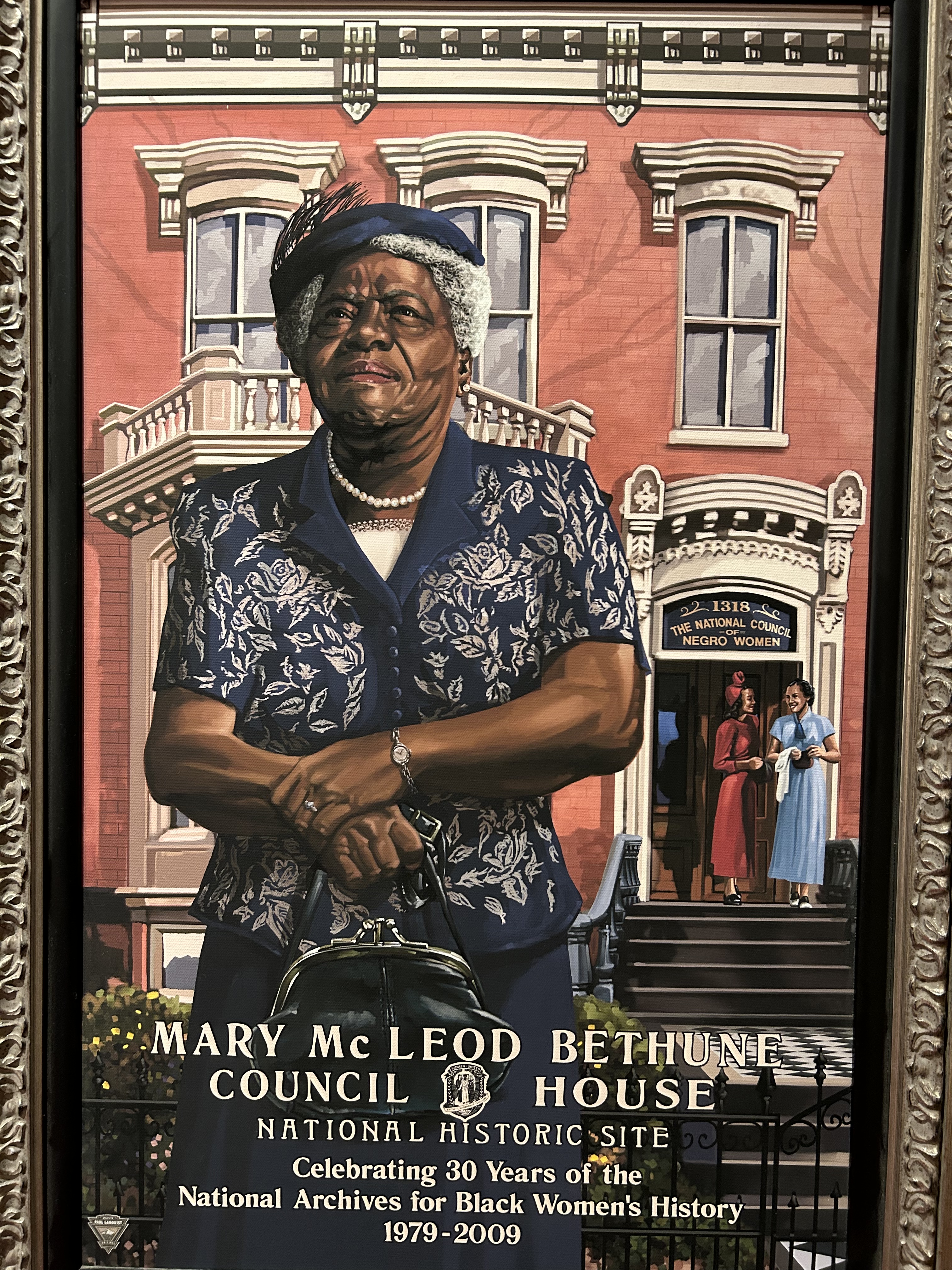
Mary McLeod Bethune Council House National Historic Site

An advisor to half a dozen presidents, founder of schools, civics organizations and the archive above, Mary McLeod Bethune was a dynamo who devoted her life to advancing the lives of people who had been denied equal rights for centuries. Her home office in DC, the headquarters for the African American women’s movement, is just up the street from the White House, where she worked in FDR’s administration, as the first African American woman to lead a federal department. She later was the only African American woman to attend the founding of the UN in San Francisco. She worked with Frederick Douglass, Booker T. Washington, WEB Du Bois, Maggie L Walker, Nannie Burroughs, and Carter Woodson, and she skillfully raised funds from John D. Rockefeller and many white elites at the Palmetto Club in Florida.

The house has recently reopened after some renovations, but the interior rooms and exhibits are still being reorganized. Given the extensive race and gender barriers, the home often had to put up visitors in the top floor, who were unwelcome at DC hotels. The upstairs office was full of busy staff, managing events, publishing articles, and coordinating activities nationally. Downstairs the parlor hosted guests and the conference room hosted important meetings and kept detailed records. The tour guide was exceptionally knowledgeable and provided the context needed to judge the scale of her contributions to our history. Guaranteed to learn here.

Here are my visits to all parks in the District of Columbia.

Carter G. Woodson Home National Historic Site

While the house is undergoing necessary renovations, it’s appropriate that the sign in the window still displays what was going on during Black History Month this February, because Dr Woodson started that right here in 1926 (originally just a week). Recognizing the need to study and teach African American History correctly, Dr Woodson devoted his life to building the academic and social foundations to publish and teach. The only person of enslaved parents to earn a PhD in History and the second African American to earn a PhD at Harvard—after WEB Du Bois—, Dr Woodson was also Dean at Howard University. He mentored a great many scholars (Langston Hughes worked here briefly), including many African American women. He was good friends with Mary McLeod Bethune, who ran his historical foundation for 16 years. He wrote eight influential books, started two academic journals, and trained a generation of future historians, intellectuals, authors and Civil Rights activists. Today, Dr Woodson is remembered as the Father of African American History. The expanded home is expected to open later this year with a new visitor center.

They’ll see how beautiful I am
And be ashamed—

I, too, am America.

Langston Hughes

Here are my visits to all parks in the District of Columbia.

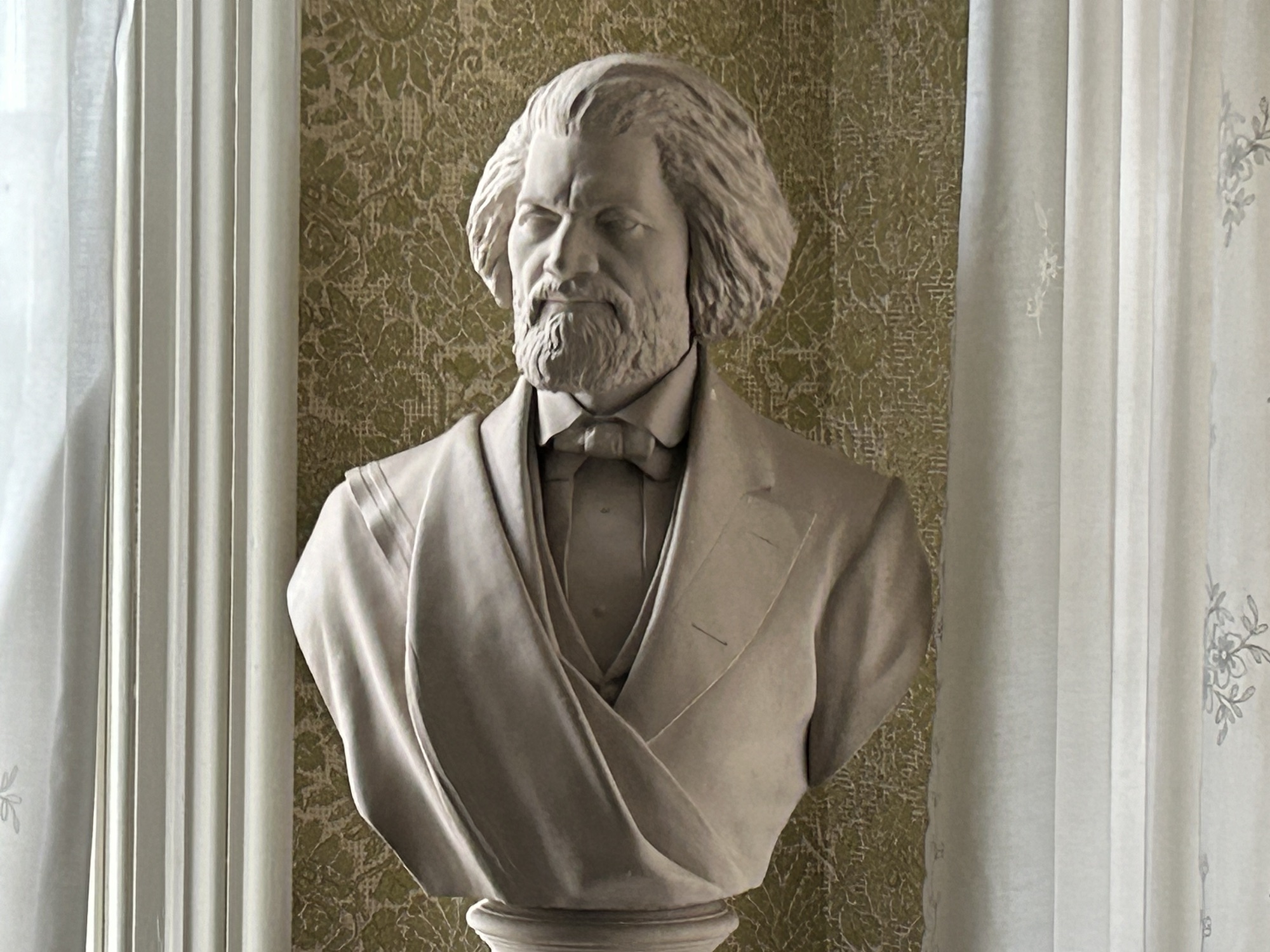
Frederick Douglass National Historic Site

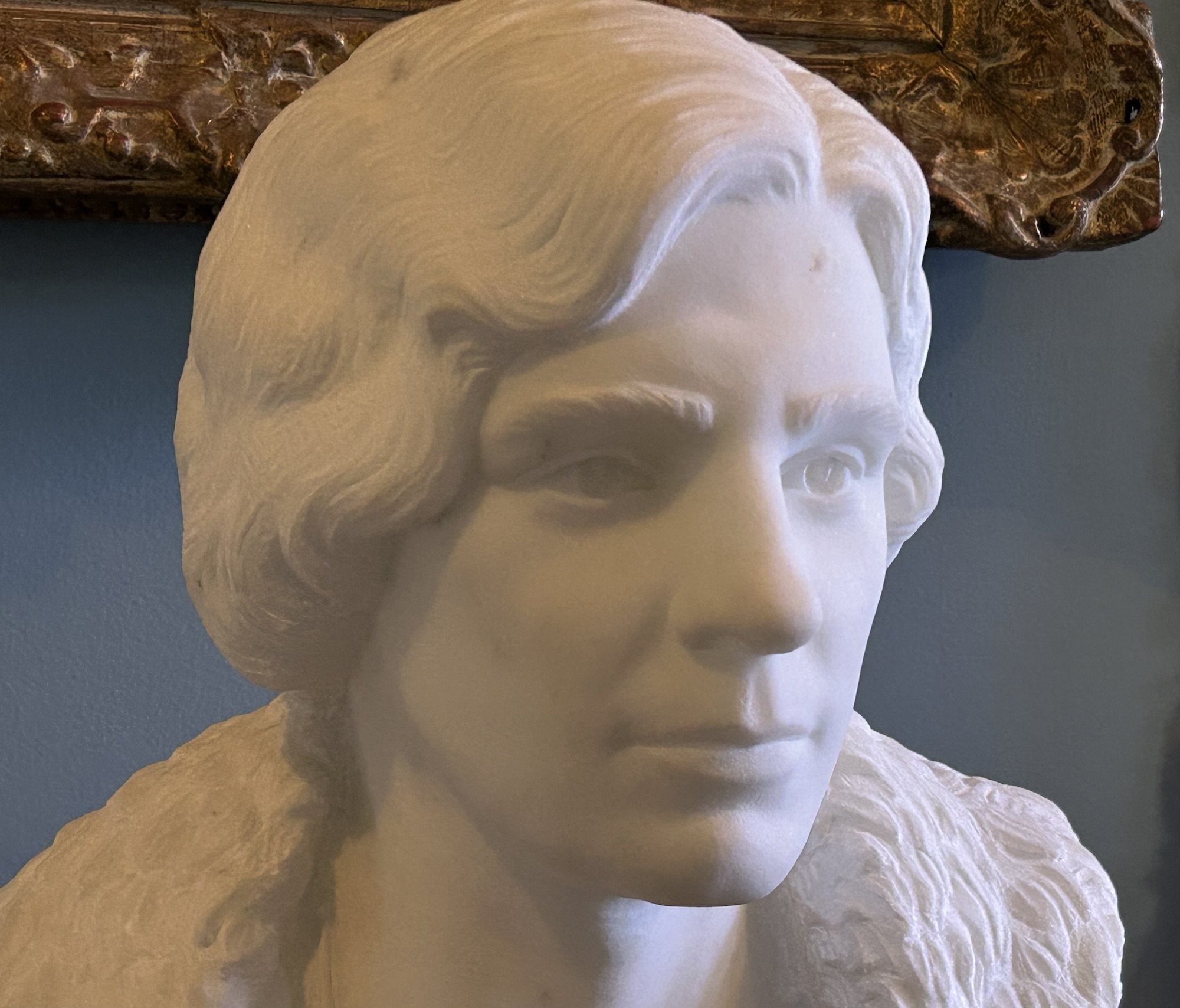
[Update] On my third visit, the site was open after renovations, and the tour allows unique insights into his life. Through hard work, intellect and moral courage, Frederick Douglass became renowned author, public speaker, publisher, adviser to many presidents, US Marshal of DC, diplomat and civil rights leader. He purchased his home on one of the highest hills in our nation’s capital, with a grand view of the Washington Monument. The neighborhood is now historic, and the surrounding area is predominantly African American, some descended from the Civil War refugees who lived in camps near the city for protection. Douglass was cognizant of the lack of African American role models when he was young, so he consciously presented himself well, and gifts like his bust above were meant to inspire another generation of leaders.

Douglass taught himself to read, escaping slavery around age 20, with the help of a free black woman he then married, fleeing to New Bedford where he soon joined abolitionists and his story is published. Pursued by slave hunters, he flees to England, and returns when donors purchase his freedom. He publishes an influential newspaper that supports both abolition and women’s suffrage and several books. During the Civil War, he advises Lincoln and urges African Americans to join the army. After the war, he buys his beautiful home on Cedar Hill overlooking our nation’s capital and continues writing books, public speaking and advocating for human rights. But, perhaps to recall his roots and to inspire him, he did much of his writing in the rough outbuilding—called the Growlery—behind his house, pictured above. Among his many accomplishments, he is often remembered as one of America’s greatest orators.

“Power concedes nothing without a demand.
It never did, and it never will.”

Frederick Douglass

Here are my visits to all parks in the District of Columbia.

Kenilworth Aquatic Gardens

This DC park is managed by Capital Parks East, which includes the long riverside park and 12 mile bike trail along the Anacostia. In summer, this is likely the prettiest DC park, when the water lilies are in bloom. Once a commercial enterprise, the community now volunteers to maintain this beautiful “oasis in the city”, and I saw a dozen folks knee deep in the mud digging around among the roots. Outside of the water lily ponds, there are wetlands accessible by boardwalk. I saw a Great Blue Heron, sandpipers and various warblers, and the water is also full of life.

That this park exists is a bit miraculous. The area was a failed tobacco plantation, a failed port, a failed reclamation project, a failed industrial zone, a failed housing development, a failed country club, a dump, and a Hooverville of WWI veterans who were removed by the Army after asking for their promised bonus, which failed.

The water lily business was the most successful, with species from all over the world. Civil War veteran WB Shaw and his daughter Helen Fowler ran it in the ‘20s and ‘30s. The wetlands are now seen as critical habitats that keep the river healthy. Freshwater mussels now clean what was once a terribly polluted river. African American community leaders like Rhuedine Davis and Walter McDowney recreated the gardens and taught kids to love nature’s beauty. We owe them all a great debt.

Here are my visits to all parks in the District of Columbia.

Greenbelt Park

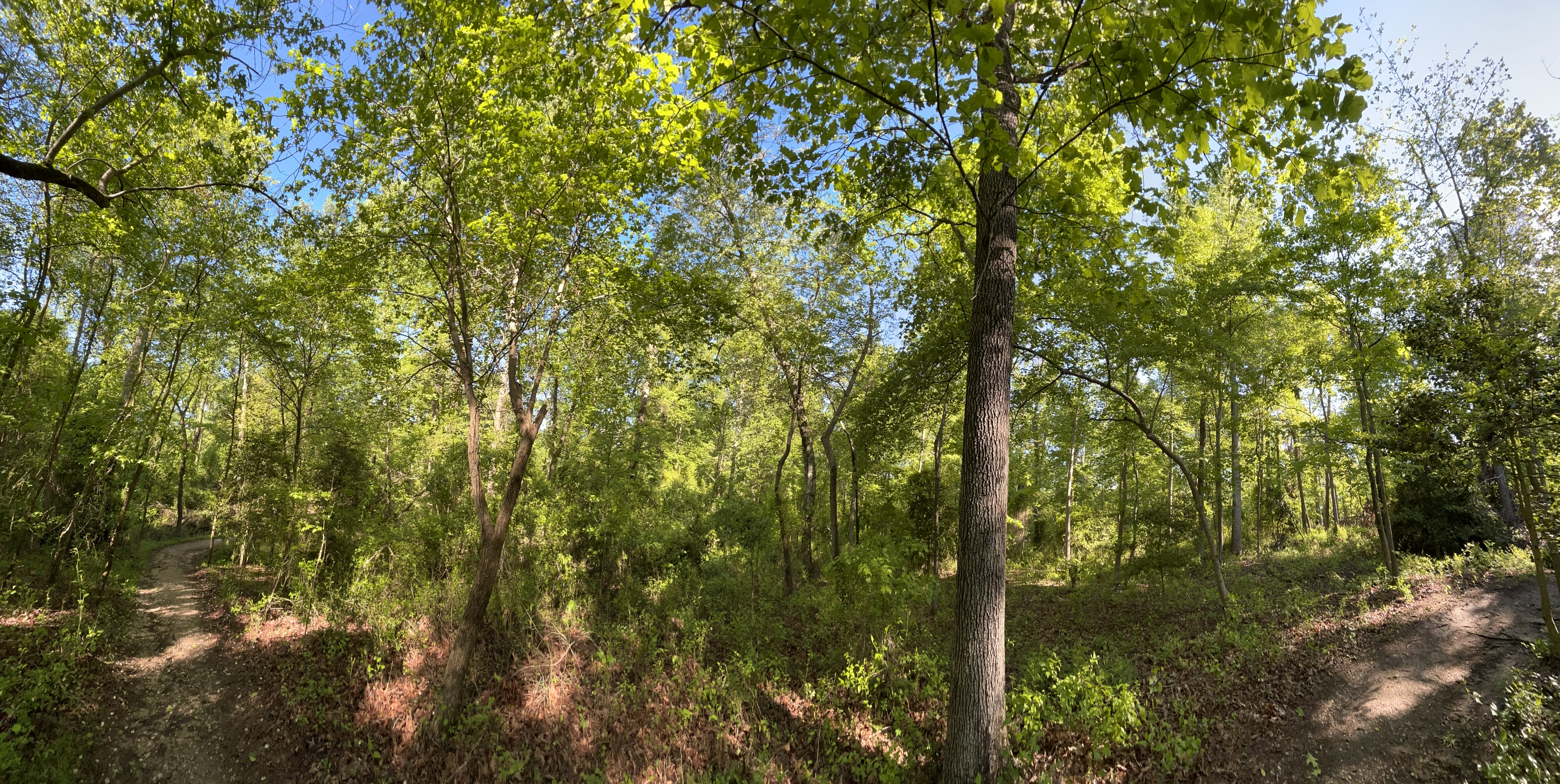
This pretty, wooded park lies within the beltway just across the DC border in Maryland. The photo above is on the Dogwood trail. There are 172 camp sites open year round, and it’s only 10 miles or so to the Washington Monument. The nearest Metro is UMD/ College Park, about a 2 mile walk. Due to the unusually high winds recently, there were a number of downed trees, but the trails were all clear.

Here are my visits to all parks in the District of Columbia.

Harriet Tubman National Historical Park

Harriet lived in Auburn—when not on the road—from 1859 until her death in 1913. The photo above recently discovered locally is the youngest one on display here. One local visitor said that his grandmother used to visit her and sit in her lap, and he brought more photos. The long term docent, a Vietnam Vet, used to live in the Tubman house and helped lead the effort to raise money for the restoration. Tubman purchased seven acres here from William Seward, of ‘Seward’s Folly’ fame, and a few of her belongings are on display—including her bed, bible and sewing machine—in the old folks home she managed here.

The park rangers are in town, while the home tours are run by the AME Zion Church, an official park partner. Until the operating agreements are finalized, the partner organization runs the majority of the park with a small devoted staff of around one, and the park service runs the church in town which Harriet attended.

I highly recommend reserving the tour, given at 10 and 2. I believe the docent’s name is Paul Carter, and he is both extremely knowledgeable and an excellent storyteller. For example, many of the visitors had heard about secret messages hidden in quilts that supposedly were used to give directions on the Underground Railroad. But there is little to no evidence of this, and logically it isn’t clear how these messages would have been understood by plantation slaves.

When Harriet was seven, she was spotted eating a cube of sugar, which meant being whipped mercilessly. Instead, she hid for days in a pigsty, fighting for scraps to eat. As a teen she received the head injury which caused a type of epilepsy that she interpreted as giving her visions. This was in Maryland, where she feared being sold down to the Deep South where conditions were much worse.

Keenly aware of the brutality and deadly reality of slavery, she began organizing escapes for herself and her relatives. With support of Abolitionists on the Underground Railroad, she became its most legendary conductor, personally leading 13 missions of hundreds of miles from plantation to Canada on foot, often crossing the border near here, rescuing 70 directly, more indirectly and losing none. She gave away her own money, spoke to Abolitionist groups, and raised money to end slavery. During the Civil War she spied behind enemy lines and led troops into combat rescuing many hundreds more. Later in life she spoke in support of women’s suffrage, with her friends Frederick Douglass and Susan B. Anthony. This iconic American hero stood less than five feet tall, and she more than deserves her place on the $20 bill.

If you hear the dogs, keep going.
If you see the torches in the woods, keep going.
If there’s shouting after you, keep going.
Don’t ever stop. Keep going.
If you want a taste of freedom, keep going.

Harriet Tubman

Here are my visits to all parks in New York.