Ozark National Scenic Riverways

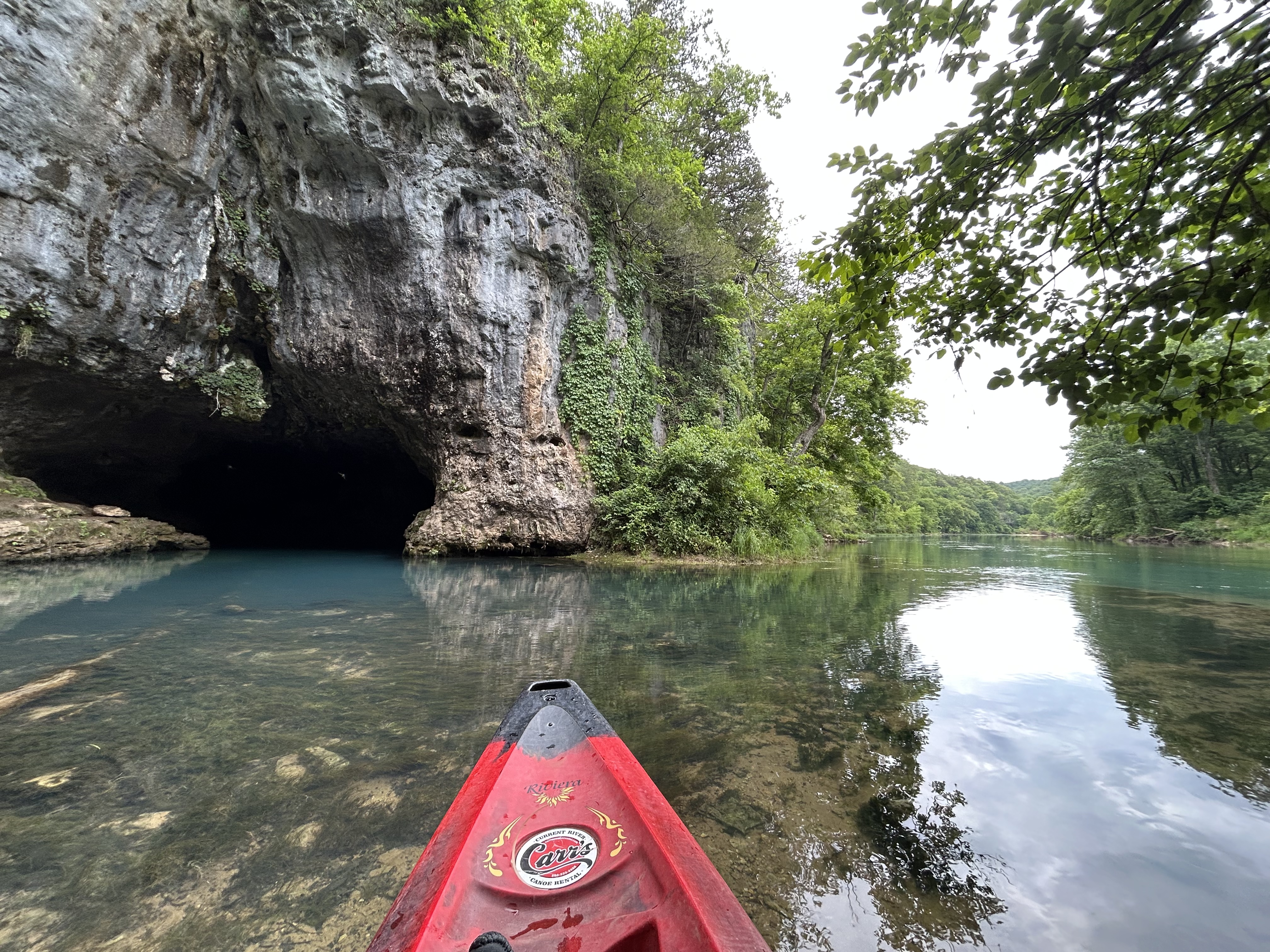
Nature requires pristine conditions to sustain diverse species, and here they exist undiminished. Cave Spring above is fed from Devils Well, a huge underground lake in a Karst cavern 100’ below the surface. The water is so clean and cold that bright green watercress grows in thick clumps underwater. I saw baby swallows above the cave mouth, baby ducks following their mother down the rapids, a river otter, great blue heron and bald eagles. The air was thick with mayflies over the water and butterflies on the wildflowers. Lovely.

Carr’s, aka Current River, offered to provide their equipment for the same price as a shuttle, so I paddled from Akers Ferry to my campground at Pulltite. There’s tubing downstream, but when the water is high enough, upstream is more scenic. There’s an excellent cave tour at Round Spring where I saw cave salamanders, but tickets are limited. The other river in the park is the Jack’s Fork, and there’s a scenic mill at Alley Spring where I saw baby skunks. The largest spring is unimaginatively called Big Spring, and it’s strikingly beautiful with hundreds of millions of gallons of aquamarine water pouring out of the rock daily. Blue Spring is one of the deepest in the world, but I didn’t have time to explore everywhere. This Missouri park is my favorite for kayaking, so I’m planning on returning to paddle another stretch soon.

Here are my visits to all parks in Missouri.

Big South Fork National River & Recreation Area

The Big South Fork is a 76 mile tributary from the Cumberland Plateau in Tennessee that joins the Cumberland River between Cumberland Falls and Lake Cumberland in Kentucky. The Falls are the second largest east of the Rockies and are the best place to see a moonbow on this side of the planet. Unfortunately, Kentucky has a littering problem, so Cumberland Falls State Park is also a place you will see trash in and along the river.

The Big South Fork looked better when I kayaked from Blue Heron to Yamacraw above (Sheltowee Trace Adventure Resort has a shuttle). Non-native insects killed many pine trees years ago, so the forest has more hardwoods now. Pollution upstream still degrades the water, but Appalachia is recovering from the damage done by coal mining. Blue Heron campground made a good base to charge my car and explore the old mine exhibit there, even though the tourist rail line to town is under repair.

The gorges and remote roads make it difficult to get around, so I recommend paddling if there’s enough water. I saw a young deer and a bald eagle on the river and enjoyed looking up at the cliffs. The hiking is excellent too, and my favorite was hiking under the huge rock shelter behind 113’ Yahoo Falls. There’s also a large natural bridge called Twin Arches. The area is thick with trees, which makes it difficult to see all the geological features of the gorges, but the lush dense foliage gives the river a primordial feel, especially since I saw not a single person while kayaking.

Here are my visits to all parks in Kentucky and Tennessee.

Obed Wild and Scenic River

Lilly Bridge is down to the left from the Lilly Bluff Overlook above. There’s a short trail from the small parking lot, a medium trail down to the bridge and longer trails too. The timing didn’t work out for me, but in theory on weekends you can ask at the Lilly Pad Hopyard near the bridge to help shuttle you to a kayak launch or pick you up. There’s a 2 mile class II trip on Daddy’s Creek and several longer and more challenging trips on the Obed & Emory Rivers and on Clear Creek, all depending on river flow levels, of course, and understanding the limited put in/ take outs available in these protected waters.

The park film showcases the paddling, climbing, hiking and wildlife, with a Tennessee ‘mountain dew’ vibe, and the area feels remote, with hog hunting permitted in the area. Moonshine distilleries must have operated around here for centuries (which may explain why I prefer Tennessee moonshine to their rye whiskey). The US also secretly enriched uranium nearby in Oak Ridge for the Manhattan Project. It’s a lovely area, and I should have budgeted more time to visit.

Here are my visits to all parks in Tennessee.

Cape Hatteras National Seashore

There are three main outer banks—‘OBX’—islands in the park: Bodie, Hatteras and Ocracoke, from north to south. Each has a lighthouse: Bodie is currently open for climbing, Hatteras is tallest and Ocracoke is oldest. I brought my kayak and stayed at Oregon Inlet campground across from the Bodie harbor which has a kayak launch, but there was some construction, commercial traffic, and strong, cold winds in May. Also, since the islands are so long and thin, it’s easiest to see the main sights by driving the 70 miles, including the free vehicle ferry to Ocracoke.

Hatteras island is the biggest, with several year round towns and thousands of residents outside summer, when hundreds of thousands visit the OBX. The road gets damaged in storms, and wind often blows huge drifts of sand onto the road. Many of the residents have anti-Biden signs, which is counter intuitive, since he is trying to defend them from the Climate Crisis, which will steal their land, take over their businesses and even invade their homes. But they ignore the science, the melting glaciers and ice caps, the strengthening storms, the sea level rise and the increasing erosion. The lighthouse has already been moved many times. The OBX is one of the fastest growing real estate markets on the NC coast, worth tens of billions of dollars, even as homes are falling into the sea. Money appears inversely related to intelligence.

The delightful nature walk above is Springer’s Point Trail at the southern tip of Ocracoke nearer Cape Lookout, the northern tip of which can be visited by passenger ferry leaving from Ocracoke’s picturesque Silver Lake Harbor. There are some ‘banker’ (OBX) horses on Ocracoke, but they’re penned, not really wild.

Here are my visits to all parks in North Carolina.

All Parks in the Mid-Atlantic, Zero Carbon

I recently completed visits to all national park units in the Mid-Atlantic region by electric vehicle, including First State in Delaware, 4 in New Jersey, 5 in West Virginia, 13 in Maryland, 16 in Pennsylvania and 17 in Virginia. I have also completed all the NPS affiliate sites, national heritage areas and NPS run trails in the region. Parks that stretch across multiple states count in whichever state I focus more of my visit, and I pick a few favorites at the end.

New Jersey does not deserve all the grief it gets from NYC talk show hosts. Get off the turnpike; it’s scenic and interesting. Great Egg Harbor River is lovely, Morristown is historic, Paterson Great Falls is impressive and Thomas Edison is fascinating.

West Virginia is almost heaven. Harpers Ferry is one of my favorite parks and it hosts the Appalachian Trail HQ. The three river parks, Bluestone, Gauley and New—a National Park—, contrast the dangerous and polluting history of coal mining with the beauty of nature when given our protection.

Maryland may be a small state, but it is packed with parks from Catoctin Mountain, down the C&O Canal, past the Greenbelt, down to Piscataway, out to the Underground Railroad and all the way to Assateague’s seashore. It’s also packed with history, from Hampton & Stone, to Forts Washington & McHenry, to Antietam & Monocacy and Clara Barton.

Pennsylvania’s parks are historic. There’s early US history at Fort Necessity, Hopewell Furnace, Independence, Kosciuszko, Valley Forge and Friendship Hill. There’s transportation history at Allegheny Portage and Steamtown. There are imagined terrors from Poe, and real terror at Johnstown Flood and Flight 93. There’s Gettysburg, where Eisenhower lived. There’s a new unit, Carlisle Indian Boarding School. And there are the Gap, Middle and Upper parts of the Delaware River, first explored by Europeans in the 17th century, who traded with the natives who lived here for millennia.

Virginia has the first British colony (see photo) and the birthplace of our first President. Many of Virginia’s parks are Civil War battle sites, including Manassas, Cedar Creek, Fredericksburg, Richmond and Petersburg. Others relate to slavery, the end of the war & civil rights, including Arlington House, Fort Monroe, Appomattox, Booker T. Washington and Maggie L. Walker. I enjoyed driving Shenandoah’s Skyline Drive, the Potomac Heritage Trail to Prince William Forest and the GW Parkway on my way to Wolf Trap. Virginia is for park lovers.

My favorite parks in each state are First, Edison, Harpers, McHenry, Independence and Colonial, but your favorite parks should be based on your interests.

New River Gorge National Park & Preserve

The bridge over the gorge is huge; it’s one of the highest in the world and the largest single arch bridge in the western hemisphere. I took some nice pictures of it, when I drove the old Fayetteville Station Road and crossed on the old one lane bridge. Some of the commercial raft trips end there, and it’s fun to watch them take their last rapid. The most crowded part of the park is the Canyon Rim Visitor Center near the bridge, where many folks stop to have ice cream or picnic.

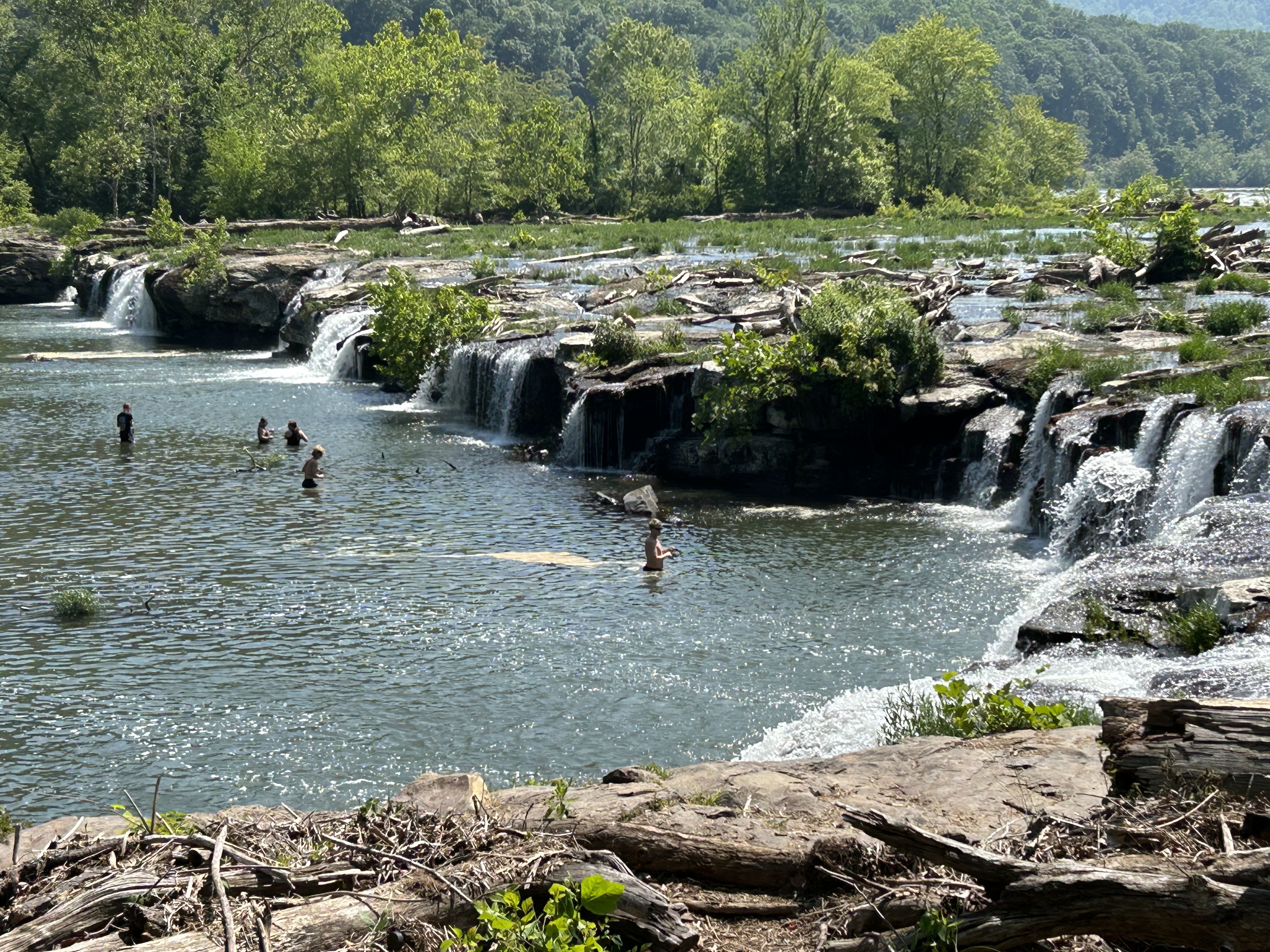
But the bridge is not the point of the park. The New River watershed is huge and very old. It starts in North Carolina near the Blue Ridge Parkway, includes the Bluestone and Gauley scenic rivers, and flows up to the Kanawha which is a major tributary into the Ohio River. The photo above shows folks fishing at Sandstone Falls, far upstream of the famous bridge. It’s a lovely spot with plenty of birds, an easy hike and a boardwalk.

The point is that the whole area was ruined by coal mining. This was the land of John Henry, if you know the old song about a railroad tunnel dug here. Now coal is more expensive than renewable energy, and many of the mines here have closed, becoming ‘exhibition mines’—fascinating tour in Beckley—, historic sites or slowly forgotten. A few coal trains still run through the gorge, but the park is now protected and recovering. Tourism generates more income and jobs now, and West Virginia is one of the most beautiful states in the US. The park is proof that we can change and improve. The point is that we can choose to save nature, instead of destroying it, and that it’s never too late to start trying.

Well every Monday morning
When the bluebirds begin to sing
You can hear John Henry a mile or more
You can hear John Henry’s hammer ring, Lord, Lord
 You can hear John Henry’s hammer ring

—A folk song

Here are my visits to all parks in West Virginia.

Bluestone National Scenic River

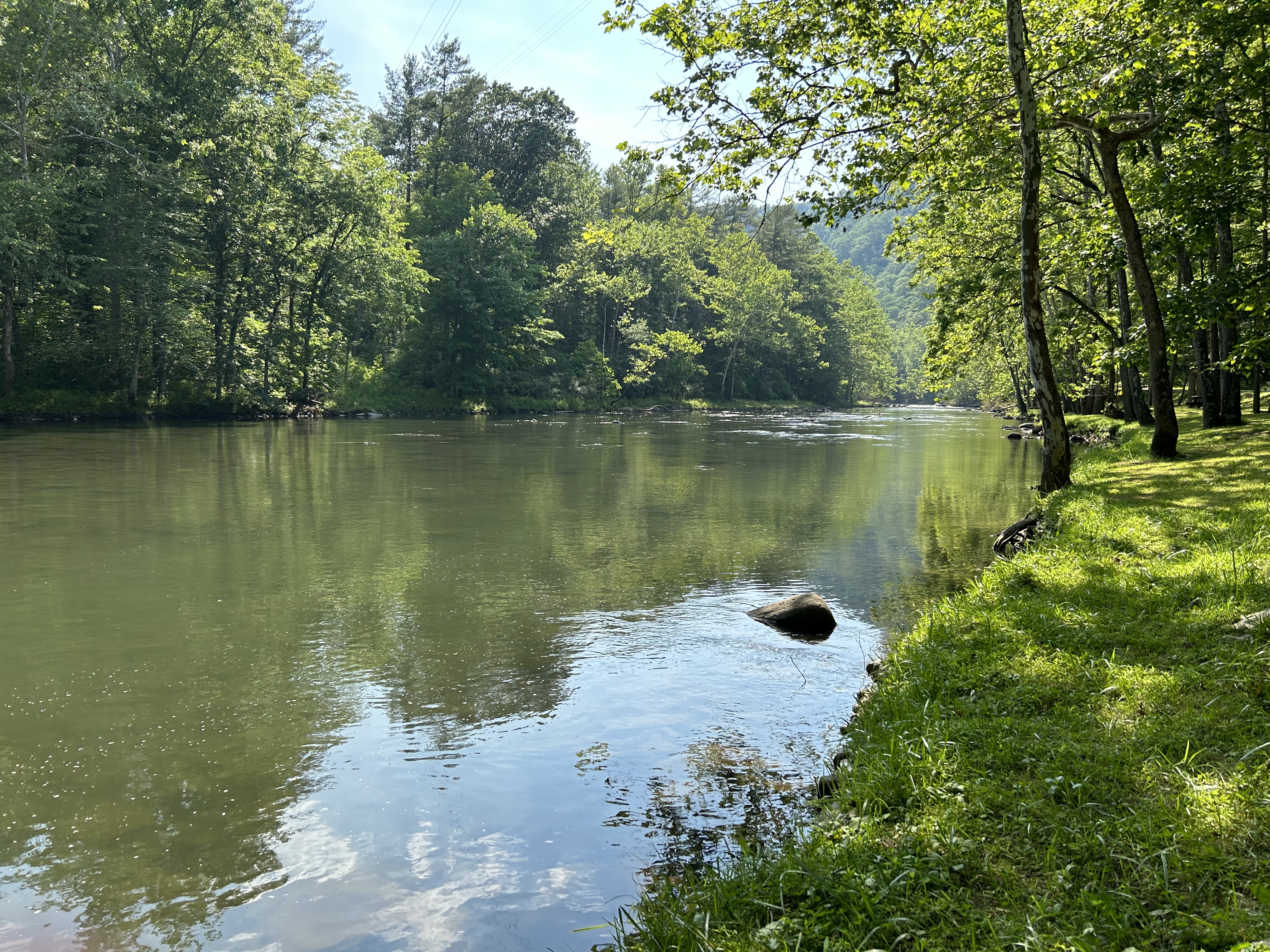
Like Gauley, this park is managed by New River Gorge and is best visited by going through a state park. Pipestem Resort State Park has a aerial tram which runs on weekends and more often in summer, and—even though it runs on gas—I recommend it as the best way to get down to the river 3,600’ below. (Look for the old moonshine cave on the way back up). Then you can hike along the beautiful river trail (see above) for as long as you like. West Virginia is wild and wonderful, and this particular river is simply stunning.

Here are my visits to all parks in West Virginia.

Gauley River National Recreation Area

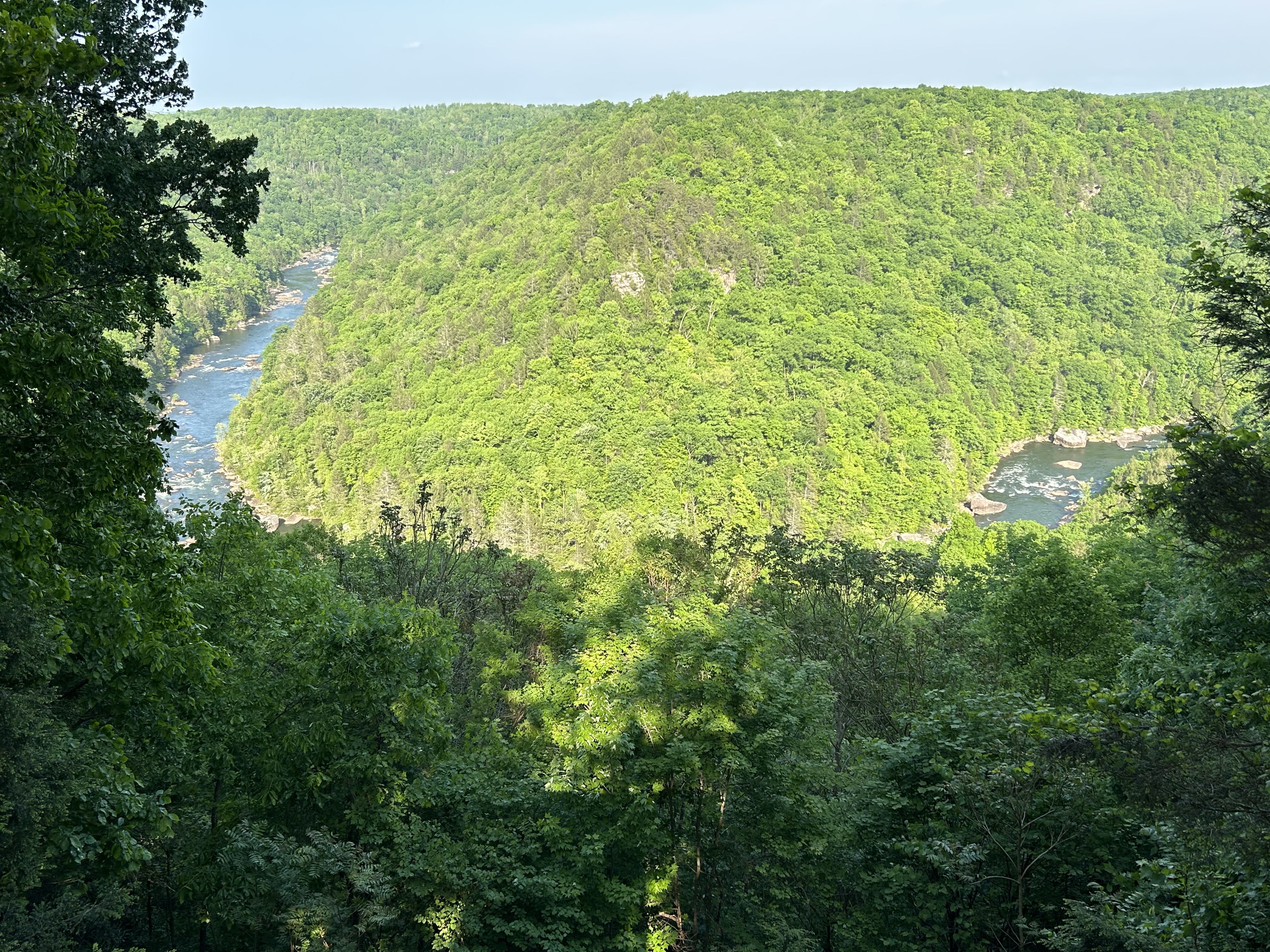
Upstream is the large Summersville Lake, which is drained each fall, creating a spectacular world class 25 mile whitewater kayak run for a few weekends through these woods and around the Pillow Rock Rapids bend above. The rest of the year, the West Virginia park belongs to the wildlife, without any significant visitor facilities and few easy access points. Information on hiking trails is available at New River Gorge nearby.

Obviously the whitewater is above my skills even if I waited until September, so I just decided to admire the views and hike in the beautiful woods. The best place for that is not the park campground—which is just a parking lot and kayak launch at the base of the Summersville Dam.

The place to go is the Carnifex Ferry Battlefield State Park—which commemorates the Civil War Union victory that helped drive the Confederacy out of western Virginia eventually leading to the creation of West Virginia. This is where I took the photo above, and where I walked into the park on the old ferry ‘road’ or trail. The state park is day use only, but it has nice facilities, beautiful lawns and a monument.

Here are my visits to all parks in West Virginia.

Coltsville National Historical Park

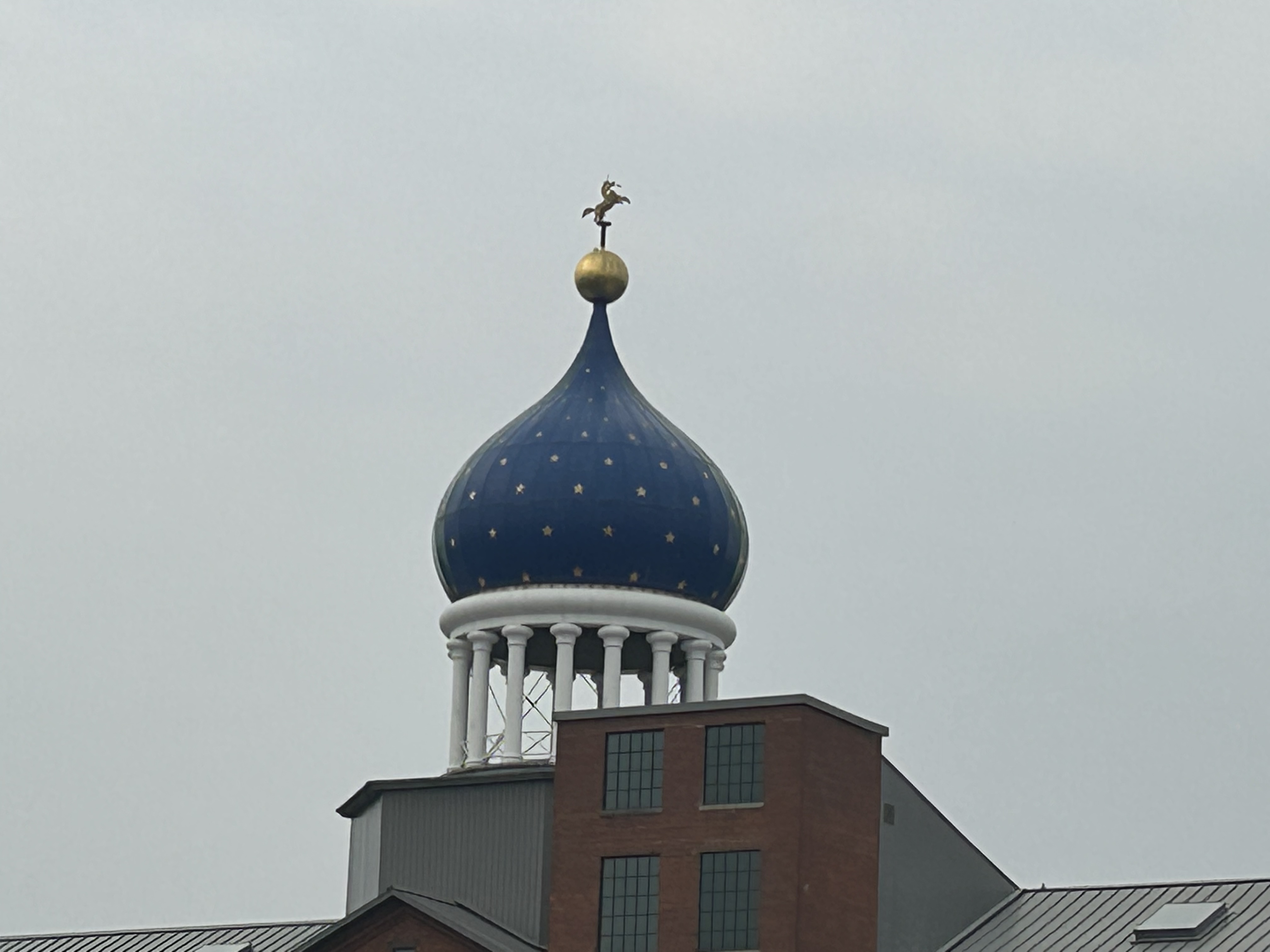
Samuel Colt sold a lot of guns to Russia, one of their first major clients, so he built the original iconic onion dome that defines the Hartford CT skyline (the one above is a replacement after a fire). You may notice the “rampant colt” on the top, which symbolizes loyalty, as the animal is breaking a lance to defend its fallen knight. The dome is actually one reason for the delay in converting the park to full status, as leaseholders control access to the dome which the park service needs. The two original brick buildings that the park service owns are in dire need of restoration too. There’s a nice walk through the large recreational Colt park to find his estranged brother’s house and through the company town to a church commissioned by the widow Elizabeth Colt, who ran the company for decades. Until this park opens officially, you may want to visit the Springfield Armory to learn more about the development of guns in the Connecticut River Valley.

Here are my visits to all parks in Connecticut.

Statue of Liberty National Monument

My remaining parks are fewer and far between, so starting today I’m posting every other day.

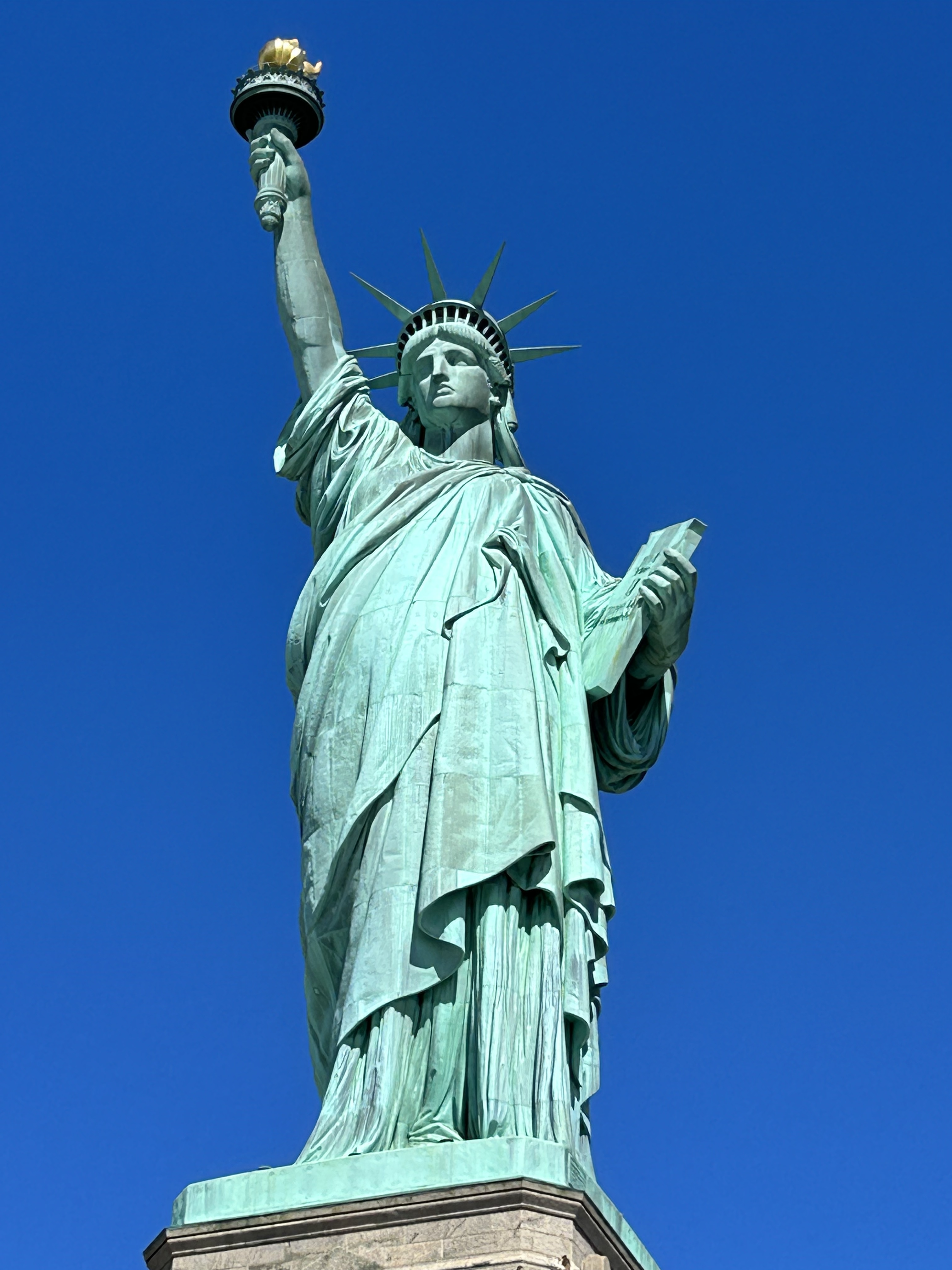
Yes, I took the ferry. No, there is no other way to visit. As a reminder, I have two goals: first to visit the parks without using any carbon fueled vehicles and second to enjoy the parks even if that requires brief carbon vehicle use. So I arrived in NYC by car, walked to Castle Clinton—which is an official Statue of Liberty park office (stamp available)—, and then took the ferry. I wasn’t going to skip it, as it is my favorite iconic park.

I’ve been here before, as a boy, a tourist, with my kids, and now on my own. As usual, some folks visiting from abroad ask me to take their photo, since this World Heritage Site is the highlight of many trips to America. For 62 years immigrants came past the statue on their way to Ellis Island, now a fascinating part of the park. America, an immigrant nation, welcomed them to this huge city in this grand harbor under Lady Liberty’s torch, young and old, rich and poor, from all parts of the globe. Now, together in the city, we share cuisines from around the world, and we learn to overcome the petty ignorance that must never separate us.

“Not like the brazen giant of Greek fame,
With conquering limbs astride from land to land;
Here at our sea-washed, sunset gates shall stand
A mighty woman with a torch, whose flame
Is the imprisoned lightning, and her name
Mother of Exiles.”

Emma Lazarus, “The New Colossus”, 1883

Here are my visits to all parks in New York.