In 1950 a group of black students were denied admission to the then white school above (now a middle school in a predominantly African American neighborhood). At the time, black schools were severely overcrowded, while white schools had plenty of empty seats for students. Integration was proposed to make education more fair. A law professor at Howard University sued the DC school board president on behalf of one of the students, Spottswood Bolling, pictured to the left of the old entrance above. Bolling v Sharpe became part of the landmark Supreme Court case Brown v Board of Education. This park is affiliated with Brown v Board NHP in Kansas, and it is the only NPS affiliate site in DC.
Alaska awaits, but in the meantime, I have visited all 4 National Parks and 16 park units in the Pacific Northwest region, plus 2 heritage areas, 1 affiliate, trails and biospheres. Part of the Manhattan Project NHP is in Washington too.
The four national parks all contain snow capped volcanoes. There are fossil, cave and geologic sites, 3 lake recreation areas, and many fascinating historic sites to enjoy. The region is beautiful, with rugged coastline, forests, mountains and wildlife.
Around 200 years ago, America was expanding the National Road (US 40) westward to St Louis and needed a bridge across the Ohio River. It took a couple tries, but the stone suspension bridge in the foreground was completed in 1859. The modern bridge behind it has four concrete bases, but the Wheeling Suspension bridge has none. Most traffic from the Midwest to the Mid-Atlantic passes on I-70 over the background bridge, so you may have seen Wheeling’s longest operating suspension bridge out your window between Ohio and West Virginia.
The city of Wheeling is marvelously uncrowded with small shops and restaurants around Centre Market in the historic center of the heritage area. It’s the kind of ‘stuck in the past’ place that I love, where the sign on the old bookstore advises folks to ask at the local bar if the owner is not inside his store. They have music, boating and cultural events, and they could use a few tourists pulling off the interstate to buy a hot fish sandwich at Coleman’s Fish Market below. Recommended.
How fast do you have to drive to average 60 mph across a one mile bridge if you drove 30 mph on the first half? 90 mph?
No, it’s impossible, because you ran out of time driving the first half.
Even rational thinkers can fail to take into consideration all the relevant real constraints when solving problems. Frequently, time is ignored. Rational thinkers can also suffer from ‘analysis paralysis’ when they spend too much time gathering information and thinking without reaching a conclusion. Ignoring the limits of the real world results in elaborate fantastic theories, instead of solutions.
A common mistake, even among the well-educated, is to believe infinity is real. This leads to a lot of nonsensical beliefs and mistaken thinking. 2,500 years ago, a Greek philosopher named Zeno mocked the mathematical concept of infinity as failing to apply to the real world.
If an arrow is not moving at any specific moment in time (i.e. an infinitely small increment of time), then it is stopped and not moving. How does it continue?
If you have to reach the halfway point before you catch up to the slower runner ahead or reach the end of the race, then there will always be half the distance remaining if you calculate an infinite number of times.
Infinity is not real. Even when the concept is presented in calculus, it is simultaneously presented with the concept of a limit. That means that even the mathematical construct of infinity, designed to solve theoretical math problems, is limited. Take the infinitely repeating decimal 0.99999…. Your math teacher may have claimed that it was equal to 1, perhaps using a phrase like “for all intents and purposes”. But the only way that could be true, is if infinity is limited, which contradicts the meaning of infinity. Sure, it’s useful in math, but nothing in the real universe is infinite.
All matter and energy is limited to travel no faster than the speed of light, which is a measurable constant. There is a finite amount of matter and energy in the universe, expanding at a known rate over a known period of time. The universe is undoubtedly larger than humans will ever know, but it is not infinite. If there were an infinite amount of gold, then there would be gold everywhere. If there were an infinite amount of intelligent alien species, who could travel faster than the speed of light, then they would visit Earth every day of the week. If there were an infinite number of multiverses, then no less than one of them would contain a magical version of yourself who would instantly appear before you to disprove what I am writing now. It’s all imaginary nonsense.
The problem here is that humans have an instinctual fear of death, so we imagine an infinite universe or multiverse, which would allow for everything, everywhere, all at once. We hope to be reincarnated in an infinite future, to live forever in some afterlife set in a different dimension, or that there’s some alternate reality where our lives and our species do not end in death. Rather than take responsibility for our fragile existence and the real consequences of our fatal mistakes, we waste time dreaming about imaginary friends and foes, worlds better and worse than our own. How childish and irresponsible.
Rational thinking should be used to solve real world problems, within real constraints, such as limited time, resources and budget. Economic theories may point the direction, but since they contain unrealistic assumptions, they will not solve all real problems. Rational thinking requires real world accuracy. There will never be enough time or resources to solve every problem perfectly, but what time and resources we have to solve important problems should not be wasted on fanciful notions, daydreams or wishful, unrealistic thinking.
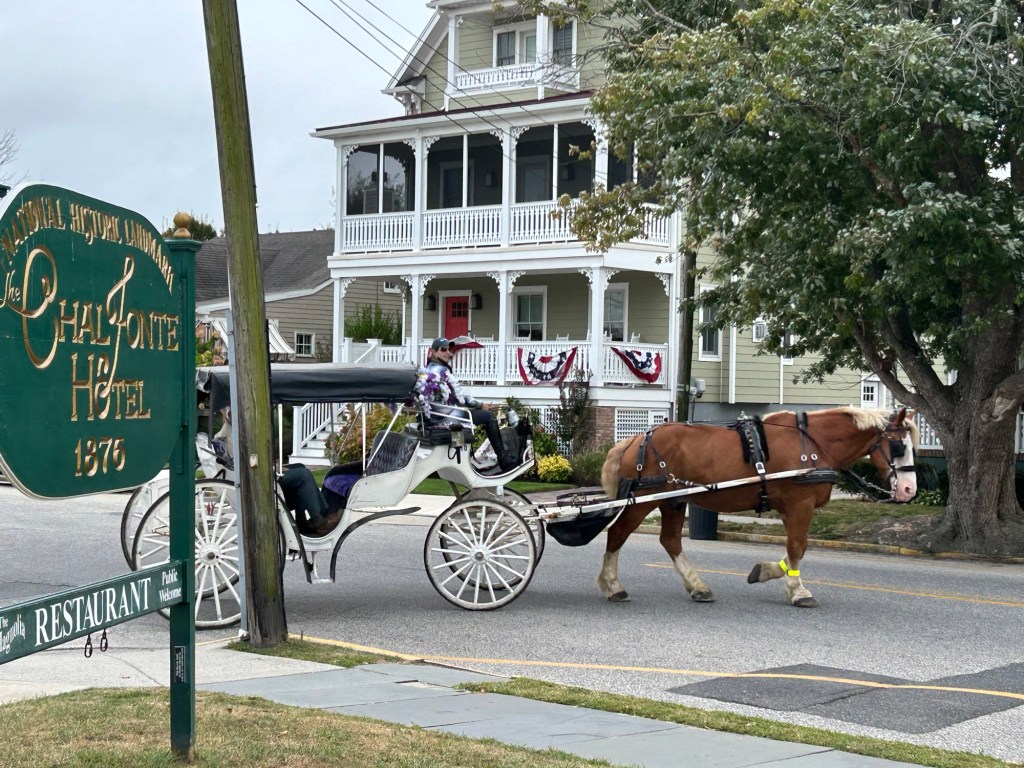
Before coming here, I wasn’t sure if this was an affiliate, a heritage area or a trail, but I thought a road trip along the NJ coast between Cape May and Sandy Hook, worthwhile. Cape May above is a lovely old town with Victorian style, boats and beaches. The Pine Barrens near Great Egg Harbor extend for miles. There are wildlife refuges, lighthouses, and historic sites, especially around the Battle of Monmouth, where Washington’s troops eked out a victory after training in Valley Forge. Locals freely admit that Seaside Heights is tacky, but much of the Jersey shore is both classy and trendy, especially in areas like Asbury Park. Technically, it turns out that this is a lapsed trail, that once partnered with the park service and was considered for heritage area status, which explains why it still appears as an obscure NPS site in a few places, but it is no longer authorized under the national park service. However, I’m glad my mistake and my curiosity about this area drove me here, and I enjoyed exploring this fascinating stretch of historic coast.
Jefferson is more controversial than his $2 bill, but like his nickel, you rely on his legacy every day.
Not only was he one of many who signed our Declaration of Independence in Philadelphia, but Jefferson was the primary author. Do you believe in freedom of religion? Jefferson ensured that Roger Williams’ ideas were enshrined in our laws, writing that “no man shall be compelled to frequent or support any religious ministry or shall otherwise suffer on account of his religious beliefs, but all men shall be free to profess and by argument maintain, their opinions in matters of religion.” His words are etched in granite in the Jefferson Memorial above in DC.
Jefferson was our second Ambassador to France after fellow inventor Franklin, the first Secretary of State, the second Vice President to his friend and rival John Adams, and friend of revolutionary patriots like Kosciuszko, Lafayette and Patrick Henry. Jefferson first engaged Dolley Madison as official hostess at the White House. Jefferson designed Monticello—below and on the back of the nickel—which is now a World Heritage Site that includes the University of Virginia, which he also designed.
But Jefferson will forever be remembered for his failure to apply his ideal that “all men are created equal” to all men including Native Americans and slaves. While he wrote that slavery was despotism, that slaves should be free and both admired and learned from Native Americans, Jefferson perpetuated both slavery and forced native removal, believing that their fated freedoms should be left to future generations to fulfill. Jefferson supported nullification—the supposed right of states to disclaim laws they did not like—, and such failures are why traitors like Jefferson Davis were named after him, and such failures forever defame Thomas Jefferson’s historic reputation.
Patrick Henry Jolly, a direct descendant of his namesake, greeted me at Red Hill (one of my favorite affiliate sites, above), where his ancestor is buried on a 1,000 acre estate in Virginia. We discussed Jefferson, a man infamous for his many long, bitter personal grudges, and I learned that Jefferson called Henry “the greatest orator that ever lived”. Speaking to Daniel Webster, a well known orator himself, Jefferson described Henry’s gift as being almost magical, delighting and moving him, even when he spoke in opposition to Jefferson, and yet Jefferson, a genius, thought, “what the devil has he said?”
Henry has been described by biographers as the Prophet or Voice of the Revolution, but the title that strikes me is Demosthenes, the greatest orator of Ancient Greece. Ogilvy, the father of modern advertising, wrote, “When Aeschines spoke, they said, ‘How well he speaks.’ But when Demosthenes spoke, they said, ‘Let us march against Philip’”. You may have heard a mistaken version of this quote with the Roman Cicero as Demosthenes’ rhetorical rival, but, of course, Cicero lived hundreds of years after Demosthenes, and attributed some of his success to adopting Demosthenes’ techniques and phrases. Patrick Henry, through his spoken words, ignited the hearts of our country’s founders to declare independence, prepare for war and give their lives and sacred honor for the cause of liberty against tyranny. And they recognized him for it contemporaneously. Jefferson said that “no man was as well suited for the times”, that he didn’t know what they would have done without Henry, and that he was “far before all in maintaining the spirit of the revolution.”
Of course, Henry accomplished much in his own right, including supporting George Rogers Clark and being elected Governor of Virginia five times. But it his speeches with many lines that still resonate today, especially his most famous speech 250 years ago—as a slave owner speaking to fellow slave owners—boldly stealing and reimagining a line from the play Cato, A Tragedy, that make Henry immortal. With Jefferson and Washington listening attentively, Henry convinced the Virginia Convention to fund troops in anticipation of the Revolutionary War, punctuating the final line by dramatically plunging his (blunt) letter opener against his chest. The letter opener was preserved by Patrick Henry Jolly’s family and is now on display at Red Hill.
“Is life so dear, or peace so sweet, as to be purchased at the price of chains and slavery? Forbid it, Almighty God! I know not what course others may take; but as for me, give me liberty or give me death!”
Rational thinking is work, which benefits from training and accumulated skill, but requires mental effort and discipline. There are specific tools and techniques designed for analyzing different subjects, and using appropriate techniques for your rational analysis is integral to achieve your end goal or solve your question. Education helps, but having knowledge or training is no substitute for doing the work of thinking logically and for applying logic consistently throughout your life. Occasionally over-trained people can be thoughtless and just go through the motions, rather than observe carefully and think through each important step. Over-thinking happens when you hesitate to follow through to your logical conclusion, especially when you are irrationally concerned with whether your answer is acceptable. Above all, rational thinking must be honest and accurate, with complete integrity, from beginning to end.
For many, simply making an effort to think rationally is an improvement over common instinctual thinking. Try to be dispassionate, ask yourself questions, observe the facts neutrally, see if you can get more information, use logic to figure out what’s going on, consider the probable outcomes, be skeptical and find ways to test to see if you are correct. Congratulations, Madame Curie, you are following the scientific method.
Many self-professed rational thinkers divide humanity by intelligence quotient. If someone is not rational, logically they must be irrational. If you’re rational, you’re smart. If you’re not rational, you must be stupid. This simplistic view of thinking is ignorant. Folks who cherish their loved ones, have strong bonds of friendship, work hard, and are well-liked in their communities, do not appreciate being called stupid. So, one step to improve rational thinking is to recognize that IQ doesn’t measure all ways of thinking and to realize that other ways of thinking are both valid and often more appropriate in different situations.
Even predominantly rational thinkers must be familiar with instinctual thinkers. While you were achieving in school academically, the instinct-driven majority likely did not make school easy for you socially. Were you “a nerd”? Did people criticize your hairstyle or fashion choices? As an adult, have you found yourself overseen by someone more politically adept than you? Meritocracy often eludes rational thinkers. Turns out that the attention to social cues, team dynamics and competition for status, which you might ignore, matter more than merely knowing the answer.
Also, it is not rational to feel smug about your IQ. Your concern with your status betrays your instinctual thinking. Perhaps calling others stupid is a childhood defense mechanism to the trauma of being bullied or ostracized as a nerd? Truly rational thinking is not driven by human emotions or primal urges. When a seemingly rational argument turns out to be driven by a deep-seated instinct, it may be false, deceptive and biased, and since it is not the product of rational thinking, then it is irrational (e.g. most political arguments).
Another error is to conflate knowledge with rational thinking. Memory is over-prized, and speed of recall is confused with intelligence. Nonsense. A good rule of thumb is that if you can do it in your sleep, it’s probably instinctual thinking, not methodical rational thought. I recall people, places, conversations and scenes vividly in my dreams, while being blissfully unconscious, and I might even talk in my sleep. Clearly, remembering or reciting facts is not proof of rational thinking, let alone consciousness. No, only when you have the intelligence to understand which facts are most relevant and actionable before offering a solution, have you demonstrated rational thought. I once aced a test without reading the chapter by glancing over my classmate’s notes two minutes before the test, even though she only got a B-. I understood the concepts better than her, knew what was important and accurately predicted the questions, even though she had memorized all the facts.
When the origin of your thinking begins in one way, then the results will likely reflect that way. You may believe you are thinking rationally, but if you began with a different way of thinking, your final report will probably reflect it. Even if you assert your rationality mid-process, you may have ignored crucial data or have already structured your approach to achieve a specific result. People walking by your desk watching you work on your spreadsheet believe you are thinking rationally. Your boss skimming your report believes it to be the product of rational thinking. But, if your motive is not rational, then your analysis will lack the integrity of accurate rational thinking.
Perhaps you are at work looking at the numbers on your screen as you usually do on Monday morning. You are not responsible for the data, there’s no risk to you, and if you were not being paid to look, you would not check them. You are detached and dispassionate. You do not care. But the numbers show a different pattern than usual. The change raises several logical questions, so you look into it. That is a rational way of starting to think.
Suppose instead that there’s a reason you decided to look into the numbers. Maybe the numbers are personal to you. Maybe a positive report will help a cause you support, or maybe the results will prove a pet theory you have that you feel deserves recognition. Perhaps the results show that your friend is not on track to meet quota, or maybe you are not. The boss is just looking for an excuse to embarrass you at the staff meeting this afternoon. In this situation, your instinct to protect your self esteem is likely driving your thinking, so you do not begin thinking rationally.
The method of thinking you use does not matter, if your thinking begins on the wrong track. You may employ advanced analytics, but if your driving goal is to support your cause, your report will not be entirely fair, which is not rational. You may write a book with charts, graphs and long-winded, elaborately structured arguments, but if it is done to support a figment of your imagination, then it is not rational. You may decide to postpone your analysis until after your boss goes on vacation tomorrow. You may believe that is a rational tactic to protect your personal interests, but it is instinct-driven thinking.
The most important step towards better rational thinking is to begin rationally. Are you too invested in the cause to be certain that your analysis will be impartial? Do you have a pre-conceived notion of what the numbers will show? Can you get control of your personal feelings and conduct the analysis rationally? You may need to ask a neutral person to do the analysis. You may need to find a rational way to eliminate your bias. Or you may need to grab a hold of yourself, be as professional as possible, and let the numbers speak for themselves.
That may be obvious to you at work, but can you be equally dispassionate when making rational decisions about yourself and your loved ones? I’m not asking you to suppress your natural instincts. Be aware of them, and control them. Then apply rational thinking to your problem honestly, without instinct biasing your beginning, with appropriate logical methods, to arrive at a sound conclusion with integrity. Then you can decide to do what you want, but at least you can be confident that your thinking is correct.
“Five percent of the people think; ten percent of the people think they think; and the other eighty-five percent would rather die than think.“






















 Zero Carbon Travel