Moravian Church Settlements—Bethlehem

This is a model of the Gemeinhaus or community house of the Moravians in Bethlehem, Pennsylvania, built between 1741 and 1743. The model is inside the original building, the largest 18th century log structure in continuous use in the US. There are several Moravian buildings from the same period in the historic district in Bethlehem, including housing for men and women, a pump house—the first municipal water system in the US—, a chapel, and a tavern, and all are now recognized as part of a UNESCO World Heritage Site that includes similar Moravian sites in the Denmark, Germany and the UK. Their school buildings are now part of Moravian University here.

The Moravians, a Protestant sect that predated Martin Luther, originally came from Moravia, now the Czech Republic, but their prime benefactor was a Saxon (German), Count von Zinzendorf, so their Bible is in old, low German. They created settlements around the world in order to do Missionary work, and in Pennsylvania, they were famous for their hospitality, music and for their early efforts to learn Native American languages and hold peaceful conferences with both native and colonial leaders.

The Gemeinhaus was multifunctional, especially before other buildings were finished, and one use was as an inn. The knowledgeable docent led me into the large simple chapel on the second floor, a music room with various instruments that predate the famed Bach Choir of Bethlehem, and explained various exhibits with original items, including fine silk needlework, kitchen items and more. While many of the later buildings are still in use by the University and as housing, the core building’s remarkable preservation makes this is an exceptional way to step back over 250 years into colonial, and early American history. But also walk around the fascinating historic town, which includes an 18th century Native American house.

But my favorite building is the Sun Inn tavern from 1758, where George & Martha Washington stayed, Sam Adams drank ale, and an impressively long list of revolutionaries met over many years. It seems likely to me that Ben Franklin would have met members of the Iroquois Confederacy here, along with Moravian translators, inspiring him to incorporate their ideas into his design of our US democracy which balanced the needs of both the states and the country. There’s no better way to experience history than to raise a glass to our founders in one of their favorite drinking establishments!

Everglades National Park

The southern end of Florida is home to Everglades National Park, which is also a UNESCO Biosphere and a World Heritage Site. Since 1900, the area has been both protected and threatened, with political battles needed to protect bird plumage, to create the park, and to protect the large, diverse ecosystem here. Marjory Stoneman Douglas wrote a book to explain how the Shark Valley River Slough runs as a “river of grass” through the Everglades. When summer rains fill Lake Okeechobee, a sheet of water overflows the low bank and floods the flat grasslands, revitalizing fish eggs and a whole ecosystem. A cross Florida road called the Tamiami Trail prevented that flow, and a political battle was fought to restore it partially. The fresh water eventually sinks through the limestone, filling the Biscayne Aquifer to provide drinking water for Miami. There are also canals crisscrossing lower Florida, including here, and that’s where these two young alligators were hanging out. Alligator Alcatraz, a temporary migrant detention center, is in the Everglades ecosystem, but it’s not in the national park. Alligator Alcatraz is north of the Tamiami trail in Big Cypress National Preserve.

The park is 1.5 million acres, including the mangrove islands that form the southern end of Florida, before the Keys. The best place to see the mangroves is by boat, either from Everglades City west of Big Cypress or by driving to Flamingo. I took my family to the latter, and we saw a large crocodile near the dock, plus much more wildlife on a quick cruise in the “submerged wilderness” of Florida Bay. Personally, I wouldn’t kayak these waters, but many people do, camping on the Chickees or raised bits of ground where natives camped seasonally and for different purposes for centuries at least. There’s even a paddling waterway to go between Everglades City and Flamingo. Before the highway was built out to Key West, visitors commonly took a similar route by boat.

The work of environmental protection is never done. Burmese pythons entered the park in the 1970s—likely as discarded pets—, and now they’ve wiped out most of the native animals, threatening the Florida panther with extinction. I was disappointed to see the dramatic decline in wildlife evident from the Shark Valley Tower, since I first visited decades ago and even since I visited again with my family not so many years ago. And since last year, the state government is not allowed to mention climate change, global warming or sea level rise, but that obviously won’t do anything to prevent rising sea levels from submerging much of southern Florida, including most of Miami and almost 1/2 the park in the coming decades. Especially if the government refuses to take action, climate science clearly shows that the environment will only continue to worsen more rapidly.

Redwood National and State Parks

After Yosemite’s magnificent waterfalls, stunning vistas and valleys, Redwood is quieter, with more solitude and an intimate closeness with the trees: less spectacle and more spiritual. This World Heritage Site is a marvelous place to get lost alone among giants, to reminisce as if traversing the great forests of Middle Earth. One of the young hikers strode in full Frodo costume, looking for Ents. As some of the trees living here predate all but the earliest human history, you can’t blame him for getting into the spirit. When Frodo first entered Lothlórien to seek Galadriel’s help, he spent his first night in a treehouse in a giant Mallorn tree. “He felt a delight in the wood and the touch of it, neither as forester nor as carpenter; it was the delight of the living tree itself.”

My favorite park for tall trees, the redwood forest is real and huge, so plan on hiking. The photo above is near Trillium Falls on a highly recommended 3 miles hike in the National Park from Elk Meadow near the south end of the park. I also walked from the Prairie Creek visitor center up to Big Tree—a Giant Sequoia—in the Prairie Creek State Park on the Knapp trail returning on the Cathedral trail on the other side of the scenic drive. There are several ways to do the 3 mile loop, as well as plenty of shorter or longer hikes from many trailheads, flat or up onto ridges or down to the coast. There are also tide pools, fresh water lagoons, beaches, mountains, camping, elk (I saw 12) and more. Best of all, it was 30 degrees cooler than inland in July. The coastal redwood forest is lush and beautiful, safe for now.

“Many of these trees were my friends.
Creatures I had known from nut or acorn.
They had voices of their own.”

—Treebeard

Yosemite National Park

In 1859 John Muir built a Sugar Pine cabin some yards from the spot above and lived in the Valley for 2 years. Sugar Pines can live 500 years, so the decades John Muir spent saving this valley are just a fraction of their long lives. Muir saved Yosemite, lost neighboring Hetch Hetchy to a dam, and influenced Teddy Roosevelt who ended up protecting 150 million acres of forests nationally. Now the park is a World Heritage Site too and my favorite for waterfalls. But in the near future, the crown jewel of John Muir’s legacy may still be lost forever.

Some species of trees still living here evolved in the Jurassic, long before the Chicxulub asteroid wiped out most dinosaurs and millions of years before humans arrived. Millenia ago, natives started fires for hunting and agriculture, and over a century ago, the timber industry clear cut forests throughout the Sierra Nevadas. But humans now present a threat bigger than any logging or dam. Now the threat is carbon pollution, which dwarfs all others, even logging. Fires burn hotter, more frequently and many times larger, because we have changed our planet’s climate dramatically—and it’s still getting worse. Species here, despite evolving 1000 times earlier than humans, are now threatened with extinction by our vehicle exhaust.

10 years ago, the 250,000+ acre Rim Fire burned over 10% of Yosemite, killing many Sugar Pines and Sequoias that had survived fires for centuries or millennia. At the time, it was the second largest fire in California history. Now it doesn’t even make the top ten. I visited the park with my family before that fire, and the park was undamaged. Now, the park is still beautiful, but it is still scarred badly, with many areas still closed.

Yosemite Falls should not be so glorious in the photo above taken in July. The snow should still be on the mountain tops, melting slowly over many months. Instead, every decade is warmer than the last and the rate of temperature rise in increasing. The Lyell Glacier that Muir saw in Yosemite has lost over 95% of its mass, no longer moves and will be gone in a few years. Man has messed up the climate, and many of the species, including the largest trees, can no longer live here safely. And it’s not the fault of Smoky Bear telling people to put out their campfires, it’s the fault of people who continue to drive gas powered vehicles. And yet the park is full of them, blithely surveying the damage they contributed to and continue to cause. If I were in charge of the park service, I would convert the shuttle buses to electric and ban all fossil fuel vehicles.

Olympic National Park

Even though the Hoh Rain Forest is on the far side of the park from Seattle, it’s popular in July, so I watched an otter playing in the water for half an hour while waiting my turn to drive through the gate to look for parking. (A parking map at the gate would save everyone time). The Hall of Mosses Trail above is easily hiked from the visitor center, and it’s impressive and definitely worth the trip. Several of the trees appear to be 1000 years old, and the streams are clear from spring water, where I saw tiny salmon among the bright green watercress.

There are some signs that the increased heat from carbon pollution is damaging some of the mosses, and while the overall annual precipitation has remained the same, it’s more concentrated in heavy downpours and less in the misty fog-drip that these sensitive plants require. The glaciers are also disappearing rapidly and will disappear completely in a few decades or less, severely impacting all the downstream ecosystems. Still, it’s my favorite park for moss.

Of course, Olympic also has mountains, including Hurricane Ridge and Mount Olympus, which feeds the Hoh and Queets Rivers. There’s a Hot Springs resort at Sol Duc and boating at Lake Crescent. The Olympic Peninsula also has Native American Reservations which help manage the coastal wilderness, wildlife refuge and marine sanctuary. For me, their crown jewel is their large temperate rainforest, but the other areas are also stunning. Some artists are painting the glaciers before they melt, but wouldn’t it be better if we all did our part to reduce our carbon footprints?

Glacier National Park

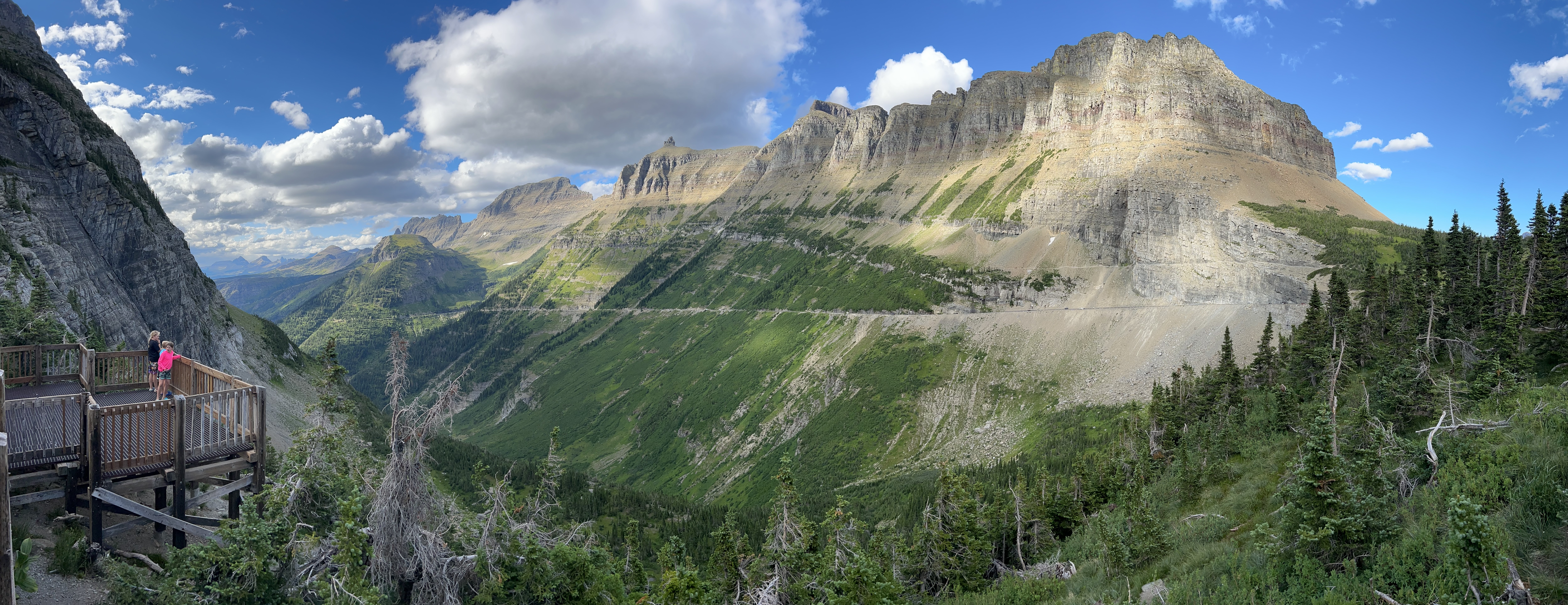
The horizontal line across the Garden Wall on the other side of the valley is the Going-to-the Sun Road, which I finally drove—3rd time’s the charm. This year the dramatically scenic road opened on 13 June with little ice & snow visible in July. Just over the wall in Many Glacier, old photos show the many large glaciers are now very small, rapidly melting glaciers. My son and I rode horseback up in 2018, and the area should be renamed Many Lakes. Combined with its neighbor across the border, Waterton Glacier International Peace Park is still a UNESCO World Heritage Site, despite the obvious melting problem.

Melting ice and glaciers are one of the tipping points that will flip our Climate Crisis into a catastrophe. Consider the Arctic ice cap. Every year recently, the multi-year ice has been shrinking at an accelerating rate. Eventually, the ice will disappear in summer. Then the same energy that currently raises ocean surface temperatures by 1° will raise it by a multiple of that amount. There are two reasons for that. First, the white ice will no longer reflect the sun. Second, the existing ice will no longer be there to act as a temperature break. When you boil water with ice, it takes something like three times the energy as water without ice, because most of the energy goes into melting the ice first. So, not only is it bad that glacial ice is melting due to flooding and dry rivers in the fall, but once the ice is gone, the surface temperature rise will accelerate much more rapidly. Please, reduce your carbon footprint.

Yellowstone National Park

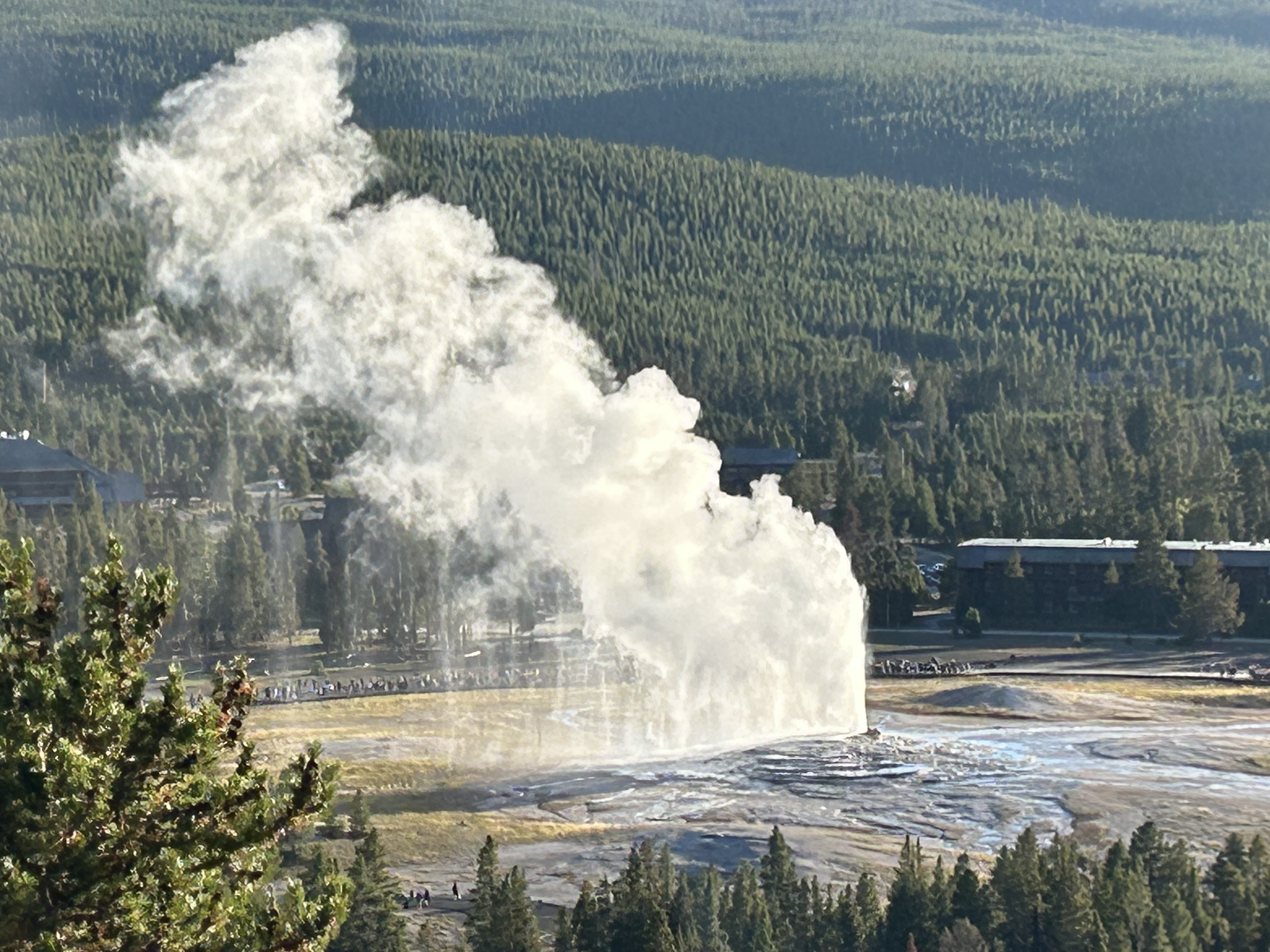
Clockwise from top: Morning Glory pool, Daisy, Grand and Old Faithful geysers.

Most of the world’s geysers are here, near the country’s largest high elevation lake and the headwaters of the longest free-flowing river in the lower 48, in a park bigger than some states. For wildlife alone, this is my favorite national park, plus the geysers are my favorite geologic feature in a park. There’s a lot to see and do, but I’m not going to write more about it. Come see for yourself.

All Frank Lloyd Wright World Heritage Sites by EV

UNESCO chose eight Frank Lloyd Wright sites for World Heritage status, and I visited them all this year by EV. An exhaustive tour of Wright’s designs could visit 100 sites, but the Heritage 8 are sufficient for me. My cross country trip went from Hollywood, to Arizona, Wisconsin, Chicago, Pennsylvania and finally to New York, but it’s easier to understand his life’s work below chronologically.

His home and studio in Oak Park Illinois showcases his various styles, influences and experiments, including his first design: his own home. While this is the one site I visited that is not on the World Heritage list, just walking the neighborhood is worth the trip.

Unity Temple in Oak Park in 1905 is a church built for his mother.

Robie House at University of Chicago in 1910 is my favorite, built for a wealthy client who only lived in it briefly.

Taliesin in Spring Green Wisconsin in 1911, later rebuilt after a dramatic tragedy, used funds from Robie to build a family country home with a school for his acolytes.

Hollyhock House in Hollywood California in 1921, was built for a theatrical oil heiress who fired him for going over budget.

Fallingwater (above) in Mill Run Pennsylvania in 1937, is his most iconic private residence, built for a wealthy department store owner whose son gave it to the park service.

Taliesin West in Scottsdale Arizona in 1937, used funds from Fallingwater to build a winter home with another school for his acolytes.

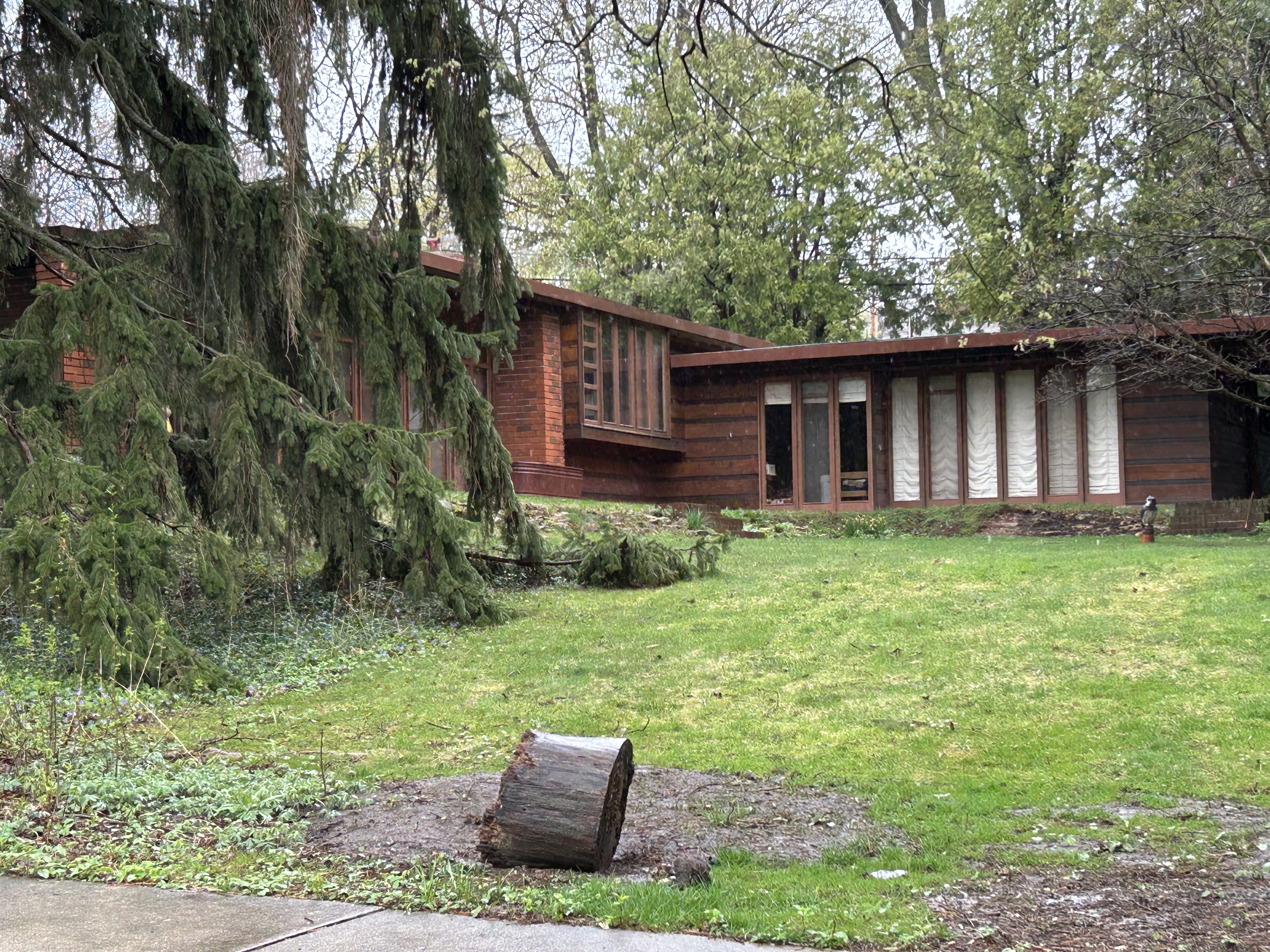
Jacobs House in Madison Wisconsin in 1937, was built to demonstrate that Wright could design something affordable on a budget.

The Guggenheim in New York City in 1959, was built to display art and to be art, for the future.

I hope you enjoyed this brief tour of 50+ years of the most widely recognized designs from America’s greatest architect.

Guggenheim

This is a World Heritage site, not a park site. The Guggenheim Museum in NYC is Frank Lloyd Wright’s final masterpiece completed after his death. Solomon Guggenheim was a guest at Taliesin. I first saw the architectural plans at Taliesin West, where I also noticed a nautilus. And the structure also reminds me of the curved, descending covered walkway that connects Fallingwater to the hill. The circular ramp is iconic, and perusing an exhibit called Measuring Infinity while slowly descending is delightful.