Beaver Hills Biosphere

This large UNESCO biosphere near Edmonton Alberta includes Elk Island National Park, which has hundreds of plains and wood bison. But Elk Island is fenced, so, as important as that park is for restoring the bison population, I came to see beaver. And on the Beaver Hills Biodiversity Trail, I saw several large beaver dens, like the one above.

Beaver are quite destructive, and their homes are surrounded by felled and drowned trees and pointy stumps. But they also create year round dens and dams with ponds and small lakes for many other species. Besides the many waterfowl, blue dragonflies, and chattery squirrels, I saw a magnificent golden eagle circle above the pond. And of course, I saw five or six beaver, swimming far from their dens, playing and occasionally climbing on branches to dry off, scratch or hang out.

When humans create zoos, safari parks or even national parks with fences, it’s not right to call the enclosed animals ‘wild’. Some may have been born wild, but as long as they’re locked up, they’re no longer wild animals. Humans make the rules in those spaces, so, no matter how we try to copy nature, the spaces are artificial. But when beaver fell trees, build dams and create lakes, they make the rules. And the species gather there naturally. Beaver Hills is a natural area, filled with wild animals, and it is delightful to pause here and take in the peaceful balance of life.

Redberry Lake Biosphere

I saw ducks and geese in the thousands, a flock of whooping cranes, a pair of sharp-tailed grouse, and many other birds, but they kept their distance from me. Saskatchewan has many lakes, and occasionally one will be full of birds. I also saw a young moose walking near the road, and there were bison behind fences. Since I was there during harvest, I could see the giant combines gathering grain. The self-guided driving tour gives several suggestions for exploring the area, which is mostly farms and First Nation communities. I believe there’s a visitor center opening soon.

The lake is at the center of a UNESCO Biosphere Reserve, but there’s also a popular state park camping and recreation area. So there are RVs, cabins, a beach below with a playground, mini golf, a golf course, a boat launch and even a few JetSkis, which hardly seem compatible with an internationally important bird refuge. Humans have trouble sharing our world with all the other species.

Historic District of Old Québec

Québec is my favorite city in North America. I love New Orleans, Philadelphia and San Francisco, but there’s a certain je ne sais quoi. Probably the food. UNESCO may have picked it as a World Heritage Site due to its history, architecture, culture, beauty, fortifications, statues, parks, narrow old streets, churches, magnificent vistas, harbor, citadel, Haute-ville, Basse-ville, museums, galleries, Parliament, battlefield, archaeological discoveries, and all the rest, but it’s really the food.

Although the funicular (above) is fun too, and the old shopping district is colorful, amidst several fine restaurants. There always seem to be festivals in all seasons, concerts, and other excuses to try something new to eat or drink. If you want to get out of the city, you can go to Île d’Orléans, by bridge from the north side of the Seaway. They have farms, berries, cheese, bakeries, jam, chocolatiers, wineries, cideries, sugar shacks with maple syrup treats, and a microbrewery. Basically, much of what you eat in Québec City is from the island. As much as I enjoy going around shops and stands there, I prefer leaving all the work to each restaurant’s wait and cook staff, so I order many different dishes and sample the best of everything. Bon appétit!

Rideau Canal

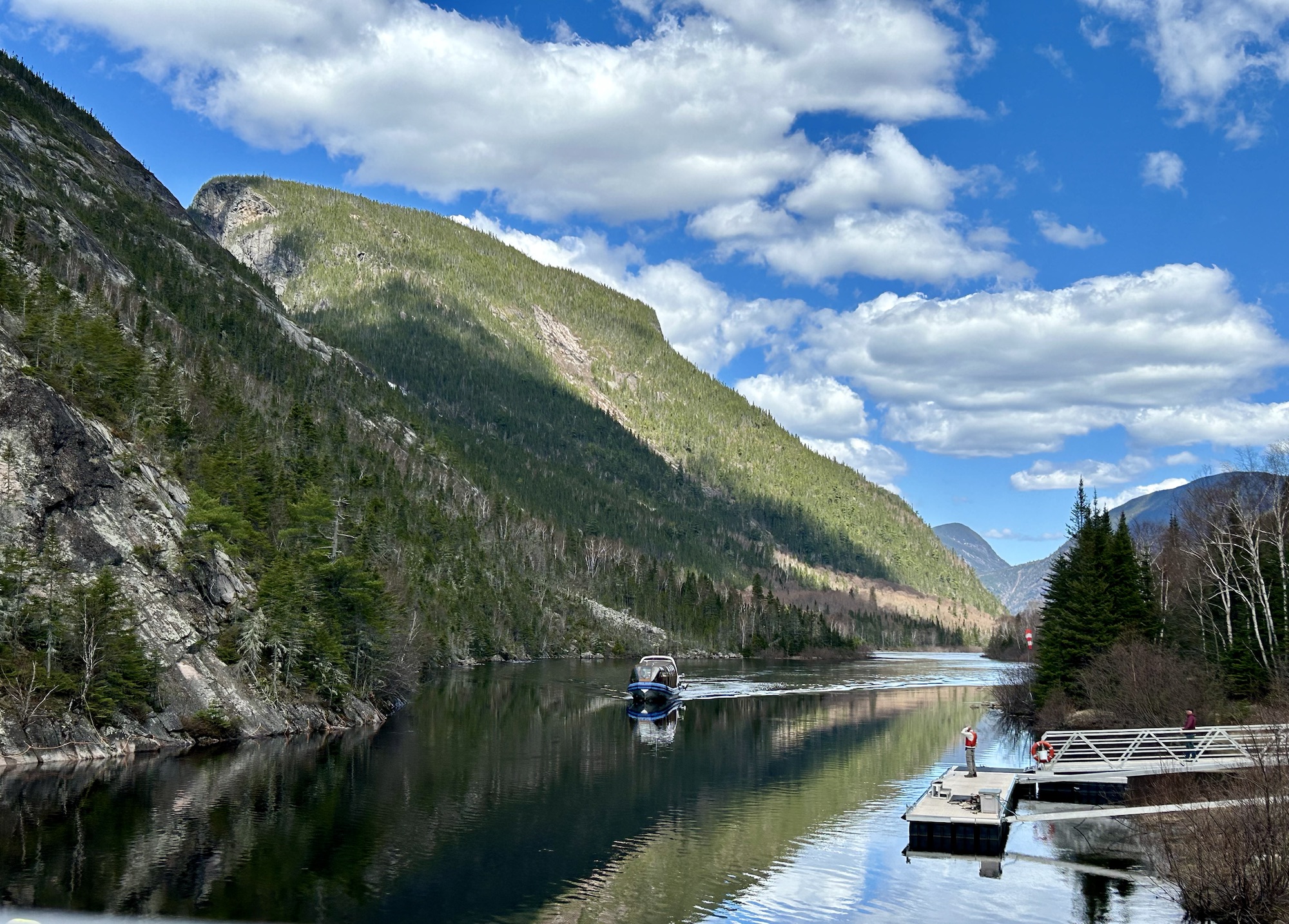
A series of locks allow small boats through Jones Falls below on the lovely historic river and canal connecting Ottawa to Kingston in Canada. In season from mid-May to mid-October, the boats tie up on the dock to the right and wait their turn, perhaps staying or getting something to eat at the 1870s lakeside Hotel Kenney. Chaffey’s Lock is another of the many pretty, historic locks, and it has a fancy hotel, a lock-master’s fort—in case the Americans try to invade by canal—, and a swing bridge that rotates on a wheel to let tall boats clear the lock.

The canal is recognized by UNESCO as a World Heritage Site. There are a couple dozen locks between Ottawa and Kingston Ontario built almost 200 years ago to facilitate trade and travel between the Great Lakes and the Atlantic Ocean. Today, giant cargo ships stick to the main St Lawrence Seaway, but that shift left a dozen or more adorable “timeless” little villages along the original canal route. Small boats still use this canal to avoid heavy barge traffic, dangerous currents and because it’s beautiful and fun. Much of the canal is short sections that connect a series of lakes, including Lake Rideau. If you visit the town of Westport, I recommend dinner at the atmospheric old Cove Inn, which often has live music.

Niagara Escarpment Biosphere Reserve

Ignore the famed waterfalls and focus on Goat Island cliff in the middle. That wall is the Niagara Escarpment, caused by relatively hard rocks at the top holding the land underneath together, until it erodes away from the side. This two level land break—all erosion and not earthquake fault—is the key geologic feature to understanding the Great Lakes.

Much of the escarpment is in Canada, and even where it crosses the border to form Niagara Falls, it’s easier to see from the Canadian side as above. It runs along the south shore of Lake Ontario, across Niagara Falls (above) where it sets the level of Lake Erie, northwest through Ontario where it guides the Bruce Trail, up along the north shore of Lake Huron where it splits off Georgian Bay and shapes Lakes Huron and Michigan, along Michigan’s Upper Peninsula where it separates Lake Superior, and down the Door Peninsula past Green Bay in Wisconsin. After driving around the Great Lakes, it’s apparent how the water levels depend on the escarpment: Superior is the highest above both ends, Michigan and Huron are the same level in the middle, and shallow Erie is a little lower, held back at Niagara Falls, before that river drains into the lowest lake, Ontario.

UNESCO defines the Biosphere as the mostly forested area of Ontario between Niagara Falls and Tobermory on the tip of the Bruce Peninsula next to Georgian Bay, roughly 500 miles along the escarpment. The geologically interesting landscape holds great biodiversity in wetlands, coastline, deciduous & conifer forests, and rocky bluffs, perhaps the most in Canada. And there are many opportunities to explore, photograph wildlife, hike, drive or boat nearby. I hiked on the Cup & Saucer Trail on Manitoulin Island, the world’s largest freshwater island, when traveling around the Great Lakes. There, the escarpment is eroded on both sides, providing many views along its edge, including Lake Manitou below.

Driving a Tesla 3 to Mexico City

To visit 16 of Mexico’s World Heritage Sites in a zero emission vehicle, I drove round trip from Texas to Mexico City, through 13 Mexican states, and, while a bit bumpy, I enjoyed the trip very much. All my trip report links are at the end of this post.

If you read online comments in the US, you might get the idea that traveling in Mexico is impossible or foolhardy at best. Well, you can’t believe everything you read online (except this blog of course). Over the entire trip, I was only asked for one ‘bribe’ of $1, to park briefly in a student parking lot without a student id. The state police, national guard and military were all very professional and waved me through either without comment or after glancing at my car permit. While I saw crime on the TV news in Mexico, I observed none.

After driving in Mexico, I finally understand driving in Texas. Instead of overpasses, underpasses and clover leafs, just use ‘retornos’ or U-turns. Folks leave the nice highways, well, they’re on their own, immediately. Want to slow traffic, without relying on folks to obey signs? Just use lots of speed-bumps or topes. Although, there are even more techniques to learn. First, always be alert. Pothole! Second, drive halfway in the breakdown lane to avoid head-on collisions with oncoming passing traffic. Third, always be alert, seriously, you need to pay attention and think while driving. Drivers are generally nice, but get out of the way of speed demons and quickly pass vehicles that wouldn’t be allowed on the roads in the US.

All Mexico is divided into three parts. Mexico City is best navigated by metro, with its one way streets, traffic and lack of parking. Traffic can be stultifying. Of course, electric cars are exempt from the Hoy No Circula—‘no driving today’—restrictions, which otherwise limit your access to the city according to the last character of your license plate. Circumnavigating the city on the ring road requires tolls: take your ticket and be prepared to pay cash (although a few places take credit cards). Remember the metro is 5 pesos or ~30 cents.

The mid-sized cities and tourist areas outside Mexico City are still crowded, but passable by private car. I was frequently fortunate to find parking very near World Heritage Sites in mid-sized city centers. Of course, the more touristy, the more likely that the roads are cobblestone. San Miguel de Allende may be magical, but I scraped the bottom of my car several times on medieval stones. Better to park outside the historic zones and walk. Still, driving your own car gets you to places that are otherwise challenging to reach.

And then there are the mountains and remote villages. Ah, lovely! But no signal to navigate. I got lost three times near the butterfly reserve. Once, my navigation asked me to drive between two trees on each side of a hiking trail. But I must admit, some of the most beautiful places in Mexico are just off the grid. Horse-driven ploughs, indigenous costumes, and forest-covered volcanoes await. Long drives are best on toll roads with frequent $5 to $15 tolls.

On this trip, I used Superchargers exclusively, and I only saw half a dozen Teslas in Mexico, including my own, mostly at chargers. Unlike the US, there isn’t a government subsidy for most electric cars, so my car was not just unusual, but uneconomical in the short run. I got few comments or looks, and the valet parking attendants had never driven one before (and didn’t like them). There are a few other electric models that I saw on TV, which we don’t have in the US, and I spotted a few of those in Mexico. But overall, electric cars are an elite affair, with parking and charging in the most expensive malls in expensive neighborhoods. I found the supercharger network from McAllen to Puebla accessible and without gaps, although it’s better to charge whenever you can, just in case you need a lot of air conditioning or have to detour.

While Mexico might seem intimidating or unrefined, the truth is that it’s worth the trouble. There are European-style cathedrals, ancient pyramids (photo from Anthropology Museum), glorious art, scrumptious food, and natural wonders that are well worth driving a couple days with the trucks on the long highways. An unexpected side benefit to driving was passing through three UNESCO Biospheres along the way: Cumbres de Monterrey, La Primavera near Tequila, and Los Volcanes near Mt Popocatépetl. I reviewed the State Department warnings and used them to plan my trip, but, again, the best way to avoid crime is to avoid drugs and be careful. Americans should take advantage of the wonderful travel opportunities just south of our border, and I’m not talking about all-you-can-whatever resorts that you fly into. See the real Mexico, and drive electric!

Read about the trip!

Guanajuato

On the right is the Alhóndiga, an old grain exchange,…

Querétaro

UNESCO recognizes this colorful, artistic city for its historic zone…

Teotihuacán

Feathered and fire serpents adorn the steps of the Quetzalcóatl…

Puebla

The city’s cathedral with its famed tall towers (above) is…

Xochicalco

If you were disappointed by not being able to climb…

Xochimilco

This is only half of a World Heritage Site, Mexico…

UNAM

University City, the main campus of UNAM, the National Autonomous…

Tequila

Technically, the name of this UNESCO World Heritage Site is…

Tequila

Technically, the name of this UNESCO World Heritage Site is Agave Landscape and Ancient Industrial Facilities of Tequila. But that’s a mouthful. For at least 2,000 years, folks around here have been making pulque, a milky agave wine. A wealthy Spanish aristocrat, working around a royal ban on new vineyards, started distilling blue agave, inventing a new drink named after the town of Tequila in Jalisco state. Above are Tres Mujeres oak barrels aging tequila for years, to the sound of classical music, which is thought to improve the taste.

But wait, trendy folks claim they don’t like tequila and only drink mezcal, which is silly since tequila is a type of mezcal. Mezcal is a very broad category of alcohol, including home brews, stuff sold in plastic containers out of the trunks of cars, and a few quality refined spirits, like tequila. Some mezcals use extra wood burning to add more smoke flavor, but good tequila just uses the cooked agave fruit and the smokiness from the barrel. Some tequilas add food coloring, but good tequilas similarly gain their color naturally.

Another misconception is that like champagne, all tequila must be made near Tequila in Jalisco. That’s not true. Tequila can be made anywhere in the state of Jalisco and also in designated areas of half a dozen other states in Mexico. We did a tequila tasting many years ago out of Puerta Vallarta, and it was as authentic and delicious as the ones near Tequila. Even the heritage site covers several different towns west of Guadalajara.

Between Tequila and Guadalajara is a UNESCO Biosphere, La Primavera or ‘springtime’, which includes a pine-oak forest, springs, orchids, birds and more, and it’s a popular recreation area. Tequila is my last stop in Mexico for a while—quite an enjoyable one—, so now Mondays switch back to US park units, affiliates, trails and heritage areas. Thanks for reading!

Hospicio Cabañas

Originally designed to be a hospital, like Les Invalides in Paris, and named after the bishop, today the World Heritage Site in the historic heart of Guadalajara is a museum, with modern art outside and exceptional murals by Orozco inside. The central masterpiece on the ceiling of the rotunda is ‘The Man of Fire’, a modern version of the myth of Prometheus (in photo on right). I had seen Orozco’s earlier version in the Pomona dining hall in California, considered “the greatest painting in America” by Jackson Pollack. Orozco lost his left hand making fireworks at 21, and he was fascinated by the story of a man who risked his life and suffered to expand human knowledge and civilization, only to be punished by the Gods. He felt the myth was an allegory for artists, explorers and reformers who were punished by conservatives for their efforts to bring enlightened change to the people. Every alcove and wall tells a story of both progress and betrayal, of historic accomplishments and dark consequences.

Prometheus stole fire from the Gods, but today we struggle with the consequences of burning carbon. Fossil fuels helped us achieve great things, but there are always consequences. Struck by the inescapable conclusions of the art here, we see that conflict over ‘progress’ often results in suffering, especially among the poor. Murals require us to step back, to try to see the bigger picture. We can build hospitals, and we can also destroy whole cultures. We can choose sustainable fuels, or we can let powerful men perpetuate destructive fuels. We may believe ourselves invincible and deserving of the powers of the Gods, but our actions come with destructive consequences that we must try to see, understand and prevent. We must give up fossil fuels, or our world will burn.

Historic Centre of Morelia

I arrived at this World Heritage Site on Sunday late morning, and with a minor miracle I found parking one block from the cathedral above. When I stepped inside a beautiful mezzo-soprano voice echoed through the high ceilings and alcoves. What a spectacular and moving service!

The city and state are named after José Morelos, born a block behind the cathedral (now a museum), a priest in the cathedral, who answered the cry for independence and supported multi-racial equality. Morelos also demonstrated remarkable skill as a military strategist, and after Hidalgo was executed in 1811, Morelos became the leader of Mexican Independence. After dozens of victories that roused the insurgents, Morelos was eventually captured in Puebla, tried by the Inquisition, defrocked and executed near the end of 1815. He is remembered as one of Mexico’s founding fathers.