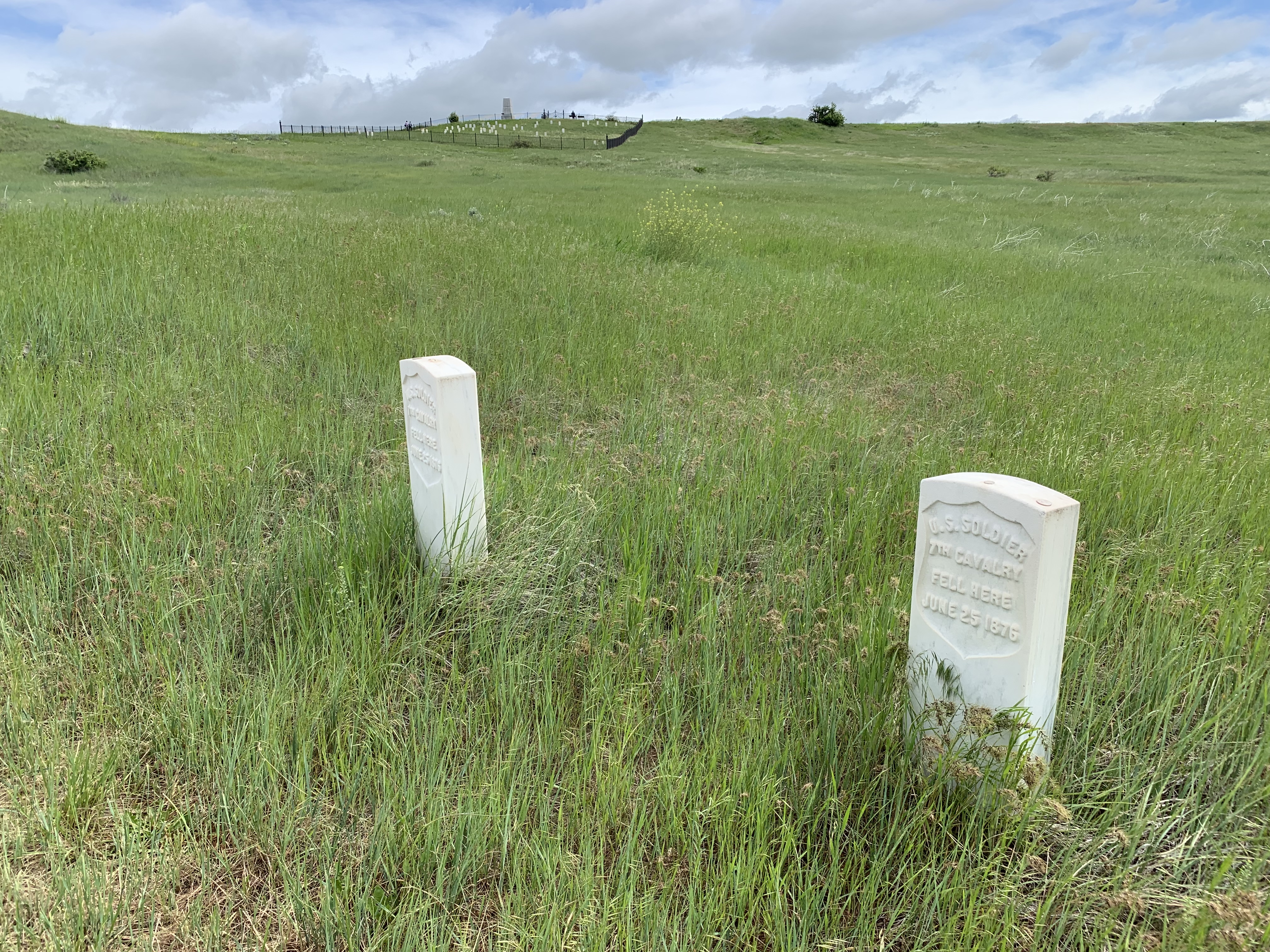
Two unnamed cavalrymen are memorialized here, below the hill where Custer made his last stand. Until fairly recently, there were no similar monuments to the Native Americans who won the battle. Now there are several, naming the heroes who defended their village, wives and children here from the cavalry attack. Custer intended on burning the village and likely was trying to take women and children hostage when he overextended his forces to this hill. The natives were surprised by the attack, and while this was their greatest and last victory over better armed US troops, it must be recognized as essentially a defensive act in response to US military aggression. The native ranger talk here is a favorite experience.
Seeing the landscape helps understand what went wrong. Custer split his forces, sending some towards the far south end of the village as he approached the north. Underestimating the size of the village both physically and in number of warriors and underestimating how fiercely they would fight back, he spread his forces thinly in order to prevent natives from escaping. He sent word to his other troops to join him thinking that he had found the village, not realizing that they had also found the village at the other end two miles away. His cavalry would have been visible on the ridge, while the natives would be hiding in the grasses & creek beds that allowed them to slowly climb the ridge. Urged on by Crazy Horse, White Bull and other chiefs, the natives stopped the US advance, kept the troops separated and eventually took the hill as Custer ran out of ammunition.
There are three sites along the interstate: a visitor center, a missile silo and a launch control facility for multiple silos. Apparently the whole area was like a prairie dog town of silos. For decades, all the sites were manned and secured continuously, so that we could annihilate our enemies many times over, as they could to us. The cost of this ludicrous overkill capacity was staggering.
But what interests me most is the claim made in Life magazine above that only 3% would die. Actually, we’d be lucky if 3% survived. How could we have been so wrong? We listened to the wrong scientists. Physicists designed the nuclear bomb, so they had the full attention of the military. They analyzed the problem by describing payload, flash of light, shockwave and fallout. Only when someone asked whether nuclear war would blot out the sun for years did we realize that the physicists completely underestimated the risk to life on earth. Why? Because the study of life on earth isn’t physicists’ job. That’s the job of biologists. We were listening to the wrong scientists.
Our public understanding of the climate crisis is very similar. We’re still not listening to the right scientists. Whenever I ask a physics expert about global warming, I always get the same answer: ”the planet will be fine”. They mean that it will continue spinning. Geologists answer that temperatures vary naturally within large ranges over eons. Meteorologists say that it won’t tell you if you need to bring an umbrella today. Again we are listening to the wrong scientists.
Biologists study life on earth, so they will tell you that the climate crisis will extinguish most forms of life on earth, either directly, by changing their environment more quickly than they can adapt, or indirectly, by collapsing some critical part of the ecological networks they rely on for food, reproduction, or any other part of their existence. These are the scientists who study whether life on earth will survive, and they’re the ones who are telling us that the risks are too great to continue carbon pollution. As living, supposedly sentient beings on this planet, we naturally should be interested in the survival of life here. We need to listen to the right scientists who know and are telling us what we need to do to avert the coming catastrophe.
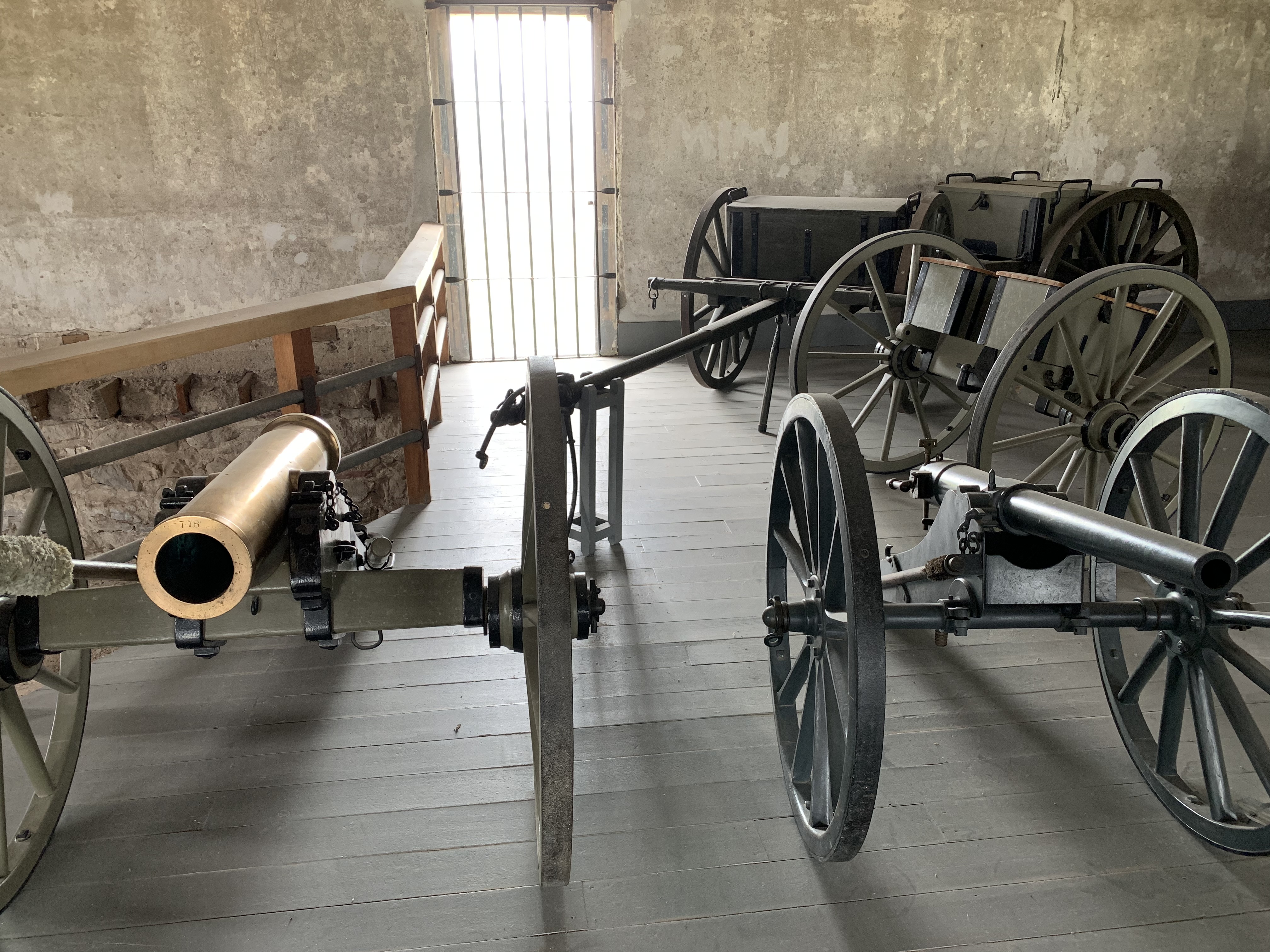
The site of two eponymous treaties, I ordered a sarsaparilla and talked history with a well-informed seasonal ranger. We decided that although the soldiers were sent out to protect pioneers, they were mostly bored silly, since the “attacks” were mostly myths or exaggerated stories. But the military leaders practiced diplomacy to try to avoid potentially deadly conflicts, and that didn’t always go well. Case in point, in 1854 a Mormon pioneer lady complained to authorities that a cow she lost on the trail had been caught and eaten by some natives who lived on the land while she was trespassing. Lt. Grattan was sent to arrest the offender (not the lady) with 29 soldiers. Apparently the negotiations were cut short when (most likely) one of the soldiers shot the chief, whose men subsequently killed all the soldiers. Several treaties were signed here, although they were not honored by the US. Ultimately, the US military ”solved the Indian problem”, by killing resistors with superior fire power, including the mountain howitzers above and Gatling guns, and driving the rest on to reservations. Four of these artillery pieces were used at Sand Creek.
Thanksgiving celebrates when Native American generosity saved the first settlers in New England. Natives taught settlers about native crops and game, they traded peacefully with the British, Spanish, French, Russians, mountain men, and pioneers, and they guided Lewis & Clark across the country. Many early Americans married natives and lived happily.
Somewhere along the line, these same natives were portrayed as bloodthirsty savages, and that racist portrait continues today. I have not yet had time to fix it, but Wikipedia’s entry on this site has extensive quotes from a 19th century book in an apparent effort to justify the massacre here, pointing to another ”massacre” by natives that provoked this military action. But that was a family of four killed ”supposedly” by natives, and other events described as native ”attacks” were actually thefts, robberies and destruction of property.
The natives were the victims, both here and elsewhere. They lost their bison, their land, their freedom and their way of life. Many of their sacred lands were stolen by illegal acts of the US government, and many lost their lives to settlers and soldiers. Yes, some Native Americans fought back, following repeated provocations. I read of one chief who, after working his whole life for peace, returned home to find his family slaughtered, and he turned to war. But it is dishonest to confuse the aggressor with the victim. Most Americans live in states or places originally named by natives, but there continues to be a desire to honor those ancestors who participated in the land theft, forced removals and slaughters of Native Americans. Only some Utes remain on tribal lands in Colorado. The town immediately south of the park is named Chivington, but when you learn what he did, you will find that honor to be a disgrace.
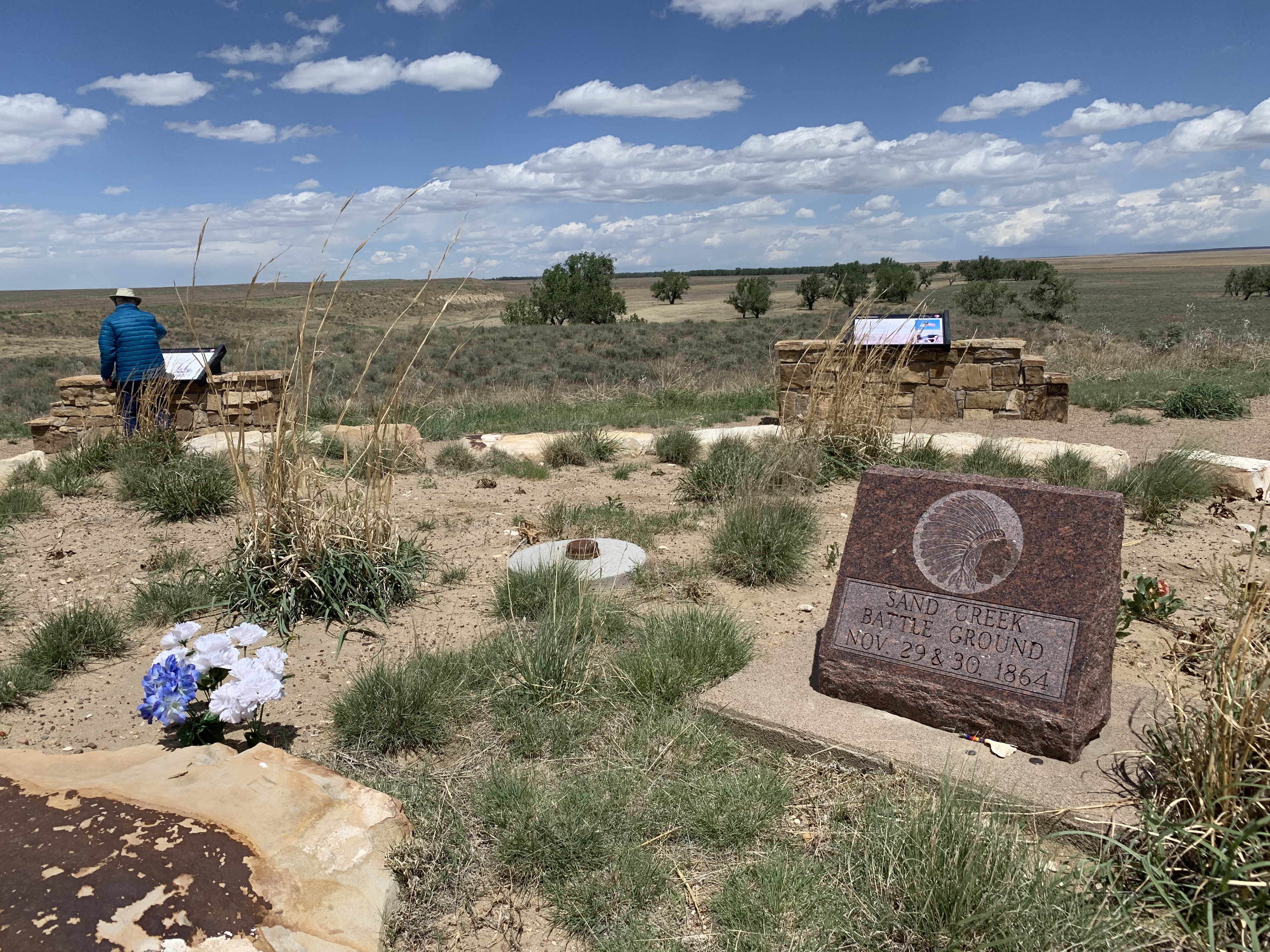
According to witness accounts of soldiers under his command, Colonel Chivington, who helped win the Battle of Glorietta Pass, was a politically ambitious man who wanted to add more victories to his resume. Peaceful native chiefs gathered here to continue peace negotiations under the protection of the local US military fort. Chivington knew that, and two days after the local commander transferred east, he attacked the village with 675 cavalry and 4 mountain howitzers. Two of his officers refused to follow orders, reported the massacre, and testified to investigators. They saw women and children bludgeoned to death while begging for their lives. Over 230 natives were massacred, including around 150 women, children and elderly. The details are horrific. Many bodies were mutilated post-mortem, and soldiers took ”trophies” including scalps, fingers, etc. to display in public. Fueled by greed and paranoid racist hatred, the townspeople treated the soldiers as heroes. But the government investigated and determined that it was an unjust, brutal “massacre”, ordering reparations (unpaid) and the removal of the governor for his involvement. Chivington, once a minister, escaped justice by resigning (loophole later closed) and the two men from a related military unit who murdered one of the witnesses also escaped justice. The other witness became a local sheriff.
As tragic as this story is, there was another similar massacre by US soldiers with a higher death toll at Bear River in Idaho. It also is tragic that many people even today, such as the Wiki liar, refuse to acknowledge the massacre as criminal and morally indefensible. At least the National Park Service is doing its job and preserving the site and the truth.
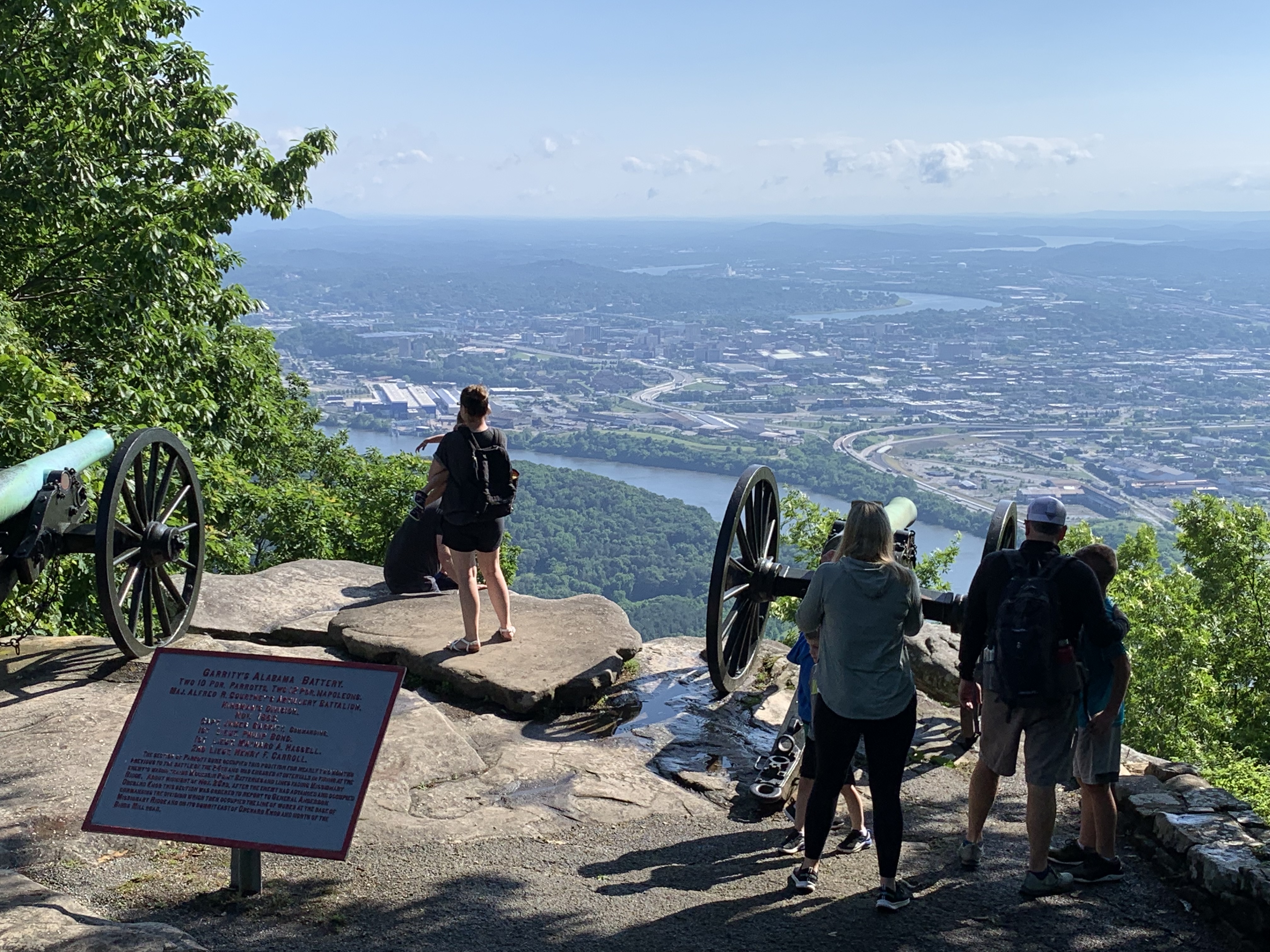
Before I rant again, let me just acknowledge that there’s a dramatically beautiful view on Lookout Mountain. Chattanooga below is in a strategic location at the bend of the river below. Long before the Civil War battles, the last overland battle of the Revolution was fought here. There’s even a steep funicular line to enjoy the view.
Militarily, controlling the high ground has always been the key. Grant used it to capture Chattanooga, and the confederates used it to try to recapture the city, unsuccessfully. Chickamauga nearby in Georgia is much flatter and covered with monuments to both sides. Which brings me to my brief rant. If even a fraction of the money and effort spent on monuments for both sides were used to explain the cause of the war, slavery, then maybe we wouldn’t have some politicians today still trying to claim that there are “very fine people on both sides” of racial prejudice. No. Racism was wrong both then and now, and the longer that we evade the obvious moral judgements here, the harder it will be to remove the poison.
If I were to choose one turning point in American history, I would choose what happened here in March of 1814. After many consecutive treaties with the Creek were broken and great parts of their land were taken, some Creek warriors tried to defend their nation, which had survived contact with the Spanish, French & British. Andrew Jackson invaded the heart of the Creek Nation, surrounded 1000 warriors armed with 300 guns with 3000 soldiers in the bend of the river here. 800 of the Creek warriors were killed, 300 while trying to swim to safety. The village was burned and the women and children with them were captured. By any fair accounting, a ten to one advantage that results in 80% killed is a slaughter, and shooting swimmers is particularly cruel.
But Jackson used the victory to steal more land for white settlers, so he was treated as a hero, instead of a liar, thief and atrocious killer. Jackson even betrayed the Creeks who fought side by side with him in battle, taking their land too. Jackson would go on to become the only President to openly defy the Supreme Court, by not only refusing to return land but by forcibly removing Native Americans to reservations in the west, along the Trail of Tears. A popular President among whites who could vote, he perpetuated racist stereotypes about Native American “savages”, which continued past the Civil War when 750,000 mostly white Americans slaughtered each other over the right keep slaves.
Most Americans won’t admit it, but our ancestors wanted our government to slaughter Native Americans and take their land for our benefit. Racism has been used as official policy for killing, removing, and exploiting non-whites for centuries. By ignoring, denying and lying about this fact, many of us have chosen to live our lives without a moral compass. The first step is to admit the truth, then figure out what to do about it, and finally to teach our kids to be better.
[Updated after touring the hangars.] Like at Tuskegee Institute, I admit to being frustrated by not being able to tour inside earlier and ranting about unequal funding. But all is forgiven now.
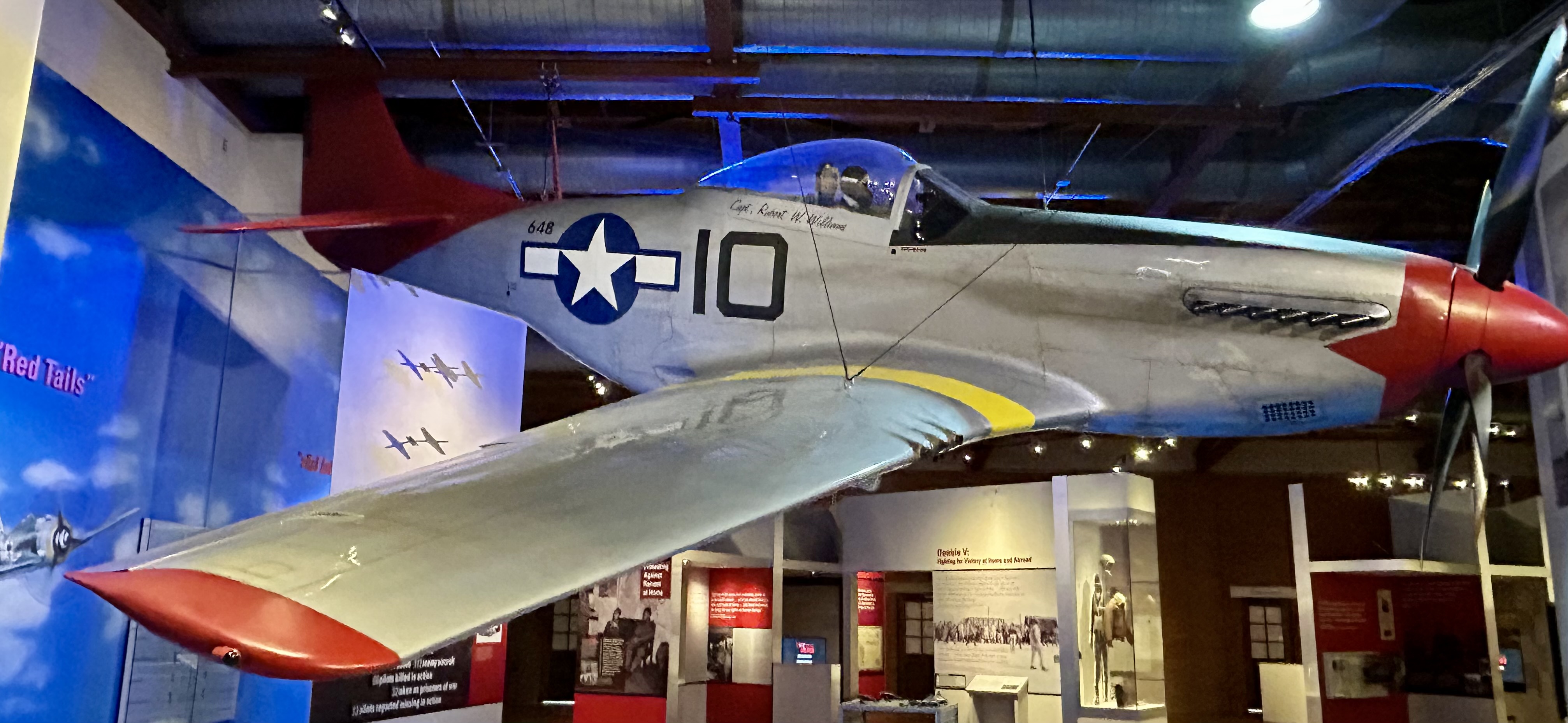
The P-51 Mustang above, known as Duchess Arlene, is just one of the planes on display, along with training planes. The first Tuskegee Airmen fighter group sent to North Africa was the 99th, which proved itself with a record-breaking number of air combat kills in short order. Later, additional units were combined into the 332nd Fighter Group, the famed Red Tails that protected the Flying Fortress bombers to help win the war in Europe. I recommend watching the Tuskegee Airmen movie, starring Laurence Fishburne, to learn more. (For the record, although Fishburne also starred in Miss Evers Boys, none of the Tuskegee airmen were involved in the Tuskegee experiment.)
The park film and exhibits also tell another important story about the Tuskegee Airmen: the Double V. Victory was needed both abroad against Hitler and at home against discrimination. When the decorated pilots and experienced mechanics returned after the war, they were not allowed jobs at US airline companies, despite their proven qualifications, nor were they allowed to vote in many states. Even during the war, a group of over 100 airmen were denied admission to an officer’s club on the basis of their race in direct contradiction with US military regulations against segregated facilities. They refused a direct order to sign away their rights, which, during wartime, potentially risked their execution. The Black Press, a group of newspapers and newsletters that closely followed the Tuskegee Airmen, broke the story of the Tuskegee officers being held prisoner and given less rights than Nazi prisoners of war at the same base. The Freeman Field ‘Mutiny’ became a national scandal, and the commanding officer was eventually removed and the officers freed. Truman eventually ordered complete desegregation of the military. We owe a great debt to these brave men, who fought for our country, despite the discrimination they faced.
Roughly the same number of Union soldiers died in this prisoner of war camp as died in battle at Shiloh: over 13,000. The conditions were horrifying. Disease, vermin, starvation, dehydration, exposure and brutality killed hundreds by the day. Only a small portion of the stockade has been reconstructed, including the north entry gate pictured above, through which about one in three did not come out alive. There is an illustration drawn from the memory of Thomas O’Dea that is absolutely haunting in both its scale and detail. The Union refused a prisoner swap out of concern the confederates would return to battle. One 19 year old prisoner had the job of numbering the dead, and he secretly kept a list of names, regiments and causes of death. Eventually he brought it to the attention of the “angel of the battlefield”, nurse Clara Barton who had petitioned Lincoln to track down missing soldiers. They toured the site and marked over 12,000 graves. Barton went on to found the American Red Cross, and the US ratified the Geneva Conventions the next year. The man in charge of the camp was hung for war crimes. Flags were flying over the National Cemetery before Memorial Day, and burials are still occurring frequently. The visitor center also serves as a memorial and museum to all prisoners of war.
Union forces fought for weeks to break the long line of confederate fortifications northwest of Atlanta, but were unable to climb the steep hills under heavy fire. There was one “dead angle” or blindspot at Cheatham near the photo where soldiers climbed all the way up the hill and over the earthen walls only to be repelled in hand to hand combat.
5,300 soldiers died in a few weeks of fighting here in the summer of 1864, before the war moved to Atlanta.
Like several of the Revolutionary War sites in the south, the park is closed Sunday through Tuesday, but I was able to enter the reconstructed stockade above. The patriots briefly captured it in 1775 but failed to take the star shaped fort nearby. The earthwork remains are still preserved after centuries. The star fort design was used by the Spanish in St Augustine, the British here and by both the Union and the confederates. With just a few troops needed to defend it, the design provides overlapping fields of fire protected by crossfire gauntlets.




 Zero Carbon Travel