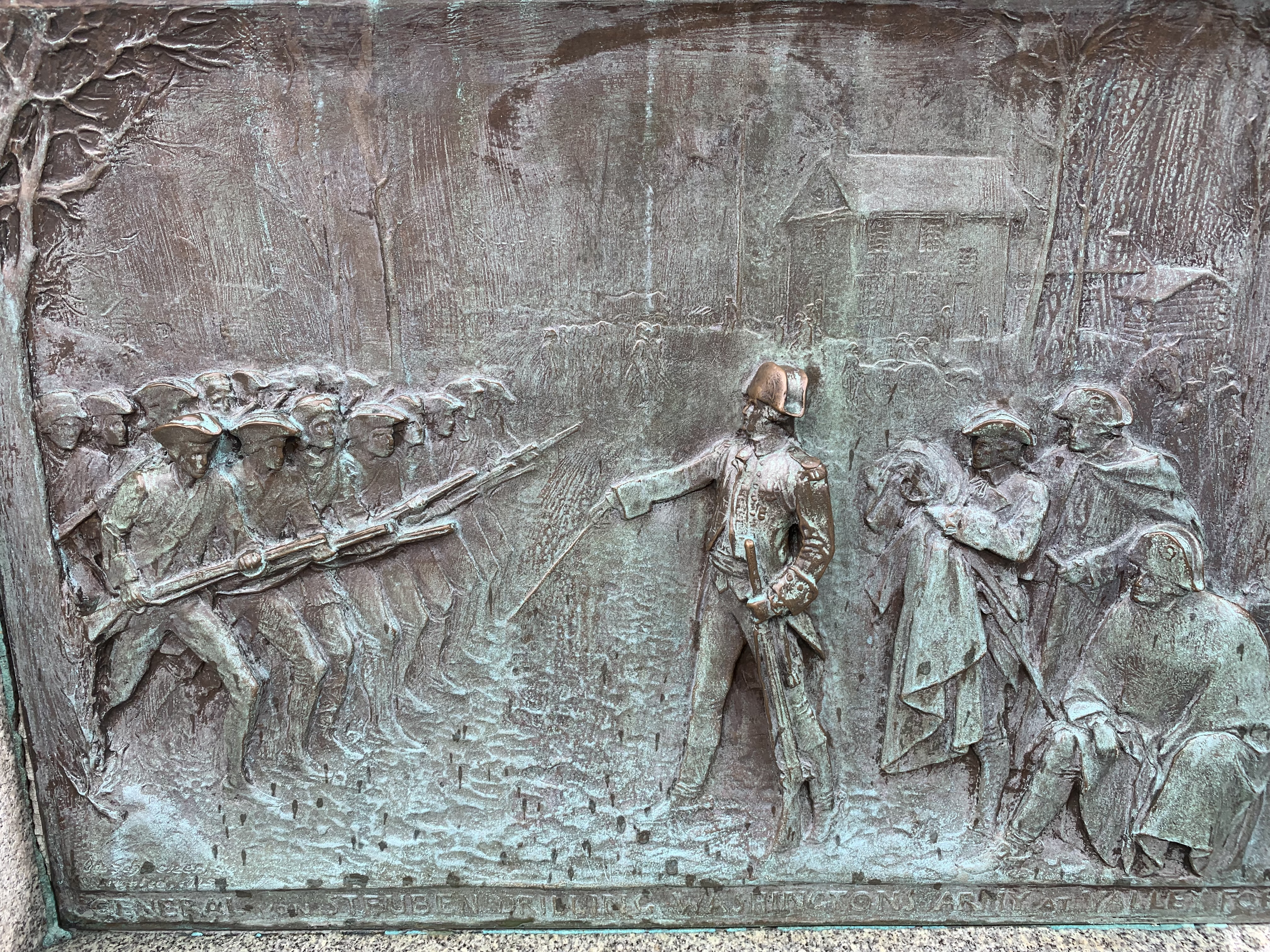
Valley Forge National Historical Park

“In Europe, when the officer commands ‘do this’, the soldier does it.

Here, with Americans, I am obliged to explain,

‘this is why you need to do it that way’, and then they do it.”

Baron von Steuben, Inspector General of Washington’s Continental Army

Valley Forge was chosen for the high ground, not the valley, and the forge had been destroyed by the British before Washington’s troops arrived. No big battles were fought here, and the most lethal forces encountered were diseases. It was a temporary winter camp, and when Washington returned later, he was happy to see that the farmers had reclaimed the land for crops.

But for Americans, this is where Washington’s leadership created e pluribus unum, ‘out of many one’, by forging 13 different sets of colonial militiamen, African Americans free and slave, Native Americans, immigrants, volunteers, and women into a professional army that could combat the British armed forces. Washington was a practical man, who ordered his troops vaccinated against smallpox, had them build thousands of sturdy log cabins, worked hard to see them well clothed & fed, and who brought a congressional delegation here to see conditions for themselves.

When Ambassador Franklin recommended the German Baron von Steuben (depicted in the bronze relief above), Washington trusted him to train his troops, unconcerned with rumors that he was homosexual or that he didn’t speak English. So, they got by in translated French, and the newly trained soldiers emerged as a credible fighting force to retake Philadelphia in the spring. Washington would not recognize the current generation of anti-vax, immigrant-hating, gay-bashing, misogynistic racists, no matter which flag they wave.

In later years, Americans realized the importance of this proving ground, and preserved it as a beautiful park, with forests, meadows and streams of trout. There’s even a covered bridge, not far from the stone farmhouse Washington rented for his quarters. The driving tour is quite pleasant, but I imaging bicycling to be best. E-bikes and regular bikes can be rented next to the parking lot.

Fort Stanwix National Monument

Yes, I’m back with a bang! Tesla is still working on my car (Chaco was tough on the springs), but rather than hold me hostage, they’re letting me travel around in a Model S until my car is ready. And the fort celebrates the 1777 victory for two weeks in mid-August with hourly cannon fire!

This fort has it all: drawbridge, sally-port, parapets, ramparts, and meticulously detailed barracks. And it’s open, labeled, extremely photogenic and great fun to climb around and explore. A small crowd gathers just a few yards from the cannon just below the colonial officer walking in the photo, and each step is demonstrated from candle to boom!

Long before we became an independent country, French fur traders gathered at this natural portage between the St Lawrence Seaway and the Hudson River and bought beaver pelts from Native Americans to make hats. I drove up the Hudson River Valley, along the Mohawk River and saw signs for Oneida Lake which drains into Lake Ontario. A short portage here connects the two watersheds, making this a strategic point in the middle of New York State, later connected by the Erie Canal. Control of this portage had international repercussions, as colonial powers divided up the globe.

The British built the original fort after capturing the area during the French & Indian War, and George Washington rebuilt it to defend the territory from the British. The key battle happened when a British Colonel led troops from the Great Lakes to meet with General Burgoyne’s force from Montreal in order to separate New England from the rest of the colonies. Both sides were joined by Native American warriors, and there was a particularly bloody ambush in the woods near the fort. The Patriots defended the fort for about 3 weeks before Benedict Arnold’s reinforcements (when he was still on our side) disrupted the plan, leading to Burgoyne’s surrender at Saratoga. Regardless of which side they fought on, the Native Americans were eventually forced to cede lands in New York, Ohio and Pennsylvania, in return for some annual compensation and limited sovereignty over their remaining land near here.

Saratoga National Historical Park

This boot monument may be the park’s most famous, but let me quickly set the scene. In 1777, General Burgoyne led his British Army from Canada down the Hudson River Valley to New York City (captured by the British fleet the year before), planning to separate New England from the rest of the colonies. After recapturing Fort Ticonderoga, the British marched confidently further south.

General Gates led the colonists who dug in at Saratoga to stop them. The British advance troops had marched into some fields to gather wheat, and the Americans surprised and flanked them. The British took heavy losses retreating to their own fortifications on two hills, and the Americans took the hill with the monument before night fell. The British continued retreating, became surrounded and soon surrendered.

The boot monument was for an American officer who was wounded in the leg taking that hill. It was the officer’s third leg wound in one year. He was a sometimes brilliant, extremely aggressive, apparently fearless, greedy, back-talking, insubordinate veteran, who was hated by other officers and loved by his men. He had led an unsuccessful assault on one hill, and then switched to this hill in the middle of the battle. The officer wasn’t supposed to be leading troops in the battle at all, since Gates had taken away his command. Actually, he had tried to resign, but Washington refused after learning that Fort Ticonderoga had fallen, insisting that the officer (who had helped capture Fort Ticonderoga originally) march north again. Angry at being mistreated by the army and in pain over his wounds (one leg became 2 inches shorter than the other), Benedict Arnold ended up betraying our country.

The museum also has a fascinating exhibit on the fallout of the British defeat at Saratoga. The French allied with the Americans first, followed by the Spanish & the Dutch, leading to attacks on British colonies in Central America, the Caribbean, South America, Africa, India, and Indonesia.

Minute Man National Historical Park

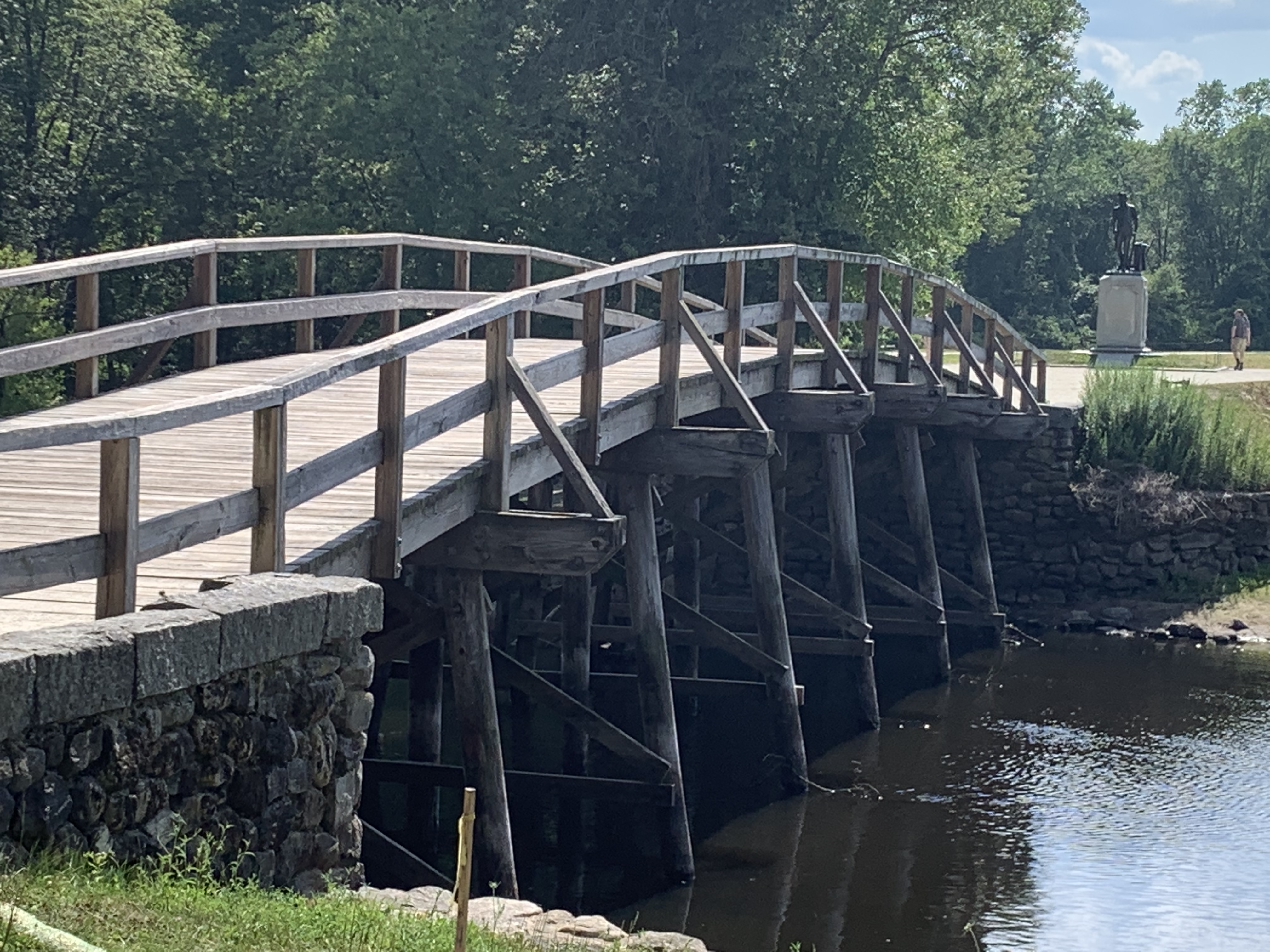
OK. First thing you need to know is to avoid Lexington; nothing to see or do there. Sure, the first shot of the day (4/19/1775) may have been fired there (unknown who or why), but the untrained militia scattered immediately. Next, unless you’re interested in walking through the woods along the Battle Road and imagining the battle scenes, you can probably skip the Minute Man visitor center too. They have a film, in case you don’t know who the Minute Men were, but the action is all at the North Bridge in Concord.

“By the rude bridge that arched the flood,
Their flag to April’s breeze unfurled,
Here once the embattled farmers stood,
And fired the shot heard round the world.”

Ralph Waldo Emerson

Emerson was standing at the Old North Bridge in Concord when he read that line to commemorate when the Minute Men (militia with extra training) were ordered to fire the first shots of what became the Revolutionary War. The British were thwarted from crossing the bridge and taking the arsenal on the hill behind the statue, and they were forced to retreat to Boston pursued by small groups of Minute Men engaging them in small skirmishes along the way. The quote is carved in the base of the famous Daniel Chester French statue across the bridge above.

Emerson’s grandfather witnessed the battle from The Old Manse, which is part of the site and later was home to Nathaniel Hawthorne. Emerson was also friends with the Alcott’s, and another part of the park is the Wayside where Louisa May Alcott lived. And, since you’re in Concord, you really should visit the Concord Museum, where you can see Paul Revere’s lantern, learn about Emerson’s other friend Henry David Thoreau, and see the excellent new exhibit that describes the battle in detail. All four literary luminaries are buried on Author’s Ridge in Concord.

Again, any propaganda you may have heard suggesting that Lexington was somehow historically important is nonsense. (And I should add that a group of cowardly Lexingtonians snuck into Concord to vandalize and destroy an early monument built around the 50th anniversary in a pique of petty jealousy). ‘The shot heard round the world’ was fired in Concord, likely by Minute Men from Acton, who were in the front and suffered the first casualties, because that order to fire on the British was understood to be an act of open rebellion that could lead to war. Soldiers on both sides blamed the other for firing first. There’s another visitor center over the bridge and past the statue that describes the day’s action. If you get a chance to hear the ranger talk “Monuments & Memories” about how the meaning of the battle has changed over time, I highly recommend it. Obviously, this is my favorite Revolutionary War site.

Springfield Armory National Historic Site

America has a gun problem. No other country on earth has anywhere near as many gun deaths per capita as we do. Australia banned guns after a mass shooting in 1996, and they have had one mass shooting in the past 26 years. Many Americans worship guns (see “organ of muskets” above), and mass shootings are a daily occurrence.

George Washington started the Armory for the Revolutionary War, and it continued making guns until 1968. The Armory did an excellent job preserving its history, and their extensive collection covers the evolution of guns in exceptional detail. Smith (of Smith & Wesson) and his father worked here, as did William Ruger. The Colt factory was another of the precision gun manufacturers in the Connecticut River Valley, and the town of Coltsville will likely open as a new national historical park someday soon.

On this visit, I also learned that most of the ammunition for at least the Civil War was produced by women and children, and that the work was extremely dangerous. 178 women and girls were killed when the Allegheny Arsenal in Pittsburgh exploded in 1862, due to sparks from iron horseshoes & iron wheels on a flinty cobblestone road covered with sawdust and gunpowder. Actually, the lawn in the center is contaminated with lead, so kids shouldn’t play on it (like I did when I first visited decades ago).

Longfellow House – Washington’s Headquarters National Historic Site

The stately home to the right should be the subject of my photo, or perhaps the meticulously preserved interior, but I’ve always loved the garden. Brattle is a quiet street off of Harvard Square, and the garden is a lovely little oasis for contemplation. George Washington doubtless had little free time after he set up his command here to build a revolutionary army. The British had retreated to Boston (along with the owner of this house) after the Minutemen forced them back in Concord. A siege ensued, and the British were unable to break out of the city, taking heavy losses at Bunker Hill. Then Washington arrived here, organized, trained, and motivated his troops for nine months. In the middle of an exceptionally cold winter, using oxen to drag sledges quickly over the ice, Henry Knox delivered cannon captured in New York to the hills surrounding Boston, and the British evacuated the city permanently.

Some sixty years later, a young literature professor named Henry Wadsworth Longfellow arrived here to rent a room from the indebted landlord, and he was thrilled to stay in the famous headquarters of General Washington. His father in law bought the house for the young couple, and Longfellow wrote the poems that many of us memorized as children: A Psalm of Life, The Midnight Ride of Paul Revere, Song of Hiawatha, the Courtship of Miles Standish, and Tales of a Wayside Inn. Fortunately for us, his family protected his legacy in exceptional detail, along with heirlooms from his colorful relatives, such that “if Longfellow returned, he would be able to find his books and most of his things exactly where he left them”. The tour explains the history of all kinds of people who lived here, from the first owner’s slaves to the flamboyant Longfellow descendant who both preserved the original artifacts and entertained here in style.

“All are architects of Fate,

Working in these walls of Time;

Some with massive deeds and great,

Some with ornaments of rhyme.”

Henry Wadsworth Longfellow, 1849

Boston National Historical Park

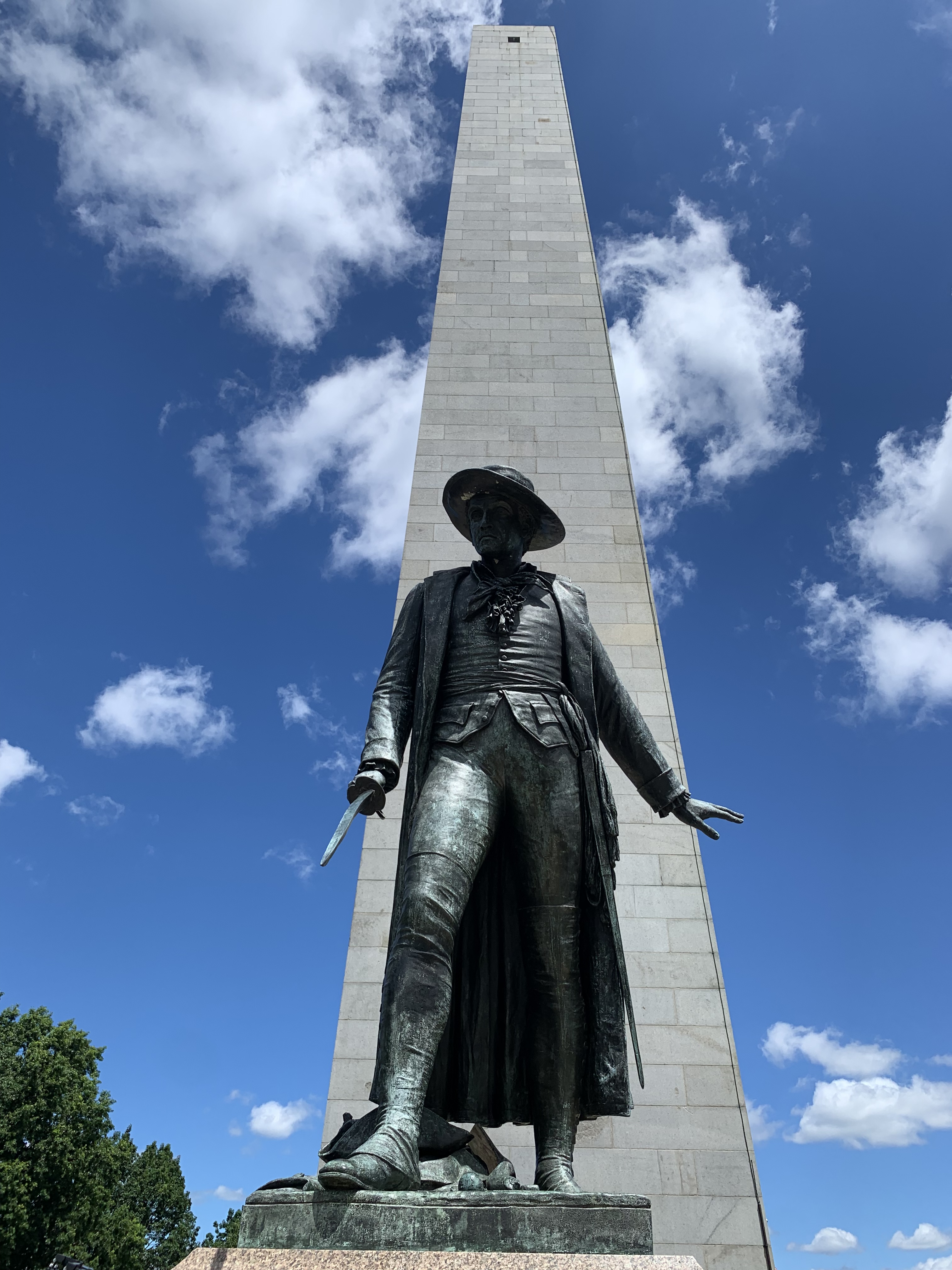
“Do not fire until you see the whites of their eyes.”

Colonel William Prescott, 1775

While the way to the top of the Bunker Hill Monument is currently closed, there is a live webcam. The monument is at the top of Breeds Hill, which the colonial soldiers defended against repeated attacks, before retreating to Bunker Hill. There’s a free museum facing Prescott’s statue across the street.

Boston has an embarrassment of historic sites in this park: the USS Constitution, Paul Revere’s house, the Old South Meeting House, the Old North Church, the Old State House, and Faneuil Hall. Each one is worth exploring to learn how we became independent, how we developed our democracy in town hall meetings, and how we debated our rights as Americans. Oh, and I’ve forgotten another historic ship (WWII), another historic battlefield (not open), another museum, a historic navy yard, living history exhibits, and other fascinating sites on the popular Freedom Trail.

Since the traffic and parking are even more horrendous than I remember, I definitely recommend taking the subway (electric and also historic) and walking. Many of the sites are clustered together, and the Rose Kennedy Greenway has beautiful art, flowers, and fountains along the way. Faneuil Hall is a great place to try local foods, and I recommend the thin cheesy Regina Pizzeria slices.

George Rogers Clark National Historical Park

Someone in Hollywood needs to tell this story, because I don’t think enough Americans know about the older brother of William Clark (of the Lewis & Clark Expedition) or how 150 men took the territory that became Illinois, Indiana, Ohio, Minnesota, and Wisconsin. It’s one of my favorites.

The Revolutionary War in this area between the northern Mississippi and Ohio rivers was sort of a rematch of the French & Indian War. The French wanted revenge against the British, so they sided with the American colonists. The British were paying Native American mercenaries to fight for them, even though the natives were on the French side before. And the American colonists had antagonized the natives by taking their lands.

Clark was 19 when he started surveying the territory west of Virginia and joined the militia just before the war started in Concord, Massachusetts. Although young, he knew the area, the tribes, the conflicts and he showed initiative. He negotiated a territorial dispute with Governor Patrick Henry, representing settlers like Daniel Boone. He led Kentucky militia to defend settlements against British-funded native raids. So when the fighting broke out, he presented a bold plan to seize three British outposts in what’s now southern Illinois. Governor Henry approved the plan, gave him a promotion, but little else.

For the rest of the story, you have to watch the park film, or read a book or wait for the Hollywood blockbuster. But let me just say it involves many French settlers who help Clark, an Italian merchant who tells Clark when the British are vulnerable, Native Americans who decide to stay out of the conflict, a brutal winter march through floods, Kentucky sharpshooters, much military deception, and a desperate pre-emptive strike against a superior defensive force.

Whatever Clark did in the rest of his life to die an impoverished alcoholic, should not take away from what he accomplished at age 26: an incredible underdog victory by 150 men, whom Clark convinced to fight and trained, resulting in five states ceded by Britain to the US. (I had neither graduated from college nor gotten my drivers license by age 26.)

Minidoka National Historic Site

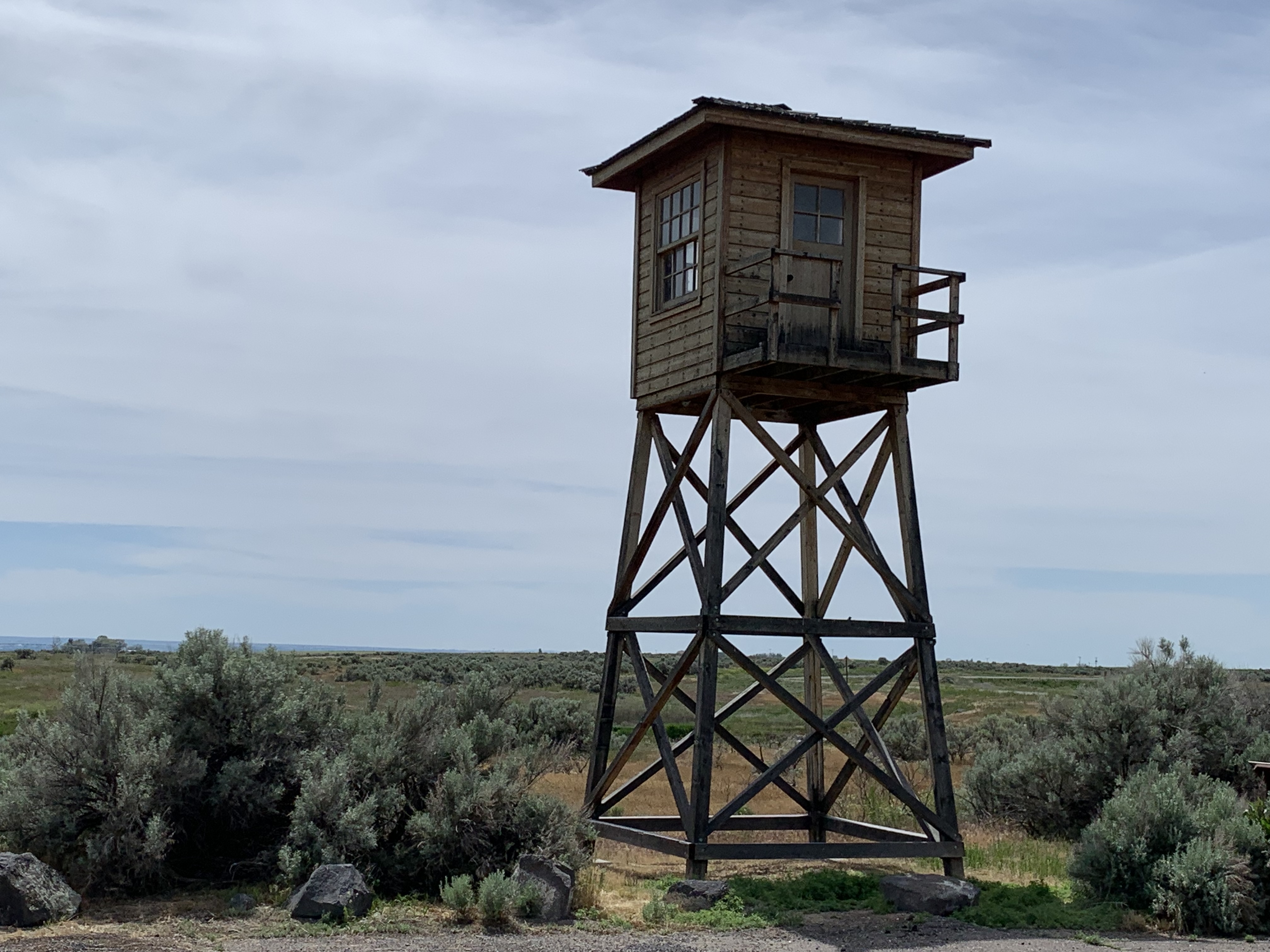
Named for the Dakota Sioux word for a spring, this concentration camp is along an irrigation canal, where the Japanese-American prisoners built a swimming hole and tried to fish. The sincere efforts to try to improve their confinement somehow make the circumstances even sadder. Thousands of Americans were cut off from their homes, neighbors and country, due to their national origin and race. Most German and Italian Americans were not incarcerated during WWII. Neither were most Japanese-Americans in Hawaii. Most of those kept here were from the Pacific Northwest and had lived in the US for a generation or more. Many also found their property had been stolen when they tried to go home. Under Carter and Reagan the survivors were paid $20,000 compensation for “race prejudice, war hysteria and a failure of political leadership”.

Big Hole National Battlefield

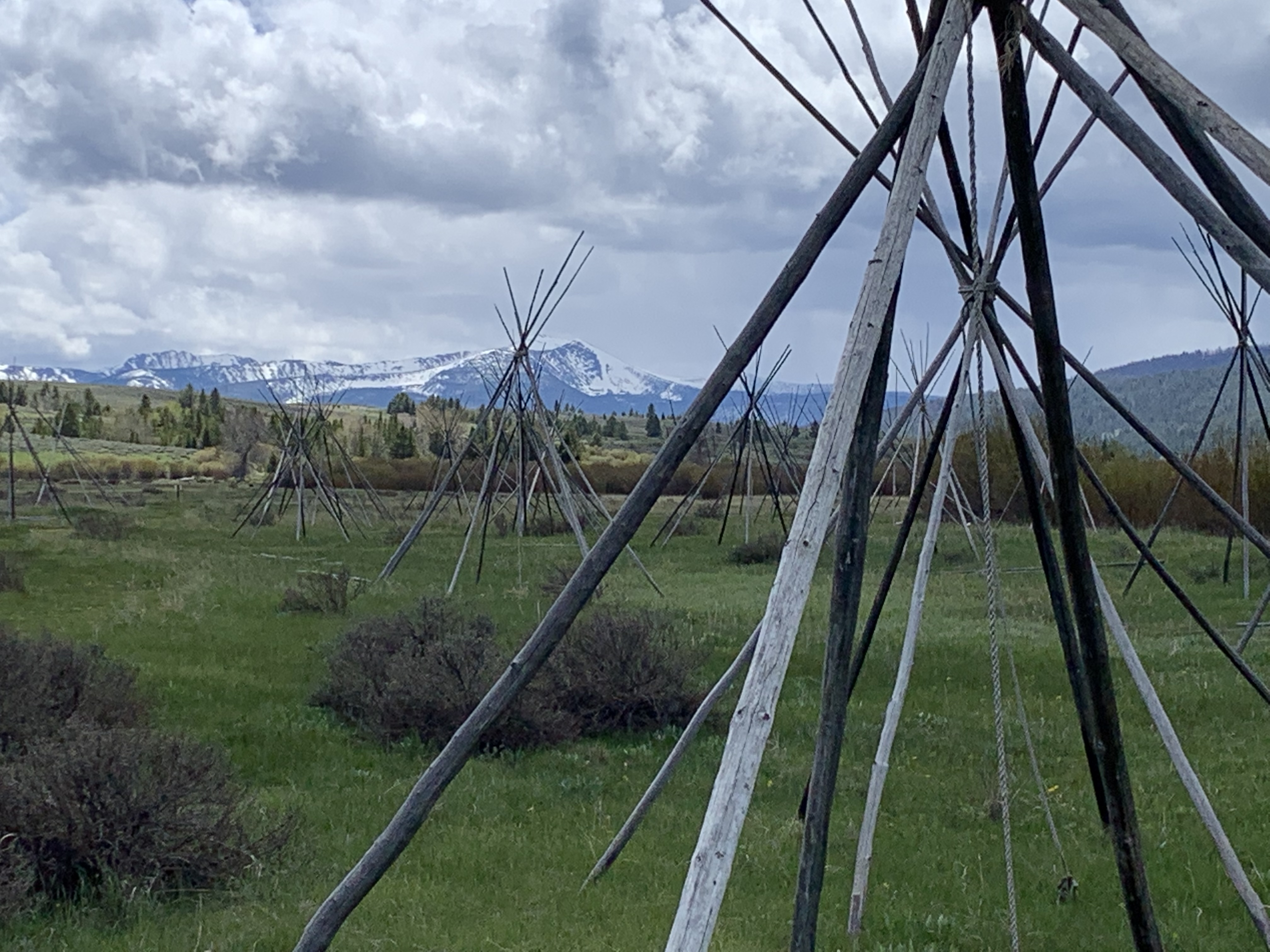
This uniquely tragic site in the War on Native America is also part of the Nez Perce National Historical Park, and it sits in the scenic Big Hole valley, right near the little town of Wisdom.

The US military was hunting down natives who refused to go to reservations and a few fugitives who had killed some settlers. They attacked the camp at night, burned the tipis and killed around 90 natives, mostly women and children, including babies bludgeoned to death. The warriors killed 31 soldiers in defense and then fled with the survivors. Some eventually escaped to Canada, but Chief Joseph later surrendered at Bear Paw with the rest.

Hail fell while I was at the Nez Perce cemetery above, and it felt appropriate, considering the terrible history here. I took some time after the film and walk to try to draw any wisdom, and all I could come up with was this.

No person can claim credit alone for greatness, as our existence is entirely due to the natural world that we evolved from, which sustained our ancestors and us. Yet a great idea, which is not limited by time and place, can inspire, destroy or outlast our civilizations, as long as there are still humans who understand it. So we must not think so much of ourselves. We must thank the natural world for everything it has given us. And we must try to cultivate thoughts, wisdom, moral judgements, insights, inspiration and kindness that may survive us and improve the future.