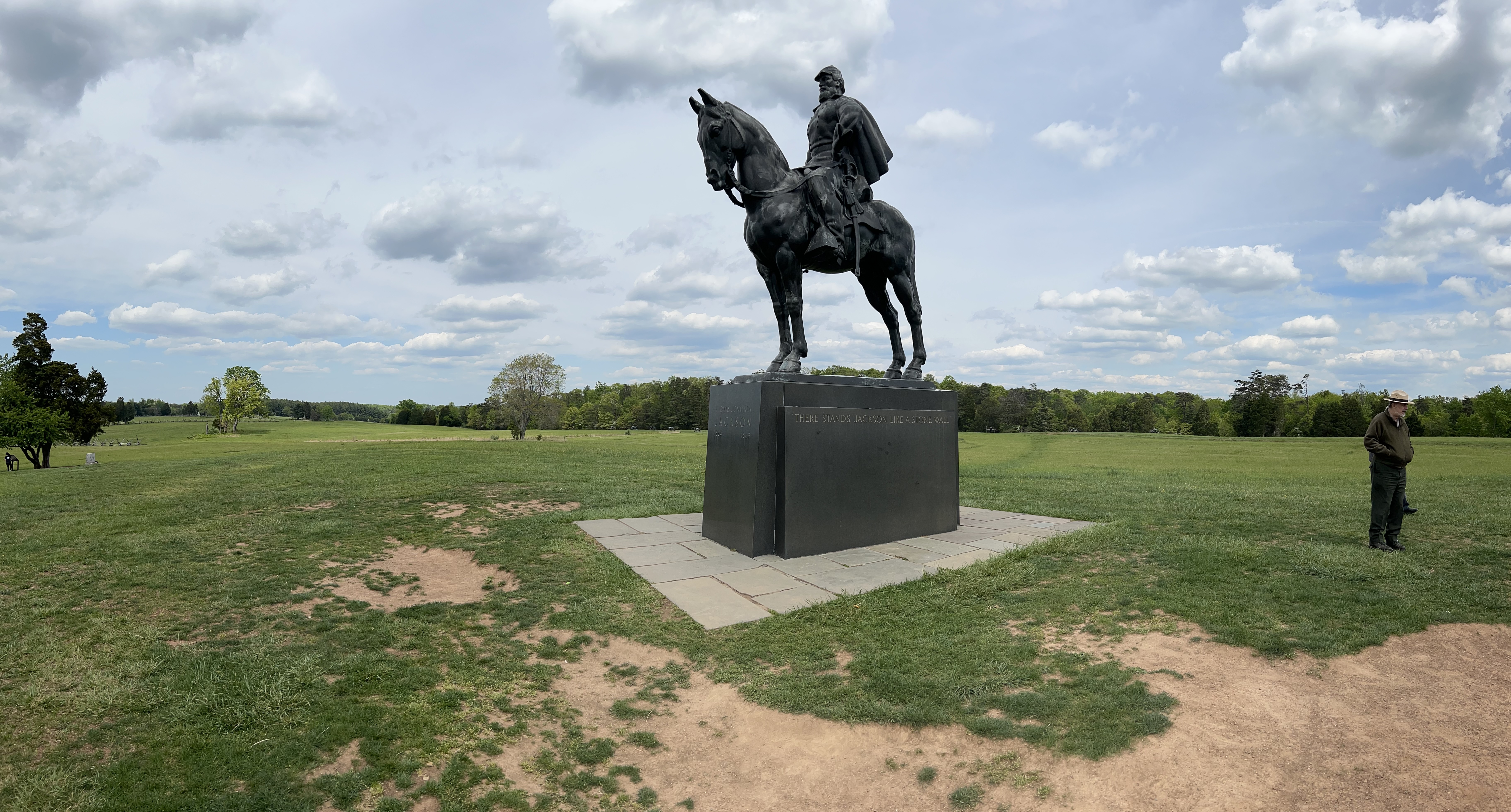
Both the first and second battles here (aka Bull Run) were severe losses for the Union ending in retreats to DC. In the first, Stonewall Jackson above got his nickname, and in the second, Robert E. Lee took command. 900 dead first, and 3,300 dead second.
The ranger is giving a tour of Henry Hill, explaining how Jackson’s forces were expertly positioned and how the Union artillery were stupidly placed in front of them, in range, without infantry support, ahead of their line, without scouting the area. A counter-attack was readied, countermanded and overrun, revealing the lack of infantry. Jackson’s troops attacked with ‘a rebel yell’, and the Union retreated in panic. Which also sums up the rest of the battle.
There’s a driving tour for the second battle, where again the Union forces were incompetently led into rash attacks, poorly executed. In contrast, Lee’s army executed maneuvers, defended and counter-attacked well, with good timing, and Jackson even captured supplies behind lines. Again on this hill, faced with defeat, the Union forces defended before retreating at night.
From a military perspective, the Confederate generals here fought admirably. The hero worship can be excessive (Ranger: ‘neither Jackson nor his horse took steroids’) and misplaced (we have no monuments to Yamashita, Tojo or Rommel). The Confederate victories prolonged the war—in defense of slavery—and increased the cost in American lives.
In August of 1814, the British launched a two-pronged attack on our nation’s Capital: a naval raid up the Potomac and an overland raid from the Chesapeake. Due to shallow water the land troops reached Washington DC first. DC was poorly defended, as Secretary of War Armstrong had decided that the Capital was not of strategic value?!? The British burned the White House and many other government buildings. Before the fleet reached the original fort here (Warburton), Captain Dyson decided to spike the guns, blow up the magazine and retreat?!? The British fleet sailed right past the smoldering ruin and took Alexandria. In September, the British fleet sailed to Baltimore where they had a different experience with Fort McHenry.
The much larger Fort Washington was built after the war on the old fort’s foundations, and it has a commanding view of the Potomac where Piscataway Creek enters. This fort’s guns were updated several times, but they were not used in battle as the Union maintained naval superiority during the Civil War. Due to fears that Maryland might change sides and give this fort to the Confederacy, additional forts were built around DC. The walk down to the lighthouse (above center) is pretty.
This is a difficult site to visit, since it’s only open seasonally, on weekends, in the afternoon, in an area with very little parking. The site is tiny, consisting of a few displays, a short film, and this recreation of his room in a boarding house here in Philadelphia. So, why do we have a site for a Polish citizen?
Thaddeus left Poland and arrived almost simultaneously with the British fleet at the outbreak of the Revolutionary War. He had military education and soon found himself employed as an engineer. Long story short, Kosciuszko was the one who chose the site and designed the fortification at Saratoga, which became the turning point of the war. He also designed and oversaw construction of the fort at West Point, which was deemed impenetrable by the British. He also joined the southern campaign and even fought in the last skirmish at the end of the war.
He returned to Poland, declared independence from Russia, and was wounded and exiled when his insurrection failed. The site here is also considered a Polish historic site. He lived in the room above for many years and was close friends with many American Revolutionary War leaders, including Thomas Jefferson. He asked Jefferson to use his American pension to free slaves through his will, but somehow the case eventually lost in court. Jefferson may have been the wrong person to entrust for that.
One of the prettiest partner sites in the park, the Old Swedes Church dates back to 1698 when the King of Sweden funded it to support his small community. (If you do the tour, take the stories about the ghosts and the character who requested the funds with a grain of salt—there are a number of hoaxes out there). The Swedes arrived here in a Dutch ship, the Kalmar Nyckel in 1638, traded with the Native Americans for beaver pelts, and they built a fort named after their progressive young Princess Christina. Eventually, the British took over the area, but there’s now a fabulous recreation of the 17th century tall ship—which does day sails in summer—next to the site of the fort.
Delaware was spared most of the battles of the Revolution, besides a skirmish at a bridge and a naval engagement in the river, and also had no Civil War battles, but its history is nonetheless fascinating. The name comes from Baron De La Warr, the first Governor of the Virginia colony. The land was part of the King’s grant to William Penn—on the condition he take his Quaker friends with him—and was technically part of Pennsylvania until 1787. At the south end of the park, John Dickinson’s plantation holds tours about his writings in favor of independence, his signing of the Constitution and his decision to free his slaves by 1786. Delaware was a key vote during the decision to issue the Declaration of Independence. Two of its three delegates split, and the third, who was ill, rode overnight to cast his vote in favor and to exhort the other state delegates to join. The first state ratification of the Constitution was done in Dover, near the Green, but the tavern were it took place is gone.
Delaware Quakers were active in the Underground Railroad, and there’s a statue of Harriet Tubman and Thomas Garrett in Wilmington. One African American conductor was arrested, jailed, and auctioned off in front of the old State House in 1848. As Samuel Burris was being carted off into slavery, his purchaser whispered to him, “not to fear, you have been purchased with abolitionist gold and I will spirit you away to Philadelphia”.
Due to the main visitor center behind the Old Court House in New Castle still being under construction, and due to the plethora of partner organizations, the sites and tours may seem a bit disorganized or amateurish, but the locals know their history and are proud of it. The Old Court House has many original artifacts, portraits and exhibits to see on the interesting tour. Try eating at one of the old Colonial Era taverns or tea rooms, and you’ll likely learn more lore from the locals.
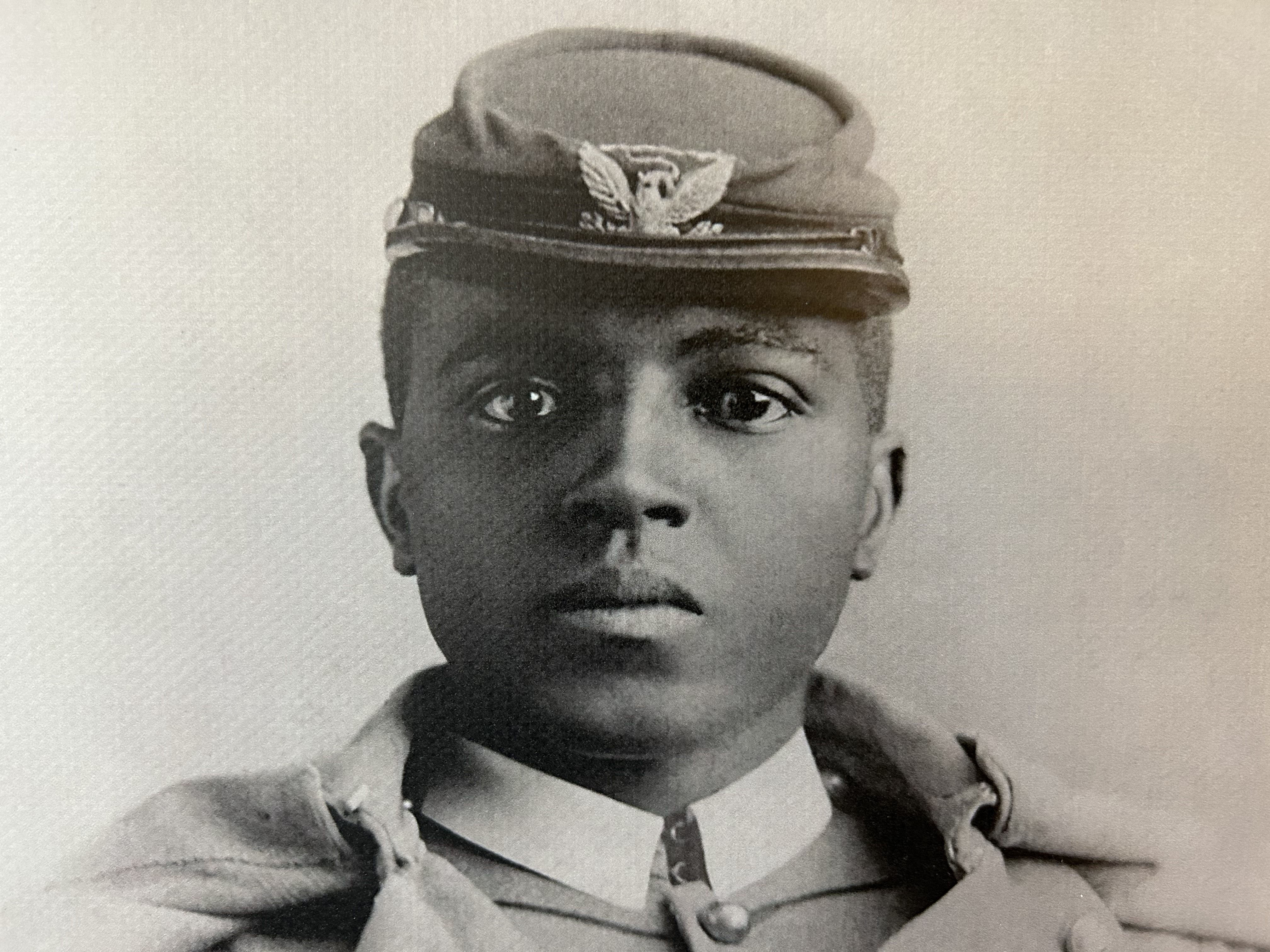
Charles Young’s father was born into slavery, escaped and joined an African American heavy artillery regiment in the Civil War. His mother and grandmother were also born into slavery but were educated and taught Charles as a boy.
Charles Young was the third African American West Point graduate to become an officer, and in 1901 he became the first African American Captain in the Army. Young was also the first African American superintendent of a National Park, Sequoia, and he eventually became the first African American Colonel in our Army.
The park here reflects the community in Wilberforce, which is the site of the first University owned and operated by African Americans. Young taught military tactics and how to be a soldier. The University also employed luminaries including WEB DuBois, voting rights activist Hallie Q. Brown, and the poet Paul L. Dunbar, all of whom enjoyed the hospitality and vibrant discussions held regularly at the Young family home, once a stop on the Underground Railroad. The Young house is still in the midst of extensive renovations, and there’s a small exhibit inside a nearby seminary library.
Young was an excellent officer, who overcame great prejudices during his interesting career, but the site is also dedicated to the many African Americans who served with him and after him. In the west, these soldiers were known as Buffalo Soldiers, due to their curly black hair, and their service is recognized at 20 different national parks, including Forts Bowie, Davis, Larned, Point, Union and Vancouver. Tragically, much of their service was against Native Americans.
The battlefields outside were long forgotten, covered by a paper mill and other modern uses, but this is a story that Americans must never forget. So the community came together to make sure we “Remember the Raisin”, correctly, completely and for our kids. The park opened in 2011, repurposing an underused ice rink, and built this longhouse and other exhibits and made the park film with the support and participation of local Native American tribes. My guide passionately explained how learning the history of his own backyard literally changed his life.
The War of 1812 was a mistake, which led to the burning of the White House and the Capitol. The US could have remained neutral as the French & British continued fighting, but instead we declared war on England without adequate preparations. The cause in the history I read was about trade relations and kidnapped sailors, but the real cause was Native American relations. The war was opposed by the ocean trading states in the northeast. Americans wanted to move west, despite the land being occupied by Natives, with treaty protections in many cases. Declaring war was popular among the western border states.
Indiana Governor Harrison destroyed a sacred Native American settlement called Prophetstown at Tippecanoe in 1811. The Americans committed atrocities there, including digging up corpses and scattering the remains. That caused the almost 20 tribes to ally with the British. When the war broke out just as the British were ready to be more conciliatory, the Americans took a French settlement on the River Raisin south of Detroit. Native Americans, with some support from British-Canadian troops, retook the village and killed a number of wounded Americans, in retaliation for Prophetstown.
Americans turned their large military losses into a recruiting tool with a big campaign to ‘Remember the Raisin’—which was followed by similar campaigns for the Alamo, the Maine, the Lusitania, Pearl Harbor and 9/11. When the new recruits arrived, the troops advanced and killed the Native leader Tecumseh. The British fled back to Canada. But for Native Americans, this was the beginning of a national military campaign to force them to Oklahoma and other reservations. Harrison was elected President after Jackson on an equally racist platform.
So it’s appropriate to start with the longhouse, the dugout canoes, maple syrup, corn meal and other Native exhibits, because this site is ground zero for US choosing policies of reneging on treaties, ignoring rights, forcing removal and waging asymmetrical war against the original inhabitants of our country.
[Note: Starting today, I’m switching to Monday, Wednesday & Friday posts to keep more up to date.]
The strange elk in the background are actually Nilgai, an Asian Antelope that escaped from a ranching project and now live in the park. In a way, it’s appropriate to start with an invasive species, since this park marks the start of the Mexican American War. In the 1840’s President Polk campaigned on expanding the country westward and as President sent troops to the Rio Grande, even though Mexico viewed it as their territory. Mexico, having only recently won its independence in 1821, was having trouble managing its northernmost territories, and lost control of much of Texas during a revolt by American settlers in the 1830’s. When Mexico’s army crossed the Rio Grande to expel the interlopers, Polk claimed that America was under attack and the war was on.
Mexico laid siege to a small fort on the north bank of the Rio Grande, and US troops were rushed in from up the coast to reinforce it. The two forces met in the middle here in a dry part of the delta. The US had better artillery, and the Mexicans had more men. The US troops were under command of Zachary Taylor, who later turned his war fame into a successful run for President, and many veterans of this battle would go on to serve in the Civil War. Lt. US Grant, who opposed war with Mexico personally, engaged in his first battle here. Between heavier guns firing more deadly shells, light guns quickly turned to face flanking attacks, and well trained US troops who engaged in hand to hand combat between here and the fort, the Mexican Army was forced to retreat. Around 100 Mexican troops and 10 US troops died in battle here.
Today the field is marked with flags and cannon to show the positions of the two sides and ‘interpretive exhibits’—small signs—to explain what happened in different places where the troops faced off. Closer to Brownsville, there’s a much smaller battlefield, the Resaca de la Palma, where the Mexican Army bravely made a stand to protect their retreat. There is a viewing platform of the resaca, meaning ‘often dry river delta channel’ (and not ‘hangover’, as the word means today). The siege of the fort was lifted, but the fort’s leader Major Brown and one other US soldier were killed in action. The fort and eventual city, Brownsville, were later named for the young officer.
Although the site only covers the first week of the war that took place in what’s now the US, the war raged on for two more years with US troops taking cities deep into Mexico, until Mexico agreed to cede Texas and sell its rights west all the way to the Pacific. Mexico lost 1/2 its territory and the US doubled in size. As interesting and consequential as the history is, the site is a well-marked field with a path for each army, so it requires some imagination and curiosity to appreciate. The small visitor center is educational, bilingual, has an informative film, and has enthusiastic and knowledgeable rangers and volunteers. But by all means go out on the battlefield, if only to see the wildlife. I saw over a dozen Nilgai, several hawks hunting in the tall grasses, a crested caracara, and more. This is a well-known area for birders.
Reconstruction began in November of 1861, when US Navy & Army forces destroyed two forts and took Port Royal, because when all the white planters fled in the Confederate retreat, 10,000 slaves took over their sea island plantations. Union policy at the time was to declare the former slaves “contraband” or illegal property seized by the military. But the pressure was on President Lincoln to resolve their status permanently. First, he quietly authorized the Union’s first black regiment—the 1st South Carolina Volunteer Infantry which by November of 1862 mustered 1000 men and engaged in battle—, and then he finalized his executive order to free the slaves.
“all persons held as slaves within any State… in rebellion against the United States, shall be then, thenceforward, and forever free”
Emancipation Proclamation of President Abraham Lincoln
Among the great mossy oaks here at Camp Saxton on the 1st day of January in 1863, our nation’s first black regiment gathered here with their friends and families to all become the first people freed by Lincoln’s Emancipation Proclamation. Then the 1st SC Volunteers received their regimental colors as proud soldiers of the Union Army, under the command of one of John Brown’s conspirators in the raid on Harpers Ferry. Harriet Tubman was also here as a volunteer spy and liberator, and in June she guided three gunboats and the 2nd SC Volunteers up the Combahee River 25 miles north in a dangerous raid that freed 700 slaves. Other African American regiments from Kansas, Massachusetts and other states in both the north and south soon followed, and by the end of the war, 200,000 African Americans enlisted to make up 10% of the Union Army.
As soon as Port Royal was liberated, Philadelphian abolitionists Laura Towne, Ellen Murray and Charlotte Forten, who was African American, arrived and began the most important part of reconstruction: teaching. While not the first African American school, in 1862 they founded the Penn School to teach people who had been denied formal education for generations. The Gullah Geechee people had created their own language and had kept many cultural traditions alive, including the delicious Lowcountry boil or Frogmore stew, and, when given the opportunity for formal education, they began learning basic, practical skills to live independently, everything from shoemaking and auto repair to cooking and nursing. At the Penn Center, I met a Gullah Geechee woman who still speaks the language and who was treated as a child by one of the first physicians to graduate from the Penn School.
The Gullah Geechee sea islands remained in Union hands throughout the war and became central to the Union “anaconda” naval blockade. The hero Robert Smalls (see Fort Sumter), after helping convince Lincoln to enlist African Americans, purchased the home of his previous owner here, using his congressionally awarded bounty for the Planter, and represented this district in Congress for five terms. The beautiful, historic neighborhoods of Beaufort were retained by the descendants of freed slaves by strict preservation laws, resulting in a sharp contrast with nearby predominantly white golfing communities like Hilton Head. In a historic echo, 100 years after the Union used Beaufort as a base to fight the Confederacy, the Reverend Dr Martin Luther King, Jr and the Southern Christian Leadership Conference chose the Penn Center as a base for their Civil Rights campaigns, including planning the March on Washington and the Poor People’s Campaign. Dr King wrote his I Have A Dream speech here in Gantt cabin on the Penn Center campus.
Plan your visit thoughtfully. To the west, Camp Saxton is hidden at the water’s edge between a navy base, the ruins of Fort Frederick and a residential neighborhood. In town, the visitor center in the historic zone’s old firehouse has very knowledgeable rangers who skillfully and kindly disabused me of my misconceptions. To the east, the Penn Center has exhibits (for a donation) on the school, the Gullah Geechee community and the important Civil Rights work done here. There are two dozen historic building on campus including a dock and a Rosenwald school. Many, such as the Brick Baptist Church, aren’t presently open to the public, but Darrah Hall is open with park staff, information and exhibits. A wonderful volunteer discussed whether the Reconstruction Era ever really ended. Plan more time for the Penn Center partner exhibits, less time for the downtown Beaufort visitor center and enough time at Camp Saxton to stand under the Emancipation Oaks (and take a better photo than I did).
This Civil War era fort still shows the pockmarked scars from Union artillery. A later famous Lt Robert E Lee helped design the tidal sluice gates and canal for the moat which circumscribes the fort, and he had assured the commander that the walls would hold. And it did hold for 112 days against a Union siege in April of 1862. But despite the impressive moat, drawbridges, masonry, and reinforced internal structures, the invention of rifled artillery made the fort obsolete, as this test of the experimental weapons demonstrated. The wall on the left end had to be rebuilt after the spinning explosive shells opened huge gaps. After 30 hours bombardment, the fort surrendered and the port of Savannah was blocked by the Union’s anaconda. Otherwise, the fort is in good condition, with good views from the tops of the walls, and walking around the inside makes for an interesting visit.
Charleston is a magnificent old port city, well worth an extensive visit. Beyond the colorful stately homes, historic churches and carriage rides, there’s the fateful battle that ignited the Civil War and much more. When I visited Fort Sumter by park ferry (before renouncing carbon travel), my kids and I stared in awe at the ships and harbor. In May of 1862, Robert Smalls, an enslaved ship’s pilot, secretly commandeered a confederate steamship, the Planter, brought his family and friends aboard under cover of darkness and maneuvered the ship out of Charleston, past forts and ships to deliver it to the Union. Fort Wagner of Glory fame (see Boston & New Bedford) was one of those confederate forts at the mouth of the harbor, before the sea took it.
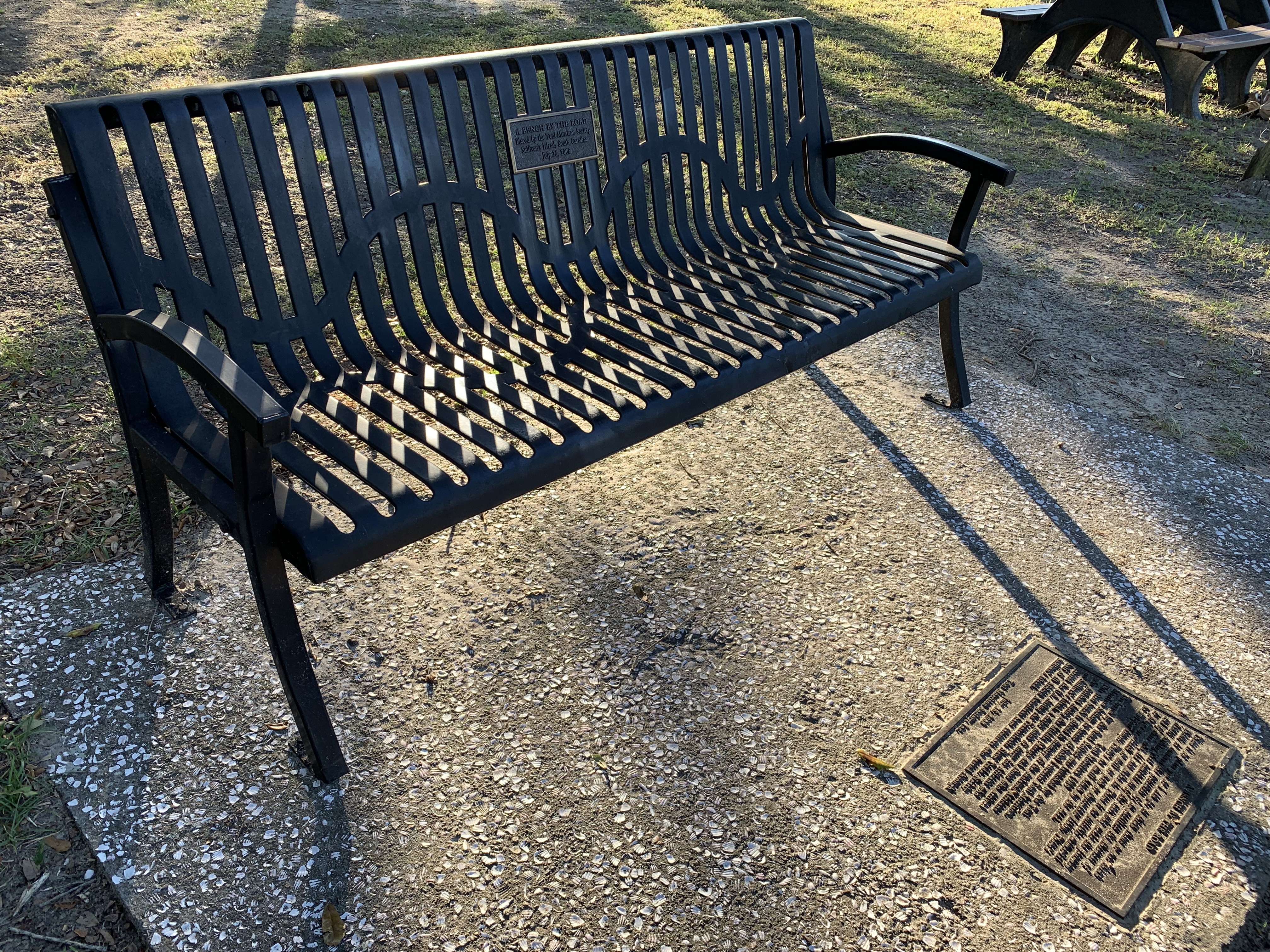
Why the bench? Beloved author Toni Morrison once explained that she wrote that book in part due to the lack of suitable monuments to capture the enormity of slavery, despite centuries of oppression and discrimination. From the impact on Africa, the millions killed in the transatlantic passage, the millions bred in captivity, the millions worked until death, the millions separated, raped and tortured, to the millions kept in ignorance and darkness for centuries, there has been no full accounting, no complete understanding and precious little effort to try. Since the interview, benches have been place in a few places around the world, including the back corner here, at Fort Moultrie near the dock.
“There is no place you or I can go, to think about or not think about, to summon the presences of, or recollect the absences of slaves . . . There is no suitable memorial, or plaque, or wreath, or wall, or park, or skyscraper lobby. There’s no 300-foot tower, there’s no small bench by the road. There is not even a tree scored, an initial that I can visit or you can visit in Charleston or Savannah or New York or Providence or better still on the banks of the Mississippi.”
Toni Morison, from an interview in 1989
This vast crime against humanity, slavery, was the cause of the Civil War, not the attack on Fort Sumter. And the bench, while far too small a gesture, is a good place to start thinking about it. Another step would be to fund grants and awards to the descendants of enslaved people for producing literature and other great works, to help make up a little of the deficit caused by centuries of enforced silence, forbidden literacy and lives erased.





 Zero Carbon Travel