US War on Native America, 1775-1924

November is Native American Heritage Month, and next week is the 403rd anniversary of the first Thanksgiving feast of the Pilgrims and the Wampanoag, when, as earlier in Jamestown, Native Americans helped starving English colonists. Contrary to the gauzy fabricated myth that natives peacefully welcomed Christian settlers and happily ceded their lands, tribes were decimated by disease and were massacred in both the Pequot War and King Philip’s War. Thanksgiving was first declared a national holiday by Abraham Lincoln during the Civil War, at a time when the US government was also at war with the Apache, Commanche, Navajo, Sioux, Ute and Yavapai, among other tribes. In the interests of truth, this post will focus on the NPS sites of the US War on Native America from the Revolution to 1924.

Our Democracy owes a debt to the Iroquois Confederacy formed 882 years ago, the oldest living participatory democracy. Ben Franklin was a student of Hiawatha’s Law of Peace which united 5 (later 6) tribes on issues affecting them all, while allowing them each to manage their own tribal issues separately. Thus, 13 colonies united to gain independence, becoming the United States. In 1794, George Washington signed the Treaty of Canandaigua recognizing our allies the Oneida, who fought with the Patriots at Fort Stanwix and Saratoga. The other tribes of the Iroquois Confederacy, many having fought for the British, had lost most of their lands in the 1783 Treaty of Paris.

For Native Americans, war with the US continued non-stop, moving northwest near Fallen Timbers and southeast near Chickamauga and Chattanooga. Despite winning the most successful native battle against the US army at the Wabash River, the pattern of natives losing their land regardless of whether they fought or which side they joined continued. The River Raisin set the stage for the War of 1812 and made the issue of claiming native land a mainstay of presidential campaigns. General Jackson leveraged his victory at Horseshoe Bend to become a popular national figure, and as President, he defied the Supreme Court to remove many tribes from the southeast to Oklahoma on the Trail of Tears.

As the country expanded out west, following the scouting trip of Lewis & Clark, the US military used a network of forts in their continuing war against natives along the Old Spanish Trails west of the Mississippi: Arkansas Post, Fort Smith, Fort Scott, Fort Larned, Fort Laramie, Fort Davis, Fort Union, and Fort Bowie. Each was involved in supporting hundreds of one-sided battles against Native Americans, often involving Buffalo Soldiers in remote places like Chiricahua. While there were a few forts, like Fort Vancouver and Fort Union Trading Post, that were peaceful, there were also other forts like Bent’s Old Fort, Hubbell Trading Post and at Pipe Spring that were involved in the destruction of native tribes, often by destroying their food supplies. And after being cleared of natives, the Homestead Act gave their land to settlers for free.

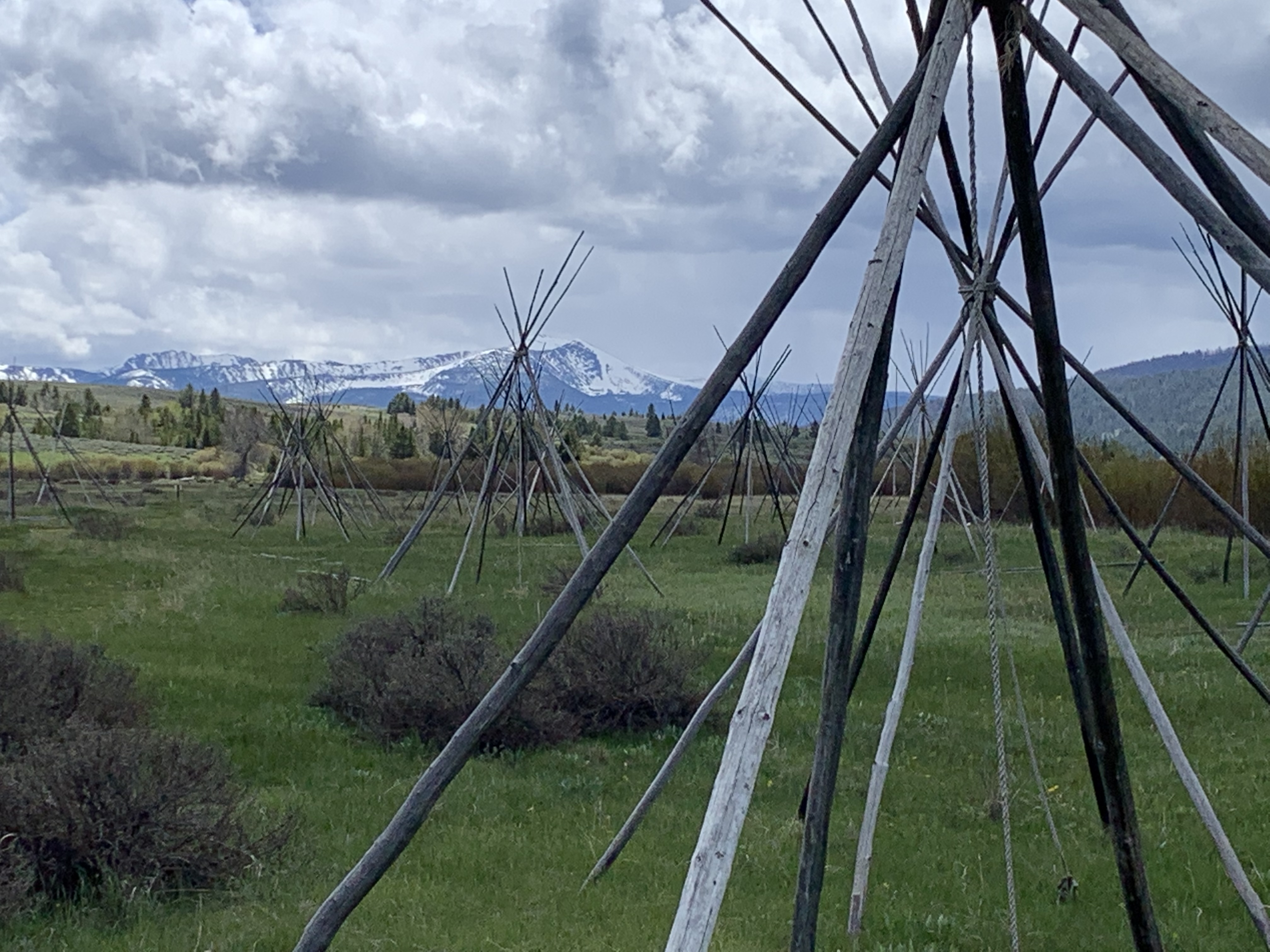
And there were massacres. Not the rare US military defeat like at Little Bighorn. Not the few sensationalized or many fictional stories of natives killing relatively small numbers of white settlers, like at Whitman Mission. But the illegal massacres of hundreds of peaceful villagers by US Army regulars and volunteers at Big Hole above, Sand Creek, and Washita Battlefield, among many others not yet memorialized by the NPS. Even our national monument to great presidents at Mount Rushmore is not far from the massacre site at Wounded Knee.

The US War on Native America is not usually considered as one continuous war, but rather as over 60 different military conflicts, often overlapping, between 1775 and 1924, when the last Apache raid was conducted in the US and when Native Americans finally got the right to vote 100 years ago. However, the US was at war with various Native American tribes in the years from 1775 to 1795, from 1811 to 1815, 1817-1818, in 1823, 1827, 1832 and from 1835 to 1924, or for 121 years of active fighting, plus 29 years of intervening “peaceful” forced removal by the US and state governments, even of tribes which had assimilated. Taken as a whole—including forcing dishonest treaties, abrogating treaties, suspending promised annuities, terminating trading relations, cheating tribes in unfair land deals, preventing private land deals with natives, relocating natives when gold was discovered on their land, revoking Indian land titles, seizing tribal land, annulling tribal constitutions, challenging their rights in court, dismissing their victories in court, dividing tribes, destroying crops, killing livestock, slaughtering bison, subsidizing exodus, rounding up tribal members into camps, locking them in forts, and forced marching them 1,000 miles over 5 months under US military guard—, the US government policy of removing Native Americans by force was a single policy, confirmed by multiple US presidents, passed into laws by Congress, and executed by the US military with deadly force against one group, known collectively as “Indians”—as in the “Indian Removal Act” of 1830—. So, rather than being dismissed as dozens of piecemeal conflicts, the US military actions against all the tribes should be considered as a single 150 year long, genocidal war.

It is horrifying to me that we do not recognize our nation’s longest war, even in the 100th anniversary since its end. We have largely forgotten the roughly 100 tribes that are now extinct, as well as the Pontiac War which used smallpox blankets, the Potawatomi Trail of Death, the Long Walk of the Navajo, the Yavapai Exodus, and others. And we in the United States—founded under a Native American democratic organizing principle and living on native land—do not admit that the long, costly war, devastating relocations and cultural destruction, was repeatedly approved by racist American voters.

“The wounded, the sick, newborn babies, and the old men on the point of death…
I saw them embark to cross the great river and the sight will never fade from my memory.
Neither sob nor complaint rose from that silent assembly.
Their afflictions were of long standing, and they felt them to be irremediable.”
Alexis de Tocqueville, on witnessing the Trail of Tears in Memphis

Fallen Timbers Battlefield and Fort Miamis National Historic Site

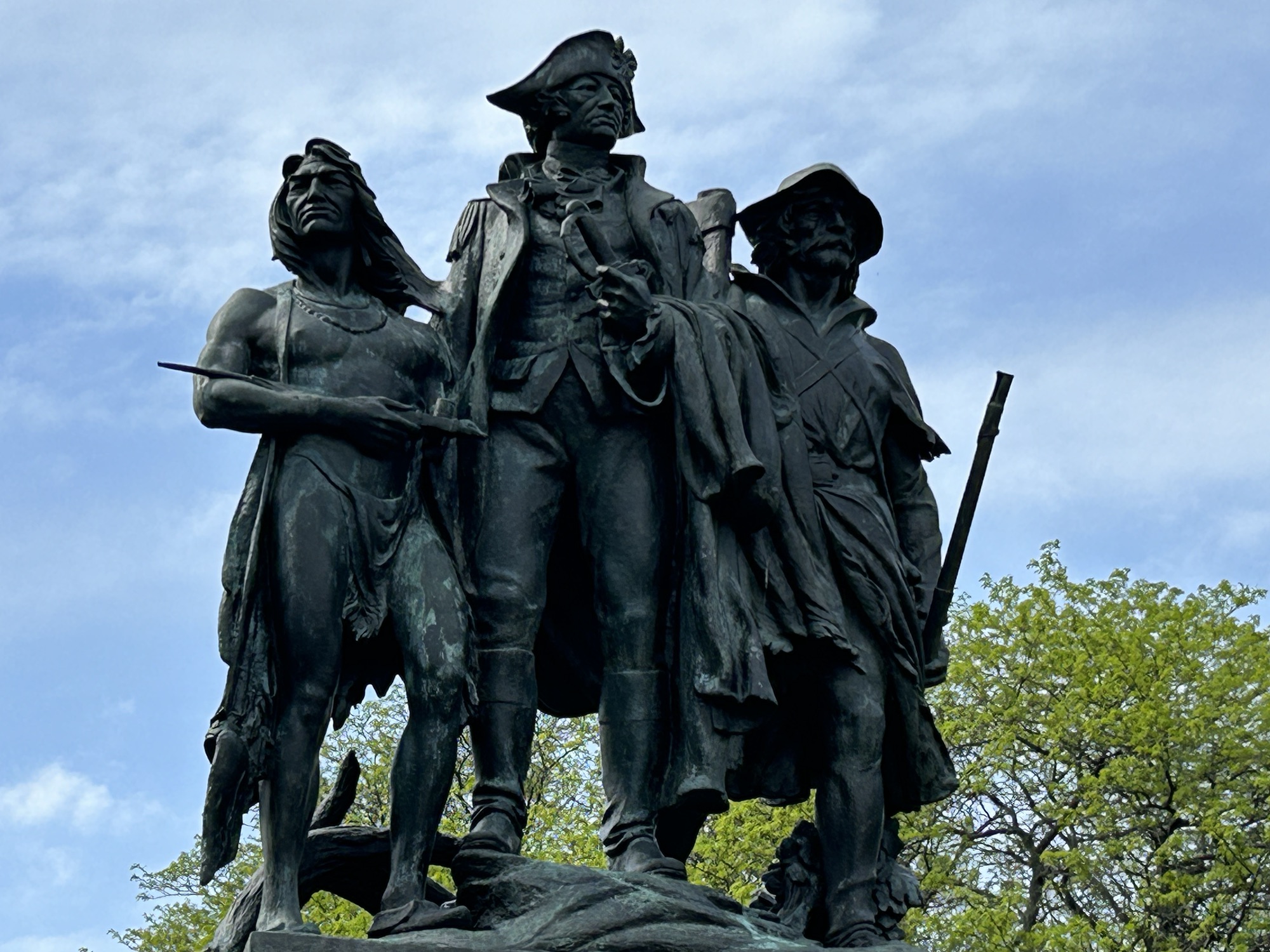
The much disputed western frontier was once here in Ohio, where the British Fort Miamis guarded the crossing point and last navigable stretch of the Maumee River to Lake Erie, backed by their confederation of Native American allies. George Washington sent General Wayne (above center) here after his previous general had been defeated. In 1794, Wayne’s troops met over 1,000 native warriors in battle, and prevailed, resulting in much native land being ceded to the US.

In 1811, Indiana Governor William Henry Harrison provoked the natives into fighting again. When the War of 1812 broke out, the British reforged their native alliances and used their naval power to reoccupy Fort Miamis. Now General Harrison—later the 9th President—built a new fort on the other side of the Maumee River and held it against attack. The fighting then moved north, where Harrison’s troops killed the Shawnee leader Tecumseh and defeated the British on the Canadian side of Lake Erie, ending both the British occupation and native land ownership in most of the northwest.

The site is affiliated with the NPS and managed by Toledo. Due to an early mistaken account of where the battle occurred, the statue above is neither on nor facing the battlefield, which is behind them over a bike bridge in the woods. There are plenty of bike trails connecting different riverside parks, and there’s an Audubon island with heron in the middle of the river. The earthworks of Fort Miamis are still clearly visible overlooking the Maumee. History and nature await us.

Nez Perce National Historical Park

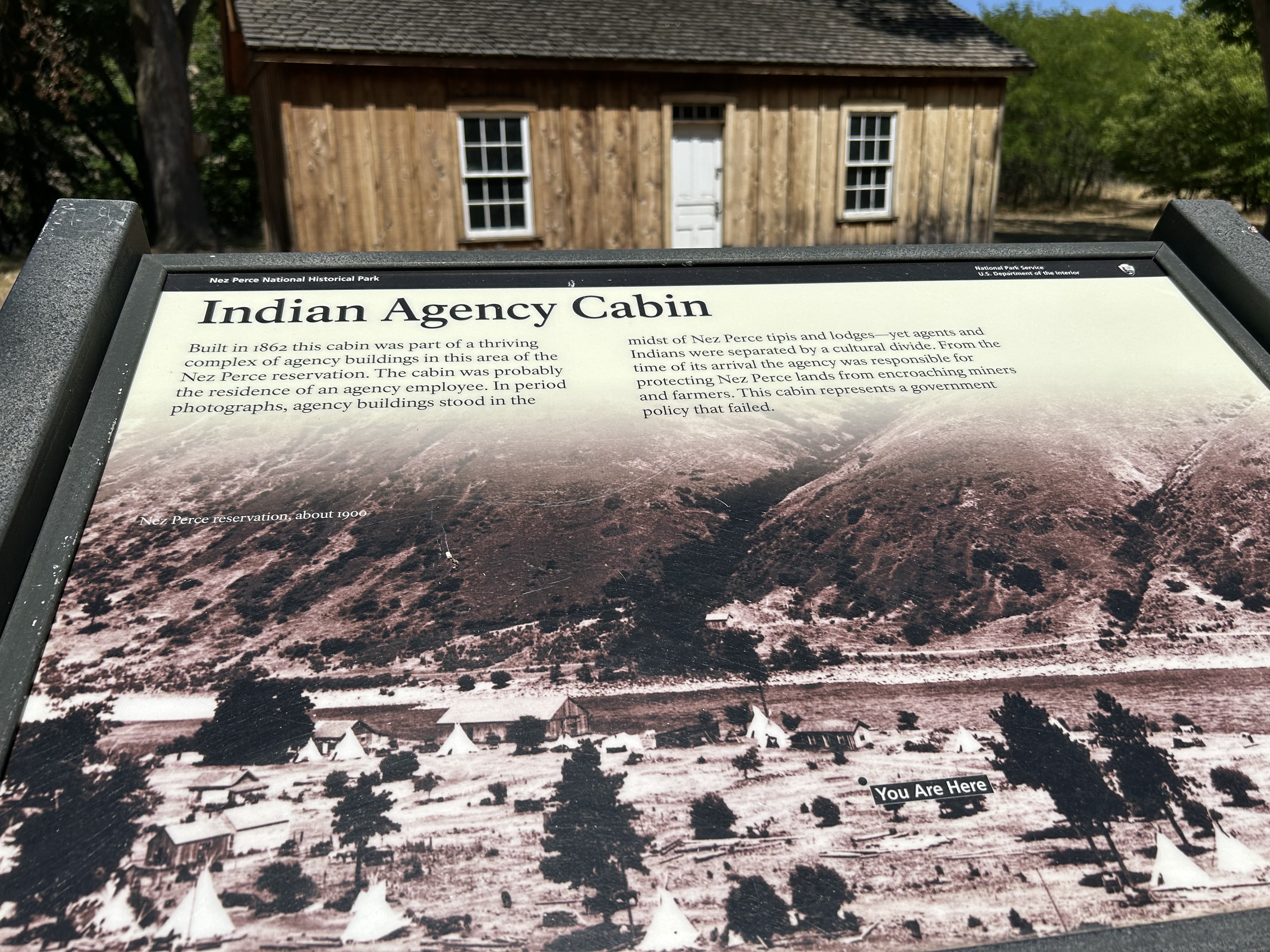
The visitor center in Idaho is on a hill above where the Lapwai Creek flows into the Clearwater River, which joins the Snake River a few miles downstream in Lewiston. The river banks were an excellent place for salmon, berries, edible flowers, and game, and the Nimiipuu used to arrive in the fall and stay through winter. By summer, they would be hunting up in the hills, forests & mountains. French trappers called the tribe Nez Perce or ‘Pierced Nose’, although that wasn’t a traditional tribal practice. When Lewis & Clark passed through, the Nimiipuu assisted the expedition and helped them make canoes. When the missionaries and other settlers arrived, they were forced to change. Many tried desperately to compromise and adapt. After the nearby Whitman mission ended in a massacre, racist demagoguery fueled far more excessive violence across the west, bringing the US military, war, exile and restricted reservation life, including here around the Spaulding mission, pictured circa 1900.

The affiliated Nez Perce National Historic Trail, which marks the flight of the tribe from the US Army, is now part of the broad official Nez Perce NHP, including Big Hole in Montana, a refuge near Lake Roosevelt, the White Bird & Clearwater Battlefields, through Lolo Pass, Yellowstone, Billings and up to Bear Paw Battlefield. Over the years, I’ve visited these places on roadtrips, read several of the books, from I Will Fight No More Forever to Chief Joseph & the Flight of the Nez Perce and pondered the mistakes and tragedy. There is simply no excuse for breaking treaties, stealing land, or killing defenseless people, including women, children, the elderly and infants. When leaders take advantage of popular anger to focus attacks against a community, the result is often far more evil than any original sins. I encourage you to learn more, since the problem of demagoguery is still with us.

But the Nez Perce tribe is still here with us, like the flowers they used to cultivate here. They are re-learning the language that they used to be punished for speaking. They self-govern, petition the US government, sing songs, dance, teach their kids to gather plants, hunt, fish and carry on their cultural traditions and exercise their treaty rights. The lessons of their forefathers and their oral traditions continue to be remembered, spoken aloud and passed down to future generations. The park preserves petroglyphs, artifacts and sites of mythology. Their culture is vibrant and contributes a valuable perspective to all of us. They are not doomed to be permanent prisoners of tragedy, and the park film here is a refreshing reminder of the resilience and life of their culture and of the human spirit.

Charles Young Buffalo Soldiers National Monument

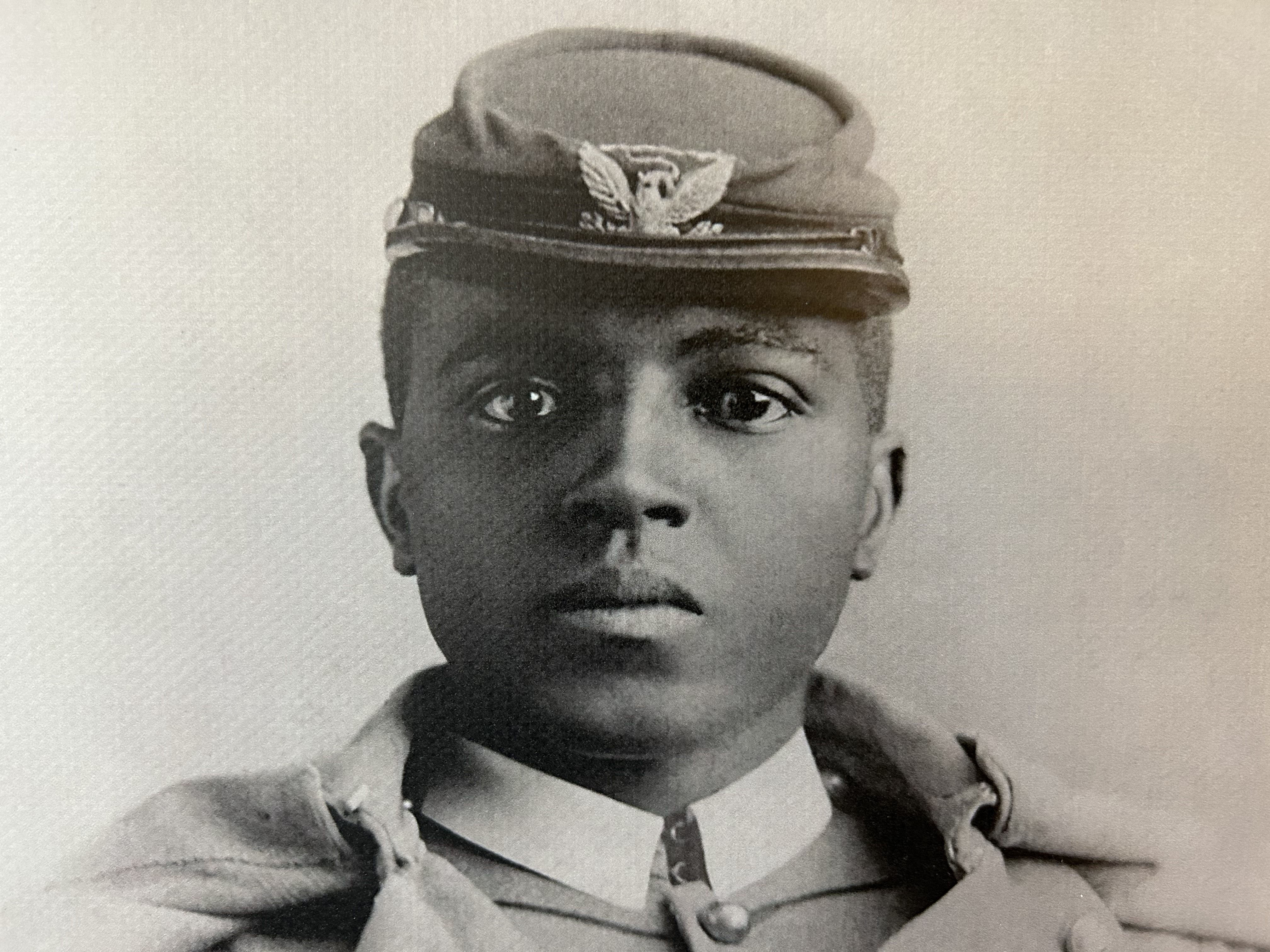
Charles Young’s father was born into slavery, escaped and joined an African American heavy artillery regiment in the Civil War. His mother and grandmother were also born into slavery but were educated and taught Charles as a boy.

Charles Young was the third African American West Point graduate to become an officer, and in 1901 he became the first African American Captain in the Army. Young was also the first African American superintendent of a National Park, Sequoia, and he eventually became the first African American Colonel in our Army.

The park here reflects the community in Wilberforce, which is the site of the first University owned and operated by African Americans. Young taught military tactics and how to be a soldier. The University also employed luminaries including WEB DuBois, voting rights activist Hallie Q. Brown, and the poet Paul L. Dunbar, all of whom enjoyed the hospitality and vibrant discussions held regularly at the Young family home, once a stop on the Underground Railroad. The Young house is still in the midst of extensive renovations, and there’s a small exhibit inside a nearby seminary library.

Young was an excellent officer, who overcame great prejudices during his interesting career, but the site is also dedicated to the many African Americans who served with him and after him. In the west, these soldiers were known as Buffalo Soldiers, due to their curly black hair, and their service is recognized at 20 different national parks, including Forts Bowie, Davis, Larned, Point, Union and Vancouver. Tragically, much of their service was against Native Americans.

River Raisin National Battlefield Park

The battlefields outside were long forgotten, covered by a paper mill and other modern uses, but this is a story that Americans must never forget. So the community came together to make sure we “Remember the Raisin”, correctly, completely and for our kids. The park opened in 2011, repurposing an underused ice rink, and built this longhouse and other exhibits and made the park film with the support and participation of local Native American tribes. My guide passionately explained how learning the history of his own backyard literally changed his life.

The War of 1812 was a mistake, which led to the burning of the White House and the Capitol. The US could have remained neutral as the French & British continued fighting, but instead we declared war on England without adequate preparations. The cause in the history I read was about trade relations and kidnapped sailors, but the real cause was Native American relations. The war was opposed by the ocean trading states in the northeast. Americans wanted to move west, despite the land being occupied by Natives, with treaty protections in many cases. Declaring war was popular among the western border states.

Indiana Governor Harrison destroyed a sacred Native American settlement called Prophetstown at Tippecanoe in 1811. The Americans committed atrocities there, including digging up corpses and scattering the remains. That caused the almost 20 tribes to ally with the British. When the war broke out just as the British were ready to be more conciliatory, the Americans took a French settlement on the River Raisin south of Detroit. Native Americans, with some support from British-Canadian troops, retook the village and killed a number of wounded Americans, in retaliation for Prophetstown.

Americans turned their large military losses into a recruiting tool with a big campaign to ‘Remember the Raisin’—which was followed by similar campaigns for the Alamo, the Maine, the Lusitania, Pearl Harbor and 9/11. When the new recruits arrived, the troops advanced and killed the Native leader Tecumseh. The British fled back to Canada. But for Native Americans, this was the beginning of a national military campaign to force them to Oklahoma and other reservations. Harrison was elected President after Jackson on an equally racist platform.

So it’s appropriate to start with the longhouse, the dugout canoes, maple syrup, corn meal and other Native exhibits, because this site is ground zero for US choosing policies of reneging on treaties, ignoring rights, forcing removal and waging asymmetrical war against the original inhabitants of our country.

De Soto National Memorial

While the park unit is small, it is excellent, with knowledgeable rangers, many of these photographic outdoor displays, and an easy nature trail with beautiful birds along the Manatee River. There are frequent interactive events here, and the film in the visitor center is particularly well done, covering the important history of De Soto’s exploration and conflict with Native Americans.

The Spanish expedition from 1539 to 1543 was a brutal failure that cost De Soto his life and fortune, and it was his fault. After helping plunder the Incan Empire (Peru) in 1533, De Soto used his stolen gold to bring more Spanish soldiers to Florida to look for more gold. Some of the natives had recent run-ins with similar Spaniards, so they kept telling him, ‘sure, there’s more gold, but it’s a little further north’. Guides who failed to deliver the promised gold were killed. (Coronado was on a similar mission at the same time further west). De Soto took hundreds of natives captive as slaves, gave the women to his men, slaughtered thousands and told the natives that he was a deity, oh, and he brought a Catholic priest (see far right). For years, they marched through the southeast, killing, burning, pillaging, enslaving, raping and spreading disease. Many of the natives fought back, mimicking some of their brutal tactics, including the Chickasaw, who later owned slaves and fought for the Confederacy. After De Soto died of fever, his men gave up on his fruitless hunt for gold and maybe half made it back.

As horrific as that all was, several of the survivors wrote accounts of their first contact with the natives, and some of those accounts provide rare descriptions of the native cultures that existed (until the Spanish arrived). De Soto actually found an interpreter from Seville who had been adopted by a local tribe after his expedition starved to death, but he later died on this new expedition. One survivor’s record clearly states that a nearby shell mound was the foundation for the local chief’s dwelling, proving that the mounds in Florida were not simply middens but were built intentionally as elevated platforms for important people and functions, contradicting the park film at Canaveral. A large mound on this site was removed for building roads, before the park service began protecting them. After all the death and destruction inflicted on the natives, it feels especially cruel to erase the last remaining remnants of their culture without acknowledgement.

Washita Battlefield National Historic Site

No veteran wants to realize that their command lied to get them to commit war crimes. In the film The Last Samurai, Tom Cruise plays a Civil War veteran haunted by his part in the Washita Battle. In my view, honoring veterans begins by honoring the truth, the rules of military engagement and heroism. And it’s important to get it right, not just for the veterans, but so we get it right in future conflicts.

The US Cavalry here were told inaccurate stories about the Cheyenne, that they were all savage warriors, that they had killed more settlers than they had, and that they must all be punished for their crimes. They were ordered to attack a peaceful village of non-combatant elderly men, women & children while they slept and to destroy their possessions so the survivors would starve during winter. Despite inferior weapons, the Native Americans defended themselves bravely.

The village Chief, Black Kettle, survived the Sand Creek Massacre, and still counseled peace with the US, until the US Cavalry killed him here. Yes, some of the Cheyenne were angry over that earlier massacre, and they raided settlements. But most of the raids were thefts of food and cattle and destroying property, after the US government reneged on its treaty promises to provide food, land and compensation. Yes, some white settlers were killed by renegades, including women and children, but for every settler killed, hundreds of natives were killed, for ever cow stolen, tens of thousands of bison were killed. Three months before the massacre here, Chief Little Rock agreed to turn over those responsible for raids, but he was also killed protecting women and children as they escaped down the Washita River.

Generals Sheridan and Sherman exaggerated the number of white settlers killed to justify declaring war on the entire tribe. No culture is entirely comprised of warriors, but Sheridan and Sherman promoted that lie to encourage the troops to commit war crimes against peaceful non-combatants, including women and children. Custer was unconcerned about whether the village was peaceful or harboring fugitives. He was just interested in surrounding the village and killing all the men, some of the women and children and taking hostages. He showed the same disinterest in sizing up his target at Little Bighorn.

The US government repeatedly lied to the Native Americans, broke treaties, ignored Supreme Court orders, forcibly deported tribes, ordered troops to war against allied and peaceful tribes, stole lands, burned homes and possessions, drove the bison to the edge of extinction (50 million to 500), destroyed crops, introduced diseases, forced children into re-education centers, and tried to destroy native culture, language and religion, all to promote a near-genocidal racist policy of populating most of the country primarily with white settlers.

Those US military and government acts and policies were wrong, and we should honor our veterans and flag by admitting the truth, so that we can act correctly in the future. We do not teach our children that if they want something, they should take it by force and then lie about it. We do not believe that declaring war justifies intentionally killing civilian non-combatants, including women and children. And we should not lie to our children to excuse the mistakes of our ancestors.

Unfortunately, rather than confront the one-sided and disproportionately violent history against Native Americans, the old excuses for US war crimes still continue today, funded by your tax dollars. The pamphlet for this site blames Native American raids for the Sand Creek Massacre, the film describes the Cheyenne as a hostile warrior culture (because they eat bison?!?), and the site presents the “battle” as a necessary victory to achieve peace and open the west. No. Without justice, there is no peace. And the west was already open: California had been a state since 1850.

That our ancestors engaged in avoidable, brutal massacres out of racism and greed is upsetting, albeit truthful. Our veterans deserve to live in a truthful country. The Native Americans who contributed to this site are doing a public service in telling us the truth, and we owe it to them to listen. That some people today, 150 years later, still whitewash history with dishonest racist pseudo-justifications is unacceptable. That the park service here misinforms visitors and believes 1/2 of its mission is to excuse tragic avoidable war crimes is profoundly wrong.

Fort Stanwix National Monument

Yes, I’m back with a bang! Tesla is still working on my car (Chaco was tough on the springs), but rather than hold me hostage, they’re letting me travel around in a Model S until my car is ready. And the fort celebrates the 1777 victory for two weeks in mid-August with hourly cannon fire!

This fort has it all: drawbridge, sally-port, parapets, ramparts, and meticulously detailed barracks. And it’s open, labeled, extremely photogenic and great fun to climb around and explore. A small crowd gathers just a few yards from the cannon just below the colonial officer walking in the photo, and each step is demonstrated from candle to boom!

Long before we became an independent country, French fur traders gathered at this natural portage between the St Lawrence Seaway and the Hudson River and bought beaver pelts from Native Americans to make hats. I drove up the Hudson River Valley, along the Mohawk River and saw signs for Oneida Lake which drains into Lake Ontario. A short portage here connects the two watersheds, making this a strategic point in the middle of New York State, later connected by the Erie Canal. Control of this portage had international repercussions, as colonial powers divided up the globe.

The British built the original fort after capturing the area during the French & Indian War, and George Washington rebuilt it to defend the territory from the British. The key battle happened when a British Colonel led troops from the Great Lakes to meet with General Burgoyne’s force from Montreal in order to separate New England from the rest of the colonies. Both sides were joined by Native American warriors, and there was a particularly bloody ambush in the woods near the fort. The Patriots defended the fort for about 3 weeks before Benedict Arnold’s reinforcements (when he was still on our side) disrupted the plan, leading to Burgoyne’s surrender at Saratoga. Regardless of which side they fought on, the Native Americans were eventually forced to cede lands in New York, Ohio and Pennsylvania, in return for some annual compensation and limited sovereignty over their remaining land near here.

Big Hole National Battlefield

This uniquely tragic site in the War on Native America is also part of the Nez Perce National Historical Park, and it sits in the scenic Big Hole valley, right near the little town of Wisdom.

The US military was hunting down natives who refused to go to reservations and a few fugitives who had killed some settlers. They attacked the camp at night, burned the tipis and killed around 90 natives, mostly women and children, including babies bludgeoned to death. The warriors killed 31 soldiers in defense and then fled with the survivors. Some eventually escaped to Canada, but Chief Joseph later surrendered at Bear Paw with the rest.

Hail fell while I was at the Nez Perce cemetery above, and it felt appropriate, considering the terrible history here. I took some time after the film and walk to try to draw any wisdom, and all I could come up with was this.

No person can claim credit alone for greatness, as our existence is entirely due to the natural world that we evolved from, which sustained our ancestors and us. Yet a great idea, which is not limited by time and place, can inspire, destroy or outlast our civilizations, as long as there are still humans who understand it. So we must not think so much of ourselves. We must thank the natural world for everything it has given us. And we must try to cultivate thoughts, wisdom, moral judgements, insights, inspiration and kindness that may survive us and improve the future.

Little Bighorn Battlefield National Monument

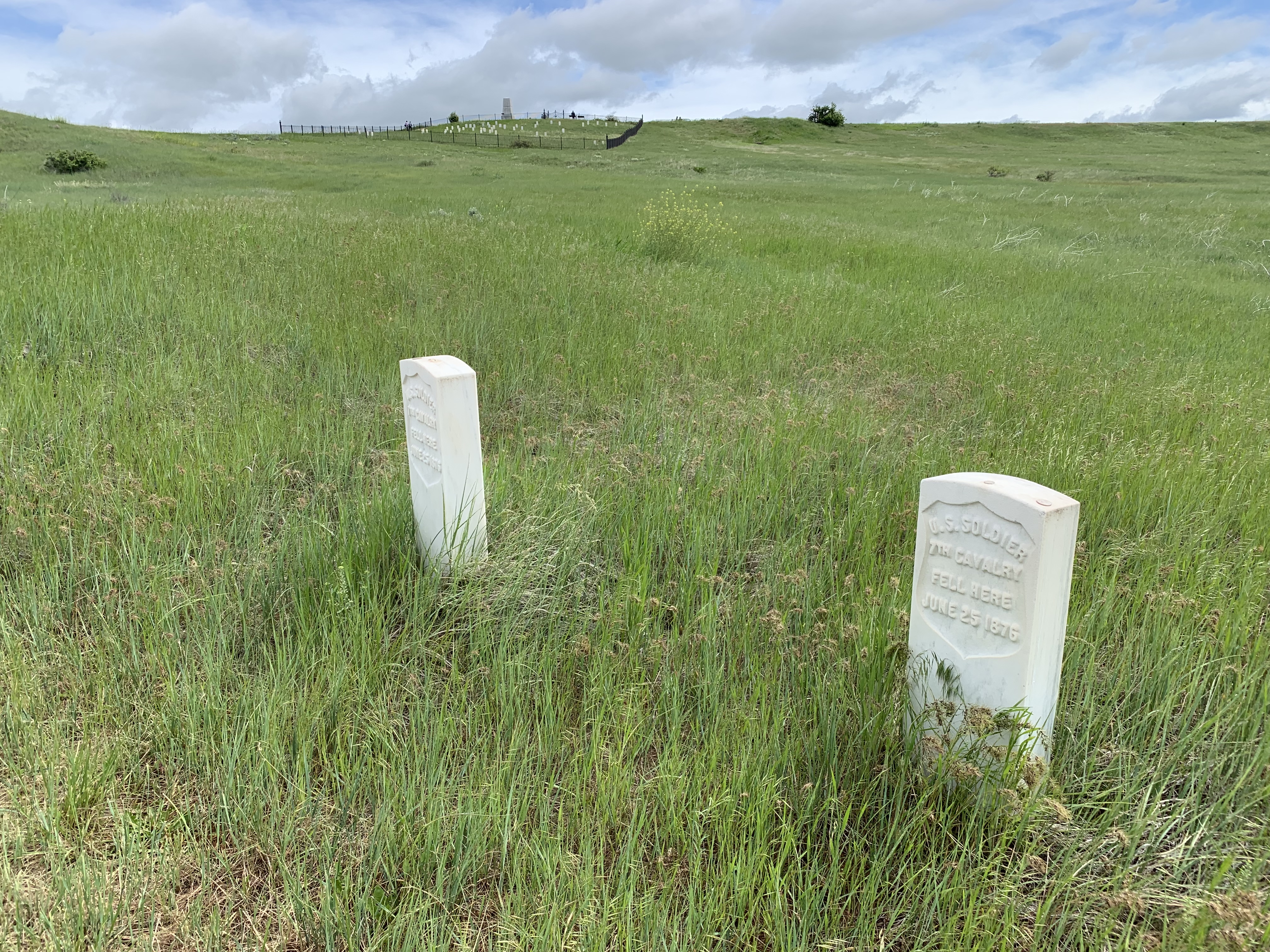
Two unnamed cavalrymen are memorialized here, below the hill where Custer made his last stand. Until fairly recently, there were no similar monuments to the Native Americans who won the battle. Now there are several, naming the heroes who defended their village, wives and children here from the cavalry attack. Custer intended on burning the village and likely was trying to take women and children hostage when he overextended his forces to this hill. The natives were surprised by the attack, and while this was their greatest and last victory over better armed US troops, it must be recognized as essentially a defensive act in response to US military aggression. The native ranger talk here is a favorite experience.

Seeing the landscape helps understand what went wrong. Custer split his forces, sending some towards the far south end of the village as he approached the north. Underestimating the size of the village both physically and in number of warriors and underestimating how fiercely they would fight back, he spread his forces thinly in order to prevent natives from escaping. He sent word to his other troops to join him thinking that he had found the village, not realizing that they had also found the village at the other end two miles away. His cavalry would have been visible on the ridge, while the natives would be hiding in the grasses & creek beds that allowed them to slowly climb the ridge. Urged on by Crazy Horse, White Bull and other chiefs, the natives stopped the US advance, kept the troops separated and eventually took the hill as Custer ran out of ammunition.