Longfellow House – Washington’s Headquarters National Historic Site

The stately home to the right should be the subject of my photo, or perhaps the meticulously preserved interior, but I’ve always loved the garden. Brattle is a quiet street off of Harvard Square, and the garden is a lovely little oasis for contemplation. George Washington doubtless had little free time after he set up his command here to build a revolutionary army. The British had retreated to Boston (along with the owner of this house) after the Minutemen forced them back in Concord. A siege ensued, and the British were unable to break out of the city, taking heavy losses at Bunker Hill. Then Washington arrived here, organized, trained, and motivated his troops for nine months. In the middle of an exceptionally cold winter, using oxen to drag sledges quickly over the ice, Henry Knox delivered cannon captured in New York to the hills surrounding Boston, and the British evacuated the city permanently.

Some sixty years later, a young literature professor named Henry Wadsworth Longfellow arrived here to rent a room from the indebted landlord, and he was thrilled to stay in the famous headquarters of General Washington. His father in law bought the house for the young couple, and Longfellow wrote the poems that many of us memorized as children: A Psalm of Life, The Midnight Ride of Paul Revere, Song of Hiawatha, the Courtship of Miles Standish, and Tales of a Wayside Inn. Fortunately for us, his family protected his legacy in exceptional detail, along with heirlooms from his colorful relatives, such that “if Longfellow returned, he would be able to find his books and most of his things exactly where he left them”. The tour explains the history of all kinds of people who lived here, from the first owner’s slaves to the flamboyant Longfellow descendant who both preserved the original artifacts and entertained here in style.

“All are architects of Fate,

Working in these walls of Time;

Some with massive deeds and great,

Some with ornaments of rhyme.”

Henry Wadsworth Longfellow, 1849
Boston National Historical Park

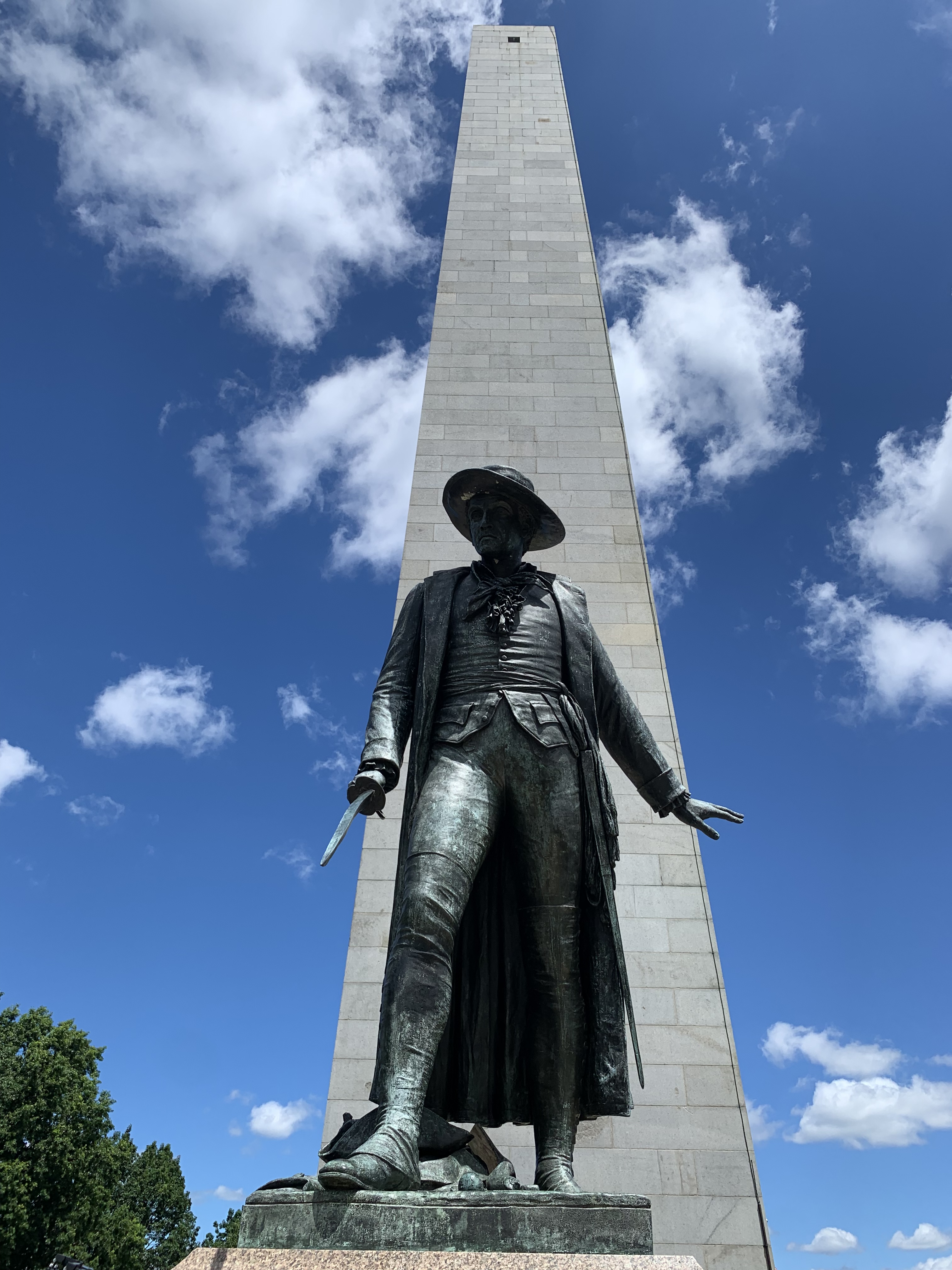
“Do not fire until you see the whites of their eyes.”

Colonel William Prescott, 1775

While the way to the top of the Bunker Hill Monument is currently closed, there is a live webcam. The monument is at the top of Breeds Hill, which the colonial soldiers defended against repeated attacks, before retreating to Bunker Hill. There’s a free museum facing Prescott’s statue across the street.

Boston has an embarrassment of historic sites in this park: the USS Constitution, Paul Revere’s house, the Old South Meeting House, the Old North Church, the Old State House, and Faneuil Hall. Each one is worth exploring to learn how we became independent, how we developed our democracy in town hall meetings, and how we debated our rights as Americans. Oh, and I’ve forgotten another historic ship (WWII), another historic battlefield (not open), another museum, a historic navy yard, living history exhibits, and other fascinating sites on the popular Freedom Trail.

Since the traffic and parking are even more horrendous than I remember, I definitely recommend taking the subway (electric and also historic) and walking. Many of the sites are clustered together, and the Rose Kennedy Greenway has beautiful art, flowers, and fountains along the way. Faneuil Hall is a great place to try local foods, and I recommend the thin cheesy Regina Pizzeria slices.

George Rogers Clark National Historical Park

Someone in Hollywood needs to tell this story, because I don’t think enough Americans know about the older brother of William Clark (of the Lewis & Clark Expedition) or how 150 men took the territory that became Illinois, Indiana, Ohio, Minnesota, and Wisconsin. It’s one of my favorites.

The Revolutionary War in this area between the northern Mississippi and Ohio rivers was sort of a rematch of the French & Indian War. The French wanted revenge against the British, so they sided with the American colonists. The British were paying Native American mercenaries to fight for them, even though the natives were on the French side before. And the American colonists had antagonized the natives by taking their lands.

Clark was 19 when he started surveying the territory west of Virginia and joined the militia just before the war started in Concord, Massachusetts. Although young, he knew the area, the tribes, the conflicts and he showed initiative. He negotiated a territorial dispute with Governor Patrick Henry, representing settlers like Daniel Boone. He led Kentucky militia to defend settlements against British-funded native raids. So when the fighting broke out, he presented a bold plan to seize three British outposts in what’s now southern Illinois. Governor Henry approved the plan, gave him a promotion, but little else.

For the rest of the story, you have to watch the park film, or read a book or wait for the Hollywood blockbuster. But let me just say it involves many French settlers who help Clark, an Italian merchant who tells Clark when the British are vulnerable, Native Americans who decide to stay out of the conflict, a brutal winter march through floods, Kentucky sharpshooters, much military deception, and a desperate pre-emptive strike against a superior defensive force.

Whatever Clark did in the rest of his life to die an impoverished alcoholic, should not take away from what he accomplished at age 26: an incredible underdog victory by 150 men, whom Clark convinced to fight and trained, resulting in five states ceded by Britain to the US. (I had neither graduated from college nor gotten my drivers license by age 26.)

Chickamauga and Chattanooga National Military Park

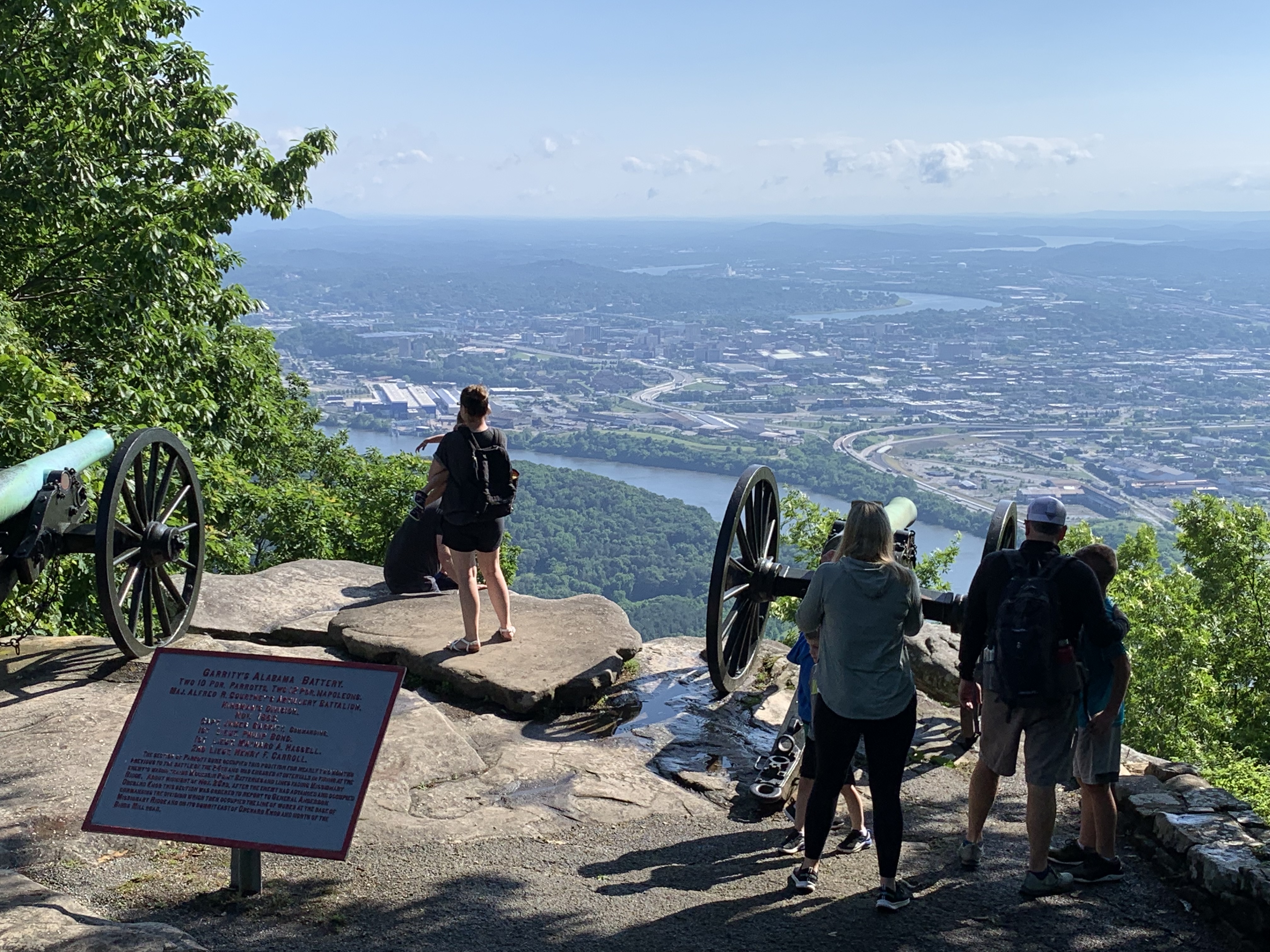
Before I rant again, let me just acknowledge that there’s a dramatically beautiful view on Lookout Mountain. Chattanooga below is in a strategic location at the bend of the river below. Long before the Civil War battles, the last overland battle of the Revolution was fought here. There’s even a steep funicular line to enjoy the view.

Militarily, controlling the high ground has always been the key. Grant used it to capture Chattanooga, and the confederates used it to try to recapture the city, unsuccessfully. Chickamauga nearby in Georgia is much flatter and covered with monuments to both sides. Which brings me to my brief rant. If even a fraction of the money and effort spent on monuments for both sides were used to explain the cause of the war, slavery, then maybe we wouldn’t have some politicians today still trying to claim that there are “very fine people on both sides” of racial prejudice. No. Racism was wrong both then and now, and the longer that we evade the obvious moral judgements here, the harder it will be to remove the poison.

Ninety Six National Historic Site

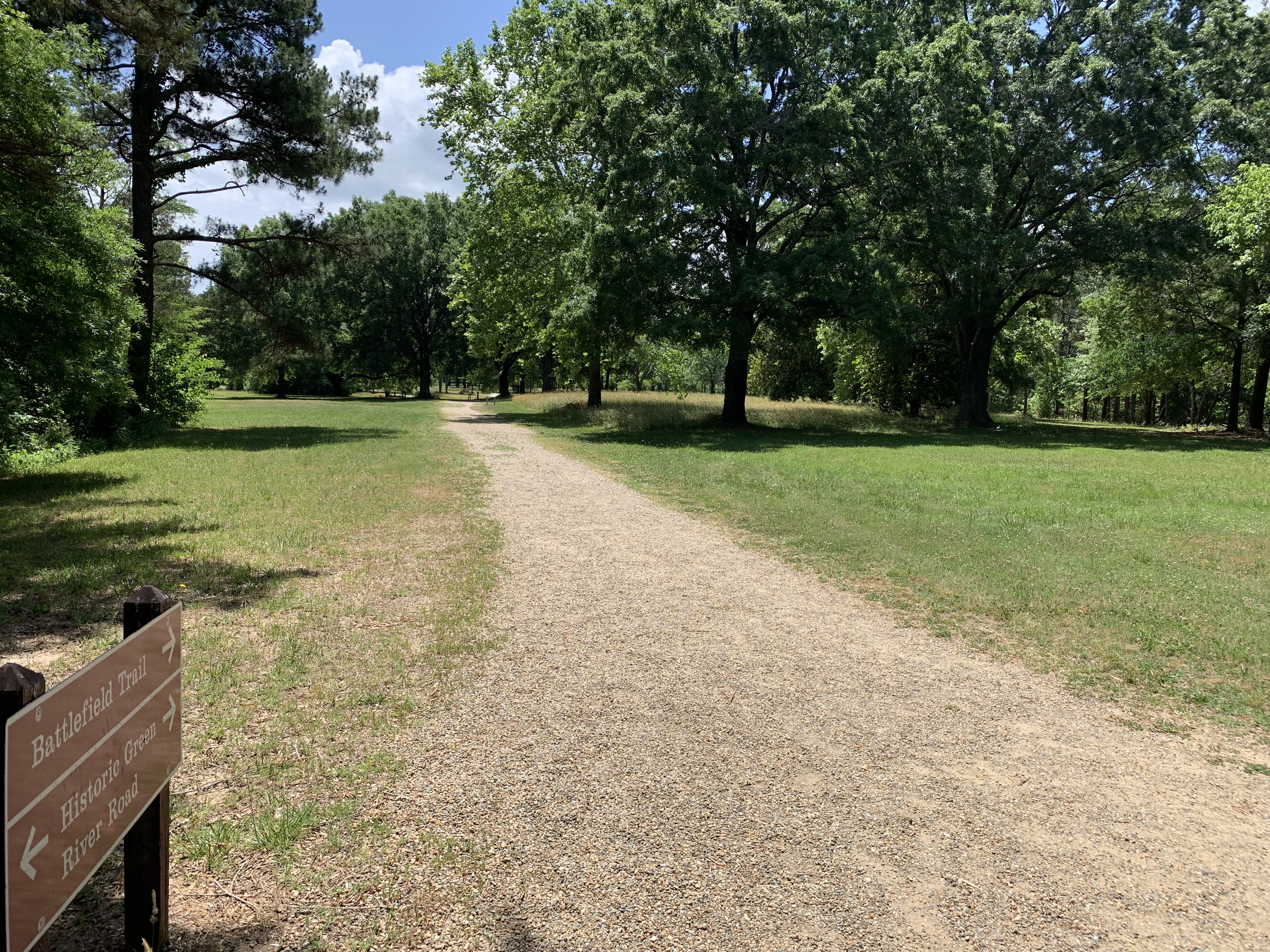
Like several of the Revolutionary War sites in the south, the park is closed Sunday through Tuesday, but I was able to enter the reconstructed stockade above. The patriots briefly captured it in 1775 but failed to take the star shaped fort nearby. The earthwork remains are still preserved after centuries. The star fort design was used by the Spanish in St Augustine, the British here and by both the Union and the confederates. With just a few troops needed to defend it, the design provides overlapping fields of fire protected by crossfire gauntlets.

Cowpens National Battlefield

Popular among war buffs, here the patriots won an impressive victory against the British. The British commander was a young hothead named “Bloody” Tarleton who had recently killed over 100 men flying a flag of truce at Waxhaws. The patriot commander was 45 year old veteran Daniel Morgan. Morgan chose the site due to thick woods and canebrakes (sugar cane thickets) that would make flanking difficult for the advancing British. His light skirmishers volleyed and fell back, and then his next line was to do similarly. They muffed it, and the British rushed forward, expecting a rout. The patriots about-faced and fired point blank. The British front line faltered while the back was still advancing, and then William Washington’s cavalry, which had emerged from a low spot to keep the enemy cavalry at bay, turned and flanked from the other side. This classic pincer or double envelopment movement is difficult and rare, yet it has won victories for thousands of years.

Tarleton was forced to retreat with his cavalry, reporting over 100 dead and 700 captured. He blamed his troops. After the war he served in the House of Commons, where he argued for continuing the slave trade.

The Mel Gibson movie “Patriot” is based in part on the battle between Morgan and Tarleton here.

Kings Mountain National Military Park

After the British took Charleston, they moved inland trying to gain momentum and more loyalists. Here, they lined this narrow ridge with skilled marksmen prepared to defend the high ground. The patriots had troops moving overland from the northwest and local milita massing on the other side. Using Native American tactics of advancing from tree to tree, the patriots were able to get close on both sides and catch the defenders in a deadly crossfire. Having learned that the British commander was wearing a checkered jacket, they targeted and eliminated him, winning a decisive battle here.

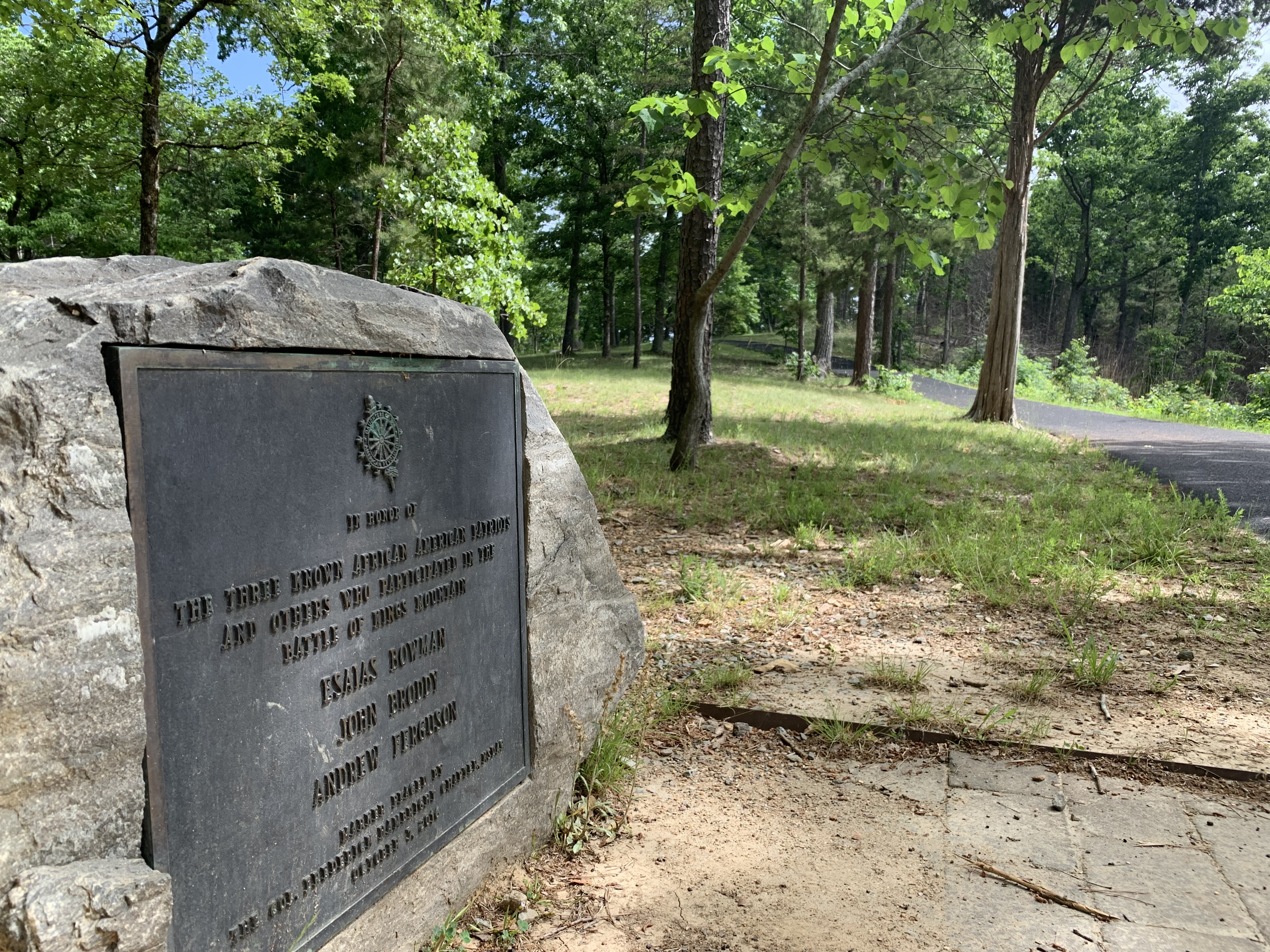
The first of the three African American patriots memorialized above, Elaias Bowman, was a free militiaman, one of several who shot the British commander. For some reason that I can’t fathom, there’s a far bigger memorial to the British commander, a Scot named Ferguson, and local visitors speak of him fondly, often leaving stones near his marker. I left a stone for the patriot Bowman instead.

Moores Creek National Battlefield

As at the Old North Bridge in Concord, Patriots removed many of the bridge planks and greased the beams. Once the loyalists crossed, they found themselves surrounded by Patriots behind hastily built earth walls with muskets, one medium sized cannon and a swivel gun. The British-employed highlanders attacked with broadswords, which was the last time that tactic was ever tried. Here on February 27th, 1776 the Patriots won a clear victory in the War for Independence.

Normally, I would stop here, but the ranger expressed some views which were misleading and incorrect. The battle is described in the visitor center as America’s “first civil war”. The ranger described the Patriots as ”fake news” northerners and corrupt townspeople who hypocritically denied the people in the backwoods their rights while over-taxing them, using the Regulator rebellion of 1761 to support his argument. Which is poppycock.

Let’s start by noting that the battle took place before America was a country. The Patriots were British colonists in open rebellion, and the loyalists were British mercenaries and colonists paid to put down the rebellion. Any over-taxation and denial of rights was done at the behest of the British Governor, who used a variety of means to control the colony, including bribery, hanging, and dividing the colonists into factions. Without sanctifying the Patriots, some who owned slaves, or condemning the loyalists, some who had been forced to swear oaths, there’s simply no honest way to recast this colonial battle as civil war. The Regulator history is interesting, but it was a tax revolt and was neither a part of the Revolutionary nor Civil War.

Guilford Courthouse National Military Park

The Revolutionary War may have started in Concord Massachusetts, but it was won in the Carolinas and Virginia, at places like this. Rhode Island Quaker Nathaniel Greene was given the southern command by General Washington, and he fought a critical battle here with Cornwallis, with Washington’s cousin William leading the dragoons (cavalry). Technically, the British won the battle, but Greene inflicted more than 1/4 casualties upon them while keeping his own force ready to fight again. The British recognized it as a Pyrrhic victory, and Cornwallis had to regroup. The two sides would clash repeatedly before Yorktown.

Jean Lafitte National Historical Park and Preserve

This is a large, multi-purpose, multi-unit park. On a previous visit I visited one of the Acadian (Cajun) cultural centers and the 1815 Chalmette Battlefield (read the pirate Lafitte’s story here), so this time I figured I should see the swamp at the Barataria Preserve. I didn’t see any alligators, but the ranger said they were probably under the boardwalk. He also said I might find one if I went on a more remote trail, explaining logically that no tourists had returned from that section today.

Folks around here are under a lot fewer illusions about the Climate Crisis than other places, out of direct experiences. The signs were more blunt than in other parks, explaining that the beautiful ecosystem above is being killed by rising oceans. If we had time to adapt, then we could learn techniques for dealing with storm surge, flooding, etc. But it doesn’t seem like enough people care.