Rock Creek Park

This DC area 1700 acre nature reserve and historic park (our nation’s 3rd national park) is chockablock full of wildlife, old buildings and monuments, and its popular attractions for hiking, biking, horseback riding, boating, field trips, sports, picnics, learning and fun are well worth your time. The Sarah Whitby Site and Pierce Mill are recommended historic attractions. The Planetarium was closed, but the park extends to Georgetown, passes the Washington National Cathedral, the National Zoo and includes nearby parks, one with a memorial to Khalil Gibran.

But my brother suggested we go to Fort Stevens, at the edge of the park near the Maryland-DC border, one of many Civil War era forts. We think most people don’t realize that confederate troops attacked DC, but there’s a small cemetery where over 40 fort defenders were buried. As depicted in bronze relief, the only time a US President has been under direct enemy fire was here, when confederate sharpshooters shot at Lincoln as 20,000 troops attempted to take our nation’s Capital. A young officer (long before he joined the Court) issued a sharp order to the easily identifiable President.

“Get down, you damn fool!”

Oliver Wendell Holmes Jr.

Monocacy National Battlefield

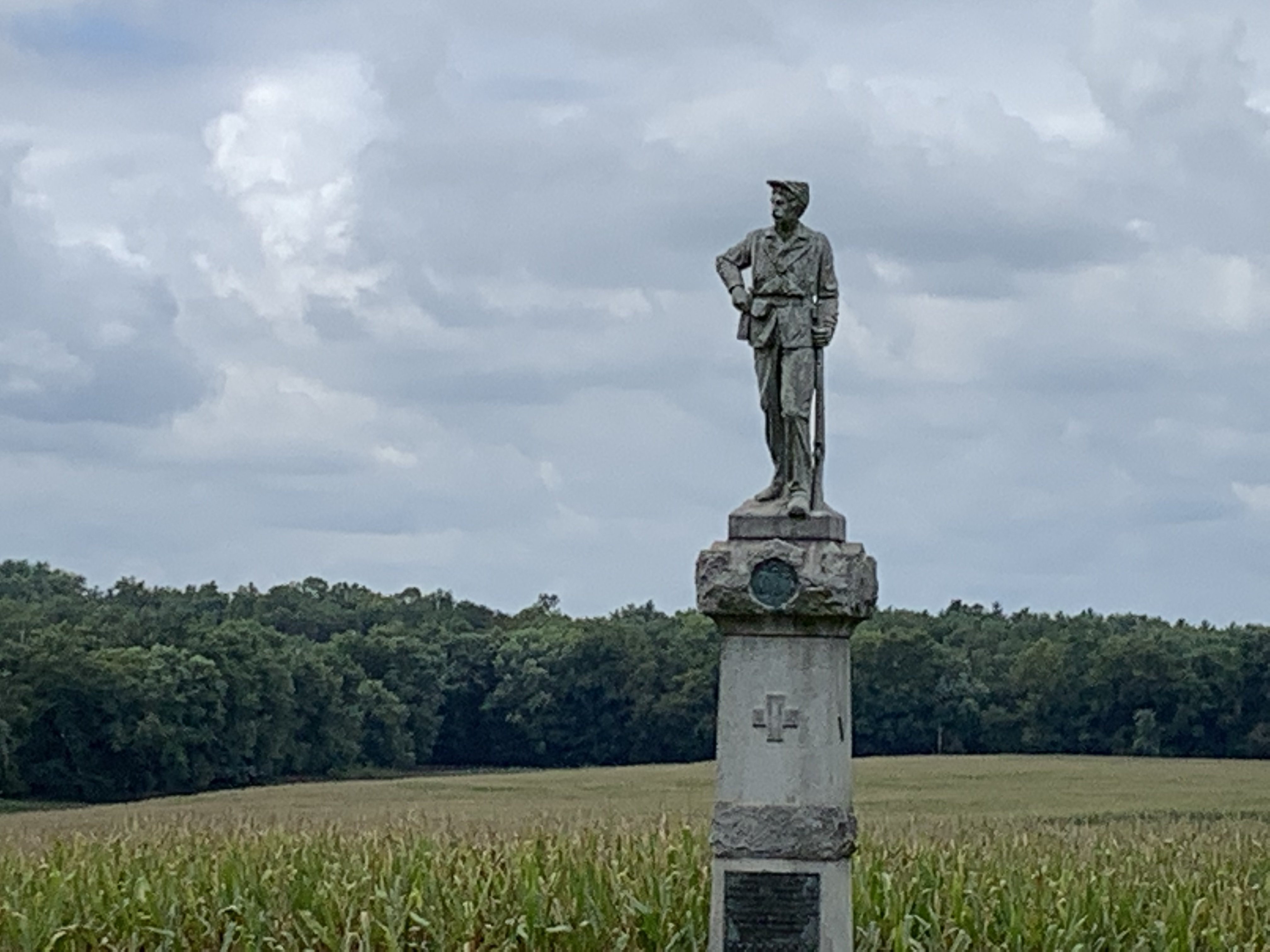
Monocacy (a Native word for river bend) is a junction northeast of DC, and during the Civil War the 14th NJ, later known as the Monocacy Regiment (above), built two blockhouses to defend the road and rail bridges. Early in the war, secret order #191 from Robert E. Lee was discovered here, providing advance warning of his movements and gaining the Union critical time to respond at Antietam. When over 15,000 troops suddenly began marching towards DC in 1864, control of the junction became critically important.

About 6,000 mostly inexperienced soldiers were rushed here to stop the advance, under the command of Lew Wallace. General Wallace had earned both distinction at Fort Donelson and shame at Shiloh, which is why he had been relegated to defensive duties. Now, he had to hold the river crossing outnumbered 3 to 1. In fierce fighting on July 9th, Union troops fought back waves of attacks and held the bridges until the confederates crossed a shallow point a mile downriver. Then Wallace ordered the road bridge burned, recalled his men from the blockhouse across the railroad bridge and launched a counterattack on the new front. After fighting all day with 1,300 casualties, his forces were finally flanked and forced to retreat.

But, as in the case of the secret order, the Union gained time to redeploy troops to defend the Capital. After only a brief skirmish at Fort Stevens, the attack was withdrawn. General Wallace and his men lost the battle, but they saved Washington DC. Wallace went on to preside over the military tribunal for the commandant of Andersonville, but he’s best known for writing Ben Hur in 1880.

General Grant National Memorial

As General, U.S. Grant won the Civil War, and as President, he saved the Union. He created the Justice Department, supported the 15th Amendment and fought the Ku Klux Klan. Over a million people gathered to watch his funeral procession in 1885, and his mausoleum became one of the top tourist destinations in the nation.

Racists like President Johnson were determined to resist letting African Americans vote, and Grant agreed to run for President in large part to protect those rights. This divide of bigotry, which festered after the Civil War, continues to divide our country. After Grant’s death, the descendants of traitors promulgated the big lie (known as the Lost Cause) that the confederates were honorable, benevolent to slaves, and were the moral victors of the Civil War. To do so, they maligned Grant as a drunk, ignoring his reform efforts and associating him with corrupt officials. The campaign was effective, and Grant was often ranked among the worst Presidents.

Grant’s Indian policy illustrates the problem. Grant appointed the first Native American to be Commissioner of Indian Affairs, and Grant pledged “proper treatment of the original occupants of this land—the Indians.” Supporting peaceful reconciliation, his administration allowed many Quakers and Episcopalians to “help” the natives, instead of continuing genocide. Grant was a firm believer in the separation of church and state, but the religious people believed that converting the Natives was the best way to help them and thus erased so much of their culture. And many people still wanted to take Native American land, so well-intended land policies were similarly corrupted.

Like most of the park rangers I’ve spoken with, I’m a fan of Grant. We believe he was, generally for his time, on the right side of history and does not deserve the vitriol he received in life and death from those on the wrong side of history. I wish he had better understood the depths of and had proposed better solutions against systemic racism, but he was an ally of the Americans who were denied their rights by many white Americans. The struggle to secure the voting rights of African Americans and to restore justice to Native American communities continues over 150 years later. Grant recognized both his own failures of judgement and the moral sins of our nation. But Grant also said victory goes to those who keep fighting.

“Nations, like individuals, are punished for their transgressions.”

Ulysses S. Grant

Springfield Armory National Historic Site

America has a gun problem. No other country on earth has anywhere near as many gun deaths per capita as we do. Australia banned guns after a mass shooting in 1996, and they have had one mass shooting in the past 26 years. Many Americans worship guns (see “organ of muskets” above), and mass shootings are a daily occurrence.

George Washington started the Armory for the Revolutionary War, and it continued making guns until 1968. The Armory did an excellent job preserving its history, and their extensive collection covers the evolution of guns in exceptional detail. Smith (of Smith & Wesson) and his father worked here, as did William Ruger. The Colt factory was another of the precision gun manufacturers in the Connecticut River Valley, and the town of Coltsville will likely open as a new national historical park someday soon.

On this visit, I also learned that most of the ammunition for at least the Civil War was produced by women and children, and that the work was extremely dangerous. 178 women and girls were killed when the Allegheny Arsenal in Pittsburgh exploded in 1862, due to sparks from iron horseshoes & iron wheels on a flinty cobblestone road covered with sawdust and gunpowder. Actually, the lawn in the center is contaminated with lead, so kids shouldn’t play on it (like I did when I first visited decades ago).

Chickamauga and Chattanooga National Military Park

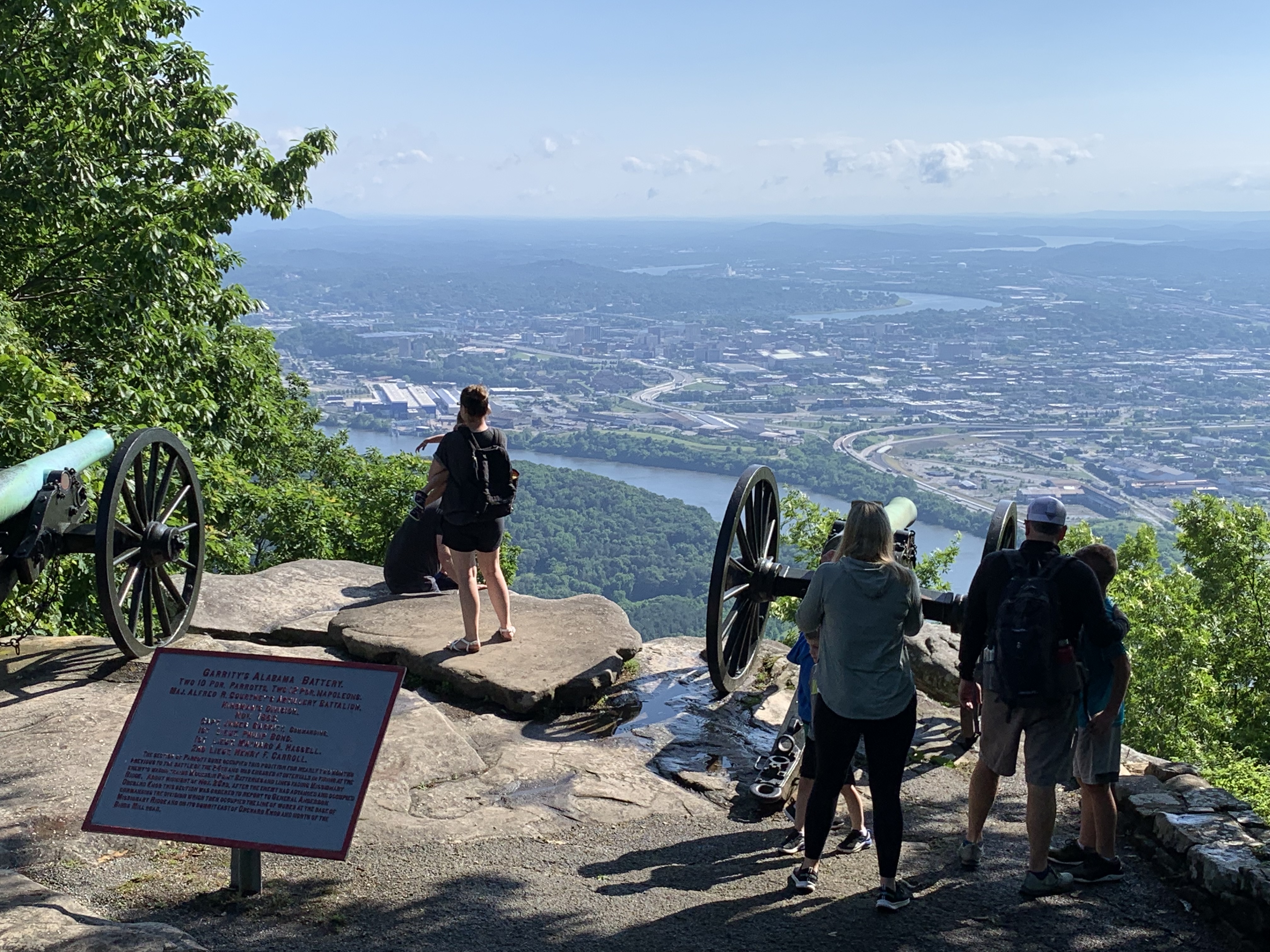
Before I rant again, let me just acknowledge that there’s a dramatically beautiful view on Lookout Mountain. Chattanooga below is in a strategic location at the bend of the river below. Long before the Civil War battles, the last overland battle of the Revolution was fought here. There’s even a steep funicular line to enjoy the view.

Militarily, controlling the high ground has always been the key. Grant used it to capture Chattanooga, and the confederates used it to try to recapture the city, unsuccessfully. Chickamauga nearby in Georgia is much flatter and covered with monuments to both sides. Which brings me to my brief rant. If even a fraction of the money and effort spent on monuments for both sides were used to explain the cause of the war, slavery, then maybe we wouldn’t have some politicians today still trying to claim that there are “very fine people on both sides” of racial prejudice. No. Racism was wrong both then and now, and the longer that we evade the obvious moral judgements here, the harder it will be to remove the poison.

Andersonville National Historic Site

Roughly the same number of Union soldiers died in this prisoner of war camp as died in battle at Shiloh: over 13,000. The conditions were horrifying. Disease, vermin, starvation, dehydration, exposure and brutality killed hundreds by the day. Only a small portion of the stockade has been reconstructed, including the north entry gate pictured above, through which about one in three did not come out alive. There is an illustration drawn from the memory of Thomas O’Dea that is absolutely haunting in both its scale and detail. The Union refused a prisoner swap out of concern the confederates would return to battle. One 19 year old prisoner had the job of numbering the dead, and he secretly kept a list of names, regiments and causes of death. Eventually he brought it to the attention of the “angel of the battlefield”, nurse Clara Barton who had petitioned Lincoln to track down missing soldiers. They toured the site and marked over 12,000 graves. Barton went on to found the American Red Cross, and the US ratified the Geneva Conventions the next year. The man in charge of the camp was hung for war crimes. Flags were flying over the National Cemetery before Memorial Day, and burials are still occurring frequently. The visitor center also serves as a memorial and museum to all prisoners of war.

Kennesaw Mountain National Battlefield Park

Union forces fought for weeks to break the long line of confederate fortifications northwest of Atlanta, but were unable to climb the steep hills under heavy fire. There was one “dead angle” or blindspot at Cheatham near the photo where soldiers climbed all the way up the hill and over the earthen walls only to be repelled in hand to hand combat.

5,300 soldiers died in a few weeks of fighting here in the summer of 1864, before the war moved to Atlanta.

Camp Nelson National Monument

While obviously fortified, the camp is best remembered as a refugee and training site for escaped and liberated slaves to join the Union. A heartless commander here burned shelters before winter to try to dissuade refugees from staying, leading to over 100 deaths from exposure, national outrage and new legislation to build more permanent refugee shelters at many Union bases, including food, clothing & education. There’s a community nearby that persists since that time. Many of the US Colored Troops that served, especially in the second half of the war, were trained here.

Mill Springs Battlefield National Monument

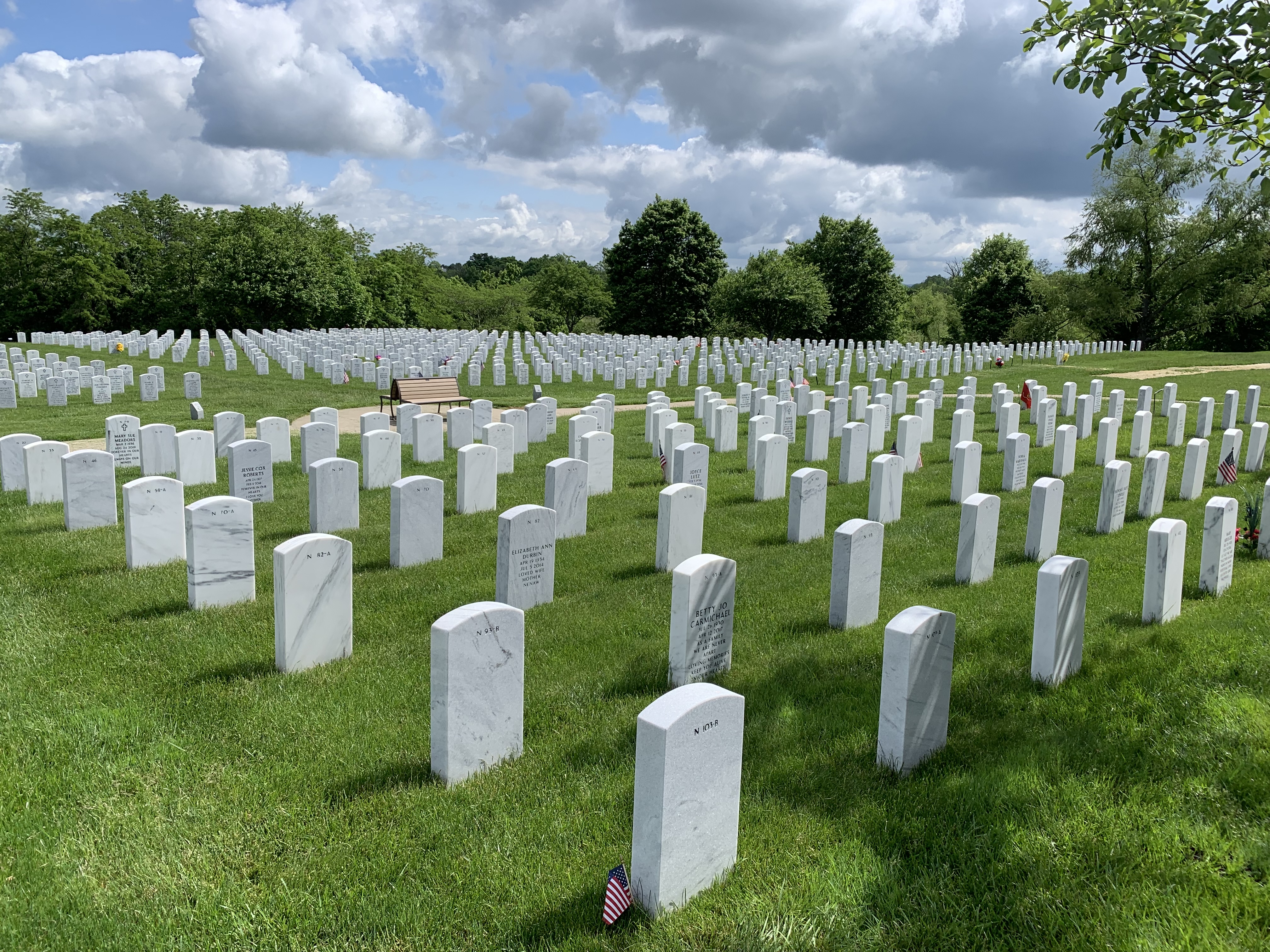
The photo is from the eponymous national cemetery next door to the visitor center.

Lincoln said ”I hope to have God on my side, but I must have Kentucky.” Kentucky was neutral early, perhaps since they enjoyed betting on horses, especially when they could tell who was going to win. In 1861, it wasn’t clear, at least until this battle.

The confederate troops had entered Kentucky from the East through the Cumberland Gap and soon fortified near the river. Unfortunately, Zollicoffer split his troops on both banks and a rising river made redeployment difficult. Worse, when fighting started, he approached some troops to stop “friendly fire”, not realizing that they were the enemy. With their general dead, the confederates became disorganized and lost. This led to a string of Union victories leading south.

Stones River National Battlefield

This was one of the bloodiest battles of the Civil War. Lincoln wanted a victory and ordered General Rosencrans to advance up the Nashville Pike. The confederates struck hard, the union army dug in, set up artillery and won the day. The photo shows part of the remains of Fort Rosencrans built to defend the supply route for the rest of the war.

African American labor typically built these massive earthen fortifications, and despite the Union victory, their new rights were often denied.