Tennessee is the only state that is also a national heritage area, focused on the Civil War, with four national park units, three other battlefield parks, three Civil War oriented museums, and Andrew Johnson NHS. The nationally established parks cover the history best, but state parks—especially Fort Pillow—are also historically important.
1862 Fort Donelson NB Grant gained access to the Cumberland River in the northwest.
1862 Shiloh NMP Grant won a costly battle, despite a Confederate surprise attack.
1862-3 Stones River NB, with slaughter pen & hell’s half acre, a bloody victory.
1863 Chattanooga NMP another Union victory, securing railroads in the southeast.
1864 Fort Pillow a massacre of surrendering black soldiers by Nathan Bedford Forrest.
1864 Battle of Franklin a disaster for the Confederates, especially a dozen or so generals.
Fort Pillow is on a bluff then overlooking a sharp bend in the Mississippi River north of Memphis. It is well sited for firing down at passing ships, but there are several higher hills around the fort, making it defensively weak against a land attack. Nathan Bedford Forrest brought superior troops in number and experience, and attained the element of surprise. The Union leader was shot dead early on by sharpshooters, and his replacement refused to surrender. The battle was soon over, as the Confederates surrounded the fort, moved in and overran the ditch defenses.
Except that the slaughter continued, long after the battle was won.
The state park visitor center at Fort Pillow has a disappointing exhibit that repeatedly describes the 1864 congressionally designated “massacre” as only a “controversy”, displays grandiose portraits of General Forrest, and provides numerous excuses for the one-sided outcome (see below list of dead). Over the years, many apologists—the same who describe the Civil War as a heroic cause for states rights—have tried to defend the actions of the Confederates at Fort Pillow, but there’s nothing honorable about a 20 to 1 slaughter.
The facts—excluded in the museum exhibit—tell the true story. Most of the Union white soldiers were taken prisoner, while almost all of the black soldiers were killed. One of Forrest’s own sergeants described many black soldiers trying to surrender and wrote, “General Forrest ordered them shot down like dogs”. Black soldiers were denied prisoner of war status throughout the war, and the Union stopped prisoner transfers due to this official Confederate policy, clearly stated after Fort Pillow. Forrest became the first Grand Wizard of the Ku Klux Klan after the war. The site should be a national battlefield, and the history of Forrest’s massacre of black soldiers told accurately.
This is an affiliate site in Tennessee focused on Nathan Bedford Forrest, who fought most of his Civil War battles in the Volunteer State. At the end of 1862, Forrest was in the midst of his guerrilla warfare destroying railroads, bridges, raiding supplies, recruiting rebels, taking prisoners and attacking the Union. Union troops moved near a key railroad and roadway crossing in the middle of western Tennessee to cut off Forrest’s escape south across the Tennessee River. Forrest attacked, was repelled, and tried to flank the Union troops. But more troops arrived behind him, so he ordered his men to ‘charge both ways’ and withdrew in the confusion. Forrest lost more men in the battle, but he escaped as the Union failed to cut him off.
If you visit the site, you might get the mistaken impression that this was a great victory for Forrest, who is compared with Napoleon in the park film. This is ironic, since ‘Napoleon’ is synonymous with having delusions of grandeur. The grounds are well kept, but there’s not really much to see. The cabin below was moved to the site later, as were examples of cannon and a caisson. There are reenactments held here. There are also many romanticized images of Forrest in the museum. As he later became the first Grand Wizard of the Ku Klux Klan, this hagiography of Forrest is both tragic and an embarrassment for the great state of Tennessee, which was divided during the war. Forrest was a brutal leader responsible for perhaps the worst atrocity of the Civil War, which I will summarize next week. History must endeavor to tell the truth.
These are two obscure heritage areas in the Carolinas, but none of the state or national park employees I spoke with had heard of either. While the South Carolina NHC has historic sites, plantations and gardens, the parks included—like Pinckney, Sumter, and Overmountain Victory—are unrelated. And while the Revolution NHC includes Moores Creek, it excludes many other important battles in the Carolinas and neighboring states. Don’t waste time following these confusing corridors, but instead start with an overview at historic Camden.
Here’s the story of the Revolutionary Campaign in the southeast, focusing on national sites and affiliates. Virginians Henry, Jefferson and Washington led their colony into rebellion, in concert with the north. Virginia colonial governor Lord Dunmore called in troops, organized loyalists and even formed a regiment of liberated slaves. Echoing Bunker Hill, Patriot militia fought well at Great Bridge in 1775, prompting Dunmore to order the shelling of Norfolk Virginia. Echoing Concord, the Patriots cut down a broadsword charge at Moores Creek North Carolina in 1776. And at the end of 1778, the Patriots took Savannah, followed up with a victory at Kettle Creek Georgia in early 1779.
But in May of 1779, the British sacked Portsmouth in Virginia, kicking off their southern campaign in earnest. In late 1779, the British returned to Savannah, capturing it after a siege. In early 1780, they took Charleston SC after another siege. Next, they turned their attention inland, hoping to sway more loyalists, keep their large southern colonies, and then take the fight back to the northeast. In 1780 the British fought over a dozen battles around Charleston and Camden (see Cornwallis’ HQ below) in South Carolina, consolidating their control over the colony.
But the British were ruthless in the south, revoking pardons, burning homes & farms, and imprisoning or hanging those who wouldn’t sign loyalty oaths. The most infamous example happened in May 1780 at Waxhaws—named after a local tribe—, when Banistre Tarleton massacred Patriots, inspiring further rebellion. Popular resentment against the tyrannical British grew, especially among the Scots-Irish settlers. After Gates lost his leadership position after failing at Camden, Nathaniel Greene began a much more effective guerrilla campaign in the back country.
The Patriots didn’t win all their battles, but many of the British victories were Pyrrhic, causing them to cede territory even after eking out technical victories. The back country belonged to the Patriots, especially when reinforcements crossed the Appalachian Mountains on the Overmountain Victory Trail. The Patriots won at Kings Mountain in late 1780, then again at Cowpens in January 1781.
Even though the British subsequently won at Petersburg VA, Ninety-Six in SC, and at Guilford Courthouse NC, clearly, they were not winning the broader campaign. Cornwallis brought his troops north to Virginia. After a close battle near Camden, the remainder of the British forces retreated for Charleston, with the last battle in the southeast fought at Eutaw Springs in September 1781. The denouement was set for Yorktown.
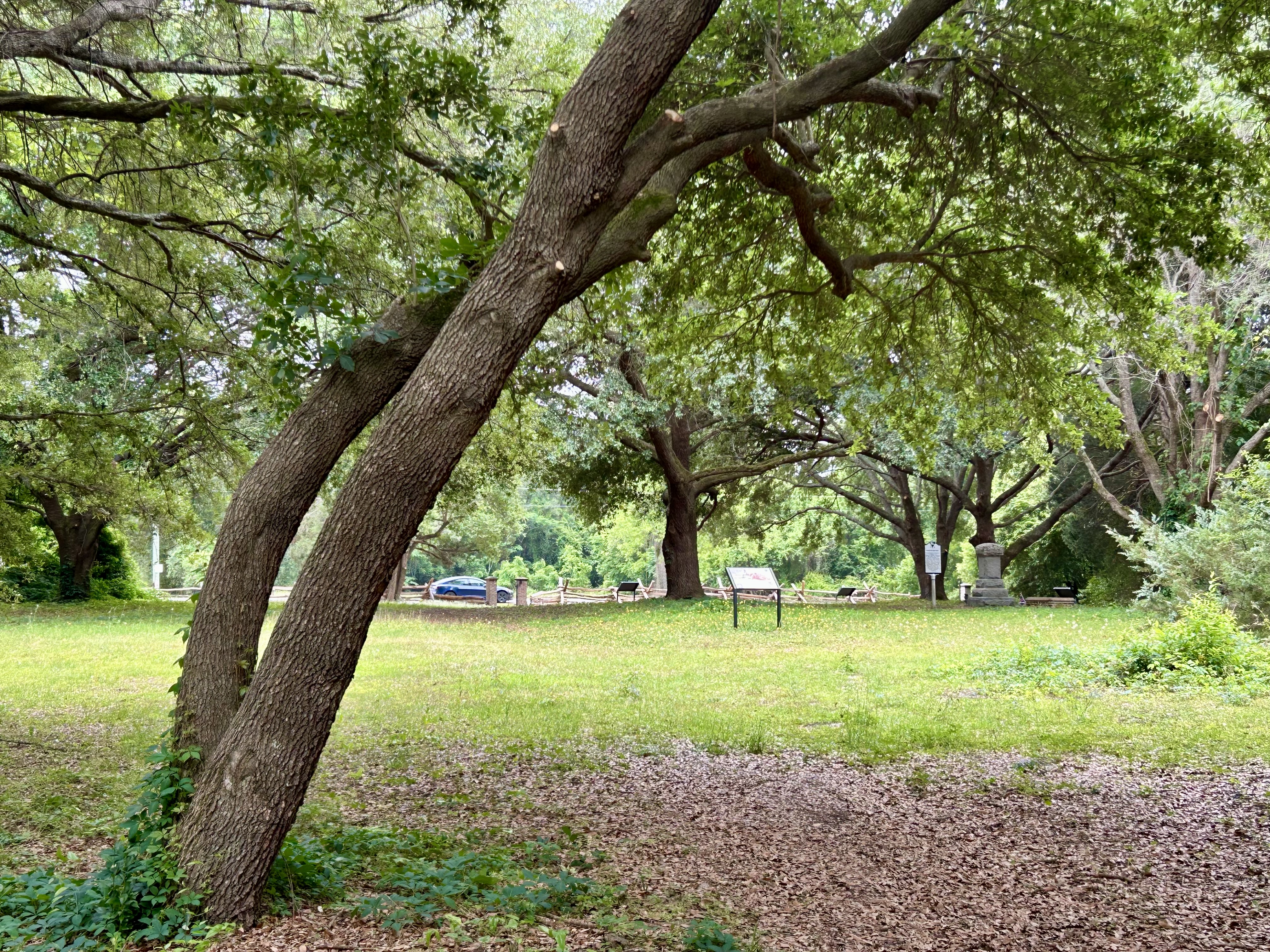
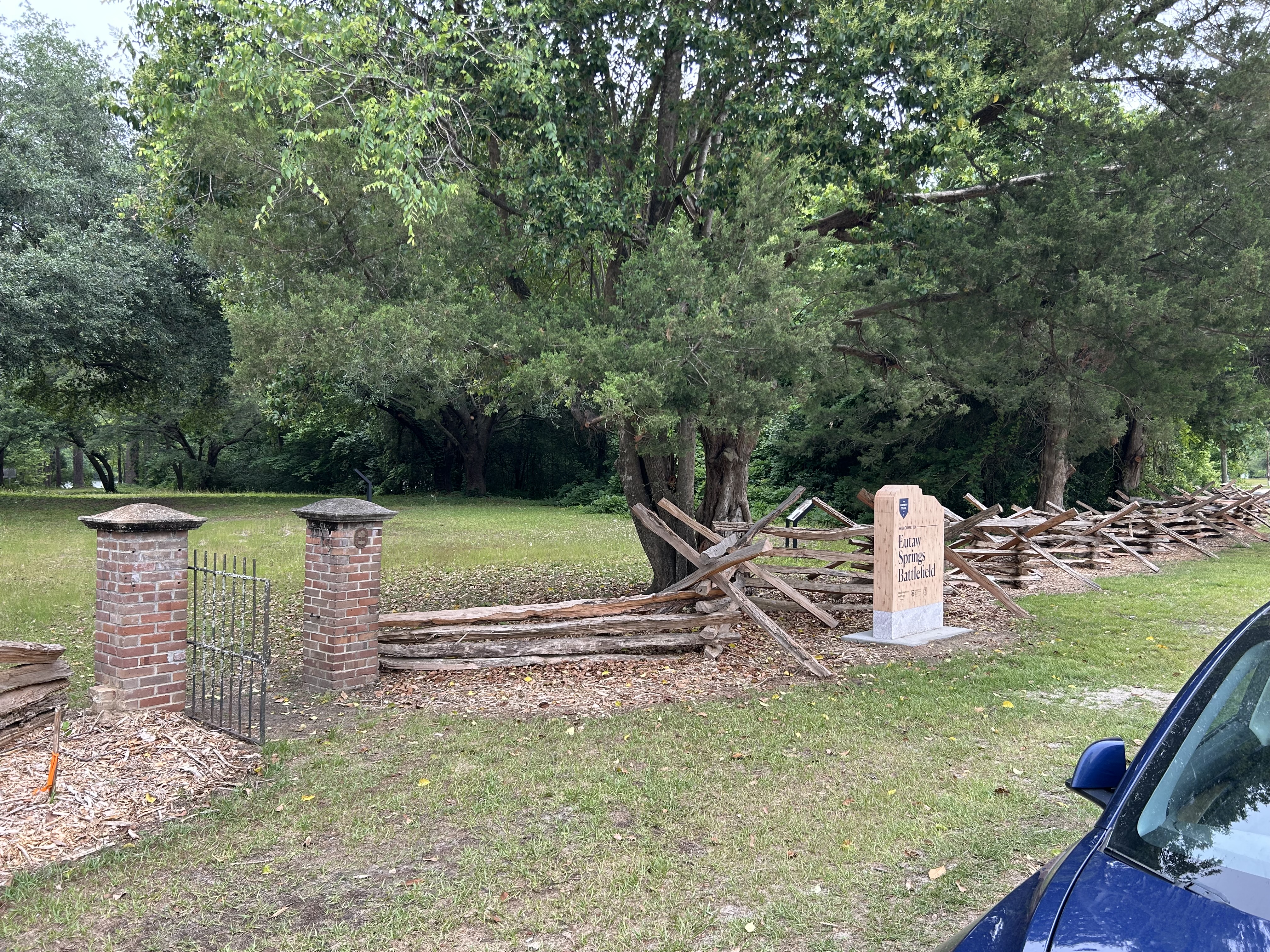
This was one of the final battles for inland South Carolina, in September 1781. Nathaniel Greene’s Patriots were battle hardened and his forces included Francis Marion, Andrew Pickens, and William Washington. The British were equally disciplined veterans. What unfolded was a brutal battle between evenly matched sides that descended into hand-to-hand combat. Finally, the British line broke, and the Patriots entered their encampment.
While it seemed that the day was won, the British formed a defensible position between a stout brick house still marked by a garden gate and the Santee River, now Lake Marion behind the trees below. Stymied, Greene was forced to back off and wait. Both sides claimed victory—technically the British held the field at the end—, but clearly it was a strategic loss for the British, who lost more troops, were forced to withdraw to Charleston and never again advanced in the back country.
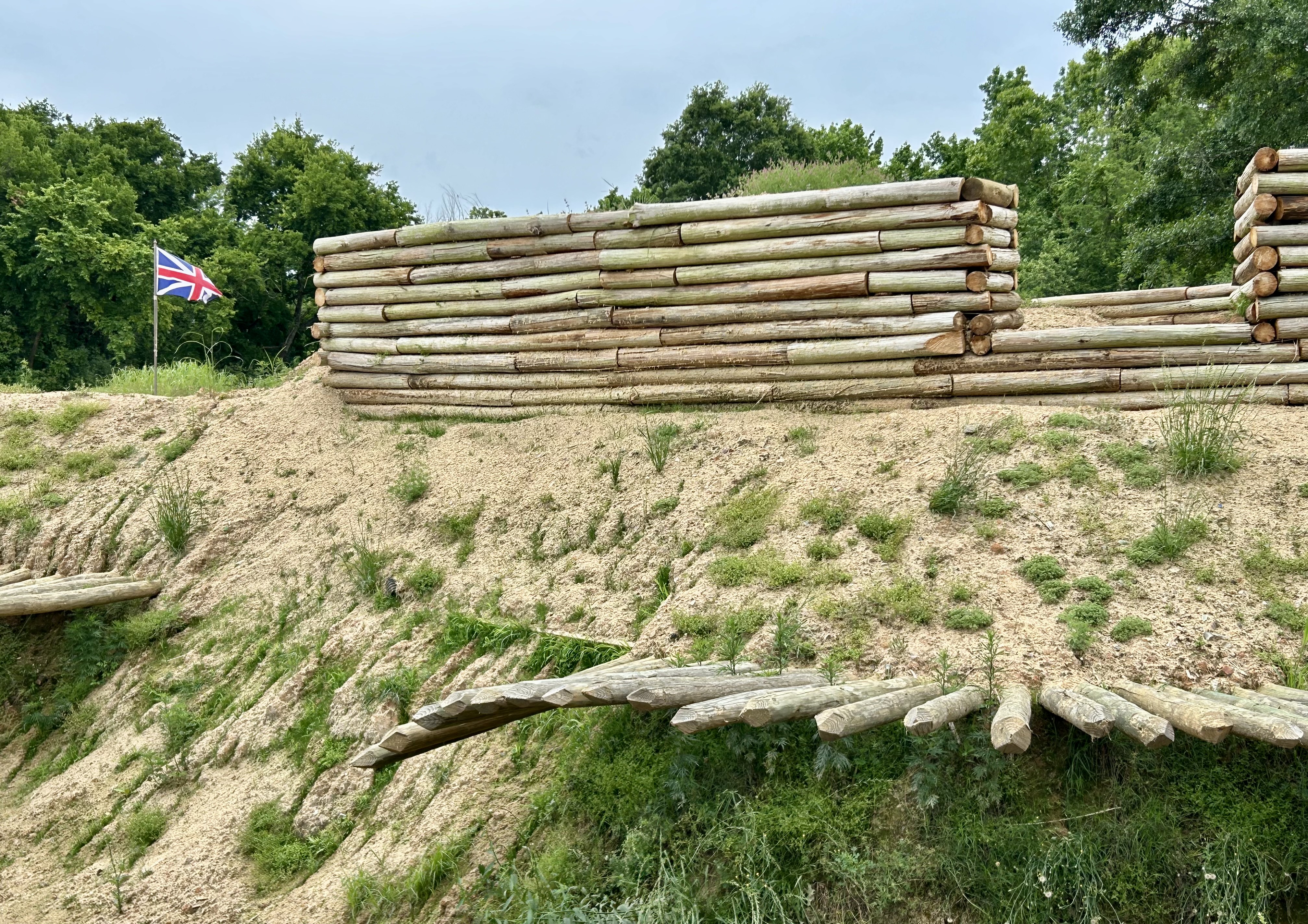
This privately managed affiliate site is one of the best revolutionary war sites in the Carolinas. On over 100 acres of battlefield and early townsite, they have reconstructed Cornwallis’ HQ, one of the redoubt forts (above), a historic tavern, and many other buildings that bring life to history. While separately managed, there’s also a visitor center next door that explains the whole course of the war in the Carolinas, which I will cover in a separate post next month.
Camden was on the Kings Road from Charleston across the low country into the back country. Here it joined with Native American trading routes and the Great Wagon Road from the northeast to Georgia. The British were determined to manage their colonies inland, and not just occupy coastal cities. They also wanted to control trade, tax the rich, hire Native Americans to fight for them, and raise militias of loyalists. Cornwallis fortified Camden as his supply hub.
General Gates, of Saratoga fame, was tasked with attacking Cornwallis. The Battle of Camden in August 1780 was a disaster for the Patriots. Gates put inexperienced troops on his left, who were wholly unprepared to meet the best British troops Cornwallis put on his right, as usual. The French General Baron de Kalb fought to his death at Camden. Gates withdrew to North Carolina. He was later replaced by Nathaniel Greene.
Many of the losses were due to diseases like dysentery, and there’s a detailed exhibit in Cornwallis’ HQ, where a docent answered my various questions. Captured prisoners from British victories in the area were often initially held in Camden and then marched to Charleston where they were imprisoned on ships in dangerously unsanitary conditions.
In 1781, Nathaniel Greene, having recruited Catawba warriors and run a cross country guerrilla campaign disrupting the British, returned to Hobkirk’s Hill near Cambden in April for a rematch. While the British won the day, they decided they could no longer defend Cambden and retreated to Charleston. Cornwallis had already moved north on his way to establish a new base at Yorktown.
November is Native American Heritage Month, and next week is the 403rd anniversary of the first Thanksgiving feast of the Pilgrims and the Wampanoag, when, as earlier in Jamestown, Native Americans helped starving English colonists. Contrary to the gauzy fabricated myth that natives peacefully welcomed Christian settlers and happily ceded their lands, tribes were decimated by disease and were massacred in both the Pequot War and King Philip’s War. Thanksgiving was first declared a national holiday by Abraham Lincoln during the Civil War, at a time when the US government was also at war with the Apache, Commanche, Navajo, Sioux, Ute and Yavapai, among other tribes. In the interests of truth, this post will focus on the NPS sites of the US War on Native America from the Revolution to 1924.
Our Democracy owes a debt to the Iroquois Confederacy formed 882 years ago, the oldest living participatory democracy. Ben Franklin was a student of Hiawatha’s Law of Peace which united 5 (later 6) tribes on issues affecting them all, while allowing them each to manage their own tribal issues separately. Thus, 13 colonies united to gain independence, becoming the United States. In 1794, George Washington signed the Treaty of Canandaigua recognizing our allies the Oneida, who fought with the Patriots at Fort Stanwix and Saratoga. The other tribes of the Iroquois Confederacy, many having fought for the British, had lost most of their lands in the 1783 Treaty of Paris.
For Native Americans, war with the US continued non-stop, moving northwest near Fallen Timbers and southeast near Chickamauga and Chattanooga. Despite winning the most successful native battle against the US army at the Wabash River, the pattern of natives losing their land regardless of whether they fought or which side they joined continued. The River Raisin set the stage for the War of 1812 and made the issue of claiming native land a mainstay of presidential campaigns. General Jackson leveraged his victory at Horseshoe Bend to become a popular national figure, and as President, he defied the Supreme Court to remove many tribes from the southeast to Oklahoma on the Trail of Tears.
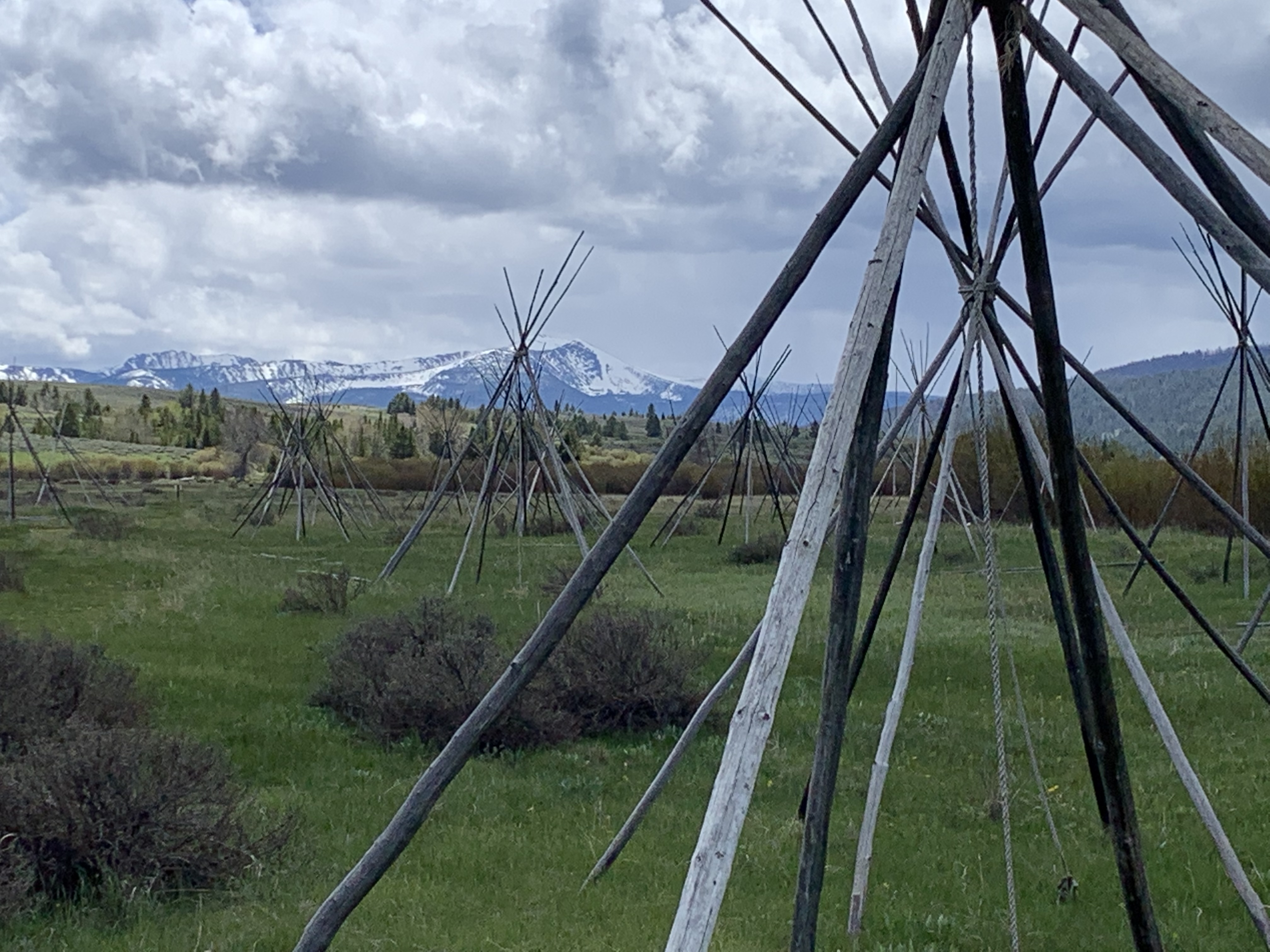
And there were massacres. Not the rare US military defeat like at Little Bighorn. Not the few sensationalized or many fictional stories of natives killing relatively small numbers of white settlers, like at Whitman Mission. But the illegal massacres of hundreds of peaceful villagers by US Army regulars and volunteers at Big Hole above, Sand Creek, and Washita Battlefield, among many others not yet memorialized by the NPS. Even our national monument to great presidents at Mount Rushmore is not far from the massacre site at Wounded Knee.
The US War on Native America is not usually considered as one continuous war, but rather as over 60 different military conflicts, often overlapping, between 1775 and 1924, when the last Apache raid was conducted in the US and when Native Americans finally got the right to vote 100 years ago. However, the US was at war with various Native American tribes in the years from 1775 to 1795, from 1811 to 1815, 1817-1818, in 1823, 1827, 1832 and from 1835 to 1924, or for 121 years of active fighting, plus 29 years of intervening “peaceful” forced removal by the US and state governments, even of tribes which had assimilated. Taken as a whole—including forcing dishonest treaties, abrogating treaties, suspending promised annuities, terminating trading relations, cheating tribes in unfair land deals, preventing private land deals with natives, relocating natives when gold was discovered on their land, revoking Indian land titles, seizing tribal land, annulling tribal constitutions, challenging their rights in court, dismissing their victories in court, dividing tribes, destroying crops, killing livestock, slaughtering bison, subsidizing exodus, rounding up tribal members into camps, locking them in forts, and forced marching them 1,000 miles over 5 months under US military guard—, the US government policy of removing Native Americans by force was a single policy, confirmed by multiple US presidents, passed into laws by Congress, and executed by the US military with deadly force against one group, known collectively as “Indians”—as in the “Indian Removal Act” of 1830—. So, rather than being dismissed as dozens of piecemeal conflicts, the US military actions against all the tribes should be considered as a single 150 year long, genocidal war.
It is horrifying to me that we do not recognize our nation’s longest war, even in the 100th anniversary since its end. We have largely forgotten the roughly 100 tribes that are now extinct, as well as the Pontiac War which used smallpox blankets, the Potawatomi Trail of Death, the Long Walk of the Navajo, the Yavapai Exodus, and others. And we in the United States—founded under a Native American democratic organizing principle and living on native land—do not admit that the long, costly war, devastating relocations and cultural destruction, was repeatedly approved by racist American voters.
“The wounded, the sick, newborn babies, and the old men on the point of death… I saw them embark to cross the great river and the sight will never fade from my memory. Neither sob nor complaint rose from that silent assembly. Their afflictions were of long standing, and they felt them to be irremediable.”
Alexis de Tocqueville, on witnessing the Trail of Tears in Memphis
Traditional historians have generally argued that the War of 1812 was about defending US maritime rights, especially of US citizens who were involuntarily ‘impressed’ into the British Navy. Jefferson had certainly left some trade issues with Britain, but such disputes rarely go to war. During the war, the northeastern states continued trading with Britain, and the treaty at the end of the war did not change the maritime rights status quo legally. Americans worked harder at getting compensation for slave owners whose slaves were freed by the British than for US citizens impressed into the British Navy. So that whole explanation for the war is obviously wrong.
More enlightened historians have argued that the War of 1812 was about expanding US territory at a time when the British were busy fighting Napoleon, as stated by the dominant party in Congress and President Madison, who called acquiring Canada “a collateral benefit”. During the war the US invaded Canada 10 times, took land in the southeast including in Alabama, Florida, Georgia, Louisiana and Mississippi, and took land in the then northwest including Indiana, Illinois, Michigan, Ohio and Wisconsin. Most of the US territorial expansion around the time of the war was from Native American lands, regardless of whether they fought for the British or the Americans. So that whole ‘expansion’ explanation checks out.
If we think about the war at all, most Americans view the War of 1812-1815 as about nationalism, patriotism and rallying around our flag, perhaps because we did not achieve any of our objectives, failed to take Canada and had our national capital burned. Canadians tend to view the war more as a heroic defense against our ill-conceived and unpopular aggression, as after all, the Americans burned York—their capital of ‘Upper Canada’ in Ontario province—first. The truth is always more complicated, as you can see comparing the capital burnings. After the British general retreated from York, local militia started fires to prevent the Americans from seizing their supplies, and the resulting gunpowder magazine explosion killed the American general along with ~200 other casualties. The American troops, not under official orders, burned public buildings and businesses. When the British seized Washington DC, they burned most public buildings, including the White House, under orders. Which gives you a sense of the animosity at the time.
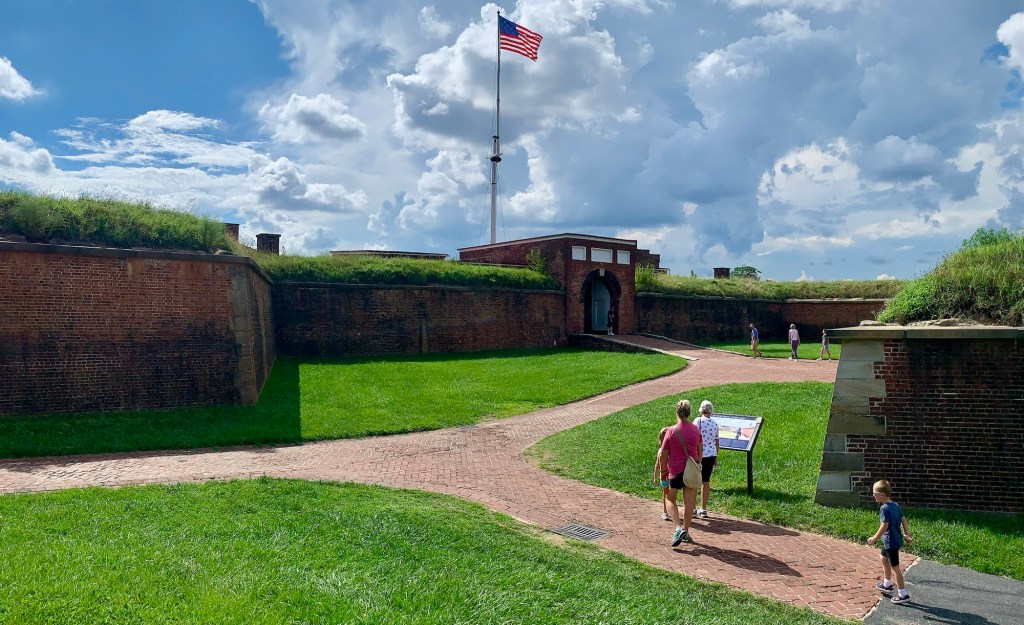
Fort McHenry, Fort Washington and the Star Spangled Banner trail focus on the dramatic events around DC and Baltimore, but there are other US park sites that tell more of the story. Along with failing to continue Washington’s peaceful tactics and trade agreements with Britain, the expansionist Jefferson hired Albert Gallatin to reduce the national debt, and Gallatin cut the military budget, leaving successor Madison the contradictory problems of war and a weak military. The US could not match the British Navy in the Atlantic, except for the USS Constitution: Old Ironsides. So the British blockaded the US ships along the eastern seaboard, except for smugglers in New England. So, technically port forts like Monroe and those guarding Mobile Bay had roles in this war, but their primary historical importance is based on events of other times.
The old Northwest Territories around the Great Lakes were long contested by the Americans, British, Native Americans, French and Spanish. River Raisin, near Detroit, is a good place to learn how we provoked the War of 1812 to take native lands. The Americans had two great naval victories during the war, first in 1813 on Lake Erie, where Perry broke the British inland fleet and cut off their supply lines to their western forts, and second in 1814 on Lake Champlain, where Macdonough thwarted a British invasion via the Hudson. The Americans made several incursions into Canada, but were unable to hold territory north of the Great Lakes and even lost their poorly manned Old Fort Niagara in New York, returned by treaty. The war encouraged the French and British in Canada to join together for common defense, eventually forming Canada in 1867. The military stalemate clearly defined the eastern border between Canada and the US, contributing to our long peaceful history since.
In the American southeast, the more consequential war was the simultaneous Creek War and related actions. At Horseshoe Bend Andrew Jackson used Cherokee and Creek allies to defeat other Creeks, even as his allies took lands from both sides. When Napoleon abdicated, the British no longer needed to kidnap American sailors to fill their fleet, and they were able to turn their full attention to their former colony. The American diplomats, led by John Q. Adams along with Gallatin and others, wisely negotiated a peace treaty. But before the news arrived stateside, Andrew Jackson took New Orleans, with the help of the French pirate Jean Lafitte in a story told here. Jackson leveraged his victory to win the White House and used office to enforce the Trail of Tears. He also invaded Florida in 1818, convincing the Spanish to sell the territory to us in 1819. While the Native Americans lost the most in the lead up, during the war and in its aftermath, many African Americans took the opportunity to escape to Canada along the Underground Railroad.
Often overshadowed by the Revolution and the Civil War, the War of 1812 offers many lessons of popular patriotism driving greedy expansionism, reckless militarism and brutally unfair racist policies, with costly, unforeseen consequences. Rather than simply look at flags or teach our kids one heroic story, we should think critically about history so we can make better decisions in the future.
About 15 scenic miles north of Niagara Falls on the US side of the Niagara River is Old Fort Niagara overlooking Lake Ontario. The fort is run by a non-profit licensed by New York State, and it preserves the 17th century stone building, ramparts, drawbridge, cannon and the various accoutrements of French, British and American soldiers who served there from before the Revolution till after the War of 1812. The British took the French fort in a siege in 1759, and then they took it again from the Americans in 1813, bayoneting around 6 dozen. Otherwise the fort changed hands by treaties. The visitor center, fort and grounds make a pleasant, educational diversion from the falls if you’re in the area.
But if you’re interested in forts and war history, I recommend crossing the Niagara River border and visiting Old Fort Erie in Canada. That British fort predates the US and was the site of the bloodiest battle of the War of 1812. Hotly contested for control of the area during that war, the Americans took the fort in 1813, relinquished it, took it again in 1814 and held it against a ferocious siege where each side had over 1000 casualties. While not part of the US Niagara Falls NHA, it is a highlight of Niagara Parks right over the bridge in Canada.
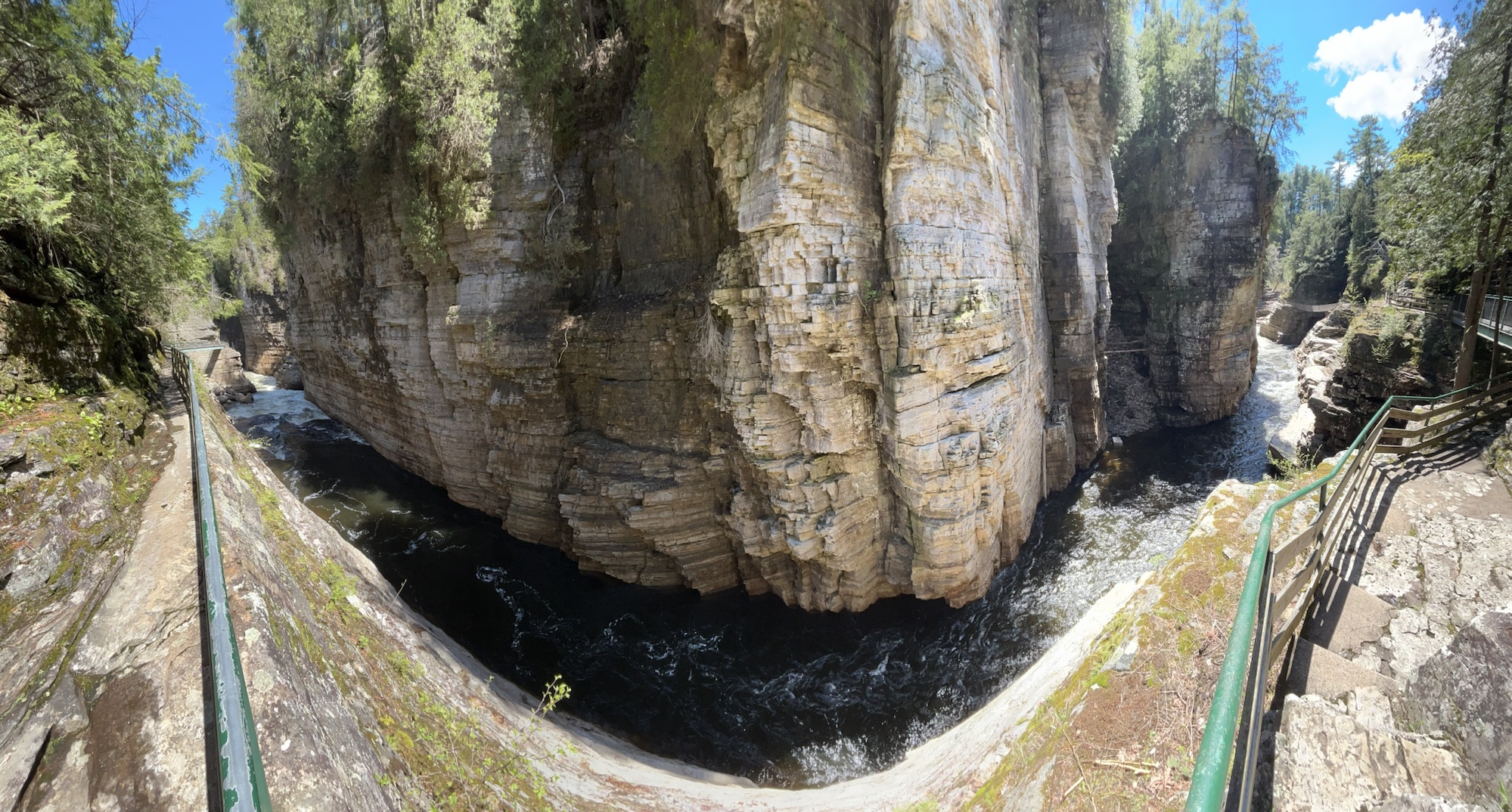
Much of upstate New York belongs to the Adirondacks, with old mountains, lakes, forests, wildlife and scenery. Two of the more famous tourist spots are the High Falls Gorge (above) and the Ausable Chasm (below), both on the Ausable River—from the French ‘au sable’ meaning ‘sandy’—which is fed from Lake Placid and flows down to Lake Champlain. Since they’re well developed old trails, walking along the secure walkways and overlooks costs about $20 each, but I think they’re still worth it, though neither is quite the scale I imagined for the ‘Grand Canyon of the East’.
Lake Champlain is part of the water route from New York City to Quebec, so several key battles were fought in the area, including at Saratoga and during the War of 1812. The British were winning in 1814, having sacked DC, but Thomas Macdonough won the Battle of Lake Champlain aboard his ship, the USS Saratoga, thwarting a British invasion down the Hudson in 1814.
This National Heritage Area preserves both history and beautiful nature, including Marsh-Billings-Rockefeller in Vermont. The Champlain-Adirondack Biosphere is also recognized by UNESCO for its forests, wetlands and mountains in both upstate NY and about 1/2 of Vermont. Unfortunately, the Trump administration ended the only other UNESCO Biosphere in the North Atlantic Region at New Hampshire’s Hubbard Brook hardwood forest research. Still, there are many other fascinating places to visit in this diverse heritage area, such as the Antique Boat Museum in Clayton New York on the St Lawrence River, as well as the scenic homelands of the Algonquin and Iroquois people near the Canadian border.
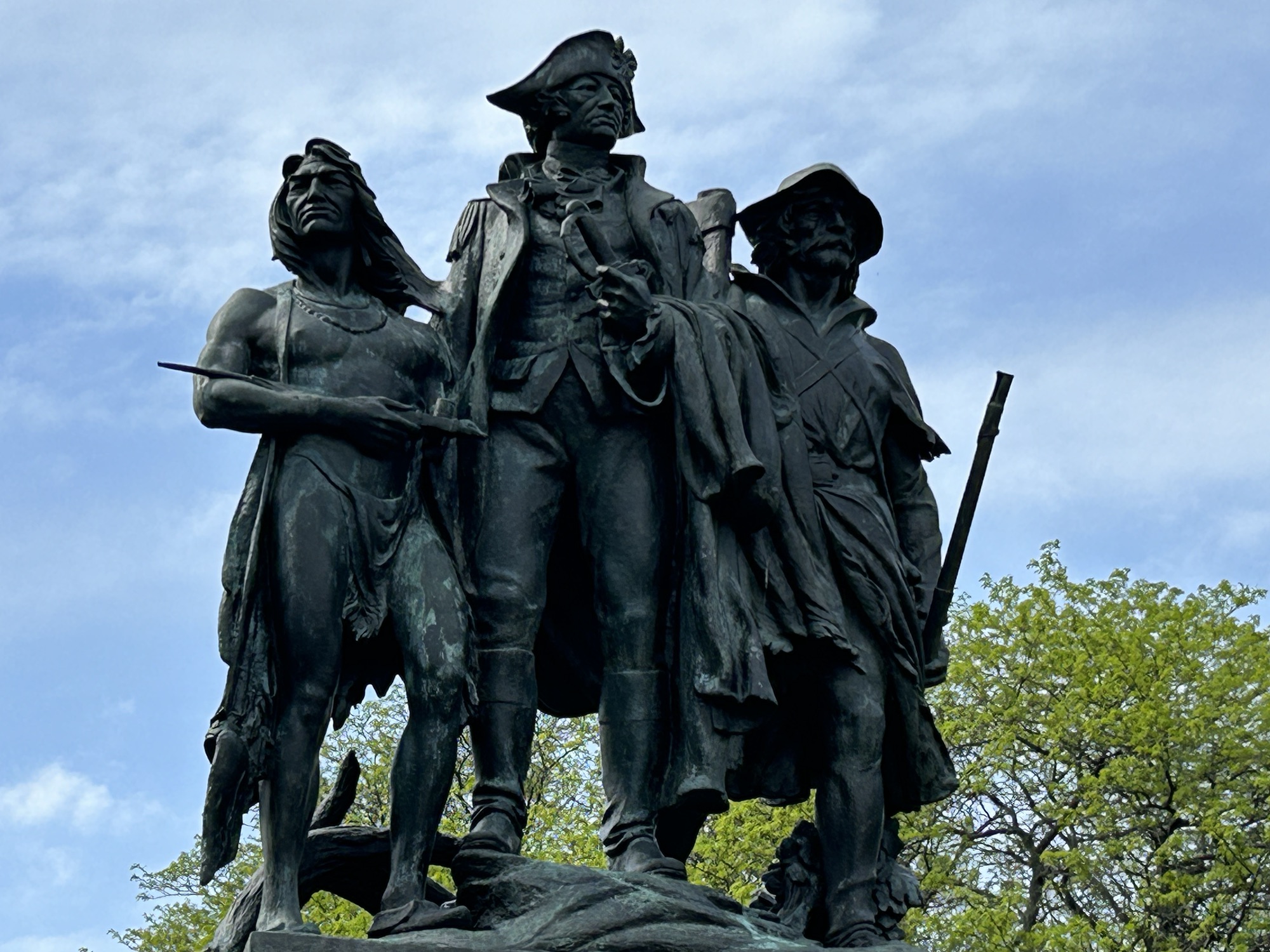
The much disputed western frontier was once here in Ohio, where the British Fort Miamis guarded the crossing point and last navigable stretch of the Maumee River to Lake Erie, backed by their confederation of Native American allies. George Washington sent General Wayne (above center) here after his previous general had been defeated. In 1794, Wayne’s troops met over 1,000 native warriors in battle, and prevailed, resulting in much native land being ceded to the US.
In 1811, Indiana Governor William Henry Harrison provoked the natives into fighting again. When the War of 1812 broke out, the British reforged their native alliances and used their naval power to reoccupy Fort Miamis. Now General Harrison—later the 9th President—built a new fort on the other side of the Maumee River and held it against attack. The fighting then moved north, where Harrison’s troops killed the Shawnee leader Tecumseh and defeated the British on the Canadian side of Lake Erie, ending both the British occupation and native land ownership in most of the northwest.
The site is affiliated with the NPS and managed by Toledo. Due to an early mistaken account of where the battle occurred, the statue above is neither on nor facing the battlefield, which is behind them over a bike bridge in the woods. There are plenty of bike trails connecting different riverside parks, and there’s an Audubon island with heron in the middle of the river. The earthworks of Fort Miamis are still clearly visible overlooking the Maumee. History and nature await us.




 Zero Carbon Travel