Kayaking around Scorpion Rock, above, is truly a great national park experience. You are completely surrounded by wildlife, with brown pelicans flying in formation above, various seabirds perched and nesting on the rocky cliffs, harbor seals and California sea lions popping up curiously, and a brown kelp forest below with colorful sea stars and garibaldi fish. Our adventure tour had us on the water for several hours exploring both east and west of the scorpion ranch dock. Due to a fault line running through the volcanic rock, combined with powerful waves, this particular corner of Santa Cruz Island has perhaps the largest concentration of sea caves in the world, and I kayaked past a big blow hole, through several arches, skirting a gyrating whirlpool, around a pillar, and far enough into the back of one cave that the entrance almost disappeared in the swell. Wonderful!
If that’s your cup of tea, get in touch with the Santa Barbara Adventure Company, who can arrange a whole day tour, my favorite paddling tour. The guides were excellent, despite being frequently interrupted by seals and sea lions, and offered memorable stories to explain what we were paddling through and to inspire us to pay closer attention and care more about the natural world around us. Some flexibility helps, as weather can affect camping, ferry crossings and kayaking conditions significantly. The ferry operator contacted me the night before my trip to advise me of a storm that would bring hazardous winds, rains to turn my campsite to mud, and the likelihood of a canceled return ferry. They suggested changing to a day trip to avoid all that, so I left my camping gear in my trunk and had a spectacular, slightly rushed, day on the water.
I feared that I would not get to see the Island Fox, but one popped out as we were eating a late lunch (see below). Frankly, I needn’t have worried about not seeing any wildlife, especially on a kayak tour. Black oystercatchers, several different cormorants, the island scrub jay, pigeon guillemots, and a wandering tattler were just a few birds we saw. A large pod of common dolphin greeted our ferry’s arrival at Santa Cruz Island and played in our wake, and I spotted several whale spouts on the ride back.
I recommend arriving the day before your trip, going to the visitor center near the ferry dock, and watching the park film, narrated by a local high school grad named Kevin Costner of Water World fame. There you can learn about the islands, the Chumash cultural heritage, and all that you hope to see. The five Channel Islands are often called the Galapagos of the US, and, having been to the actual Galapagos, I must say it’s not true. There are similarities, including some seabirds resembling penguins, numerous playful seals & sea lions, and the sense of being surrounded by species in an extraordinarily special place, but there are no giant tortoises or brightly colored iguanas or other tropical species. The Channel Islands are unique in their own right, in a Mediterranean climate, on a busy seaway for whales and other marine mammals, remarkably accessible from one of the country’s largest urban areas. Marvelous!
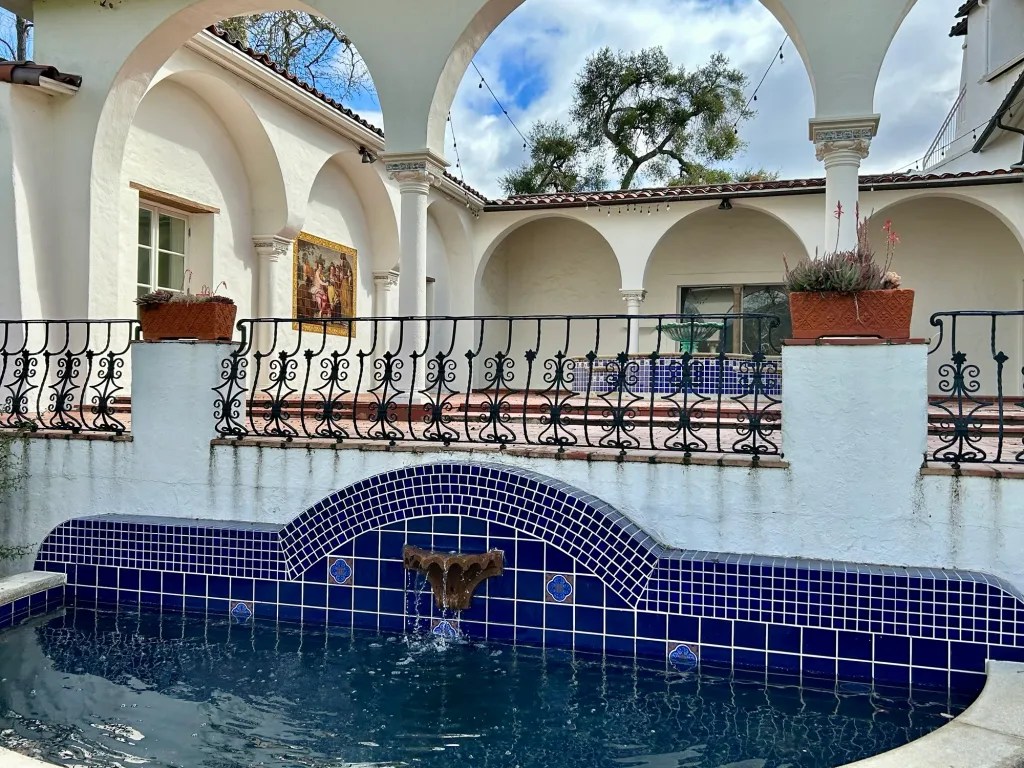
California’s Golden Age architect, Edwin Neff, designed a grand ranch, above, for King Gillette of razor blade fame, in the roaring ‘20s, who sold it to Clarence Brown, who directed dozens of successful films, including National Velvet and The Yearling. Later the property had numerous colorful owners, but eventually it was saved by conservationists who won national protection for the stretch of mountains overlooking the Pacific above Malibu. The recreation area includes state and city parks, numerous film locations, horse riding trails, scenic vistas and wildlife, not far from Santa Monica and the LA basin.
This was actually the first park I visited for this blog, on the same day I picked up my EV. But I was so upset by the devastation of Paramount Ranch after the Woolsey Fire, that I neglected to take a photo. So, since I driving by on Thursday, I decided to do this redux visit to get a proper photograph or three. The visitor center is in the old Gillette Ranch carriage house, with the horse stalls and round hayloft now an exhibit space. And if you walk up the hill, you get a grand view of the Santa Monica Mountains below.
The whole recreation area is fascinating, especially if you’re a fan of scouting old TV and film locations: the Rockford Files beachfront home/ office at Paradise Cove, M*A*S*H’s camp in ‘Korea’ and Planet of the Apes, including Zuma Beach where Charlton Heston famously dropped to his knees to curse us all.
Daniel Romero marched with César Chávez back in the day, so when a nationwide protest against recent cuts to the national parks & US forest service popped up today at noon, of course, he came wearing his ‘¡Si, Se Puede!’ T-shirt. He knows from experience that predicting turnout is a fool’s game, but instead of the expected 3, there were around 20, even at a very small park in a rural area best known for a loop of track for trains to change elevation to traverse the Tehachapi pass. Another was Fernando Chávez, a grandson of César, who discussed the need for solidarity, coalition building, and activism at the base of the old oak tree next to Martyr’s Garden, where his grandparents lie at rest. “We’ve been protesting forever”, said Romero. “Even though we are sometimes excluded, we have always tried to support each others’ causes”, said Chávez, recounting how spontaneous protests recently broke out after a particularly brutal local raid by ICE. Romero listed the unions that marched with them, describing diverse families and even weddings during the boycott and strike.
This was an early park visit for me, as it’s local. Unlike my quiet visit 3 years ago, folks here today were sad, angry and surprised by the chaotic decisions to cut 1,000 NPS staff and 10% of the USFS. One employee here had just transferred from New Mexico when his job was axed by Elon Musk. Many of those affected were young, promising staffers, full of optimism. Supposedly he is scrambling to get the transfer reversed to stay employed. While there may be some cost savings, in the long run, the work these folks do protects and adds a lot of value to our country, so cutting when hiring is needed is counterproductive. I felt the need to apologize for still driving a Tesla, but folks understood, knowing others who are now trying to unload theirs. I’m keeping mine, as the climate crisis is going to get worse, despite efforts to delete the word climate from government documents.
I know Saturdays are supposed to alternate state photos, so I’ll add another and a video below. But I thought you might like this real time update from a very appropriate park for a protest, with people whose lives were defined by the proud history of protesting in America. Next week will return with another western state. Thanks for reading!
National Heritage Areas are run by local communities, with technical support and limited federal funding, so they’re not official park units. They’re certainly worth visiting, and they include some of my favorite places in the USA. Each has its own unique character, some preserve history, some culture and some nature, and together they showcase the tapestry of our country. I’ve visited the four NHAs in the Western Region by EV, so here’s a quick summary for you to explore.
The Santa Cruz Valley National Heritage Area in Arizona is part of the Gadsden Purchase of 1854. The NHA includes Saguaro National Park, Tumacácori National Historical Park—a small, but exceptionally beautiful place above—, San Xavier del Bac Mission, the Tucson Presidio Museum, the Arizona-Sonora Desert Museum, Native American tribal lands, and many other parks, preserves, ranches and gardens. The Juan Bautista de Anza National Historic Trail begins in the Santa Cruz Valley south of Tucson, at the Nogales Mexico border crossing.
Yuma Crossing National Heritage Area, in Arizona just across the Colorado River from California, is only a few blocks from Mexico, and it still carries some of that old frontier atmosphere. Yuma Territorial Prison, a state park, is a good place to start, and it figures in many of the old western tales of Tombstone and Hollywood. Be sure to visit the riverside parks, where 400 acres of wetlands have been restored, turning back time to before the Spanish came up river almost 500 years ago. The crossing is also part of the Juan Bautista de Anza National Historic Trail.
And the same trail ends up in San Francisco, where I used to live and work. One of my favorite escapes from that city was to explore the Delta, a huge area of farmlands, levees, and artificial islands upriver from the Bay. Built by Chinese laborers—later denied residency or citizenship—, the agricultural and boating area is sparsely populated, compared to the large cities nearby. My favorite town is Locke, which still has many old buildings used by Chinese laborers and merchants from over 100 years ago. It was one of the last towns of its kind, fortunately avoiding many of the “mysterious” fires that burned out other Chinese immigrant communities. While visiting John Muir’s home and Port Chicago, I took the opportunity to get lost there again, visiting Isleton and small harbors known only to locals. Fortunately, the entire area is part of the Sacramento-San Joaquin Delta National Heritage Area, including more civilized spots in Walnut Grove and Benicia California.
The last NHA in the Western Region is Great Basin National Heritage Area. While most folks think of Great Basin National Park, the Great Basin Desert is actually a huge geologic area, including a piece of southeastern Oregon, bits of California, the western half of Utah and almost all of Nevada. (Utah is part of the Rocky Mountain Region, but as most of the NHA is in Nevada, I count it here). So, anyone who’s followed the Pony Express or driven America’s loneliest road, Highway 50, knows the area. To call it sparsely populated is an understatement: one of the most populous places around is Eureka, Nevada, population 414. There is a remarkably undisturbed drugstore museum in McGill, and there’s a hot spring in Duckwater (pop 228). Topaz is in the Basin, as is part of the epic Pahvant-Valley Heritage Trail, one of the Mormon pioneer trails beyond the capability of my electric car. One of the trail stops is Hole-in-the-Rock in Glen Canyon, across from Rainbow Bridge. Good place to visit if you can get there and like solitude.
While not a national park site, I just had to stop to see the legendary Gunfight at OK Corral. The shootout was so quick I only got this photo of the aftermath. As mass shootings go now, I doubt this one from 1881 would make the news today. Now mass shooters kill more in one hour than any old west gunslinger did in their lives.
This Arizona town—named after a silver claim wrongly thought hopeless—is not far from a Butterfield Stage stop, and it has restored horse-drawn stagecoaches that take folks around the historic center of town. Boot Hill cemetery is another famous site here, but there are loads of historic saloons, re-enactments, museums, shops and more.
The “world’s largest rose tree” is in a courtyard near the courthouse, and it’s amazing how large plants can get if we let them grow. Nellie Cashman ran a string of successful businesses here before moving on to the Klondike. Three Mexican Revolutionaries were convicted in the old county courthouse here, along with the Bisbee Massacre gang. And Geronimo had his famous photo taken by the photographer who had a studio above.
West of town is the San Pedro Riparian conservation area, which protects nature and both Native American and Spanish sites. Further west on the other side of Apache Peak is Las Cienegas—the marshes—conservation area, which is a beautiful protected grassy lowland in a historic ranching area. Since many tourists fly around burning carbon these days, they miss these distinct and fascinating features of the old west.
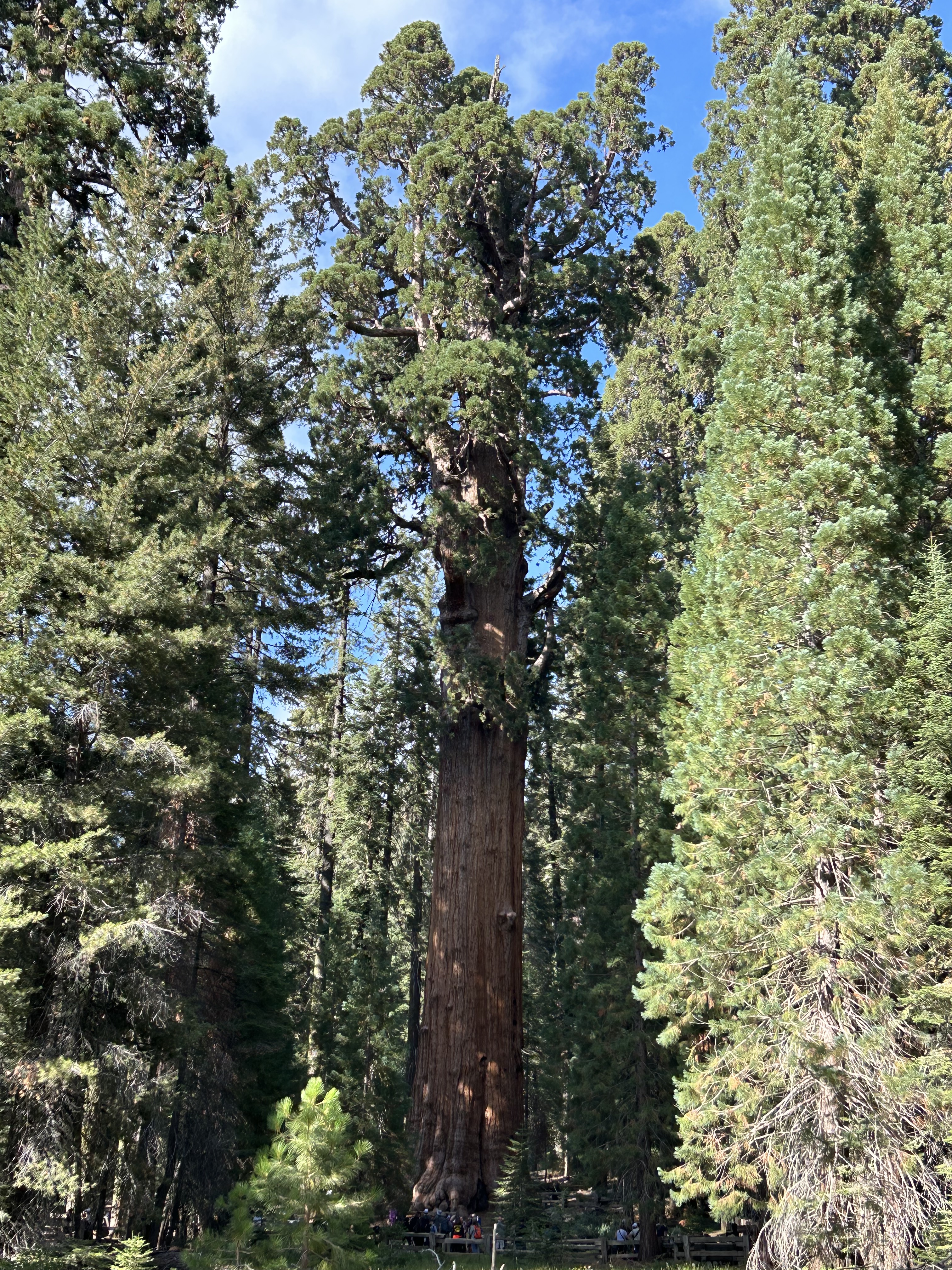
General Sherman, the Giant Sequoia above, is the largest living single organism on earth. Over half of the largest trees on earth are in this park and in neighboring Sequoia National Monument, Sequoia National Forest and Kings Canyon. This park is my favorite for giant trees. For millions of years, these magnificent trees thrived here, near the southern end of the Sierra Nevada—‘jagged, snowy’—mountains. The taller, thinner coastal redwoods mainly live closer to the Pacific where cool ocean breezes bring fog, protecting them.
But in a small fraction of one Giant Sequoia’s 3,000 year lifespan, humans have burned so much carbon into the atmosphere that the mountains here no longer hold snow all year, serving the immovable trees an eviction notice. Just in 2020-2021, between 13% and 19% of the world’s Giant Sequoias were burned to death in consecutive huge wildfires here. These trees evolved to survive fire, and, until recently, mature Giant Sequoias survived wildfires. The Climate Crisis has changed that, putting this species at risk of extinction in our lifetimes.
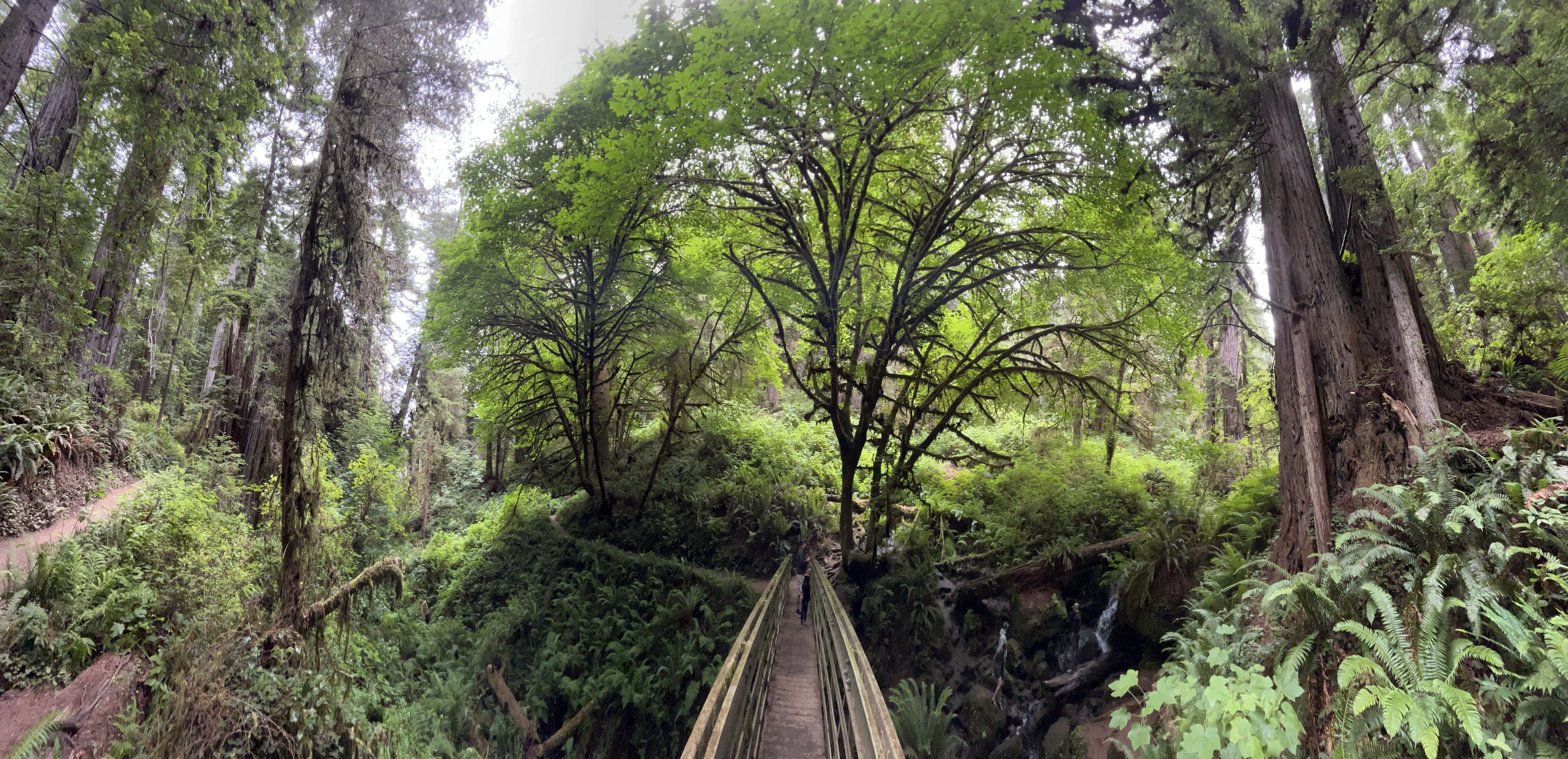
Many of the groves and much park wilderness are currently unreachable, due to post-fire erosion washing out roads, bridges and trails. Finding sections of the park unmarred by burn scars is challenging. The trees here are magnificent, but I recommend visiting Redwood to find solace. While most of our Giant Sequoias still live here for the time being, please don’t burn gas to get here. The last giant forests the loggers failed to destroy with sawmills, we are destroying with our cars and airplanes. By choosing to burn carbon, we are destroying the ecosystem these magnificent trees needed to live naturally for thousands of years. It would be too sad to visit only to say goodbye.





















 Zero Carbon Travel