Aztec Ruins National Monument

Again, we keep using the wrong name for a national park site (like Montezuma’s Castle). The Aztecs had nothing to do with building this pueblo or reducing it to ruins. By now, I’ve had it. Even the park service uses the term “Indians”. Well, Indians are from India, and we’ve known for centuries that Columbus was wrong to believe the natives he encountered were from the Indies. Geographically, it’s difficult to find two places more diametrically opposed on our globe than India and New Mexico. It’s frankly insulting to keep referring to people by using a mistaken term for centuries. And it shows a profound and reckless disregard for addressing past mistakes and thinking about how to correct them, when we continue making the mistake every day. I’ve been using the term “Native Americans” to discuss the people who still live here and still practice their religion at sites like these. In Canada, the official term is “First People”, which is certainly an improvement in accuracy. Navajo use the term “Diné”. Unless we’re referring to the south Asian country of India, we need to stop saying “Indian” now.

Rant over. The ruins are primarily worth visiting in my opinion to see the spectacularly restored Kiva pictured above, as well as to duck through a long row of low doorways to explore the many rooms along the longest wall here. If you have time to visit a number of these native cultural sites in one trip, then you begin to get a fuller picture of the various migrations, trade routes and pueblos along the river valleys. Each park visit helps open my eyes to both the ancient people and their living descendants.

Gila Cliff Dwellings National Monument

This park is surrounded by real wilderness, and any intelligent visitor would plan on camping overnight to take a longer hike or maybe even a trail ride on horseback. Of course, I drove through on my way back to Arizona, practicing my hairpin turns on mountain switchback roads. Well, at least I didn’t burn any species-ending fossil fuels on the drive.

The cliff dwellings are spectacular, with details like a wall mural and a pictogram, well worth the brief hike along the pretty creek and up the cliff side. Unlike Montezuma Castle NM, I was able to climb right into the main room and climb ladders to peer into the past. There was even a volunteer there who reminded me that pictograms are painted and petroglyphs are carved.

Click to see my photos of all national park units in New Mexico.

White Sands National Park

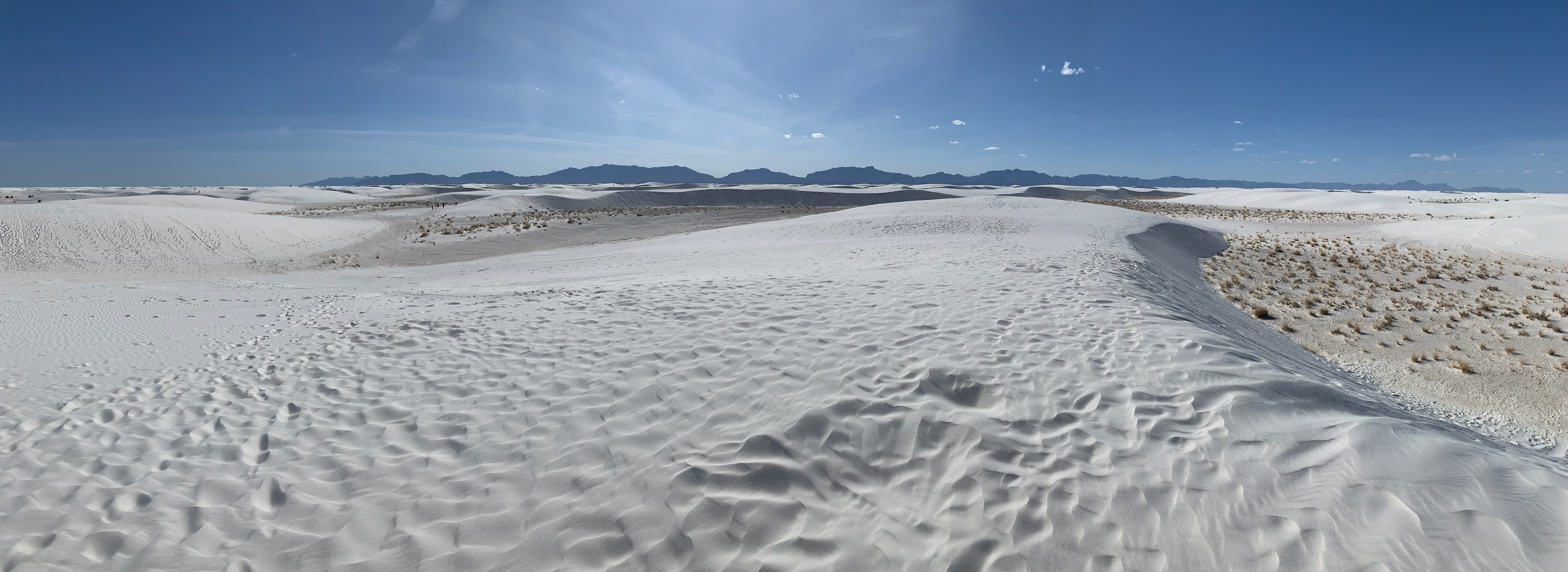
One of only three large gypsum sand dunes on earth, the others being nearby in Guadalupe Mountains NP and in Coahuila Mexico. If I had more time, I would have enjoyed camping overnight in the “back country” away from the road or a ranger lead evening program. But I enjoyed the nature hike and the otherworldly views. I was glad to have the long-range version of the Tesla Model 3, since the round trip distances to charging stations cross the vast missile range and mountains you can see in the distance.

Click to see my photos of all national park units in New Mexico.

Petroglyph National Monument

Worth going to the visitor center first. They directed me to the trail with the most petroglyphs (400+) and no parking fee. Fascinating to see the signs those travelers left so long ago, preserved by the city of Albuquerque, right behind a residential neighborhood.

Another hiker pointed out a coyote, probably chasing the road-runner I saw too. I heard the distinctive “beep-beep”. They should make a cartoon about that.

Click to see my photos of all national park units in New Mexico.