Oklahoma City National Memorial

Each of the chairs is etched with a name of one of the 168 victims of the bombing here on 19 April, 1995. The smaller chairs are for each of the 19 children killed.

The memorial is designed to achieve closure for this traumatic event, for the families, survivors and responders. The reflecting pool spans the 1 minute interval at 9:02 am ‘between innocence and healing’. There’s a statue of Jesus weeping with his back turned away. There’s a grand old elm that survived. And there’s graffiti, sprayed by a CSI bomb specialist working in the rubble, promising to seek Justice for the victims and for God.

For me, the decision not to delve into the cause of the bombing makes closure impossible. Neither the victims nor God could be satisfied that 27 years later our country is still under assault by violent anti-government white supremacists. The $15 museum (closed Sunday mornings) describes the investigation and trial (2nd floor), but the main film is on “personal responsibility” (GW Bush’s campaign theme).

The truth is that McVeigh (executed) and Nichols (life) were anti-semitic, white supremacists who believed that attacking the government and killing civilians is justified. They were heinous criminals, not patriots. Yet their hateful, militant and deadly beliefs have continued to grow into a powerful political movement that still threatens our democracy.

The memorial offers a powerful opportunity to teach people about overcoming bigotry, about non-violence and about true patriotism. The focus should be on the strengths of our democracy, including “liberty and justice for all” and our right to “peaceably assemble, and to petition the Government for a redress of grievances”. Instead, each memory is placed in a glass case, platitudes abound, Christianity is affirmed, extremism ignored, and our nation is left unable to come to terms with the issues that caused the bombing.
Lake Meredith National Recreation Area

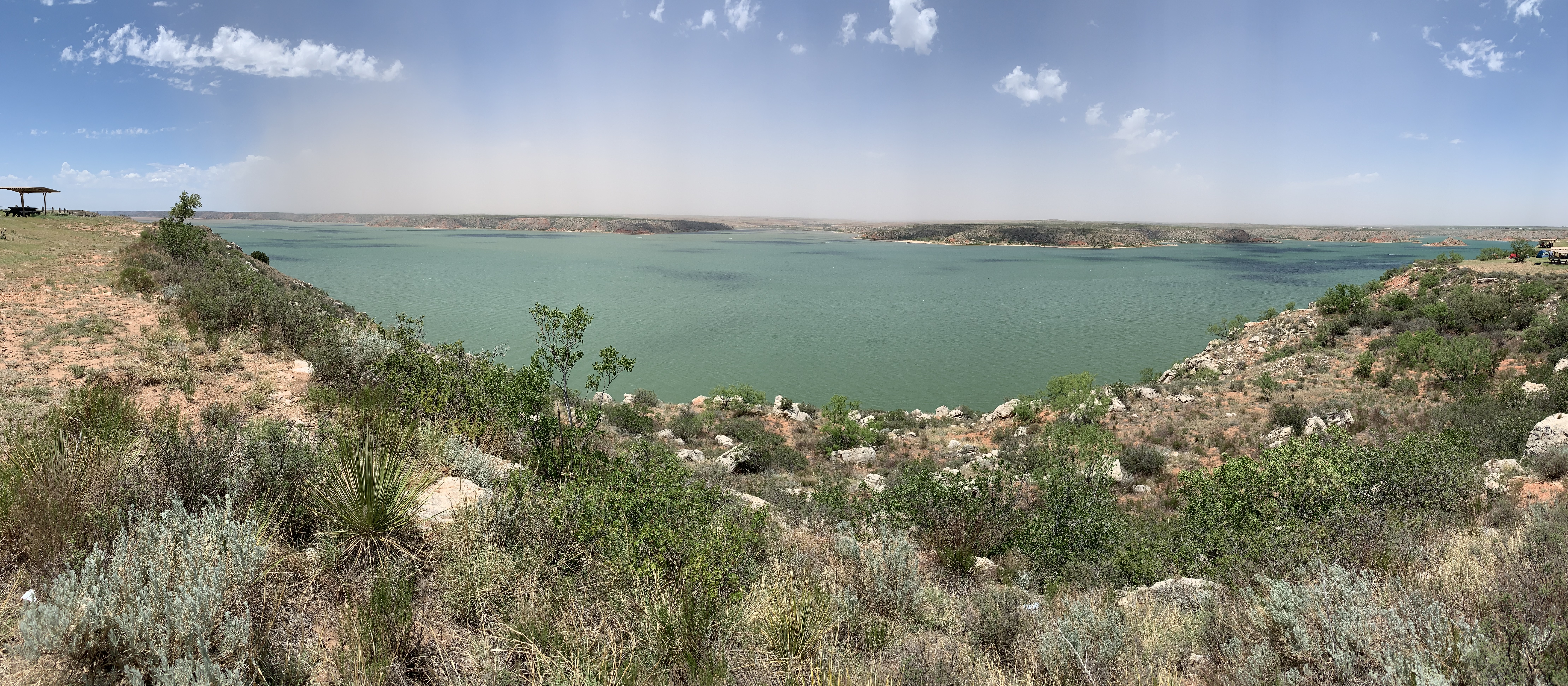
The Canadian River flows from the Colorado/ New Mexico border through Texas and joins the Arkansas River in eastern Oklahoma, but a dam here creates Lake Meredith. I had planned to kayak here next year, but I think I’ve decided against it. Most of the water craft are loud, fast, gas-guzzling powerboats, the lake has shrunk dramatically due to water diversion to cities, and Spring Canyon where the park service once had wildlife paddling tours is now more of a separate small pond.

When Congress sets aside these areas for recreation, there’s some effort made to protect the natural beauty, but it’s mostly done for the benefit of only one species: us. There’s a garden in this NRA for the monarch butterfly migration at the visitor center for the neighboring Alibates Flint Quarries, but it is ridiculously tiny. I can’t see how migrating birds could use the lake with all the motorboats. The lake is more of an artificial water park, rather than a wildlife refuge. On the interstates, I see signs for “wildlife parks”, which are basically zoos. But once animals are locked up in cages and fed, they are no longer wildlife.

I don’t think people understand (or care) that once the real wildlife is gone, it will be gone forever. Our government needs to prioritize saving species, due to the climate crisis, and that requires leadership to make significant changes right now. There should be a cabinet-level biologist directing policies across government to make sure we maximize the chances for species to survive. Water parks and zoos can be built anywhere with recycled water, but natural ecosystems need to be protected, especially along our western rivers.

Alibates Flint Quarries National Monument

This little lady is an Eastern Collared Lizard, and she’s sitting on Alibates flint, which is an extremely hard and unusual type of flint used by Native Americans for sharp edged tools. These flints were used to hunt Mammoths (possibly to extinction) by the Clovis people over ten thousand years ago. (Clovis is the New Mexican town where they were studied). Successive groups of natives used these flints, notably the Antelope Creek tribe, who dug hundreds of quarry pits around here to dig out the best quality, unweathered flint, and traded them as far as Montana, California, Mexico and Alabama.

I’m not particularly interested in geology, but this was the funniest parks tour I’ve taken. The ranger, Ben, somehow got ten strangers roaring with laughter in ~100 degree heat while climbing a hill to look at rocks and taught us all lots of interesting facts along the way. He even got a Texas Horned Lizard (or “horned frog” or “horny toad”) to scramble in front of us, so we could all get a good look at the official lizard of the state. Actually, the only way into the park is by guided tour, and the only tour during the heat of summer is at 10am. Better to call and make a reservation.

If you are into geology, then this park is fascinating. There’s petrified algae, iron rich red beds, fossilized dolomite, salty gypsum, and of course the multi-colored, sometimes sparkly, agatized dolomite, known as Alibates flint. That name came from a cowboy guide named “Allie Bates”. Mysteriously, perhaps from Valles Caldera or Yellowstone volcanic activity, there was an abundance of silica-rich water that seeped into the dolomite and crystalized into a dense quartz along with an array of other colorful minerals. The flints have many of the rich colors and patterns of the mineralized trees found in the Petrified Forest.

I stayed the night in Palo Duro Canyon (2nd in size to the Grand Canyon) which is another great location for views of the colorful red, white, orange, and yellow rocks under a blue sky with lots of different green trees and plants. The night sky was also brilliant. Any recent rain can close roads though. There was a summer musical playing there for Texans about how wonderful the history of Texas is, but of course, it glosses over the theft of native lands and doesn’t mention slavery at all. It never occurred to me that Texans would be so insecure.

Jean Lafitte National Historical Park and Preserve

This is a large, multi-purpose, multi-unit park. On a previous visit I visited one of the Acadian (Cajun) cultural centers and the 1815 Chalmette Battlefield (read the pirate Lafitte’s story here), so this time I figured I should see the swamp at the Barataria Preserve. I didn’t see any alligators, but the ranger said they were probably under the boardwalk. He also said I might find one if I went on a more remote trail, explaining logically that no tourists had returned from that section today.

Folks around here are under a lot fewer illusions about the Climate Crisis than other places, out of direct experiences. The signs were more blunt than in other parks, explaining that the beautiful ecosystem above is being killed by rising oceans. If we had time to adapt, then we could learn techniques for dealing with storm surge, flooding, etc. But it doesn’t seem like enough people care.

New Orleans Jazz National Historical Park

On a New Years dare, a young Louis Armstrong fired a pistol in the air here and changed both his own fate and the world. He was taken from his home here with the Karovskys (recently reduced by hurricane to a brick pile above) and sent to reform school, where he joined the band. The Karovskys lent him money for a trumpet, and he joined King Oliver’s band playing the Eagle Saloon in the foreground and the Iroquois Theater next door. Remembered by many for the “Wonderful World” end of his career, it was his astounding trumpet skills that made him a breakthrough star. He recorded both the first Jazz solo (multi-bar & improvisational) and the first use of scatting. Despite racial barriers, he played all over and converted many into Jazz lovers. Of all his accolades, he was proudest of being Mardi Gras Zulu King in his hometown.

The block is eventually going to be restored. Sorry for not giving NOLA a longer entry, but I’m posting sporadically from the road. Lessez les bons temps rouler.

Chamizal National Memorial

Unlike any other park, Chamizal memorializes diplomacy. When the Rio Grande shifted course at the end of the 1800’s, it created an island and a seven decade long border dispute with Mexico. President Kennedy went to Mexico to finalize an agreement, and LBJ later participated in the joint ceremony at the border here. There’s a beautiful mural on the visitor’s center, and I remember from a previous visit that there’s a film that explains the importance inside.

Guadalupe Mountains National Park

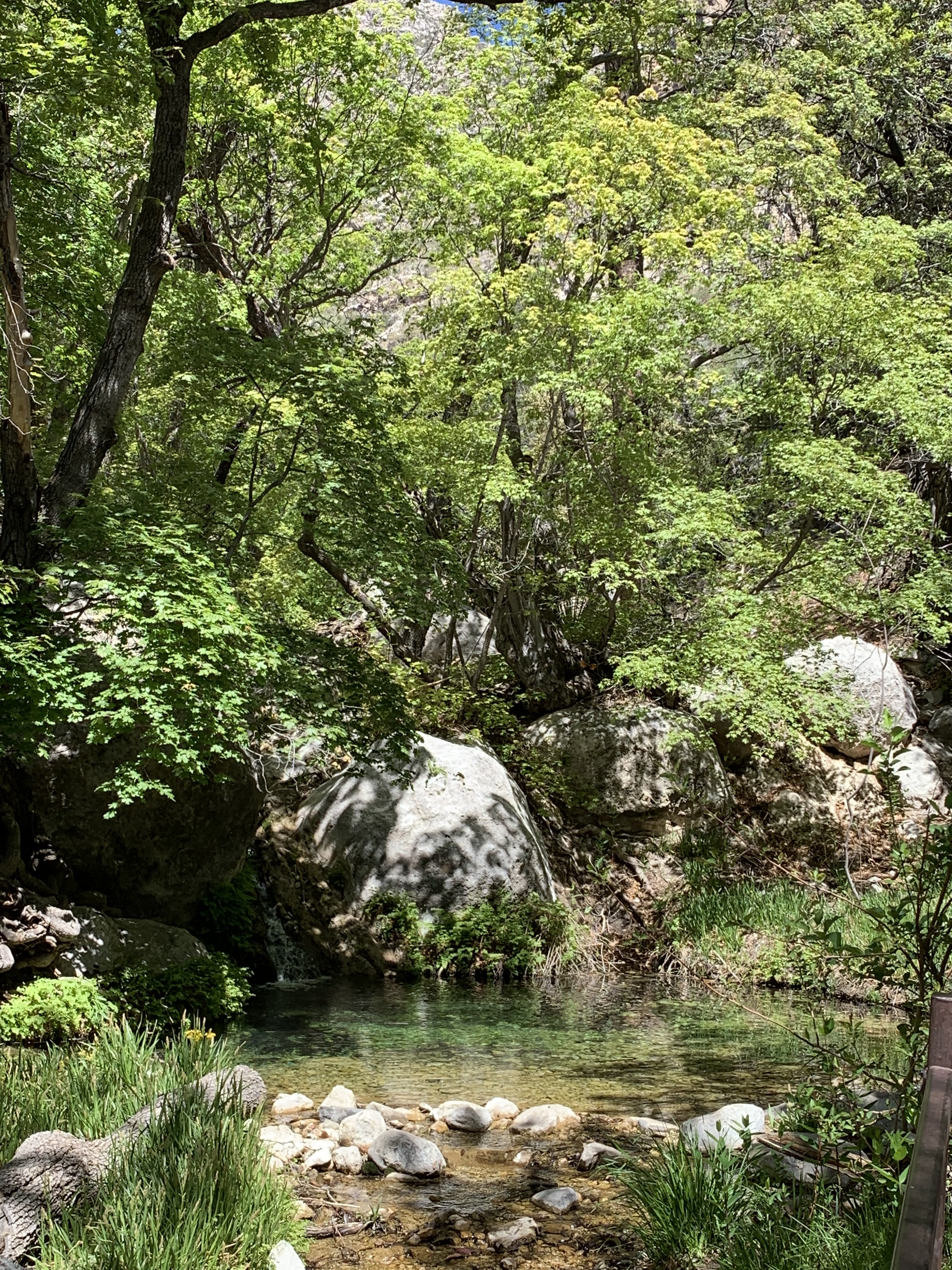
Even after planning, I still check with the rangers for suggestions on good hikes and photo ops. I originally planned to hike McKittrick Canyon, but the ranger suggested the trail at Frijoles Ranch instead, as its shorter and quite similar this time of year. The trail passes two different springs, including the mountainside one pictured.

Guadalupe is large, mountainous and mostly dry, which makes it both difficult to explore and also more barren than many other parks. But that’s what makes the occasional oasis above especially sweet.

Carlsbad Caverns National Park

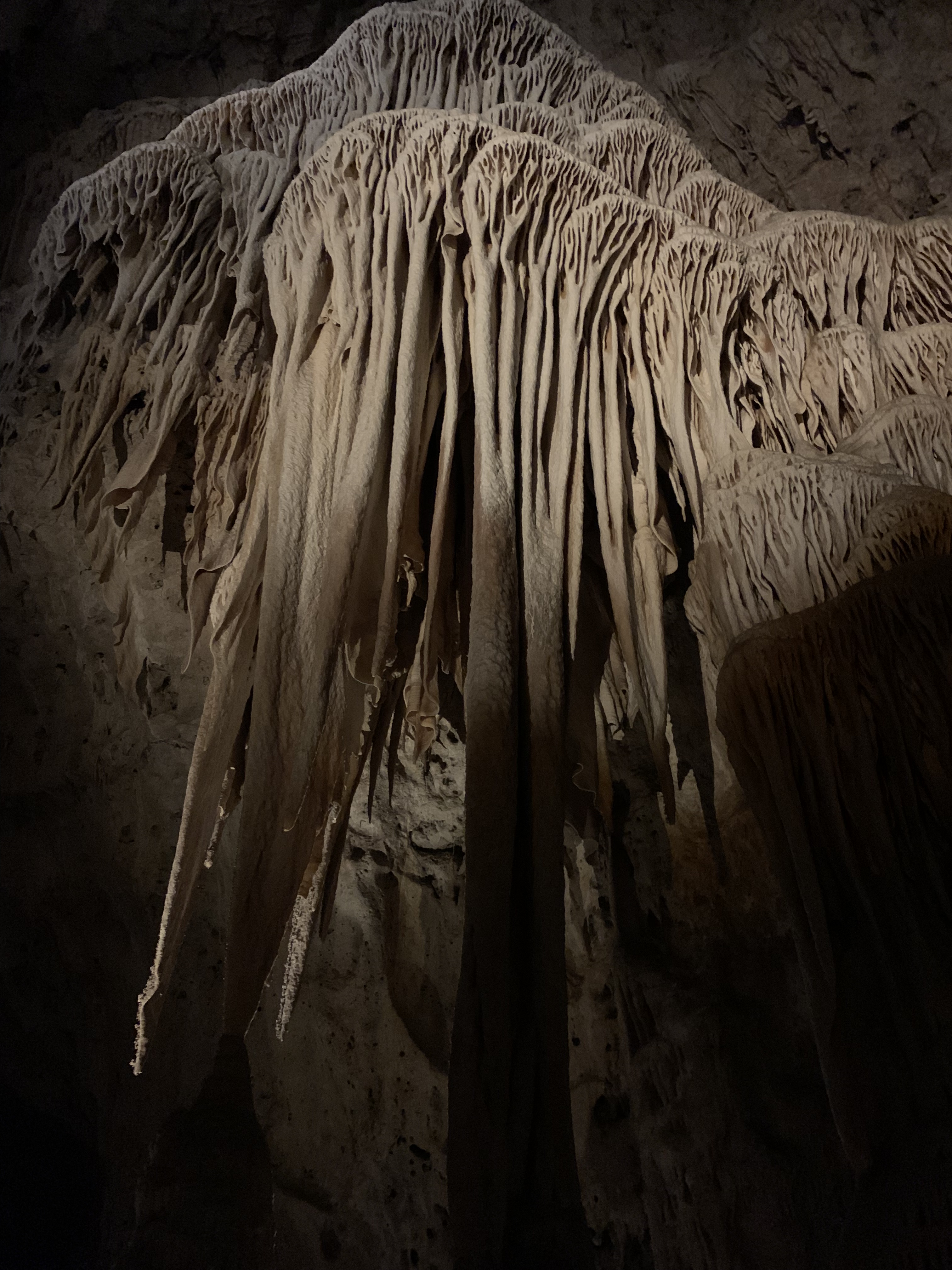
While not as long as Mammoth Cave, Carlsbad is larger in terms of volume, and both are World Heritage Sites. The ceilings are often over a hundred feet high, and the Big Room spans over 8 acres, with a mile-long loop to see it. Even after descending 750 feet down the natural entrance, there are still deeper “bottomless” pits below. I was fairly sure I heard faint drumbeats coming up from the darkness, so I asked the rangers. They explained that there were only a few goblins, and that they try to catch them as they’re considered “invasive species”. I finished the hike as quickly as possible and took the elevator up.

Fort Davis National Historic Site

This is an Indian Native American War era fort. Soldiers from here, including African American Buffalo Soldiers, fought Geronimo and the Apaches in Arizona, the Kiowas and the Comanche, patrolling the San Antonio-El Paso road against raids. President Andrew Jackson predicted it would take a thousand years for white settlers to replace the Native Americans in the west. In reality, the process only took a few decades.

I believe the goal of history should not be a recitation of events. I believe the point of history should be to learn from the past in order to make better decisions in the future. The people are dead. They don’t care whether we praise them or criticize them; that’s not the point. We need to evaluate past actions in the context of the times.

Columbus was an innovative navigator, whose initial voyage went against common sense at the time and changed people’s understanding of the world. He was also wrong about who the Natives were, and he treated them viciously. But he didn’t create racism or slavery. Those were taught in European universities, supported by the church and were the official policy of European governments. Those institutions, which still exist today, bear the responsibility for atoning for the evils of racism and slavery of colonialism.

Kit Carson was an accomplished explorer, who developed strong relationships with the Native Americans he met and traded with. He did what others did not dare and changed people’s understanding of the west. He also carried out a brutal scorched-earth campaign against the Navajo and marched them into internment camps. He neither created racism nor invented the policy of removing Native Americans from their land.

Andrew Jackson was an American hero for defeating the British in the Battle of New Orleans in 1815. He also fought many wars against the Native Americans, broke treaties and even defied Supreme Court orders to remove Native Americans along the Trail of Tears, leading to a legacy of depressed, poverty-stricken reservations. He should have chosen a different path, leading to greater education, cultural exchange, technology transfer, integration and cooperation. The US Presidency, Congress and the military, which still exist today, bear the responsibility for atoning for the evils of the wars and forced removal of Native Americans.

History must be studied to make these judgements and to recommend corrective actions whenever possible, otherwise we doom ourselves to carry the burden and even repeat our past mistakes.

Lyndon B. Johnson National Historical Park

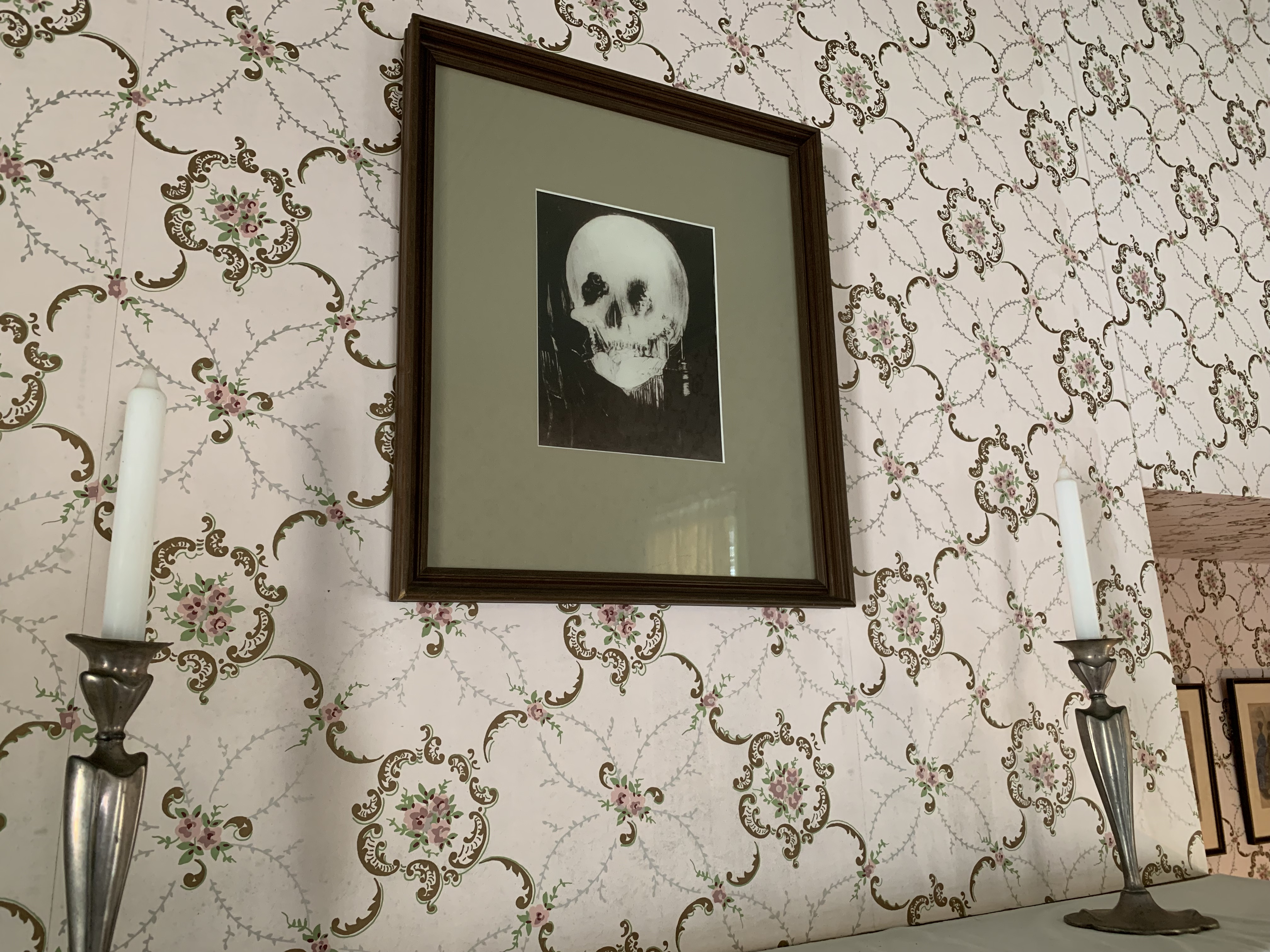
Above the fireplace mantle in the sitting room where LBJ’s mother used to entertain guests is this rather macabre image of a skull. Only after the ranger told me that it was an optical illusion, could I see the image of a young woman looking at her reflection in her dresser mirror. The lesson for Lyndon was to look deeper and try to see things differently. His father was a state representative and taught him the art of politics. His wife, Ladybird, financed his campaign, and under tragic circumstances he becomes President.

The park film on LBJ’s legacy is a bit old but excellent, with recordings from Ladybird Johnson, Vernon Jordan and others. It’s difficult to imagine a time when a Democratic President could win in a landslide on a campaign based on Civil Rights and government spending to alleviate poverty. It also seems strange now to think that his downfall would be being too hawkish militarily in Vietnam. How much the country has changed since then. I wonder what would have been his legacy if LBJ had looked at things differently and decided to abandon the war instead of escalate. Perhaps he would not have withdrawn his candidacy and could have continued his ‘great society’ initiatives.