All Southeast Sites *

The southeast region has more park units (70) than any other region, and I have visited all the units—*except 6 in US Caribbean territories—including all the affiliates, heritage areas and trails in Alabama, Florida, Georgia, Kentucky, Mississippi, North Carolina, South Carolina and Tennessee. Given the large number of states and parks involved, the summary below is organized by theme.

Natural Areas

All of the National Parks in the southeast preserve natural areas, including the reef area of the Florida Keys from Biscayne to the Dry Tortugas, the lowlands of Congaree and the Everglades, the Great Smoky Mountains, and even underground at Mammoth Cave. Other park units, Canaveral, Cape Hatteras, Cape Lookout, Cumberland Island and the Gulf Islands, protect barrier islands. Big Cypress, Big South Fork, Chattahoochee River, Little River Canyon and Obed River all protect diverse riparian areas.

Pre Civil War

Ocmulgee Mounds, Russell Cave and Timucuan stretch back before history, but Horseshoe Bend covers a tragic event in Native American history. Several sites cover early colonial history, including Castillo de San Marcos, De Soto, and Forts Caroline, Frederica, Matanzas and Raleigh. Cowpens, Guilford Courthouse, Kings Mountain, Moores Creek and Ninety-Six cover the Revolution. Blue Ridge, Cumberland Gap, Lincoln Birthplace, Natchez HistoricParkwayTrace, and Pinckney, trace the path of history in the southeast, culminating in the war to abolish slavery.

Civil War and beyond

Andersonville, Brices Cross Roads, Camp Nelson, Chattanooga, Forts Donelson, Pulaski and Sumter, Kennesaw Mountain, Mill Springs, Shiloh, Stones River, Tupelo and Vicksburg are Civil War sites. Johnson, Reconstruction, and Tuskegee Institute cover post war struggles. Carter, Sandburg & Wright Brothers are historic highlights. Birmingham Civil Rights & Freedom Riders, Emmett Till, MLK, Medgar Evers, and Tuskegee Airmen reveal the continuing struggle for Civil Rights.

I learned more traveling in the southeast than any other region, as the area is so rich in history and culture. And the preserved natural areas include some of my favorite park experiences, from underwater and underground, to rivers and shores, and to wildlife experiences in mountain forests. And they can all be explored without traveling in a carbon-burning vehicle.
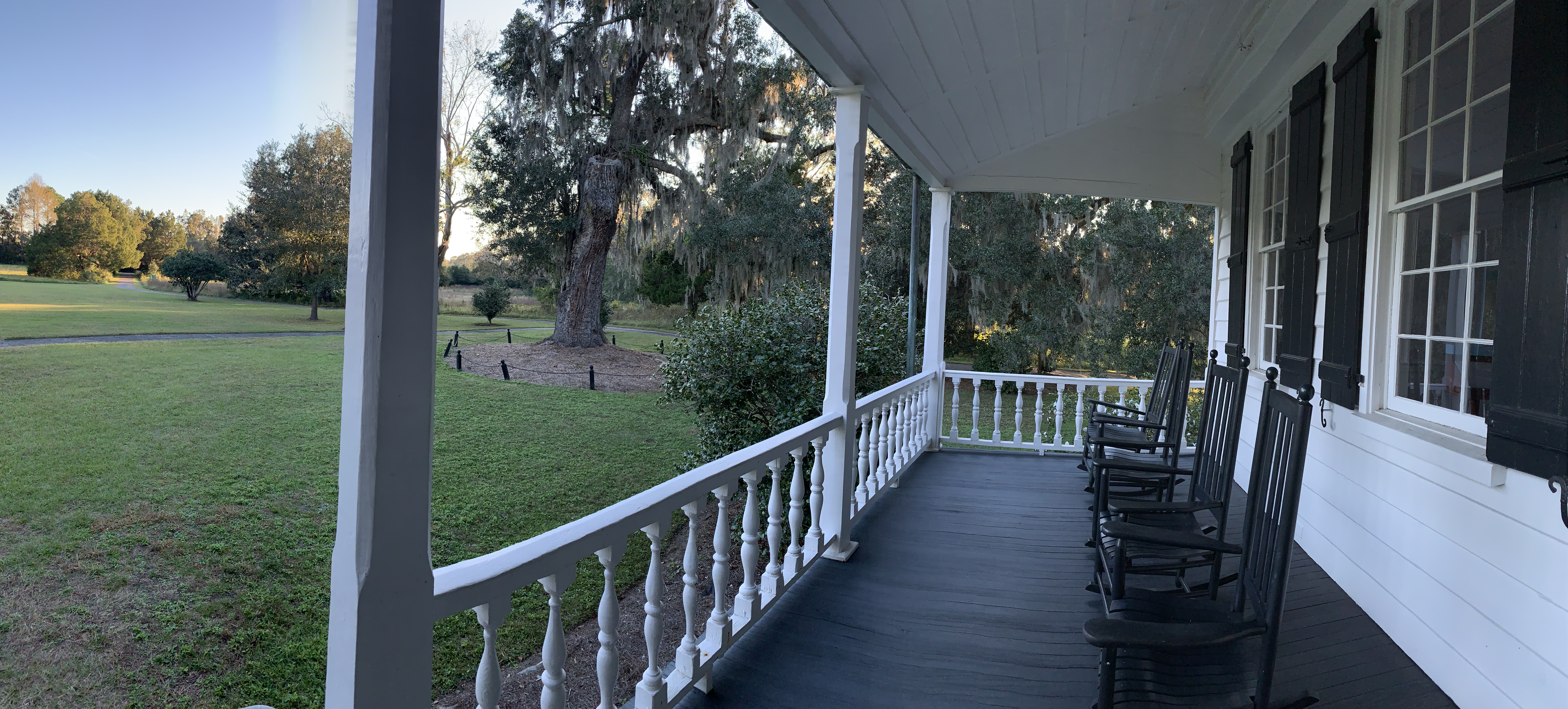
South Carolina & Southern Campaign of the Revolution National Heritage Corridors

These are two obscure heritage areas in the Carolinas, but none of the state or national park employees I spoke with had heard of either. While the South Carolina NHC has historic sites, plantations and gardens, the parks included—like Pinckney, Sumter, and Overmountain Victory—are unrelated. And while the Revolution NHC includes Moores Creek, it excludes many other important battles in the Carolinas and neighboring states. Don’t waste time following these confusing corridors, but instead start with an overview at historic Camden.

Here’s the story of the Revolutionary Campaign in the southeast, focusing on national sites and affiliates. Virginians Henry, Jefferson and Washington led their colony into rebellion, in concert with the north. Virginia colonial governor Lord Dunmore called in troops, organized loyalists and even formed a regiment of liberated slaves. Echoing Bunker Hill, Patriot militia fought well at Great Bridge in 1775, prompting Dunmore to order the shelling of Norfolk Virginia. Echoing Concord, the Patriots cut down a broadsword charge at Moores Creek North Carolina in 1776. And at the end of 1778, the Patriots took Savannah, followed up with a victory at Kettle Creek Georgia in early 1779.

But in May of 1779, the British sacked Portsmouth in Virginia, kicking off their southern campaign in earnest. In late 1779, the British returned to Savannah, capturing it after a siege. In early 1780, they took Charleston SC after another siege. Next, they turned their attention inland, hoping to sway more loyalists, keep their large southern colonies, and then take the fight back to the northeast. In 1780 the British fought over a dozen battles around Charleston and Camden (see Cornwallis’ HQ below) in South Carolina, consolidating their control over the colony.

But the British were ruthless in the south, revoking pardons, burning homes & farms, and imprisoning or hanging those who wouldn’t sign loyalty oaths. The most infamous example happened in May 1780 at Waxhaws—named after a local tribe—, when Banistre Tarleton massacred Patriots, inspiring further rebellion. Popular resentment against the tyrannical British grew, especially among the Scots-Irish settlers. After Gates lost his leadership position after failing at Camden, Nathaniel Greene began a much more effective guerrilla campaign in the back country.

The Patriots didn’t win all their battles, but many of the British victories were Pyrrhic, causing them to cede territory even after eking out technical victories. The back country belonged to the Patriots, especially when reinforcements crossed the Appalachian Mountains on the Overmountain Victory Trail. The Patriots won at Kings Mountain in late 1780, then again at Cowpens in January 1781.

Even though the British subsequently won at Petersburg VA, Ninety-Six in SC, and at Guilford Courthouse NC, clearly, they were not winning the broader campaign. Cornwallis brought his troops north to Virginia. After a close battle near Camden, the remainder of the British forces retreated for Charleston, with the last battle in the southeast fought at Eutaw Springs in September 1781. The denouement was set for Yorktown.

Eutaw Springs Battlefield

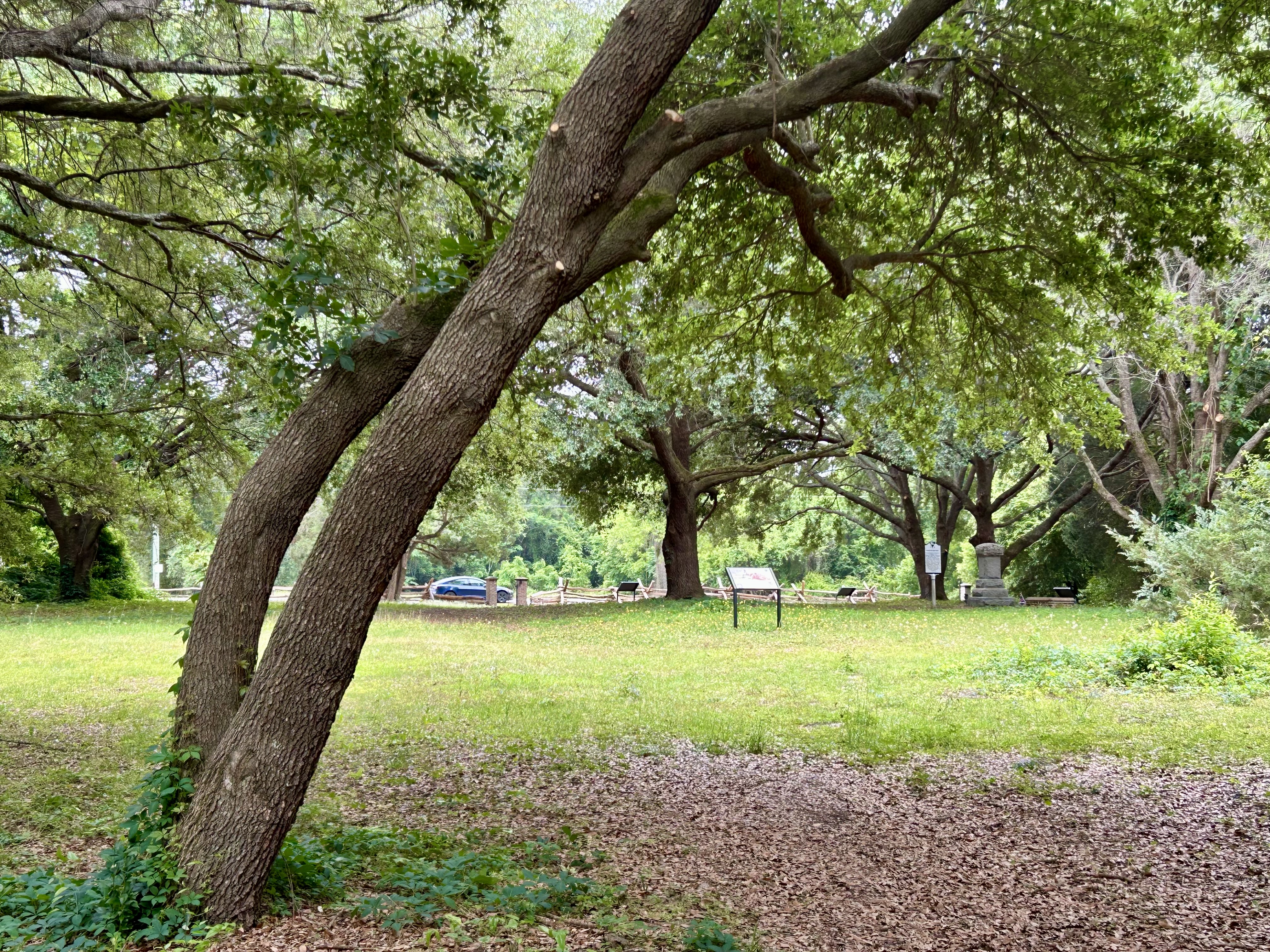
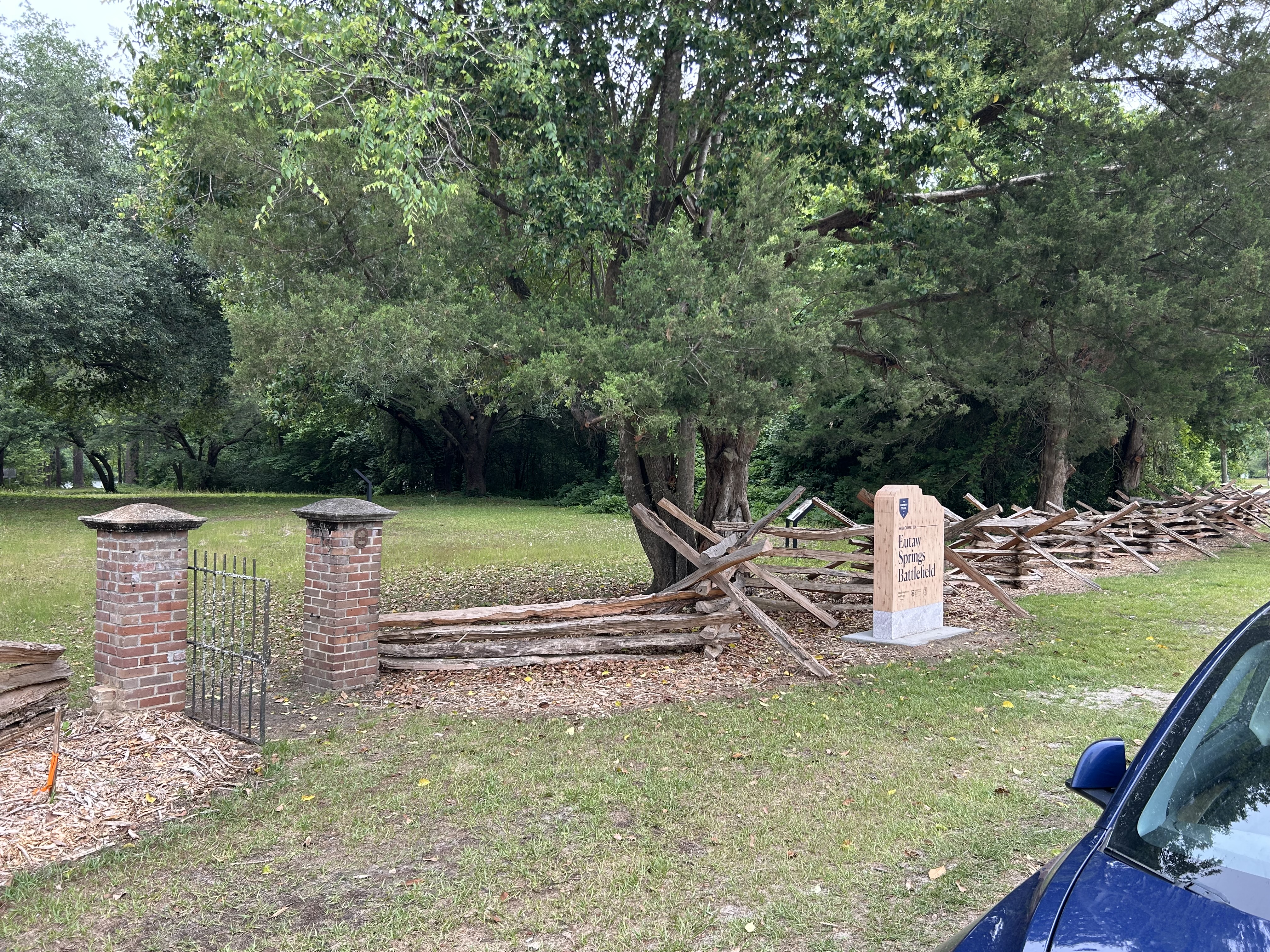
This was one of the final battles for inland South Carolina, in September 1781. Nathaniel Greene’s Patriots were battle hardened and his forces included Francis Marion, Andrew Pickens, and William Washington. The British were equally disciplined veterans. What unfolded was a brutal battle between evenly matched sides that descended into hand-to-hand combat. Finally, the British line broke, and the Patriots entered their encampment.

While it seemed that the day was won, the British formed a defensible position between a stout brick house still marked by a garden gate and the Santee River, now Lake Marion behind the trees below. Stymied, Greene was forced to back off and wait. Both sides claimed victory—technically the British held the field at the end—, but clearly it was a strategic loss for the British, who lost more troops, were forced to withdraw to Charleston and never again advanced in the back country.

Historic Camden

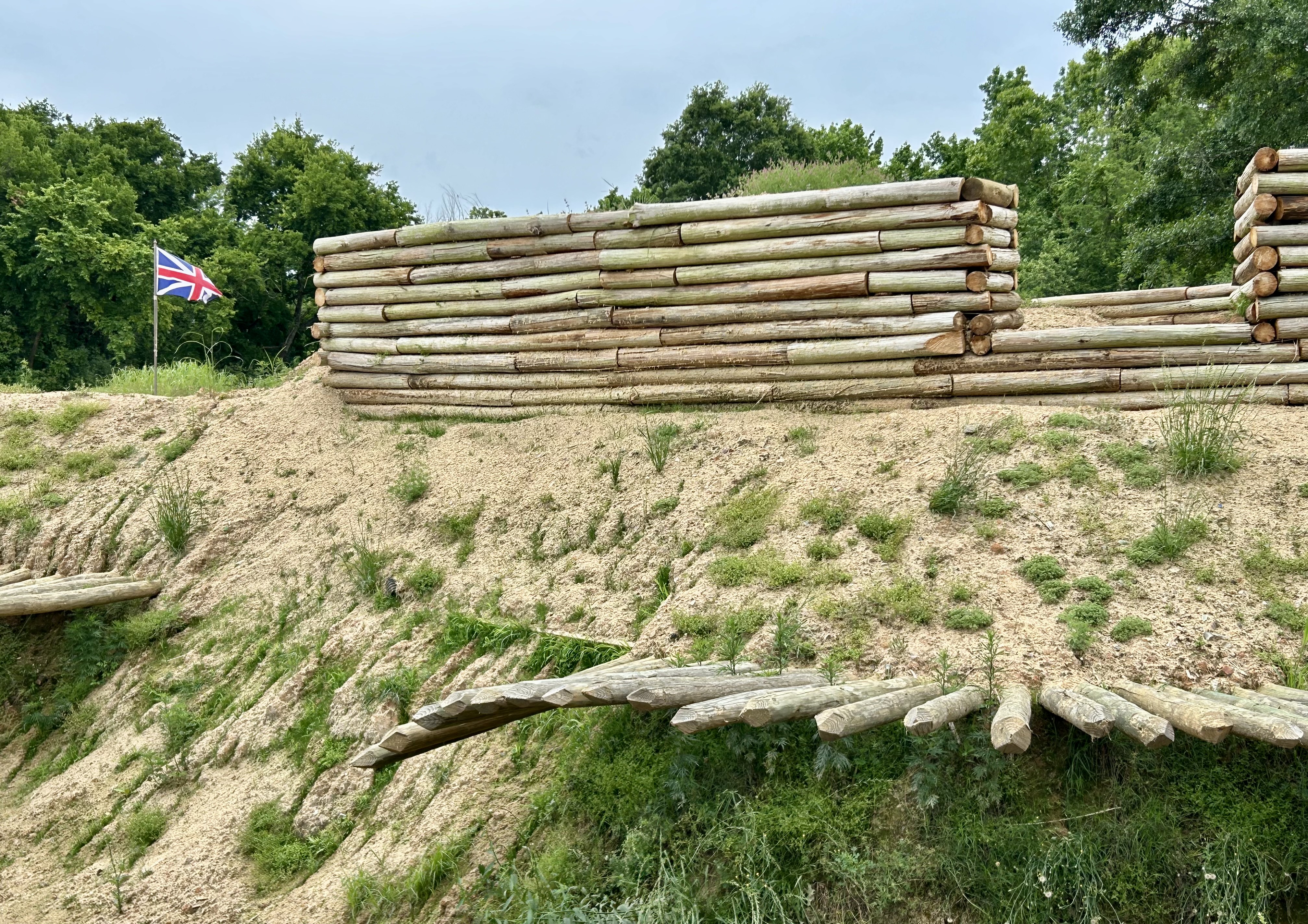
This privately managed affiliate site is one of the best revolutionary war sites in the Carolinas. On over 100 acres of battlefield and early townsite, they have reconstructed Cornwallis’ HQ, one of the redoubt forts (above), a historic tavern, and many other buildings that bring life to history. While separately managed, there’s also a visitor center next door that explains the whole course of the war in the Carolinas, which I will cover in a separate post next month.

Camden was on the Kings Road from Charleston across the low country into the back country. Here it joined with Native American trading routes and the Great Wagon Road from the northeast to Georgia. The British were determined to manage their colonies inland, and not just occupy coastal cities. They also wanted to control trade, tax the rich, hire Native Americans to fight for them, and raise militias of loyalists. Cornwallis fortified Camden as his supply hub.

General Gates, of Saratoga fame, was tasked with attacking Cornwallis. The Battle of Camden in August 1780 was a disaster for the Patriots. Gates put inexperienced troops on his left, who were wholly unprepared to meet the best British troops Cornwallis put on his right, as usual. The French General Baron de Kalb fought to his death at Camden. Gates withdrew to North Carolina. He was later replaced by Nathaniel Greene.

Many of the losses were due to diseases like dysentery, and there’s a detailed exhibit in Cornwallis’ HQ, where a docent answered my various questions. Captured prisoners from British victories in the area were often initially held in Camden and then marched to Charleston where they were imprisoned on ships in dangerously unsanitary conditions.

In 1781, Nathaniel Greene, having recruited Catawba warriors and run a cross country guerrilla campaign disrupting the British, returned to Hobkirk’s Hill near Cambden in April for a rematch. While the British won the day, they decided they could no longer defend Cambden and retreated to Charleston. Cornwallis had already moved north on his way to establish a new base at Yorktown.

Overmountain Victory National Historic Trail

The trail stretches from Virginia, through a corner of Tennessee, south through North Carolina and into South Carolina at Cowpens and Kings Mountain (below). Revolutionary War re-enactors and enthusiasts follow parts of the trail on foot and by car annually, ever since some Boy Scouts walked the whole length in 1975. I’ve crisscrossed the area, and it’s beautiful country with whitewater rivers and some steep mountain slopes. Both the Appalachian Trail and the Blue Ridge Parkway cross and run along near the trail, and the Biltmore Estate is near the middle.

Many of the colonial settlers in the highlands here were descendants of Scots-Irish lowlanders, and their families still held grudges against the British, especially those who fought to extend the Empire by force. The British sent officers to the Carolinas to bribe and intimidate their subjects to remain loyal to the crown. They sent mercenaries, regular soldiers, and raised local militias to threaten settlers, particularly in the foothills. Their heavy-handed tactics provoked the Appalachian settlers. One particularly offensive leader was Major Patrick “Bulldog” Ferguson, who had ordered the bayonet slaughter of sleeping Patriot troops at Little Egg Harbor, NJ. He also designed the Ferguson rifle, a breach-loading rifle, and was wounded in the right arm in the Battle of Brandywine against General Washington, after which the British took Philadelphia.

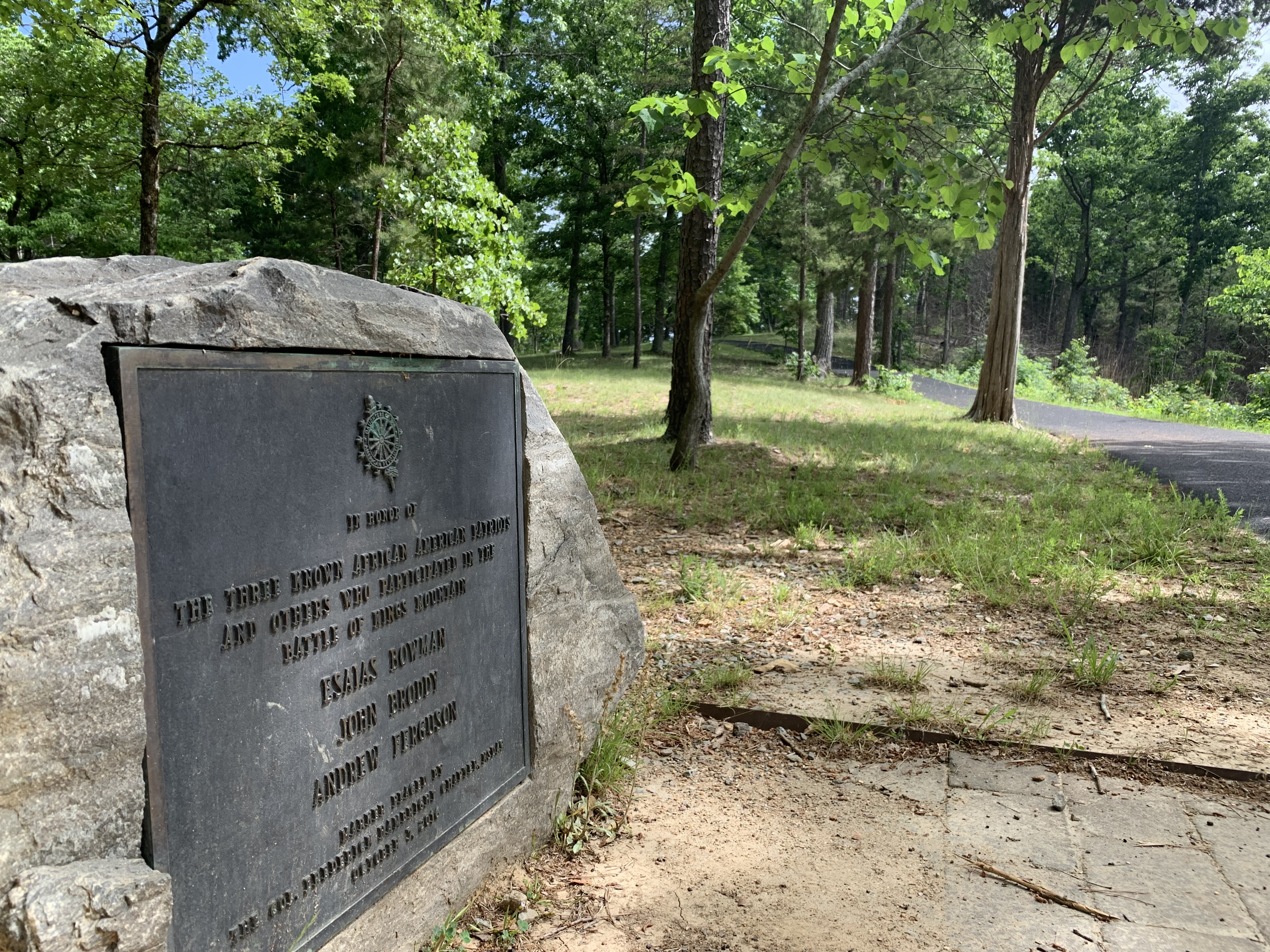
The trail commemorates the pursuit of Ferguson’s army from north to south, by the citizen militias that rose up from Georgia, Tennessee, Virginia and the Carolinas against the overbearing British threat, culminating at Kings Mountain. Immediately before and after the events of the Overmountain Victory, the Patriots also won decisively at Musgrove Mill and Cowpens, respectively. These Appalachian Patriots turned the course of the Revolutionary War.

Normally, high ground is superior during fighting, but the ridge at Kings Mountain is steep, fairly straight and narrow. Once the patriots managed to get on both sides, the British became easy targets on top. Ferguson was shot off his horse, shot a young soldier asking him to surrender, and was finally shot multiple times and urinated upon before being buried in an unmarked grave where he lay. A headstone was later placed in the woods not far from the large monument at Kings Mountain below.

Reconstruction Era National Historical Park

Reconstruction began in November of 1861, when US Navy & Army forces destroyed two forts and took Port Royal, because when all the white planters fled in the Confederate retreat, 10,000 slaves took over their sea island plantations. Union policy at the time was to declare the former slaves “contraband” or illegal property seized by the military. But the pressure was on President Lincoln to resolve their status permanently. First, he quietly authorized the Union’s first black regiment—the 1st South Carolina Volunteer Infantry which by November of 1862 mustered 1000 men and engaged in battle—, and then he finalized his executive order to free the slaves.

“all persons held as slaves within any State…
in rebellion against the United States,
shall be then, thenceforward, and forever free”

Emancipation Proclamation of President Abraham Lincoln

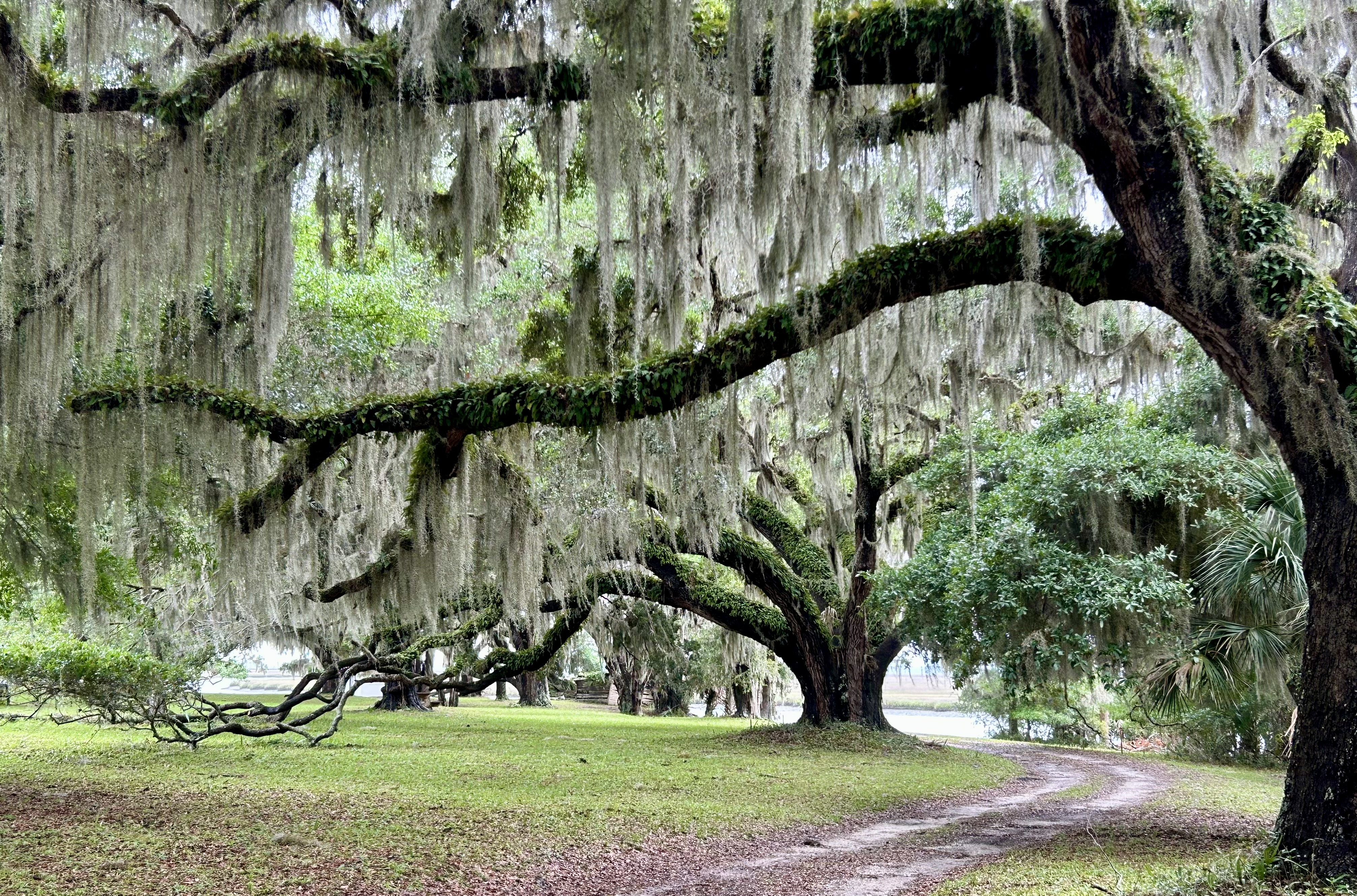
Among the great mossy oaks here at Camp Saxton on the 1st day of January in 1863, our nation’s first black regiment gathered here with their friends and families to all become the first people freed by Lincoln’s Emancipation Proclamation. Then the 1st SC Volunteers received their regimental colors as proud soldiers of the Union Army, under the command of one of John Brown’s conspirators in the raid on Harpers Ferry. Harriet Tubman was also here as a volunteer spy and liberator, and in June she guided three gunboats and the 2nd SC Volunteers up the Combahee River 25 miles north in a dangerous raid that freed 700 slaves. Other African American regiments from Kansas, Massachusetts and other states in both the north and south soon followed, and by the end of the war, 200,000 African Americans enlisted to make up 10% of the Union Army.

As soon as Port Royal was liberated, Philadelphian abolitionists Laura Towne, Ellen Murray and Charlotte Forten, who was African American, arrived and began the most important part of reconstruction: teaching. While not the first African American school, in 1862 they founded the Penn School to teach people who had been denied formal education for generations. The Gullah Geechee people had created their own language and had kept many cultural traditions alive, including the delicious Lowcountry boil or Frogmore stew, and, when given the opportunity for formal education, they began learning basic, practical skills to live independently, everything from shoemaking and auto repair to cooking and nursing. At the Penn Center, I met a Gullah Geechee woman who still speaks the language and who was treated as a child by one of the first physicians to graduate from the Penn School.

The Gullah Geechee sea islands remained in Union hands throughout the war and became central to the Union “anaconda” naval blockade. The hero Robert Smalls (see Fort Sumter), after helping convince Lincoln to enlist African Americans, purchased the home of his previous owner here, using his congressionally awarded bounty for the Planter, and represented this district in Congress for five terms. The beautiful, historic neighborhoods of Beaufort were retained by the descendants of freed slaves by strict preservation laws, resulting in a sharp contrast with nearby predominantly white golfing communities like Hilton Head. In a historic echo, 100 years after the Union used Beaufort as a base to fight the Confederacy, the Reverend Dr Martin Luther King, Jr and the Southern Christian Leadership Conference chose the Penn Center as a base for their Civil Rights campaigns, including planning the March on Washington and the Poor People’s Campaign. Dr King wrote his I Have A Dream speech here in Gantt cabin on the Penn Center campus.

Plan your visit thoughtfully. To the west, Camp Saxton is hidden at the water’s edge between a navy base, the ruins of Fort Frederick and a residential neighborhood. In town, the visitor center in the historic zone’s old firehouse has very knowledgeable rangers who skillfully and kindly disabused me of my misconceptions. To the east, the Penn Center has exhibits (for a donation) on the school, the Gullah Geechee community and the important Civil Rights work done here. There are two dozen historic building on campus including a dock and a Rosenwald school. Many, such as the Brick Baptist Church, aren’t presently open to the public, but Darrah Hall is open with park staff, information and exhibits. A wonderful volunteer discussed whether the Reconstruction Era ever really ended. Plan more time for the Penn Center partner exhibits, less time for the downtown Beaufort visitor center and enough time at Camp Saxton to stand under the Emancipation Oaks (and take a better photo than I did).

Fort Sumter and Fort Moultrie National Historical Park

Charleston is a magnificent old port city, well worth an extensive visit. Beyond the colorful stately homes, historic churches and carriage rides, there’s the fateful battle that ignited the Civil War and much more. When I visited Fort Sumter by park ferry (before renouncing carbon travel), my kids and I stared in awe at the ships and harbor. In May of 1862, Robert Smalls, an enslaved ship’s pilot, secretly commandeered a confederate steamship, the Planter, brought his family and friends aboard under cover of darkness and maneuvered the ship out of Charleston, past forts and ships to deliver it to the Union. Fort Wagner of Glory fame (see Boston & New Bedford) was one of those confederate forts at the mouth of the harbor, before the sea took it.

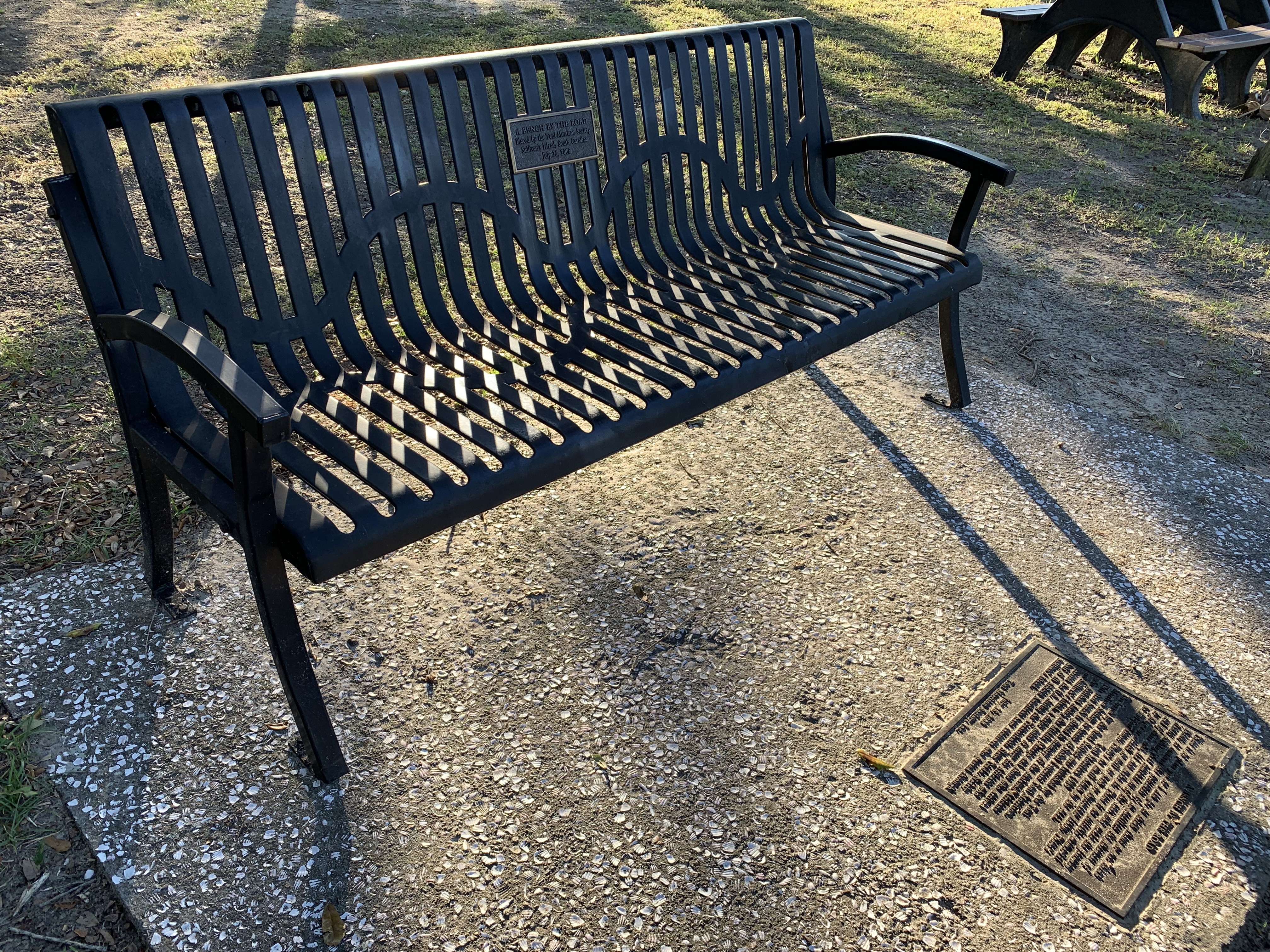
Why the bench? Beloved author Toni Morrison once explained that she wrote that book in part due to the lack of suitable monuments to capture the enormity of slavery, despite centuries of oppression and discrimination. From the impact on Africa, the millions killed in the transatlantic passage, the millions bred in captivity, the millions worked until death, the millions separated, raped and tortured, to the millions kept in ignorance and darkness for centuries, there has been no full accounting, no complete understanding and precious little effort to try. Since the interview, benches have been place in a few places around the world, including the back corner here, at Fort Moultrie near the dock.

“There is no place you or I can go, to think about or not think about,
to summon the presences of, or recollect the absences of slaves . . .
There is no suitable memorial, or plaque, or wreath, or wall, or park, or skyscraper lobby.
There’s no 300-foot tower, there’s no small bench by the road.
There is not even a tree scored, an initial that I can visit or you can visit
in Charleston or Savannah or New York or Providence or better still on the banks of the Mississippi.” 

Toni Morison, from an interview in 1989

This vast crime against humanity, slavery, was the cause of the Civil War, not the attack on Fort Sumter. And the bench, while far too small a gesture, is a good place to start thinking about it. Another step would be to fund grants and awards to the descendants of enslaved people for producing literature and other great works, to help make up a little of the deficit caused by centuries of enforced silence, forbidden literacy and lives erased.

Charles Pinckney National Historic Site

Charles was a son of privilege. His father educated him in the law at the family firm, made him an officer in his town militia unit, and cooperated with the British during the Revolution to save the family plantation for his heirs. Charles, having participated in the failed attempt to keep Charleston out of British hands, was considered a patriot and became a young and successful politician. He participated in the Constitutional Convention in Philadelphia, made numerous significant contributions and signed the document, and he remained in public service as an elected representative for decades.

Today, he is best remembered for being an outspoken advocate of slavery, for insisting that the southern states would not ratify a Constitution that prohibited slavery or the slave trade, and for suggesting the 3/5ths compromise, which counted slaves as 3/5ths of a person to boost southern white representation in Congress, while counting not at all in terms of black citizenship or representation. At the end of his career, Charles voted against the Missouri Compromise, correctly predicting that it would overturn the original truce on slavery between the northern and southern states and lead to bloody civil war.

For many years, this site was financially sponsored mainly by Senator Strom Thurmond, who served 48 years in the US Senate as its most notorious modern segregationist. According to the ranger, the exhibits were a hagiography of Pinckney’s contributions to our Constitution and whitewashed his devotion to the institution of slavery. Today, the exhibits are new and improved in comparison with the hagiography still in place at Andrew Johnson’s site. But there’s still much work to be done.

According to a volunteer at Darrah Hall in a Reconstruction Era site, white visitors sometimes tell the African Americans who work there that “you people need to get over slavery”. And yet, to this day, white political pressure denies teaching the truth of racism and slavery to our children, censors books from libraries and creates lies to hide painful truth, as they have since the Civil War. On this ZCT adventure, I have seen the Confederate battle flag flown from Utah to Pennsylvania, while the presumptive Presidential nominee from Florida signed legislation preventing teachers from criticizing racism. So clearly, it is white people who “need to get over slavery”.

Congaree National Park

Congaree is one of my favorite parks, so I saved it for my last entry of the year. Once, every river in the southeast was filled with hardwood forests like this, supporting many species of birds, fish and wildlife, and keeping our air and water clean. Now, this may be the last great one left. Around late May, the fireflies blink in synch, so you’ll need to plan months ahead if you want a campsite then. The 2.5 mile boardwalk hike from the main Harry Hampton visitors center takes you past a few of the tall trees that fill the swamp: beech, bald cypress, water tupelos and loblolly pines. The latter are the largest, most massive pines in the eastern half of the US. Congaree may have been saved much more recently than some of the more famous parks in the west, but for biodiversity, it is exceptional.

Of course, being basically a swamp or flood plain forest in the middle of a giant watershed stretching from the Blue Ridge Mountains to the Atlantic, the best way to see the park is by paddling. I dragged out my trusty OruKayak and spent several glorious hours exploring Cedar Creek by myself. There were folks on tour at the boat launch, but once on the water, I didn’t see anyone. Longer trips can be arranged on the Congaree River. Several people asked about my kayak, including a couple that happened to be from my old hometown, and I explained that it is lightweight, a bit tippy, and fits easily in the trunk of my Tesla Model 3. (I know everyone is hating on Elon right now, but he made a good car, as long as you don’t use the autopilot).

Apologies for botching another photo, but I should point out that the knobby things sticking up from the bank on the left are the knees of the bald cypress. They say it’s a mystery why the tree has knees, but obviously, the knees help dry out the roots, preventing rot. Above them, you can see some dwarf palmetto illuminated by the sun, and further upstream, the creek was blocked by falling trees, which are becoming more frequent with climate-crisis fueled storms. I also heard a variety of birds, although most of them flew away as I approached. Definitely worth bringing a map & GPS, since there are many side routes and obstacles that may require changing plans on the water. Beautiful.