North of Tupelo, there’s another memorial to another Civil War battle where the goal was to protect railroads and also included US Colored Troops. While the Union was forced to retreat, the confederates were drawn away from the Union’s other advance. There’s a self-guided car tour through the fields where the battle was fought. And here’s another photo.
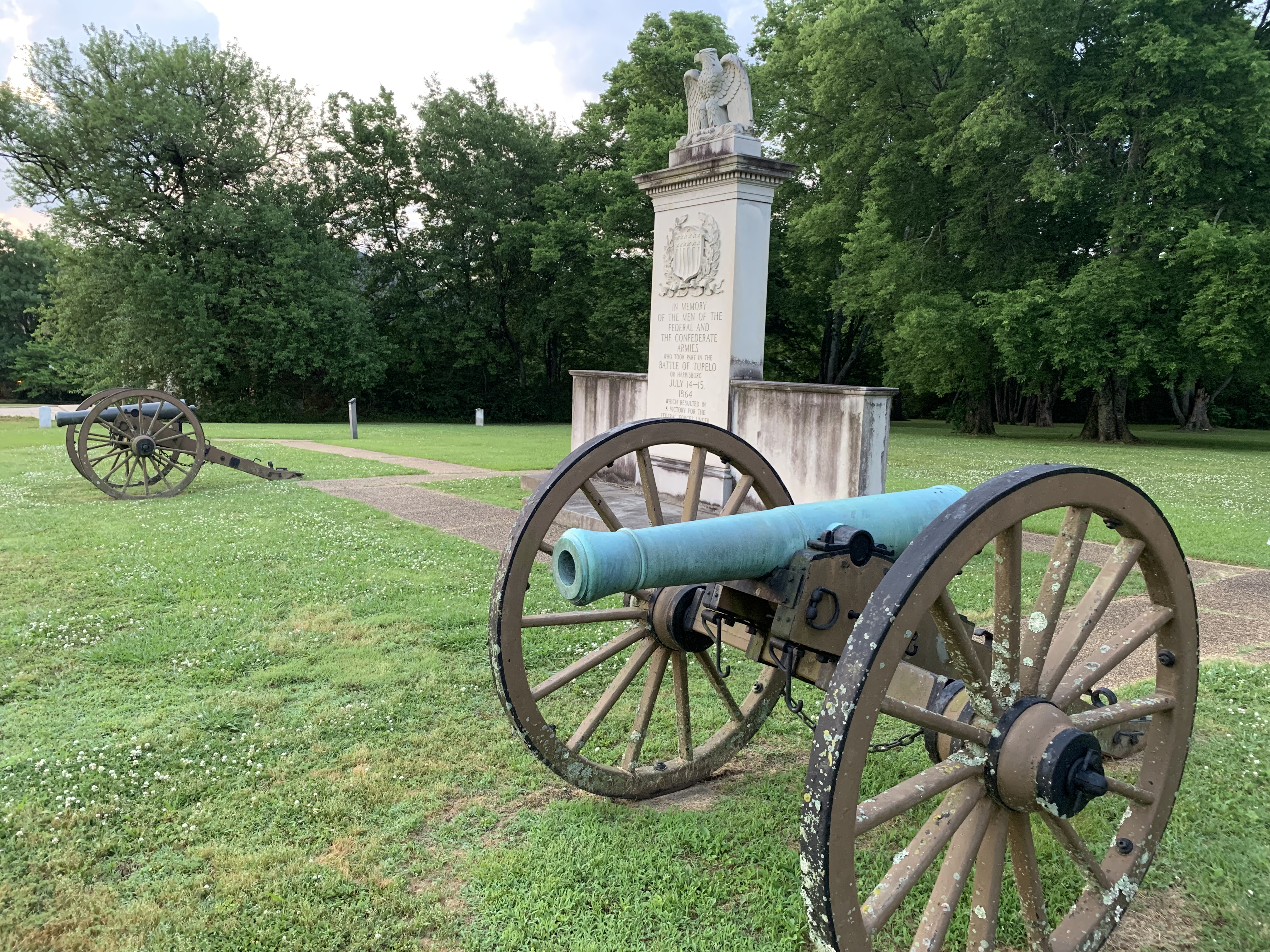
While obviously, Tupelo is most famous for being the birthplace of Elvis, where his family home now has a museum next to it, a late Civil War battle was fought here too. The Union troops defended the railway, but you have to use your imagination to follow the battle. There’s a small memorial on an acre in town. Here’s a photo.
Their home is currently closed to the public. It’s in a residential neighborhood, and the park service is figuring out how to reopen it. The normal setting underscores the shocking assassination of civil rights leader Medgar Evers in June of 1963. They had prepared for a drive by attack (note the door is on the side), but not for a waiting sniper. Two all white juries failed to convict his assassin who sat on the local ”White Citizens Council”, but in 1994 a conviction was won. Myrlie continues to fight for civil rights, and Medgar, a Normandy veteran, is buried at Arlington National Cemetery.
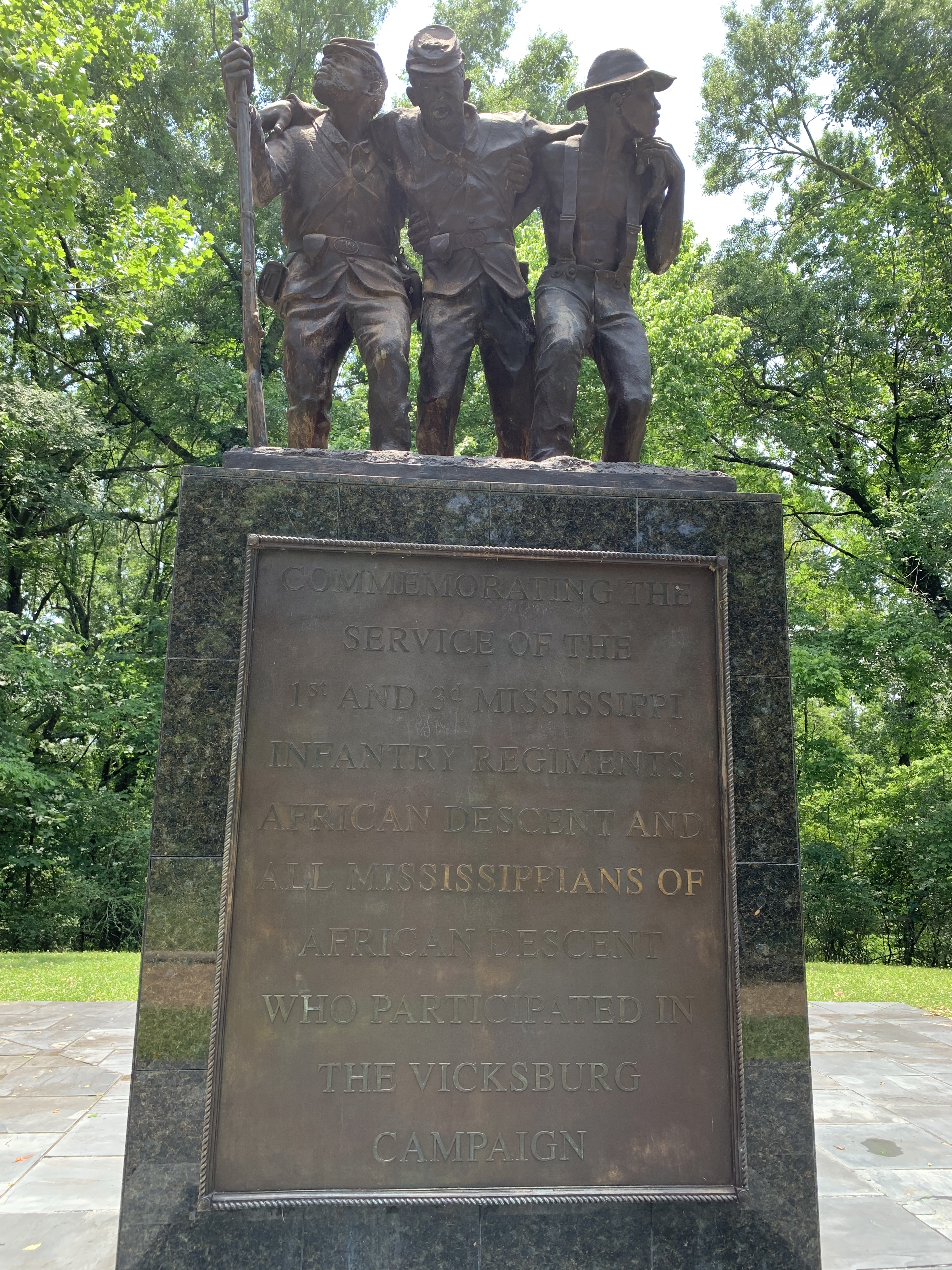
The fighting here lasted the last six months of the Civil War, and the steep hilly terrain is now covered with placards, cannon, graves, memorials, and statues. The road out to my home state’s memorial was under construction, so I turned around near the statue above.
I was momentarily confused, since the plaque says “1st and 3rd Mississippi Infantry Regiments, African American Descent”. I knew that the confederates had no African American soldiers, at least not at this point of the war, when the Union offered full freedom to enslaved people who joined. Then I realized that these were escaped slaves from Mississippi who formed regiments in liberated Louisiana and returned as soldiers to fight slavery. Their units represented a future, free Mississippi, not the old, slavery Mississippi. Later I read about the statue and learned that the man on the right is looking back at slavery, while the man on the left is looking forward to freedom.
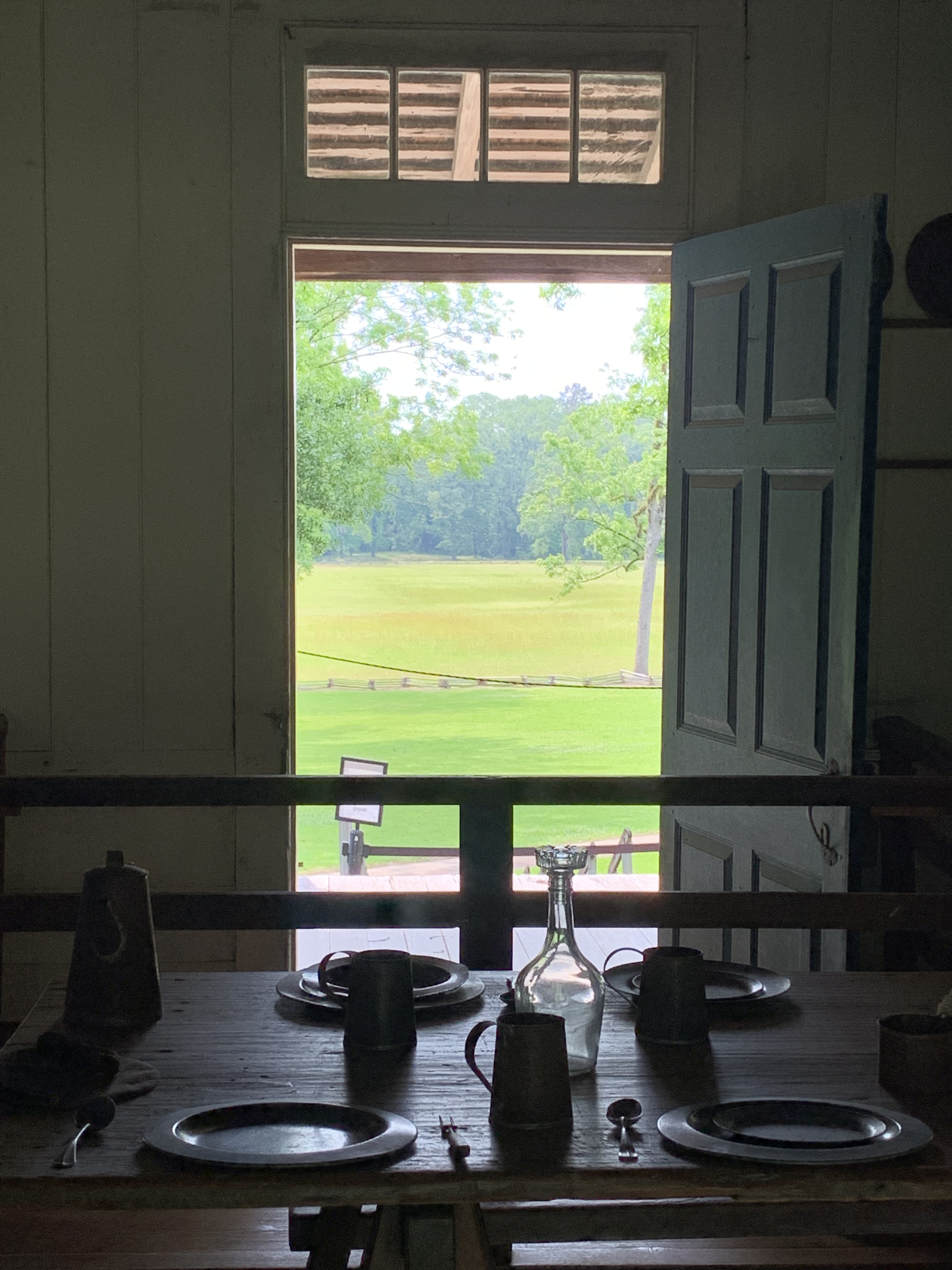
The “trace” or trail from Natchez to Nashville is now a parkway, under strict protection of the park service which limits development. The National Scenic Trail, also a park unit, has miles of hiking & equestrian trails along the way. I’ve more or less driven the length now, with lots of side trips to nearby sights, and the dense spring foliage is beautiful, soothing and seems endless. The first stop traditionally is at Mount Locust pictured above, and the route was typically used northbound, returning by boat. The trail is far older than our country, as French fur traders followed Native American trading routes that had been used for thousands of years. After the steamship was invented, most people stopped walking, which put an end to the proprietor’s lucrative business of selling whiskey, food and basic shelter at the ”stand” or simple roadside inn.
We tend to see history as inevitable, and don’t often think about what might or should have been different. But the people back then were constantly trying to learn, make changes and adapt. The land in the photo belonged to Native Americans, then was claimed by England, then by America, then worked by slaves who turned sharecroppers, and is now run by the park service. At each transition there was loss and opportunity. Only fortunate and adaptable people made it through turbulent changes. Injustice was resolved by war. No success or failure was inevitable. In hindsight, better choices could and should have been made.
I need to believe that we’re capable of learning, making changes and adapting. Dramatic change is inevitable, common behaviors suddenly become unthinkable, and those who can’t change usually suffer most. The extent of damage from the climate crisis has not yet been determined. Not all the coming extinctions are inevitable. The actions we take today make a difference to our future. We must stop burning carbon now, no matter how inconvenient, and we must prepare for the coming challenges.
Natchez was the second largest slave market in the US (after New Orleans), but almost nothing remains. From here, many were walked to plantations up the Natchez Trace. The park service recently acquired part of the ”Forks of the Road” slave market for an interpretive site, which includes the actual slave chains pictured above. The hand in the photo is of a woman who is planting flowers to beautify the site. She explained to me that she feels compelled to do something due to the profoundly disturbing history of tens of thousands of humans sold into bondage for generations. When she first arrived here, she had trouble sleeping, and she imagines the voices of the enslaved calling out for help. She asked me if I thought that strange, and I said it was by far the best perspective I had heard today.
I had just finished touring the Melrose mansion in the park, and all the glamour of the place left me feeling quite ill. The home of a Pennsylvanian lawyer turned plantation owner, it has all the ostentatious luxury that money could buy, with slaves next to the barn, above the laundry and dairy, and in the basement, all trained to come running at the sound of a bell. And 350 slaves working on plantations out of sight. I had to ask about those 350 slaves who actually brought in the cotton, since the placards only described a few house slaves, “laughing” and enjoying their “leisure”. The other visitors had seen the TV shows and movies filmed in the well-preserved mansion, and they seemed impressed by the lifestyles of the rich and morally reprehensible.
I could only hear the bells ringing years ago, and later, I too heard the voices.



 Zero Carbon Travel