Fort Sumter and Fort Moultrie National Historical Park

Charleston is a magnificent old port city, well worth an extensive visit. Beyond the colorful stately homes, historic churches and carriage rides, there’s the fateful battle that ignited the Civil War and much more. When I visited Fort Sumter by park ferry (before renouncing carbon travel), my kids and I stared in awe at the ships and harbor. In May of 1862, Robert Smalls, an enslaved ship’s pilot, secretly commandeered a confederate steamship, the Planter, brought his family and friends aboard under cover of darkness and maneuvered the ship out of Charleston, past forts and ships to deliver it to the Union. Fort Wagner of Glory fame (see Boston & New Bedford) was one of those confederate forts at the mouth of the harbor, before the sea took it.

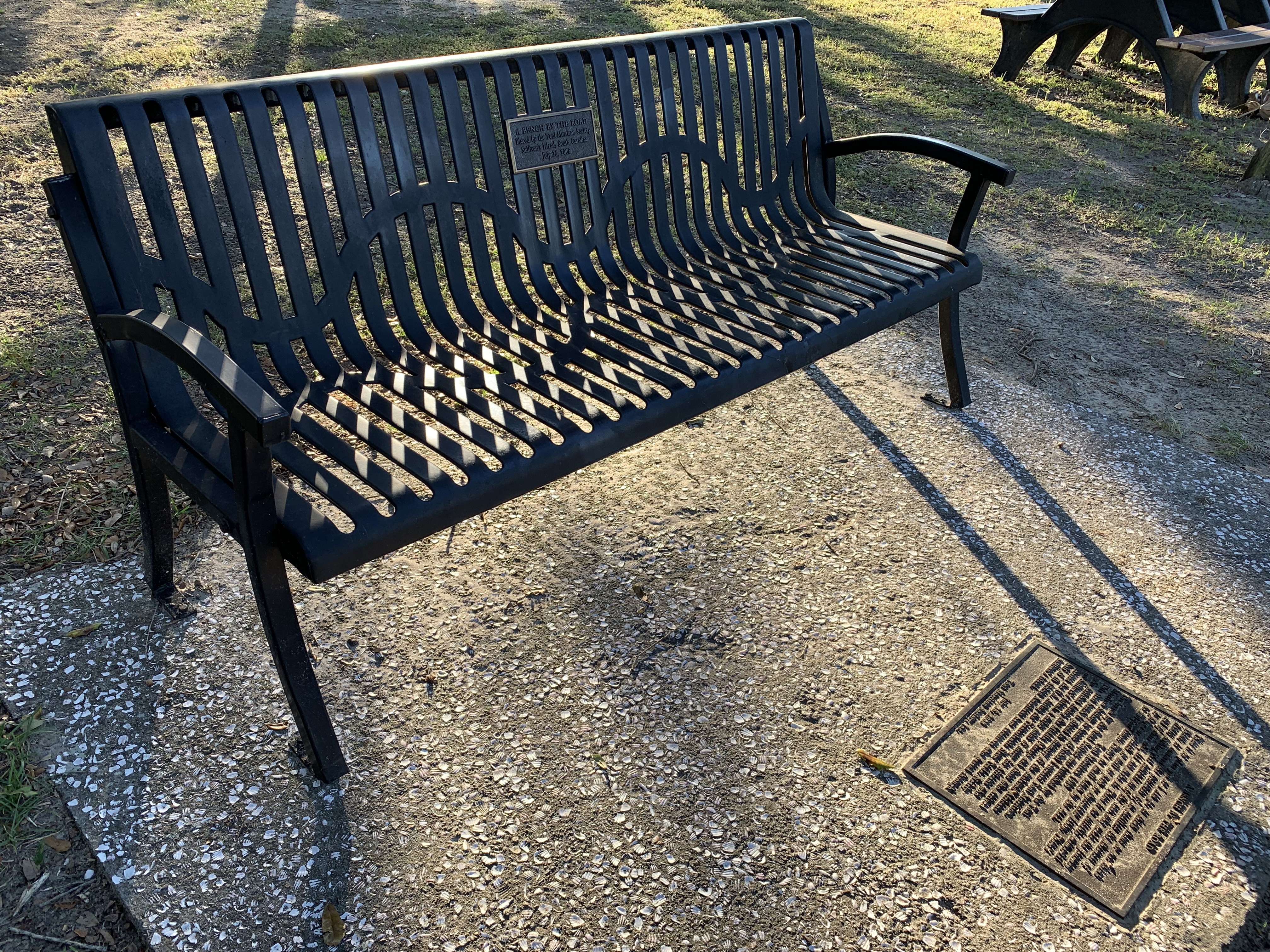
Why the bench? Beloved author Toni Morrison once explained that she wrote that book in part due to the lack of suitable monuments to capture the enormity of slavery, despite centuries of oppression and discrimination. From the impact on Africa, the millions killed in the transatlantic passage, the millions bred in captivity, the millions worked until death, the millions separated, raped and tortured, to the millions kept in ignorance and darkness for centuries, there has been no full accounting, no complete understanding and precious little effort to try. Since the interview, benches have been place in a few places around the world, including the back corner here, at Fort Moultrie near the dock.

“There is no place you or I can go, to think about or not think about,
to summon the presences of, or recollect the absences of slaves . . .
There is no suitable memorial, or plaque, or wreath, or wall, or park, or skyscraper lobby.
There’s no 300-foot tower, there’s no small bench by the road.
There is not even a tree scored, an initial that I can visit or you can visit
in Charleston or Savannah or New York or Providence or better still on the banks of the Mississippi.” 

Toni Morison, from an interview in 1989

This vast crime against humanity, slavery, was the cause of the Civil War, not the attack on Fort Sumter. And the bench, while far too small a gesture, is a good place to start thinking about it. Another step would be to fund grants and awards to the descendants of enslaved people for producing literature and other great works, to help make up a little of the deficit caused by centuries of enforced silence, forbidden literacy and lives erased.
Charles Pinckney National Historic Site

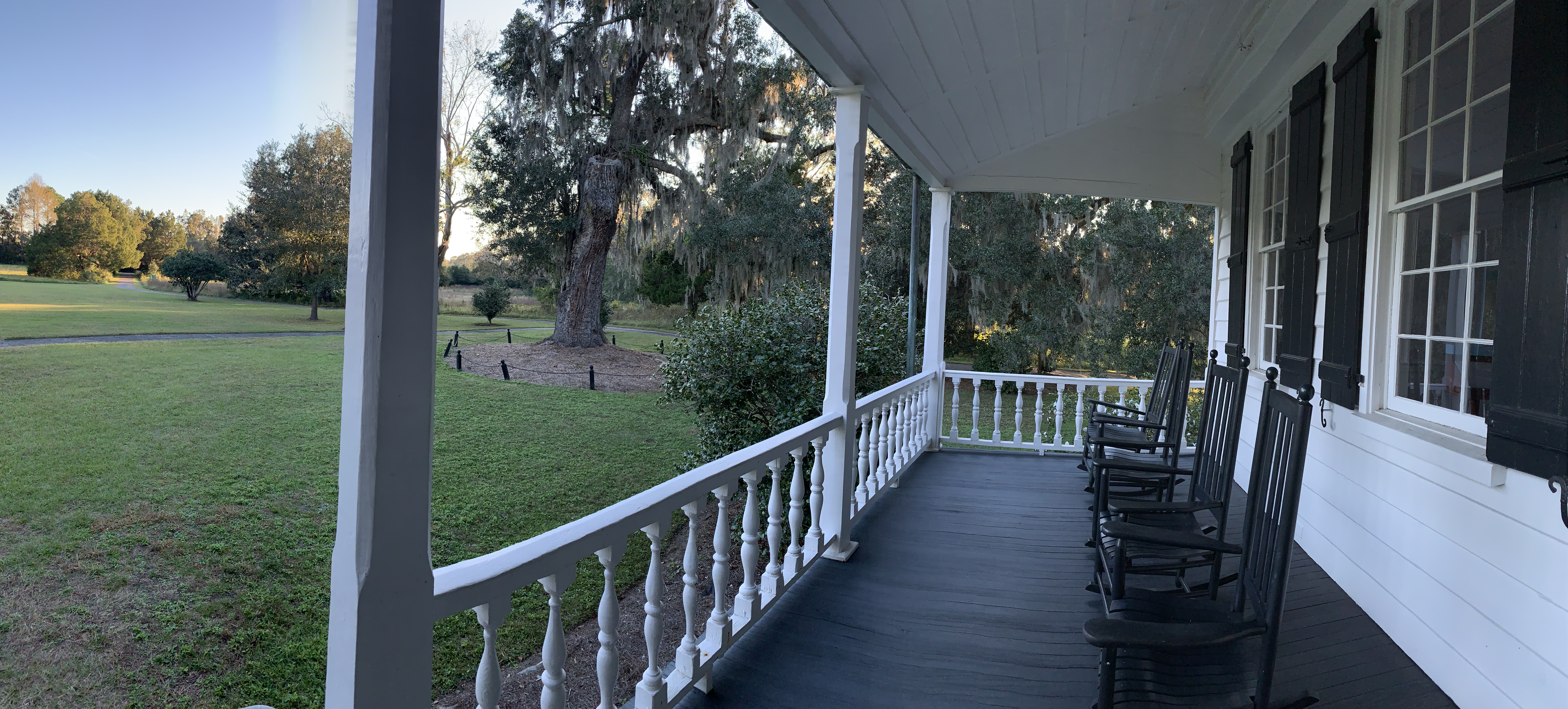
Charles was a son of privilege. His father educated him in the law at the family firm, made him an officer in his town militia unit, and cooperated with the British during the Revolution to save the family plantation for his heirs. Charles, having participated in the failed attempt to keep Charleston out of British hands, was considered a patriot and became a young and successful politician. He participated in the Constitutional Convention in Philadelphia, made numerous significant contributions and signed the document, and he remained in public service as an elected representative for decades.

Today, he is best remembered for being an outspoken advocate of slavery, for insisting that the southern states would not ratify a Constitution that prohibited slavery or the slave trade, and for suggesting the 3/5ths compromise, which counted slaves as 3/5ths of a person to boost southern white representation in Congress, while counting not at all in terms of black citizenship or representation. At the end of his career, Charles voted against the Missouri Compromise, correctly predicting that it would overturn the original truce on slavery between the northern and southern states and lead to bloody civil war.

For many years, this site was financially sponsored mainly by Senator Strom Thurmond, who served 48 years in the US Senate as its most notorious modern segregationist. According to the ranger, the exhibits were a hagiography of Pinckney’s contributions to our Constitution and whitewashed his devotion to the institution of slavery. Today, the exhibits are new and improved in comparison with the hagiography still in place at Andrew Johnson’s site. But there’s still much work to be done.

According to a volunteer at Darrah Hall in a Reconstruction Era site, white visitors sometimes tell the African Americans who work there that “you people need to get over slavery”. And yet, to this day, white political pressure denies teaching the truth of racism and slavery to our children, censors books from libraries and creates lies to hide painful truth, as they have since the Civil War. On this ZCT adventure, I have seen the Confederate battle flag flown from Utah to Pennsylvania, while the presumptive Presidential nominee from Florida signed legislation preventing teachers from criticizing racism. So clearly, it is white people who “need to get over slavery”.

Timucuan Ecological and Historic Preserve

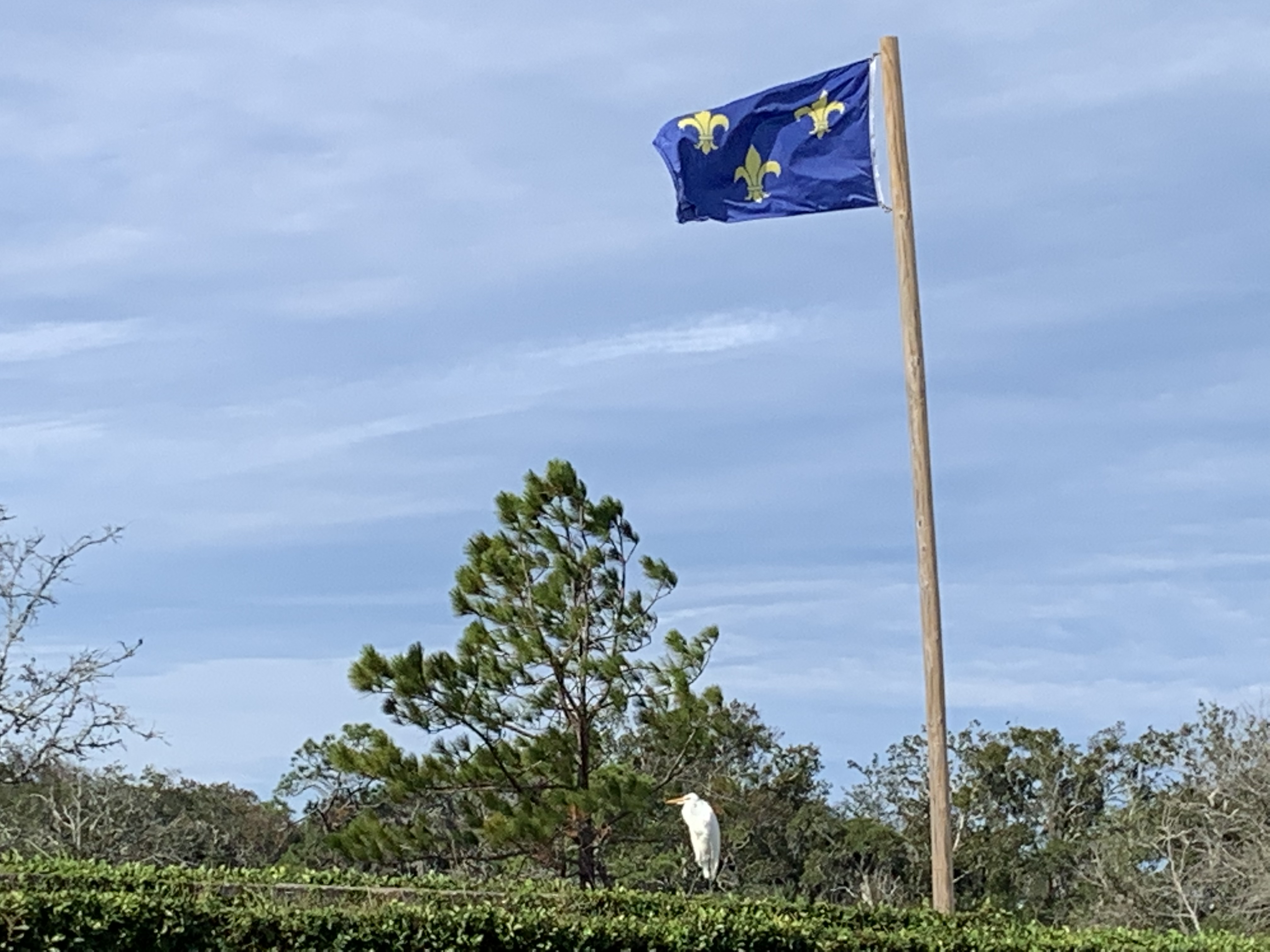
Let’s catch up on where we were in Florida, at this fascinating, multilayered site that preserves not just nature but also native, colonial and freed slave cultures. As I learned here at Fort Caroline, which hosts the visitor center for the preserve, the Timucuan people either were killed, converted or escaped to join other tribes, after contact with the Spanish. But this was once their land (and water). And at the small exhibit in the Ribault Club, a partner site & wedding venue, I learned that thousands of years ago the Native Americans built shell mounds and large, complex rings of shell structures throughout these coastal islands, some of which remain here. So the preserve does help protect Native American archaeological sites, in addition to protecting critical breeding grounds and nurseries for fish, flyways for migrating birds, habitat for endangered wildlife and the plants which literally hold the land together. I saw many different birds on my hike in the Teddy Roosevelt area (above), including wood storks.

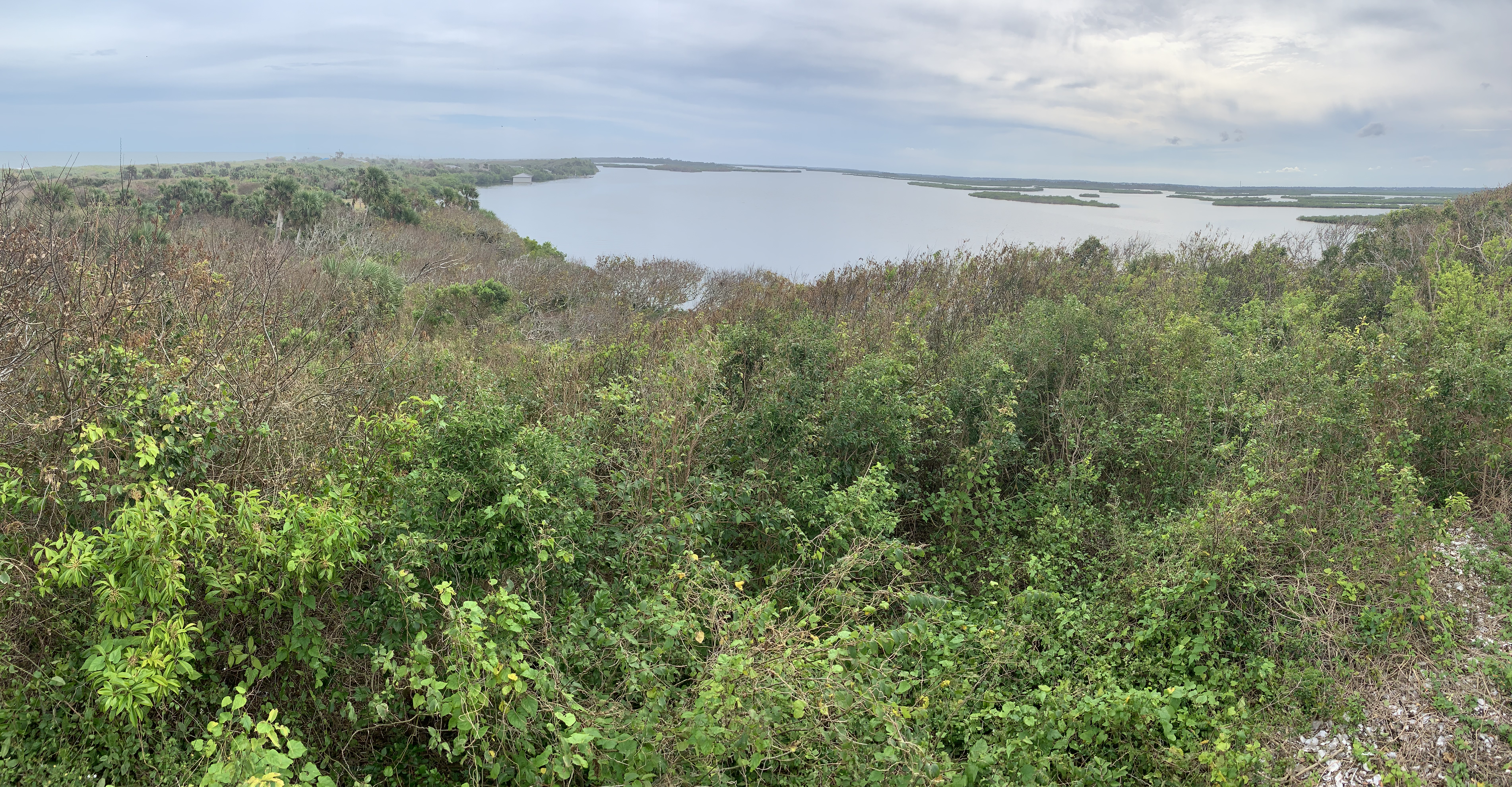
These islands (pictured) are the southern end of these low-lying coastal delta islands that run to Moores Creek in North Carolina. The whole area is now known as the Gullah Geechee Cultural Heritage Corridor, where some African traditions and culture survived, and a unique Creole was created, called Gullah in an echo of slave roots in Angola. That culture developed separately from the mainland, since some of the first Africans brought here were free, some slaves purchased their freedom (or their children’s) from the French, Spanish & British who allowed that, and some escaped. Unlike the larger plantations in the southeast, the coastal rice, cotton & indigo sea island plantations were run more loosely, with free time allowed after tasks were completed and many families kept intact.

The complexity of slavery in Florida is revealed in Anna’s story. She was born as Anta Ndaiye, a Senegalese royal, but was captured and sold into slavery at age 13. She was purchased in Havana in 1806 by a planter and trader who promptly impregnated her and brought her to Florida. Five years and three children later, the planter granted freedom to her and her biracial children. Florida was Spanish at the time, and she received her rights under their law. Her nominal husband owned other properties (and had other wives), so he left the management of the plantations near here to Anna. When US rebels tried to seize their property, she burned the plantation and was rewarded with new property by the Spanish. Anna ran the Kingsley plantation here for 25 years, overseeing 100 slaves. Her fourth child was born free. After Florida became a US territory, new laws were passed making interracial marriage illegal and jeopardizing the rights of Anna and her children. So her husband moved the family to Haiti, which had been free since the end of their revolution in 1804. After her husband died, Anna returned to the US to claim her inheritance, which was contested by her husband’s sister, who argued that Anna couldn’t own property in Florida. Anna argued that she was Spanish, since she had been recognized by the Spanish government as free (and a hero) and noted that the US government had promised to protect the rights of all Spanish citizens under the Florida treaty signed by John Q. Adams in 1819. Anna won. She fled to New York for the duration of the Civil War returning to Florida afterwards.

“To deny people their human rights is to challenge their very humanity.”

Nelson Mandela

Fort Frederica National Monument

Upon arrival, I remembered visiting by small boat as a teen many years ago. All along the southeast coast, displaced Native Americans and escaped slaves endeavored to remain free in these low-lying delta barrier islands. Although threatened, the evocative old oaks, the Spanish Moss and the shell-filled archaeological ruins are still hauntingly beautiful.

In the 1730’s the British built a pair of forts, both named after Frederick, Prince of Wales, to develop and defend their colonies against the Spanish. Fort Frederick’s ruins are 125 miles north, next the Reconstruction Era Camp Saxton in South Carolina. Fort Frederica here in Georgia, defined the southern boundary of their colonies, north of Spanish Florida.

The British commander Oglethorpe was considered enlightened (for the time) and enthusiastic. Rather than slavery, he proposed work be done by indentured servants mostly from debtors prisons in England, making Georgia a type of penal colony where workers could gain their freedom over time. The Methodist founder John Wesley and his brother Charles first attempted a church under one of the large, mossy oaks here, and the settlement had various tradespeople, including a Native American interpreter, a blacksmith and a doctor/barkeep.

In a remarkable historical echo of the French colonial experience at Fort Catherine, Oglethorpe also tried to seize St. Augustine in Florida, besieging the Castillo de San Marco and being stopped at Matanzas. Again, the Spanish counterattacked, but faring better than the French, Oglethorpe successfully defended this fort and cleverly routed the Spanish in Bloody Marsh, despite being outnumbered. After the Spanish retreated and conceded Georgia, the British cut their military presence here and the remote island village faded away in a decade or two.

Now, while driving through these remote islands, I can’t help but be amazed by the fancy houses. Not because they’re decadently ostentatious, but because they’re so close to sea level. It is astonishing to think that many of America’s most successful retirees choose to develop luxurious estates within the zone that is most certainly going to be erased by the climate crisis. The collapse of Thwaites ‘Doomsday’ Glacier is accelerating, and rising seas will take all the land here. They may have inherited much wealth, but they won’t be leaving these houses to future generations. Apparently, you don’t need much intelligence to be rich.

Fort Caroline National Memorial

The French settled on the Atlantic coast of Florida in 1564, a year before the Spanish established the Castillo de San Marco in St Augustine. The French built a fort, but their settlement had fewer soldiers and more crafts people, as they intended to trade with the natives, rather than conquer them. Their relations with the Timucuan people were peaceful and friendly.

But the French intended to stamp out the Spanish newcomers, and the fort sent its troops by sea to take St Augustine. That didn’t end well: see Matanzas. Even worse for the French, the Spanish had the same idea and attacked Fort Catherine while its troops were away. The Spanish sacked the fort, killing 140 civilians and taking over the settlement. Only a few French survivors were spared to serve the Spanish.

The natives didn’t intervene when the Spanish attacked, but when another French force arrived for revenge three years later, the natives sided with the French. In the fighting, Fort Catherine burned down. The current fort is a replica created from old plans, drawings and descriptions, but roughly 1/3 the original’s size. The French lost their foothold in Florida to the Spanish.

In settling colonial claims at the Treaty of Paris in 1763, the Spanish traded Florida to the British for the return of Cuba and the Philippines. With American independence, Florida reverted to Spain, before eventually becoming a US territory in 1821, a state in 1845, then seceding in 1861, and then re-joining the Union in 1868. Florida was part of Spain longer than it has been part of the USA.

My eyes used to glaze over in history class, especially with all the dates, places and people long ago. But now, when I think about how the French differed from the Spanish and British, I realize how those battles centuries ago determined who lived & died, who survived and who thrived. I wonder what could our history have been, if only our ancestors had cooperated peacefully, instead of fighting.

For example, the Timucuan natives were wiped out within 150 years or so, some because the Spanish took revenge on them, some by disease, some who joined neighboring tribes and some who were converted and perhaps assimilated. My DNA is 5% Neanderthal, and I’m glad some of the natives survived somehow and assimilated, rather than disappearing without any trace.

Fort Matanzas National Monument

The shaded grove interests me, more so than the fort. In the southeastern US, a grove like this is called a hammock, a Native American word that entered European languages with two meanings shortly after Columbus visited around 1500. Hammocks, the sleeping nets hung between trees, date back to the Maya civilization in Central America, and the Taino in the Caribbean would have been the first to introduce those as ‘hammocks’ to Columbus. Perhaps the grove meaning stems from ‘net’ as a way to describe the interlaced canopy of branches. Or, perhaps an explorer pointed at a grove asking what it was, and a native answered “that’s my hammock”. The wonderful brief boardwalk hike covers a great variety of species. I saw a great horned owl, ghost crabs, eastern red cedar, sand live oak, holly & myrtle and the burrow of a gopher tortoise.

458 years ago and long before any fort, the inlet here—with its strategic opening to the Atlantic—was named Bahía de Matanzas, or ‘Slaughter Bay’. The French had settled on the Florida coast just before the Spanish, and in 1565 Fort Catherine sent 250 French soldiers down here to seize St Augustine, 15 miles up the inland waterway. But a storm intervened as their ships were crossing the bar, and they were shipwrecked. When they were discovered, the Spanish slaughtered them.

283 years ago, the British, under Governor Oglethorpe of Georgia, also tried to seize St Augustine, laying siege to to Castillo de San Marco for 39 days in 1740. The Spanish improved their defenses in 1742, including building Fort Matanzas to guard the southern approach. That same year, the British returned and the fort fulfilled its mission by firing warning shots across the inland waterway, helping prevent another sneak attack on St Augustine.

The fort itself is small and unremarkable, but it has a commanding view of the narrow channel. Unless you have your own kayak, you have to take a gasoline-powered ferry to get there (no ferry Monday or Tuesday). Of all the places to convert a boat to electric, this seems perfect. The ferry has a large flat roof that could charge up by solar and it only runs a short distance on a limited schedule. But for all the talk about “saving nature forever”, not enough practical steps are being taken to protect wonderful natural habitats like this from the climate crisis.

Castillo de San Marco National Monument

As you approach St Augustine, you may see the signs proclaiming it to be the nation’s oldest city. That’s not true, of course, there are several older, continuously occupied Native American settlements, including Acoma’s Sky City, Taos, Zuni and Oraibi. St Augustine is the oldest continuously occupied city in the US which was founded by Europeans. This euro-centric bias is even more inappropriate when you realize that the fort was used repeatedly by the US military to imprison many Seminole, 74 survivors of the Sand Creek Massacre, and many Apache.

This is my favorite fortress park. Still, too many Americans still haven’t heard of St Augustine, don’t know that the first thanksgiving mass with natives occurred here, that the fort was unsuccessfully besieged by the English (twice) and by the French, and didn’t know that the Spanish were here two hundred years before the US declared independence from England. So, a visit here is bound to be educational. The programs here sometimes include costumed re-enactors, gun firing demonstrations and tours of the various rooms, walkways and defensive lookouts, so it’s fun for kids of all ages. The fort’s strategic location means that it has a beautiful view of the boats traveling through, and years ago my kids enjoyed seeing a nearby museum with pirate treasure.

De Soto National Memorial

While the park unit is small, it is excellent, with knowledgeable rangers, many of these photographic outdoor displays, and an easy nature trail with beautiful birds along the Manatee River. There are frequent interactive events here, and the film in the visitor center is particularly well done, covering the important history of De Soto’s exploration and conflict with Native Americans.

The Spanish expedition from 1539 to 1543 was a brutal failure that cost De Soto his life and fortune, and it was his fault. After helping plunder the Incan Empire (Peru) in 1533, De Soto used his stolen gold to bring more Spanish soldiers to Florida to look for more gold. Some of the natives had recent run-ins with similar Spaniards, so they kept telling him, ‘sure, there’s more gold, but it’s a little further north’. Guides who failed to deliver the promised gold were killed. (Coronado was on a similar mission at the same time further west). De Soto took hundreds of natives captive as slaves, gave the women to his men, slaughtered thousands and told the natives that he was a deity, oh, and he brought a Catholic priest (see far right). For years, they marched through the southeast, killing, burning, pillaging, enslaving, raping and spreading disease. Many of the natives fought back, mimicking some of their brutal tactics, including the Chickasaw, who later owned slaves and fought for the Confederacy. After De Soto died of fever, his men gave up on his fruitless hunt for gold and maybe half made it back.

As horrific as that all was, several of the survivors wrote accounts of their first contact with the natives, and some of those accounts provide rare descriptions of the native cultures that existed (until the Spanish arrived). De Soto actually found an interpreter from Seville who had been adopted by a local tribe after his expedition starved to death, but he later died on this new expedition. One survivor’s record clearly states that a nearby shell mound was the foundation for the local chief’s dwelling, proving that the mounds in Florida were not simply middens but were built intentionally as elevated platforms for important people and functions, contradicting the park film at Canaveral. A large mound on this site was removed for building roads, before the park service began protecting them. After all the death and destruction inflicted on the natives, it feels especially cruel to erase the last remaining remnants of their culture without acknowledgement.

Canaveral National Seashore

Florida is famously flat, but above there’s an impressive view of the beach, lagoon and islands from the top of Turtle Mound near the Apollo Beach visitor center. There’s a kayak trail through the lagoon with campsites, and further south, there’s a scenic drive and nature hike in the neighboring Merritt Island National Wildlife Refuge. The Timucuan people who built the mound disappeared under Spanish rule—from 40,000 to “a handful” in the 18th century—, so they can’t tell us why they built these mounds. Talking with the ranger and watching the park film, I was told that the shell mound was simply a midden, or dump, from the large feasts that the Native Americans enjoyed here: “only trash”.

I said, “really” and asked why anyone would pile their empty shells 40 feet high when they could just toss them in the water? These mounds survived centuries of hurricanes, before most were excavated to build roads. The Spanish used the shells to build strong “tabby” forts. So isn’t it likely that this sturdy, flat-topped platform next to a trade route with views for miles was built for some structural purpose? I was told “no evidence for that”.

Clearly the park film and the ranger underestimate the Timucuan. It takes no great leap of imagination to realize that Native Americans shared common cultural customs and built large mounds for ceremonial, funereal, calendar and other purposes. See Poverty Point, Ocmulgee, Cahokia, Hopewell and Effigy. Ignoring the pattern takes willful blindness and shows a lack of respect for Native American culture by the people who now live here.

Anyways, I had to be out of the park before the night launch of Artemis I from the Kennedy Space Center next door. NASA preserved this largest undeveloped Atlantic coast, and the seashore, lagoons and waterways host critical ecosystems for fish, birds and more. The endangered Right Whale winters off the coast, and the vulnerable West Indian Manatee breeds, raises young and migrates seasonally. In the warmer months, manatees can be seen at the Haulover Canal or from Turtle Mound. Some manatees winter in the discharge of a nearby natural gas electric plant, but most winter in natural hot springs like Blue Spring State Park, where I hiked their cypress swamp boardwalk to the deep blue hole and found a couple early ones. The manatee’s natural territory is much larger than the park boundaries. Some boaters disregard Slow signs, support removing all safety zones from rivers and even advocate legalizing lethal manatee strikes, just so they can bomb around in their noisy carbon polluting toys. We need to learn how to coexist with nature, not kill it.

Congaree National Park

Congaree is one of my favorite parks, so I saved it for my last entry of the year. Once, every river in the southeast was filled with hardwood forests like this, supporting many species of birds, fish and wildlife, and keeping our air and water clean. Now, this may be the last great one left. Around late May, the fireflies blink in synch, so you’ll need to plan months ahead if you want a campsite then. The 2.5 mile boardwalk hike from the main Harry Hampton visitors center takes you past a few of the tall trees that fill the swamp: beech, bald cypress, water tupelos and loblolly pines. The latter are the largest, most massive pines in the eastern half of the US. Congaree may have been saved much more recently than some of the more famous parks in the west, but for biodiversity, it is exceptional.

Of course, being basically a swamp or flood plain forest in the middle of a giant watershed stretching from the Blue Ridge Mountains to the Atlantic, the best way to see the park is by paddling. I dragged out my trusty OruKayak and spent several glorious hours exploring Cedar Creek by myself. There were folks on tour at the boat launch, but once on the water, I didn’t see anyone. Longer trips can be arranged on the Congaree River. Several people asked about my kayak, including a couple that happened to be from my old hometown, and I explained that it is lightweight, a bit tippy, and fits easily in the trunk of my Tesla Model 3. (I know everyone is hating on Elon right now, but he made a good car, as long as you don’t use the autopilot).

Apologies for botching another photo, but I should point out that the knobby things sticking up from the bank on the left are the knees of the bald cypress. They say it’s a mystery why the tree has knees, but obviously, the knees help dry out the roots, preventing rot. Above them, you can see some dwarf palmetto illuminated by the sun, and further upstream, the creek was blocked by falling trees, which are becoming more frequent with climate-crisis fueled storms. I also heard a variety of birds, although most of them flew away as I approached. Definitely worth bringing a map & GPS, since there are many side routes and obstacles that may require changing plans on the water. Beautiful.