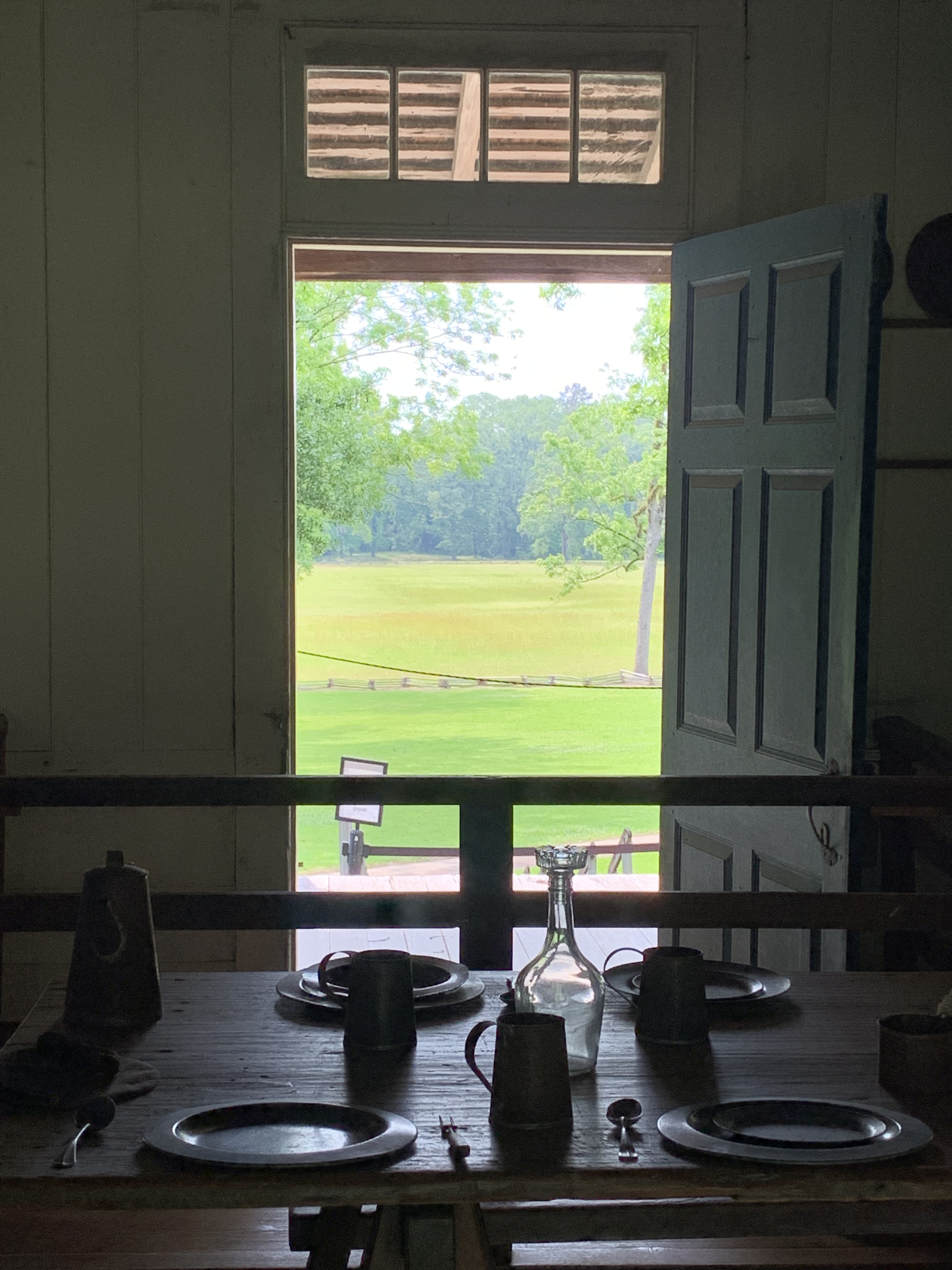
The “trace” or trail from Natchez to Nashville is now a parkway, under strict protection of the park service which limits development. The National Scenic Trail, also a park unit, has miles of hiking & equestrian trails along the way. I’ve more or less driven the length now, with lots of side trips to nearby sights, and the dense spring foliage is beautiful, soothing and seems endless.
The first stop traditionally is at Mount Locust pictured above, and the route was typically used northbound, returning by boat. The trail is far older than our country, as French fur traders followed Native American trading routes that had been used for thousands of years. After the steamship was invented, most people stopped walking, which put an end to the proprietor’s lucrative business of selling whiskey, food and basic shelter at the ”stand” or simple roadside inn.
We tend to see history as inevitable, and don’t often think about what might or should have been different. But the people back then were constantly trying to learn, make changes and adapt. The land in the photo belonged to Native Americans, then was claimed by England, then by America, then worked by slaves who turned sharecroppers, and is now run by the park service. At each transition there was loss and opportunity. Only fortunate and adaptable people made it through turbulent changes. Injustice was resolved by war. No success or failure was inevitable. In hindsight, better choices could and should have been made.
I need to believe that we’re capable of learning, making changes and adapting. Dramatic change is inevitable, common behaviors suddenly become unthinkable, and those who can’t change usually suffer most. The extent of damage from the climate crisis has not yet been determined. Not all the coming extinctions are inevitable. The actions we take today make a difference to our future. We must stop burning carbon now, no matter how inconvenient, and we must prepare for the coming challenges.

 Zero Carbon Travel