Jimmy Carter National Historical Park

Not far from the profoundly disturbing Andersonville site, is the very pleasant town of Plains, Georgia, where the Carters still reside. There’s a giant peanut, a store selling Billy Beer cans, the campaign depot and the delightful boyhood farm home of Jimmy Carter. The site and the town have a wholesome feeling that feels like stepping back in time. The farm still seemed active, with crops, goats, bees and mules (donkeys?), and everyone was very welcoming and friendly. The Carter compound is strictly guarded by the Secret Service and off limits, but I enjoyed fried peanuts and peanut flavored ice cream and peeking in store windows and chatting with the locals.

Young Jimmy’s playmates were mostly African American, so it was natural for him to oppose segregation and become an activist. He saw poverty just down the street, so his work with Habitat for Humanity was also natural for him. As President he negotiated the Camp David Peace Accords and later earned the Nobel Peace Prize for his Carter center. He did well by doing good, and he’s still making an effort at 97. We could all try to learn something from that.

Andersonville National Historic Site

Roughly the same number of Union soldiers died in this prisoner of war camp as died in battle at Shiloh: over 13,000. The conditions were horrifying. Disease, vermin, starvation, dehydration, exposure and brutality killed hundreds by the day. Only a small portion of the stockade has been reconstructed, including the north entry gate pictured above, through which about one in three did not come out alive. There is an illustration drawn from the memory of Thomas O’Dea that is absolutely haunting in both its scale and detail. The Union refused a prisoner swap out of concern the confederates would return to battle. One 19 year old prisoner had the job of numbering the dead, and he secretly kept a list of names, regiments and causes of death. Eventually he brought it to the attention of the “angel of the battlefield”, nurse Clara Barton who had petitioned Lincoln to track down missing soldiers. They toured the site and marked over 12,000 graves. Barton went on to found the American Red Cross, and the US ratified the Geneva Conventions the next year. The man in charge of the camp was hung for war crimes. Flags were flying over the National Cemetery before Memorial Day, and burials are still occurring frequently. The visitor center also serves as a memorial and museum to all prisoners of war.

Ocmulgee Mounds National Historical Park

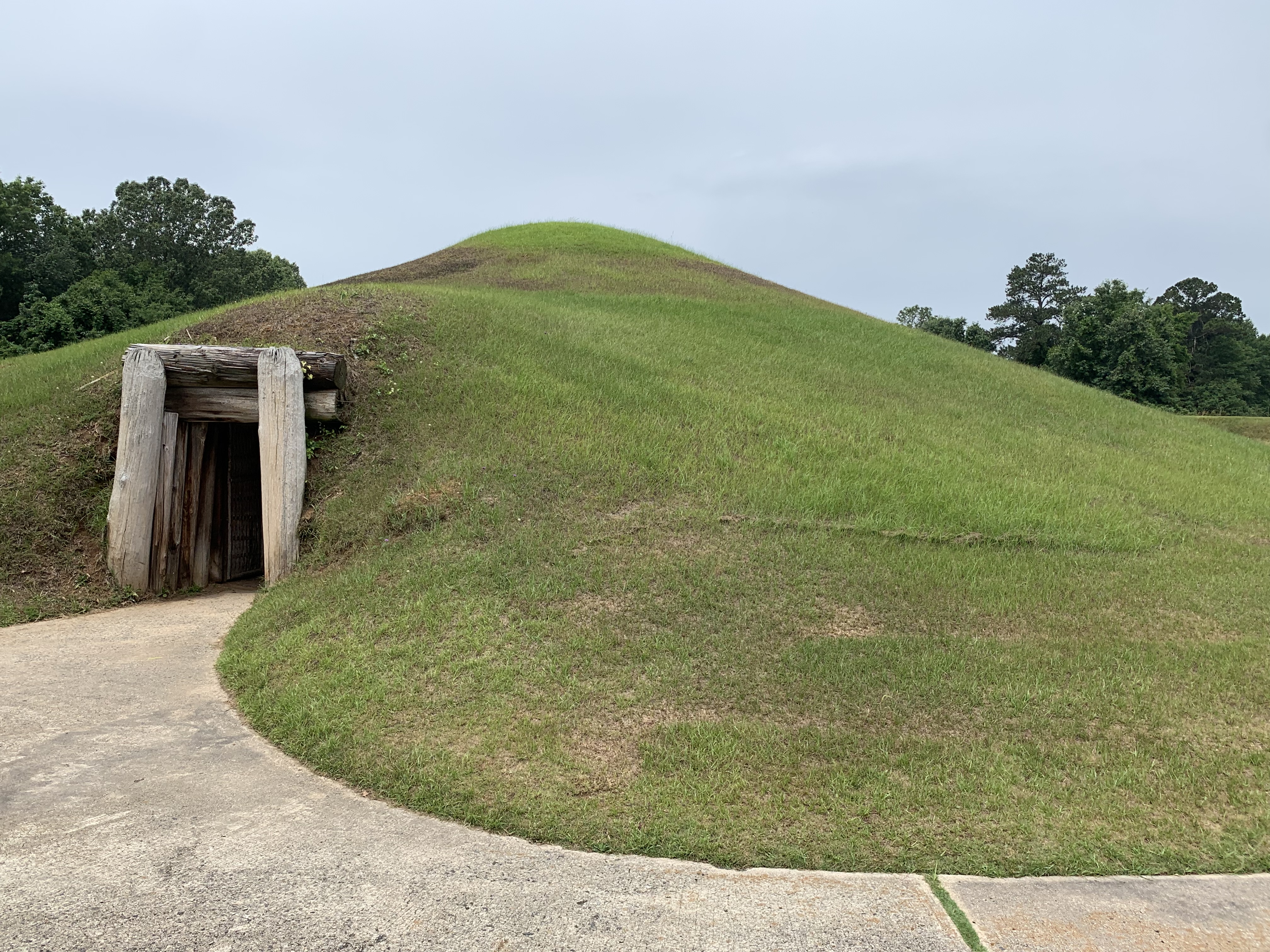
The large mounds here date back over 1,000 years, and include the reconstructed earth mound above, temples and funeral mounds of the ancestors of the Creek people. Despite tremendous challenges, the culture continues today, as seen in the Creek Nation Supreme Court Building in Ocmulgee Oklahoma, which is patterned after this mound. The ground inside dates to 1015, and appears similar to kiva I’ve seen in the west. During the Depression the Civilian Conservation Corps reconstructed the roof and built an Art Deco style visitor center. The entrance tunnel is low, carpeted and well ventilated, and it opens into a glassed-in viewing area. Despite not being half as old as Poverty Point, the mounds here also have bird symbols and other similarities. The Creek Nation farmed corn, squash, beans, pumpkin and tobacco here, fished and traded deer skins with the Spanish, French, British and Americans. They largely westernized and had multiple treaty rights to their lands, but they were nevertheless forced to abandon their homeland by Andrew Jackson.

Driving through the southeast, especially in rural areas, you see a great many churches. I’m no expert on the Bible, but I’m pretty sure the ”thou shalt not steal” is in there (Exodus 20:15). Almost all of the land was stolen from the Native Americans, yet I don’t often hear people expressing any regret for the sins of our ancestors, even in church. Obviously, it’s not God’s will that his commandment be broken. I’ve been to church services from coast to coast, and I’ve never heard a sermon about how we live on stolen property, how that was a sin and how we should try to make amends. Seems like that would be the proper Christian attitude. Of course, the church has been wrong on this issue for centuries, but reflecting on our sins and seeking forgiveness are supposed to be core values of Christianity. Why not start reflecting on this sin and our responsibilities today?

Martin Luther King, Jr. National Historical Park

Every year winning poems are chosen from children around the world for visitors to admire along with the roses. The sentiments are moving testimonials to his life, ideals and inspiration, expressed with the moral clarity and unbridled hope of children. This is my favorite Civil Rights site.

The short films & exhibits in the visitor center capture Dr King’s life as the heart and soul of the Civil Rights movement, as well as his wish that we continue. His birthplace, church, center for non-violence and grave are overwhelming, but I was struck by how the community continues to gather here daily for many different events and causes. His passion for justice and righteousness inspire action every day.

Today I’m inspired by one of his thoughts in his letter from a Birmingham jail, about how difficult it is to be told to wait after enduring centuries of suffering. Earth has suffered centuries of pollution, and always the message to environmentalists is to wait. Wait for new technologies, wait for laws, people and society to change, and wait until the polluters have made more money, and then, maybe…. But now we have no more time to wait. We’re moving quickly to catastrophe, wasting precious time on inaction, and extinguishing species without pause. Unless we act to stop burning fossil fuels now, we condemn much life on earth to end.

Kennesaw Mountain National Battlefield Park

Union forces fought for weeks to break the long line of confederate fortifications northwest of Atlanta, but were unable to climb the steep hills under heavy fire. There was one “dead angle” or blindspot at Cheatham near the photo where soldiers climbed all the way up the hill and over the earthen walls only to be repelled in hand to hand combat.

5,300 soldiers died in a few weeks of fighting here in the summer of 1864, before the war moved to Atlanta.