All Southeast Sites *

The southeast region has more park units (70) than any other region, and I have visited all the units—*except 6 in US Caribbean territories—including all the affiliates, heritage areas and trails in Alabama, Florida, Georgia, Kentucky, Mississippi, North Carolina, South Carolina and Tennessee. Given the large number of states and parks involved, the summary below is organized by theme.

Natural Areas

All of the National Parks in the southeast preserve natural areas, including the reef area of the Florida Keys from Biscayne to the Dry Tortugas, the lowlands of Congaree and the Everglades, the Great Smoky Mountains, and even underground at Mammoth Cave. Other park units, Canaveral, Cape Hatteras, Cape Lookout, Cumberland Island and the Gulf Islands, protect barrier islands. Big Cypress, Big South Fork, Chattahoochee River, Little River Canyon and Obed River all protect diverse riparian areas.

Pre Civil War

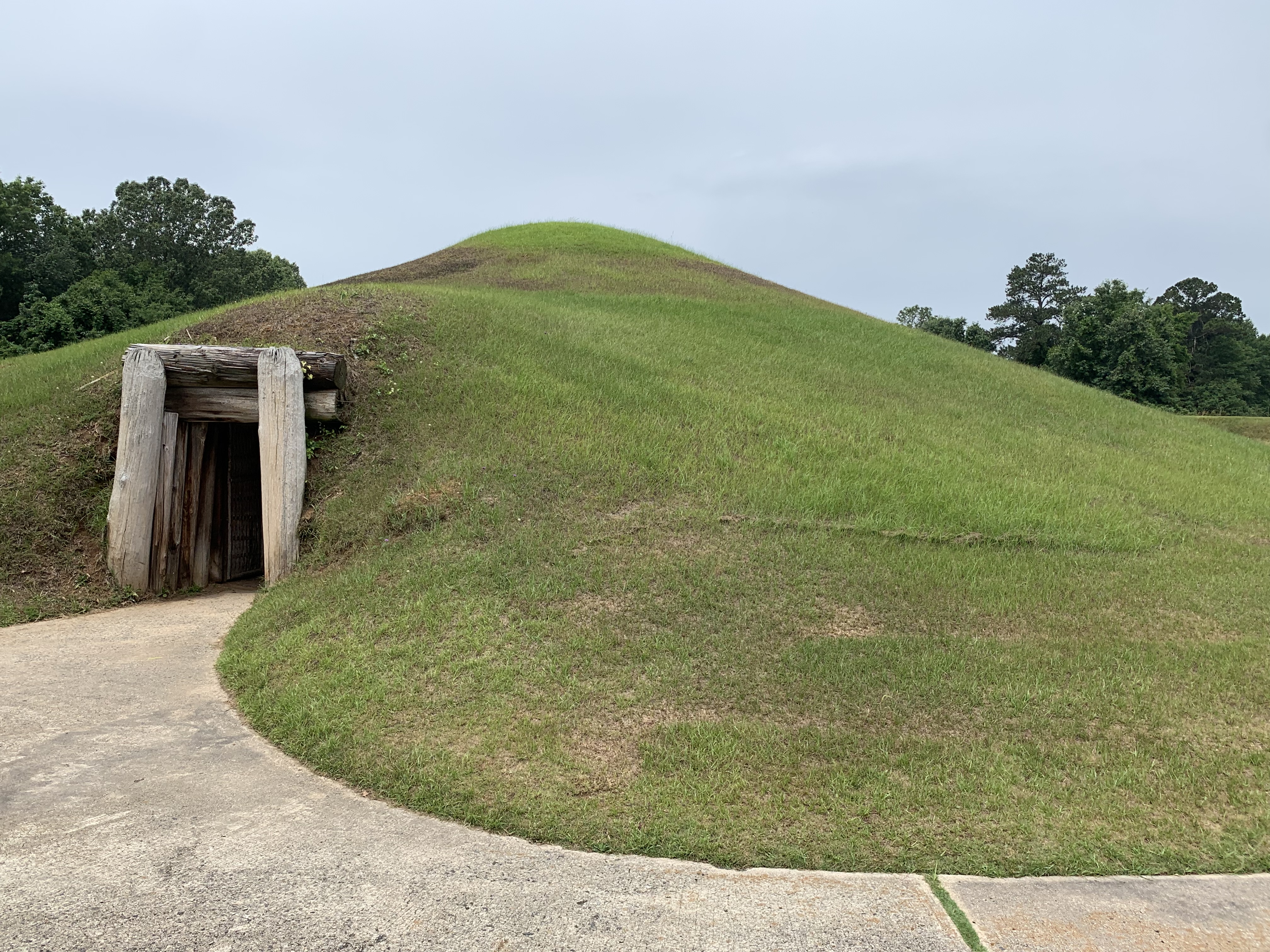
Ocmulgee Mounds, Russell Cave and Timucuan stretch back before history, but Horseshoe Bend covers a tragic event in Native American history. Several sites cover early colonial history, including Castillo de San Marcos, De Soto, and Forts Caroline, Frederica, Matanzas and Raleigh. Cowpens, Guilford Courthouse, Kings Mountain, Moores Creek and Ninety-Six cover the Revolution. Blue Ridge, Cumberland Gap, Lincoln Birthplace, Natchez HistoricParkwayTrace, and Pinckney, trace the path of history in the southeast, culminating in the war to abolish slavery.

Civil War and beyond

Andersonville, Brices Cross Roads, Camp Nelson, Chattanooga, Forts Donelson, Pulaski and Sumter, Kennesaw Mountain, Mill Springs, Shiloh, Stones River, Tupelo and Vicksburg are Civil War sites. Johnson, Reconstruction, and Tuskegee Institute cover post war struggles. Carter, Sandburg & Wright Brothers are historic highlights. Birmingham Civil Rights & Freedom Riders, Emmett Till, MLK, Medgar Evers, and Tuskegee Airmen reveal the continuing struggle for Civil Rights.

I learned more traveling in the southeast than any other region, as the area is so rich in history and culture. And the preserved natural areas include some of my favorite park experiences, from underwater and underground, to rivers and shores, and to wildlife experiences in mountain forests. And they can all be explored without traveling in a carbon-burning vehicle.

National Heritage Areas in Georgia

In addition to part of the multi-state Gullah Geechee Cultural Heritage Corridor, Georgia has two unique heritage areas.

Arabia Mountain is a large site east of Atlanta, managed in sections by city, county and state park rangers. While Stone Mountain—infamous for its carving of three traitors—just north has similar granite monadnock geology, Arabia Mountain is a natural area, protecting Diamorpha and other rare species that thrive in shallow sandy puddles in the rock. It’s more of a low granite hill with a gentle slope, and there are signs of quarrying. At the top, I saw a Killdeer (see photo above) drinking out of one of the larger pools, so I turned on my birdsong identifier app and quickly recorded 18 more birds, including an uncommon Swainson’s Thrush, an Indigo Bunting, a Purple Martin, a Tufted Titmouse, 2 different Vireos and a Red-shouldered Hawk. I was well pleased for such a short hike. Panola Mountain is an even more protected part of the Arabia Mountain heritage area, but you need to reserve a hike with a ranger to climb it. The historic quarrying town of Lithonia is also in the area and has an old African American cemetery.

The other heritage area is the Augusta Canal NHA. That’s a miles long canal with tow-road paths, parks and views from the north of the city down to the historic district. The most famous historic sight along the canal is the Confederate Powderworks square chimney below. It’s the last remnant of the city’s impressive wartime industry. Late in the Civil War, one of the gunpowder mill buildings exploded killing 9, including one boy, which also sparked a strike. There’s now a fancy new Salvation Army multi-function center funded by the founder of McDonalds across the canal. The waterfront is a pretty area to hike or kayak.

Cumberland Island National Seashore

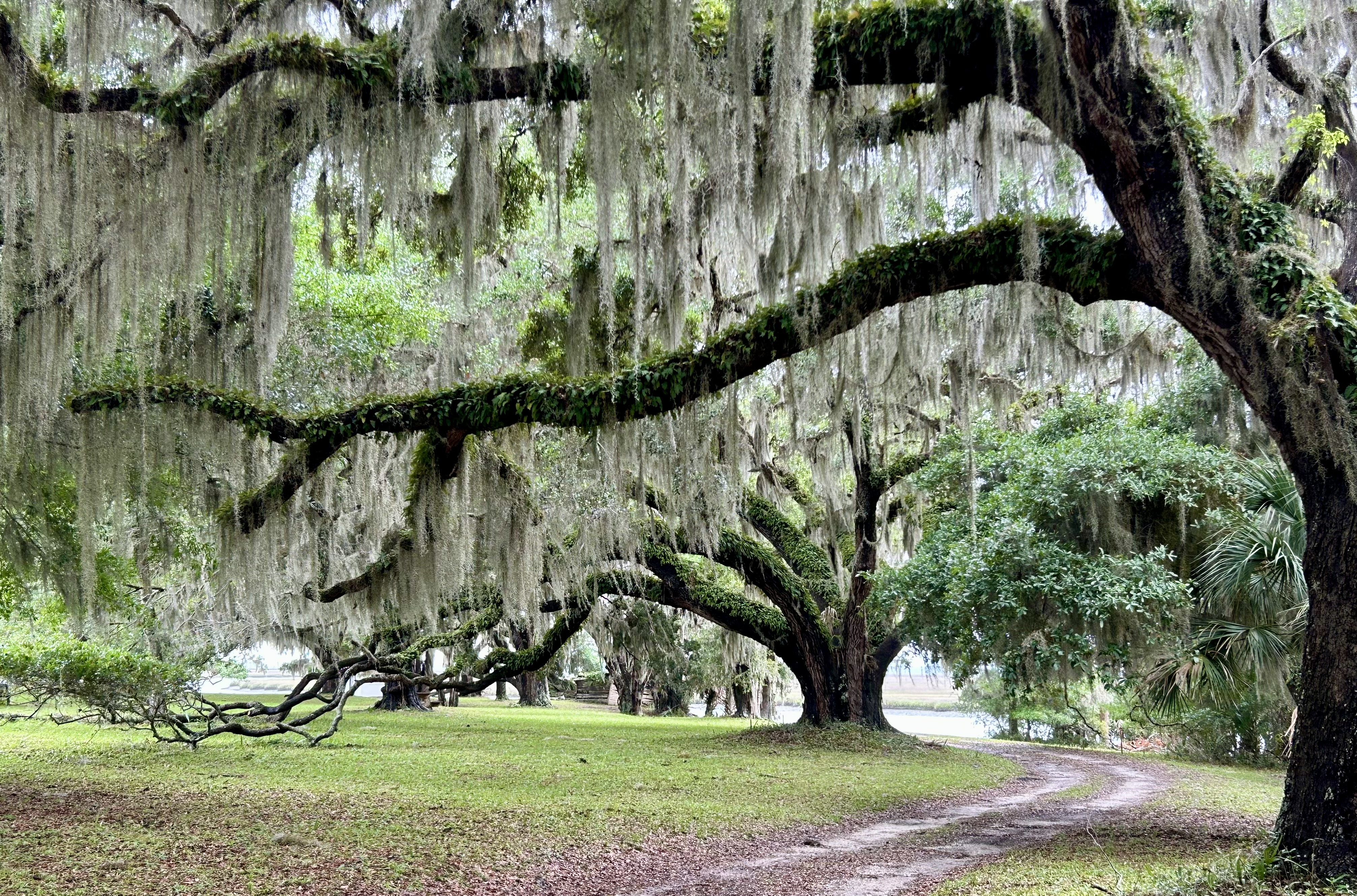
Decades later, I returned to see the southern live oaks that have haunted my dreams. Now I know the ferns that grow on the tops of their branches are called resurrection ferns, since they revive to a bright green after it rains. As a teen, I was told that humans could eat the Spanish Moss that hangs down from their branches, but returning as a tourist I was told that no humans ever did, only horses. I was too ashamed to admit I ate some long ago and thought it tasted OK.

Since I had been to the island before, I knew the only way to get to the north end on a day trip was to take a tour, so I joined the NPS recommended van tour and got to see everything from the settlements at the north to the Dungeness ruins in the south. The photo above is behind the Plum Orchard mansion, one of a few Carnegie family homes built on the island. The Carnegies were excluded by the other billionaires on neighboring Jekyll Island, so many of them settled here. Plum Orchard is beautiful and has interesting innovations, but plantation style troubles me. The center of the island is protected wilderness, and it feels like an ancient forest or overgrown jungle. Along the way we saw wild boar, wild horses, an alligator, several armadillos, and many beautiful birds.

I don’t always try to draw historic connections between parks, but bear with me this once. The natives here were related to the Timucuan. The Gullah Geechee (next week’s post) descendants of slaves are related to those all along the coast up to Reconstruction Era and down into Florida. The southern live oaks from this island were used to build the “iron sides” of the USS Constitution in Boston. Nathaniel Greene, commanding general of the Southern Campaign of the Revolutionary War, died shortly after retiring near Savannah Georgia, and his wife remarried and moved to Cumberland Island. There, Greene’s daughter Louisa cared for one of his cavalry officers, Henry Lee—veteran of Eutaw Springs—, before his death and burial at Dungeness mansion. Lee’s son was Robert E. Lee of Arlington House. And, if you want one more parks connection, the Carnegie’s innovative household DC power was likely overseen by Thomas Edison.

When I first arrived on the island several decades ago, I was invited as a guest of someone who knew the owners into a grand old home under the oaks for a meal, stories on the porch and an after dinner cognac, my first. As I recall, there was some discussion about whether the home would have to become an inn to survive, and we all agreed that it was important for beautiful old historic places to be preserved. (It later became the exclusive Greyfield Inn of Kennedy wedding fame). Folks need to come to places like Cumberland Island to try to imagine what it was like all those years ago, to walk along the barrier island beaches, to see the wild horses, to learn about dugout canoes, see photos of Primus and Amanda Mitchell who went from slaves to church and settlement founders, to learn about sea island cotton, and especially to feel the special old grandeur under those southern live oak trees.

South Carolina & Southern Campaign of the Revolution National Heritage Corridors

These are two obscure heritage areas in the Carolinas, but none of the state or national park employees I spoke with had heard of either. While the South Carolina NHC has historic sites, plantations and gardens, the parks included—like Pinckney, Sumter, and Overmountain Victory—are unrelated. And while the Revolution NHC includes Moores Creek, it excludes many other important battles in the Carolinas and neighboring states. Don’t waste time following these confusing corridors, but instead start with an overview at historic Camden.

Here’s the story of the Revolutionary Campaign in the southeast, focusing on national sites and affiliates. Virginians Henry, Jefferson and Washington led their colony into rebellion, in concert with the north. Virginia colonial governor Lord Dunmore called in troops, organized loyalists and even formed a regiment of liberated slaves. Echoing Bunker Hill, Patriot militia fought well at Great Bridge in 1775, prompting Dunmore to order the shelling of Norfolk Virginia. Echoing Concord, the Patriots cut down a broadsword charge at Moores Creek North Carolina in 1776. And at the end of 1778, the Patriots took Savannah, followed up with a victory at Kettle Creek Georgia in early 1779.

But in May of 1779, the British sacked Portsmouth in Virginia, kicking off their southern campaign in earnest. In late 1779, the British returned to Savannah, capturing it after a siege. In early 1780, they took Charleston SC after another siege. Next, they turned their attention inland, hoping to sway more loyalists, keep their large southern colonies, and then take the fight back to the northeast. In 1780 the British fought over a dozen battles around Charleston and Camden (see Cornwallis’ HQ below) in South Carolina, consolidating their control over the colony.

But the British were ruthless in the south, revoking pardons, burning homes & farms, and imprisoning or hanging those who wouldn’t sign loyalty oaths. The most infamous example happened in May 1780 at Waxhaws—named after a local tribe—, when Banistre Tarleton massacred Patriots, inspiring further rebellion. Popular resentment against the tyrannical British grew, especially among the Scots-Irish settlers. After Gates lost his leadership position after failing at Camden, Nathaniel Greene began a much more effective guerrilla campaign in the back country.

The Patriots didn’t win all their battles, but many of the British victories were Pyrrhic, causing them to cede territory even after eking out technical victories. The back country belonged to the Patriots, especially when reinforcements crossed the Appalachian Mountains on the Overmountain Victory Trail. The Patriots won at Kings Mountain in late 1780, then again at Cowpens in January 1781.

Even though the British subsequently won at Petersburg VA, Ninety-Six in SC, and at Guilford Courthouse NC, clearly, they were not winning the broader campaign. Cornwallis brought his troops north to Virginia. After a close battle near Camden, the remainder of the British forces retreated for Charleston, with the last battle in the southeast fought at Eutaw Springs in September 1781. The denouement was set for Yorktown.

Kettle Creek Battlefield

This affiliate site memorializes a key Revolutionary War battle in Georgia in mid February 1779. The British had been moving freely through Georgia with some 600 loyal colonial forces, until 350 Patriots came across them west of Augusta at Kettle Creek. The smaller force of Georgians and South Carolinians had the element of surprise and attacked, under the command of Andrew Pickens. The British quickly climbed a hill and sought cover, but their leader was shot and mortally wounded. Fearing they were being surrounded, the British retreated back across the creek in some disorder and most escaped. This battle was a significant defeat for the British who lost 3 times as many men, including their Colonel Boyd. The markers above are cenotaphs, placed about 60 years ago, in memory of American veterans of the battle who are buried elsewhere. There are several hiking loops in the woods to give you a sense of the hilly, difficult terrain, with crosses marking actual graves.

Fort Pulaski National Monument

This Civil War era fort still shows the pockmarked scars from Union artillery. A later famous Lt Robert E Lee helped design the tidal sluice gates and canal for the moat which circumscribes the fort, and he had assured the commander that the walls would hold. And it did hold for 112 days against a Union siege in April of 1862. But despite the impressive moat, drawbridges, masonry, and reinforced internal structures, the invention of rifled artillery made the fort obsolete, as this test of the experimental weapons demonstrated. The wall on the left end had to be rebuilt after the spinning explosive shells opened huge gaps. After 30 hours bombardment, the fort surrendered and the port of Savannah was blocked by the Union’s anaconda. Otherwise, the fort is in good condition, with good views from the tops of the walls, and walking around the inside makes for an interesting visit.

Fort Frederica National Monument

Upon arrival, I remembered visiting by small boat as a teen many years ago. All along the southeast coast, displaced Native Americans and escaped slaves endeavored to remain free in these low-lying delta barrier islands. Although threatened, the evocative old oaks, the Spanish Moss and the shell-filled archaeological ruins are still hauntingly beautiful.

In the 1730’s the British built a pair of forts, both named after Frederick, Prince of Wales, to develop and defend their colonies against the Spanish. Fort Frederick’s ruins are 125 miles north, next the Reconstruction Era Camp Saxton in South Carolina. Fort Frederica here in Georgia, defined the southern boundary of their colonies, north of Spanish Florida.

The British commander Oglethorpe was considered enlightened (for the time) and enthusiastic. Rather than slavery, he proposed work be done by indentured servants mostly from debtors prisons in England, making Georgia a type of penal colony where workers could gain their freedom over time. The Methodist founder John Wesley and his brother Charles first attempted a church under one of the large, mossy oaks here, and the settlement had various tradespeople, including a Native American interpreter, a blacksmith and a doctor/barkeep.

In a remarkable historical echo of the French colonial experience at Fort Catherine, Oglethorpe also tried to seize St. Augustine in Florida, besieging the Castillo de San Marco and being stopped at Matanzas. Again, the Spanish counterattacked, but faring better than the French, Oglethorpe successfully defended this fort and cleverly routed the Spanish in Bloody Marsh, despite being outnumbered. After the Spanish retreated and conceded Georgia, the British cut their military presence here and the remote island village faded away in a decade or two.

Now, while driving through these remote islands, I can’t help but be amazed by the fancy houses. Not because they’re decadently ostentatious, but because they’re so close to sea level. It is astonishing to think that many of America’s most successful retirees choose to develop luxurious estates within the zone that is most certainly going to be erased by the climate crisis. The collapse of Thwaites ‘Doomsday’ Glacier is accelerating, and rising seas will take all the land here. They may have inherited much wealth, but they won’t be leaving these houses to future generations. Apparently, you don’t need much intelligence to be rich.

Chattahoochee River National Recreation Area

The park runs along the riverside in 16 different mostly contiguous sections, just north of metro Atlanta. The view above is from an overlook in the East Palisades section, specifically between EP 10 and EP 14 near the Indian Trail entrance. The treacherous whitewater mild shoals in the river above are known as the Devil’s Race Course, not for downstream paddling difficulty, but because it used to be “a devil” to move cargo up the river here.

Parks near urban areas means more people enjoying nature, and even on a chilly autumn day there were plenty of folks out jogging, hiking, biking and dog walking. One young lady appeared to be in deep meditation at the river’s edge, while her dog intently watched some geese on a sand bar in mid stream. It would have been fun to kayak through the park, but I couldn’t figure out a good way to get all my gear back to my car. With limited time to visit other sections, I spent my time on a beautiful long hike along the river and up in the wooded hills.

Crunching through the leaves reminds me of running cross country as a boy during the fall in New England and leaves time to reflect on loss and letting things go. Life is not perpetual youthful summers, and the decay that comes with the passage of time prepares the ground for new life and the next generation. The bittersweet changes of seasons and life should be learned from, embraced and cherished, not denied nor medicated away.

“Good night, good night! Parting is such sweet sorrow,
That I shall say good night till it be morrow.” 

— Juliet

Chickamauga and Chattanooga National Military Park

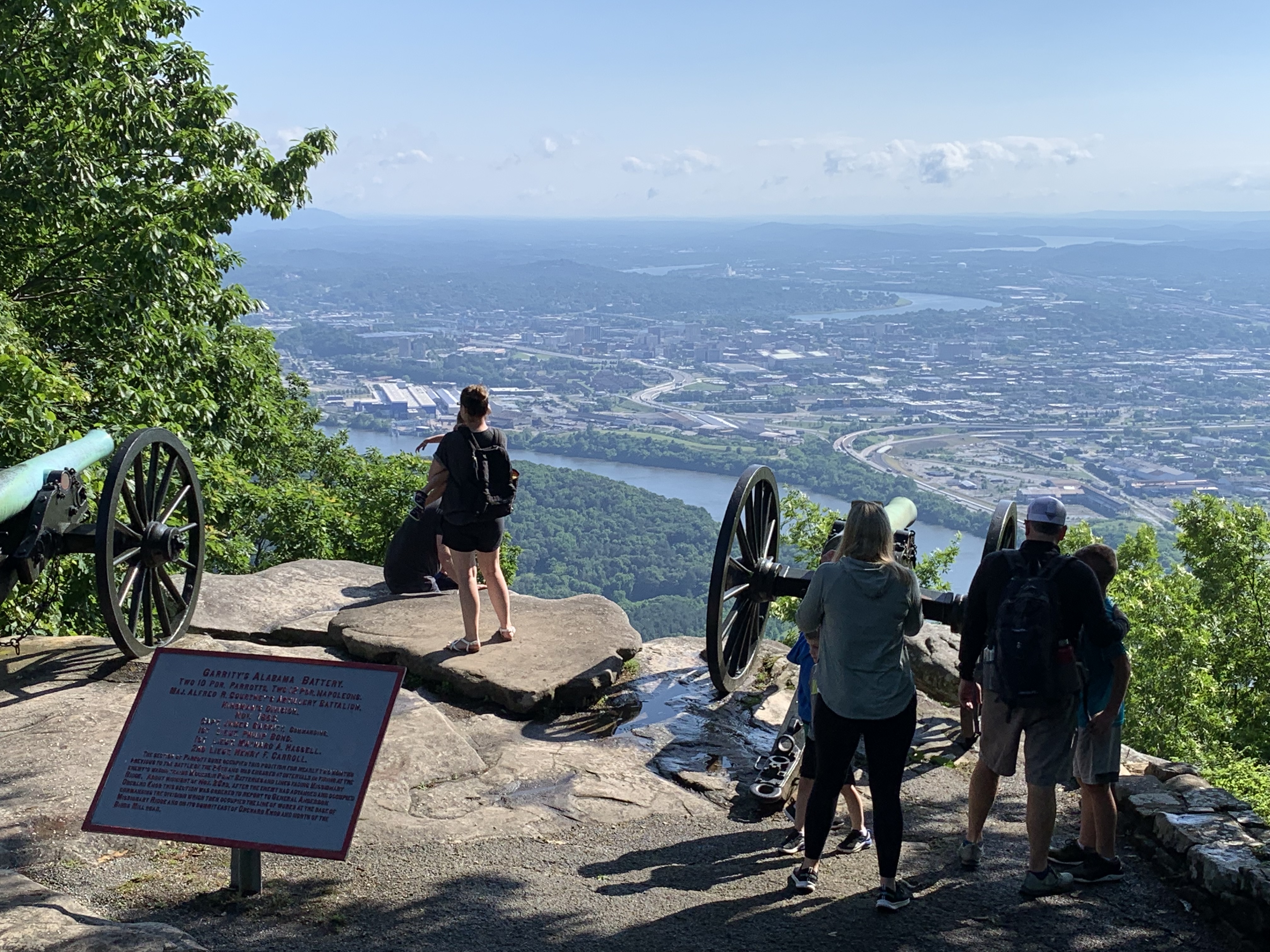
Before I rant again, let me just acknowledge that there’s a dramatically beautiful view on Lookout Mountain. Chattanooga below is in a strategic location at the bend of the river below. Long before the Civil War battles, the last overland battle of the Revolution was fought here. There’s even a steep funicular line to enjoy the view.

Militarily, controlling the high ground has always been the key. Grant used it to capture Chattanooga, and the confederates used it to try to recapture the city, unsuccessfully. Chickamauga nearby in Georgia is much flatter and covered with monuments to both sides. Which brings me to my brief rant. If even a fraction of the money and effort spent on monuments for both sides were used to explain the cause of the war, slavery, then maybe we wouldn’t have some politicians today still trying to claim that there are “very fine people on both sides” of racial prejudice. No. Racism was wrong both then and now, and the longer that we evade the obvious moral judgements here, the harder it will be to remove the poison.