Timpanogos Cave National Monument

The cave is famous for its helactites, the squiggly ones that seem to defy gravity. To see them, I’d recommend a reservation or getting here early (open at 7am), as they do sell out. Then, walk up the switchback trail for 1.5 miles, and be careful not to wander off the near vertical drops while you gawk at the stunning views. The gap between the mountains appears to be deeper than it is wide, and there’s a river flowing through a forest at the bottom along with the road. Don’t mind the many hikers. They’re probably just out for exercise, as one lady told me her friend had climbed it over 100 times. And I suspect they exercise regularly with mountain goats here, since I also saw two moms carrying two kids each with more in tow.

The regular tour is ranger led and includes three sections of cave. The middle section has a crack in the ceiling which has dripped water for ages to create the amazing structures: flowstone, soda straws, popcorn, bacon, small crystals, stalactites, stalagmites and columns, in a variety of colors. We also saw a party of explorers with caving equipment entering small passages, which is another tour option for the skinny and flexible. This is my favorite cave.

Fossil Butte National Monument

Near Bear Lake, there was a much larger lake here during the Eocene around 50 million years ago, and there are many fossils of fish, reptiles, mammals and plants here. The one in the photo is a freshwater stingray. To help visitors get a sense of the timeframe, there are proportionately spaced signs from the entrance to the visitor center showing what evolved when.

We’re just the most recent to evolve, but we’re already driving a massive extinction wave, potentially as devastating as natural extinctions hundreds of millions of years ago. We take for granted the vibrant diversity of species, but even subtle changes can upset the balance and wipe most life off the earth suddenly. We evolved to overcome our limits, and now we need to learn how to control ourselves before we ruin the environment that sustains us.

Golden Spike National Historical Park

The two sides racing to complete the transcontinental railway actually went far past each other before they finally agreed to meet here. The celebration drew many, as did the centennial, but the location is fairly remote and sparsely populated. There’s a plaque honoring Chinese laborers who contributed, even though many were not allowed to remain in the US.

Many visitors come to see the old style trains shown periodically, but the site is most interesting as a historic symbol of a new age dawning. There’s a large solar array under construction nearby, and hopefully our next transportation revolution from fossil-fueled to electric vehicles can be as dramatic and sudden as the shift from horse to train and telegraph.

Big Hole National Battlefield

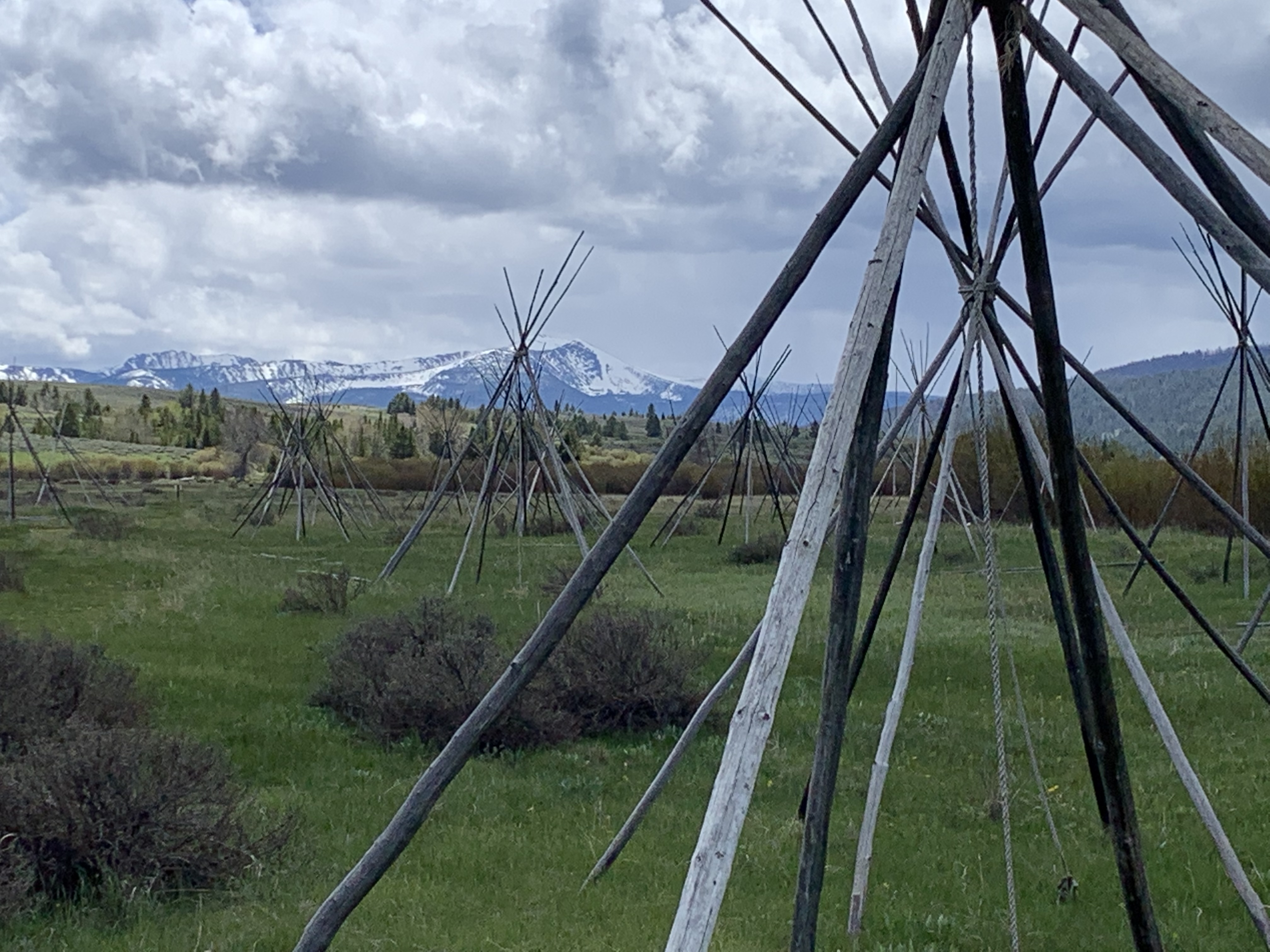
This uniquely tragic site in the War on Native America is also part of the Nez Perce National Historical Park, and it sits in the scenic Big Hole valley, right near the little town of Wisdom.

The US military was hunting down natives who refused to go to reservations and a few fugitives who had killed some settlers. They attacked the camp at night, burned the tipis and killed around 90 natives, mostly women and children, including babies bludgeoned to death. The warriors killed 31 soldiers in defense and then fled with the survivors. Some eventually escaped to Canada, but Chief Joseph later surrendered at Bear Paw with the rest.

Hail fell while I was at the Nez Perce cemetery above, and it felt appropriate, considering the terrible history here. I took some time after the film and walk to try to draw any wisdom, and all I could come up with was this.

No person can claim credit alone for greatness, as our existence is entirely due to the natural world that we evolved from, which sustained our ancestors and us. Yet a great idea, which is not limited by time and place, can inspire, destroy or outlast our civilizations, as long as there are still humans who understand it. So we must not think so much of ourselves. We must thank the natural world for everything it has given us. And we must try to cultivate thoughts, wisdom, moral judgements, insights, inspiration and kindness that may survive us and improve the future.

Grant-Kohrs Ranch National Historic Site

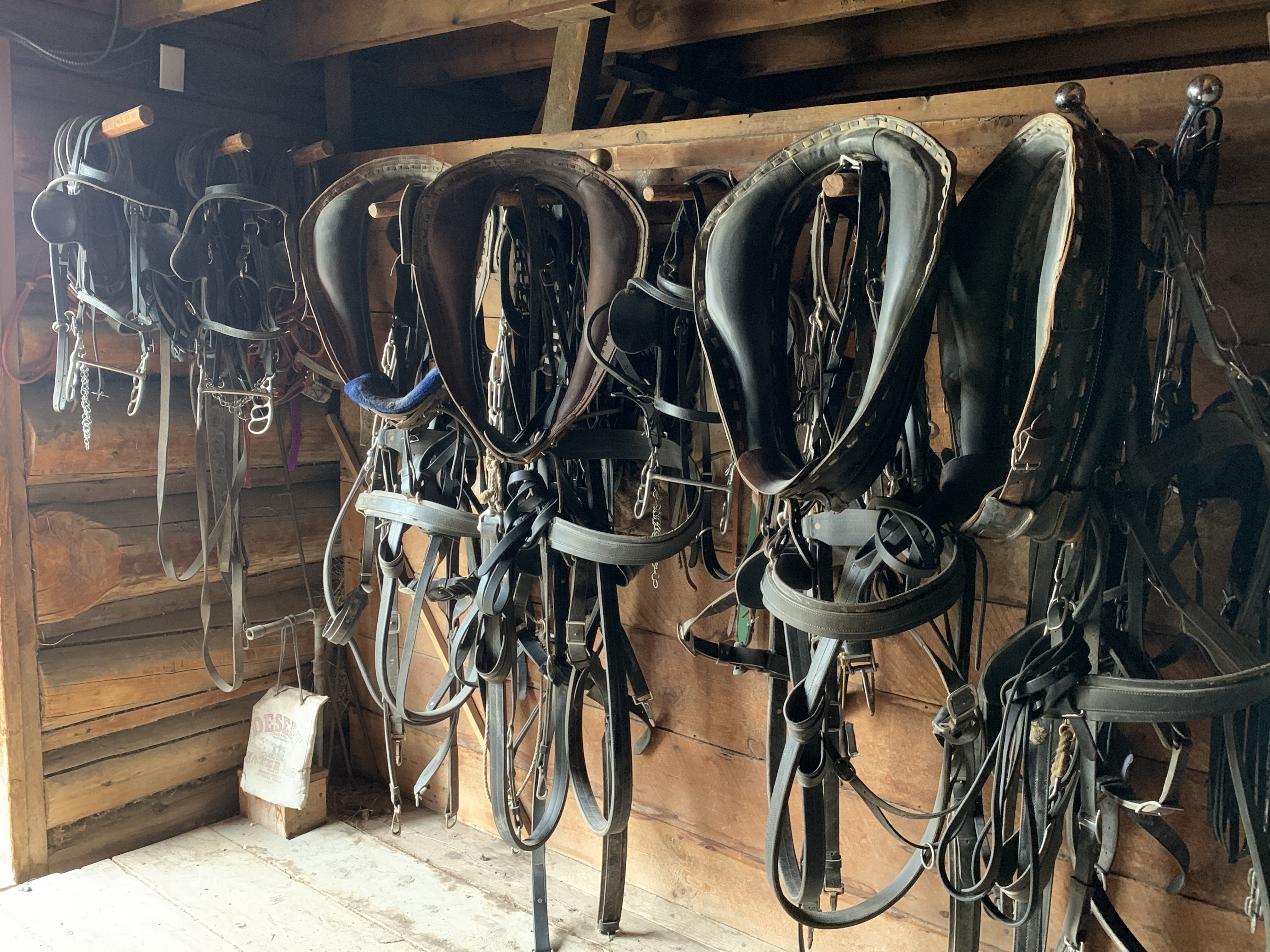
Before barbed wire many ranches raised cattle free range, meaning without fences, and cowboys would drive herds of cattle up to halfway across the country. This ranch helps preserve a few elements of that iconic way of life, as a working ranch with beaver-slide hay stackers (invented nearby) and a variety of animals. The displays depicting the cowboys put real faces on the young men whose lifestyle was romanticized by books, radio, TV and film.

When I stay in state park campgrounds, like Bannack near here, I’ve been reading Louis L’Amour’s books which helped mythologize the West. I often find I’m following the same routes and seeing the same places he did. One of his scripts could easily have come from the history of Bannack where a corrupt sheriff and his gang, ”the innocents”, killed over 100 people and robbed even more before the townspeople figured it out and hung him from his own gallows.

Another local site is the Anaconda copper mine smelting tower, site of a horrific pollution scandal. There’s still a large Superfund site cleaning up here. The mountains, valleys, forests and rivers here are stunning, but greed often drives men to devastate both their communities and their environment. We must look deeper than myths, see what’s going on behind the scenes and act before damage becomes irreparable.

Little Bighorn Battlefield National Monument

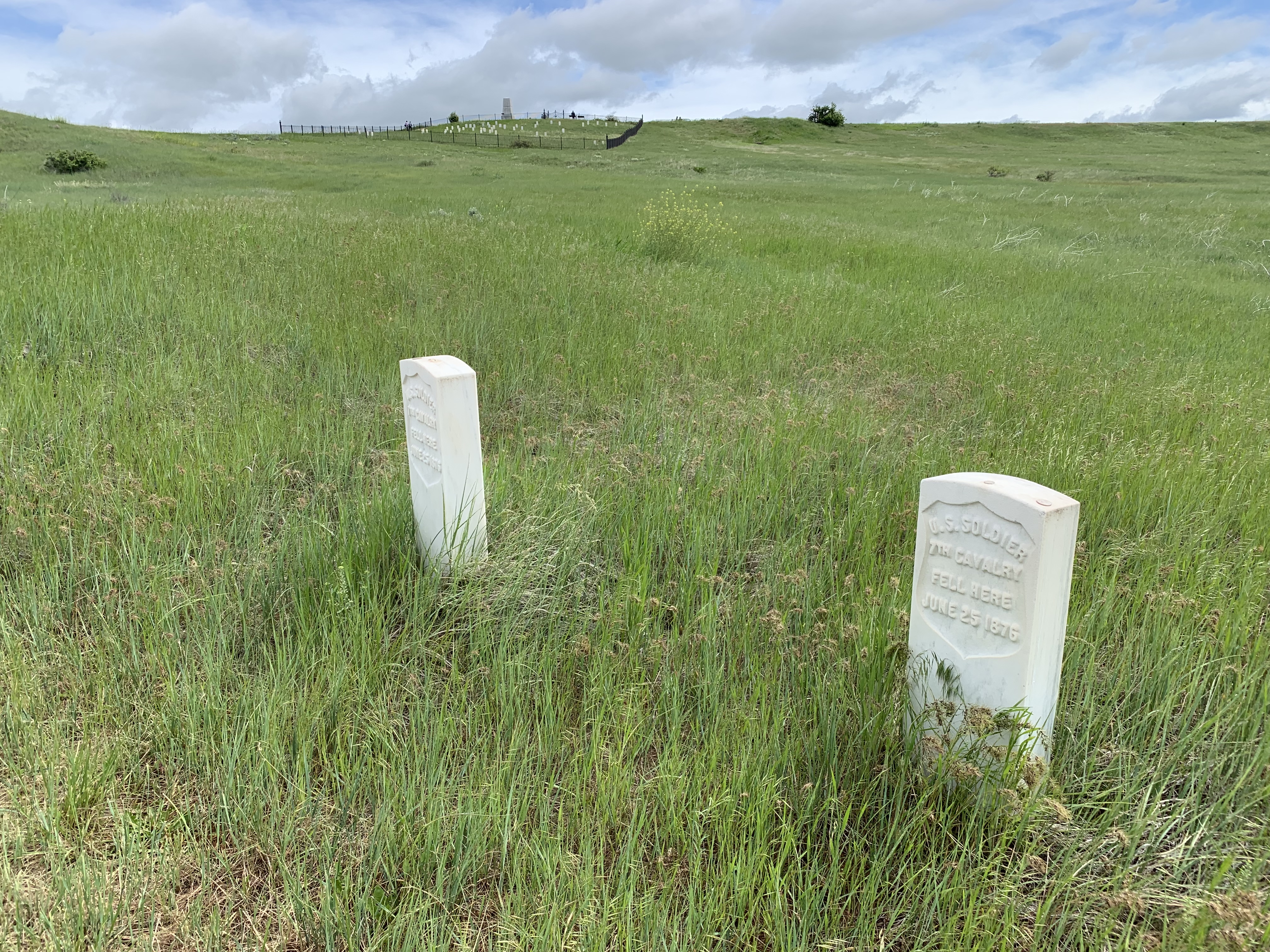
Two unnamed cavalrymen are memorialized here, below the hill where Custer made his last stand. Until fairly recently, there were no similar monuments to the Native Americans who won the battle. Now there are several, naming the heroes who defended their village, wives and children here from the cavalry attack. Custer intended on burning the village and likely was trying to take women and children hostage when he overextended his forces to this hill. The natives were surprised by the attack, and while this was their greatest and last victory over better armed US troops, it must be recognized as essentially a defensive act in response to US military aggression. The native ranger talk here is a favorite experience.

Seeing the landscape helps understand what went wrong. Custer split his forces, sending some towards the far south end of the village as he approached the north. Underestimating the size of the village both physically and in number of warriors and underestimating how fiercely they would fight back, he spread his forces thinly in order to prevent natives from escaping. He sent word to his other troops to join him thinking that he had found the village, not realizing that they had also found the village at the other end two miles away. His cavalry would have been visible on the ridge, while the natives would be hiding in the grasses & creek beds that allowed them to slowly climb the ridge. Urged on by Crazy Horse, White Bull and other chiefs, the natives stopped the US advance, kept the troops separated and eventually took the hill as Custer ran out of ammunition.

Fort Union Trading Post National Historic Site

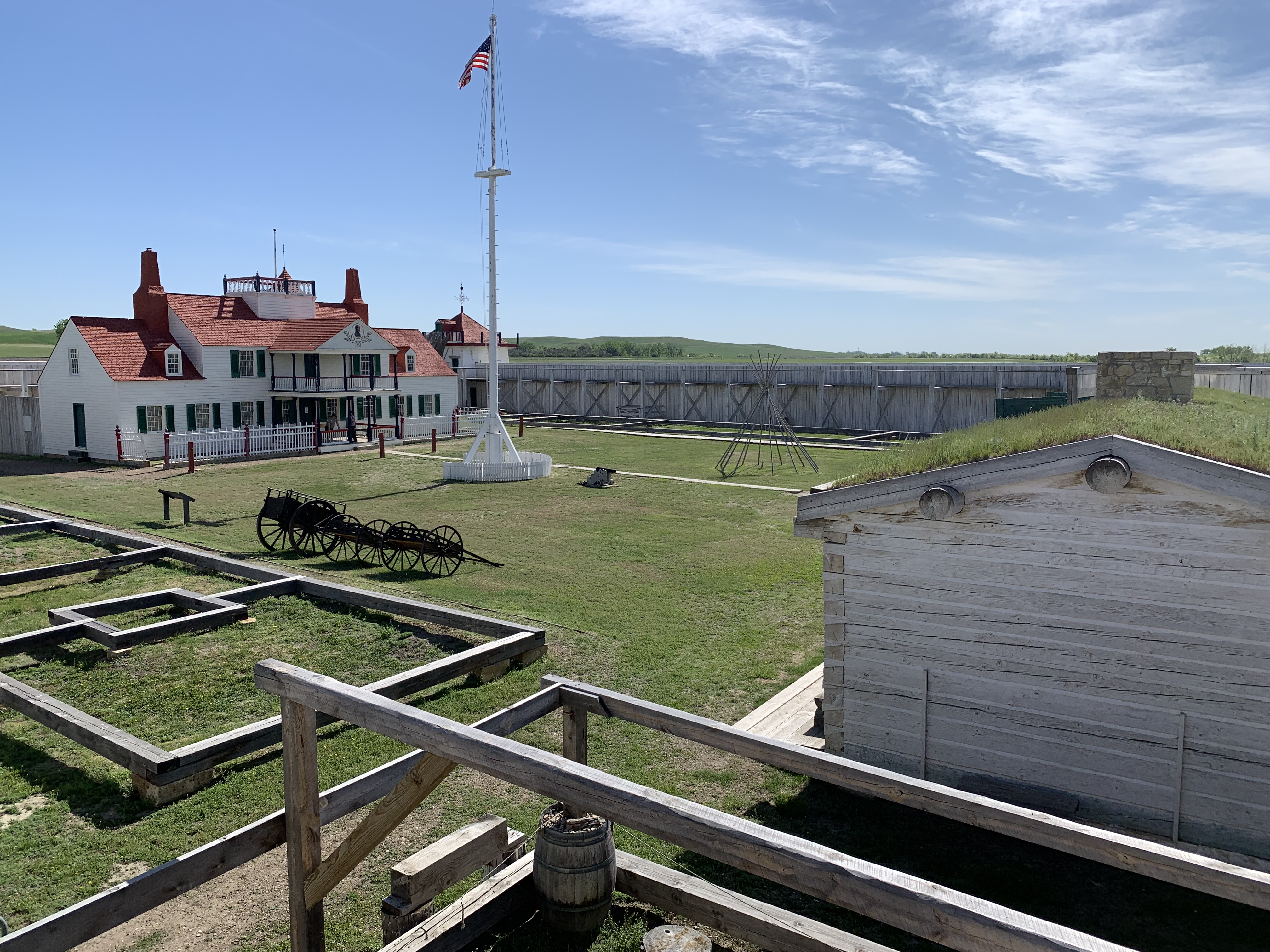
Not to be confused by the other Fort Union, this was strictly a trading post built for the fur trade at the invitation of the Assiniboine. The post was open for 40 years, peacefully and profitably trading with the Native Americans. Large numbers of natives brought stacks of furs, which were sorted and pressed outside the fort to determine payment, and then at a window they bought various goods, especially cloth. The large fur press outside the fort is basically a long pole on a fulcrum to measure fur stack thickness. Fort Vancouver in Oregon has one too, reconstructed from photos, but the rangers didn’t know what it was. (I showed them a picture and told them to call my favorite rangers here.)

Audubon came here to study mammals after finishing his bird book. Catlin came here to paint portraits of natives and portray their lives without the hateful bias that was common at the time, and he first suggested a series of national parks to protect the beautiful, historic and vanishing way of life in the West. The rangers here were among the best I’ve heard at bringing the old fort to life with engaging stories.

There’s also a small plaque, near where Lewis & Clark must have stopped, to a national parks founder named Mather, praising him for good works that “will never come to an end”. But if we lose the climate fight, many of our national parks will fail in their mission to protect nature and fail to pass that natural world on the future generations.

Theodore Roosevelt National Park

Certainly the highlight of my trip, the three units are connected by the Little Missouri River, which is the south unit oxbow on the left. The south unit also has bison, wild horses, a painted canyon, petrified logs, a prairie dog town, badlands, a replica of Teddy’s cabin, a ranch, camping, and lots more. The north unit has even better oxbow views on one of the best hikes I’ve ever done: Caprock Coulee 4 miles. Even the tiny Elkhorn Ranch unit, hemmed in by cattle fences and pumpjacks, had a pair of whooping cranes to amaze me. I’m honestly struggling for superlatives. Teddy used the phrase “grim beauty” which gets at the serious nature of the park. This is one of my favorite national parks. Click here for more Teddy Roosevelt sites.

I would like to spend a week up here and ride a horse, but I’m already in Montana. For EV travelers who want to see all 3 units, I recommend charging overnight in state campgrounds before & after. There’s one next to the south unit and another not too far from the north.

Minuteman Missile National Historic Site

There are three sites along the interstate: a visitor center, a missile silo and a launch control facility for multiple silos. Apparently the whole area was like a prairie dog town of silos. For decades, all the sites were manned and secured continuously, so that we could annihilate our enemies many times over, as they could to us. The cost of this ludicrous overkill capacity was staggering.

But what interests me most is the claim made in Life magazine above that only 3% would die. Actually, we’d be lucky if 3% survived. How could we have been so wrong? We listened to the wrong scientists. Physicists designed the nuclear bomb, so they had the full attention of the military. They analyzed the problem by describing payload, flash of light, shockwave and fallout. Only when someone asked whether nuclear war would blot out the sun for years did we realize that the physicists completely underestimated the risk to life on earth. Why? Because the study of life on earth isn’t physicists’ job. That’s the job of biologists. We were listening to the wrong scientists.

Our public understanding of the climate crisis is very similar. We’re still not listening to the right scientists. Whenever I ask a physics expert about global warming, I always get the same answer: ”the planet will be fine”. They mean that it will continue spinning. Geologists answer that temperatures vary naturally within large ranges over eons. Meteorologists say that it won’t tell you if you need to bring an umbrella today. Again we are listening to the wrong scientists.

Biologists study life on earth, so they will tell you that the climate crisis will extinguish most forms of life on earth, either directly, by changing their environment more quickly than they can adapt, or indirectly, by collapsing some critical part of the ecological networks they rely on for food, reproduction, or any other part of their existence. These are the scientists who study whether life on earth will survive, and they’re the ones who are telling us that the risks are too great to continue carbon pollution. As living, supposedly sentient beings on this planet, we naturally should be interested in the survival of life here. We need to listen to the right scientists who know and are telling us what we need to do to avert the coming catastrophe.

Badlands National Park

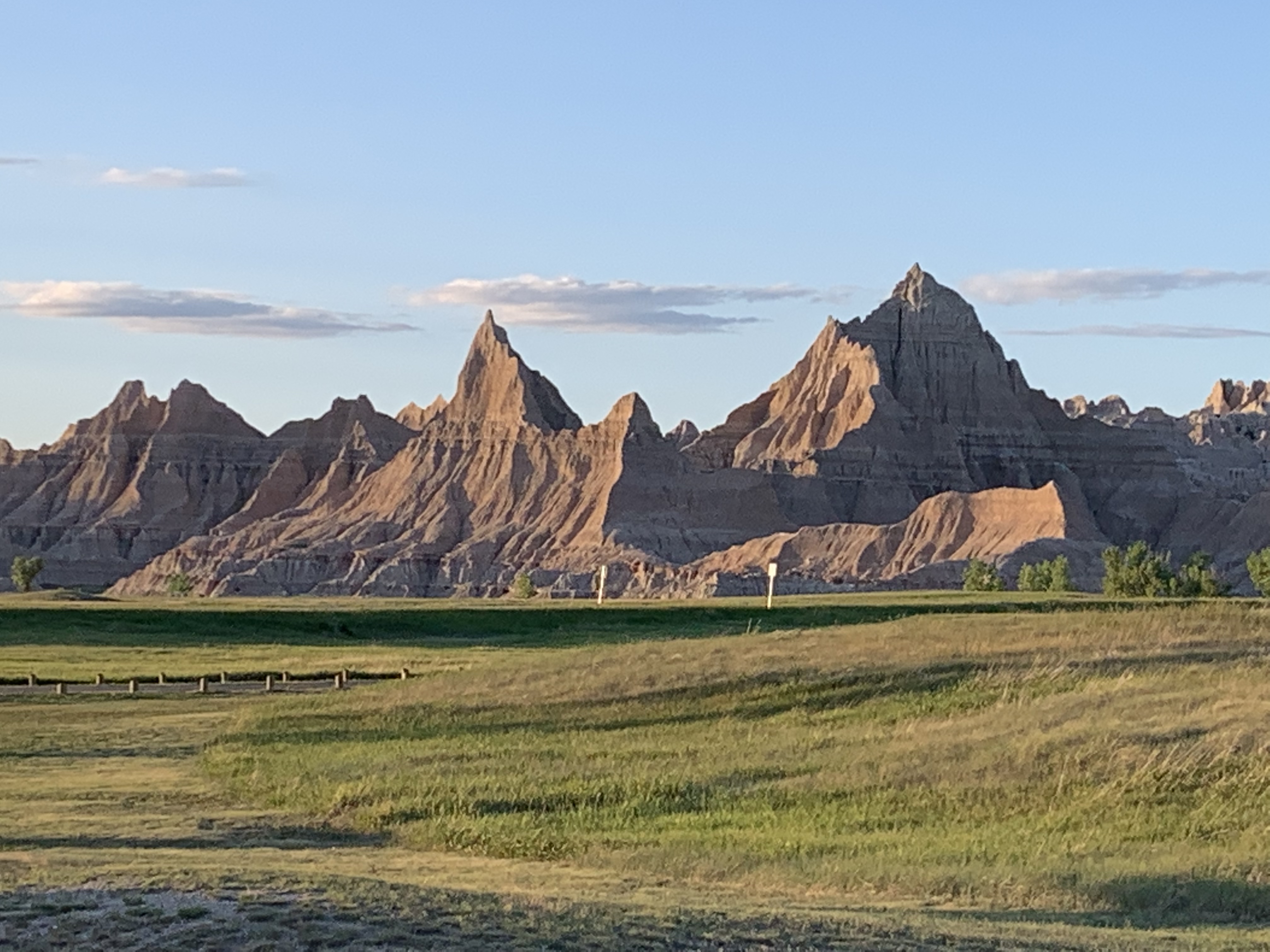
I took the photo just a minute after arriving at Cedar Pass campground. Much of the “original badlands” scenery is down in canyons, but these peaks are more photogenic. The long loop road is worth it, and the park allows even off-trail scrambling. The ranger talk was excellent, and I learned that the town of Wall (and famous Wall Drug Store) is named after the barrier that the park’s landscape presents to travel.