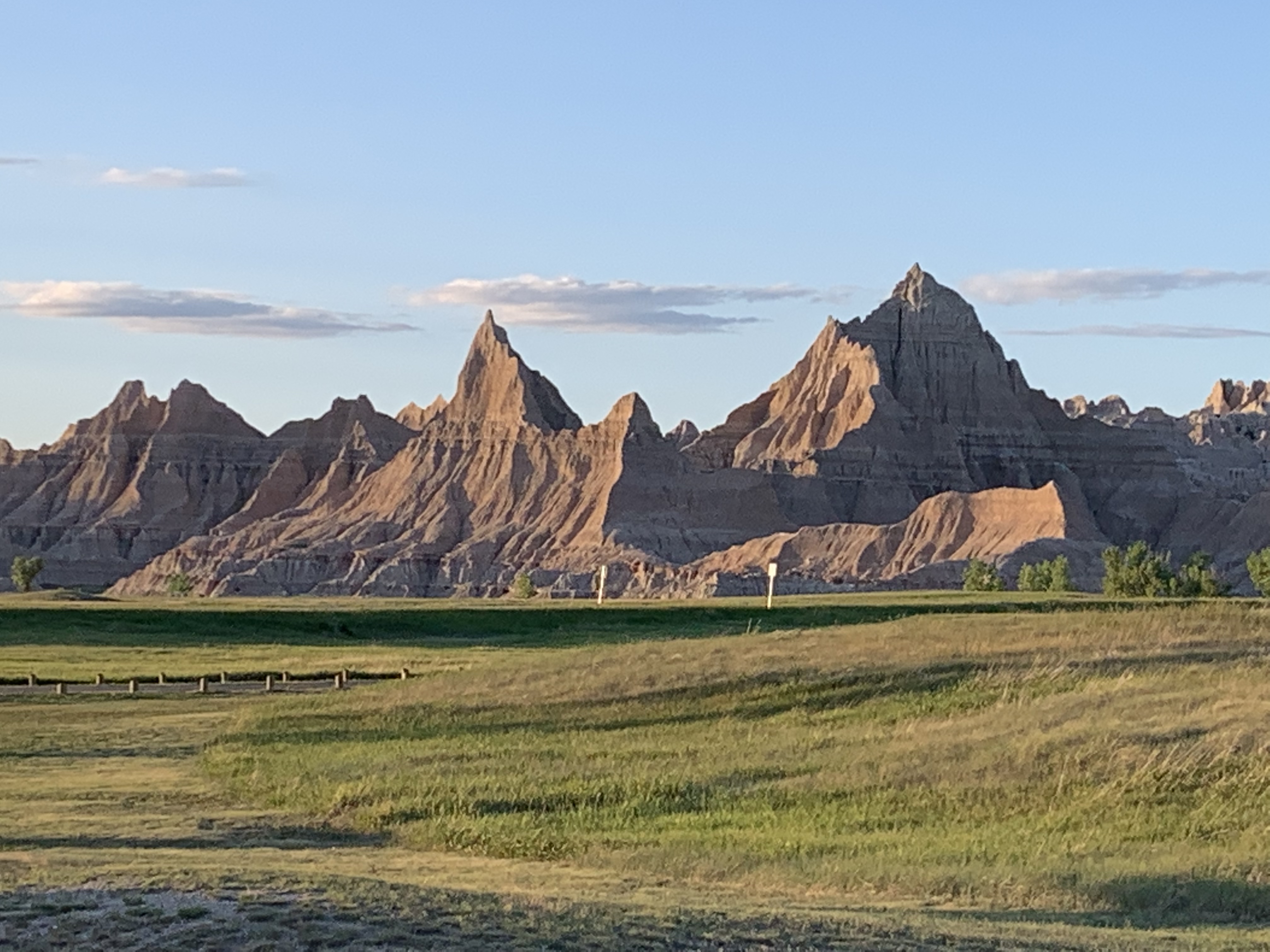
Quick bonus post to celebrate completing all the parks, trails, et cetera in South Dakota. The photos above are from the Badlands, Jewel & Wind Caves, Minuteman Missile and Mount Rushmore. The Missouri NRR borders the state and includes Yankton’s Meridian Bridge, which is nice for walking or biking and has a good kayak launch nearby. Lewis & Clark stopped here too, and there are several sites on their trail where the Yankton tribe showed them around South Dakota.
Quick logistical update: until summer, Mondays are Mexican World Heritage Sites, Thursdays are eclectic, and Saturdays are bonus park photos. I took the photos above yesterday in New Mexico and Colorado.
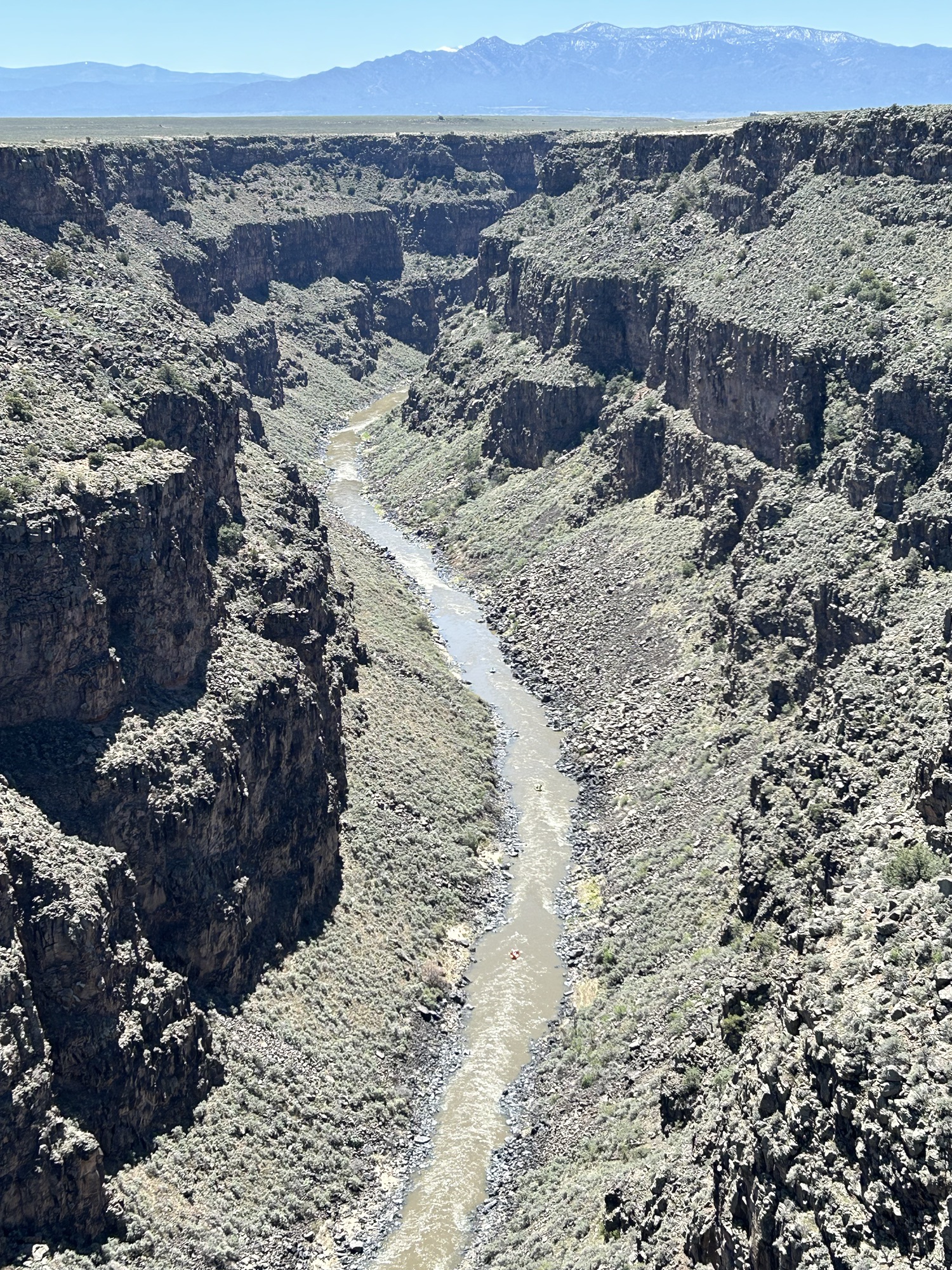
While technically in different regions, both National Heritage Areas are linked by the river, the mountains and our cultural heritage. The Rio Grande begins in the San Juan Mountains in south central Colorado and flows east through the San Luis Valley where it turns south into New Mexico. The scenic north section is called the Río Grande del Norte to distinguish it from the southern section that defines the Texas-Mexico border. The river flows through the Rio Grande Gorge and is now popular for whitewater rafting (see three rafts above left). In the distance are the Sangre de Cristo Mountains (both photos).
Native Americans and Spanish explorers traveled up and down the river, settling on the fertile valleys. The native land was claimed by the Spanish, Mexicans, and Texans, and for a dozen years, the Río Grande del Norte defined the US-Mexico border in Colorado, before the US claimed the land all the way to California by treaty in 1848. In the Civil War, Texas secessionists battled Colorado volunteers at Glorietta Pass in New Mexico to decide the war in the southwest.
The Northern Río Grande National Heritage Area in New Mexico celebrates this magnificent natural scenery and the cultural heritage it guided. It also includes Taos Pueblo, wild & scenic rivers, historic trails, scenic byways, and several cliff dwellings. Much of the land is also a BLM managed National Monument. The area is both beautiful and fascinating, and I was not going to miss another chance to drive through on my way northeast.
The Sangre de Cristo Mountains tower over the east side of the Río Grande del Norte from east of Santa Fe NM up into Colorado past the Great Sand Dunes. Meaning ‘blood of Christ’ in Spanish, the name likely refers to the scarlet colors of the mountains at sunset. The helpful illustration (my favorite photo above right) is on the Stations of the Cross trail up to a church that overlooks the historic San Luis Valley.
The Sangre de Cristo National Heritage Area in New Mexico borders the Northern Rio Grande National Heritage Area in Colorado, and includes the Cumbres and Toltec Scenic Railroad featured in Indiana Jones and the Last Crusade, the Monte Vista National Wildlife Refuge famed for Sandhill Cranes in March, and Fort Garland, a fine restored Kit Carson fort with an interesting museum on Buffalo Soldiers—one turned out to have been a woman who served for years as a man undetected. The area is lovely and pastoral amid snow-capped mountains, with many other worthy attractions, but I’m on the road again.
Biospheres are important ecological areas around the globe for protecting species diversity and for learning how to best sustain development ecologically, economically and socially. Science and solutions learned in each area are shared globally through the United Nations, and this is particularly important now that we face a global climate crisis. UNESCO currently recognizes three biospheres in the Rocky Mountain Region, and up to 2017, there were five more described below.
The Rocky Mountain Biosphere in Colorado roughly encompasses Rocky Mountain National Park and some of the Rocky Mountain Wilderness to the north. Some of the charismatic species in the biosphere are Bighorn Sheep, Elk, Mountain Lions, Pika and Snowshoe Hare. Scientists have studied species that have been wiped out of the area, like the Grizzly, Gray Wolf and Bison, as well as species that have moved in, like Moose. The exceptionally high altitudes define unique ecosystems of global importance.
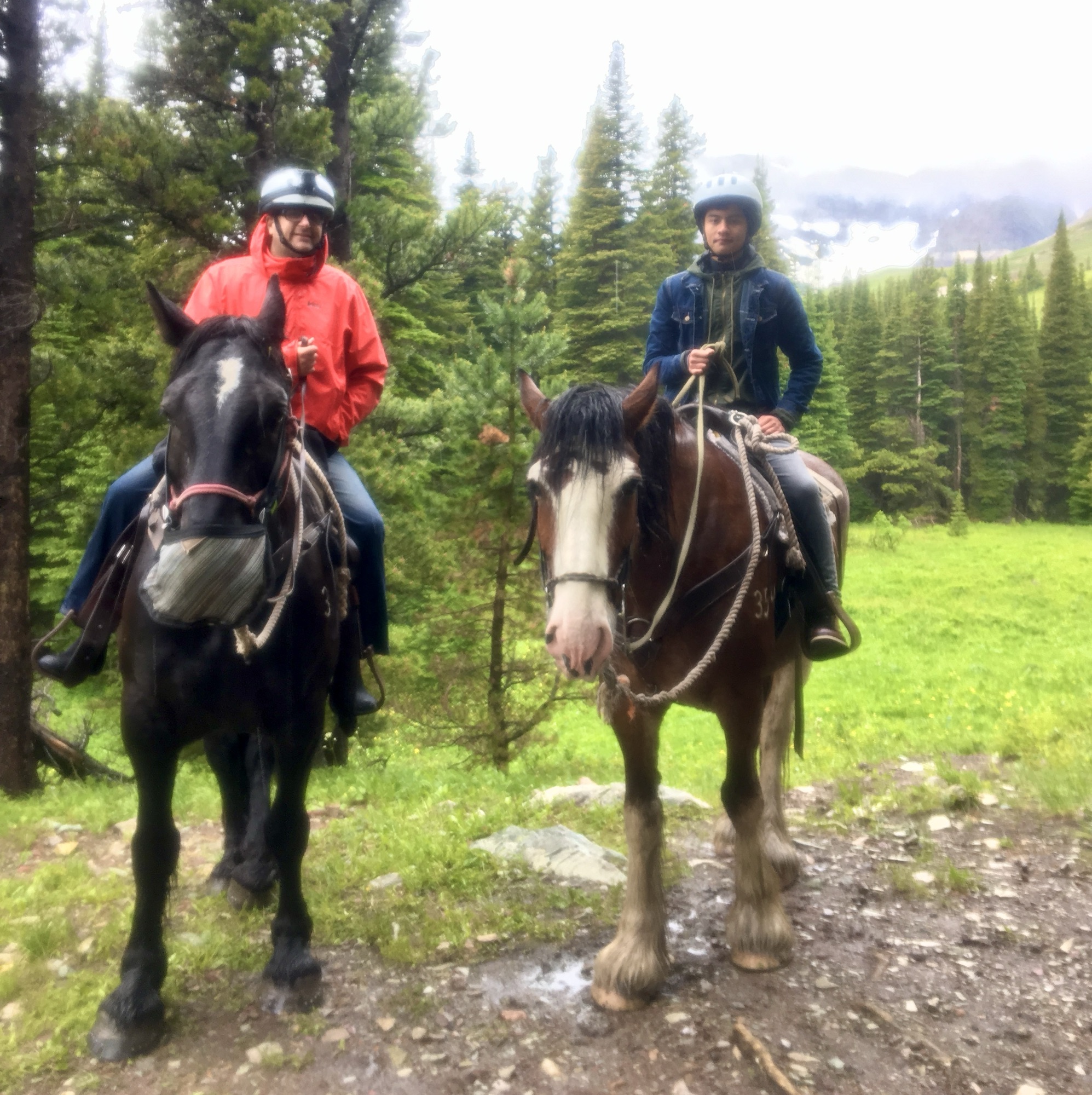
The Crown of the Continent Biosphere in Montana includes Glacier National Park (see photo of author & son above). (Perhaps to de-emphasize the shrinking glacier problem, the Biosphere dropped the name “Glacier” in 2017). The biosphere is home to rare charismatic species like Grizzly Bears, Lynx and Wolverines. Over 100 years of scientific data on wildfires, snowpack, species populations, and more have been collected and shared from this park and its sister park Waterton Glacier in Canada. Like Rocky Mountain, the biospheres here cover the Continental Divide, which defines the direction of rivers across the US to the Atlantic & Pacific, but from here rivers also flow north to the Arctic, making these biospheres of particularly important for studying migrating species.
Yellowstone-Grand Teton Biosphere in Wyoming obviously includes Yellowstone and Grand Teton National Parks. One of the most intact predator-prey-scavenger biospheres on earth, with large herds of Elk and Bison, Grizzly Bears, Cutthroat Trout and Bald Eagles, and unrestricted rivers, this is an exceptionally important global biosphere.
Unfortunately, in 2017 the Trump Administration canceled 5 other biospheres in the Rocky Mountain Region. Apparently, the Israelis were upset that Palestinians were allowed to participate in UNESCO and used the place name “Palestine” in the name of a joint heritage site, so the US ended over forty years of scientific cooperation and research sharing with the world and removed many US biospheres from the global program.
The programs canceled in 2017 included three in Colorado: Central Plains Biosphere in the northeast, Fraser Biosphere in central, and Niwot Ridge Biosphere in the north. The Central Plains was particularly valuable in the study of short grass prairie ecosystems. Fraser was important in studying the interaction of forests, rivers and climate. Niwot Ridge contributed important research into alpine tundra ecosystems, glaciers, high altitude plants and climate change.
In Montana, the Coram Biosphere, west of Glacier NP ended in 2017. Coram was important in the study of forest regeneration and forest management. And in Utah, the Desert Biosphere, near Great Basin also ended in 2017. Desert, begun by President Hoover, contributed to our understanding of scrublands and pasturelands in hot and dry areas.
I’ve traveled in, through or next to all five canceled Rocky Mountain biospheres in my electric car, and they’re also uniquely beautiful places. But biospheres aren’t primarily meant for tourists, they’re meant for nature and for scientists. While some research continues at many of these sites, the international scientific and policy management cooperation was cut off. Especially facing a global climate crisis, we need to be actively cooperating to find global solutions to our ecological threats. Also, it seems bizarre to remove our own natural scientific research areas from participation in international science, due to deep-rooted political feuds in the Mideast. I hope these irrational mistaken biosphere withdrawals can be reversed by the current or future administrations, so that the global learning can continue.
I recently completed visits to all national park units in the Rocky Mountain region by electric vehicle, including 3 in North Dakota, 5 in South Dakota, 5 in Montana, 6 in Wyoming, 10 in Colorado and 12 in Utah. I count multi-state parks where I spend my time, and I pick a favorite from each state at the end.
North Dakota’s parks are each glorious. At Knife River early Native American life is revealed in middens, plants, a round earthlodge, and living exhibits. At Fort Union the early interactions between Native Americans and fur traders also come to life. And Teddy Roosevelt’s 3 park areas protect both wildlife and the formative experience of our greatest conservationist president. And the state has the only affiliate in the region, International Peace Garden.
South Dakota’s parks cluster in the southwest corner, but they are varied. Wind and Jewel Caves give entry to the subterranean world, Badlands to the wall across the wide foreboding landscape, Mt Rushmore to the Black Hill cliffs, and Minuteman to the Cold War apocalyptic thinking.
Montana has two powerful parks describing our tragic history of brutal war against Native Americans: Big Hole and Little Bighorn. Grant-Kohrs preserves a piece of the old cowboy west, and Bighorn Canyon has striking views and wild horses. Glacier is stunning, rugged and a great place for horse riding, backcountry camping, kayaking and hiking.
Wyoming has parks in each corner, but the best are in the northwest. Fossil Butte does an admirable job of illustrating the full scale of evolution on earth, Devils Tower evokes some otherworldly monolith, and Fort Laramie recalls the days of wagon trains and unjust war on Native Americans. But Grand Teton, the Rockefeller Parkway and Yellowstone, in particular, are spectacular.
Half of Colorado’s parks preserve some of its impressive scenery, and half preserve the past. Black Canyon, Great Sand Dunes and Rocky Mountain National Parks are self-explanatory and awesome. Curecanti and Colorado also have dramatic canyon views. Bent’s Old Fort is a trading post out of a western movie, and Florissant protects fossilized trees, plants and animals from eons ago. Mesa Verde National Park (one of four in the state) and Yucca House preserve early native dwellings and artifacts, and Sand Creek preserves a shameful massacre of Native Americans by US troops and volunteers.
My favorite parks in each state are wildlife refuge Teddy Roosevelt, starkly scenic Badlands, dramatic drive & trails Glacier, geyser popping Yellowstone, native dwelling etched Mesa Verde (see Cliff Palace photo above) and stunning hikes Zion. While other regions may have more total park units, Rocky Mountain has many of the most spectacular parks in the system.
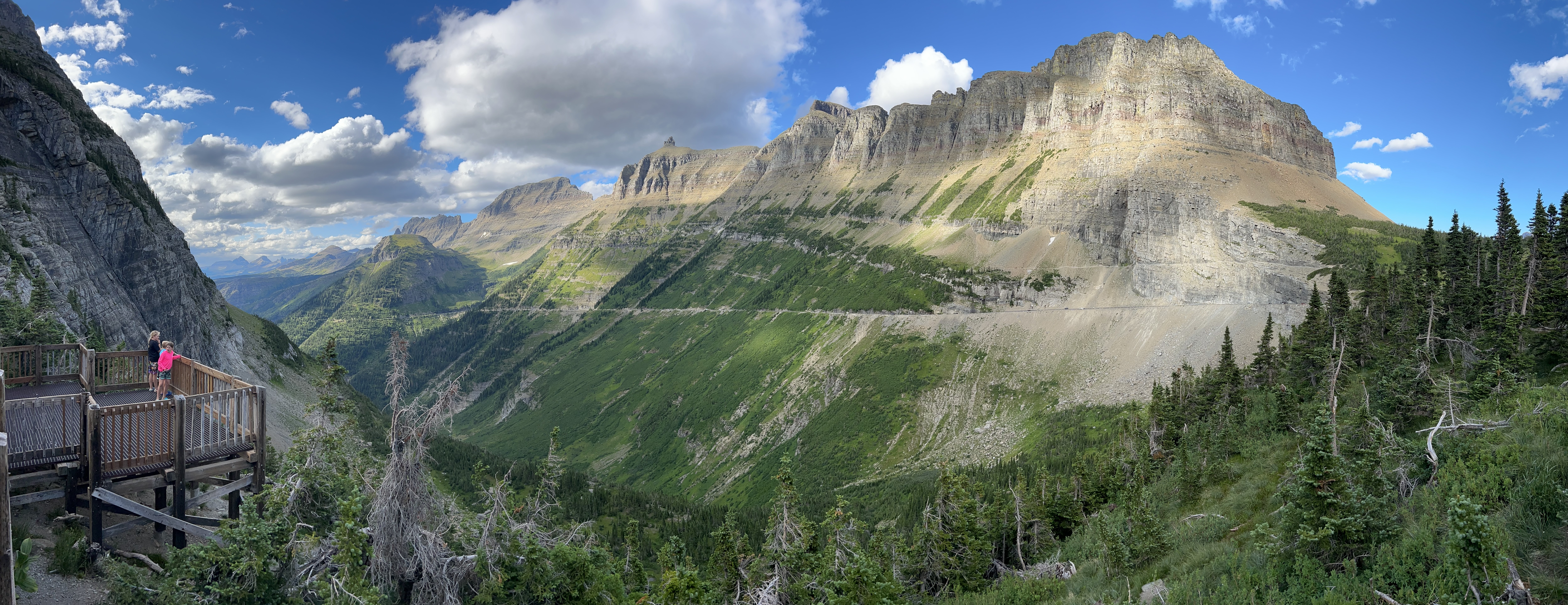
The horizontal line across the Garden Wall on the other side of the valley is the Going-to-the Sun Road, which I finally drove—3rd time’s the charm. This year the dramatically scenic road opened on 13 June with little ice & snow visible in July. Just over the wall in Many Glacier, old photos show the many large glaciers are now very small, rapidly melting glaciers. My son and I rode horseback up in 2018, and the area should be renamed Many Lakes. Combined with its neighbor across the border, Waterton Glacier International Peace Park is still a UNESCO World Heritage Site, despite the obvious melting problem.
Melting ice and glaciers are one of the tipping points that will flip our Climate Crisis into a catastrophe. Consider the Arctic ice cap. Every year recently, the multi-year ice has been shrinking at an accelerating rate. Eventually, the ice will disappear in summer. Then the same energy that currently raises ocean surface temperatures by 1° will raise it by a multiple of that amount. There are two reasons for that. First, the white ice will no longer reflect the sun. Second, the existing ice will no longer be there to act as a temperature break. When you boil water with ice, it takes something like three times the energy as water without ice, because most of the energy goes into melting the ice first. So, not only is it bad that glacial ice is melting due to flooding and dry rivers in the fall, but once the ice is gone, the surface temperature rise will accelerate much more rapidly. Please, reduce your carbon footprint.
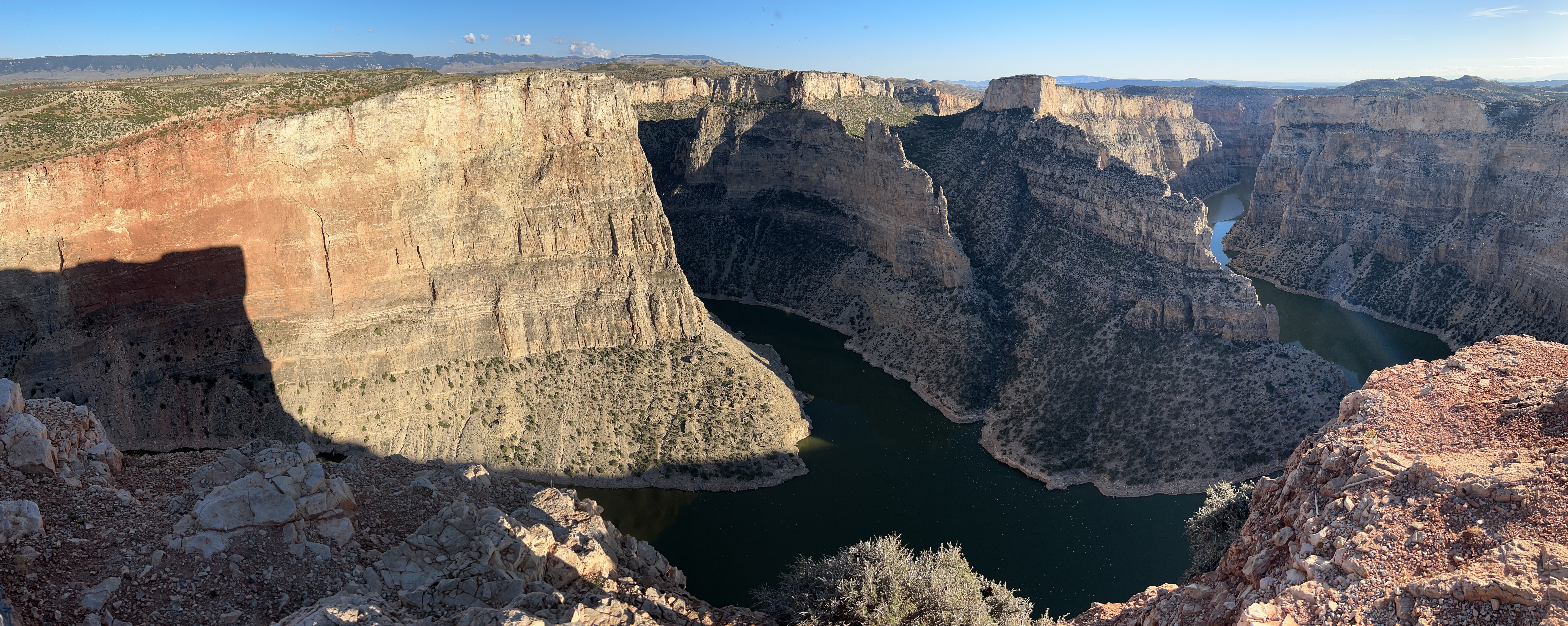
The choice is either to start at the dam in Montana and go up the canyon by boat or to start in Wyoming and take in the views from the rim. It was a long way for me to dodge power boats without easy stopping points, and the water level is obviously artificial. So, I chose to admire the views from above, passing through the wild horse refuge area and finding Devils Canyon Overlook above. I didn’t see any horses, but a turkey vulture flew right by my head so close the loud whoosh and sudden breeze startled me. Maybe he was hoping I’d fall over the extremely steep edge.
The topography of the area is disconcerting, as you see mountains & high ground and assume the Bighorn River would run south, but for all the uplift, the river has just carved its way deeper through the partially flooded canyon. Far upriver further south, it does the same thing, but there it’s called Wind River and cuts through Wind River Canyon. Ultimately, the basins and lesser mountain ranges in Wyoming matter far less to the river direction than the Rocky Mountains, which on this side of the Continental Divide cause the rivers like the Shoshone and Bighorn to flow east and north, joining here before flowing into the Yellowstone River on its way to the Missouri River. In the photo above, that flow is from the upper right to lower left, below the large shadow on the cliff across the canyon. The stretch of water in the upper middle, below the fans is Devil’s Canyon, partly filled by the dam’s backwash and sometimes fed by Porcupine Creek. The foreboding names match the inhospitable scenery. This is a rough and remote area, but it’s also starkly beautiful and dramatic.
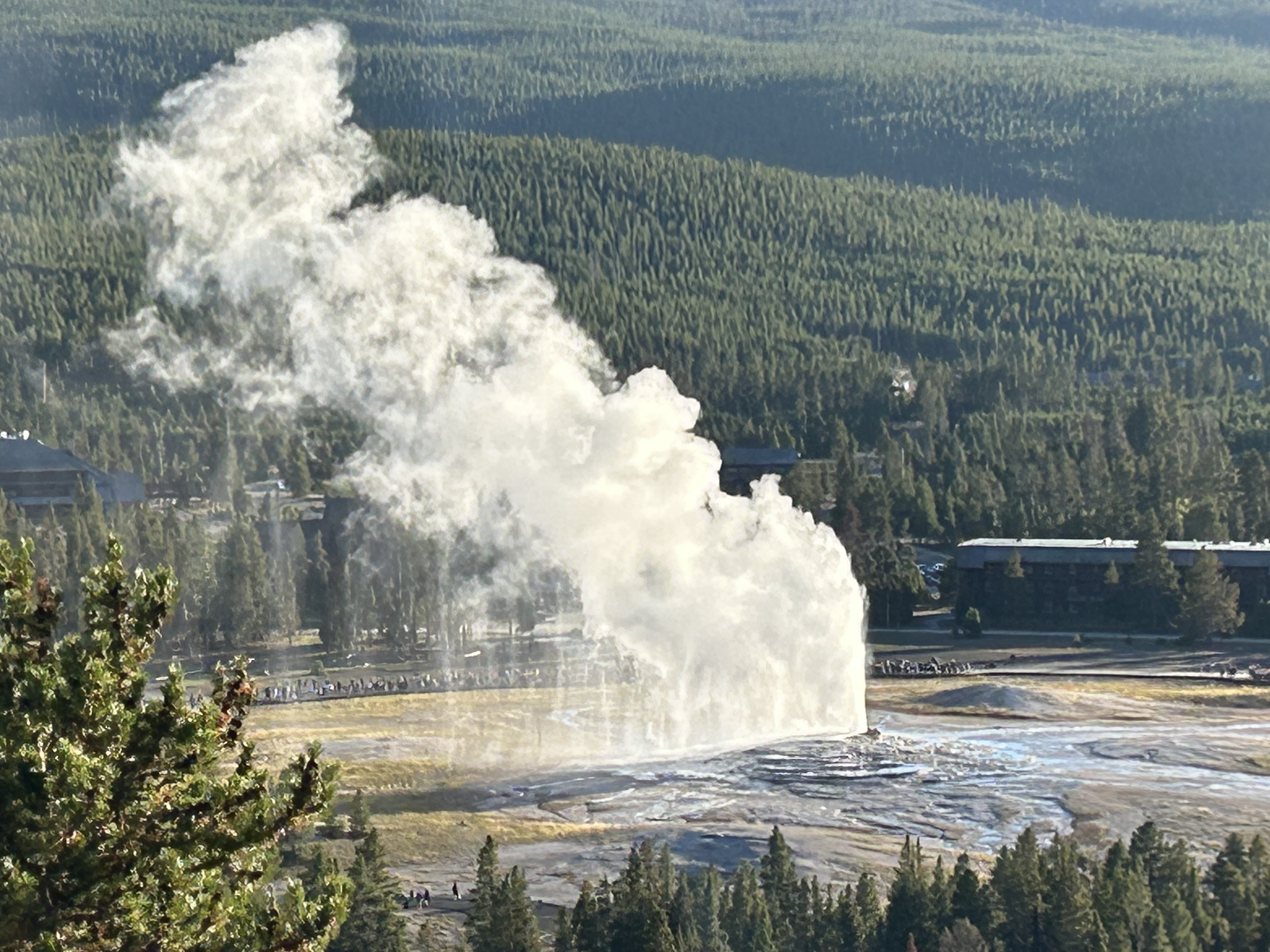
Clockwise from top: Morning Glory pool, Daisy, Grand and Old Faithful geysers.
Most of the world’s geysers are here, near the country’s largest high elevation lake and the headwaters of the longest free-flowing river in the lower 48, in a park bigger than some states. For wildlife alone, this is my favorite national park, plus the geysers are my favorite geologic feature in a park. There’s a lot to see and do, but I’m not going to write more about it. Come see for yourself.
The parkway runs along the Snake River (above) connecting Grand Teton and Yellowstone, but the park includes a 24,000 acre land & river corridor for wildlife, without which we couldn’t enjoy seeing as many migratory animals in the two famous parks. The Rockefellers were instrumental in a number of national parks, including Acadia, Smoky and Marsh-Billings. Despite opposition from local ranchers, they purchased huge tracts of ranch lands and donated them to us. Laurance Rockefeller later donated his family’s 1,000 acre ranch to become part of Grand Teton, and his Preserve Center there near Phelps Lake is the best place to get in tune with their legacy. Considering the damage being done every day by burning the oil that created their fortune, it’s really the least they could have done.
”How we treat our land, how we build upon it, how we act toward our air and water, will in the long run tell what kind of people we really are.”
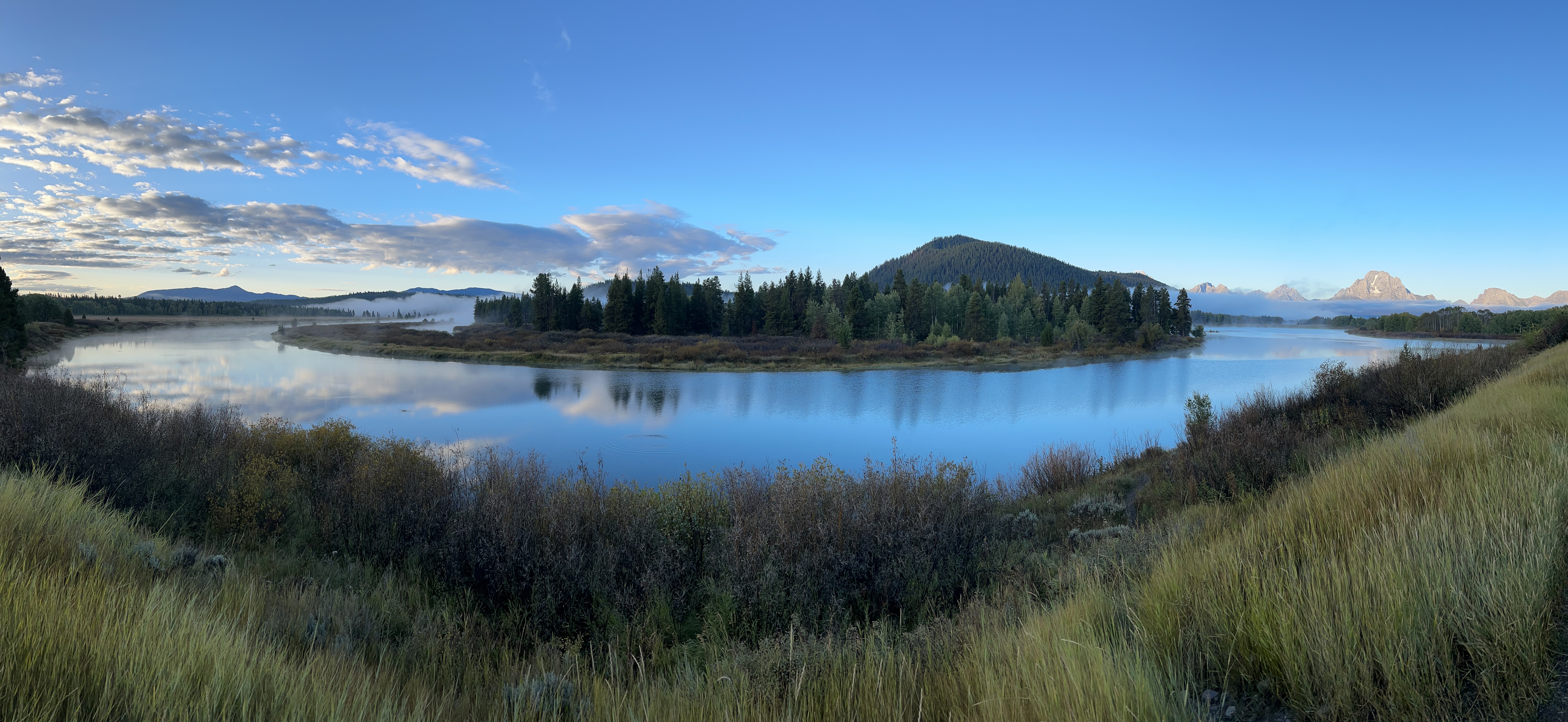
Oxbow Bend (above) is popular at sunrise as wildlife gathers in the coils of the Snake River and the light hits the Teton Range high on the right. Owls, a bald eagle, beaver and bugling elk all appeared out of the mist. Elsewhere in the park, pelicans, geese, ducks, osprey and many different small birds, then foxes and a large herd of bison wandered into view. Black bears foraging for hawthorn berries forced a trail detour, but I only saw scat.
Pronghorn migrate from here in Wyoming as far as New Mexico, and the headwaters from the nearby Continental Divide eventually reach the Pacific. This is an important park, ecologically, more than just a great photo stop. Still, the many lakes provide lots of flat hikes with steep mountain backgrounds, and lots of mountain hikes with water vistas. Or you could take the Jenny Lake boat across for even more views. Kayaking is a hassle with the permit & inspection process, and the views are wonderful on scenic drives and trails. Jackson Hole is crowded and expensive now, so look elsewhere for a place to stay.
The 700’ granite spire above that rises out of the Gunnison River at the confluence of Blue & Curecanti Creeks is the Curecanti Needle, formed by an earthquake fault running straight across the canyon. The half dozen turkey vultures in the foreground below it are drying out after a brief rain shower.
There are much more difficult ways to get here than driving to Pioneer Point Overlook, including climbing down hundreds of steps with gear and paddling down the river (and then back up), but I took the easy way. If someone is nice enough to build an overlook, then it’s best not to waste it.
Upriver from the Black Canyon, there are several dams and large basins with powerboats, and a very small, but pretty hike through the Cottonwoods along the riverside Neversink trail before the town of Gunnison. I skipped the artificial reservoirs and didn’t see any wildlife on the hike, but driving through colorful Colorado in early fall is always a pleasure.








 Zero Carbon Travel