Celebrating completing the Peace Garden State!
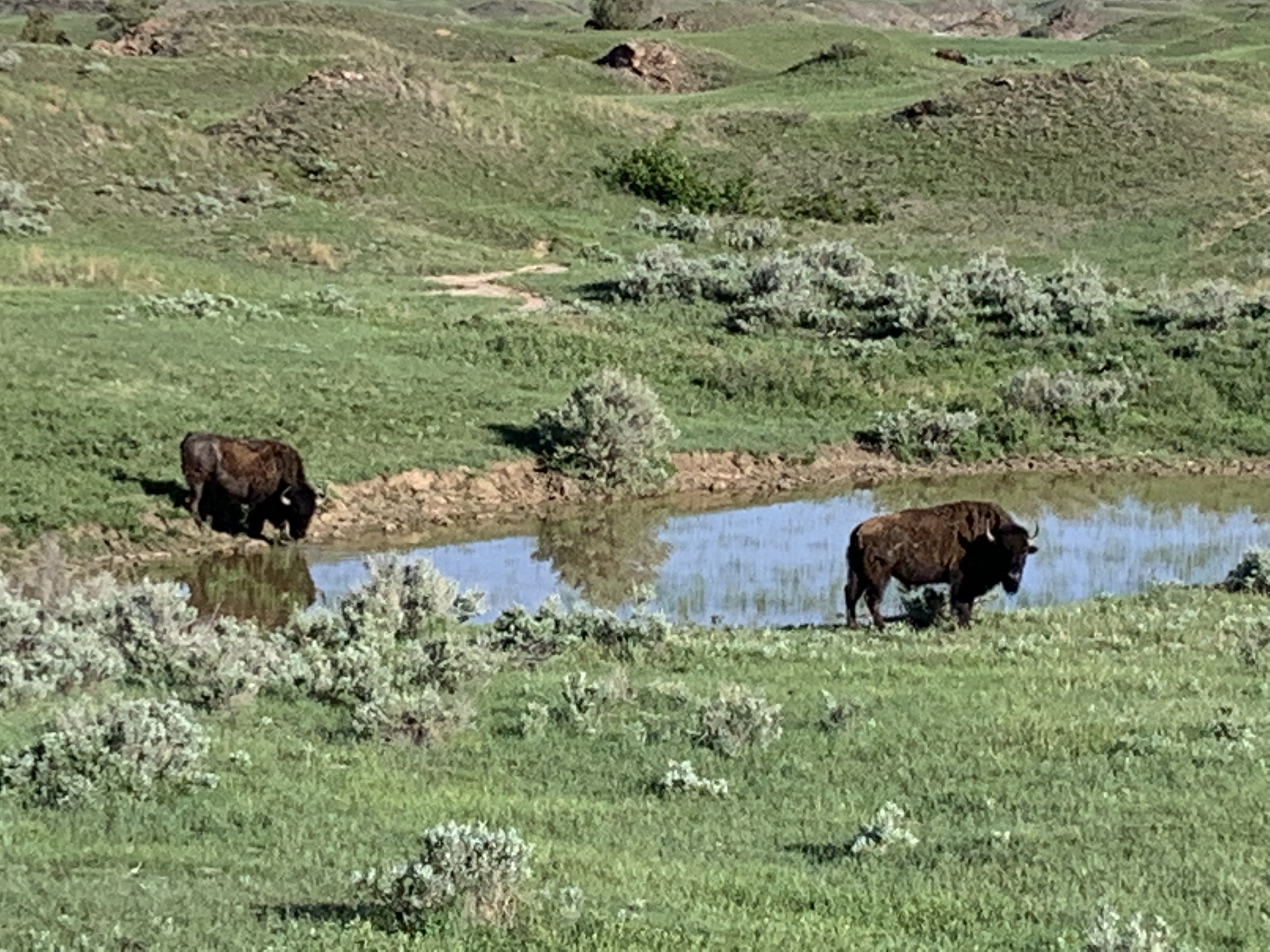




All three units of Theodore Roosevelt National Park, the Fort Union Trading Post and Knife River Indian Villages, plus the affiliated International Peace Garden are above.
Completed
Celebrating completing the Peace Garden State!
All three units of Theodore Roosevelt National Park, the Fort Union Trading Post and Knife River Indian Villages, plus the affiliated International Peace Garden are above.
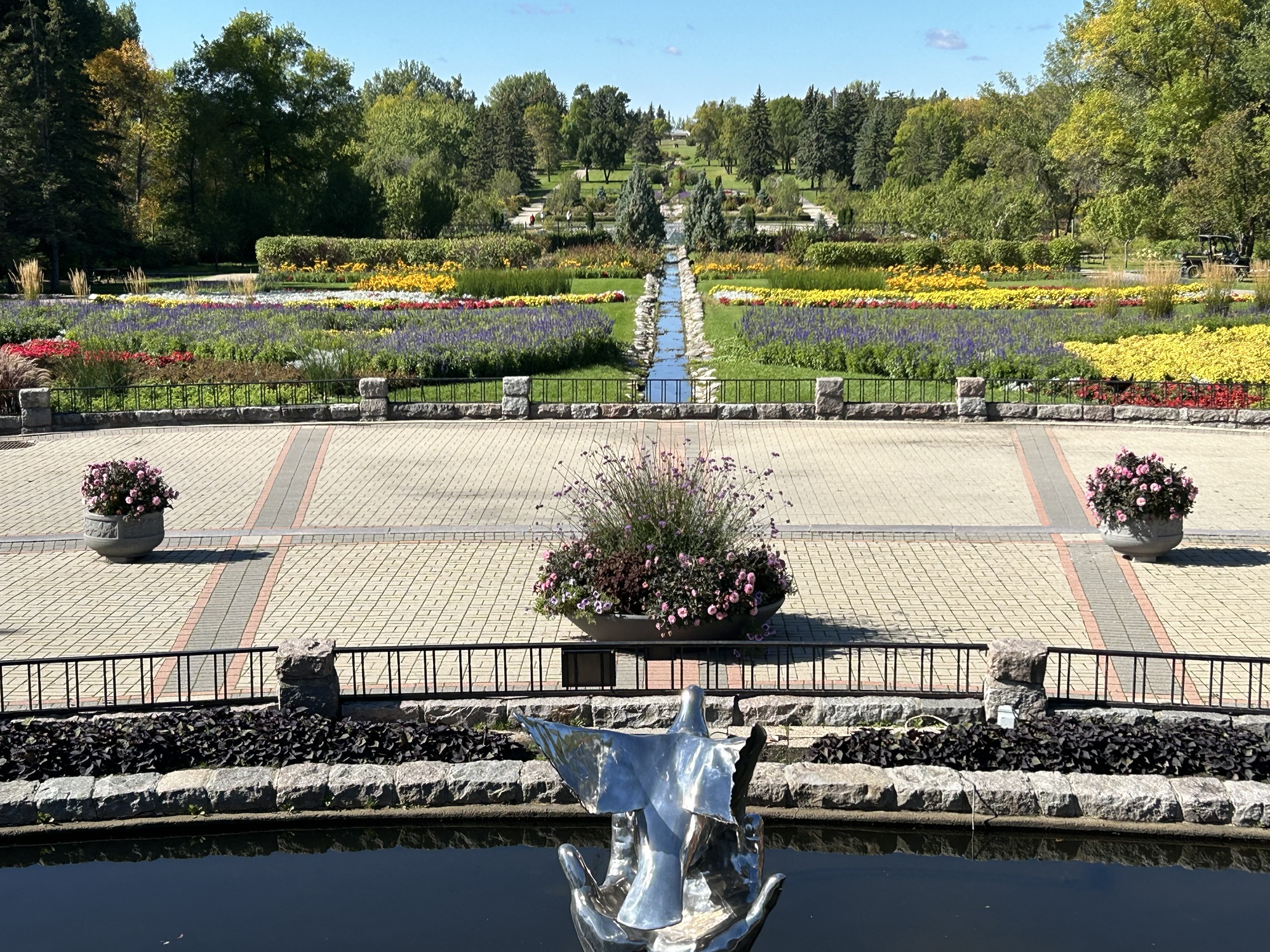
What a beautiful place! A Canadian horticulturalist, Dr Henry Moore, deserves credit for the idea creating a peace garden—built during the Great Depression—on the Manitoba / North Dakota border. America has far more war memorials than parks devoted to peace. Chamizal on the Mexican border is dedicated to diplomacy, and Perry’s is both a war and peace memorial. As we begin a new year, we should not take peace and diplomacy for granted, given all we sacrificed in wars.
This affiliated park, a favorite of mine, is a neutral zone with the entrance between each country’s border security. You will need proper id either to continue on or to return to your home country after your visit here. The park is not far from the small town of Rugby North Dakota, which is the geographic center of North America. It’s a bit of a trek from the nearest US supercharger in Grand Forks, but there are a couple car dealers on the way that offer CCS charging if you have the adapter. Also, the park itself has a free electric 1772 car charger at the drop off entrance to the Conservatory, which has a massive collection of succulents donated by local enthusiasts.
Technically I missed the peak season, but as you can see above, there were plenty of flowers still in bloom at the end of September. There’s a long winding drive through the woods with lakeside picnic grounds below, a campground and a few cabins and more around the central border gardens. And if you walk the length of the formal garden above, the building at the end is the Peace Chapel, which is the perfect place to find inspiration and hope for peace in the quotes from famous leaders and philosophers carved inside its walls.

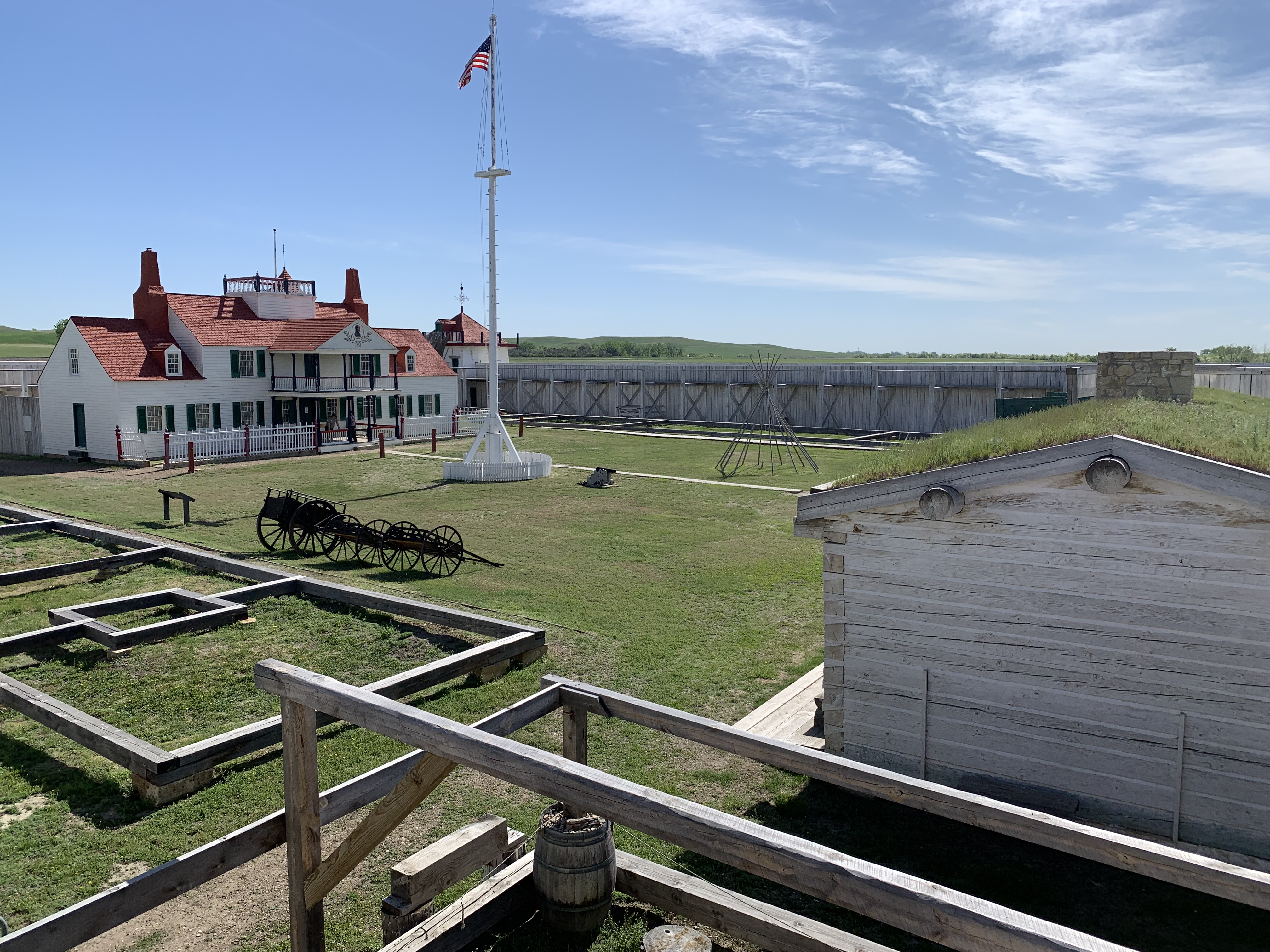
Not to be confused by the other Fort Union, this was strictly a trading post built for the fur trade at the invitation of the Assiniboine. The post was open for 40 years, peacefully and profitably trading with the Native Americans. Large numbers of natives brought stacks of furs, which were sorted and pressed outside the fort to determine payment, and then at a window they bought various goods, especially cloth. The large fur press outside the fort is basically a long pole on a fulcrum to measure fur stack thickness. Fort Vancouver in Oregon has one too, reconstructed from photos, but the rangers didn’t know what it was. (I showed them a picture and told them to call my favorite rangers here.)
Audubon came here to study mammals after finishing his bird book. Catlin came here to paint portraits of natives and portray their lives without the hateful bias that was common at the time, and he first suggested a series of national parks to protect the beautiful, historic and vanishing way of life in the West. The rangers here were among the best I’ve heard at bringing the old fort to life with engaging stories.
There’s also a small plaque, near where Lewis & Clark must have stopped, to a national parks founder named Mather, praising him for good works that “will never come to an end”. But if we lose the climate fight, many of our national parks will fail in their mission to protect nature and fail to pass that natural world on the future generations.
Certainly the highlight of my trip, the three units are connected by the Little Missouri River, which is the south unit oxbow on the left. The south unit also has bison, wild horses, a painted canyon, petrified logs, a prairie dog town, badlands, a replica of Teddy’s cabin, a ranch, camping, and lots more. The north unit has even better oxbow views on one of the best hikes I’ve ever done: Caprock Coulee 4 miles. Even the tiny Elkhorn Ranch unit, hemmed in by cattle fences and pumpjacks, had a pair of whooping cranes to amaze me. I’m honestly struggling for superlatives. Teddy used the phrase “grim beauty” which gets at the serious nature of the park. This is one of my favorite national parks. Click here for more Teddy Roosevelt sites.
I would like to spend a week up here and ride a horse, but I’m already in Montana. For EV travelers who want to see all 3 units, I recommend charging overnight in state campgrounds before & after. There’s one next to the south unit and another not too far from the north.
This is a great place to learn about earthlodges due to the continuous maintenance of traditional culture here. Videos tours are available online too. Clearly the lodges were multi-use, serving both daily needs and special ceremonies. Having seen various ruins of similar structures around the country, it is informative to view such a complete exhibit.
The other reason these particular villages are important is that Lewis & Clark landed here and added a few folks to their expedition, including a French trapper named Toussaint Charbonneau and his wife and their infant son. Since she acted as interpreter and guide, Sakakawea became the expedition’s most valuable player and is memorialized on a US $1 coin first minted in 2000. A hike down to the river is worth the short walk.
 Zero Carbon Travel