Alaska awaits, but in the meantime, I have visited all 4 National Parks and 16 park units in the Pacific Northwest region, plus 2 heritage areas, 1 affiliate, trails and biospheres. Part of the Manhattan Project NHP is in Washington too.
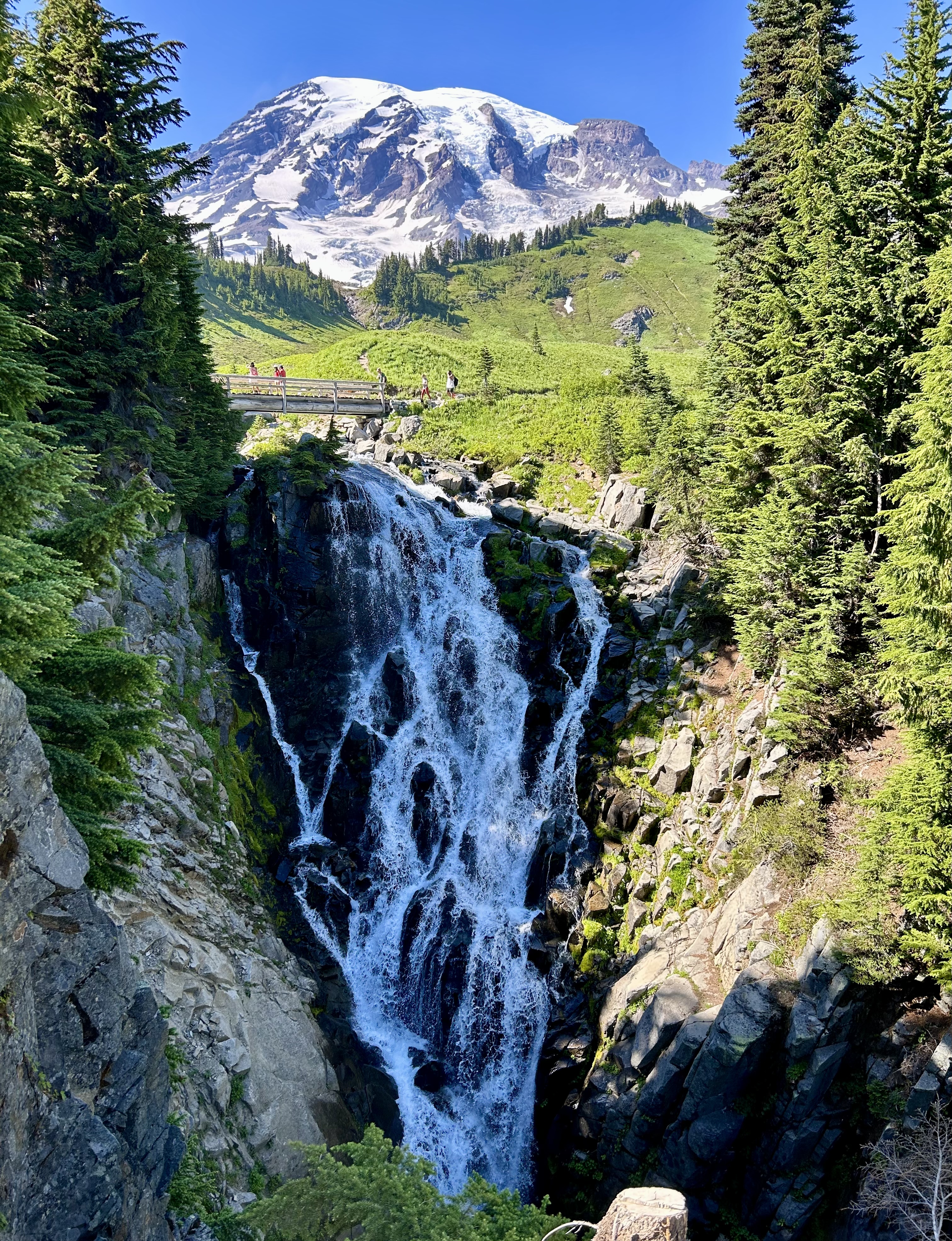
The four national parks all contain snow capped volcanoes. There are fossil, cave and geologic sites, 3 lake recreation areas, and many fascinating historic sites to enjoy. The region is beautiful, with rugged coastline, forests, mountains and wildlife.
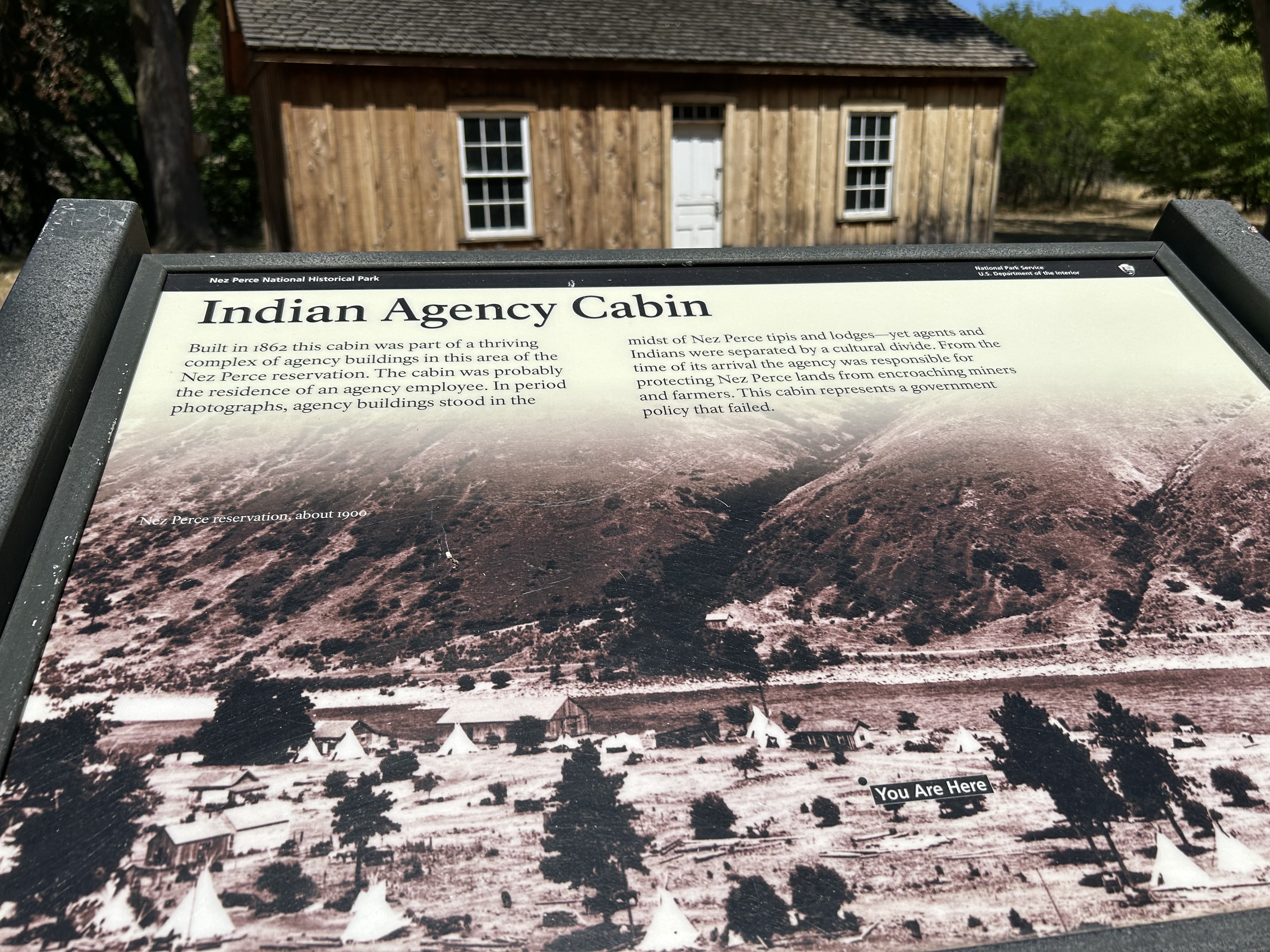
The visitor center in Idaho is on a hill above where the Lapwai Creek flows into the Clearwater River, which joins the Snake River a few miles downstream in Lewiston. The river banks were an excellent place for salmon, berries, edible flowers, and game, and the Nimiipuu used to arrive in the fall and stay through winter. By summer, they would be hunting up in the hills, forests & mountains. French trappers called the tribe Nez Perce or ‘Pierced Nose’, although that wasn’t a traditional tribal practice. When Lewis & Clark passed through, the Nimiipuu assisted the expedition and helped them make canoes. When the missionaries and other settlers arrived, they were forced to change. Many tried desperately to compromise and adapt. After the nearby Whitman mission ended in a massacre, racist demagoguery fueled far more excessive violence across the west, bringing the US military, war, exile and restricted reservation life, including here around the Spaulding mission, pictured circa 1900.
The affiliated Nez Perce National Historic Trail, which marks the flight of the tribe from the US Army, is now part of the broad official Nez Perce NHP, including Big Hole in Montana, a refuge near Lake Roosevelt, the White Bird & Clearwater Battlefields, through Lolo Pass, Yellowstone, Billings and up to Bear Paw Battlefield. Over the years, I’ve visited these places on roadtrips, read several of the books, from I Will Fight No More Forever to Chief Joseph & the Flight of the Nez Perce and pondered the mistakes and tragedy. There is simply no excuse for breaking treaties, stealing land, or killing defenseless people, including women, children, the elderly and infants. When leaders take advantage of popular anger to focus attacks against a community, the result is often far more evil than any original sins. I encourage you to learn more, since the problem of demagoguery is still with us.
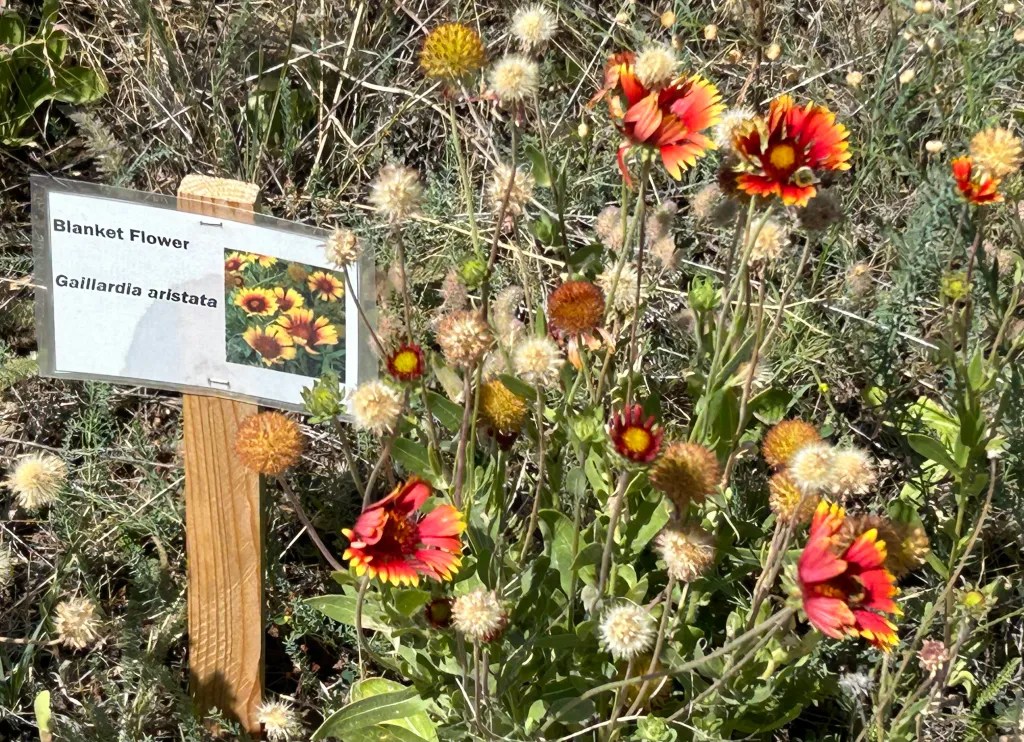
But the Nez Perce tribe is still here with us, like the flowers they used to cultivate here. They are re-learning the language that they used to be punished for speaking. They self-govern, petition the US government, sing songs, dance, teach their kids to gather plants, hunt, fish and carry on their cultural traditions and exercise their treaty rights. The lessons of their forefathers and their oral traditions continue to be remembered, spoken aloud and passed down to future generations. The park preserves petroglyphs, artifacts and sites of mythology. Their culture is vibrant and contributes a valuable perspective to all of us. They are not doomed to be permanent prisoners of tragedy, and the park film here is a refreshing reminder of the resilience and life of their culture and of the human spirit.
I think the best way to explore here is to camp. Many of the most interesting rock formations are steps from the primitive campsites and the best views are after dawn and around sunset. I spent a quiet night here imagining what the California Trail settlers thought as they camped nearby. The hard granite offers many handholds and steps for novice scramblers. Of course, the site is also popular among technical rock climbers who can prep on Practice Rock before working their way up to more challenges.
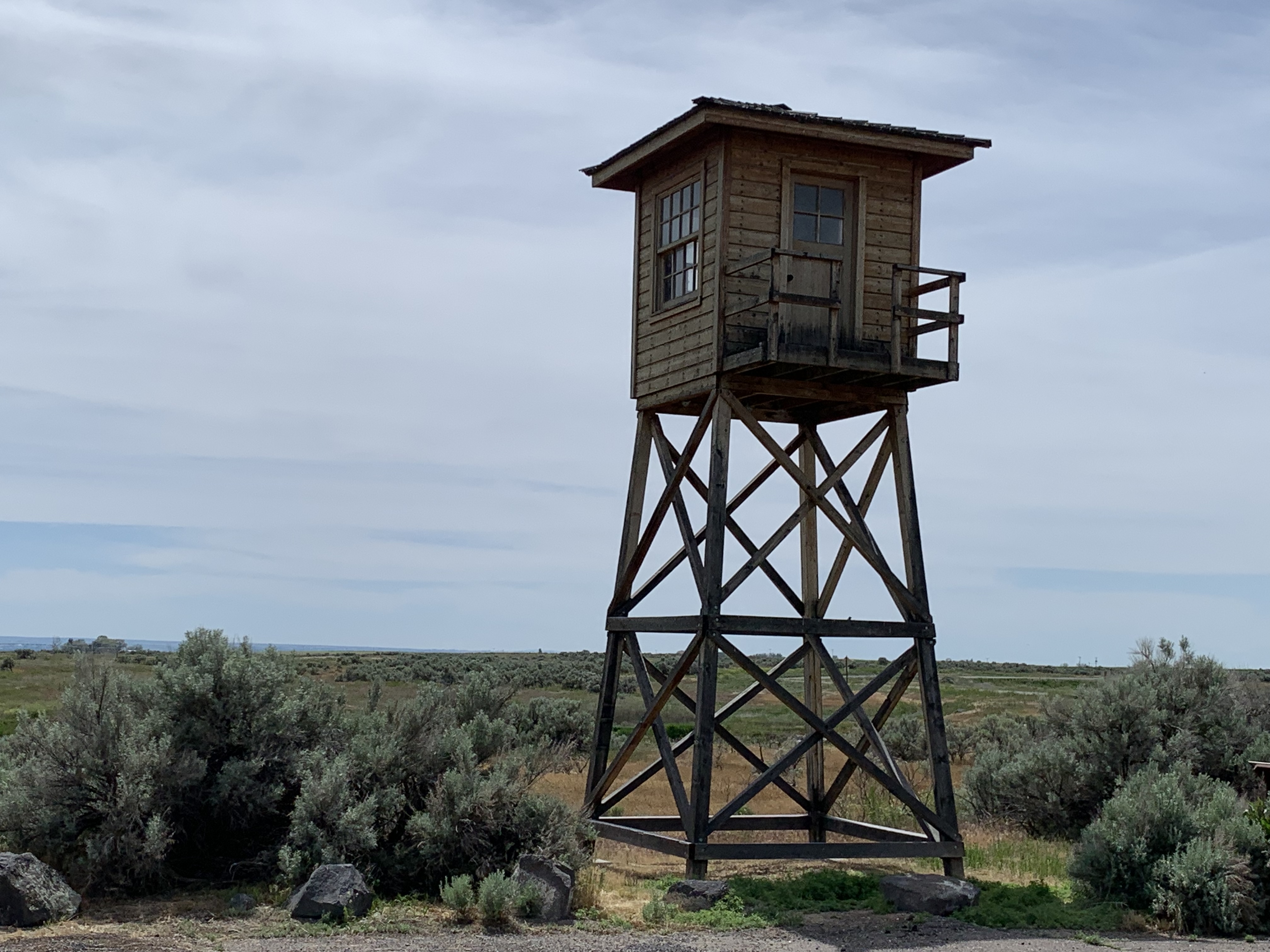
Named for the Dakota Sioux word for a spring, this concentration camp is along an irrigation canal, where the Japanese-American prisoners built a swimming hole and tried to fish. The sincere efforts to try to improve their confinement somehow make the circumstances even sadder. Thousands of Americans were cut off from their homes, neighbors and country, due to their national origin and race. Most German and Italian Americans were not incarcerated during WWII. Neither were most Japanese-Americans in Hawaii. Most of those kept here were from the Pacific Northwest and had lived in the US for a generation or more. Many also found their property had been stolen when they tried to go home. Under Carter and Reagan the survivors were paid $20,000 compensation for “race prejudice, war hysteria and a failure of political leadership”.
I just realized that my photo is almost the same as on the NPS app, but that’s because there’s not much else to see. The fossil, a common ancestor of the horse and zebra, is actually “a Frankenstein’s monster” of bones left over from a big Smithsonian dig. On the way in, there’s an overlook where you can see the bluff on the other side of the Snake River where a herd of these guys were found. That’s about it.
The river canyon is spectacular, and I even watched base jumpers while charging my car nearby. The visitor center is jointly run with the state, so don’t drive past it like I did.
This is a stunning volcanic landscape, with lava fields, rocky crags, deep vents and cinder cones. The site has a scenic loop drive, easy hikes and camping. The snow-peaked mountains, green valleys, red rocks and black soil are beautiful, despite my poor photography. I picked it as one of my first favorite volcanic sites.





 Zero Carbon Travel