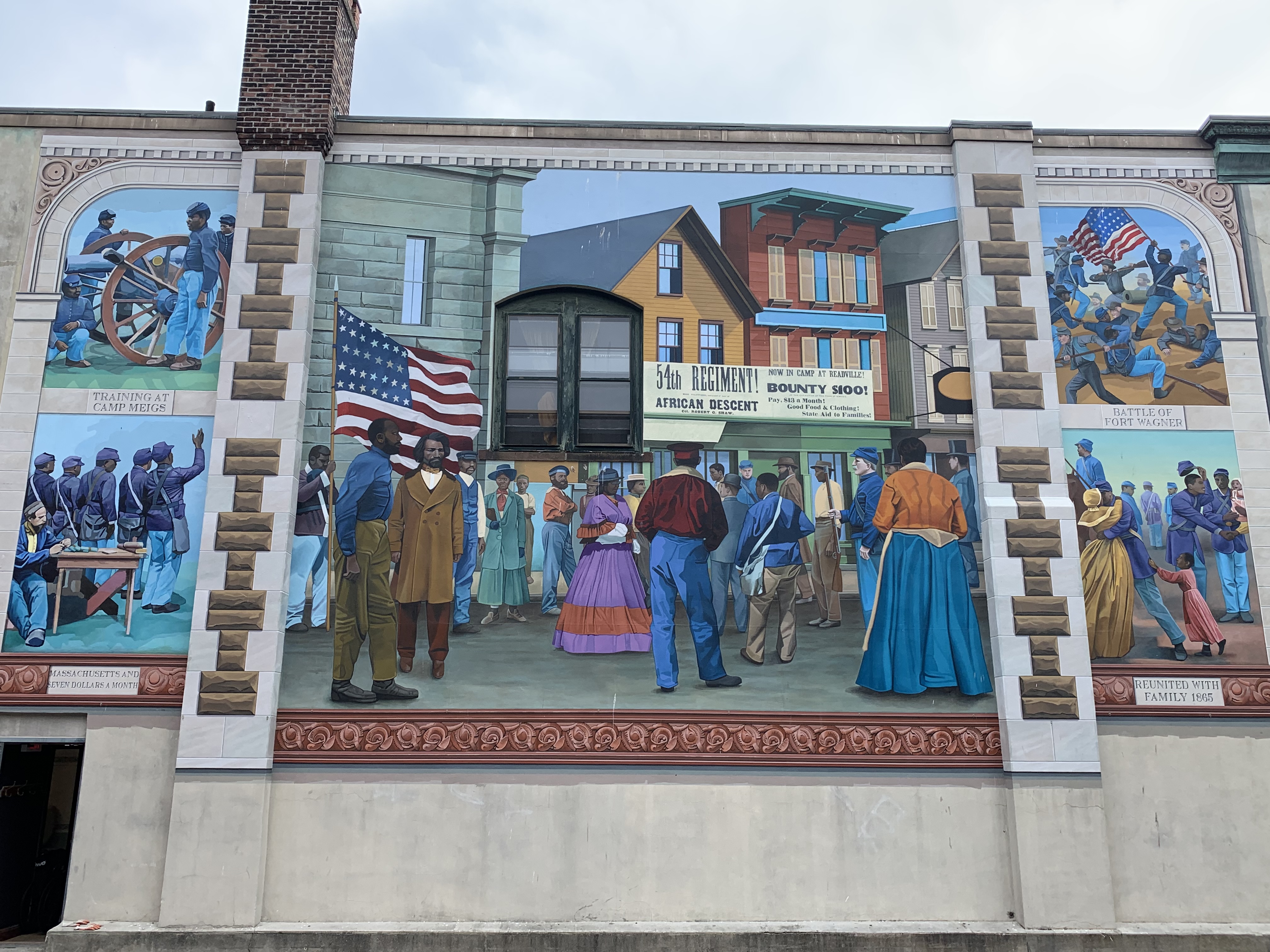
Why am I showing a mural of the Massachusetts 54th instead of the blue whale or the model ship Lagoda from the Whaling Museum? Well, this park covers a lot of history, and most of the recruits for the famed 54th (see the movie Glory) joined here. They were here in part because the whaling industry had long employed people of all kinds, including free African Americans and escaped slaves, and because this was an important stop on the Underground Railroad. Before the Civil War, New Bedford was an abolitionist city, run by Quakers with people of color making up 7.5% of the population . A young Frederick Johnson escaped slavery and stayed in Nathan Johnson’s house here in 1838. To avoid confusion, he accepted the new name “Frederick Douglass”.
And the whaling history may be even more interesting. Today New Bedford is the largest scallop port, but from 1825 to 1925, its major commodity was whale oil, which once powered lamps across the country and had a hundred other uses. Besides the whaling museum, there’s the Seaman’s Bethel with memorials to those lost at sea, historic homes, living history, the Ernestina-Morrisey schooner along the fascinating wharf, fast ferries to the islands and many other interesting things to see and do. And, there are plenty of seafood places, including the Black Whale, which has both an excellent sit-down restaurant and a more casual dockside stand.
 Zero Carbon Travel