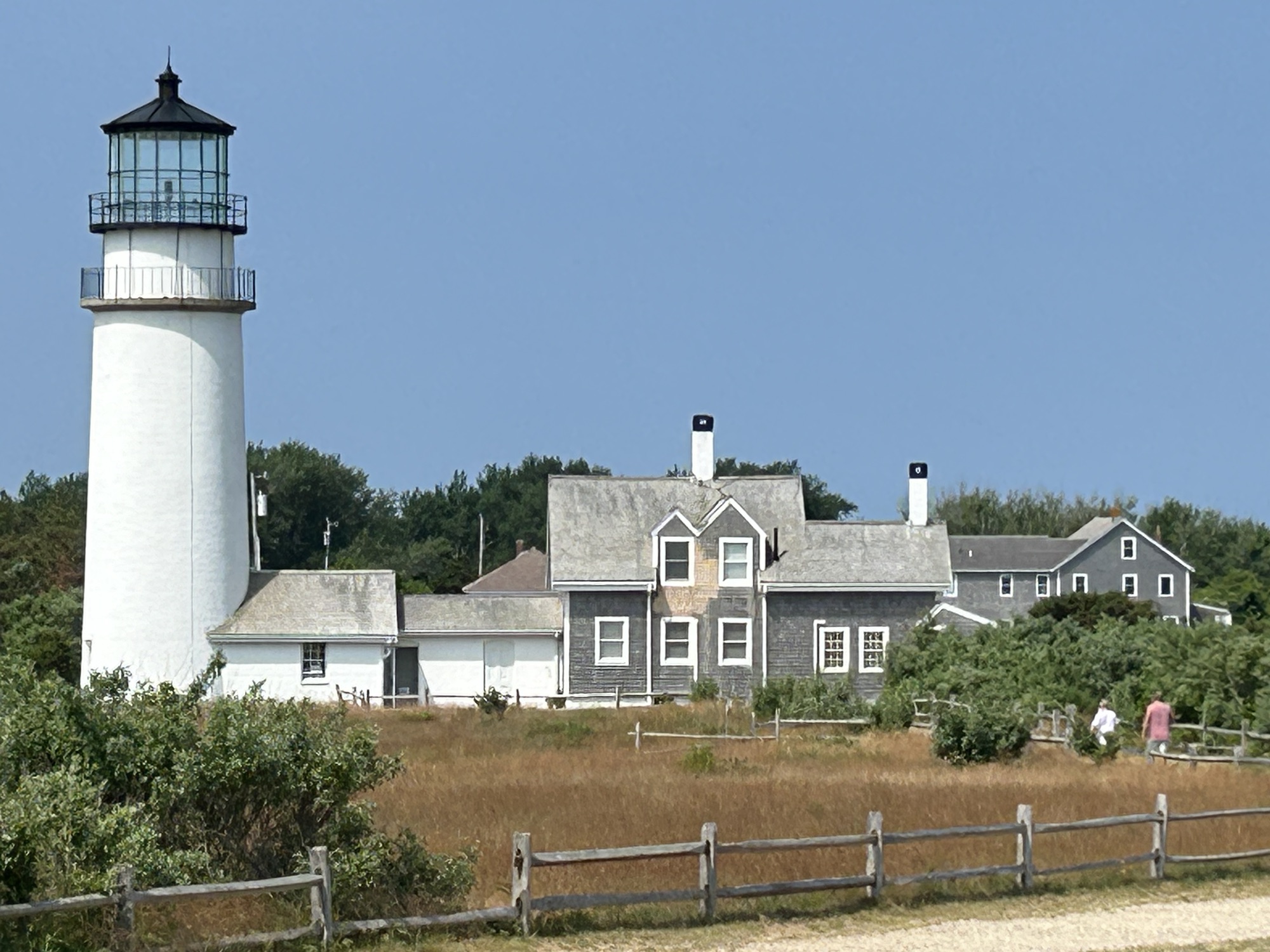
The park extends from the fist to the elbow, from around proud Provincetown to historic Chatham Harbor, and there’s much to see and do. For me, the quintessential experience is to find an isolated stretch of beach and walk until the birds far outnumber the people. I saw dozens of grey seals swimming right near the shore or lying on the rocks just off the beach. It’s difficult to get to any beach without passing a lighthouse, but if you want to climb one, your best shot is Highland Light (above), the first one commissioned on the Cape by one George Washington.
There are about a dozen named trails too, and I’d recommend hiking near Fort Hill, where you can see the Penniman House, get a great view of the marsh, and spot many different birds. With the aid of a birdsong identifier, I counted 18 different species in one day, including the rare Indigo Bunting and an uncommon Willow Flycatcher.
If you have a bike, consider taking the Cape Cod Rail Trail, which is a high-quality dedicated bike trail through about 1/3 of the cape, and there are also other decent bike lanes and bike trails. My first bike trip here a few decades ago, extended the length of Cape Cod, plus the islands of Martha’s Vineyard and Nantucket, returning by ferry from Provincetown to Boston. When I last visited the lighthouse above, it stood where I stood to take the photo above, because the highland cliffs are eroding at several feet per year, forcing them to move the lighthouse in the intervening decades.
Visiting in shoulder season, rather than July-August, helps avoid miserable traffic and exorbitant hotel rates. There are also lots of good seafood shacks, still one or two cheaper motels, some campgrounds, and lots of nature. Wellfleet is well known for oysters, and the fried clams here are the best I’ve had. I’m still on a quest to find the best lobster roll, and I suspect it will be lifelong. Though speaking of seafood, I would be careful swimming around here, as great white sharks prowl along the shores.
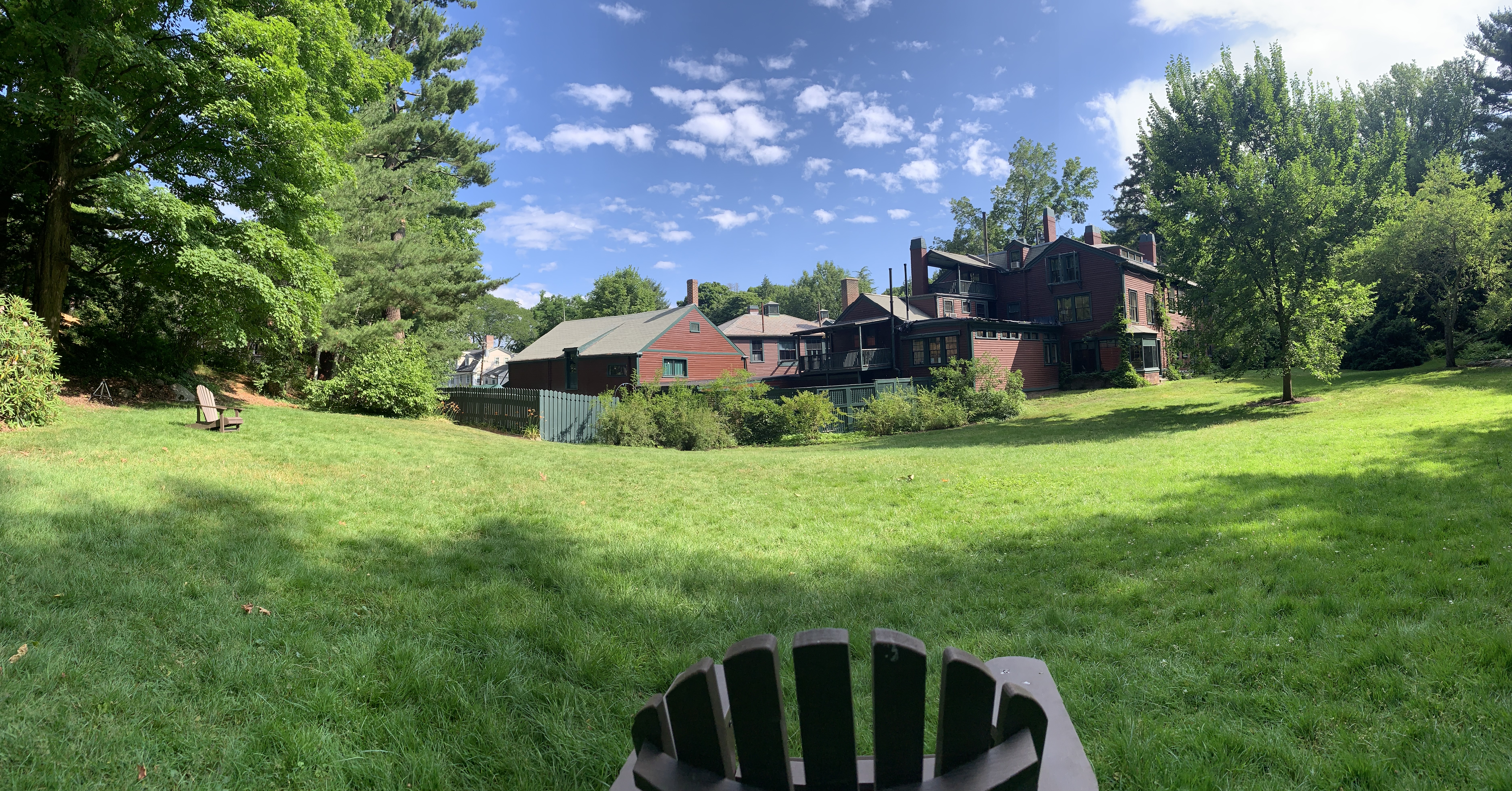
The Housatonic River runs down the western edge of Massachusetts through Connecticut, and the heritage area is shared by both states. Connecticut gets the best natural areas—the bogs, fern filled cobbles (hills) and pine forests—and Massachusetts gets the best historic places. My childhood schooling is filled with stories from the Berkshires, so I wanted to revisit The Mount (above) in Lenox Massachusetts most of all. And how much improved it is! But that’s getting far ahead of the story.
The Mohicans lived here first, and before the Revolution, English settlers swapped land with them. Some of the first to learn to speak the native language were missionaries, and Rev John Sergeant’s house in Stockbridge can be visited during the summer. After Independence, the Shakers settled in Pittsfield, and their living history museum is recommended too. The old mill of the company that makes the paper for US currency is in Dalton. Herman Melville and Nathaniel Hawthorne lived and wrote here around 1850, and Melville’s Pittsfield home can be visited too. W.E.B. Du Bois was born and raised in Great Barrington, and there’s a walking tour in addition to his homesite, not far from Simon’s Rock, which has an excellent program dedicated to Du Bois.
Edith Wharton built the Mount in 1902 and wrote many of her most famous books there. Her maiden name was Jones—as in the phrase “keeping up with the Joneses”—and her husband was related to the business school. She had already rebuilt Lands End on the Cliff Walk in Newport RI, making Interior Design a profession when she co-wrote a book about it. Gilded Age women were not supposed to be progressive writers, but Edith Wharton was, becoming the first woman to win a Pulitzer for Fiction in 1921 with The Age of Innocence.
When I visited the Mount as a child, the girls’ equestrian school there had just closed, and the once magnificent home was falling apart. I remember adults being much concerned with marble fireplaces collapsing, whether a Shakespeare company might help save it, or whether it would be demolished for condos. I liked the formal garden but little remained of the famous author who lived there. But thanks to some devoted preservationists, including a collection saved by a book dealer in London, the home and library have been gloriously restored. Highly recommended.
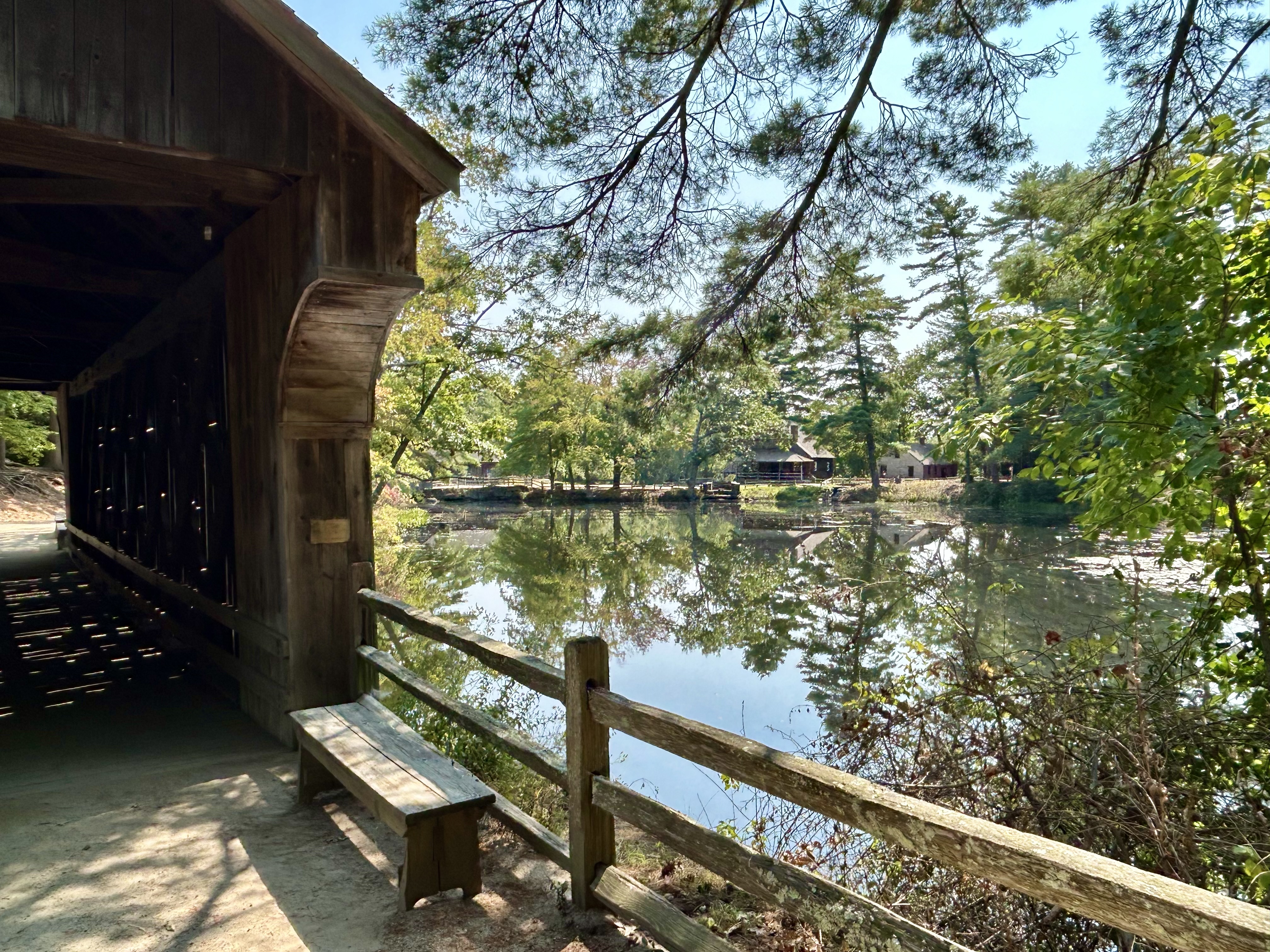
Old Sturbridge Village above in Massachusetts is emblematic of the Valley, which is delightfully wooded, rural and historic with mill villages, museums and natural preserves. In my youth I ran cross country through the area at small traditional New England schools, and I took many field trips to the living history museum pictured. There are old farmhouses, taverns, gardens, barns, gristmills, cider mills, meetinghouses, galleries, shops, pottery, bakeries, crafts and more, all through the valley, dozens of historic sites too. Patriots Clara Barton and Nathan Hale—‘I regret I have but one life to give to my country’—came from this valley. One uncommon benefit of preserving traditions here are the dark skies at night, perfect for star gazing. Much has been lost of the old ways in our sprawling busy modern developments, but not here.
The view above is from the Ramparts at Fort Warren on Georges Island, one of the 34 beautiful & fascinating islands. The fort didn’t come into play in the Civil War, except as a prison for Confederate soldiers. When I was here in my youth, I heard the spooky story of the Lady in Black, who haunts the cliffs and corridors. With the help of local sympathizers, she snuck into the fort, whistled a tune that her husband knew, found him but accidentally shot him during the escape. She was tried and executed for treason, in a dress she had sewn herself from black curtains in the commander’s office. Her shadowy ghost has been seen by many since the Civil War.
Alas for fans of the supernatural, the story is nonsense. Despite the obviously dramatic appeal, there are no contemporary records of the women herself, the escape attempt, the death of her husband, the arrest, the investigation, the trial or what would have been the first official hanging of a woman for treason during the Civil War. The story began in the 1950s or 60s to encourage folks to visit the old fort in summer. But apparently we prefer lies to the truth. And nothing cools you off on a hot day like sitting in a dark 65° man-made cave listening to a ghost story.
The islands have been also been used as summer fishing grounds by Native Americans, by pirates, smugglers, for quarantine, as schools or asylums, and as way-stations on the Underground Railroad. Outward Bound holds one of its programs on Thompson Island, which Nathaniel Hawthorne once described as “a little world by itself”. The School for Field Studies once hosted me (photo) and a few other whale watchers for a month on a boat, including a day writing up our research in the church on Peddocks Island. A few of the islands remained relatively unchanged since the glaciers receded leaving steeply eroded drumlin cliffs and long low sand-spits. But Spectacle Island had to be completely reclaimed from “trash island” to beautiful natural recreation area.
The Boston Harbor of Tea Party fame is in the inner harbor in the distance above. The Tea Party Ships & Museum on Griffin’s Wharf is not part of the park service, but it’s a fun hands-on spot to learn about ‘no taxation without representation’. The Harbor Island ferries mostly leave from Long Wharf near Faneuil Hall, which is on the Freedom Trail. The islands make a nice excursion if you’re visiting Boston during their open season from mid May to mid October. Since I had already traveled to the islands many times by sailboat, I simply rode the park-partner ferry out for a few hours to take some photos and reminisce. But as I write this today, I can’t help but think about tomorrow’s election. We owe it both to those who fought to create and protect our country and to our future, to hold tightly to our democracy, and vote.
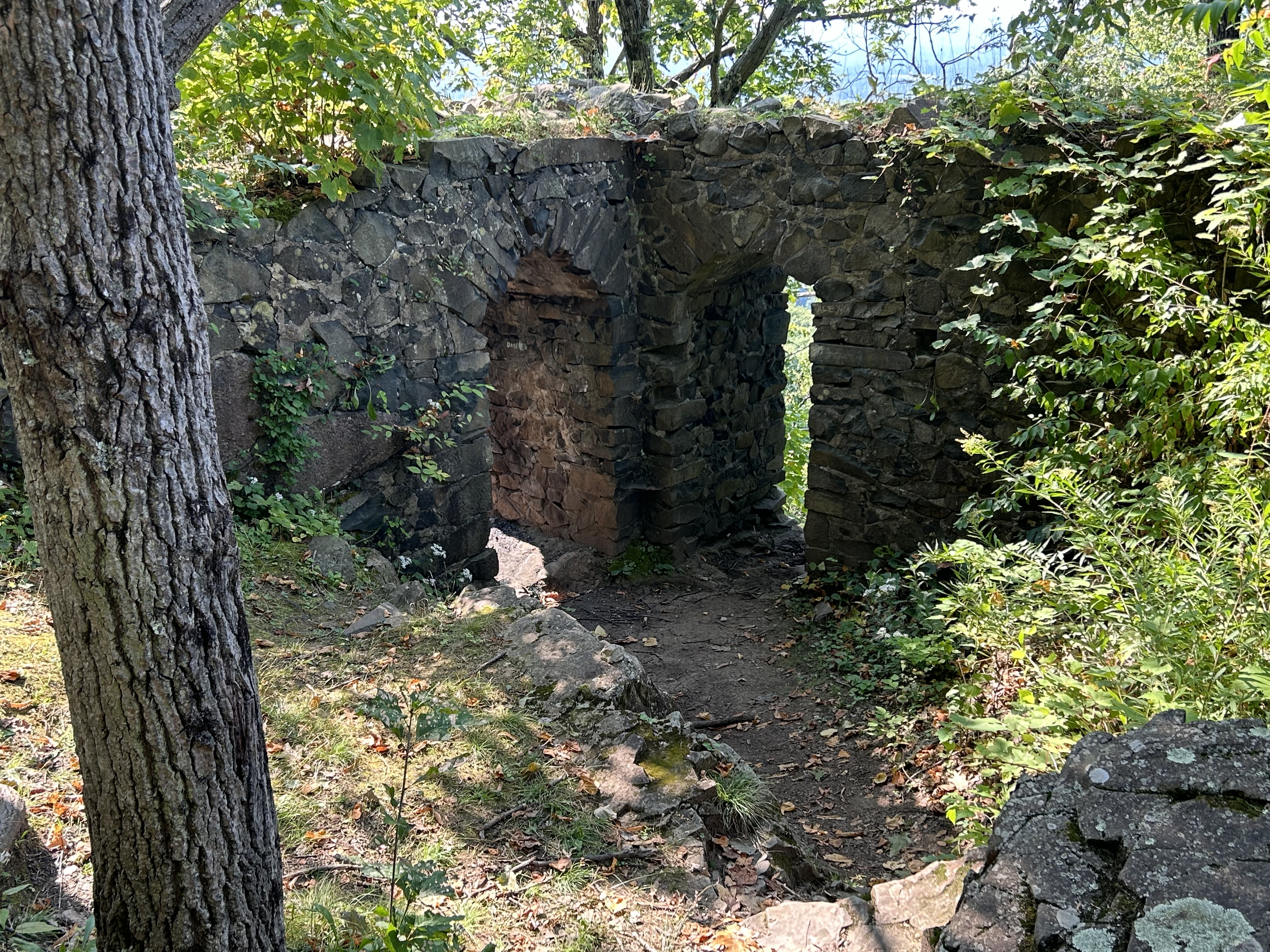
Mt Tom in Holyoke Massachusetts is a high point of the trail along the Connecticut River (although there are mountains over ten times higher in Colorado). The trail runs along a high ridge with several lookout towers to watch hawks or catch a glimpse of the river over the trees. The Eyrie House Ruins above are of a view hotel that burned down 123 years ago. As usual, I had forgotten about my childhood visit here, until I reached the ruins and climbed a rusty old tower to see the view below.
The trail is 235 miles from Long Island Sound to the New Hampshire border, through native lands, over rugged mountains, through annually brilliant foliage, past reservoirs, waterfalls and quaint New England villages. Last year, President Biden elevated the trail to a full national park unit, along with North Country and Ice Age National Scenic Trails. Hopefully, this step will encourage more people to hike and explore this lovely area of our country.
Butler Flats Light (above) has marked the entrance to New Bedford Harbor in Massachusetts since 1898. It was a clever bit of engineering by a marine architect using a caisson or box to pump out the water for construction, and every day it’s used for navigation by the famed scallop fleet, ferries, the occasional tall ship, and many other boats passing through the hurricane barrier. When the light was built, New Bedford still dominated the whaling industry, sending ships on long voyages to harpoon whales, melt their blubber into oil and return to fuel America.
Behind the light are two wind turbines, which provide electricity today without extinguishing any species. Despite the preposterous claims of fossil fuel industry funded politicians, there is no such thing as ‘windmill cancer’ and bird strikes are rare. But folks who live near the turbines complain that they cast shadows, are noisy or are ugly, so new wind turbines are now built far offshore, south of Martha’s Vineyard. The current project is known as Vineyard Wind, with 62 turbines each generating 13 megawatts when complete. Currently, there’s a pause after a blade broke, requiring inspections and clean up. Massachusetts recently committed to roughly quadrupling wind projects in the area.
The turbine assembly is based in New Bedford, with final installation of the towers at sea. Interestingly, to protect whales from construction noise, they create a circular curtain of bubbles rising up from around the foundation on the seabed. They got the idea from whales, who create a circular curtain of bubbles underneath schools of fish to herd them together into a bite sized meal. Thousands of locals work on the project, in a boon to the economy, and the first project will provide relatively cheap, green energy to 400,000 homes. I’ve observed the gimbaled tower segments and long blades being transported out to sea by huge construction ships on the same routes once used by whaling ships.
Progress is beautiful, especially when it helps save so many different species on earth from extinction. Back in the day, whalers would have argued that smelly whale oil was ‘indispensable’ and ‘higher quality’ than alternative fuels, and they resisted progress. Today, that seems absurd, although now the fossil fuel industry lies routinely to protect its profits. Ironically, during the Civil War, the US government helped launch the fossil fuel industry by buying their new fuel and taxing alternatives to save the Union. Now we need the government to help us transition quickly to green energy to save life on Earth and leave the smelly old fuels unburned.
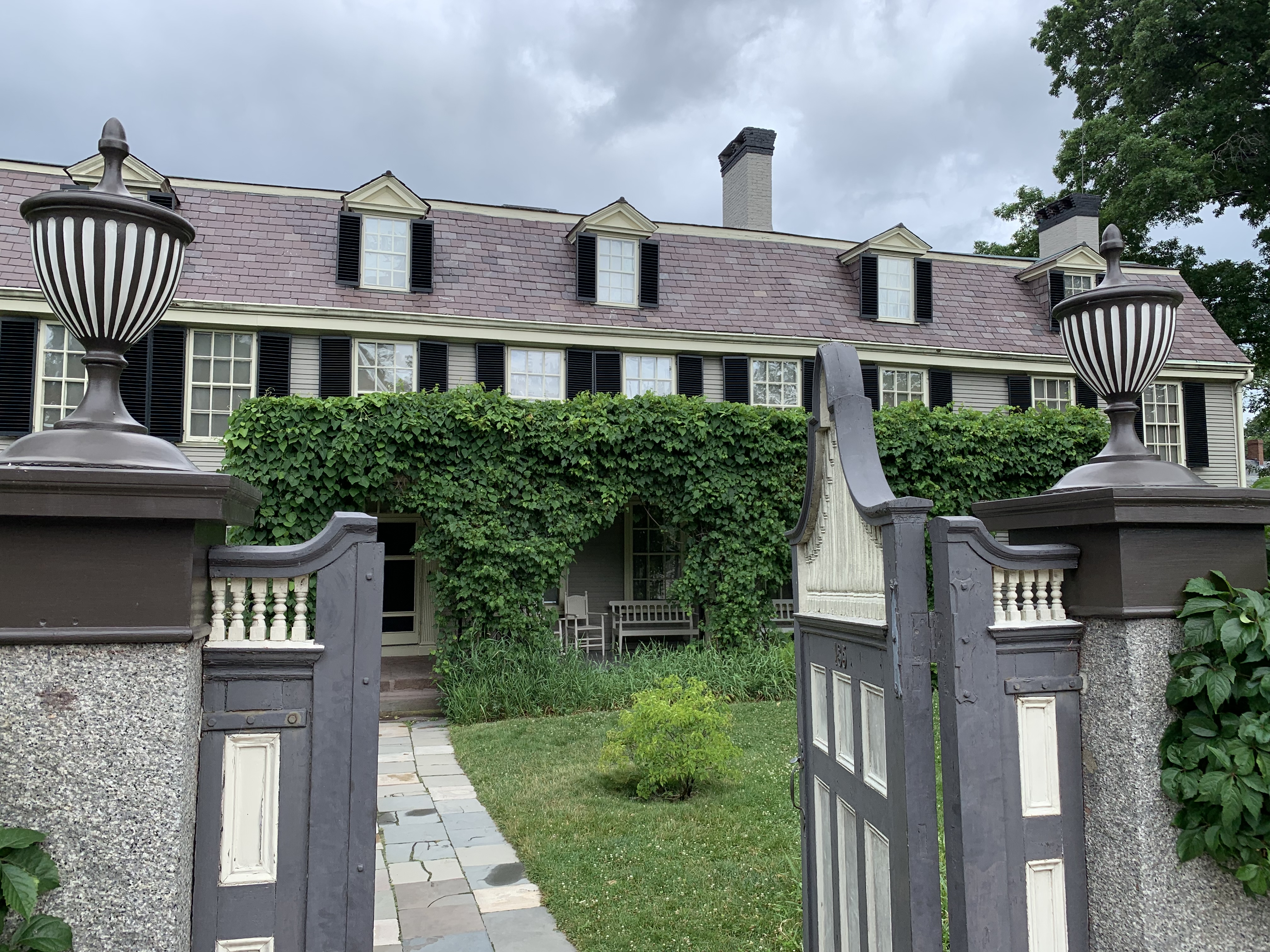
Recently I returned with my kids and my Mom (above right) to Duxbury in Massachusetts, where she grew up. Duxbury is a pretty seaside town with a large harbor on the north end of Plymouth Bay, reflecting the long history of our seafaring roots. When the Pilgrims arrived on the Mayflower in 1620, they first landed in Provincetown on the tip of Cape Cod, skirmished with the natives and then moved to Plymouth. The military commander, Miles Standish, settled in Duxbury, and his statue stands there atop a large viewing tower on Captain’s Hill. Longfellow wrote a romantic poem about a love triangle between Standish, the cooper John Alden and a recently orphaned teen named Priscilla Mullins. John and Priscilla Alden lived on the homestead above, which is still owned by their many descendants as a National Historic Landmark.
The Aldens were Pilgrims, not Puritans. The Pilgrims had separated from the Church of England, while the Puritans did not. Just before arriving in Plymouth to form a new colony, while awaiting royal permission, the Pilgrims and others aboard wrote an independent contract, the Mayflower Compact of 1620, which was the first self-governing document by British settlers in the now USA, although the British colony of Jamestowne was founded first. The Puritans arrived around 1630, settling in Boston and Salem. Contrary to the ‘mind your own business’ ethos of the Pilgrims, the Puritans were so strict that many left their colony for religious freedom. Such historic differences may seem inconsequential now, but freedom versus loyalty to England would become a big issue in Concord in 1775. And still today, there are conflicts between those who would impose their strict religious beliefs and those who prefer more freedom to make our own choices.
Driving back over the bridge from the beach, we got a glimpse of Miles Standish looking out over the harbor once famed for ship building and a large merchant fleet, before we went to dinner at a haunted restaurant, built before the Revolution. Moments like these improve our perspective, remembering the breathtaking leap of faith our ancestors took to settle here. While not part of the NPS, I recommend visiting the reconstructed living history museum in Plymouth, now called Plimoth Patuxet Museums, as well as other historic sites in the area like Alden House in Duxbury where we enjoyed an excellent tour.
[In July 2025 the president upgraded this park from a historic site to a historical park]. Per Tripadvisor, this site doesn’t even make the top 10 things to do in Salem Massachusetts. Honestly, I would recommend the Peabody Essex Museum, the House of Seven Gables, and a nighttime witch walking tour before I’d send someone here. Not that it isn’t an interesting site that describes the port’s peak between the Revolution and the War of 1812, it’s just that there’s a lot of fascinating history in Salem outside the park.
In the several 18th century buildings near the wharf run by the park service, you can learn about the British East India Company, trade with the West Indies, slave traders, Polish immigrants, and more than you wanted to know about how goods cleared customs and were taxed (Hawthorne worked there but spent his time thinking up The Scarlet Letter). There’s a replica tall ship, the Friendship, docked on the wharf, but it’s under restoration—looks better inside. The 19th century Derby Light Station above still functions (solar, upgraded from oil) and sits at the end of historic Derby Wharf, which is quite long and gives folks a nice view of the harbor.
OK. First thing you need to know is to avoid Lexington; nothing to see or do there. Sure, the first shot of the day (4/19/1775) may have been fired there (unknown who or why), but the untrained militia scattered immediately. Next, unless you’re interested in walking through the woods along the Battle Road and imagining the battle scenes, you can probably skip the Minute Man visitor center too. They have a film, in case you don’t know who the Minute Men were, but the action is all at the North Bridge in Concord.
“By the rude bridge that arched the flood, Their flag to April’s breeze unfurled, Here once the embattled farmers stood, And fired the shot heard round the world.”
Ralph Waldo Emerson
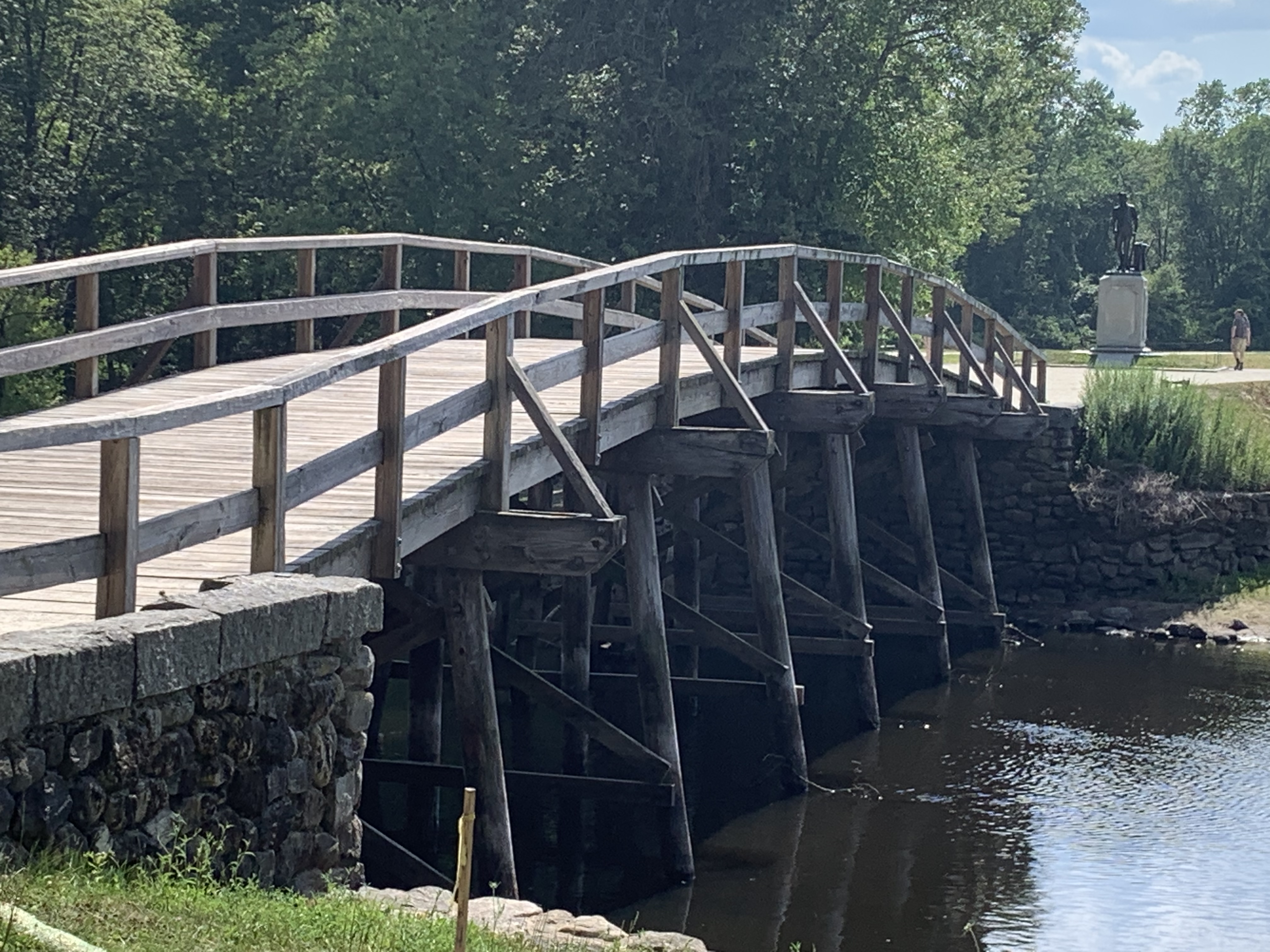
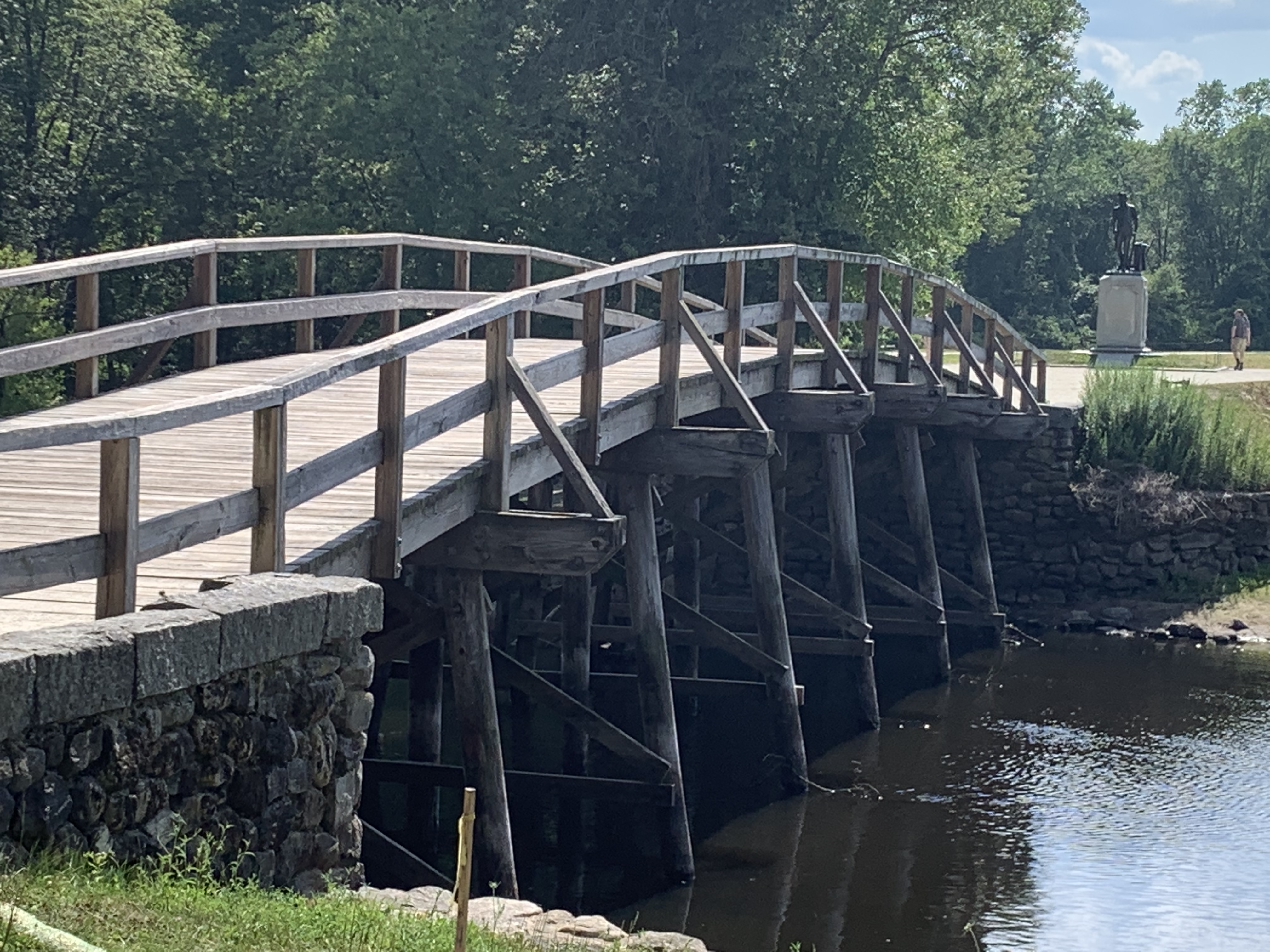
Emerson was standing at the Old North Bridge in Concord when he read that line to commemorate when the Minute Men (militia with extra training) were ordered to fire the first shots of what became the Revolutionary War. The British were thwarted from crossing the bridge and taking the arsenal on the hill behind the statue, and they were forced to retreat to Boston pursued by small groups of Minute Men engaging them in small skirmishes along the way. The quote is carved in the base of the famous Daniel Chester French statue across the bridge above.
Emerson’s grandfather witnessed the battle from The Old Manse, which is part of the site and later was home to Nathaniel Hawthorne. Emerson was also friends with the Alcott’s, and another part of the park is the Wayside where Louisa May Alcott lived. And, since you’re in Concord, you really should visit the Concord Museum, where you can see Paul Revere’s lantern, learn about Emerson’s other friend Henry David Thoreau, and see the excellent new exhibit that describes the battle in detail. All four literary luminaries are buried on Author’s Ridge in Concord.
Again, any propaganda you may have heard suggesting that Lexington was somehow historically important is nonsense. (And I should add that a group of cowardly Lexingtonians snuck into Concord to vandalize and destroy an early monument built around the 50th anniversary in a pique of petty jealousy). ‘The shot heard round the world’ was fired in Concord, likely by Minute Men from Acton, who were in the front and suffered the first casualties, because that order to fire on the British was understood to be an act of open rebellion that could lead to war. Soldiers on both sides blamed the other for firing first. There’s another visitor center over the bridge and past the statue that describes the day’s action. If you get a chance to hear the ranger talk “Monuments & Memories” about how the meaning of the battle has changed over time, I highly recommend it. Obviously, this is my favoriteRevolutionary War site.










 Zero Carbon Travel