Carter G. Woodson Home National Historic Site

While the house is undergoing necessary renovations, it’s appropriate that the sign in the window still displays what was going on during Black History Month this February, because Dr Woodson started that right here in 1926 (originally just a week). Recognizing the need to study and teach African American History correctly, Dr Woodson devoted his life to building the academic and social foundations to publish and teach. The only person of enslaved parents to earn a PhD in History and the second African American to earn a PhD at Harvard—after WEB Du Bois—, Dr Woodson was also Dean at Howard University. He mentored a great many scholars (Langston Hughes worked here briefly), including many African American women. He was good friends with Mary McLeod Bethune, who ran his historical foundation for 16 years. He wrote eight influential books, started two academic journals, and trained a generation of future historians, intellectuals, authors and Civil Rights activists. Today, Dr Woodson is remembered as the Father of African American History. The expanded home is expected to open later this year with a new visitor center.

They’ll see how beautiful I am
And be ashamed—

I, too, am America.

Langston Hughes

Frederick Douglass National Historic Site

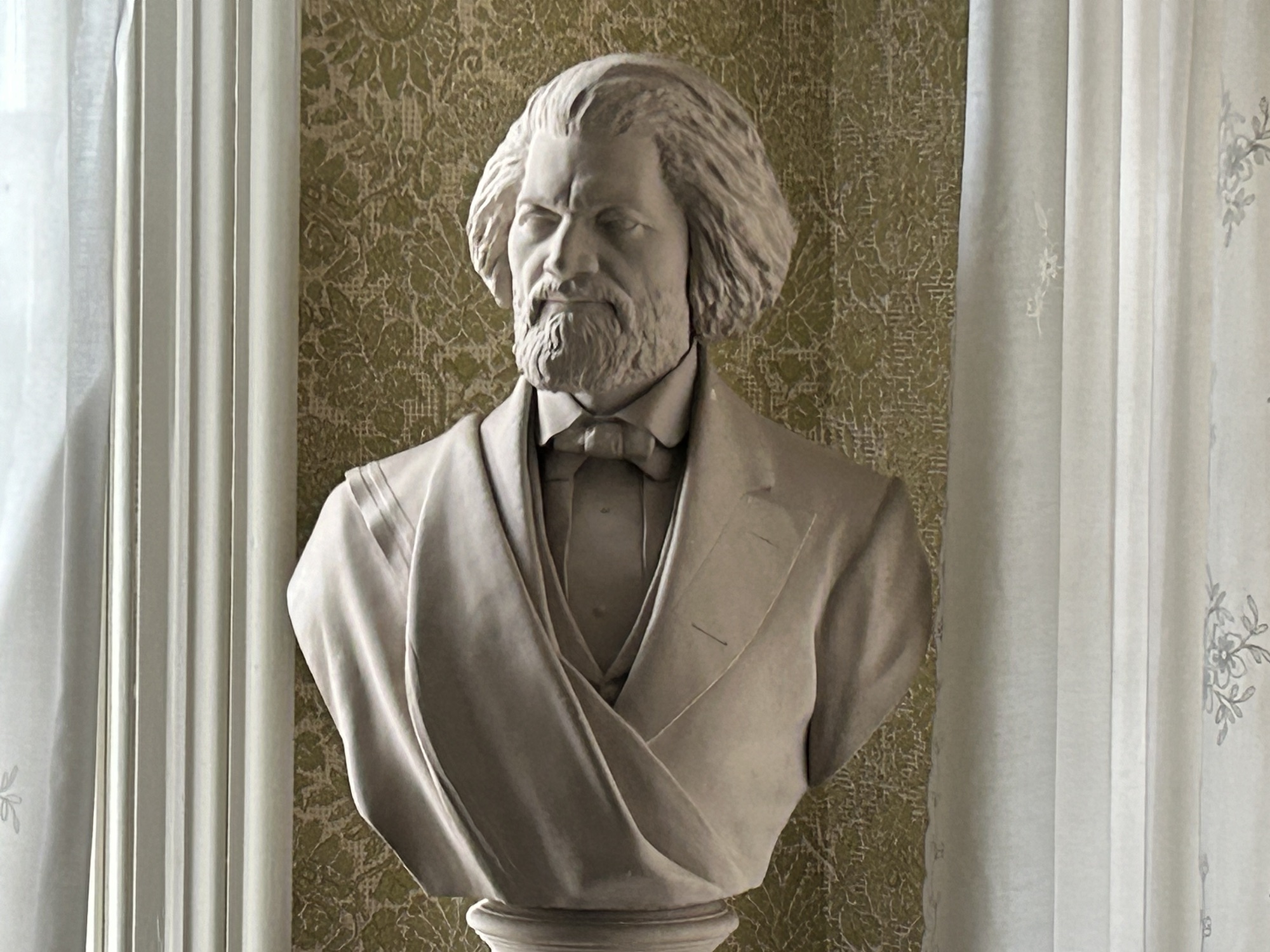
[Update] On my third visit, the site was open after renovations, and the tour allows unique insights into his life. Through hard work, intellect and moral courage, Frederick Douglass became renowned author, public speaker, publisher, adviser to many presidents, US Marshal of DC, diplomat and civil rights leader. He purchased his home on one of the highest hills in our nation’s capital, with a grand view of the Washington Monument. The neighborhood is now historic, and the surrounding area is predominantly African American, some descended from the Civil War refugees who lived in camps near the city for protection. Douglass was cognizant of the lack of African American role models when he was young, so he consciously presented himself well, and gifts like his bust above were meant to inspire another generation of leaders.

Douglass taught himself to read, escaping slavery around age 20, with the help of a free black woman he then married, fleeing to New Bedford where he soon joined abolitionists and his story is published. Pursued by slave hunters, he flees to England, and returns when donors purchase his freedom. He publishes an influential newspaper that supports both abolition and women’s suffrage and several books. During the Civil War, he advises Lincoln and urges African Americans to join the army. After the war, he buys his beautiful home on Cedar Hill overlooking our nation’s capital and continues writing books, public speaking and advocating for human rights. But, perhaps to recall his roots and to inspire him, he did much of his writing in the rough outbuilding—called the Growlery—behind his house, pictured above. Among his many accomplishments, he is often remembered as one of America’s greatest orators.

“Power concedes nothing without a demand.
It never did, and it never will.”

Frederick Douglass

Kenilworth Aquatic Gardens

This DC park is managed by Capital Parks East, which includes the long riverside park and 12 mile bike trail along the Anacostia. In summer, this is likely the prettiest DC park, when the water lilies are in bloom. Once a commercial enterprise, the community now volunteers to maintain this beautiful “oasis in the city”, and I saw a dozen folks knee deep in the mud digging around among the roots. Outside of the water lily ponds, there are wetlands accessible by boardwalk. I saw a Great Blue Heron, sandpipers and various warblers, and the water is also full of life.

That this park exists is a bit miraculous. The area was a failed tobacco plantation, a failed port, a failed reclamation project, a failed industrial zone, a failed housing development, a failed country club, a dump, and a Hooverville of WWI veterans who were removed by the Army after asking for their promised bonus, which failed.

The water lily business was the most successful, with species from all over the world. Civil War veteran WB Shaw and his daughter Helen Fowler ran it in the ‘20s and ‘30s. The wetlands are now seen as critical habitats that keep the river healthy. Freshwater mussels now clean what was once a terribly polluted river. African American community leaders like Rhuedine Davis and Walter McDowney recreated the gardens and taught kids to love nature’s beauty. We owe them all a great debt.

Chesapeake and Ohio Canal National Historical Park

The highlight of the canal has to be the tavern, lock and boat in Maryland across from the Great Falls Park in Virginia. It’s only a short walk here to a view of the falls from the ecologically important Olmsted Island, which was preserved by the son of the famous landscape architect. There are limited boat rides on Saturdays until mid October. Williamsport has a much more elaborate and functioning canal boat exhibit, but their rides are currently suspended. If time allows, I would like to come back next year to bike along the multi-state canal route.

LBJ Memorial Grove on the Potomac

I bet LBJ would joke that this monolith is a middle finger salute to DC. But the grove is a tribute by his wife to his environmental legacy, recognizing LBJ’s unsurpassed legislative achievements in one term: the Wilderness Act, the Clean Water and Clean Air Acts, the National Historic Preservation Act, the Endangered Species Act, and the Wild and Scenic Rivers Act. While meant to reflect nature and his Texas roots, the monolith looks unfinished, like the work ahead of us to save our climate.

Martin Luther King, Jr. Memorial

“Injustice anywhere is a threat to justice everywhere.
We are caught in an inescapable network of mutuality,
tied in a single garment of destiny.
Whatever affects one directly, affects all indirectly.”

letter from a Birmingham jail

“Darkness cannot drive out darkness, only light can do that.
Hate cannot drive out hate, only love can do that.”

Strength to Love

“I believe that unarmed truth and unconditional love will have the final word in reality.
This is why right, temporarily defeated, is stronger than evil triumphant.”

Nobel Peace Prize acceptance speech

Dwight D. Eisenhower Memorial

Ike was a farm boy, raised by Mennonite pacifists, who chose military school because tuition was free. His only outstanding role at West Point was leading the cheerleading squad. But the military valued his leadership skills, and George Marshall picked him to plan the European war effort, form the allies into an effective team and lead them to victory in North Africa, Southern Italy, D-Day, and Germany.

A popular President, Ike expanded the social safety net, created the interstate highway system (thanks), started NASA, spied on the Soviets, and sent troops into Little Rock Central High School. When leaving office, he warned about the “unwarranted influence [of] the military-industrial complex”.

“Only an alert and knowledgeable citizenry can compel the proper meshing of the huge industrial and military machinery of defense with our peaceful methods and goals.”

Ike Eisenhower

Theodore Roosevelt Island

“It is true of the Nation, as of the individual,
that the greatest doer must also be a great dreamer.”

Teddy Roosevelt

On the re-wilded island in the Potomac River amid a couple miles of wildlife trails, there’s a statue of Teddy Roosevelt along with a few granite inscriptions of his thoughts and exhortations on youth, manhood, nature and the state. Nature is slowly reclaiming the plaza’s landscaping, and nobody was there on a drizzly weekday morning. So I felt like I had stumbled across a forgotten sacred space in the forest. Once, a man of great vision, recognizing the importance of wilderness to our spirit and future, fought to protect nature from being wasted by myopic man. He challenged us to overcome our misfortunes, “find delight in the hardy life of the open”, and do our duty to preserve our natural resources for the next generation. Let us not forget him. Let us honor his vision.

“There are no words
that can tell of the hidden spirit of the wilderness,
that can reveal its mystery, its melancholy and its charm”

Teddy Roosevelt

George Washington Memorial Parkway

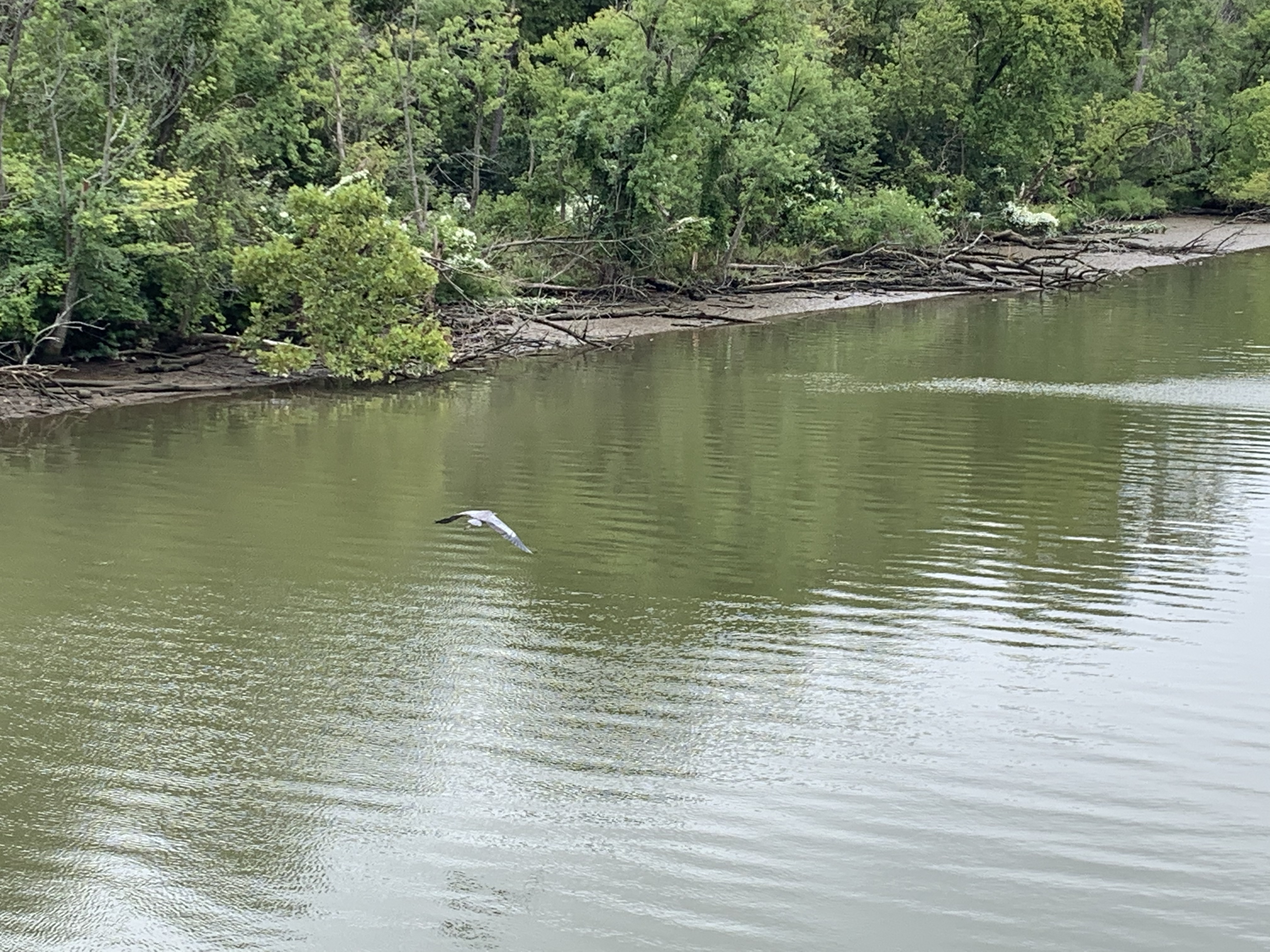
The green parkway along the Virginia side of the Potomac River (islands are DC) connects Riverside Park, the Mount Vernon Trail, Belle Haven Park, Daingerfield Park, Roaches Run Waterfowl Sanctuary, Gravelly Point, the LBJ Memorial Grove, Lady Bird Johnson Park, Theodore Roosevelt Island, and Turkey Run Park, so get out of the car frequently. I barely caught the Great Blue Heron flying under my footbridge, so keep your eyes open too. Great Falls on the Virginia side is a unit of this parkway park, but it’s part of C&O on the Maryland side.

Franklin Delano Roosevelt Memorial

“We have faith that future generations will know here, in the middle of the twentieth century,
there came a time when men of good will found a way to unite, and produce,
and fight to destroy the forces of ignorance, and intolerance, and slavery, and war.”

FDR in 1943

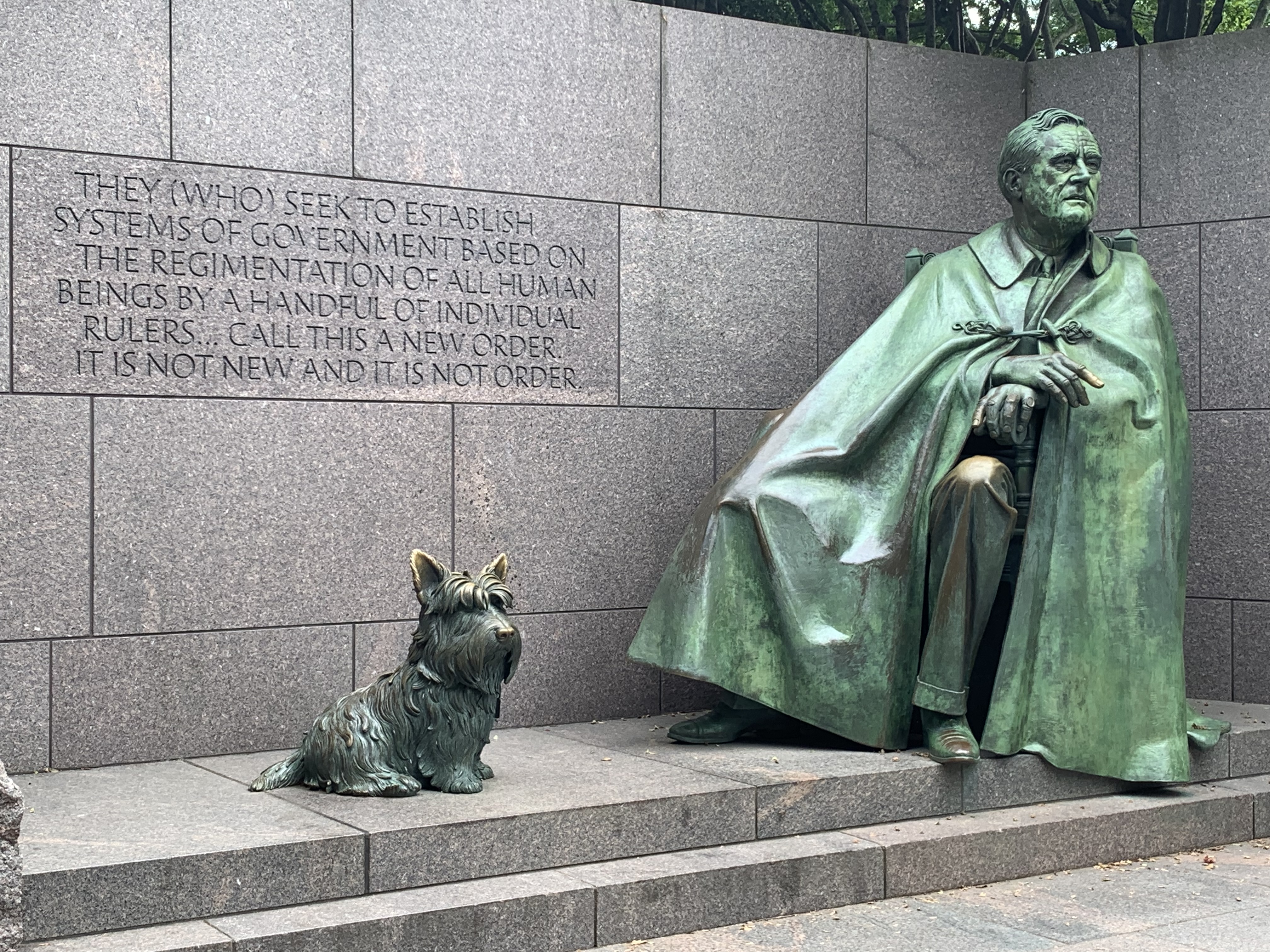
Wander through the FDR memorial amid the waterfalls and trees, reading his words and reflecting on his extraordinary life, and feel the impact his leadership had upon the world. He struggled against being defined by polio, against the Great Depression, to bring a new deal to Americans, through WWII and for peace, until his wife Eleanor took up his torch at the UN. In speaking plainly with people FDR became the lightning rod that harnessed the energy of everyone’s dashed dreams and fearful hopes to make the world better. The desperation of the times brought Americans “a rendezvous with destiny” and required more of FDR than any other President: putting 1/4 of the country back to work, creating a new social contract with a safety net, becoming “the great arsenal of Democracy”, and fighting for a dream of world peace.

“Unless the peace that follows recognizes that the whole world is one neighborhood
and does justice to the whole human race,
the germs of another world war will remain as a constant threat to mankind.”

FDR in 1943