


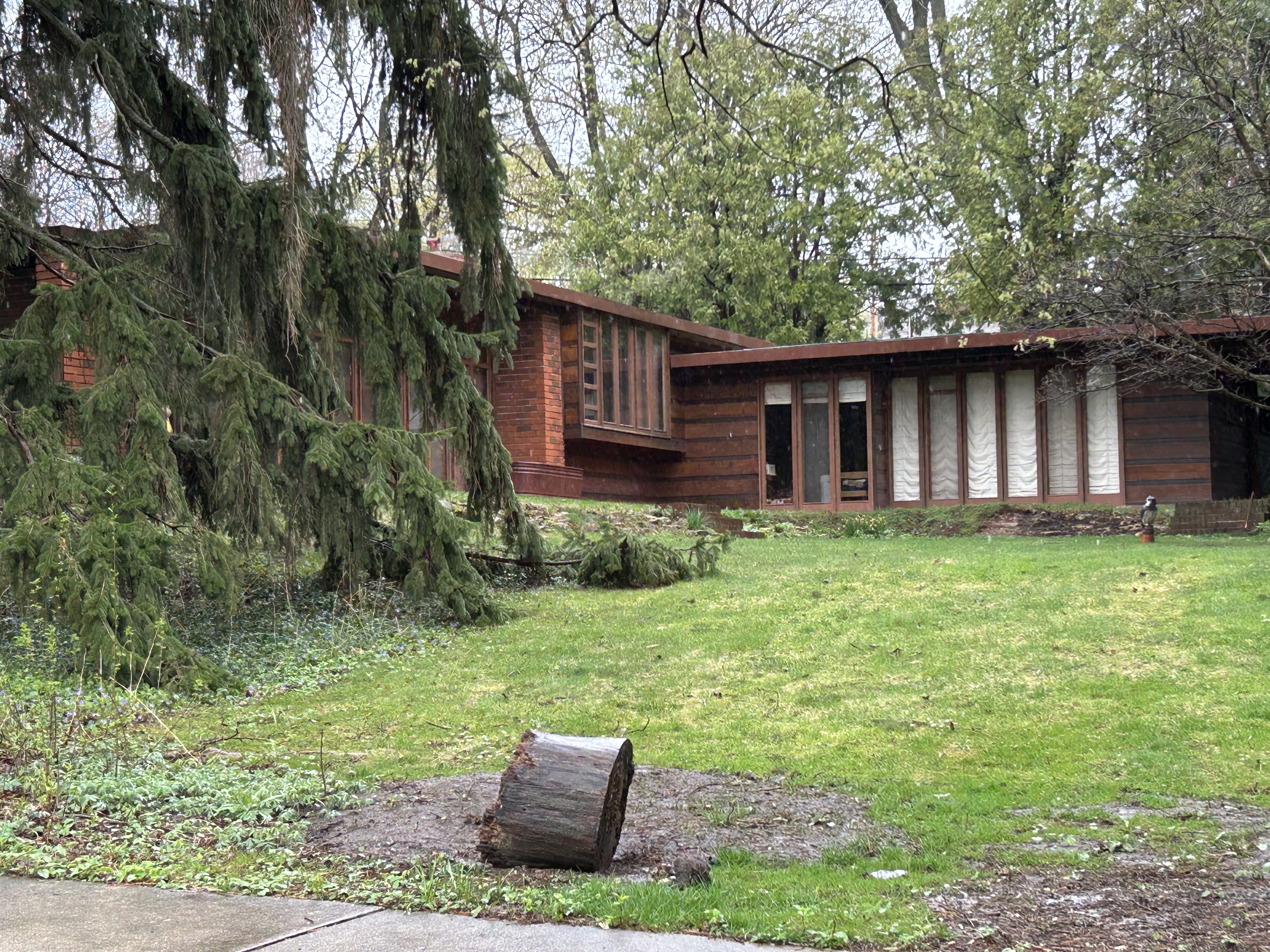


Wisconsin is home to the Apostle Islands NL, Ice Age NST, Saint Croix NSR, and both Frank Lloyd Wright’s affordable Jacobs House and his dream home Taliesin World Heritage Sites above, as well as a section of the North Country NST.
Wisconsin is home to the Apostle Islands NL, Ice Age NST, Saint Croix NSR, and both Frank Lloyd Wright’s affordable Jacobs House and his dream home Taliesin World Heritage Sites above, as well as a section of the North Country NST.

The trail is not straight. It meanders through Michigan’s wooded hills, green valleys and along its rivers and lakes. The trail begins along the Niagara Escarpment that separates Green Bay from Lake Michigan, then south below Madison, before crossing the Wisconsin River at Lake Wisconsin. Then it passes up across the bluff on the right with its characteristic rough rock glacial remnants on the steep slope to the north beach of Devil’s Lake above before continuing north to the Wisconsin Dells with iconic eroded rocks. Eventually it crosses the state to end at the St Croix River.
President Biden elevated the trail to a full national park unit, but many of the most scenic sections are in state parks or affiliated scientific reserves. Wisconsin Dells itself is quite commercialized, with water parks and pricey tours, even though the layered rock can be seen in several different places along the Wisconsin River. State parks like above or Mirror Lake have fine scenery, camping and miles of maintained trails. I tend to rush around and then spend too much time at supper clubs, but it’s worth slowing down a bit here to enjoy the natural beauty. For more, read my earlier post about the Ice Age Trails.

Above is the northeast point of Devils Island, the park’s northernmost island. The sandstone is more finely layered here, a bit softer and exposed to Lake Superior, so it erodes into caves, arches and beautiful shapes, under the lighthouse, quite photogenically. I briefly considered taking my own boat, but the distances are more than I realized. The largest island (left out of the park) is roughly the size and shape of Manhattan, with “1.5 hundred residents”. One does not simply paddle into the Apostles without serious preparation and proper gear. So, like most tourists, I took the efficient new catamaran from Bayfield. (While I arrived without burning carbon, I sometimes use park transport to enjoy places). The tour lets you see many of the 20+ islands in just a few hours. Guided kayak tours are also available.
Several of these beautiful Wisconsin islands are off limits, but most have one or more individual primitive campsites accessible by kayak, private boat or water taxi. Some of the wildlife is very difficult to see; martens weren’t seen on one until wildlife cams were installed. But from the comfort of the tour boat, we stopped to turn around and get a good look at a bald eagle nest, with a nesting pair visible. We also saw mergansers, nesting gulls and other birds. Bear and deer are only rarely spotted while swimming between islands. This is a large and important refuge for species that were once common all around the Great Lakes, and getting out among the islands is easy and worthwhile. If you have the chance, the colorful old Greunke’s Inn, near the dock, serves whitefish liver, a delicacy they popularized in the 1940s.

Defining much of the border between Minnesota and Wisconsin, this river and its tributary the Namekagon were among the first rivers protected by the Wild & Scenic Rivers Act, supported by Walter Mondale and many other locals 55 years ago. The forest was quickly and heavily logged 150 years ago, but the water remained clean. Even though there are several dams, including a hydroelectric one at Taylors Falls, the river is much healthier than most, especially the upper St Croix. Below the dams, near the Mississippi, there are power boats, a power plant and non-native mussels, but higher up there are dozens of native mussel species, various fish, otters, bald eagles, kingfishers, great blue heron, several different colorful warblers and more.
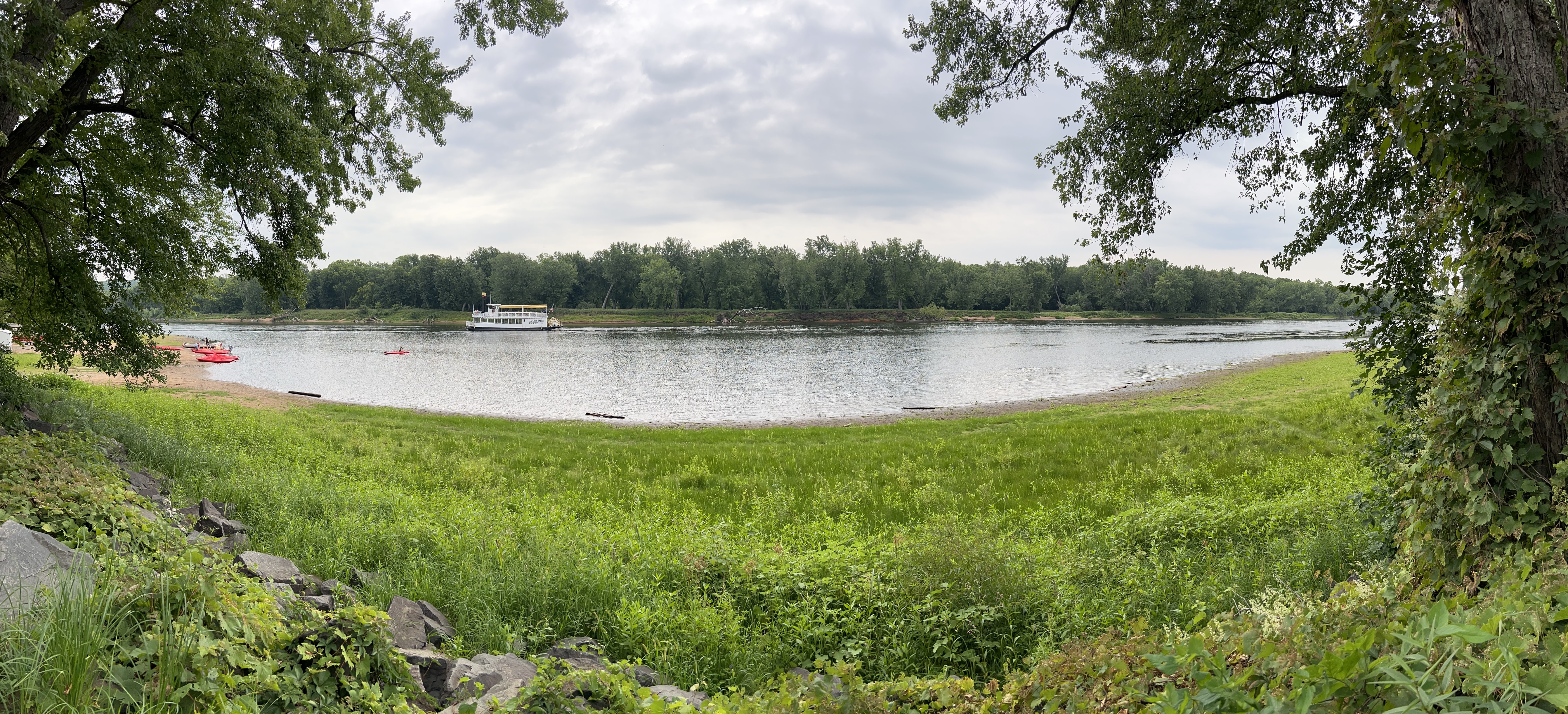
The forests have regrown too, so it can be difficult to get a decent view of the river. The photo is from the Minnesota state park ($5 to park) below Taylors Falls, and it has a a canoe & kayak rental, picnic tables and camping. Nearby you can catch the scenic riverboat pictured that offers views of the basalt cliffs shattered by glacier melt. I’m going to have to return a third time, since my first trip was during spring floods and this summer during extreme low water. I believe the best views will be paddling the upper St Croix from the Namekagon confluence to highway 70, but I need good conditions for the rapids.
The Wisconsin parks are $11 to park with very similar views and features. There’s also a waterfall at Osceola, but the bluff trail there is now called the Falls Bluff Trail Loop, or the Cascade Falls Trail or the Eagle Bluff Trail or maybe the Simenstad Trail or the Osceola Rivertown Trail, but not the Osceola Bluff Trail like the park map says. Fortunately, you can also see the waterfall from the road, and the Watershed Café is quite good.
 Zero Carbon Travel