The Great Lakes & Midwest Biospheres

This year I completed loops around all the Great Lakes, crossing the Canadian border in Minnesota, upper & lower Michigan, and western & northern New York, visiting biospheres in both countries. In Canada, UNESCO Biospheres are tourist destinations, where you can hike and see and learn about wildlife, in addition to and separately from their wonderful national and provincial parks. In the US, while some national parks are also internationally recognized biospheres, the United Nations Educational, Scientific and Cultural Organization, UNESCO, is hardly mentioned.

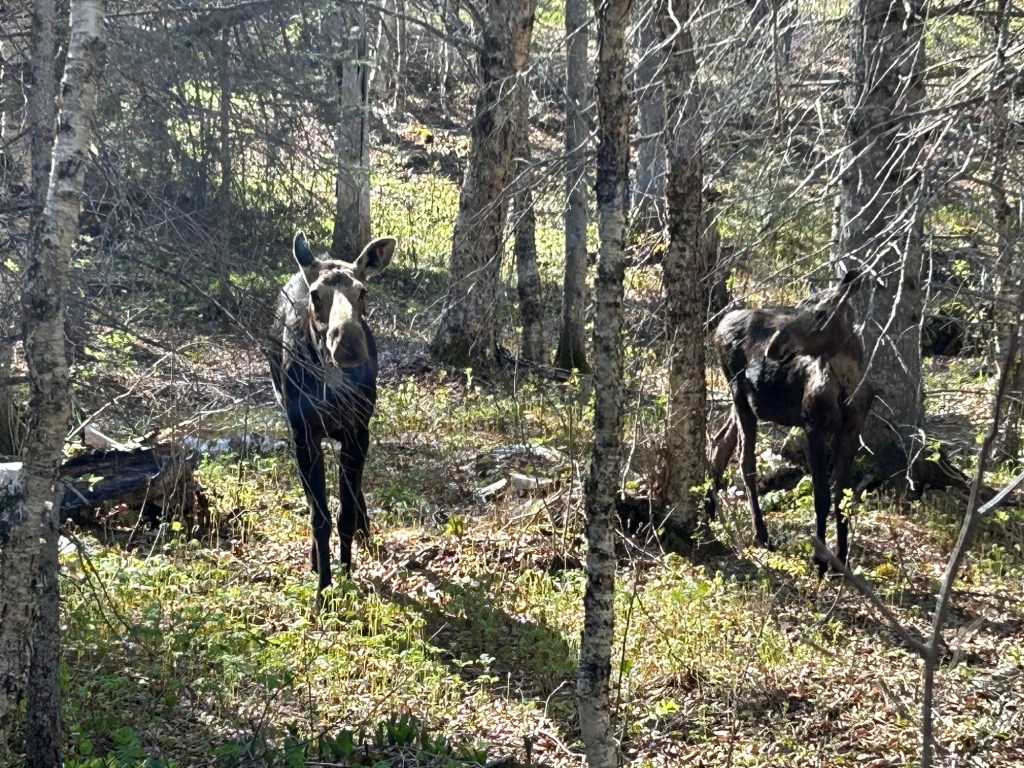
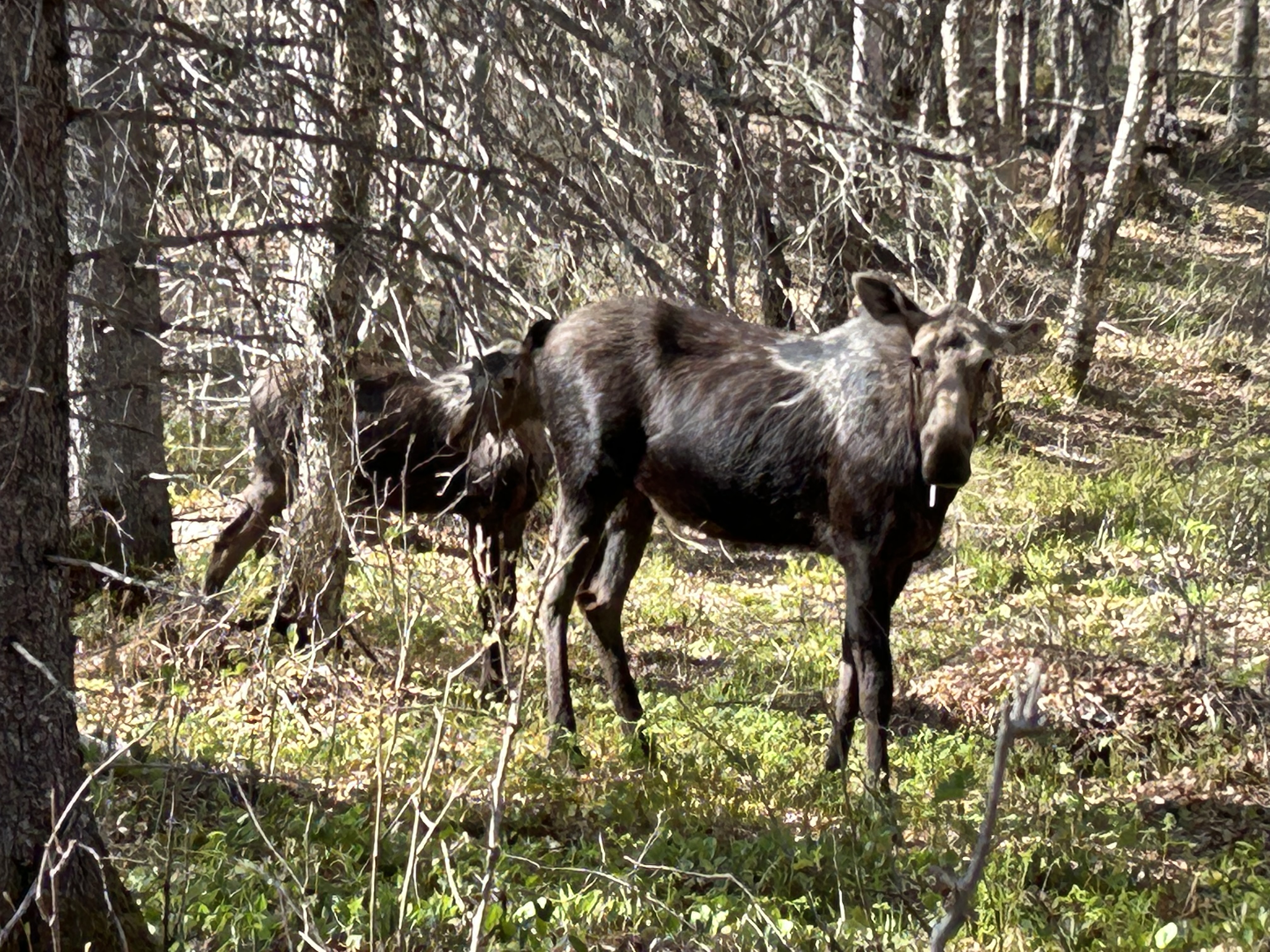
Obtawaing Biosphere is a university project, not well known despite its international scientific research cooperation. Isle Royale National Park attracts many midwestern volunteers for its prey-predator study (see tagged moose above), but even if you ask a ranger, you’re unlikely to learn much about the site being a UNESCO Biosphere. And it took some research for me to learn that Sleeping Bear Dunes is also part of the larger global biosphere network.

Many Americans view our parks as recreation areas for workers to take vacations and spend money as tourists. That nature thrives there is taken for granted. What’s important for most is that you can exercise by climbing a dune, hiking across an island, renting a kayak or biking on a trail. If science is considered at all, it should be presented to the kids in an entertaining, limited format, where kids can learn about ‘weird’ or ‘cool’ animals.

Canada has all of that too, but they also cooperate in international scientific efforts to protect nature. Adults are encouraged to increase their scientific understanding of species too. Their Great Lake biospheres have online visiting information, campgrounds, cooperative agreements with First Nations, birding resources, museums, and both areas that are closed to the public and where the public is welcome. UNESCO is on the signs and in the exhibits.

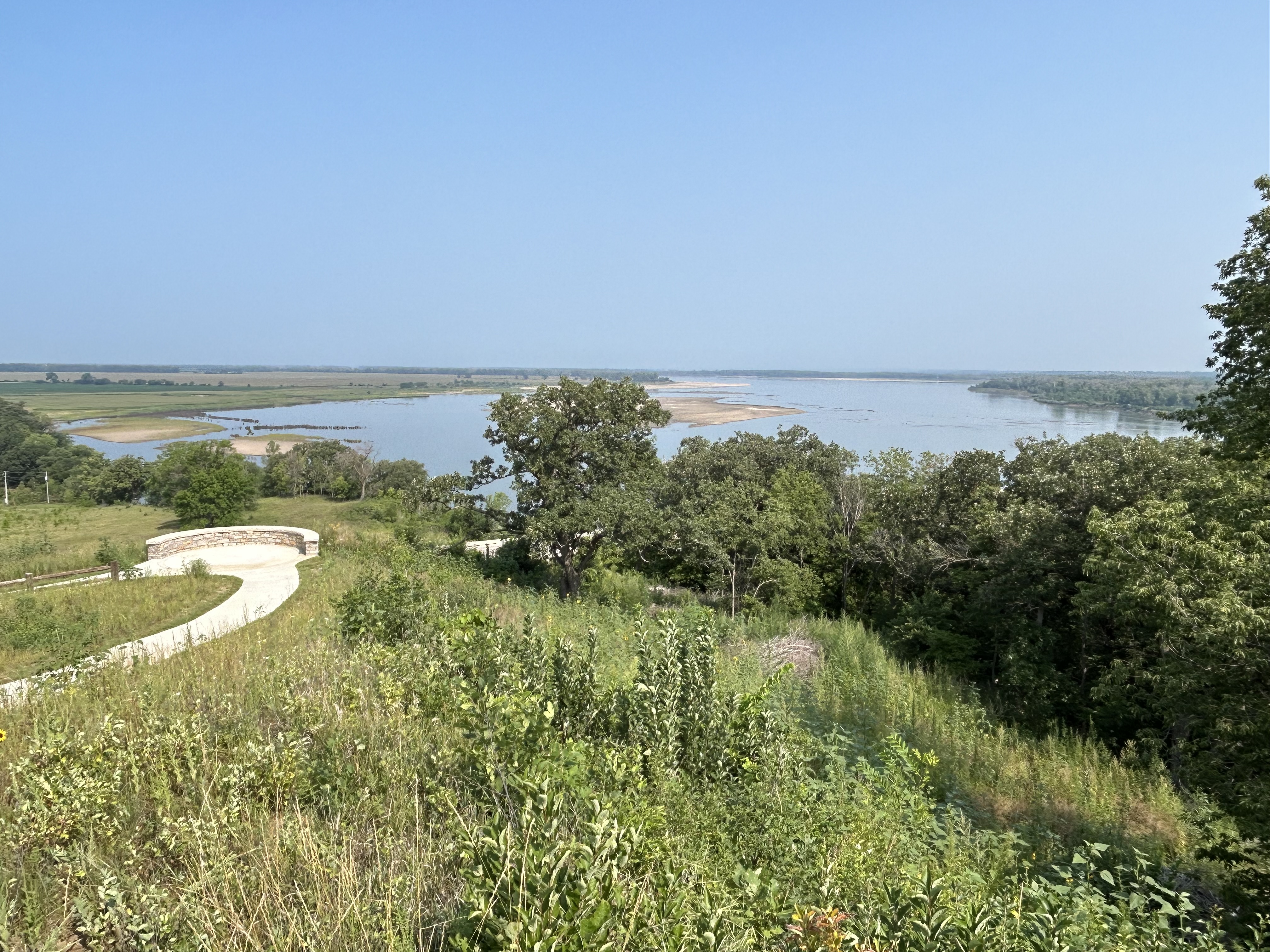
Sadly, a few Americans believe stupid conspiracies about UNESCO, and some leaders disparaged the science group over an unrelated Israel/ Palestine dispute. As President, Trump removed 17 US Biospheres from the UN program, including Konza Prairie in Kansas. Kansas may not be demographically diverse, but its Tallgrass Prairie is ecologically important to species diversity on earth. The research at Konza used to receive international funding and cooperate with UN scientific efforts, including climate and wildfire research.

There is no logic behind stopping us from receiving funding from the UN for many of our critically important research biospheres, when we need international cooperation to fix the climate crisis. Humans impact nature, and if we’re not careful, we will irrevocably destroy much of our natural environment. Americans should learn about and celebrate our UNESCO biospheres. Please support scientific research and the environment.
Sleeping Bear Dunes National Lakeshore

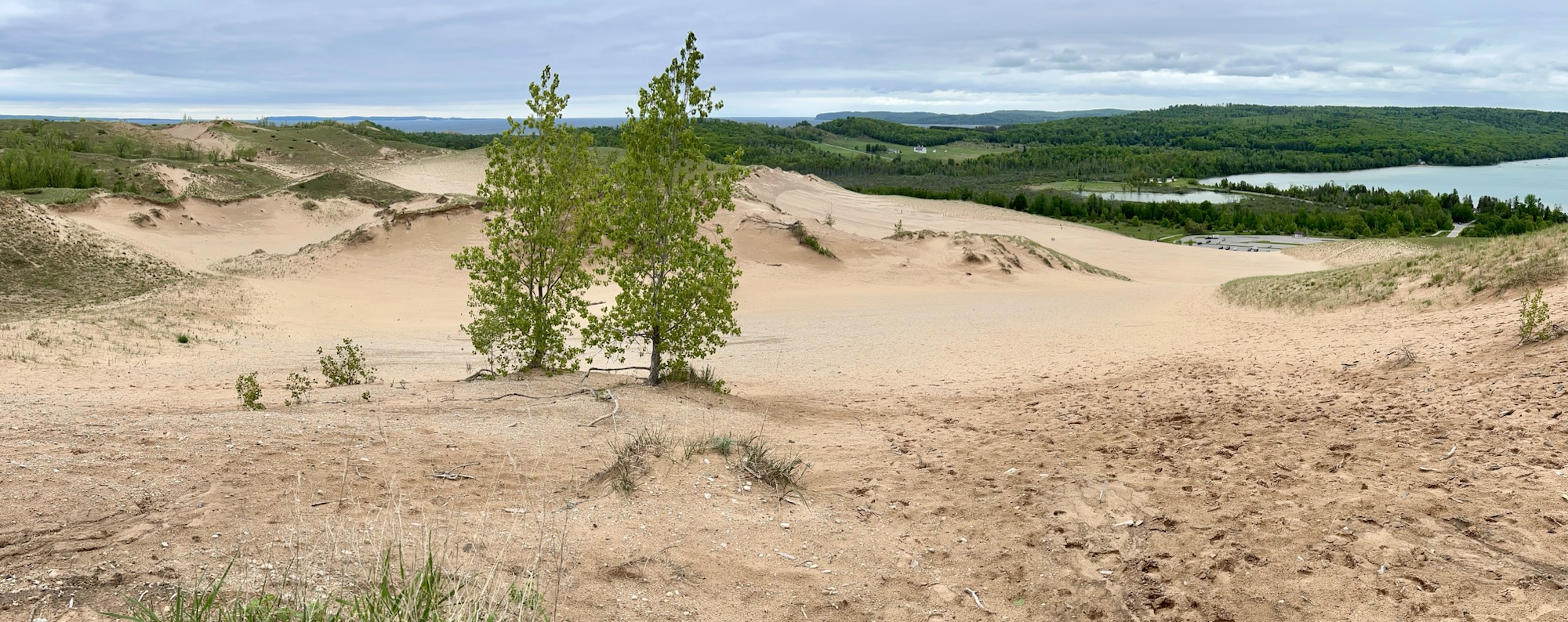
The small lake on the right is Glen Lake, and Lake Michigan is at the top left. If you zoom in to the right, you might see tiny people climbing the middle dune from the parking lot. I got up to this vast view on the pleasant Cottonwood Trail (less than 2 miles round trip) from the Pierce Stocking Scenic Drive, which also takes you to the breathtaking Lake Michigan Overlook and the splendid Sleeping Bear Overlook. Many folks seem to want to do things the hard way, but I definitely recommend hiking from the scenic drive. The impressive Sleeping Bear Dune itself is over 1000 feet high, and folks frequently need rescuing ($3,000) after climbing down to the lake and not being able to climb back up. A few extreme winter folk ski down the steep dune to the lake. Not sure how they get back up. Please stay on the trails, as past humans caused much erosion damage to the fragile ecosystem here. This is a beautiful park with wildlife, deep Native American roots, and it is part of a new UNESCO Biosphere across northern lower Michigan.

Obtawaing Biosphere

The University of Michigan Biological Station—better known as ‘bug camp’—on Douglas Lake (above) began over 100 years ago, and now, under its new Anishinaabemowin name, it is recognized as the heart of a huge UNESCO biosphere protecting species in northern Michigan. While UMBS is not a tourist destination at all, I saw groups of enthusiastic students and researchers preparing scientific experiments and data collection, various boats and a large protected forest. They are doing important research on the Climate Crisis and preparing a new generation of experts with hands on experience. We need to stop climate change denial, pay attention to the science and stop carbon pollution, before it’s too late.

Bronzeville—Black Metropolis National Heritage Area

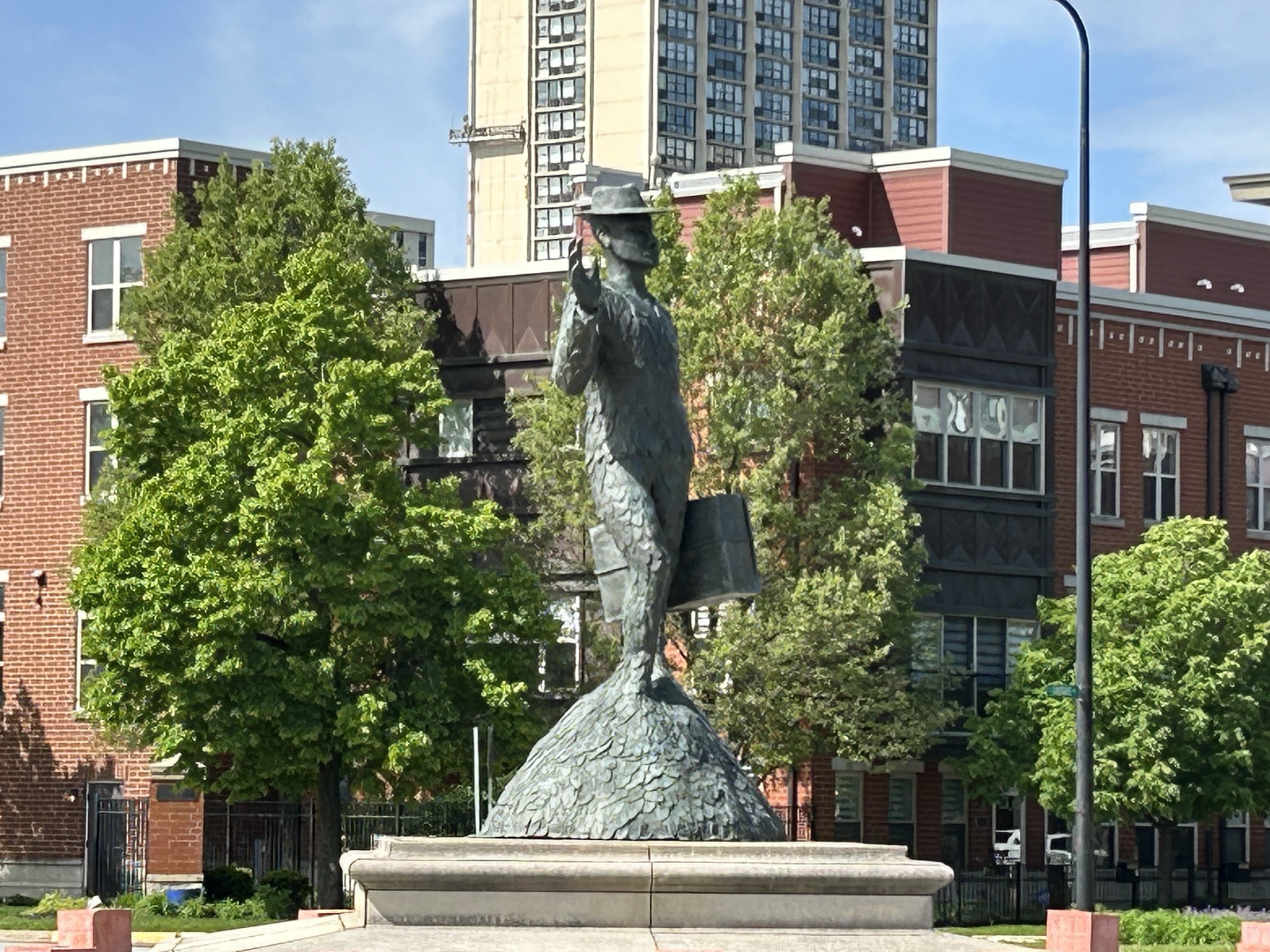
The South Side of Chicago has long been a historic district, and now it will be recognized as its own National Heritage Area. This is the neighborhood of activist Ida B. Wells, the church for Emmett Till’s funeral, of poet Gwendolyn Brooks, boxer Jack Johnson, musicians Louis Armstrong and Nat King Cole, and where a young community organizer named Barack Obama worked before law school. 1/2 a million African Americans moved to Chicago during the early 20th century. Above is the Monument to the Great Migration at MLK & 25th, welcoming people to join the community, and every so often you will find a bronze plaque recognizing accomplished residents on the walk to 35th, where there’s another statue, honoring the African American soldiers who chased the Germans at the end of WWI.

The neighborhood continues south, with many beautiful brownstone buildings and a few blues venues. Unfortunately, many historic buildings—like the Checkerboard Lounge where Muddy Waters used to play—were lost to poor government planning, an expressway that cut the neighborhood off, and expansion of the University of Chicago. Establishing a specific heritage area helps recognize the unique cultural value of a neighborhood, encouraging more visitors by promoting it. Now, I expect Black Metropolis will continue experiencing its renaissance, and I look forward to trying the food at Bronzeville Soul (closed Mondays) the next time I pass through town.

Affiliated Sites in Midwest

I recently completed EV visits to all five NPS affiliated sites in the Midwest, which were interesting and educational. Wisconsin is a good place to learn about drumlin hills, kettle lakes and moraine at the various park interpretive centers in the Ice Age National Scientific Reserve. The story of Father Marquette’s voyages and the Chicago Portage stretches through several states. Toledo Ohio keeps history at the Fallen Timbers Battlefield and Fort Miamis (see the fort’s footprint above) on the banks of the Maumee River. And Nebraska protects Chimney Rock on the pioneer trails.

Much more coming soon, including three national parks, biospheres, and heritage areas as I wrap up the Midwest region. And I reveal my secret project. Stay tuned!

Grand Portage National Monument

[Update: Blackwell National Historic Site in Texas is now officially a national park unit.]

The photo is from the moose exhibit upstairs at the visitor center. I failed to photograph a bald eagle flying right in front of the reconstructed fort, which includes a great hall, kitchen, warehouse, lookout and wooden palisade. The monument is surrounded by Anishinaabe (Ojibwe/Chippewa) land, and the tribe co-manages the unit, a first for the NPS. I stayed at the casino to catch an early ferry from Grand Portage, and I had a delicious ‘lunker’ (big fish) for dinner. From the dock, you can see Isle Royale in the distance, and there are various demonstrations of the fur trading life during the summer season.

Traders wanted access to the western rivers and lakes, and the easiest way to get there was to carry their canoes on the ~10 mile Grand Portage Trail around some impassable waterfalls (including Minnesota’s largest) on the Pigeon River at the border with Canada. At a site called Fort Charlotte, the voyageurs entered the Pigeon River—now the US-Canada border—and continued with shorter portages upstream on the Athabasca, English & Saskatchewan Rivers. They would pass through what’s now Voyageurs National Park, Rainy Lake, Lake of the Woods, and deep up into the Canadian Rockies to the Athabasca, Great Slave, and Winnipeg Lakes. The trail carried beaver and other pelts, typically trapped by natives, in 90 pound packs from inland Canada down to Montreal (skipping the polar bears around Hudson Bay), bound for global markets in Europe, Russia and China. Vast fortunes were made wiping out the abundance of our wildlife.

Fallen Timbers Battlefield and Fort Miamis National Historic Site

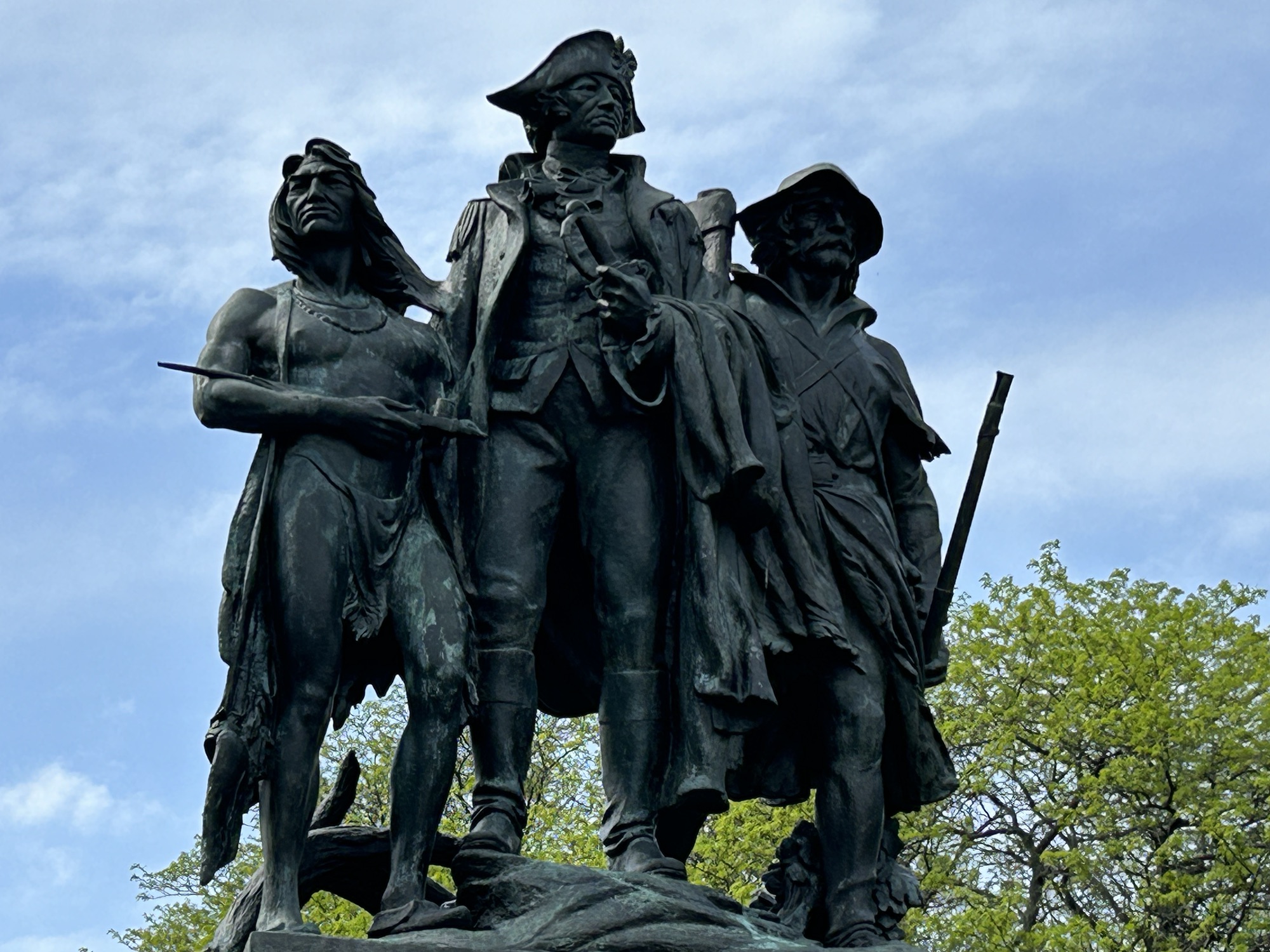
The much disputed western frontier was once here in Ohio, where the British Fort Miamis guarded the crossing point and last navigable stretch of the Maumee River to Lake Erie, backed by their confederation of Native American allies. George Washington sent General Wayne (above center) here after his previous general had been defeated. In 1794, Wayne’s troops met over 1,000 native warriors in battle, and prevailed, resulting in much native land being ceded to the US.

In 1811, Indiana Governor William Henry Harrison provoked the natives into fighting again. When the War of 1812 broke out, the British reforged their native alliances and used their naval power to reoccupy Fort Miamis. Now General Harrison—later the 9th President—built a new fort on the other side of the Maumee River and held it against attack. The fighting then moved north, where Harrison’s troops killed the Shawnee leader Tecumseh and defeated the British on the Canadian side of Lake Erie, ending both the British occupation and native land ownership in most of the northwest.

The site is affiliated with the NPS and managed by Toledo. Due to an early mistaken account of where the battle occurred, the statue above is neither on nor facing the battlefield, which is behind them over a bike bridge in the woods. There are plenty of bike trails connecting different riverside parks, and there’s an Audubon island with heron in the middle of the river. The earthworks of Fort Miamis are still clearly visible overlooking the Maumee. History and nature await us.

Chimney Rock National Historic Site

While not the largest rock formation in the west, Chimney Rock above, was the first exceptional one seen by the pioneers on their journey across the wide open prairie, so many pioneers elaborately described it in their journals. Judging by the old photos, it has lost some of its point, but it still towers over the landscape. Chimney Rock also made a clear landmark for the prairie schooners navigating on the Pioneer Trails from the Platte River to the nearby pass at Scotts Bluff. The site is affiliated with the NPS, but it is managed by the Nebraska State Historical Society.

Isle Royale National Park

This is now my favorite park for wildlife. I was lucky to get a photo of this moose and her calf on the 1 mile Nature Trail in Windigo just before my boat left. Despite seeing loons, mergansers, swans, geese, and even a bushy tailed fox parading near my shelter on Washington Creek, I had neglected to take any decent wildlife photos, so until these two approached me, all I had was one photo of two ducks: a paradox.

I hiked a dozen miles and enjoyed the pitcher plants and boardwalks through the swampy areas and the mossy boulders on the north shore. The island is larger than I imagined, so be sure to download the park map in advance and charge your phone. This Biosphere is one of the least visited National Parks but most re-visited. Many folks hike the length over several days, and early in the season there were many volunteers hiking off-trail doing scientific research on wolf-moose predator-prey. A few were carrying a canoe for inland lakes. It’s an idyllic place, with hours of silence and solitude, a wonderful trip into the wilderness.

Isle Royale is in Lake Superior, and the shortest ferry ride is a couple hours from Minnesota to Windigo. The island is part of Michigan, and there are also ferries from the Keweenaw Peninsula in Upper Michigan to Rock Harbor. Most visitors are experienced hikers who backpack to their campgrounds, and it’s 40 miles between Windigo and Rock Harbor. Some arrive by private boat, and several campgrounds have docks. Lodgings are limited to Rock Harbor and a couple cabins in Windigo, and rooms are both very expensive and typically sold out many months in advance. The season roughly runs from early June to early September, so it’s a good idea to plan your trip a year in advance.