Benjamin Franklin National Memorial

His large marble statue sits in a marble rotunda at the Franklin Institute in Philadelphia, a private museum that promotes science, making this an affiliate site. This 20 foot statue was made in the ‘30s by Fraser, sits on an imposing pedestal, in a room modeled after the Pantheon in Rome. There’s an expensive new light display, which accounts for Ben’s odd pallor, and there are some quotes. The memorial is free, as is parking for a short time.

Franklin’s print shop and post office are 2 miles away in Franklin Court—as is the recommended Benjamin Franklin Museum—, which is part of Independence National Historical Park. There’s also an older, well known bronze statue of Franklin at U Penn, which he founded. He also founded the colonies’ first successful public lending library, first public hospital, and first insurance company. Franklin was Governor of Pennsylvania and led the state’s abolitionist society. He helped draft the Articles of Confederation, the Declaration of Independence, the Treaty of Paris, and the Constitution. He was an author, printer, inventor, scientist, musician, diplomat and founder, when he wasn’t busy doing other things. We will never see the likes of him again.

“Well done is better than well said.”

—Benjamin Franklin
Natural Bridge

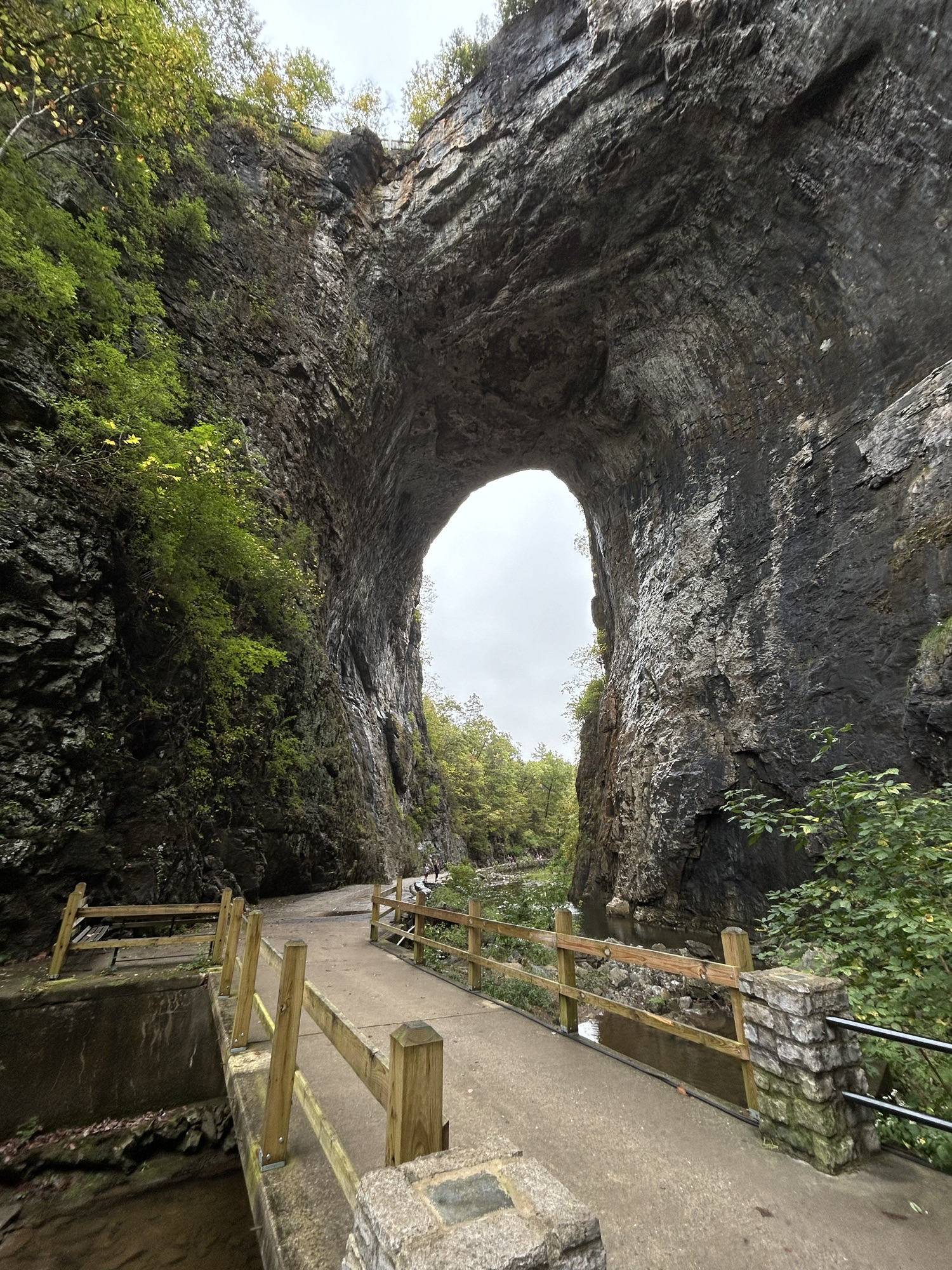
George Washington surveyed it in 1750, and Thomas Jefferson bought the largest limestone arch in North America above in 1774. At 200’ tall, it’s higher than Niagara Falls. See if you can find the people in the photo. It’s an NPS affiliate, managed by Virginia State Parks. There’s a pretty 1.7 mile trail up under and past the arch along Cedar Creek, with many steps, interesting rock formations, heron below, woodpeckers, chickadees and other birds.

Virginia Coast Reserve Biosphere

This is one of two UNESCO Biospheres in the Mid Atlantic region; the other is Pine Barrens in New Jersey. Dedicated to scientific research, protected for decades by dedicated environmentalists and locals, including Federal, State and Local lands, and managed by the Nature Conservancy, this UNESCO Biosphere protects much of the Virginia part of the Delmarva Peninsula, including its fragile barrier islands. It’s a crucial stop for birds on the Atlantic flyway from the Yucatán, over Florida and up the coast to Canada. And of course, studying these coastal wetlands is critical for combating the effects of the climate crisis.

There’s a nice trail next to the Brownsville HQ with boardwalks out to the Atlantic view below and a similar one facing the inland wetlands. I saw a great blue heron, two large turtles, and many butterflies, spiders and frogs. Frogs were much more common in my youth, so it was a delight to see so many hopping across the trail or grass in front of me.

Appalachian Forest National Heritage Area

Smoke Hole above is a canyon formed by the South Fork of the Potomac River in West Virginia. Excursion trains take visitors on various trips through the area, but there are also country roads. I drove about 10 miles along the canyon admiring the views with fall foliage, and I never saw another person. The C&O Canal and Potomac Heritage NST are also in this NHA, which extends into the mountains of western Maryland. This is a rare, beautiful, underrated spot in the US to hike and enjoy nature.

Gateway National Recreation Area

Gateway is multifaceted, but for me the most important part is the Jamaica Bay Wildlife Refuge above. Here there are migratory and year round birds, butterflies, trails, groves of trees and pleasant views. The contrast between the busy planes of JFK and the mute swans could not be more striking. Although the road noise limited my birdsong app, I still lost count at a dozen species. With more time, I would have kayaked around to see more birds.

But for folks interested in other things, the park includes Forts Hancock, Tilden & Wadsworth, beaches, parks and more, spread out over western Long Island, Staten Island and Sandy Hook peninsula in New Jersey. The Sandy Hook unit has miles of beautiful beaches (below with NYC skyline view) and paved bike trails to enjoy.

Heritage Areas in Pennsylvania

Pennsylvania has eight National Heritage Areas, by far the most of any state, and I have visited them all by EV. Kudos to their politicians, but Pennsylvania does have many unique areas worth visiting.

The Delaware & Lehigh National Heritage Corridor includes the National Canal Museum with summer canal boat rides and different trails and bike paths along historic routes for coal and early American industry. The trail runs (with a few gaps) from the Lower Delaware River, through Allentown and will eventually connect with Wilkes Barre on the Susquehanna River.

The Journey Through Hallowed Ground NHA covers Civil War sites across four states, with Gettysburg being the star in Pennsylvania.

Lackawanna Valley NHA’s star is Steamtown above, but the area includes electric trolleys, as well as historic coal, iron and industrial sites.

The Oil Region NHA includes Drakes Well and other sites related to the birth of the modern petroleum industry in the Quaker State.

Fort Necessity and Friendship Hill are both in the Rivers of Steel NHA, but the historic focus is best seen by visiting sites like a blast furnace or a foundry & machine shop that explain how the steel industry began.

Schuylkill River Greenways NHA includes Hopewell Furnace, Independence NHP and Valley Forge NHP, but there are also over 100 miles of river to explore paddling, hiking or driving. (Say SKOO-kil meaning ‘hidden river’; so Schuylkill River is redundant.)

Susquehanna NHA focuses on the river valley and colonial York more-so than the Amish communities of Lancaster County, and there are many beautiful natural places to explore.

The Path of Progress National Heritage Tour Route is currently a bit DIY, but it includes Allegheny Portage, Fallingwater and Johnstown Flood sites along picturesque, winding historic roads.

Oil Region National Heritage Area

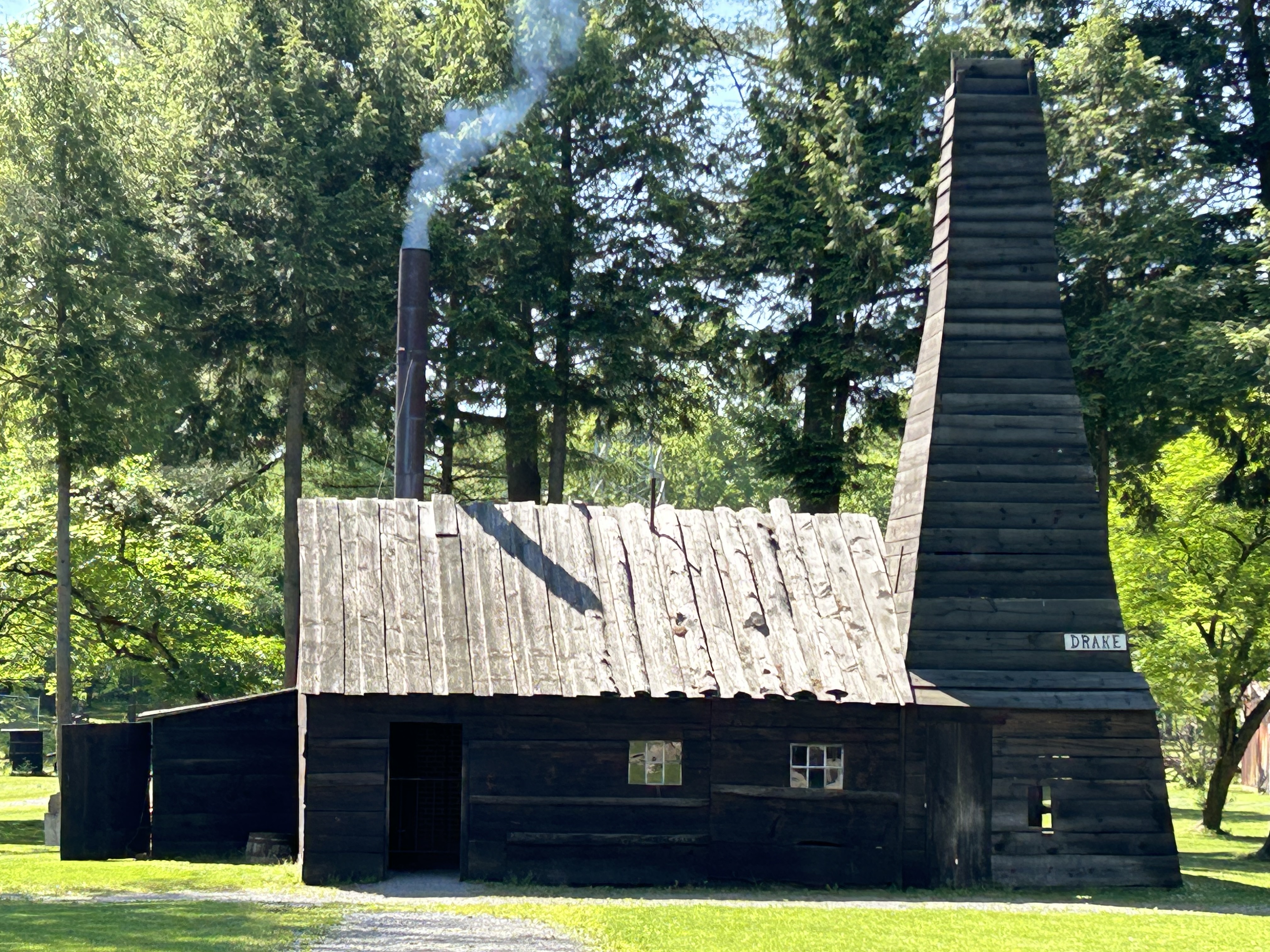
[Apologies for posting this a day behind schedule.] Light sweet crude oil (above) means a thin, low-sulfur, unrefined oil, and at one time the global price was set here in western Pennsylvania, where it was found in 1859 at 70’ in a lucky strike by Edwin Drake. Of course, the Seneca had already discovered the oil where it seeped into Oil Creek, and they had long used it for various purposes, including as Vaseline, but Drake built a well to extract oil as fast as it could be pumped out. His backers already knew of many commercial uses, including replacing whale oil which was used for lamps. The industry helped the Union win the Civil War. Quaker State and Pennzoil were born near here, and John D. Rockefeller was an early customer. Ida Tarbell, daughter of a local independent forced out by the monopoly, went on to write a critical history of Standard Oil.

The hub of the heritage area, the Drake Well Museum has a variety of equipment over 100 years old and many exhibits explaining the different oil products produced by refining at different temperatures and occasional demonstrations of (recycled) oil pumped up by the reconstructed historic well below. If you want to learn the story, you can look up the 1954 Vincent Price movie about “Colonel” Drake on YouTube; it was made by the American Petroleum Institute. With Halloween almost upon us, nothing could be more appropriate than watching a movie about the oil industry starring an actor famous for horror movies.

No matter how cleanly carbon is burned, it is still dangerous, as running a car inside a garage proves. In only 165 years, we extracted and burned millions of years of accumulated oil, and we changed the composition of our atmosphere. Carbon levels have risen at an incredibly fast rate back to where they were about 3 million years ago, ten times as long ago as when human Homo sapiens (wise) evolved. Considering the mass extinctions our carbon burning will cause and our inexcusable refusal to stop, we should probably rename ourselves Homo stultus (foolish).

Star-Spangled Banner National Historic Trail

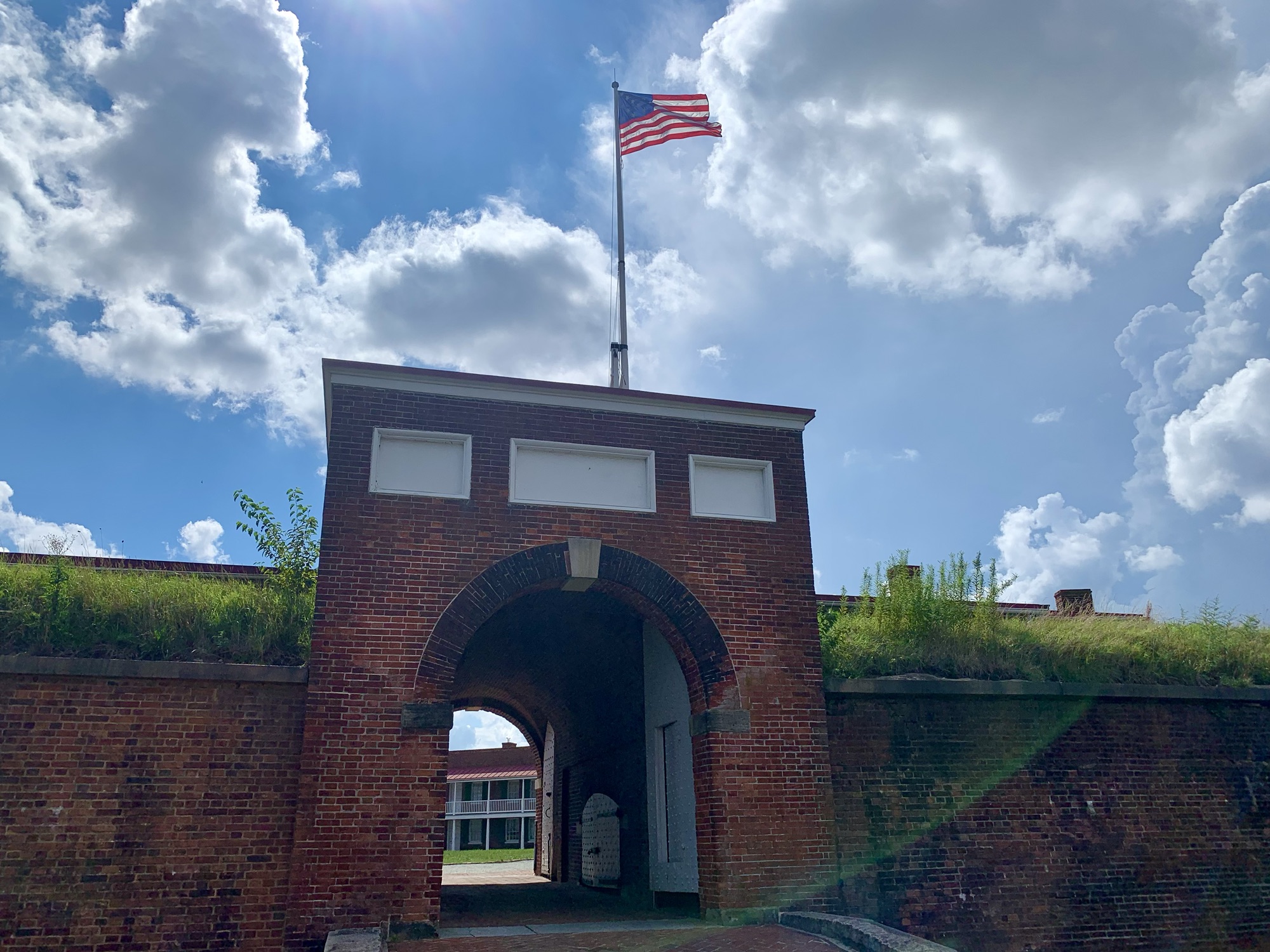
Although his namesake bridge collapsed in Baltimore, Francis Scott Key is best remembered for capturing the spirit of renewed patriotism that grew out of the War or 1812, as he penned his description of the defense of Fort McHenry (above) that became our National Anthem. The War of 1812 was a national low point in many ways, as Congress had ended Alexander Hamilton’s National Bank, and Albert Gallatin’s budget cuts had eviscerated the military. The trail traces the British advances on land and sea, leading up to the siege of Baltimore. Many of the DC area sites are part of this trail, including Fort Washington, Greenbelt Park, Kenilworth Aquatic Gardens, the National Mall, Pennsylvania Avenue, the White House, the George Washington Parkway, and the Potomac Heritage Trail, but there are lesser known battlefields, forts, museums, plantations, gardens, parks, the Pride of Baltimore II, the house of Mary Pickersgill, who made the flag, and more throughout Maryland.

Dolley Madison may have been our greatest First Lady—especially compared to the feckless Congress and Cabinet, often only barely loyal to the US and open to surrender—, but Dolley did everything she could to support her husband and her country. She invented the Inaugural Ball, hosted Native American Chiefs, smoothed quarrels between European and African envoys, and, in our hour of need, stood fast in the White House, even as the marauding British Troops approached in 1814 and as her husband tried to rally the local militia to defend the Capitol. At the last possible moment, she evacuated, with the President’s papers, the curtains, china, an original copy of the Declaration of Independence, and a famous portrait of George Washington, torn from its immovable frame. The British burned the White House to the ground. Dolley’s famous diplomacy helped convince Congress not to abandon Washington DC and to rebuild the White House and the Capitol. And through the news reports of her defense of our country, the nation rallied, shocked that the British would burn down DC’s public buildings.

However, in the war’s aftermath came a new sense of national identity, including our national flag and national anthem, setting the foundation for a more aggressive and stronger nation. That nationalism was fatal to many Native Americans, as the British had tried to enlist them and as the USA became more assertive and expansionist. And today, there are self-proclaimed ‘nationalists’ who support the second attack on the Capitol.

All Parks in the Mid-Atlantic, Zero Carbon

I recently completed visits to all national park units in the Mid-Atlantic region by electric vehicle, including First State in Delaware, 4 in New Jersey, 5 in West Virginia, 13 in Maryland, 16 in Pennsylvania and 17 in Virginia. I have also completed all the NPS affiliate sites, national heritage areas and NPS run trails in the region. Parks that stretch across multiple states count in whichever state I focus more of my visit, and I pick a few favorites at the end.

New Jersey does not deserve all the grief it gets from NYC talk show hosts. Get off the turnpike; it’s scenic and interesting. Great Egg Harbor River is lovely, Morristown is historic, Paterson Great Falls is impressive and Thomas Edison is fascinating.

West Virginia is almost heaven. Harpers Ferry is one of my favorite parks and it hosts the Appalachian Trail HQ. The three river parks, Bluestone, Gauley and New—a National Park—, contrast the dangerous and polluting history of coal mining with the beauty of nature when given our protection.

Maryland may be a small state, but it is packed with parks from Catoctin Mountain, down the C&O Canal, past the Greenbelt, down to Piscataway, out to the Underground Railroad and all the way to Assateague’s seashore. It’s also packed with history, from Hampton & Stone, to Forts Washington & McHenry, to Antietam & Monocacy and Clara Barton.

Pennsylvania’s parks are historic. There’s early US history at Fort Necessity, Hopewell Furnace, Independence, Kosciuszko, Valley Forge and Friendship Hill. There’s transportation history at Allegheny Portage and Steamtown. There are imagined terrors from Poe, and real terror at Johnstown Flood and Flight 93. There’s Gettysburg, where Eisenhower lived. There’s a new unit, Carlisle Indian Boarding School. And there are the Gap, Middle and Upper parts of the Delaware River, first explored by Europeans in the 17th century, who traded with the natives who lived here for millennia.

Virginia has the first British colony (see photo) and the birthplace of our first President. Many of Virginia’s parks are Civil War battle sites, including Manassas, Cedar Creek, Fredericksburg, Richmond and Petersburg. Others relate to slavery, the end of the war & civil rights, including Arlington House, Fort Monroe, Appomattox, Booker T. Washington and Maggie L. Walker. I enjoyed driving Shenandoah’s Skyline Drive, the Potomac Heritage Trail to Prince William Forest and the GW Parkway on my way to Wolf Trap. Virginia is for park lovers.

My favorite parks in each state are First, Edison, Harpers, McHenry, Independence and Colonial, but your favorite parks should be based on your interests.

New River Gorge National Park & Preserve

The bridge over the gorge is huge; it’s one of the highest in the world and the largest single arch bridge in the western hemisphere. I took some nice pictures of it, when I drove the old Fayetteville Station Road and crossed on the old one lane bridge. Some of the commercial raft trips end there, and it’s fun to watch them take their last rapid. The most crowded part of the park is the Canyon Rim Visitor Center near the bridge, where many folks stop to have ice cream or picnic.

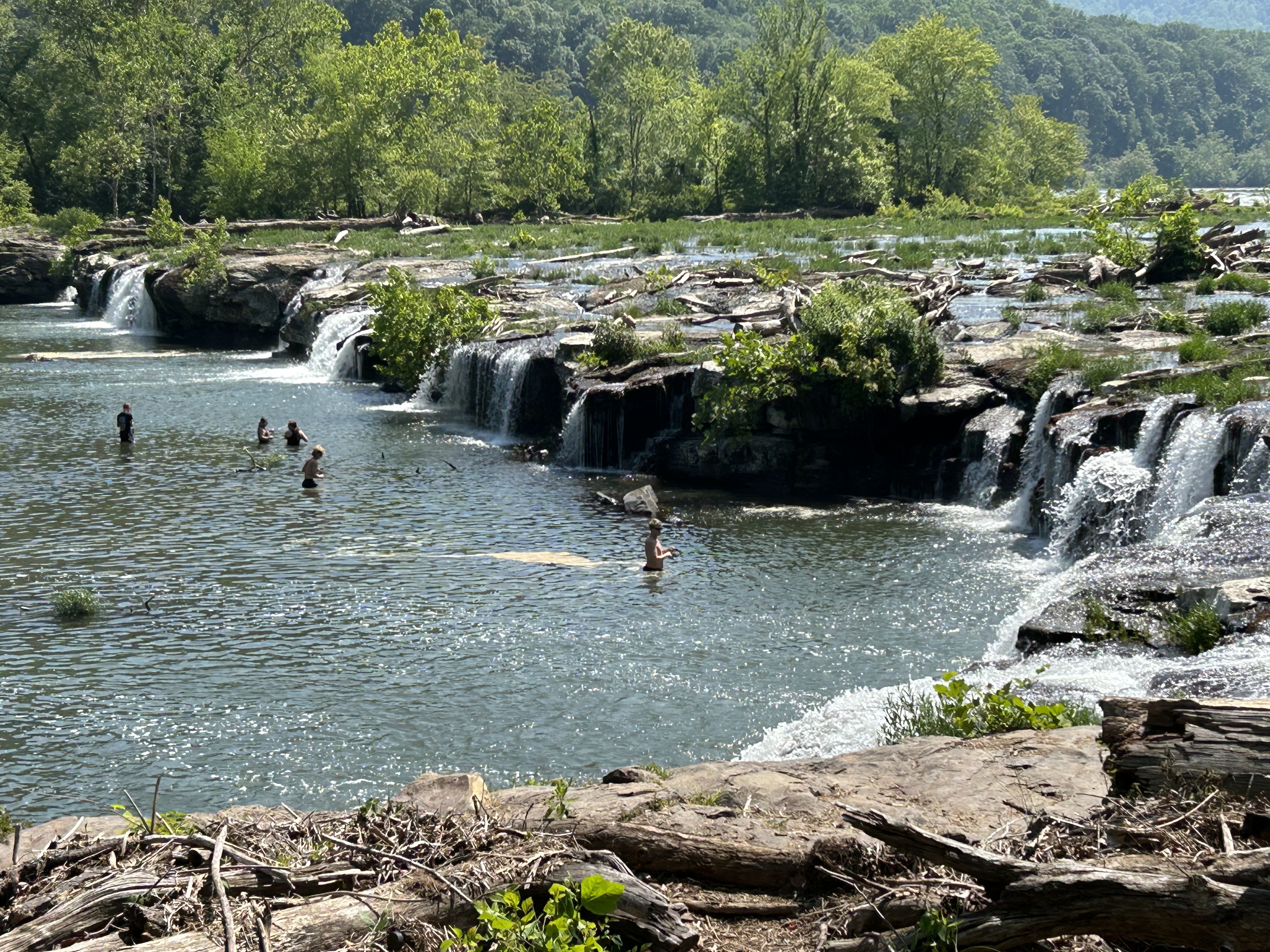
But the bridge is not the point of the park. The New River watershed is huge and very old. It starts in North Carolina near the Blue Ridge Parkway, includes the Bluestone and Gauley scenic rivers, and flows up to the Kanawha which is a major tributary into the Ohio River. The photo above shows folks fishing at Sandstone Falls, far upstream of the famous bridge. It’s a lovely spot with plenty of birds, an easy hike and a boardwalk.

The point is that the whole area was ruined by coal mining. This was the land of John Henry, if you know the old song about a railroad tunnel dug here. Now coal is more expensive than renewable energy, and many of the mines here have closed, becoming ‘exhibition mines’—fascinating tour in Beckley—, historic sites or slowly forgotten. A few coal trains still run through the gorge, but the park is now protected and recovering. Tourism generates more income and jobs now, and West Virginia is one of the most beautiful states in the US. The park is proof that we can change and improve. The point is that we can choose to save nature, instead of destroying it, and that it’s never too late to start trying.

Well every Monday morning
When the bluebirds begin to sing
You can hear John Henry a mile or more
You can hear John Henry’s hammer ring, Lord, Lord
 You can hear John Henry’s hammer ring

—A folk song