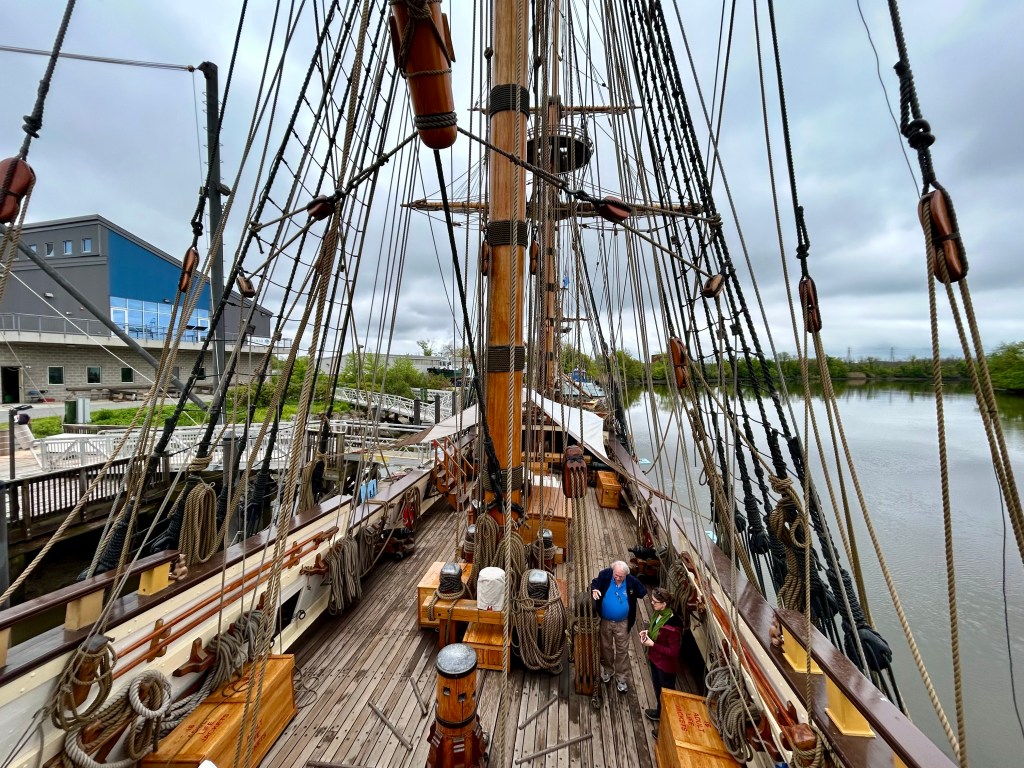
The Zimmerman center above is the launching point for summer boat rides on the river in the background, a colonial era museum, the trailhead through a Susquehannock tribal area, local HQ for the Captain John Smith Chesapeake NHT, and the HQ for the Susquehanna NHA. I’m glad I stopped here last month, since the staff cleared up some of my misconceptions.
The museum here does a good job in describing the contact between the colonial explorer John Smith and the natives. The staff also confirmed my suspicion that Captain Smith could not have traveled to all the points up river shown on his trail. Even his small exploring boat could not sail up waterfalls and over rocky shoals. So Smith’s historic trail map does not match the explorer’s actual historic trail. The NPS describes the trail as “a water-based trail following the coastline of the Chesapeake Bay and its tributary rivers”, which would be great, if this were a scenic trail, but it’s a historic trail, named for a real explorer. [No word yet from the NPS on fixing this.]
Amidst handling school groups with aplomb, the staff also nicely answered my questions about the broad heritage area. If you’re interested in the colonial era, you should visit the county history museum in York, which has several colonial buildings, including a tavern, where our revolutionary leaders, the Continental Congress, fled during the British occupation of Philadelphia from 1777 to 1778. While exploring, you will likely see both Mennonite and Amish community members, such as around Loganton in the scenic area up the west branch of the river.
Delaware has three schools that are recently designated NPS affiliate sites of the Brown v Board of Education NHP in Kansas.
The very small school in Delaware above, Hockessin Colored School #107C, was funded by one of the du Ponts—owners of palatial Longwood and Nemours estates nearby—for the purpose of segregating black students from their extravagantly outfitted white schools. Hockessin students were also given cast-off old textbooks and denied transportation. Louis Redding sued on behalf of one of the students in Bulah v Gephart in 1951, winning the case in 1952, and later combining several other cases on appeal to argue Brown v Board of Education at the Supreme Court.
Claymont High School below, now a community center, allowed 12 African American students to attend in 1952, the first students effectively integrating into a segregated state school system after a legal challenge that became a key part of Brown.
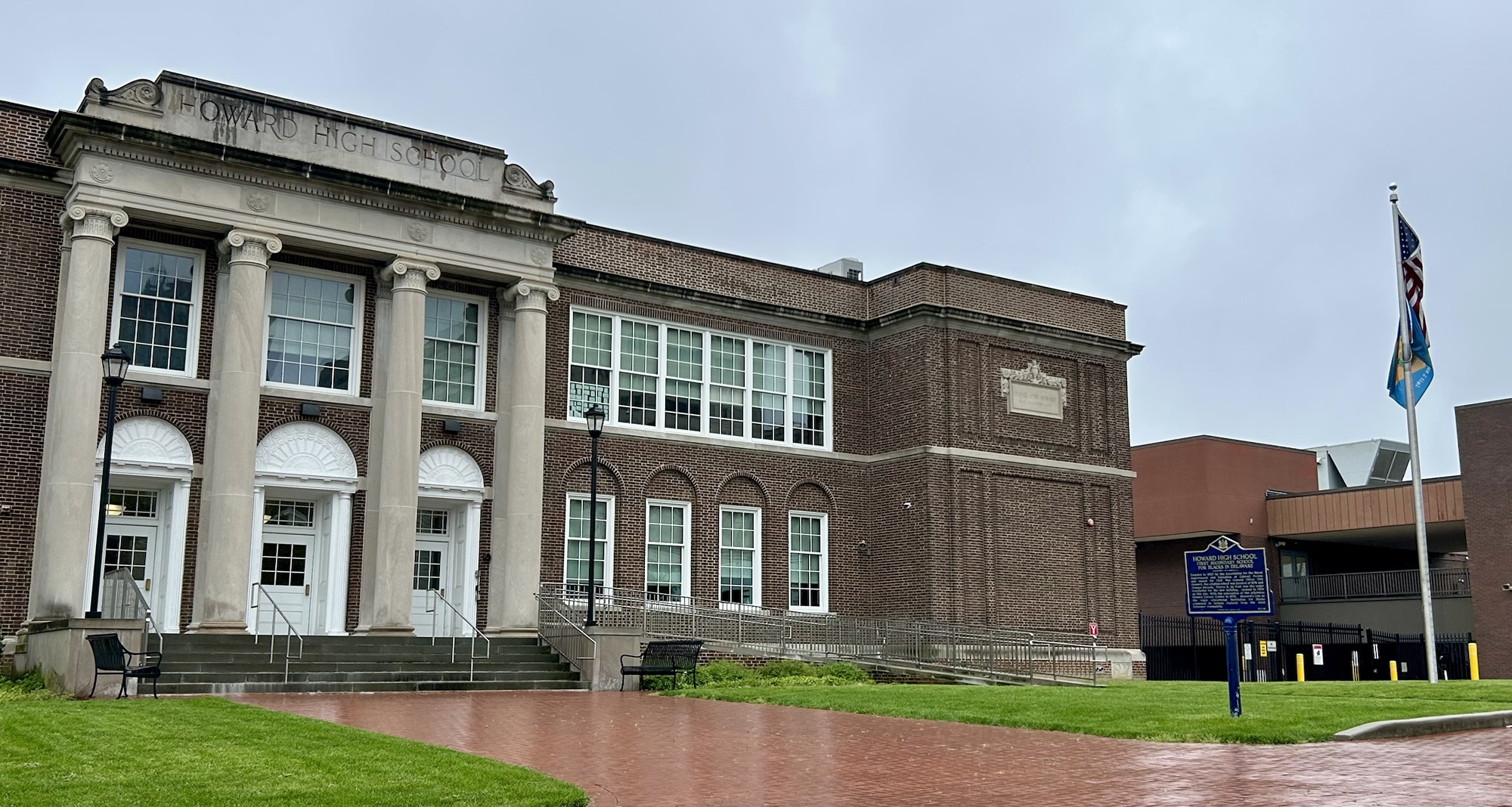
Previously, African American students from all over Delaware could only attend Howard High School below, often without public transportation. Brown recognized that segregation in and of itself was illegal discrimination in public education. Read more about the road to equal education.
Equality is the ideal we have yet to achieve. Jefferson wrote of equality in our Declaration of Independence. Our Constitution did not recognize it. Lincoln guided the country through a Civil War for equality, but then the country slid backwards again. But we must try.
W.E.B. Du Bois had supported and tracked inequality, progress and hope for schooling in the African American community of Prince Edward County in 1898. The state of Virginia revised their post Civil War Constitution in 1902 to permit racial segregation. In 1951, the inequality had long been unconscionable. While white students had cafeterias, gymnasiums, school busses and laboratories, black students needed warm clothes and umbrellas inside tar paper shacks.
Frustrated by the systemic racism that prevented adults—who faced retribution for asking for change—from fixing the problem, the students decided to act by themselves. 16 year old Barbara Johns addressed her fellow students, banging her shoe on the podium, and called a strike, asking for cooperation and saying “don’t be afraid”. The students all went on strike, and their minister said they should contact the NAACP. Barbara Johns called Richmond lawyer Oliver Hill to help.
Their case, which lost, became part of the Brown v. Board of Education appeal, but the Prince Edward County school district refused to follow the Supreme Court ruling. A new school was built, but rather than comply with integration, even after Little Rock, the Governor of Virginia closed schools for five years. Martin Luther King visited in 1962. JFK and RFK publicly excoriated Prince Edward County in 1963. Finally, the Supreme Court ruled again, saying “time… has run out”.
Every student should know this story, which began with a student walkout to demand a new school building. I was moved to tears listening to Barbara Johns’ recreated speech in the school auditorium and thinking about their courage in the face of terrible injustice. If you can visit, go and listen for yourself. This affiliate site, a favorite of mine, in Virginia is a powerful part of our Civil Rights history.
Around 200 years ago, America was expanding the National Road (US 40) westward to St Louis and needed a bridge across the Ohio River. It took a couple tries, but the stone suspension bridge in the foreground was completed in 1859. The modern bridge behind it has four concrete bases, but the Wheeling Suspension bridge has none. Most traffic from the Midwest to the Mid-Atlantic passes on I-70 over the background bridge, so you may have seen Wheeling’s longest operating suspension bridge out your window between Ohio and West Virginia.
The city of Wheeling is marvelously uncrowded with small shops and restaurants around Centre Market in the historic center of the heritage area. It’s the kind of ‘stuck in the past’ place that I love, where the sign on the old bookstore advises folks to ask at the local bar if the owner is not inside his store. They have music, boating and cultural events, and they could use a few tourists pulling off the interstate to buy a hot fish sandwich at Coleman’s Fish Market below. Recommended.
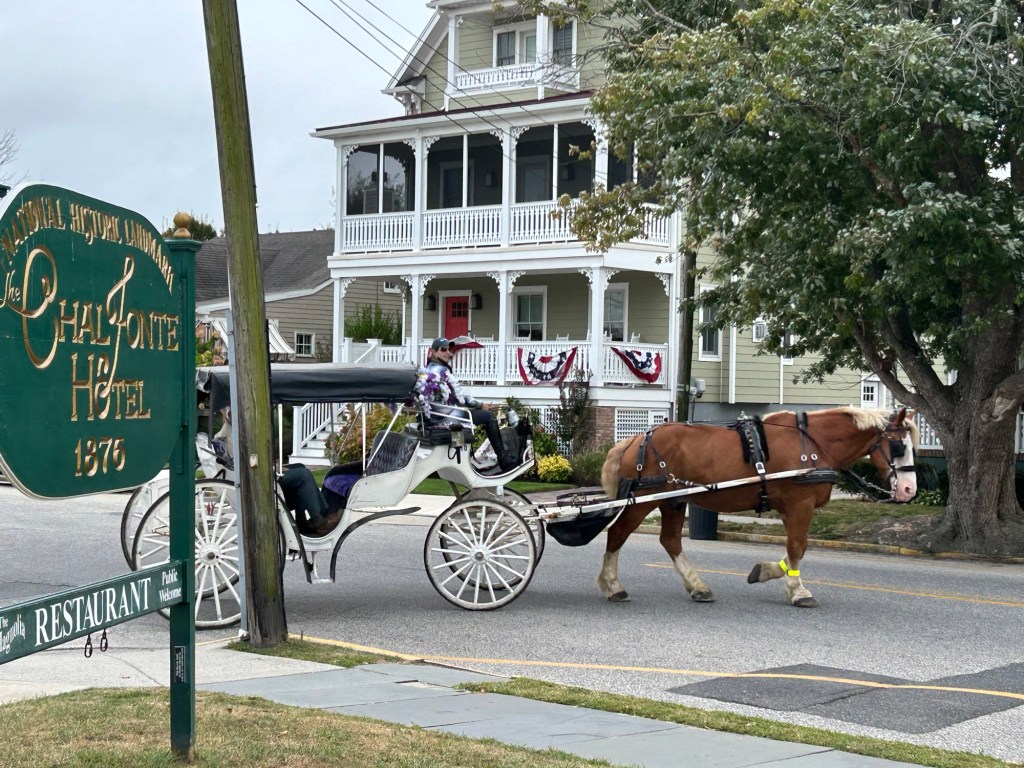
Before coming here, I wasn’t sure if this was an affiliate, a heritage area or a trail, but I thought a road trip along the NJ coast between Cape May and Sandy Hook, worthwhile. Cape May above is a lovely old town with Victorian style, boats and beaches. The Pine Barrens near Great Egg Harbor extend for miles. There are wildlife refuges, lighthouses, and historic sites, especially around the Battle of Monmouth, where Washington’s troops eked out a victory after training in Valley Forge. Locals freely admit that Seaside Heights is tacky, but much of the Jersey shore is both classy and trendy, especially in areas like Asbury Park. Technically, it turns out that this is a lapsed trail, that once partnered with the park service and was considered for heritage area status, which explains why it still appears as an obscure NPS site in a few places, but it is no longer authorized under the national park service. However, I’m glad my mistake and my curiosity about this area drove me here, and I enjoyed exploring this fascinating stretch of historic coast.
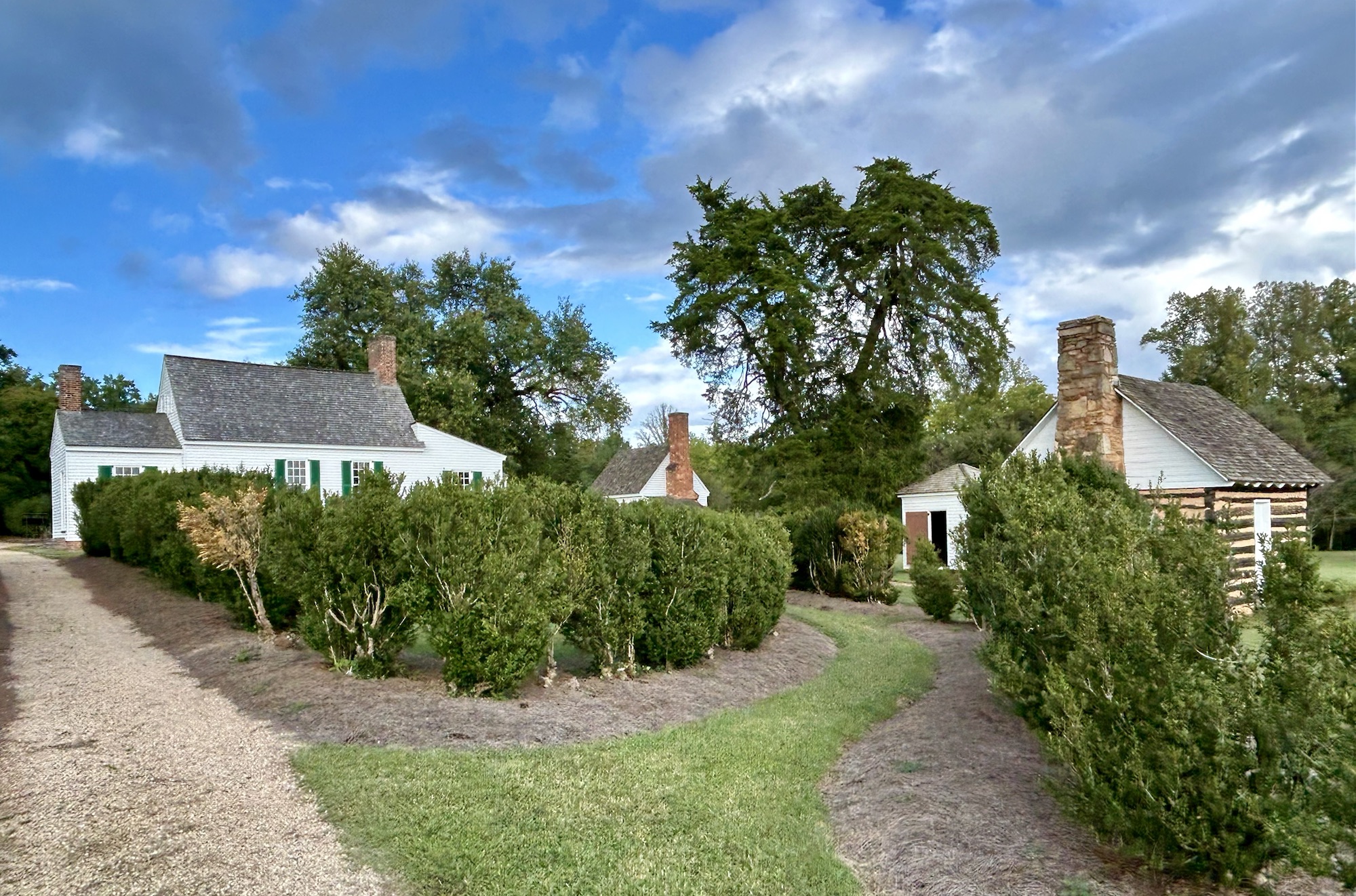
Patrick Henry Jolly, a direct descendant of his namesake, greeted me at Red Hill (one of my favorite affiliate sites, above), where his ancestor is buried on a 1,000 acre estate in Virginia. We discussed Jefferson, a man infamous for his many long, bitter personal grudges, and I learned that Jefferson called Henry “the greatest orator that ever lived”. Speaking to Daniel Webster, a well known orator himself, Jefferson described Henry’s gift as being almost magical, delighting and moving him, even when he spoke in opposition to Jefferson, and yet Jefferson, a genius, thought, “what the devil has he said?”
Henry has been described by biographers as the Prophet or Voice of the Revolution, but the title that strikes me is Demosthenes, the greatest orator of Ancient Greece. Ogilvy, the father of modern advertising, wrote, “When Aeschines spoke, they said, ‘How well he speaks.’ But when Demosthenes spoke, they said, ‘Let us march against Philip’”. You may have heard a mistaken version of this quote with the Roman Cicero as Demosthenes’ rhetorical rival, but, of course, Cicero lived hundreds of years after Demosthenes, and attributed some of his success to adopting Demosthenes’ techniques and phrases. Patrick Henry, through his spoken words, ignited the hearts of our country’s founders to declare independence, prepare for war and give their lives and sacred honor for the cause of liberty against tyranny. And they recognized him for it contemporaneously. Jefferson said that “no man was as well suited for the times”, that he didn’t know what they would have done without Henry, and that he was “far before all in maintaining the spirit of the revolution.”
Of course, Henry accomplished much in his own right, including supporting George Rogers Clark and being elected Governor of Virginia five times. But it his speeches with many lines that still resonate today, especially his most famous speech 250 years ago—as a slave owner speaking to fellow slave owners—boldly stealing and reimagining a line from the play Cato, A Tragedy, that make Henry immortal. With Jefferson and Washington listening attentively, Henry convinced the Virginia Convention to fund troops in anticipation of the Revolutionary War, punctuating the final line by dramatically plunging his (blunt) letter opener against his chest. The letter opener was preserved by Patrick Henry Jolly’s family and is now on display at Red Hill.
“Is life so dear, or peace so sweet, as to be purchased at the price of chains and slavery? Forbid it, Almighty God! I know not what course others may take; but as for me, give me liberty or give me death!”










 Zero Carbon Travel