
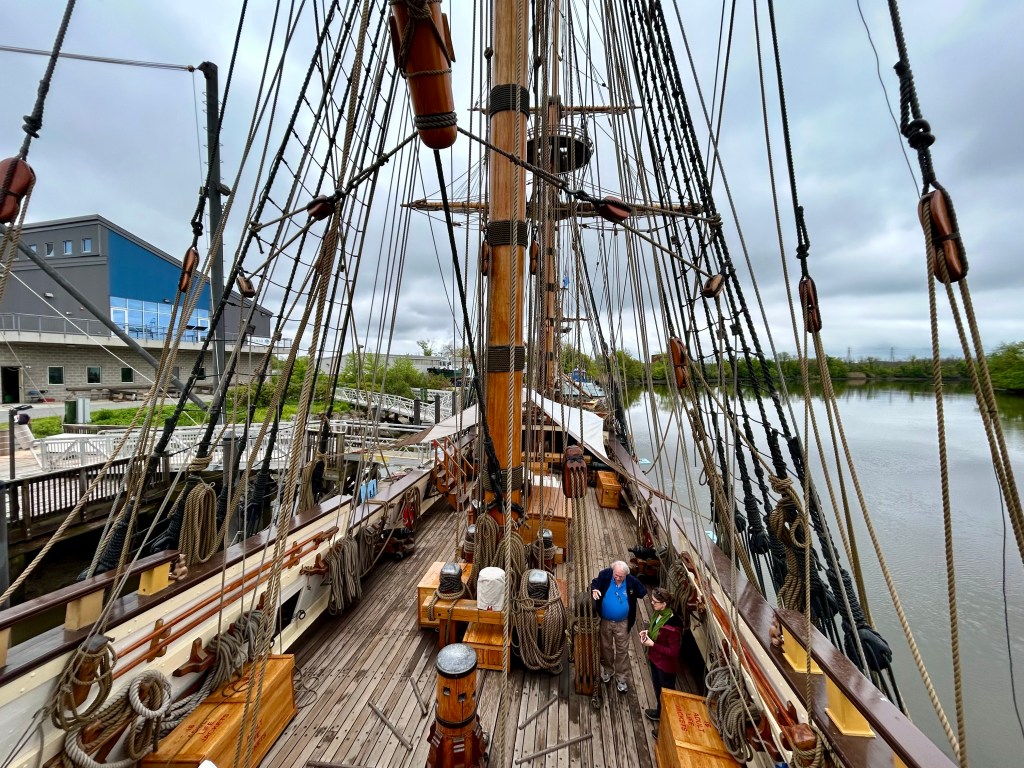
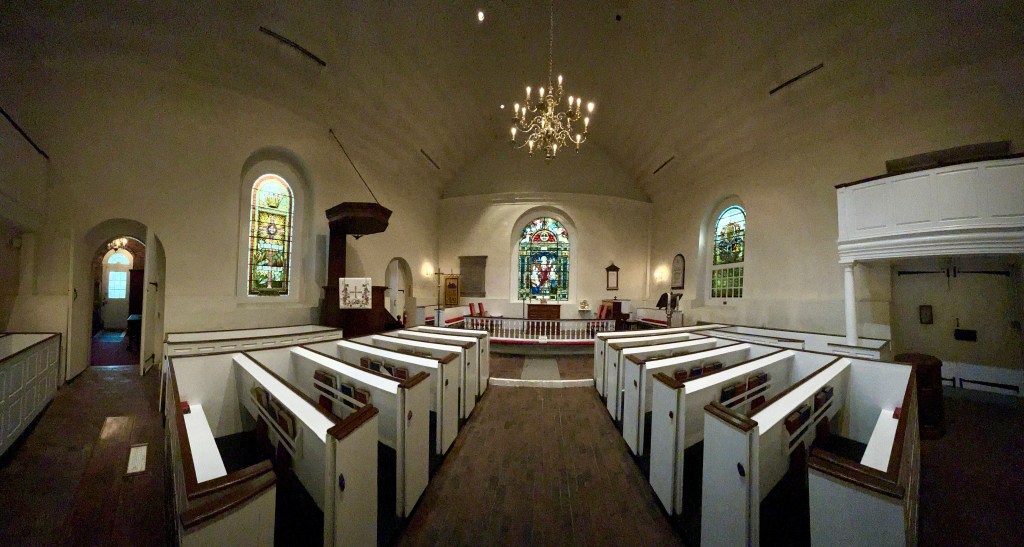
Celebrating the First State! Delaware has one park, First State National Historical Park, which includes the New Castle Court House, the Kalmar Nyckel and Old Swede’s Church, above. The John Smith Chesapeake and the Rochambeau Route also cross the state. And Claymont, Howard & Hockessin are affiliate schools in Delaware of Brown v Board NHP in Kansas.
Delaware
Completed
Delaware Brown v Board Affiliates

Delaware has three schools that are recently designated NPS affiliate sites of the Brown v Board of Education NHP in Kansas.
The very small school in Delaware above, Hockessin Colored School #107C, was funded by one of the du Ponts—owners of palatial Longwood and Nemours estates nearby—for the purpose of segregating black students from their extravagantly outfitted white schools. Hockessin students were also given cast-off old textbooks and denied transportation. Louis Redding sued on behalf of one of the students in Bulah v Gephart in 1951, winning the case in 1952, and later combining several other cases on appeal to argue Brown v Board of Education at the Supreme Court.
Claymont High School below, now a community center, allowed 12 African American students to attend in 1952, the first students effectively integrating into a segregated state school system after a legal challenge that became a key part of Brown.
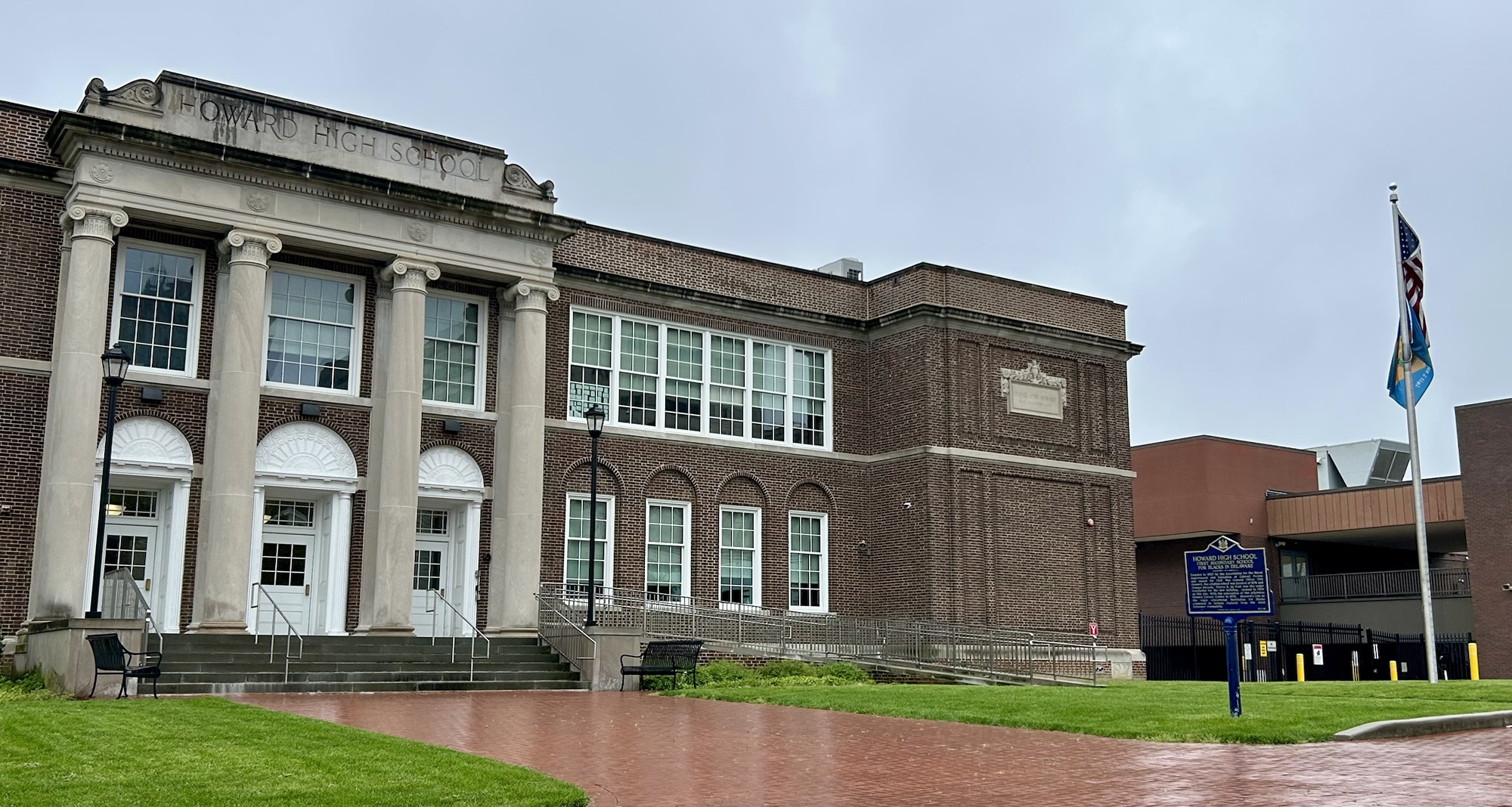
Previously, African American students from all over Delaware could only attend Howard High School below, often without public transportation. Brown recognized that segregation in and of itself was illegal discrimination in public education. Read more about the road to equal education.

Star-Spangled Banner National Historic Trail
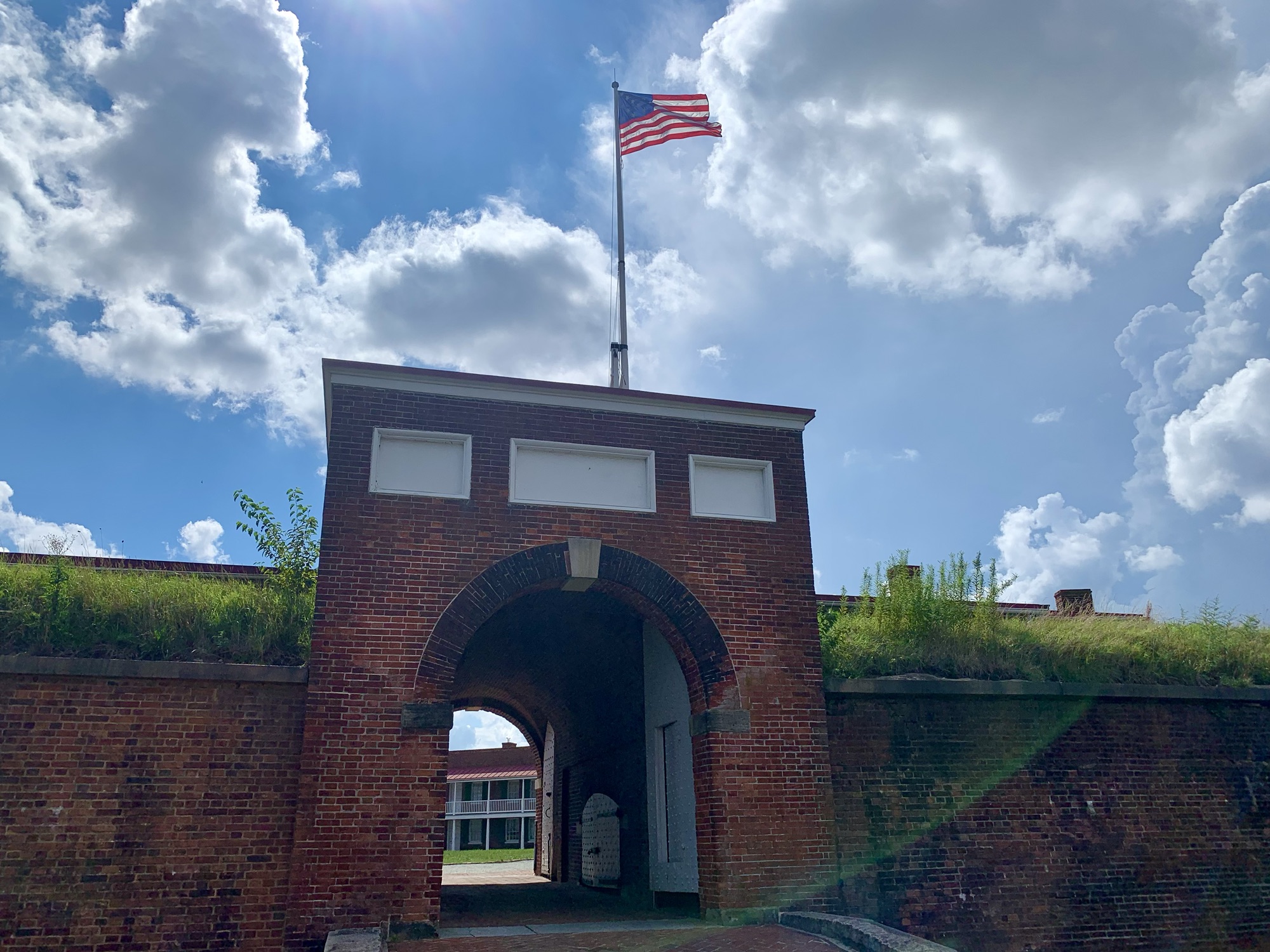
Although his namesake bridge collapsed in Baltimore, Francis Scott Key is best remembered for capturing the spirit of renewed patriotism that grew out of the War or 1812, as he penned his description of the defense of Fort McHenry (above) that became our National Anthem. The War of 1812 was a national low point in many ways, as Congress had ended Alexander Hamilton’s National Bank, and Albert Gallatin’s budget cuts had eviscerated the military. The trail traces the British advances on land and sea, leading up to the siege of Baltimore. Many of the DC area sites are part of this trail, including Fort Washington, Greenbelt Park, Kenilworth Aquatic Gardens, the National Mall, Pennsylvania Avenue, the White House, the George Washington Parkway, and the Potomac Heritage Trail, but there are lesser known battlefields, forts, museums, plantations, gardens, parks, the Pride of Baltimore II, the house of Mary Pickersgill, who made the flag, and more throughout Maryland.
Dolley Madison may have been our greatest First Lady—especially compared to the feckless Congress and Cabinet, often only barely loyal to the US and open to surrender—, but Dolley did everything she could to support her husband and her country. She invented the Inaugural Ball, hosted Native American Chiefs, smoothed quarrels between European and African envoys, and, in our hour of need, stood fast in the White House, even as the marauding British Troops approached in 1814 and as her husband tried to rally the local militia to defend the Capitol. At the last possible moment, she evacuated, with the President’s papers, the curtains, china, an original copy of the Declaration of Independence, and a famous portrait of George Washington, torn from its immovable frame. The British burned the White House to the ground. Dolley’s famous diplomacy helped convince Congress not to abandon Washington DC and to rebuild the White House and the Capitol. And through the news reports of her defense of our country, the nation rallied, shocked that the British would burn down DC’s public buildings.
However, in the war’s aftermath came a new sense of national identity, including our national flag and national anthem, setting the foundation for a more aggressive and stronger nation. That nationalism was fatal to many Native Americans, as the British had tried to enlist them and as the USA became more assertive and expansionist. And today, there are self-proclaimed ‘nationalists’ who support the second attack on the Capitol.
First State National Historical Park

One of the prettiest partner sites in the park, the Old Swedes Church dates back to 1698 when the King of Sweden funded it to support his small community. (If you do the tour, take the stories about the ghosts and the character who requested the funds with a grain of salt—there are a number of hoaxes out there). The Swedes arrived here in a Dutch ship, the Kalmar Nyckel in 1638, traded with the Native Americans for beaver pelts, and they built a fort named after their progressive young Princess Christina. Eventually, the British took over the area, but there’s now a fabulous recreation of the 17th century tall ship—which does day sails in summer—next to the site of the fort.
Delaware was spared most of the battles of the Revolution, besides a skirmish at a bridge and a naval engagement in the river, and also had no Civil War battles, but its history is nonetheless fascinating. The name comes from Baron De La Warr, the first Governor of the Virginia colony. The land was part of the King’s grant to William Penn—on the condition he take his Quaker friends with him—and was technically part of Pennsylvania until 1787. At the south end of the park, John Dickinson’s plantation holds tours about his writings in favor of independence, his signing of the Constitution and his decision to free his slaves by 1786. Delaware was a key vote during the decision to issue the Declaration of Independence. Two of its three delegates split, and the third, who was ill, rode overnight to cast his vote in favor and to exhort the other state delegates to join. The first state ratification of the Constitution was done in Dover, near the Green, but the tavern were it took place is gone.
Delaware Quakers were active in the Underground Railroad, and there’s a statue of Harriet Tubman and Thomas Garrett in Wilmington. One African American conductor was arrested, jailed, and auctioned off in front of the old State House in 1848. As Samuel Burris was being carted off into slavery, his purchaser whispered to him, “not to fear, you have been purchased with abolitionist gold and I will spirit you away to Philadelphia”.
Due to the main visitor center behind the Old Court House in New Castle still being under construction, and due to the plethora of partner organizations, the sites and tours may seem a bit disorganized or amateurish, but the locals know their history and are proud of it. The Old Court House has many original artifacts, portraits and exhibits to see on the interesting tour. Try eating at one of the old Colonial Era taverns or tea rooms, and you’ll likely learn more lore from the locals.
 Zero Carbon Travel