Mammoth Cave National Park

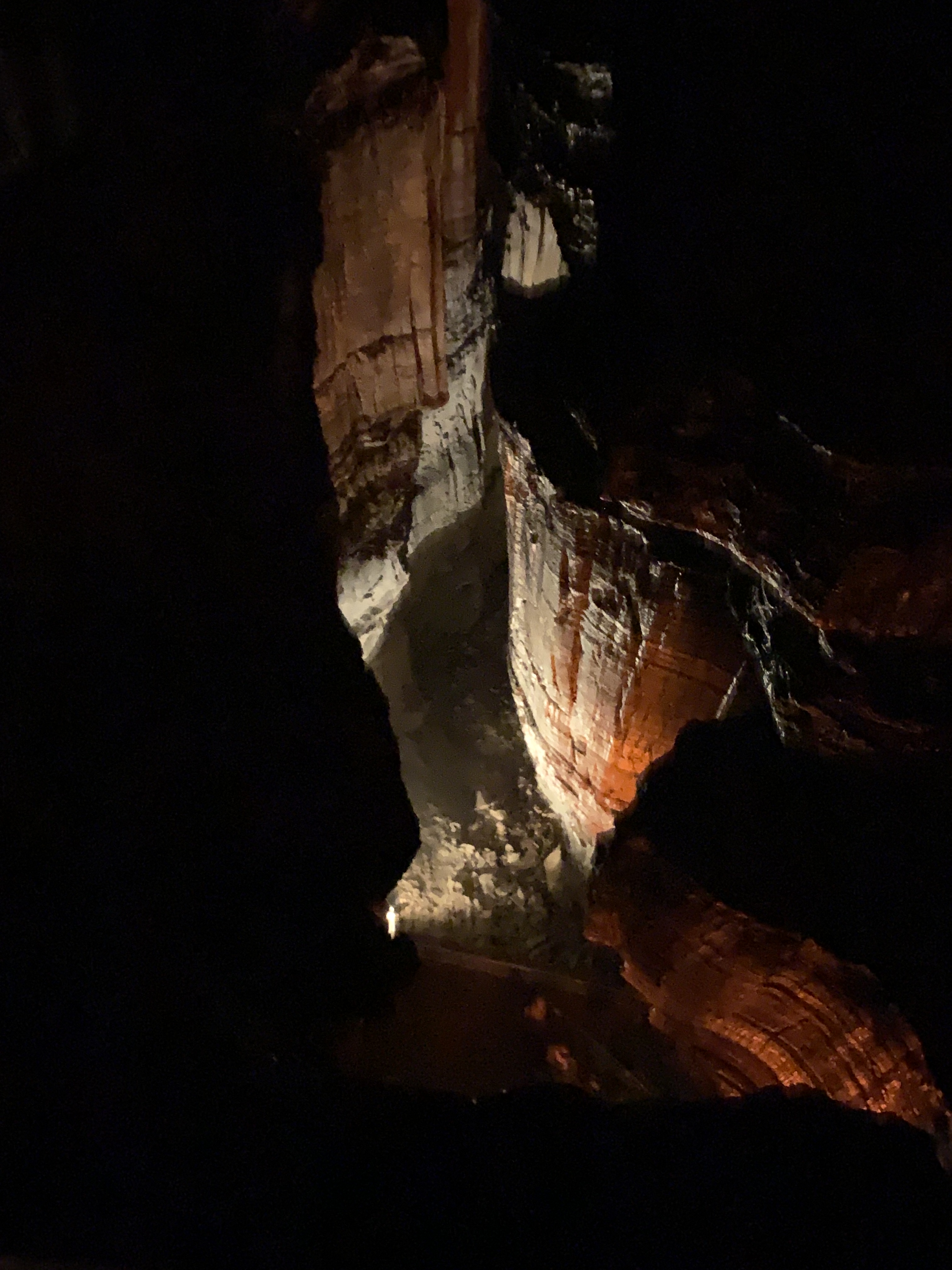
Where Carlsbad is like the Mines of Moria where you’re expecting goblins to stream out of the crevices into the magnificent cathedral-sized chambers, Mammoth is definitely hollow-earth lizard people. The walls are fairly smooth and plain and the ”cave” is actually an incredibly long maze of tunnels with underground rivers. I figure since the ceilings vary in height that only lizard people who are equally comfortable either upright or on all fours would feel at home roaming the endless passageways. The ranger herding us from the back concurred and told scary stories which kept us moving right along.

The cave is a World Heritage Site. Above ground is a huge forest with miles of trails, several nice campgrounds, and the Green River which runs deep enough to require a small car ferry at one point. The clean ecosystem above helps keep rare blind cave fish and other species alive below.

The ranger leading the historic tour explained that a slave named Stephen Bishop first crossed the ’bottomless pit’ and discovered the fish while guiding tourists. His tours gained widespread fame and included luminaries like Emerson. Bishop was evidently fearless, had an unusual amount of freedom as a guide and educated himself in geology and other subjects to converse with visitors. Emerson’s tour lasted all day, and they must have had interesting discussions. Emerson and his literary friends were conductors on the Underground Railway at the time, and many slaves escaped through Kentucky in the area near the cave. Bishop must have been motivated to use his unique access into the hundreds of miles of tunnels under Kentucky, since his own children were sold away into slavery. He died shortly after gaining his freedom in unknown circumstances.

Speaking of railroads, I charged my Tesla at the Casey Jones Museum in Jackson Tennessee on the way, and got a kick out of how modes of transportation change. I also ate at the Old Country Store there, which was reasonably priced and delicious, and it surprised me. Outside it celebrated the confederate General Nathan Bedford Forrest of KKK infamy, but inside it had a thoughtful and beautifully done exhibit on the Woolworth lunch-counter protests. Much like Mammoth Cave, you sometimes can’t judge what’s happening beneath the surface. Similarly, this post has been too long and meandering, but I hope somehow it’s all connected.

Saguaro National Park

When I visited this park with my kids, we went to the east unit. Both units are in the greater Tucson area, but both are a decent drive away from the center of town in different directions. So, I was glad to have a chance to see the other side. Although the visitor center is a bit nicer in the west, the east unit has a scenic cactus forest drive where you can easily get out and take a closer look. Both have plenty of saguaro (suh-Wah-ro) to see.

Guadalupe Mountains National Park

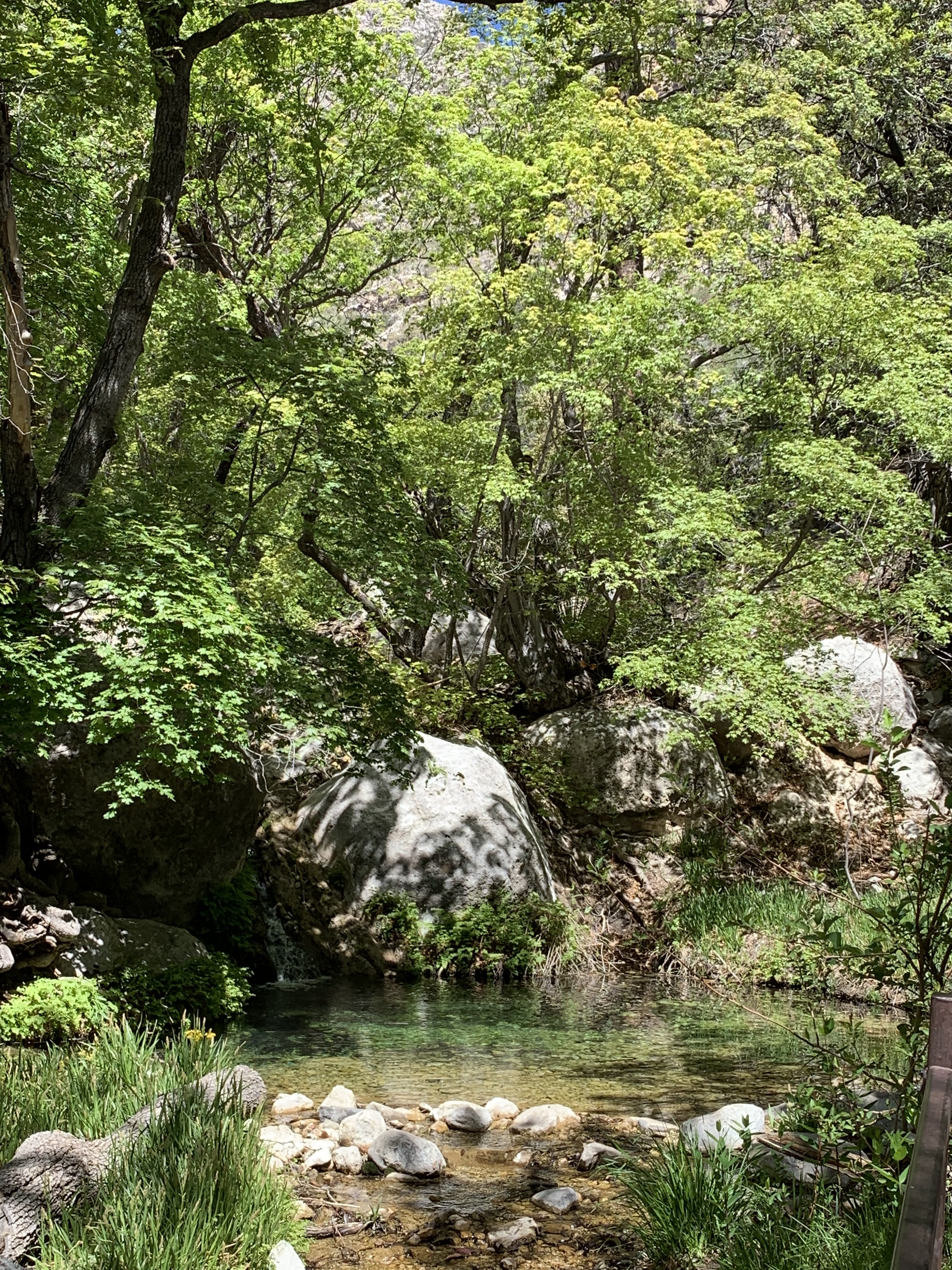
Even after planning, I still check with the rangers for suggestions on good hikes and photo ops. I originally planned to hike McKittrick Canyon, but the ranger suggested the trail at Frijoles Ranch instead, as its shorter and quite similar this time of year. The trail passes two different springs, including the mountainside one pictured.

Guadalupe is large, mountainous and mostly dry, which makes it both difficult to explore and also more barren than many other parks. But that’s what makes the occasional oasis above especially sweet.

Carlsbad Caverns National Park

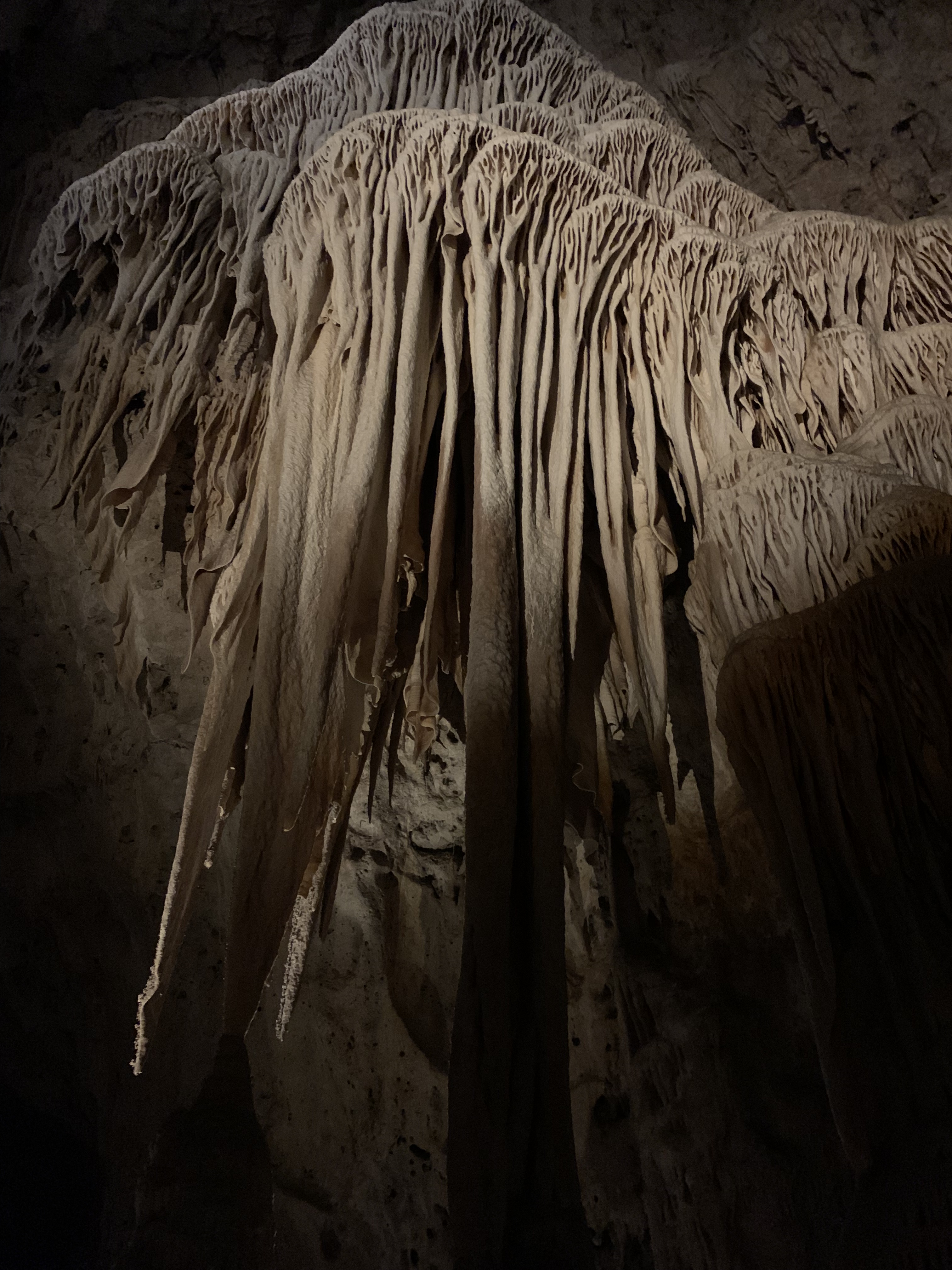
While not as long as Mammoth Cave, Carlsbad is larger in terms of volume, and both are World Heritage Sites. The ceilings are often over a hundred feet high, and the Big Room spans over 8 acres, with a mile-long loop to see it. Even after descending 750 feet down the natural entrance, there are still deeper “bottomless” pits below. I was fairly sure I heard faint drumbeats coming up from the darkness, so I asked the rangers. They explained that there were only a few goblins, and that they try to catch them as they’re considered “invasive species”. I finished the hike as quickly as possible and took the elevator up.

Hot Springs National Park

Wilderness exploration is nice, but I really enjoyed spending a couple nights here to rest and look for inspiration. Unfortunately I couldn’t literally recharge, as the nearest supercharger is in Little Rock, and I doubted my hotel would let me run an extension cord out into the parking lot. The entire area is full of hills, forests and lakes, but the downtown area is unique, being both historic and still thriving. There are fancy restaurants, stylish hotels, and, of course, bathhouse row. There seems to have been a few boom & bust cycles that created a few winners, some losers and some interesting adaptations. The longest running, original and most traditional bathhouse is Buckstaff. I’m up early, but there was already a line outside when I walked past, as they don’t take reservations. Maybe I’ll come back someday for a spa treatment. For now, it’s enough to just wander around, put my hands in the hot water public fountains, peer in the shop windows, admire the Art Deco and other architecture and hike up the hill into the trees.

Great Sand Dunes National Park

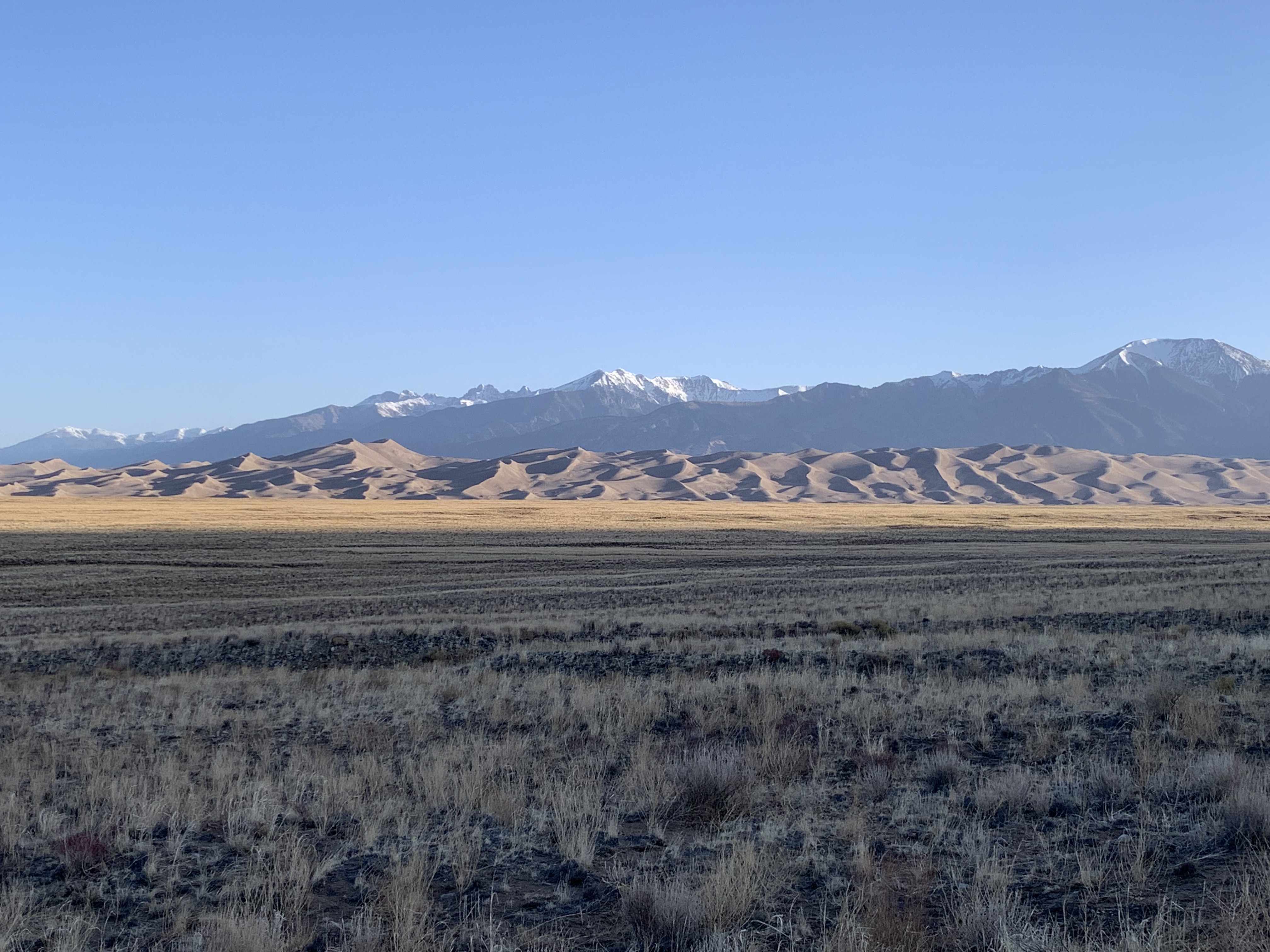
I’m obviously not much of a photographer, but I like this one. The tallest dunes here are over 700 feet, but they’re dwarfed by the surrounding mountains. Since I camped at Piñon Flats in the park, I was able to take this just as the sun came over the mountains, which added shadows for contrast. I hiked into the dunes before dawn and along the creek, but it’s not easy to take an interesting picture of so much brown sand, even in such a beautiful, surreal landscape in the moonlight. The dunes and the neighboring preserve are basically all wilderness, easily hiked into, and our footprints quickly disappear.

Whenever I wander into any wilderness, I always wonder about what we value. I have both a BS & MBA in business, and I worked in HQ at a Fortune 100 financial firm for a couple decades. And it seems to me that capitalism is terrible at valuation. One problem is that the first business to claim a resource is often just the first idea that comes along. There may be a better and more profitable use for a resource, but the quickest way to make money is typically the one that’s chosen. Another problem is that business people aren’t very innovative. If they see one business is successful in an area, then they will often just copy that idea. Economically, we’re far better off with a diverse set of competitive products and services than with a small number, because then we’re more resilient to market changes. But short term thinking dominates, which leads to over-investment in a few businesses, rather than a broad, diverse range of businesses.

It doesn’t take any special training to see this. Drive through most towns and see the same chain restaurants everywhere. Look at how similar most vehicles are or how all the fields in an area grow the exact same crop or raise the same cattle. Business is mainly herd behavior, and few want to risk money to develop a completely new business. Capitalists need tax incentives to change. Traditional car companies killed the electric car, then ignored Tesla, and now are demanding that the government build a charging network for them to compete. Who knew America’s largest and oldest corporations were such whiny cowards who need taxpayer handouts before they will adapt?

Why do I think about valuation in the wilderness? Because if the first guy to find this place had owned a cement company, he would have started carting off these dunes to make concrete. And then other concrete material suppliers would have copied him, lowering profits to nearly zero. And the wilderness would have been gone before anyone bothered to think whether there were any other better uses. The same is true of forests, wetlands, prairies, rivers, valleys, mountains and oceans. Capitalism rewards the first, fastest, cheapest exploiter for destroying wilderness, and penalizes long term thinking. Because time is money.

White Sands National Park

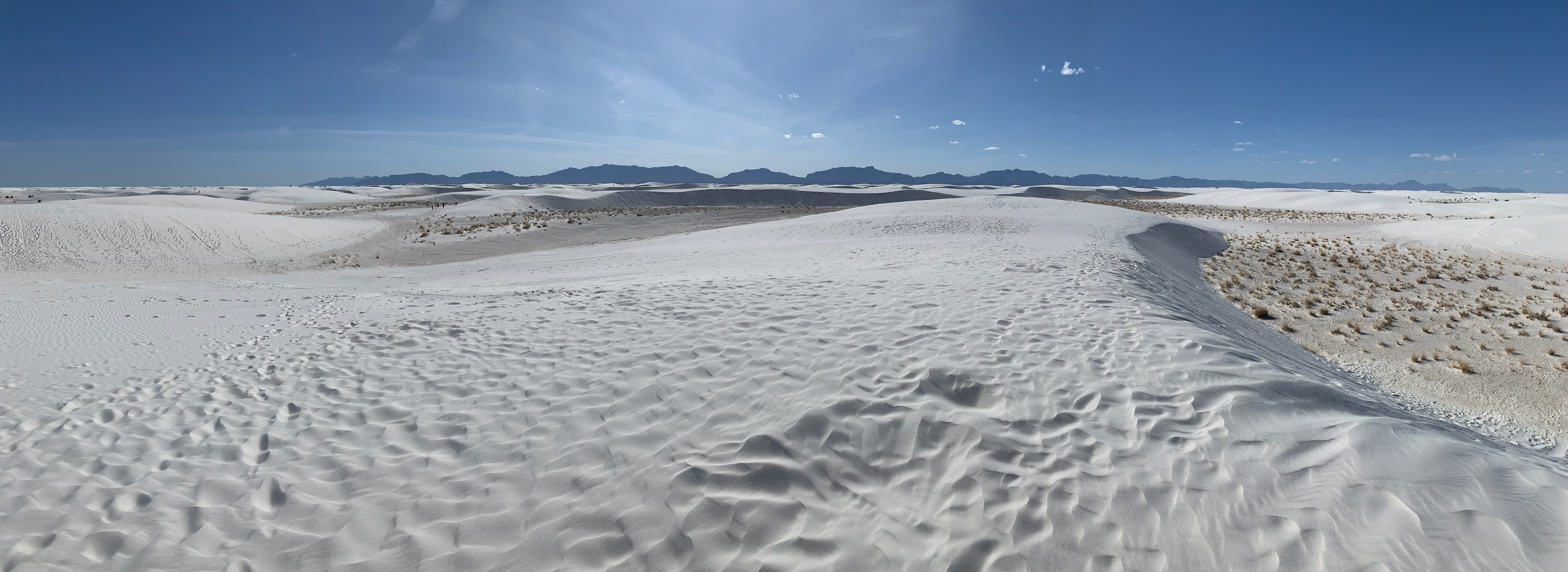
One of only three large gypsum sand dunes on earth, the others being nearby in Guadalupe Mountains NP and in Coahuila Mexico. If I had more time, I would have enjoyed camping overnight in the “back country” away from the road or a ranger lead evening program. But I enjoyed the nature hike and the otherworldly views. I was glad to have the long-range version of the Tesla Model 3, since the round trip distances to charging stations cross the vast missile range and mountains you can see in the distance.

Click to see my photos of all national park units in New Mexico.

Petrified Forest National Park

The Triassic forests are gone, and all that remains are fossils like these. Our climate changes frequently, but extremely slowly. Sudden change is a crisis, because plants and animals lack the ability to adapt or evolve quickly. Hundreds of millions of years ago, this area was an equatorial jungle. The trees were buried by volcanic ash and sediment and soaked in mineral rich waters to fossilize, offering a rare glimpse back before the Jurassic dinosaurs.

The park film explains the distant past, the recent past and current attractions. I hope they improve their camping opportunities, so that visitors spend more time here. I enjoyed my brief time here. But it was difficult to find a car-camping campground in the area, so I moved on too quickly.

Our carbon emissions since the industrial revolution are like an asteroid strike against all life on earth. The Anthropocene, or human dominated age, has been very short, but it will be characterized by extensive global mass extinctions. And unlike a meteor, this time the devastation is entirely by choice. We know that we’re killing the plants & animals that we claim to love. But most of us apparently don’t care enough about the future to make any significant changes to save life on earth.

Click to see my photos of all national park units in Arizona.

Pinnacles National Park

I enjoy revisiting parks now that I travel by electric vehicle (EV), but this one was particularly good. When Pinnacles was still a National Monument before 2013 and I still traveled by burning carbon, we took the kids, but our timing was a bit off. Pinnacles gets crowded on weekends with full campgrounds and limited parking at trailheads. And the seasons are tricky. Winter can be too cold with icy roads in the hills, and summer is too hot for me, especially with our new and changing climate. Spring break is popular, and the campground pool opens on April 1st this year. Last time, we experienced both too many crowds and too much heat. After a bit of research, I decided to go mid-week at the beginning of Spring.

The biggest difference is visiting the caves at Bear Gulch. To protect the large, sensitive colony of Townsend’s big eared bats, it’s rare to be able to visit the entire cave. I remember being underwhelmed by the caves on our earlier visit and described it as being more like a narrow canyon with a few boulders stuck overhead, compared to other caves in the park system. So this time, I checked the status of the caves, and I learned that the last week of March often has full cave access, before the bat breeding season starts. And wow, it was a very different experience.

First, I hiked from the campground to save EV battery range and get more exercise. That turned out to be a beautiful hike through varied terrain with quail, wild turkeys, woodpeckers, jays, turkey vultures and other birds. But when the Gulch narrowed, I felt the cold air from underground, even before entering the lower caves. Last time, we must have taken the less-scenic shortcut. This time, I felt like a spelunker. By the time I got to the upper caves, my iPhone was in my breast pocket for light, because scrambling and ducking required both hands. It was more adventure than I expected, but fortunately, people along the way helped keep me on the path to the lovely small reservoir at the top. Well worth revisiting!

“An elf will go underground, where a dwarf dare not? Oh, I’d never hear the end of it.” — LOTR

Click to see my photos of all national park units in California.

Joshua Tree National Park

Jumbo Rocks Campground

The common meme here is that the eponymous trees remind folks of Dr Seuss, but the stars here are the lumpy rocks. Every time I turned around, I half expected the rock monster from Galaxy Quest to stand up. I took this panorama less than 50 feet from my campsite. Exploring around here brings back that childhood sense of wonder, and the actual kids I saw also enjoyed scrambling all over the weird landscape.

Also, the tree that inspired Dr Seuss for the truffala trees in his Lorax story was a Monterey Cyprus, not a Joshua Tree. But it’s not a bad idea to think about the Lorax when visiting any park, since we need to protect our trees more than ever now. And since I’m correcting the record on trivial items, Jumbo Rocks Campground site #113 has plenty of parking for a 15′ 5″ long electric vehicle. The site description says that the parking space is limited to 13 foot long vehicles, and coincidentally I’ve noticed more than once that it is the last campsite available. So, if you have an EV, go ahead and book the site. If you’re driving a gas-guzzler, stay home.

“It’s a rock monster. It doesn’t have motivation.”

Galaxy Quest

Click to see my photos of all national park units in California.