Mount Rushmore National Monument

I like Mount Rushmore, but it’s in the wrong place. The Presidents selected all had issues with Native Americans (although the Presidents were all long dead when the monument was sculpted). The sculptor was a KKK member who wanted to sculpt confederate leaders, but that’s just a side note. No, the problem is that the monument is carved into the sacred Black Hills which may be the most shamefully taken, fought over and litigated place in America. It doesn’t help that the surrounding area is filled with common tourist traps, and that the tourist dollars do not go to the tribes who legitimately (according to Court decision) should own the land. Even though they have Tesla chargers in the parking lot, I just can’t appreciate the site as I did years ago.

Jewel Cave National Monument

I’ve now only a couple caves left to explore in the system. I’m all out of troll, dragon and lizard-people jokes. So, instead I will just encourage you to reserve your tour in advance, since they can sell out. I was lucky to get the last single ticket to the shortest tour, where I was able to see the jewel-like dog’s tooth structure above. There are many more interesting crystal and other features to see. And the cave maps continue to expand as new sections are explored.

Agate Fossil Beds National Monument

This diorama is one of the best I’ve seen, and it showcases all the major finds discovered here to date. The first fossil was found by James Cook on his ranch here at the headwaters of the Niobrara, but his collection of Native American art & artifacts rivals the attraction of the fossils. He was a great friend of Chief Red Cloud, and, unlike many of the original fossils which have gone on for display and study elsewhere, Cook insisted his gifts remain here. If that weren’t enough, there’s a lovely creek with wildlife on the trail up to where most of the fossils were found. This is one of my favorite fossil sites, although Dinosaur is better.

Scotts Bluff National Monument

Like many folks, I grew up watching Westerns, so when I think of wagon trains of pioneers, I think of circling the wagons to defend against native attacks. But that’s another myth. More pioneers were killed by gun accidents than native raids. Pioneers traded peacefully with Native Americans as a rule. There was another school shooting recently, and the myth that guns make us safer is still being repeated today.

Of course, the main cause of death for the pioneers was cholera, so what actually protected them was coffee. Folks who drank “cowboy coffee” (strong enough to float a horseshoe) were saved by boiling water. I knew there was a reason I love espresso.

The park is beautiful, and many of our ancestors in the west walked (“prairie schooners” or wagons were for supplies) through the pass above. The rangers are both informative and engaging, and as always I learned more in a brief conversation than from any other source. Since I arrived early, I hiked up the Saddle Rock trail, but you can also drive up. The bluffs aren’t the highest or most brightly colored in the whole country, but they offer pleasant views of the historic trail.

Russell Cave National Monument

Local archaeologists started digging here under the overhang, but soon the Smithsonian took over, finding evidence of over ten thousand years of continuous use by Native Americans. There’s a particular style of stone spear point found here that old and named after the site. There’s a also a nature trail along the creek that flows from underground, with birds and lush vegetation.

I wonder how our country could have evolved more peacefully, with more respect of different cultures and more generous sharing of technology. If not expelled from this place, perhaps Native American guides could be teaching stories from their oral traditions here and could be conducting their own research, instead of having their culture irrevocably damaged and their societies misunderstood.

Isolation and homogenization slow the progress of new ideas and retard civilization. Many of the towns I drive through appear almost identical, with people wearing the same clothes from the same chain stores and eating at the same restaurants. A few corporations own the most popular national brands. The sameness isn’t strength; it’s weakness. Diversity and integration take more effort, but they pay off in vibrancy, new ideas, and healthier, more resilient communities. We impoverish ourselves by rejecting differences.

Freedom Riders National Monument

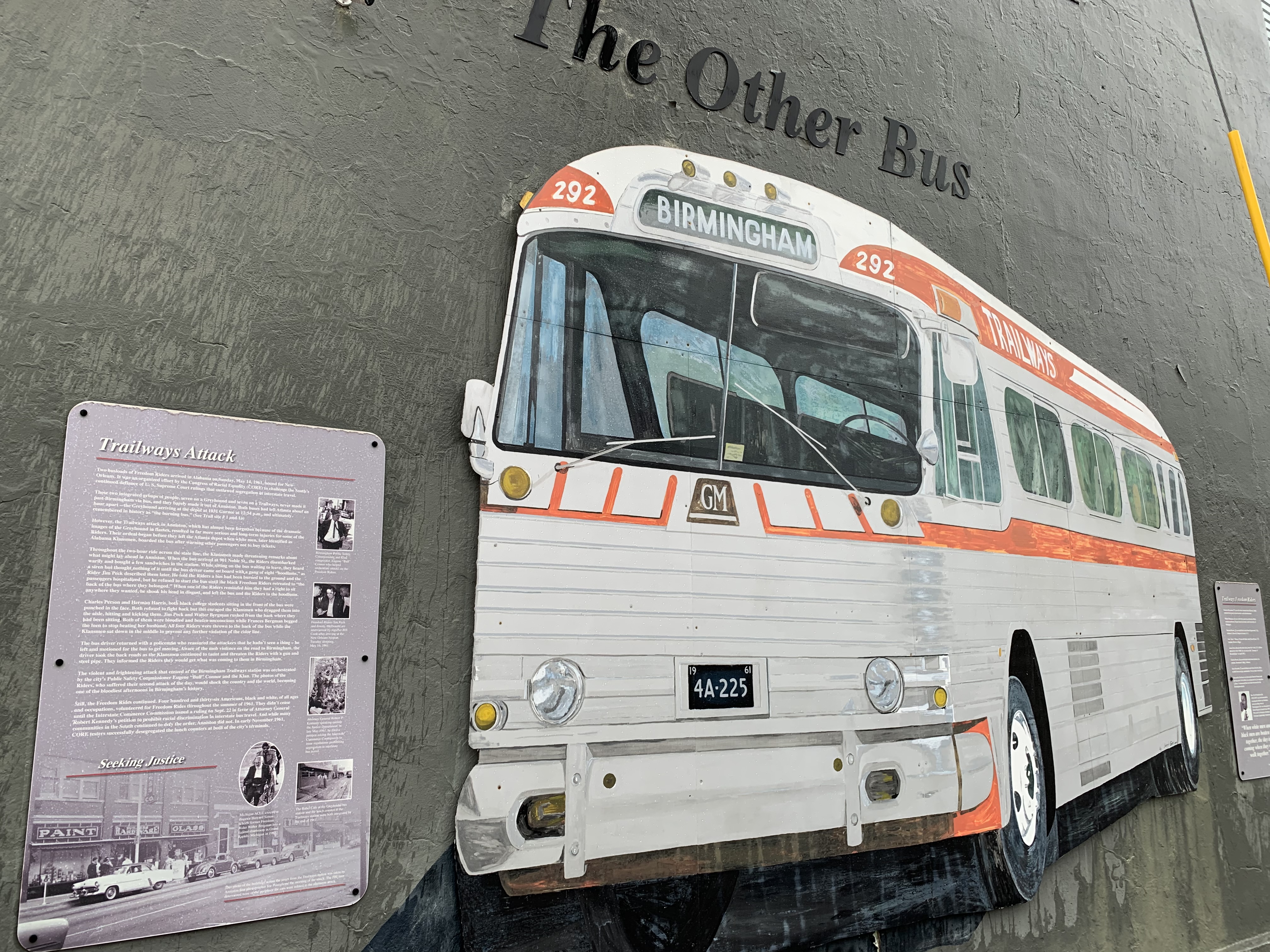
This is another underfunded Civil Rights site. The mural above is one of the few sights I found to see. As part of a systematic campaign to dismantle segregation, a small group of regular people rode buses between states in the south, where race mixing was not allowed under local laws. Since the federal government regulates interstate commerce and travel, they had jurisdiction. The activists exposed the racism, the NAACP lawyers brought cases to court, and eventually the Supreme Court outlawed segregation. Rosa Parks may have started the bus strikes, but it was the Court that integrated buses legally. The freedom riders were brutalized by the Klan, but their cause eventually won.

This may be the worst transition ever, but RV’s get about the same mileage as buses and some are even bus conversions. At a campsite near here, I was asked whether I was afraid of running out of electricity. We compared ”range anxiety” and realized that even with large fuel tanks, the rigs in the campground have less range than my long range model 3 Tesla’s 350 miles. Once loaded, they simply get such bad mileage that they have to go to gas stations more often than I need to charge.

Birmingham Civil Rights National Monument

I had forgotten that it was a children’s march on Palm Sunday that was assaulted by dogs and water cannon. Under city ordinance, it was illegal for children of different races to play together. In my view, the longer a system of injustice is allowed to stand, the more deeply engrained it becomes. The Civil Rights Institute does a powerful job of setting the scene, where African Americans worked in the steel mills and mines and lived in the city behind a color line. People like Bull Connor and the mayor grew up believing that segregation was normal, right and beneficial. They didn’t play with African American children as kids, and as adults they attacked them, peacefully assembled, wearing Sunday clothes, in a park, outside the 16th St Baptist Church, singing songs. The children had learned from Dr King not to fear jail when doing no wrong, but the assault against them was brutal, and televised.

At the time, America was shocked and voiced outrage. This week children were slaughtered in yet another episode of gun violence. I wonder if we’re sufficiently outraged to change the system as those kids in Birmingham did.

“A man dies when he doesn’t stand up for injustice.”

Rev Dr Martin Luther King, Jr. in Selma

Camp Nelson National Monument

While obviously fortified, the camp is best remembered as a refugee and training site for escaped and liberated slaves to join the Union. A heartless commander here burned shelters before winter to try to dissuade refugees from staying, leading to over 100 deaths from exposure, national outrage and new legislation to build more permanent refugee shelters at many Union bases, including food, clothing & education. There’s a community nearby that persists since that time. Many of the US Colored Troops that served, especially in the second half of the war, were trained here.

Mill Springs Battlefield National Monument

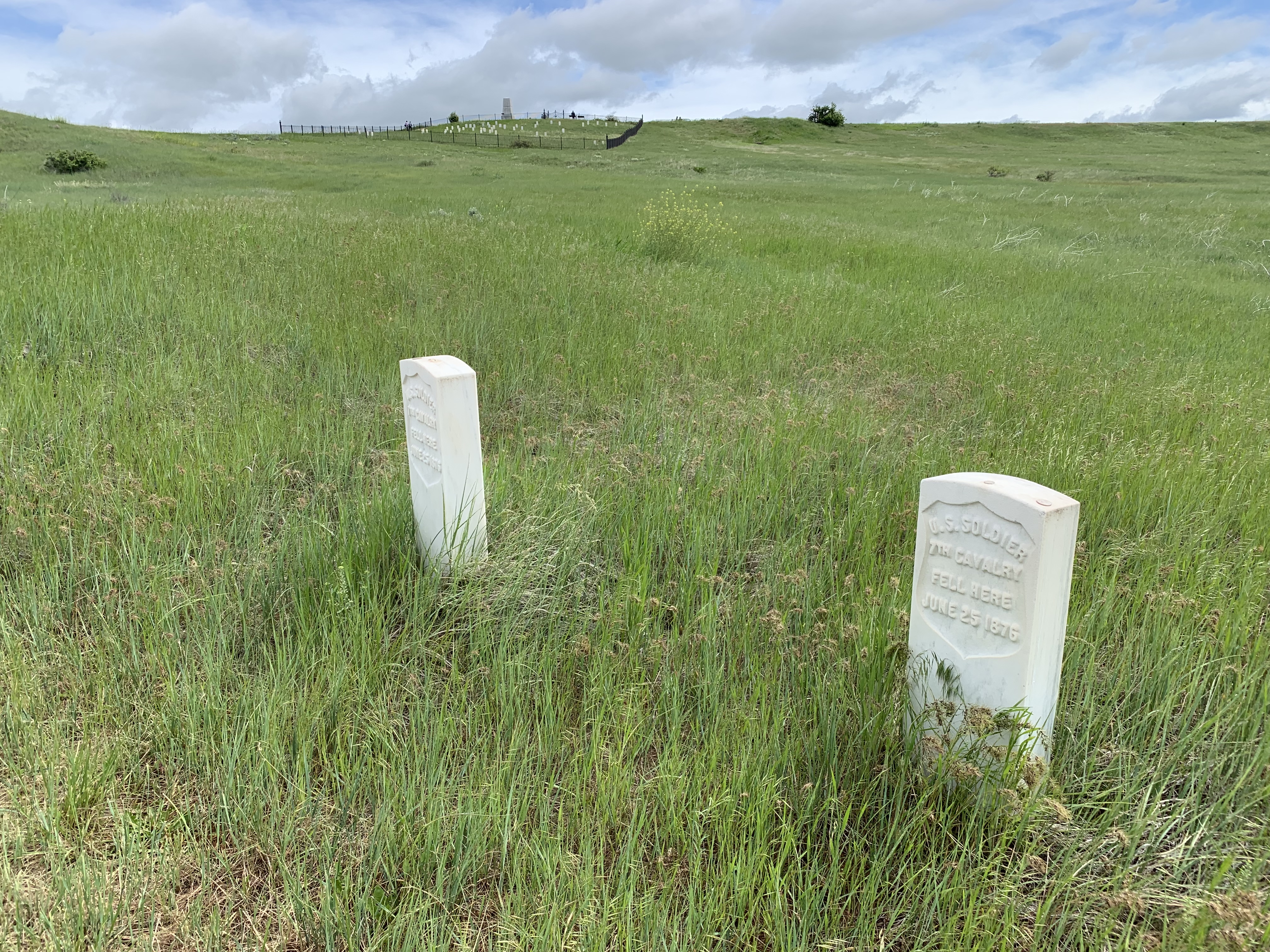
The photo is from the eponymous national cemetery next door to the visitor center.

Lincoln said ”I hope to have God on my side, but I must have Kentucky.” Kentucky was neutral early, perhaps since they enjoyed betting on horses, especially when they could tell who was going to win. In 1861, it wasn’t clear, at least until this battle.

The confederate troops had entered Kentucky from the East through the Cumberland Gap and soon fortified near the river. Unfortunately, Zollicoffer split his troops on both banks and a rising river made redeployment difficult. Worse, when fighting started, he approached some troops to stop “friendly fire”, not realizing that they were the enemy. With their general dead, the confederates became disorganized and lost. This led to a string of Union victories leading south.