San Juan Island National Historic Park

Most of our border with Canada is a straight line from Minnesota to the Pacific, except for Canada’s Vancouver Island, which dips below the line. When the border was negotiated, the treaty put the border through the “middle of the channel”, i.e. the Straits of Georgia and Juan de Fuca. Except where the San Juan Islands are in the middle, and then which is the main channel becomes a matter of interpretation. San Juan Island is much closer to Victoria Canada than to the mainland, so the British claimed it. But the Haro Strait is larger than the rest of the channel, so the Americans claimed San Juan Island too. Nobody really cared much about the sparsely populated islands, until an American squatter killed a British pig for rooting in his garden. Then, both sides prepared for war.

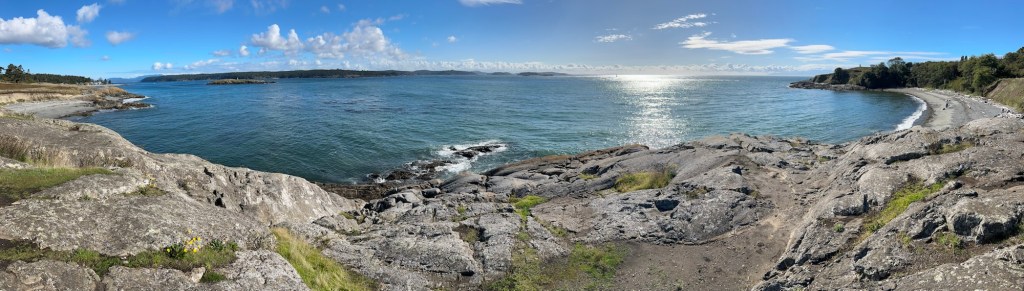
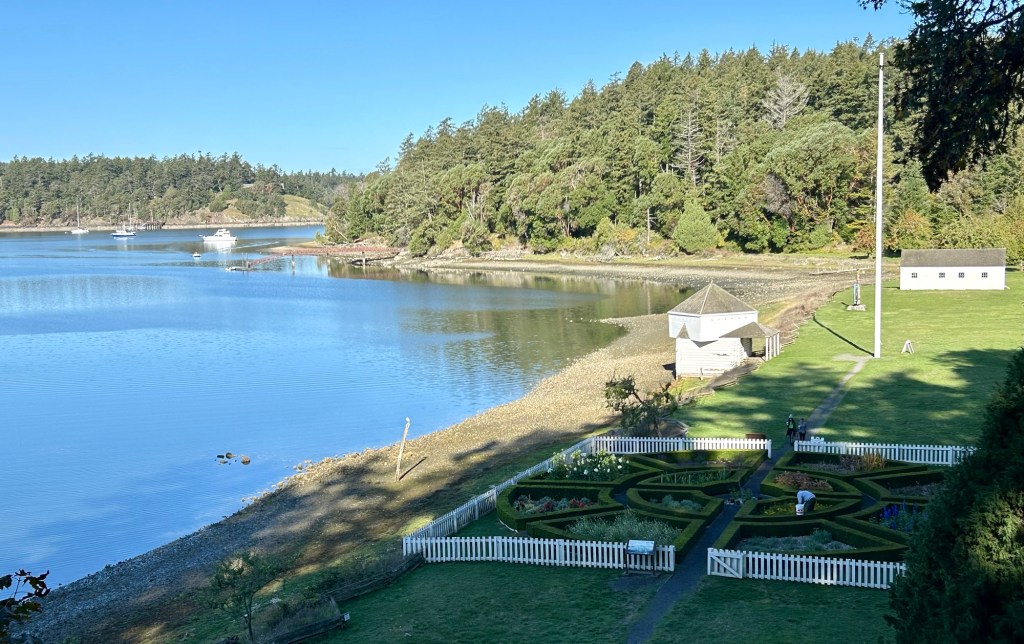
English Camp in the northwest is lovely, set on a well protected bay amidst large oaks, hemlock, and madrona trees. Well supplied from Victoria, the British created a formal garden above, kept calm and carried on. The Americans—actually the Robert’s Rules of Order writer—built a fort on the exposed southeastern point, conducted rigorous drills and maintained strict discipline. Large flag poles were erected at both camps. At the time, the US was entering the Civil War, so the government sent General Scott to negotiate peace. Fortunately, the border dispute was settled diplomatically.

There is an interpretive center at the American camp, while the English camp visitor center was closed when I visited late last September. Regular car ferries run to San Juan Island, with pleasant views along the way. Friday Harbor is between the English and American camps, 9 and 6 miles respectively, and has nice restaurants and more.

Keweenaw National Historical Park

Reports of a two ton boulder of pure copper lying in a river bank on the Keweenaw peninsula of the upper peninsula of Michigan were dismissed as tall tales, until proven by a geologist in 1840. The boulder wound up at the Smithsonian Natural History Museum, a huge mining boom rush erupted, and the closest port town was named after the geologist, Houghton. Most of the small mines failed, but eventually a large consolidated firm found and mined the largest pure copper lode in the world.

Technically the copper was “rediscovered” (or stolen) as the Native Americans here had been mining it for at least 7,000 years and traded it as far as Effigy Mounds, Hopewell, and other prehistoric sites around the country—so don’t accept the common misconception that Europeans introduced metal work to this continent. However, European immigrants did expand the mines here to an astounding scale. The deepest part of the Quincy Mine above is over 9,000 feet below ground, which is over 6 times deeper than the Empire State Building is high, with huge rooms left behind after the copper seam was excavated (see photo), and 92 levels mostly flooded after the mine closed in 1945 due to competition from western mines.

The huge equipment includes many rare and once record-breaking pieces of industrial machinery, and the Quincy Mine tour is fascinating and essential to understand miners’ lives. Be sure to get a big Cornish Pasty at Roys in Houghton. There are some museums and a visitor center in Calumet, including a magnificent old theater with lovely murals, but since most of those tours are only in the afternoon, it may be smarter to tour the mine in the morning. There are a couple dozen interesting sites on the Keweenaw peninsula, but for me the most haunting exhibit was the description of the Italian Hall disaster at Christmas in 1913.

While capitalists are allowed to organize freely under the law, labor was not. Thousands of copper miners went on strike, and the mine owners hired ruthless, violent strikebreakers. Someone—an anti-unionist according to eight witness who later testified to Congress—yelled ‘fire’ into a crowded Christmas party on the second floor of the Italian Hall in Calumet. There was no fire, but 59 children and 14 adults died. Woody Guthrie explained what happened below.

“The copper boss’ thugs stuck their heads in the door,
One of them yelled and he screamed, “there’s a fire”
A lady she hollered, “there’s no such a thing.
Keep on with your party, there’s no such thing.”

A few people rushed and it was only a few,
“It’s just the thugs and the scabs fooling you, “
A man grabbed his daughter and carried her down,
But the thugs held the door and he could not get out.

And then others followed, a hundred or more,
But most everybody remained on the floor,
The gun thugs they laughed at their murderous joke,
While the children were smothered on the stairs by the door.”

“1913 Massacre” by Woody Guthrie

Lewis and Clark National Historical Park

The replica of Fort Clatsop, winter camp 1805-6, above helps imagine the rough conditions for 32 men, a woman, her baby and one dog, when it rained or sleeted 94 days out of 105. Several visitors brought their Newfoundland dogs in a regular event to honor Seaman, the valued, four-legged expedition member.

Jaden and his friend—not yet park service employees—explained the story of the stolen canoe, the eating of dogs and how Sacagawea was purchased and impregnated around age 15 by her ‘husband’ who had other ‘wives’. These facts didn’t make my history book. Jaden’s canoe story was one of the best talks I’ve heard in any national park.

I missed the guided paddle trip, but I walked to Canoe Landing and saw most of the short Lewis & Clark ‘river’ from shore. The pilings in the water here and in much of the Pacific Northwest are old logging organizers.

The park also includes various nearby sites visited by the expedition, including Washington state’s Cape Disappointment—misnamed by someone who mistakenly thought the bay too large to be the mouth of the Columbia River. A Japanese sub briefly bombed Fort Stevens on the Oregon side. The charming seaside town of Astoria, once famous for furs, canneries and The Goonies, makes a good base to explore with some good restaurants and reasonably priced hotels.

Nez Perce National Historical Park

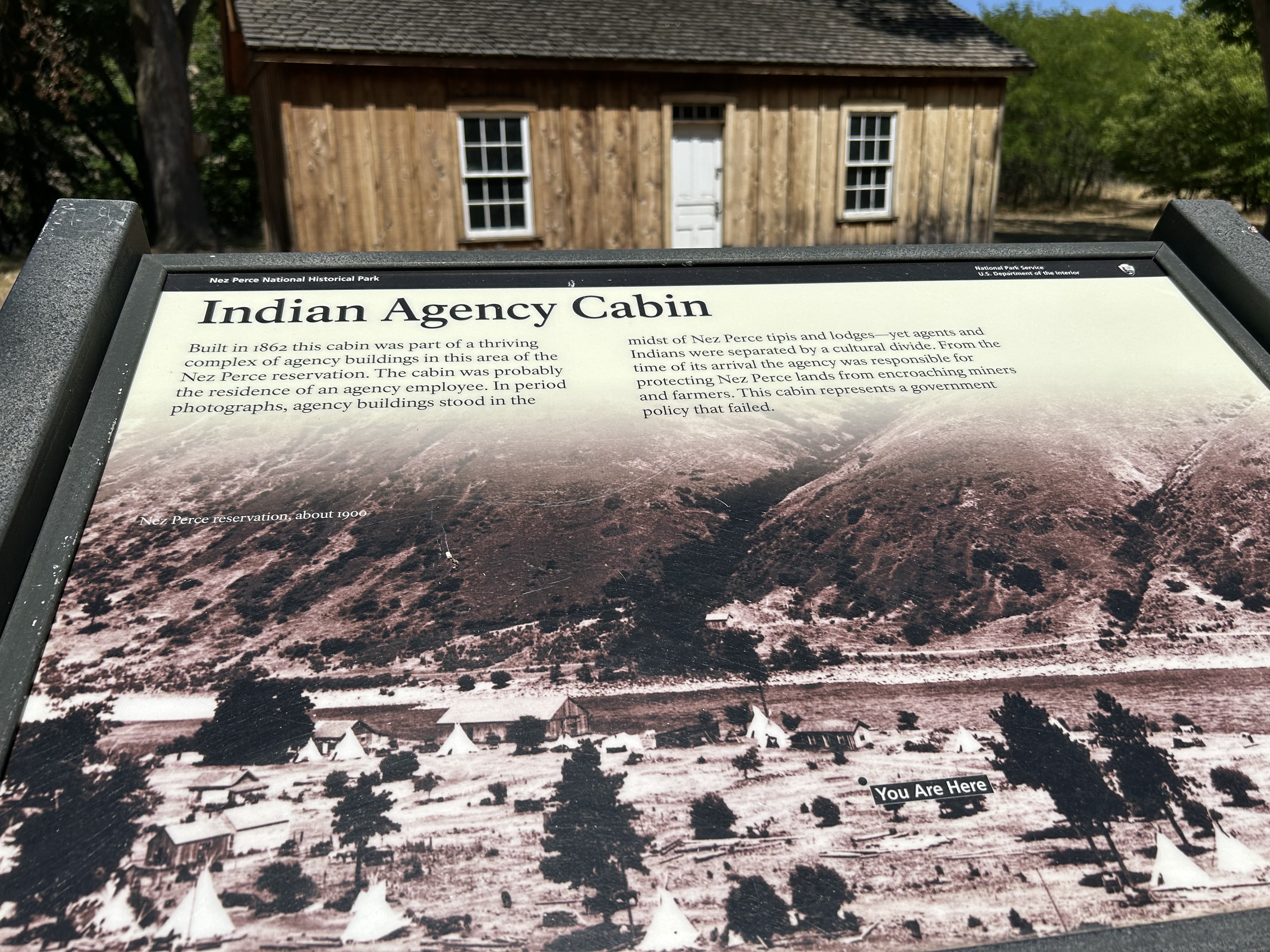
The visitor center in Idaho is on a hill above where the Lapwai Creek flows into the Clearwater River, which joins the Snake River a few miles downstream in Lewiston. The river banks were an excellent place for salmon, berries, edible flowers, and game, and the Nimiipuu used to arrive in the fall and stay through winter. By summer, they would be hunting up in the hills, forests & mountains. French trappers called the tribe Nez Perce or ‘Pierced Nose’, although that wasn’t a traditional tribal practice. When Lewis & Clark passed through, the Nimiipuu assisted the expedition and helped them make canoes. When the missionaries and other settlers arrived, they were forced to change. Many tried desperately to compromise and adapt. After the nearby Whitman mission ended in a massacre, racist demagoguery fueled far more excessive violence across the west, bringing the US military, war, exile and restricted reservation life, including here around the Spaulding mission, pictured circa 1900.

The affiliated Nez Perce National Historic Trail, which marks the flight of the tribe from the US Army, is now part of the broad official Nez Perce NHP, including Big Hole in Montana, a refuge near Lake Roosevelt, the White Bird & Clearwater Battlefields, through Lolo Pass, Yellowstone, Billings and up to Bear Paw Battlefield. Over the years, I’ve visited these places on roadtrips, read several of the books, from I Will Fight No More Forever to Chief Joseph & the Flight of the Nez Perce and pondered the mistakes and tragedy. There is simply no excuse for breaking treaties, stealing land, or killing defenseless people, including women, children, the elderly and infants. When leaders take advantage of popular anger to focus attacks against a community, the result is often far more evil than any original sins. I encourage you to learn more, since the problem of demagoguery is still with us.

But the Nez Perce tribe is still here with us, like the flowers they used to cultivate here. They are re-learning the language that they used to be punished for speaking. They self-govern, petition the US government, sing songs, dance, teach their kids to gather plants, hunt, fish and carry on their cultural traditions and exercise their treaty rights. The lessons of their forefathers and their oral traditions continue to be remembered, spoken aloud and passed down to future generations. The park preserves petroglyphs, artifacts and sites of mythology. Their culture is vibrant and contributes a valuable perspective to all of us. They are not doomed to be permanent prisoners of tragedy, and the park film here is a refreshing reminder of the resilience and life of their culture and of the human spirit.

Klondike Gold Rush National Historical Park

Seattle is a fascinating city, and this park offers a free walking tour of the Pioneer Square Historic District which teaches you about how the city overcame various challenges to grow. But the focus here is on the Gold Rush of 1897. To just report the numbers, 100,000 people rushed off to find gold, 70,000 bought supplies in Seattle, 40,000 reached the Klondike (mid-border of Alaska and Canada), 20,000 tried prospecting, 300 ‘struck it rich’ finding over $500,000 in gold, and only about 50 didn’t waste their money away digging for more. So the store above represents the only real winners of the rush, Seattle’s merchants. The stories are fascinating, although darkly tragic in many cases.

There’s another section of the park on Bainbridge Island across from Seattle, which is a memorial to the first US citizens of Japanese descent to be forcibly removed from their homes and sent to Manzanar and Minidoka. There is a beautiful cedar and stone memorial wall there along with names of the ‘interns’ and origami cranes, each representing a fragment of hope that a wish comes true. More than in some other places, many of the victims returned to their homes after the war. The main Klondike visitor center in Seattle also has a small exhibit about this American experience.

Coltsville National Historical Park

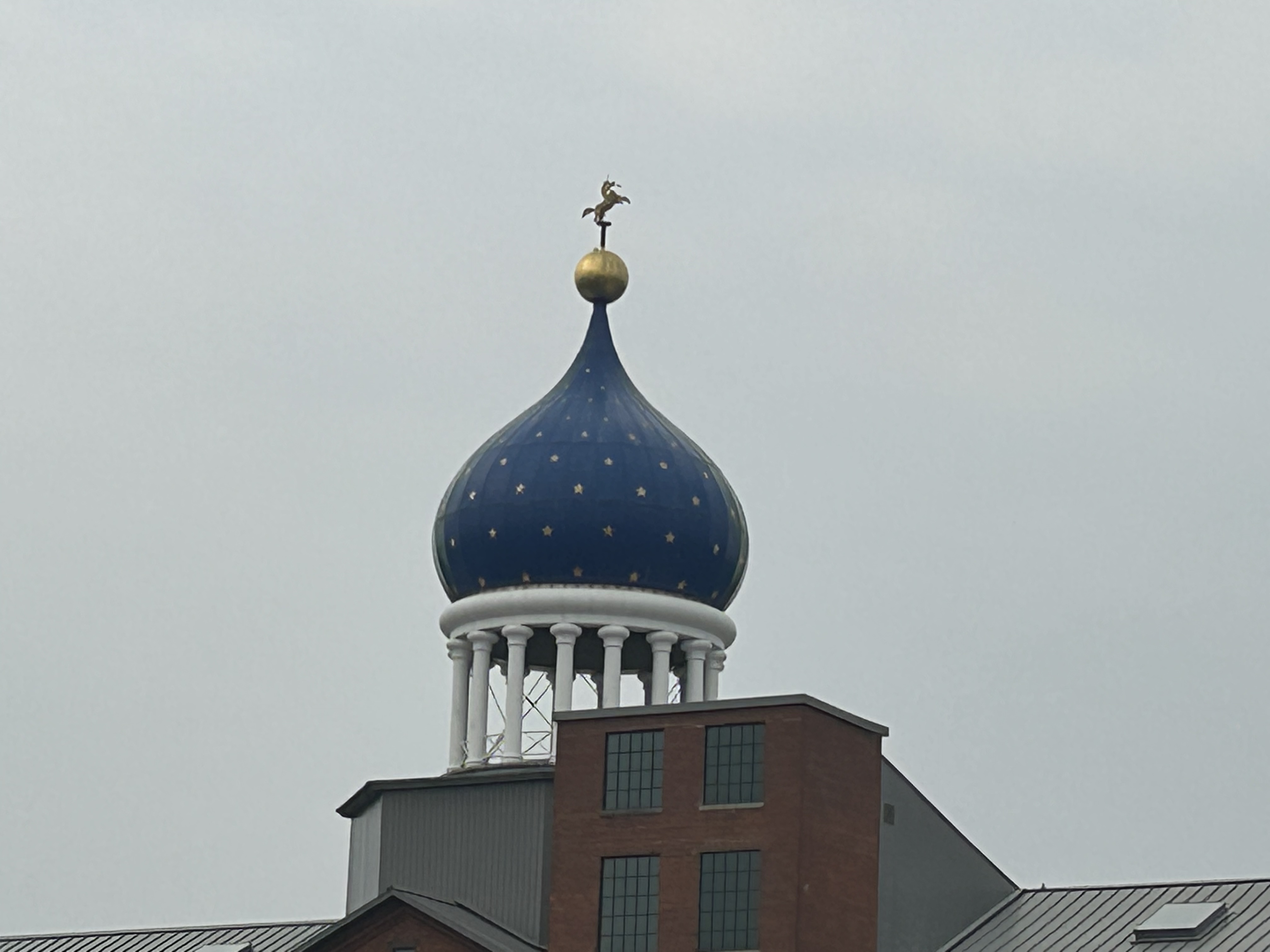
Samuel Colt sold a lot of guns to Russia, one of their first major clients, so he built the original iconic onion dome that defines the Hartford CT skyline (the one above is a replacement after a fire). You may notice the “rampant colt” on the top, which symbolizes loyalty, as the animal is breaking a lance to defend its fallen knight. The dome is actually one reason for the delay in converting the park to full status, as leaseholders control access to the dome which the park service needs. The two original brick buildings that the park service owns are in dire need of restoration too. There’s a nice walk through the large recreational Colt park to find his estranged brother’s house and through the company town to a church commissioned by the widow Elizabeth Colt, who ran the company for decades. Until this park opens officially, you may want to visit the Springfield Armory to learn more about the development of guns in the Connecticut River Valley.

Colonial National Historical Park

This Virginia park spans the history of Colonial America, from the first settlement and seat of English government to Yorktown which marked the end of British military control. While in theory the park can be visited in a day, take two. The pretty town of Yorktown is nice with a little beach. Jamestown has several areas to see, and the park road connecting them runs through Colonial Williamsburg, which alone is worth time. This is my favorite colonial era park.

Yorktown has a very good visitor center, film and two auto tours. Even I was able to follow what happened, and long story short, the victory was as much or more French than American. Alexander Hamilton led the successful joint French & American assault on the last two key British defensive positions, one of which is eroding into the bay. The Rhode Island Light Infantry Regiment—largely African American—were critical in the assault, which employed bayonets on unloaded muskets to ensure both silence and an aggressive attack. Washington maneuvered his armies & Lafayette executed the siege in their most successful and determinative battle of the war with the assistance of the French fleet blocking the large mouth of the Chesapeake Bay. There are also remnants of the Confederate defense of Richmond on the same battlefield, although that is not the main focus of the park.

Jamestown needs explanation. Simply, there are three parts: 1) the park service Loop Road which is a swampy wooded drive or bike ride through the eastern end of the island, 2) the state’s very well funded living history settlement, and 3) the oldest Jamestowne part that has been run by a private group which predates the park service and is now an affiliated National Historic Site. All three are amazing. I saw a bald eagle, baby turtles, deer and more. At the settlement you can climb aboard recreations of all three ships, visit a Native American village, a reconstruction of the fort and an impressive museum, and there are many helpful staff throughout, some clothed in period garb, making the history extremely accessible. But don’t miss the third part, Olde Jamestowne.

This is the original remote outpost of the Elizabethan era that excited imaginations at the time, including Shakespeare whose Tempest is based on a shipwreck here. The most exciting work today is happening above in the oldest section of the park: an active archaeological dig with many world class discoveries. The fort there is built on the original fort site, and one of the archaeologists who began the dig in the 1990s gave a guided tour. There’s also a museum showcasing their discoveries.

Pocahontas married her husband John Rolfe in the church to her right, her husband witnessed the arrival of the first Africans at Fort Comfort (now Monroe), and the most recent excavation of a well is happening over her left shoulder. One of the gruesome discoveries was evidence of cannibalism among the settlers, but other discoveries speak to the diversity of the colony and its early peace with the natives, thanks mainly to the young woman above.

Appomattox Court House National Historical Park

Lincoln wanted “malice toward none” and for the Confederates to return their allegiance to the Union, so he let them all go home, with passes, with their horses and even with Union provisions, as long as they gave up their guns. After his son reported to his father about Lee’s surrender at Appomattox in Virginia, Lincoln went to the theater, believing that his charity would prevent further bloodshed, and that night, only five days after the scene above took place, the President was assassinated.

Contrary to the explanation given here, the Confederacy did not rise in response to “northern aggression”. Fort Sumter was not an act of northern aggression. Secession was not northern aggression. The south insisted that the Fugitive Slave Act apply nationally; so much for states’ rights. Even the pamphlet that attempts to give reasons other than slavery for why the Confederates fought, reveals that it was still about slavery: “submit to Abolitionists”, “lose property”, and “our negroes”. And after the insurrection was defeated and federal troops left, the Klan arose and African Americans have been systematically denied their rights for more than 150 years. No honor in that.

The site is beautifully restored to its 1865 appearance, and there are talented living history actors who bemoan how difficult it will be now that they have to plant and harvest their own crops. Not sure how they can get every fence post to look as it did, but somehow still find it difficult to present the main cause of the war plainly. The film is excellent and explains all the details of the surrender, such as that the signing did not occur in the courthouse but in a nearby house also open to the public. Visiting such a superbly preserved and restored place is a wonderful way to appreciate the scene of such an important historic moment.

Cedar Creek and Belle Grove National Historical Park

The park service Belle Grove site is near the north entrance to Shenandoah National Park, near the West Virginia border. Cedar Creek feeds into the Shenandoah River nearby, and this large agricultural valley in Virginia was home to James Madison’s brother in law, who had up to 100 slaves or so working his grain fields at any given time. Nelly Madison Hite named the plantation house Belle Grove Manor after her birthplace Belle Grove Plantation which is on the Rappahannock River near Fredericksburg, also in Virginia, and that’s now a historic B&B. James Madison was also born there and died at his Montpelier estate, which is near Charlottesville Virginia.

In 1864 Confederate troops routed Union soldiers in a surprise foggy morning attack. In the afternoon, General Sheridan arrived with more troops and won the day. The fighting approached the front porch above and left a couple bullet holes still visible. General Grant ordered many such farms in the valley burned to break the rebellion, causing hardship and starvation. Of course, the crops had all been grown by slave labor, so in the long run the owners’ hardship was finally needing to pay their workers.

The ‘struggle of southern women to be able to feed their families’ was due to a combination of factors: blockaded ports, burned plantations and escaped slave labor—the last factor perhaps the largest and longest lasting. Even poor whites benefited from cheap food, clothing & tobacco grown by slaves, which needs to be remembered when reading arguments that ‘most white southerners did not own slaves and were fighting to preserve a way of life’. Even poor whites knew that they would lose social status and have to start doing hard labor themselves if slavery ended. The end of slavery meant the end of that morally reprehensible way of life for all whites in the south, and the men who enlisted all knew it and chose to fight to preserve slavery.

There are reenactments, trenches and fields to explore, some monuments, a partner tour of Belle Grove Manor above, and a small partner museum with Civil War memorabilia across the street. The park is within the broader Shenandoah Valley Battlefields historic district, so there’s plenty to see in the area too. The basement of the manor has an interesting exhibit reconstructing the kitchen and showing artifacts of life in the time of slavery. If you’re interested in the defeated, there’s a picture of a dying Confederate general being comforted by G. A. Custer and also Coronation Tea in the gift shop.

Harriet Tubman Underground Railroad National Historical Park

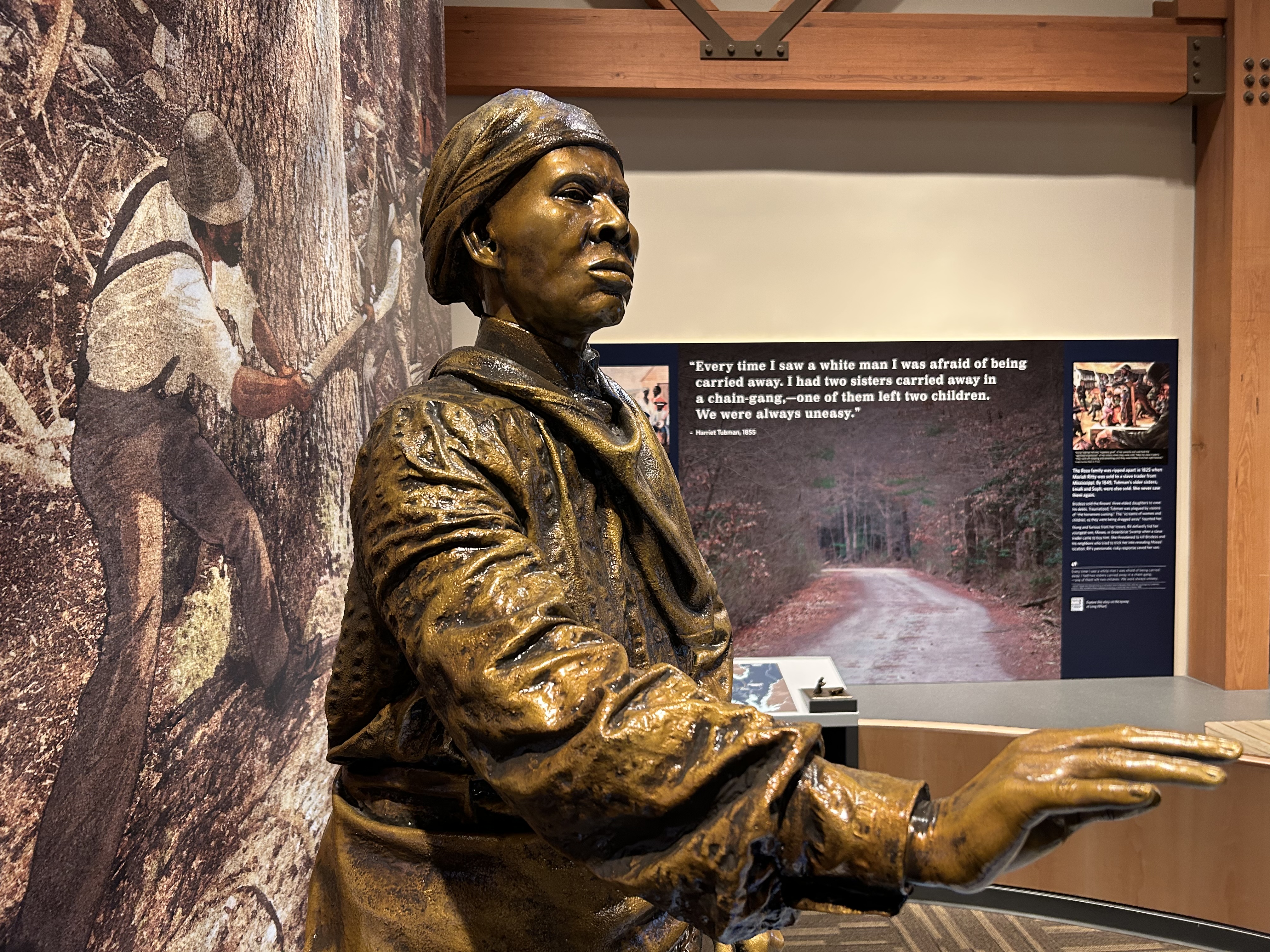
Harriet was born in remote southeastern Maryland, and the joint NPS-Maryland park is within the Blackwater National Wildlife Refuge. Her knowledge of survival skills in the marshy fields and forests of the area helped her free 70 slaves directly and many more indirectly through her instructions. Unlike her home site in Auburn NY, there are no structures from her time here, but the visitor center has exhibits telling her story and busting many of the myths about her, such as the ‘secret messages’ in quilts. The brochure further explains that she could not have sung “Swing Low, Sweet Chariot”, since it was written by an Oklahoma Cherokee after the Civil War. But she did sing “Go Down Moses” and “Bound for the Promised Land”.

“I had reasoned this out in my mind;
there was one of two things I had a right to, liberty or death;
if I could not have one, I would have the other,
for no man should take me alive.”

Harriet Tubman

The stories of her childhood, her Underground Railroad missions and of the Combahee River raid are all told here, as is the story of her friendship with the Abolitionist Thomas Garrett. While he did not risk his life as Harriet did, he was involved in almost three thousand escapes over four decades, at considerable personal financial cost. His partnership with Harriet must have felt serendipitous to both. She was a natural, simple, pure person of faith, from childhood, but especially since her injury-caused epilepsy. The Quakers held strong convictions of faith, even over the law, and prized simplicity, humility and doing good deeds. Each was exactly what the other needed, a Moses leading her people out of the wilderness into the promised land, and a network of believers willing to contribute time, money and help to end the abomination of slavery. Yet despite their acts, millions remained enslaved.