Fort Necessity National Battlefield

“In 1753 a young George Washington crossed the Allegheny Mountains on missions he hoped would lead to a career as a British Officer and land holdings that would make him wealthy. He was unsuccessful in both goals and his actions sparked a war that spread across the globe.”

— National Park Service

We really need a better name than the “French & Indian War”. It sounds like some colonial conflict in South Asia. Indians Native Americans were only reluctantly drawn into fighting on both sides. I suggest the “Colonial Rivers War”, because that explains who, why and where. British and French colonial forces fought over control of rivers, portages and passes linking the St. Lawrence Seaway, the Gulf of Mexico and the Mid-Atlantic Eastern Seaboard.

At the beginning, the French & British were building roads, riverside forts and sending small armed groups into the passes to scout. Washington was in charge of a British force, found a French force, and someone fired a shot precipitating a slaughter that killed the French leader named Jumonville. Jumonville’s brother, Captain Villiers, then led a much larger force seeking revenge.

So Washington’s necessity was to defend his camp, which had been chosen in a pleasant, open meadow, good for grazing animals. As you can see in the photo, the fort was built under a hill, so Washington lost quickly and badly. (Fortunately, he improved tactics later). The French accepted his surrender, but the war over the colonial rivers continued for years, as part of a broader Seven Years’ War between the French and British globally.

Monocacy National Battlefield

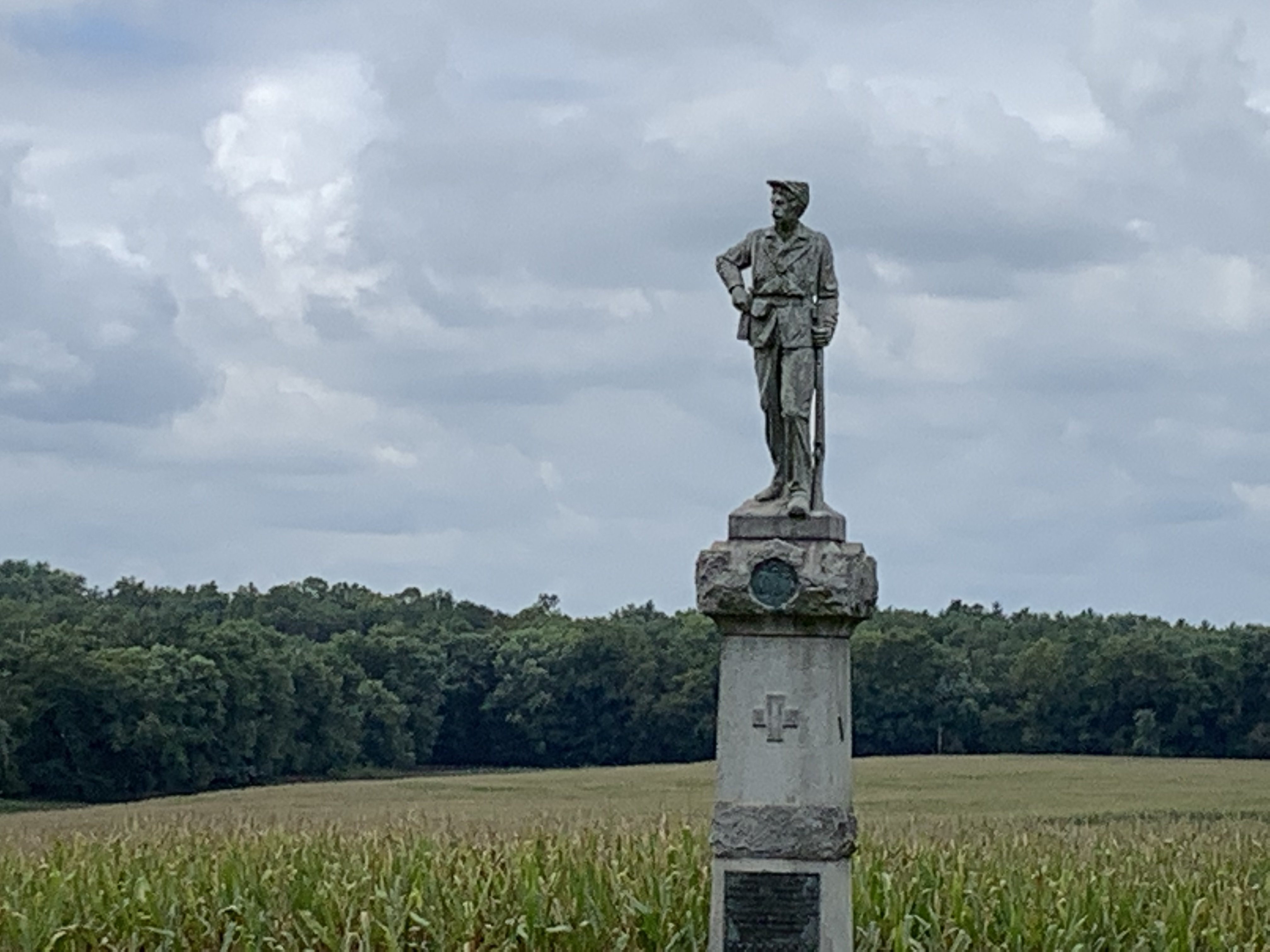
Monocacy (a Native word for river bend) is a junction northeast of DC, and during the Civil War the 14th NJ, later known as the Monocacy Regiment (above), built two blockhouses to defend the road and rail bridges. Early in the war, secret order #191 from Robert E. Lee was discovered here, providing advance warning of his movements and gaining the Union critical time to respond at Antietam. When over 15,000 troops suddenly began marching towards DC in 1864, control of the junction became critically important.

About 6,000 mostly inexperienced soldiers were rushed here to stop the advance, under the command of Lew Wallace. General Wallace had earned both distinction at Fort Donelson and shame at Shiloh, which is why he had been relegated to defensive duties. Now, he had to hold the river crossing outnumbered 3 to 1. In fierce fighting on July 9th, Union troops fought back waves of attacks and held the bridges until the confederates crossed a shallow point a mile downriver. Then Wallace ordered the road bridge burned, recalled his men from the blockhouse across the railroad bridge and launched a counterattack on the new front. After fighting all day with 1,300 casualties, his forces were finally flanked and forced to retreat.

But, as in the case of the secret order, the Union gained time to redeploy troops to defend the Capital. After only a brief skirmish at Fort Stevens, the attack was withdrawn. General Wallace and his men lost the battle, but they saved Washington DC. Wallace went on to preside over the military tribunal for the commandant of Andersonville, but he’s best known for writing Ben Hur in 1880.

Saratoga National Historical Park

This boot monument may be the park’s most famous, but let me quickly set the scene. In 1777, General Burgoyne led his British Army from Canada down the Hudson River Valley to New York City (captured by the British fleet the year before), planning to separate New England from the rest of the colonies. After recapturing Fort Ticonderoga, the British marched confidently further south.

General Gates led the colonists who dug in at Saratoga to stop them. The British advance troops had marched into some fields to gather wheat, and the Americans surprised and flanked them. The British took heavy losses retreating to their own fortifications on two hills, and the Americans took the hill with the monument before night fell. The British continued retreating, became surrounded and soon surrendered.

The boot monument was for an American officer who was wounded in the leg taking that hill. It was the officer’s third leg wound in one year. He was a sometimes brilliant, extremely aggressive, apparently fearless, greedy, back-talking, insubordinate veteran, who was hated by other officers and loved by his men. He had led an unsuccessful assault on one hill, and then switched to this hill in the middle of the battle. The officer wasn’t supposed to be leading troops in the battle at all, since Gates had taken away his command. Actually, he had tried to resign, but Washington refused after learning that Fort Ticonderoga had fallen, insisting that the officer (who had helped capture Fort Ticonderoga originally) march north again. Angry at being mistreated by the army and in pain over his wounds (one leg became 2 inches shorter than the other), Benedict Arnold ended up betraying our country.

The museum also has a fascinating exhibit on the fallout of the British defeat at Saratoga. The French allied with the Americans first, followed by the Spanish & the Dutch, leading to attacks on British colonies in Central America, the Caribbean, South America, Africa, India, and Indonesia.

Big Hole National Battlefield

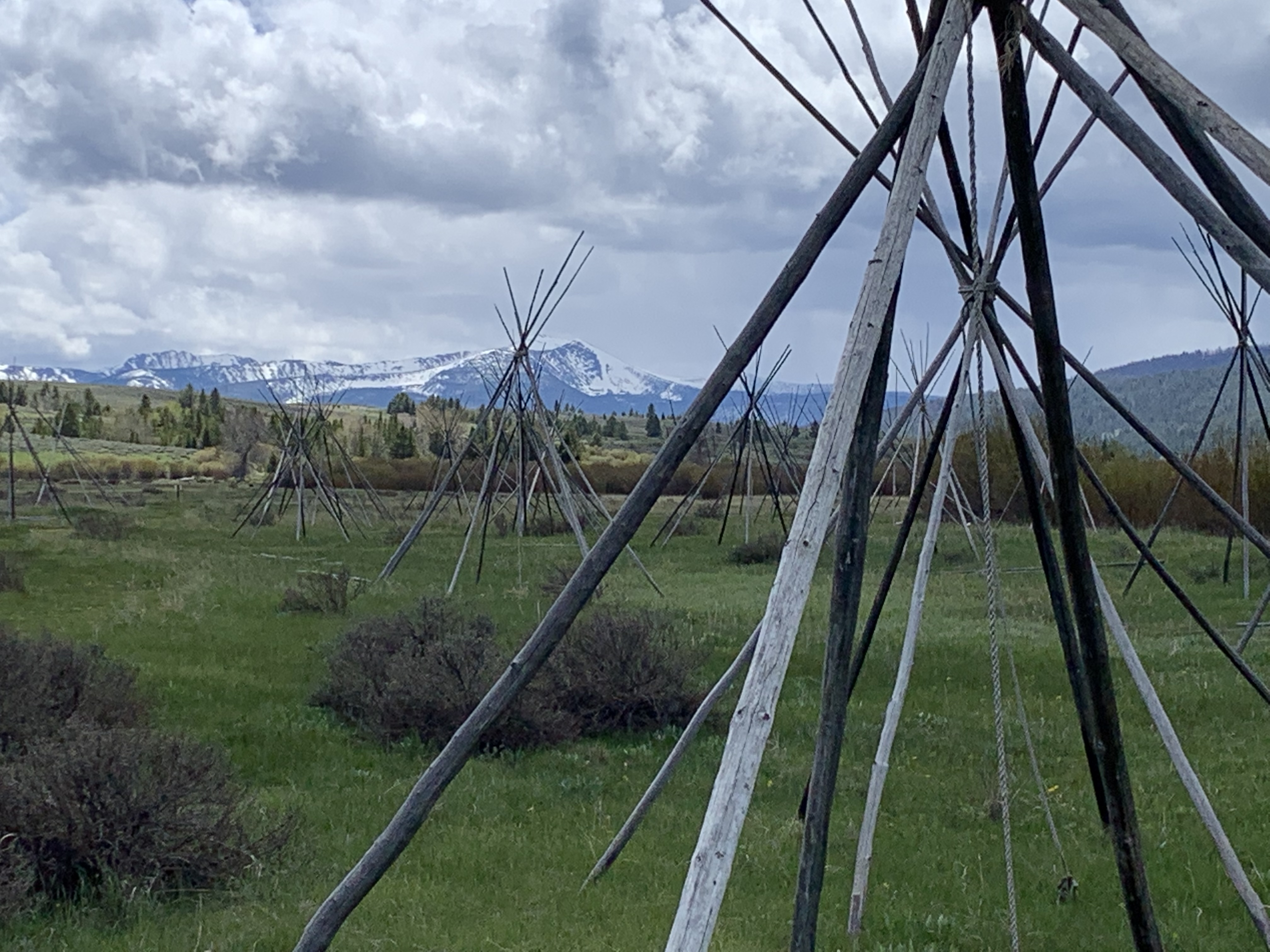
This uniquely tragic site in the War on Native America is also part of the Nez Perce National Historical Park, and it sits in the scenic Big Hole valley, right near the little town of Wisdom.

The US military was hunting down natives who refused to go to reservations and a few fugitives who had killed some settlers. They attacked the camp at night, burned the tipis and killed around 90 natives, mostly women and children, including babies bludgeoned to death. The warriors killed 31 soldiers in defense and then fled with the survivors. Some eventually escaped to Canada, but Chief Joseph later surrendered at Bear Paw with the rest.

Hail fell while I was at the Nez Perce cemetery above, and it felt appropriate, considering the terrible history here. I took some time after the film and walk to try to draw any wisdom, and all I could come up with was this.

No person can claim credit alone for greatness, as our existence is entirely due to the natural world that we evolved from, which sustained our ancestors and us. Yet a great idea, which is not limited by time and place, can inspire, destroy or outlast our civilizations, as long as there are still humans who understand it. So we must not think so much of ourselves. We must thank the natural world for everything it has given us. And we must try to cultivate thoughts, wisdom, moral judgements, insights, inspiration and kindness that may survive us and improve the future.

Little Bighorn Battlefield National Monument

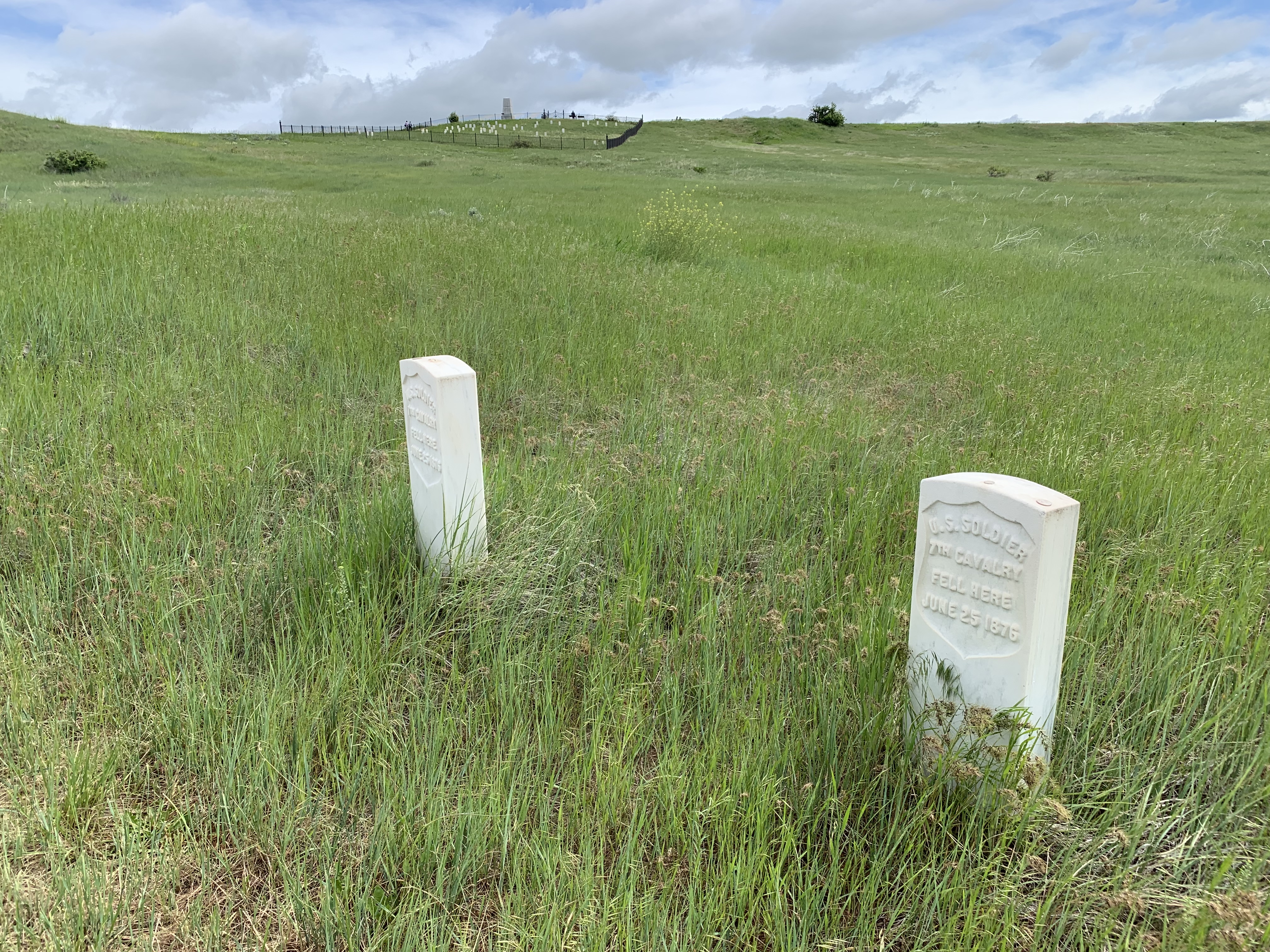
Two unnamed cavalrymen are memorialized here, below the hill where Custer made his last stand. Until fairly recently, there were no similar monuments to the Native Americans who won the battle. Now there are several, naming the heroes who defended their village, wives and children here from the cavalry attack. Custer intended on burning the village and likely was trying to take women and children hostage when he overextended his forces to this hill. The natives were surprised by the attack, and while this was their greatest and last victory over better armed US troops, it must be recognized as essentially a defensive act in response to US military aggression. The native ranger talk here is a favorite experience.

Seeing the landscape helps understand what went wrong. Custer split his forces, sending some towards the far south end of the village as he approached the north. Underestimating the size of the village both physically and in number of warriors and underestimating how fiercely they would fight back, he spread his forces thinly in order to prevent natives from escaping. He sent word to his other troops to join him thinking that he had found the village, not realizing that they had also found the village at the other end two miles away. His cavalry would have been visible on the ridge, while the natives would be hiding in the grasses & creek beds that allowed them to slowly climb the ridge. Urged on by Crazy Horse, White Bull and other chiefs, the natives stopped the US advance, kept the troops separated and eventually took the hill as Custer ran out of ammunition.

Chickamauga and Chattanooga National Military Park

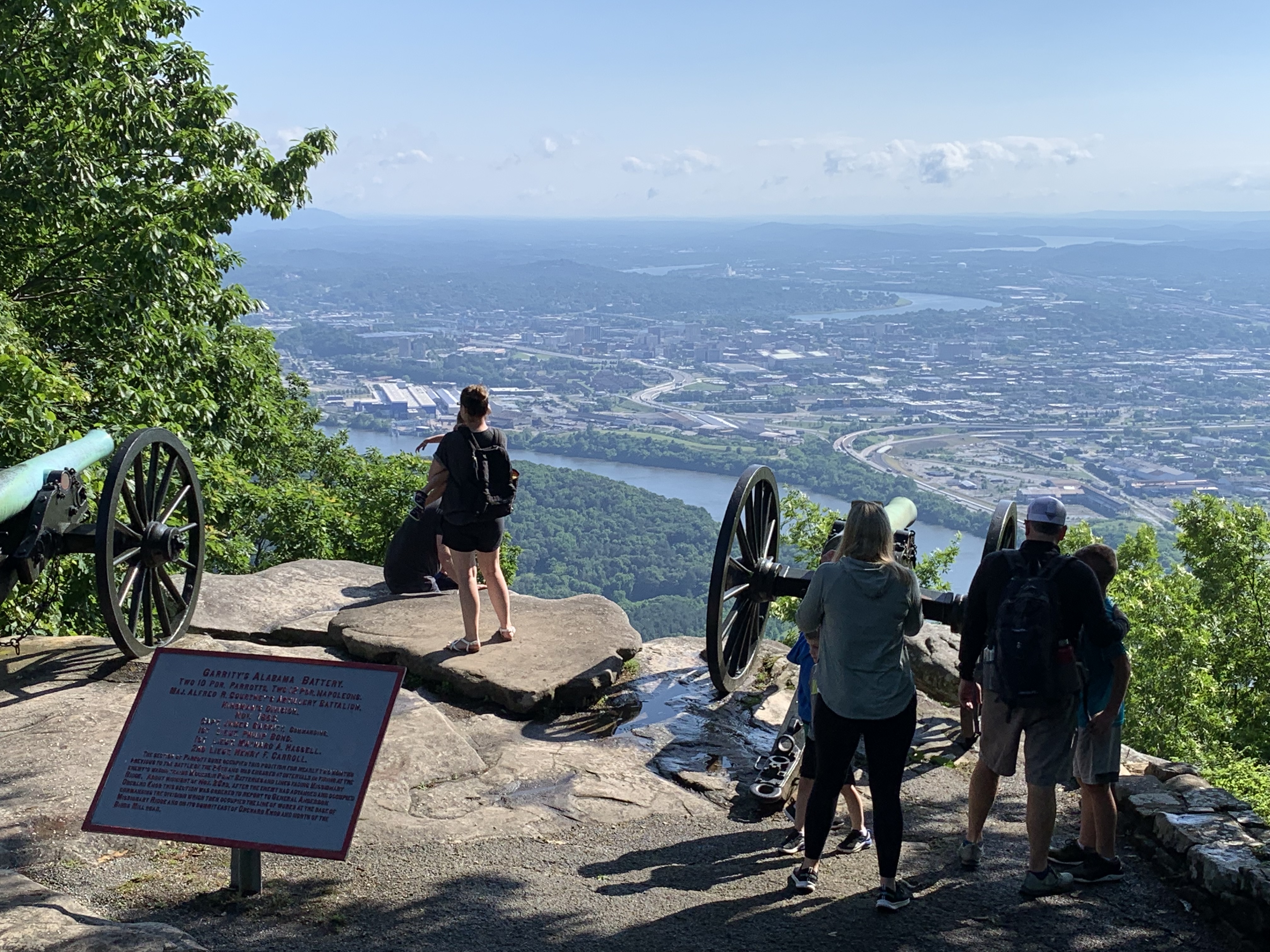
Before I rant again, let me just acknowledge that there’s a dramatically beautiful view on Lookout Mountain. Chattanooga below is in a strategic location at the bend of the river below. Long before the Civil War battles, the last overland battle of the Revolution was fought here. There’s even a steep funicular line to enjoy the view.

Militarily, controlling the high ground has always been the key. Grant used it to capture Chattanooga, and the confederates used it to try to recapture the city, unsuccessfully. Chickamauga nearby in Georgia is much flatter and covered with monuments to both sides. Which brings me to my brief rant. If even a fraction of the money and effort spent on monuments for both sides were used to explain the cause of the war, slavery, then maybe we wouldn’t have some politicians today still trying to claim that there are “very fine people on both sides” of racial prejudice. No. Racism was wrong both then and now, and the longer that we evade the obvious moral judgements here, the harder it will be to remove the poison.

Horseshoe Bend National Military Park

If I were to choose one turning point in American history, I would choose what happened here in March of 1814. After many consecutive treaties with the Creek were broken and great parts of their land were taken, some Creek warriors tried to defend their nation, which had survived contact with the Spanish, French & British. Andrew Jackson invaded the heart of the Creek Nation, surrounded 1000 warriors armed with 300 guns with 3000 soldiers in the bend of the river here. 800 of the Creek warriors were killed, 300 while trying to swim to safety. The village was burned and the women and children with them were captured. By any fair accounting, a ten to one advantage that results in 80% killed is a slaughter, and shooting swimmers is particularly cruel.

But Jackson used the victory to steal more land for white settlers, so he was treated as a hero, instead of a liar, thief and atrocious killer. Jackson even betrayed the Creeks who fought side by side with him in battle, taking their land too. Jackson would go on to become the only President to openly defy the Supreme Court, by not only refusing to return land but by forcibly removing Native Americans to reservations in the west, along the Trail of Tears. A popular President among whites who could vote, he perpetuated racist stereotypes about Native American “savages”, which continued past the Civil War when 750,000 mostly white Americans slaughtered each other over the right keep slaves.

Most Americans won’t admit it, but our ancestors wanted our government to slaughter Native Americans and take their land for our benefit. Racism has been used as official policy for killing, removing, and exploiting non-whites for centuries. By ignoring, denying and lying about this fact, many of us have chosen to live our lives without a moral compass. The first step is to admit the truth, then figure out what to do about it, and finally to teach our kids to be better.

Kennesaw Mountain National Battlefield Park

Union forces fought for weeks to break the long line of confederate fortifications northwest of Atlanta, but were unable to climb the steep hills under heavy fire. There was one “dead angle” or blindspot at Cheatham near the photo where soldiers climbed all the way up the hill and over the earthen walls only to be repelled in hand to hand combat.

5,300 soldiers died in a few weeks of fighting here in the summer of 1864, before the war moved to Atlanta.

Cowpens National Battlefield

Popular among war buffs, here the patriots won an impressive victory against the British. The British commander was a young hothead named “Bloody” Tarleton who had recently killed over 100 men flying a flag of truce at Waxhaws. The patriot commander was 45 year old veteran Daniel Morgan. Morgan chose the site due to thick woods and canebrakes (sugar cane thickets) that would make flanking difficult for the advancing British. His light skirmishers volleyed and fell back, and then his next line was to do similarly. They muffed it, and the British rushed forward, expecting a rout. The patriots about-faced and fired point blank. The British front line faltered while the back was still advancing, and then William Washington’s cavalry, which had emerged from a low spot to keep the enemy cavalry at bay, turned and flanked from the other side. This classic pincer or double envelopment movement is difficult and rare, yet it has won victories for thousands of years.

Tarleton was forced to retreat with his cavalry, reporting over 100 dead and 700 captured. He blamed his troops. After the war he served in the House of Commons, where he argued for continuing the slave trade.

The Mel Gibson movie “Patriot” is based in part on the battle between Morgan and Tarleton here.

Kings Mountain National Military Park

After the British took Charleston, they moved inland trying to gain momentum and more loyalists. Here, they lined this narrow ridge with skilled marksmen prepared to defend the high ground. The patriots had troops moving overland from the northwest and local milita massing on the other side. Using Native American tactics of advancing from tree to tree, the patriots were able to get close on both sides and catch the defenders in a deadly crossfire. Having learned that the British commander was wearing a checkered jacket, they targeted and eliminated him, winning a decisive battle here.

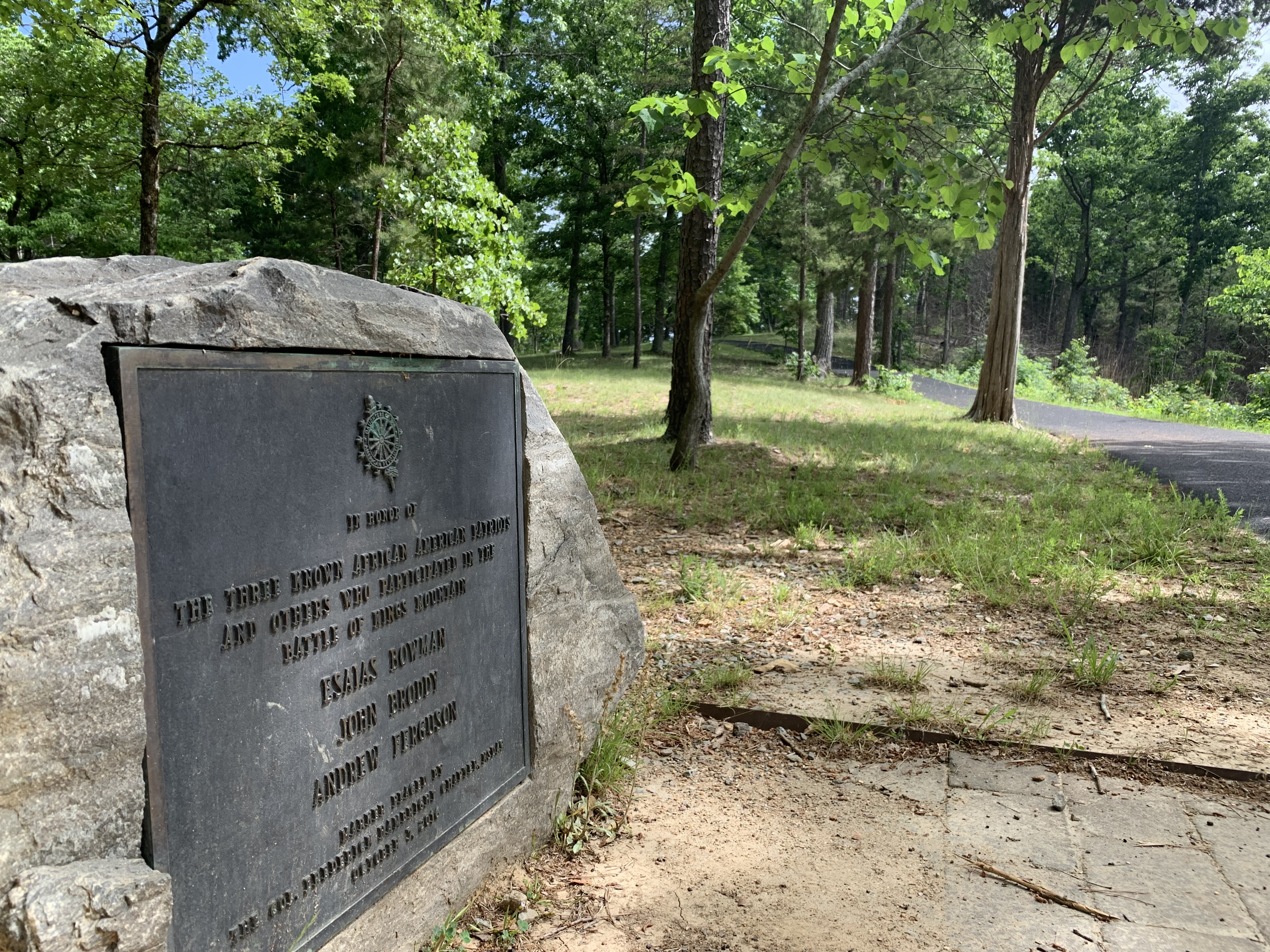
The first of the three African American patriots memorialized above, Elaias Bowman, was a free militiaman, one of several who shot the British commander. For some reason that I can’t fathom, there’s a far bigger memorial to the British commander, a Scot named Ferguson, and local visitors speak of him fondly, often leaving stones near his marker. I left a stone for the patriot Bowman instead.