Mount Rushmore National Monument

I like Mount Rushmore, but it’s in the wrong place. The Presidents selected all had issues with Native Americans (although the Presidents were all long dead when the monument was sculpted). The sculptor was a KKK member who wanted to sculpt confederate leaders, but that’s just a side note. No, the problem is that the monument is carved into the sacred Black Hills which may be the most shamefully taken, fought over and litigated place in America. It doesn’t help that the surrounding area is filled with common tourist traps, and that the tourist dollars do not go to the tribes who legitimately (according to Court decision) should own the land. Even though they have Tesla chargers in the parking lot, I just can’t appreciate the site as I did years ago.

Ulysses S Grant National Historic Site

Grant was a quiet, thoughtful man who was sometimes taken advantage of by others, developed strong moral convictions and enjoyed travel. He was also the leader who saved the Union in battle and in his Presidency. This is one of my favorite presidential homes, next to Sagamore Hill.

While he served in the war with Mexico, he correctly deduced that it was “a wicked war” waged to expand slavery by taking territory from a neighbor in the midst of internal conflicts. After leaving the military to be with wife and kids, he somehow wound up owning a slave, most likely received from his father-in-law, and Grant freed him. His father-in-law kept his other slaves, until they escaped during the Civil War. Unlike some Union generals, Grant advanced African American units as key to victory.

I have now visited a number of his battlefields, but here at his (and his in-laws’) home his views are made clear. Grant clearly attributed the cause of the Civil War to slavery, and as President he fought hard for African American rights, establishing the precedent of sending in troops to protect African Americans being terrorized by racists including the KKK. Grant was often underestimated, even by historians, but in life he counter-attacked aggressively, and in history his core views have proven to be right.

Jimmy Carter National Historical Park

Not far from the profoundly disturbing Andersonville site, is the very pleasant town of Plains, Georgia, where the Carters still reside. There’s a giant peanut, a store selling Billy Beer cans, the campaign depot and the delightful boyhood farm home of Jimmy Carter. The site and the town have a wholesome feeling that feels like stepping back in time. The farm still seemed active, with crops, goats, bees and mules (donkeys?), and everyone was very welcoming and friendly. The Carter compound is strictly guarded by the Secret Service and off limits, but I enjoyed fried peanuts and peanut flavored ice cream and peeking in store windows and chatting with the locals.

Young Jimmy’s playmates were mostly African American, so it was natural for him to oppose segregation and become an activist. He saw poverty just down the street, so his work with Habitat for Humanity was also natural for him. As President he negotiated the Camp David Peace Accords and later earned the Nobel Peace Prize for his Carter center. He did well by doing good, and he’s still making an effort at 97. We could all try to learn something from that.

Abraham Lincoln Birthplace National Historical Park

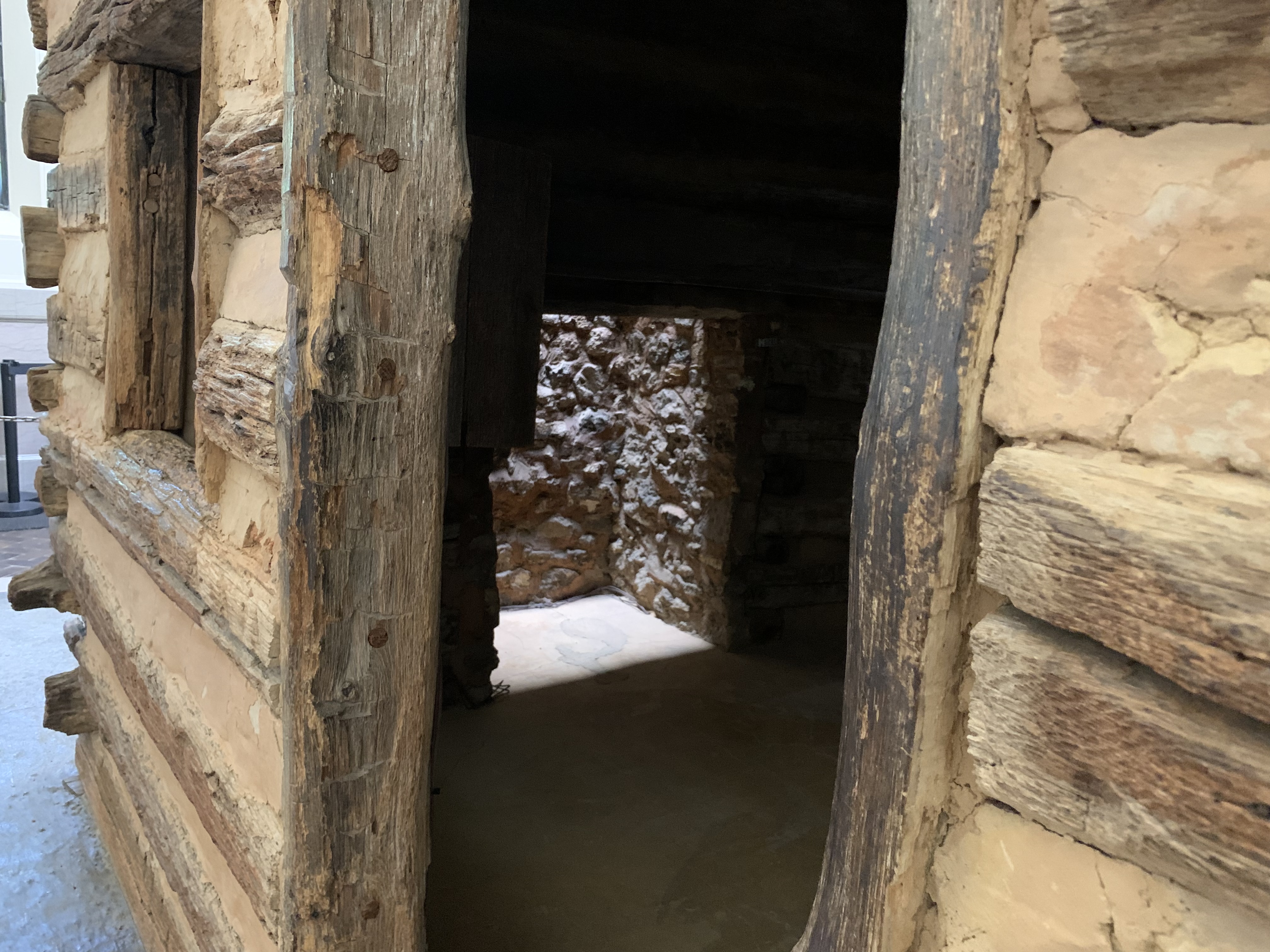
I think this is the first park, alphabetically. The cabin is ”symbolic”, meaning a replica, and it’s inside a grand monumental building. Lincoln’s family moved up the creek due to a property dispute which they lost, and he must have grown up listening to his parents complain about it. I suspect that childhood experience helped him choose law and government as his vocation.

The other memory he had from here would have been seeing slaves in chains, marching in vocal cadence to market. His parents and minister definitely complained about that. That formative experience helped him change the course of our nation.

Chamizal National Memorial

Unlike any other park, Chamizal memorializes diplomacy. When the Rio Grande shifted course at the end of the 1800’s, it created an island and a seven decade long border dispute with Mexico. President Kennedy went to Mexico to finalize an agreement, and LBJ later participated in the joint ceremony at the border here. There’s a beautiful mural on the visitor’s center, and I remember from a previous visit that there’s a film that explains the importance inside.

Lyndon B. Johnson National Historical Park

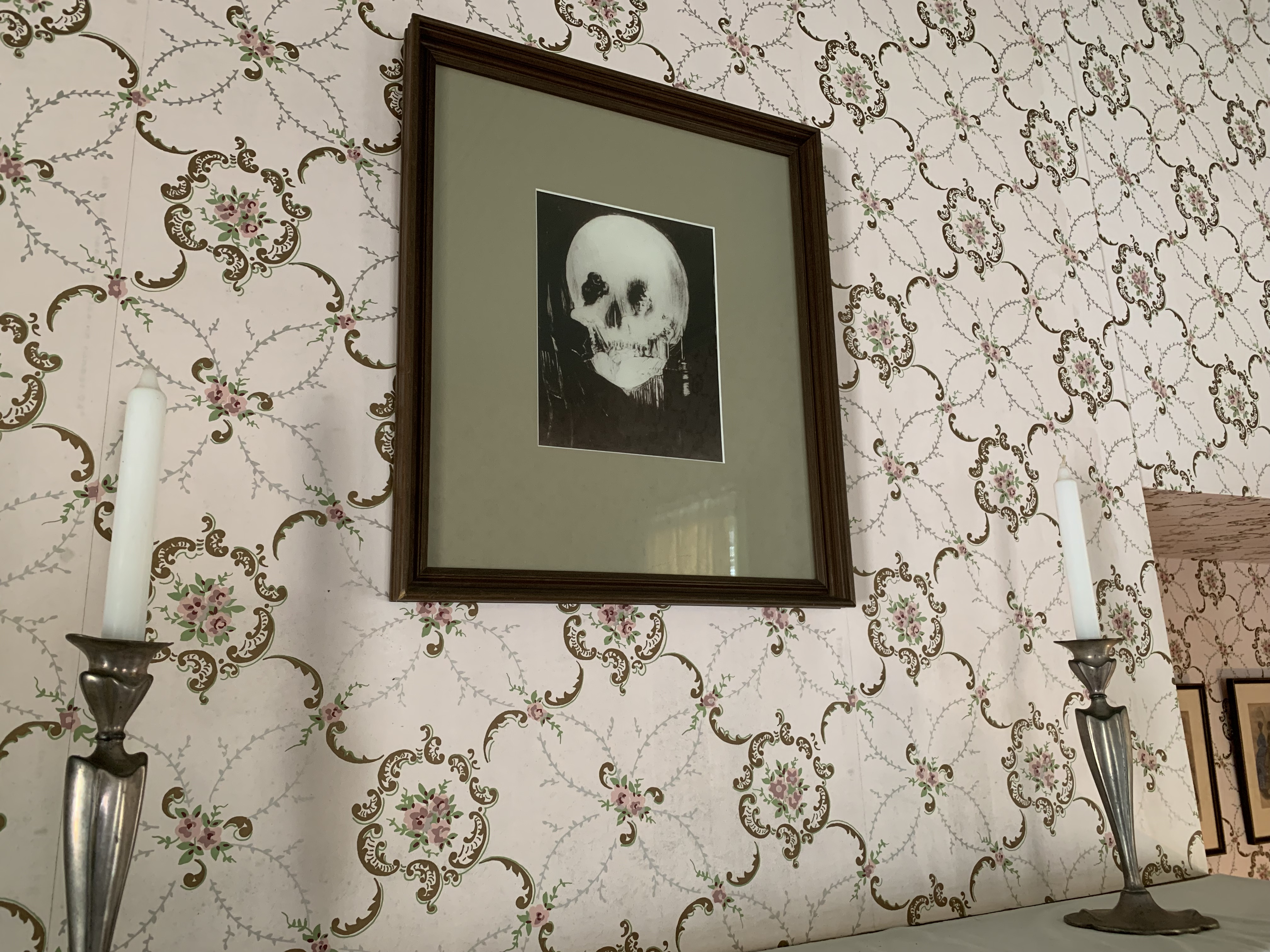
Above the fireplace mantle in the sitting room where LBJ’s mother used to entertain guests is this rather macabre image of a skull. Only after the ranger told me that it was an optical illusion, could I see the image of a young woman looking at her reflection in her dresser mirror. The lesson for Lyndon was to look deeper and try to see things differently. His father was a state representative and taught him the art of politics. His wife, Ladybird, financed his campaign, and under tragic circumstances he becomes President.

The park film on LBJ’s legacy is a bit old but excellent, with recordings from Ladybird Johnson, Vernon Jordan and others. It’s difficult to imagine a time when a Democratic President could win in a landslide on a campaign based on Civil Rights and government spending to alleviate poverty. It also seems strange now to think that his downfall would be being too hawkish militarily in Vietnam. How much the country has changed since then. I wonder what would have been his legacy if LBJ had looked at things differently and decided to abandon the war instead of escalate. Perhaps he would not have withdrawn his candidacy and could have continued his ‘great society’ initiatives.

President William Jefferson Clinton Birthplace Home National Historic Site

The ranger blamed Clinton for choosing the overly long name of the site, and he also explained why some Presidents get public sites and some stay private. Mostly it depends on what the family and community decide. Truman’s family donated their home, and the community here in Hope started trying to turn this house into a national park site as soon as Clinton was elected. The park is still developing as the Clintons are very much still living. One tip, unless you’re interested in the history of a particular brand of cone-shaped speakers, ignore the “open” sign at the large yellow house next to the parking lot and head through the black iron gate in the corner.

Since it is open to tours, including the upstairs which was closed during Covid, you can stand in the living room, amid mementos arranged by Clinton’s mother, and listen to the poignant story of Clinton’s early childhood. His father, a WWII veteran, traveled to Chicago for work and died in a car accident driving back here, never meeting his son. His step-father was an abusive louse, who Bill kicked out of the house when he grew large enough. To spare his younger half-brother Roger from any embarrassing questions about their mixed family, Bill changed his last name to Clinton, despite how he felt about his step-father. There’s not much evidence of Clinton’s life there, beyond a book, a letter from Georgetown and the neighborhood itself, which still has the low railroad crossing nearby where young Bill used to listen to the trains go by and wonder if he was ever going anywhere.

Harry S. Truman National Historic Site

The home was actually Bess’s family’s, before becoming the vacation White House. Due to my inattention and Tesla’s quirky routing, I briefly visited Truman’s family farm, which is much less fancy, before getting to the center of Independence where Harry worked as a judge and could walk a couple blocks to Bess’s house. President Truman evidently enjoyed coming back to Missouri as often as possible, and I’m sure he would be pleased having so many folks visit.

Very little official business was conducted here. But if you’re looking for information on Truman’s Presidency, his library and related artifacts are managed separately by the National Archives a few blocks away.