Timucuan Ecological and Historic Preserve

Let’s catch up on where we were in Florida, at this fascinating, multilayered site that preserves not just nature but also native, colonial and freed slave cultures. As I learned here at Fort Caroline, which hosts the visitor center for the preserve, the Timucuan people either were killed, converted or escaped to join other tribes, after contact with the Spanish. But this was once their land (and water). And at the small exhibit in the Ribault Club, a partner site & wedding venue, I learned that thousands of years ago the Native Americans built shell mounds and large, complex rings of shell structures throughout these coastal islands, some of which remain here. So the preserve does help protect Native American archaeological sites, in addition to protecting critical breeding grounds and nurseries for fish, flyways for migrating birds, habitat for endangered wildlife and the plants which literally hold the land together. I saw many different birds on my hike in the Teddy Roosevelt area (above), including wood storks.

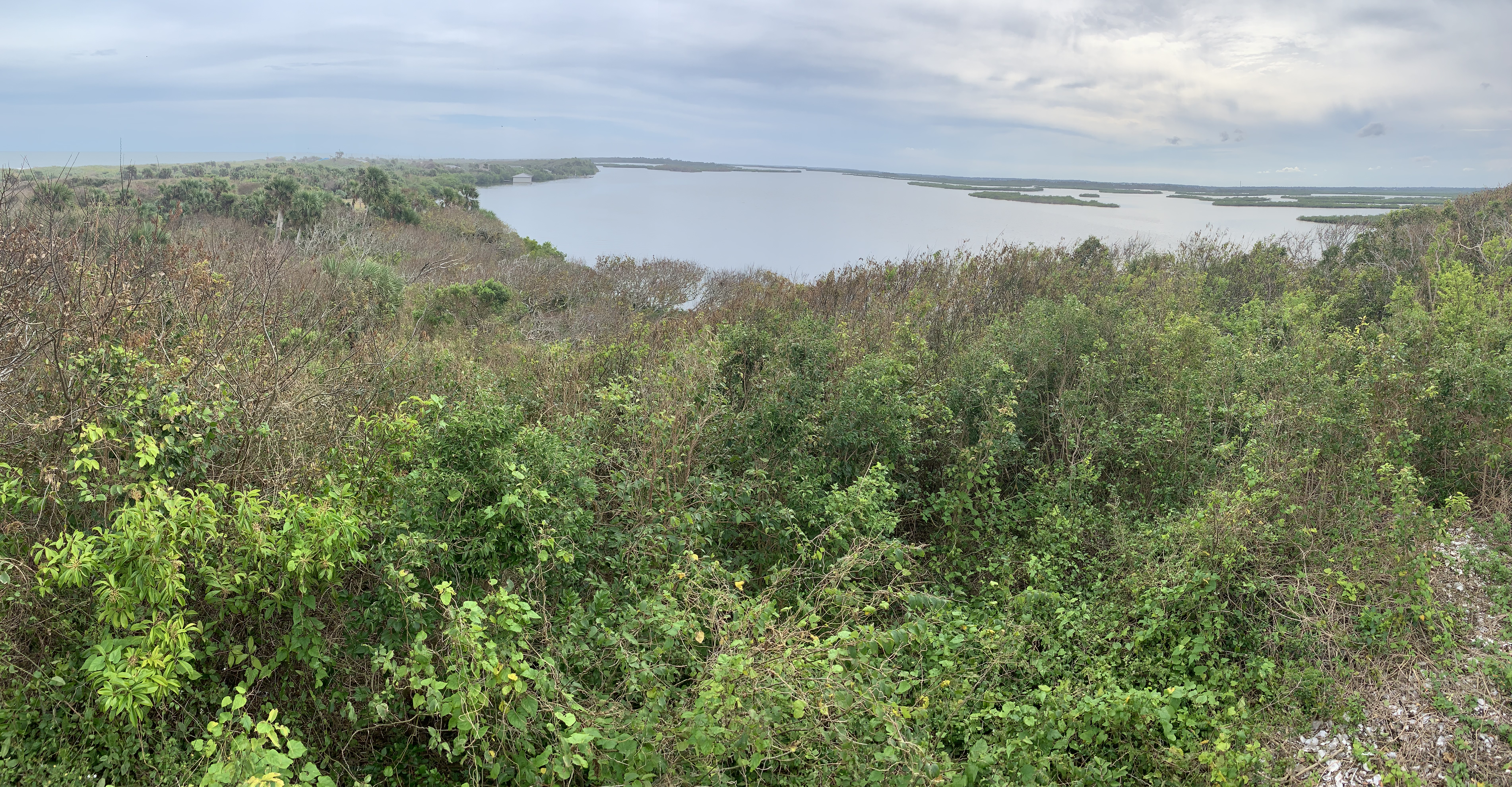
These islands (pictured) are the southern end of these low-lying coastal delta islands that run to Moores Creek in North Carolina. The whole area is now known as the Gullah Geechee Cultural Heritage Corridor, where some African traditions and culture survived, and a unique Creole was created, called Gullah in an echo of slave roots in Angola. That culture developed separately from the mainland, since some of the first Africans brought here were free, some slaves purchased their freedom (or their children’s) from the French, Spanish & British who allowed that, and some escaped. Unlike the larger plantations in the southeast, the coastal rice, cotton & indigo sea island plantations were run more loosely, with free time allowed after tasks were completed and many families kept intact.

The complexity of slavery in Florida is revealed in Anna’s story. She was born as Anta Ndaiye, a Senegalese royal, but was captured and sold into slavery at age 13. She was purchased in Havana in 1806 by a planter and trader who promptly impregnated her and brought her to Florida. Five years and three children later, the planter granted freedom to her and her biracial children. Florida was Spanish at the time, and she received her rights under their law. Her nominal husband owned other properties (and had other wives), so he left the management of the plantations near here to Anna. When US rebels tried to seize their property, she burned the plantation and was rewarded with new property by the Spanish. Anna ran the Kingsley plantation here for 25 years, overseeing 100 slaves. Her fourth child was born free. After Florida became a US territory, new laws were passed making interracial marriage illegal and jeopardizing the rights of Anna and her children. So her husband moved the family to Haiti, which had been free since the end of their revolution in 1804. After her husband died, Anna returned to the US to claim her inheritance, which was contested by her husband’s sister, who argued that Anna couldn’t own property in Florida. Anna argued that she was Spanish, since she had been recognized by the Spanish government as free (and a hero) and noted that the US government had promised to protect the rights of all Spanish citizens under the Florida treaty signed by John Q. Adams in 1819. Anna won. She fled to New York for the duration of the Civil War returning to Florida afterwards.

“To deny people their human rights is to challenge their very humanity.”

Nelson Mandela

Cabrillo National Monument

On the left coast, last week I visited another park dedicated to a Spanish explorer. In 1542, the same year DeSoto died and Coronado gave up searching for gold, Juan Rodriguez Cabrillo sailed into San Diego Bay, before also dying on his expedition to explore America. The myth of the seven cities of gold was a powerful draw for the Spanish. Cabrillo was a slaver, who killed Aztecs by crossbow for Cortes and was rewarded with land, mines and enslaved Guatemalan natives. Wanting more, he headed north in ships built by slave labor in order to claim more land and enslave more natives. Cabrillo got as far as the Channel Islands, before dying by accident, and his crew made it as far as Oregon upwind before returning.

The monument is at the end of Point Loma, past Fort Rosencrans National Cemetery, overlooking the Naval Air Station on Coronado Island. Several different 25 minute films play on the half hour, and there’s an interesting old lighthouse to explore. Hiking paths on both bay side and ocean side offer especially beautiful views, and there’s parking near the tide pools and the sea cove connected by a lovely short trail. From the cliffs, I saw large sea lions, numerous pelicans, cormorants and seagulls. It’s a beautiful Navy city with famously great weather, and the Old Town, the Gaslamp District and the Hotel Coronado are among the interesting sights. Hopefully this post fits thematically, even though it is a bit out of trip order and way off geographically.

Fort Caroline National Memorial

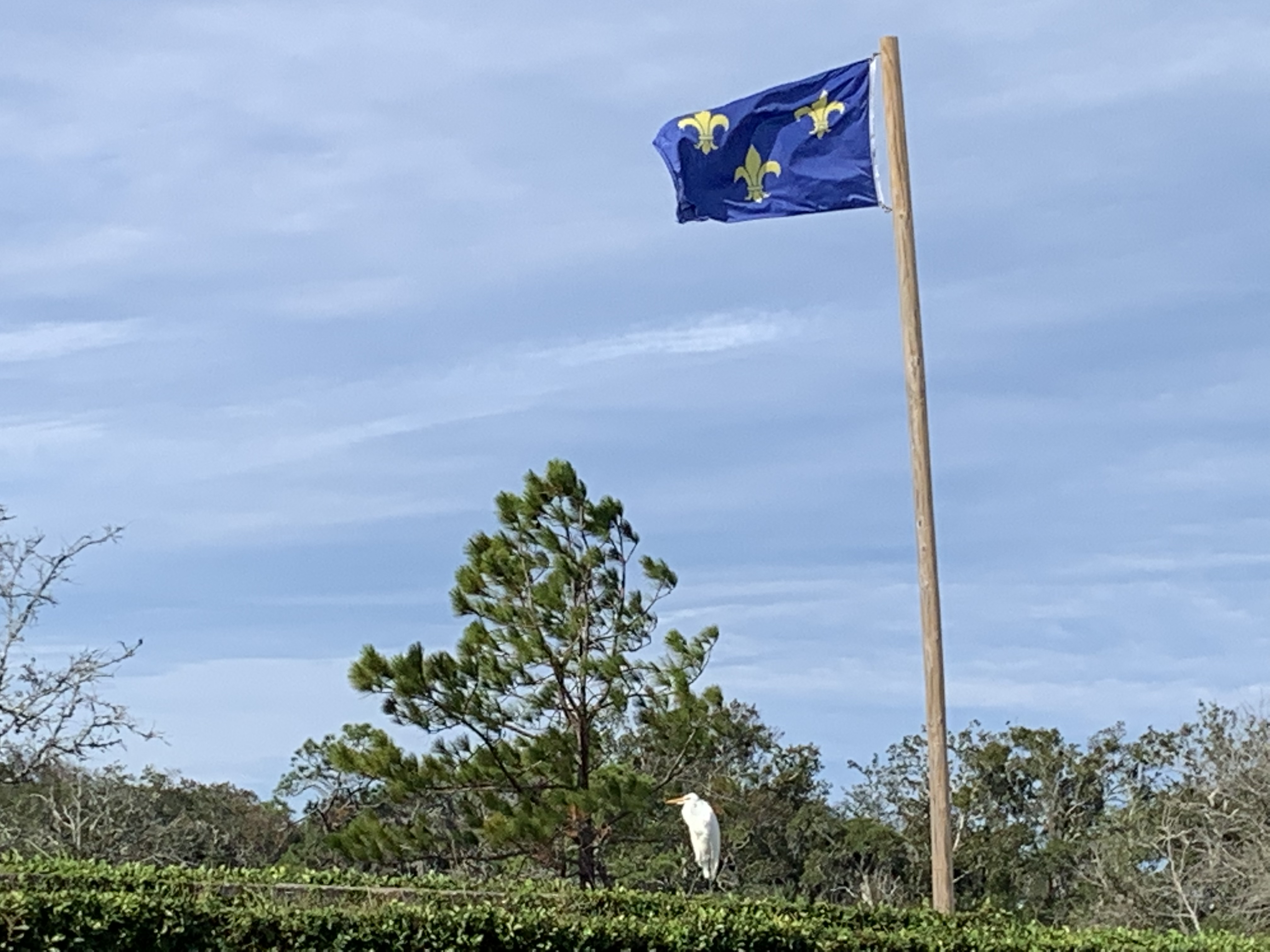
The French settled on the Atlantic coast of Florida in 1564, a year before the Spanish established the Castillo de San Marco in St Augustine. The French built a fort, but their settlement had fewer soldiers and more crafts people, as they intended to trade with the natives, rather than conquer them. Their relations with the Timucuan people were peaceful and friendly.

But the French intended to stamp out the Spanish newcomers, and the fort sent its troops by sea to take St Augustine. That didn’t end well: see Matanzas. Even worse for the French, the Spanish had the same idea and attacked Fort Catherine while its troops were away. The Spanish sacked the fort, killing 140 civilians and taking over the settlement. Only a few French survivors were spared to serve the Spanish.

The natives didn’t intervene when the Spanish attacked, but when another French force arrived for revenge three years later, the natives sided with the French. In the fighting, Fort Catherine burned down. The current fort is a replica created from old plans, drawings and descriptions, but roughly 1/3 the original’s size. The French lost their foothold in Florida to the Spanish.

In settling colonial claims at the Treaty of Paris in 1763, the Spanish traded Florida to the British for the return of Cuba and the Philippines. With American independence, Florida reverted to Spain, before eventually becoming a US territory in 1821, a state in 1845, then seceding in 1861, and then re-joining the Union in 1868. Florida was part of Spain longer than it has been part of the USA.

My eyes used to glaze over in history class, especially with all the dates, places and people long ago. But now, when I think about how the French differed from the Spanish and British, I realize how those battles centuries ago determined who lived & died, who survived and who thrived. I wonder what could our history have been, if only our ancestors had cooperated peacefully, instead of fighting.

For example, the Timucuan natives were wiped out within 150 years or so, some because the Spanish took revenge on them, some by disease, some who joined neighboring tribes and some who were converted and perhaps assimilated. My DNA is 5% Neanderthal, and I’m glad some of the natives survived somehow and assimilated, rather than disappearing without any trace.

Castillo de San Marco National Monument

As you approach St Augustine, you may see the signs proclaiming it to be the nation’s oldest city. That’s not true, of course, there are several older, continuously occupied Native American settlements, including Acoma’s Sky City, Taos, Zuni and Oraibi. St Augustine is the oldest continuously occupied city in the US which was founded by Europeans. This euro-centric bias is even more inappropriate when you realize that the fort was used repeatedly by the US military to imprison many Seminole, 74 survivors of the Sand Creek Massacre, and many Apache.

This is my favorite fortress park. Still, too many Americans still haven’t heard of St Augustine, don’t know that the first thanksgiving mass with natives occurred here, that the fort was unsuccessfully besieged by the English (twice) and by the French, and didn’t know that the Spanish were here two hundred years before the US declared independence from England. So, a visit here is bound to be educational. The programs here sometimes include costumed re-enactors, gun firing demonstrations and tours of the various rooms, walkways and defensive lookouts, so it’s fun for kids of all ages. The fort’s strategic location means that it has a beautiful view of the boats traveling through, and years ago my kids enjoyed seeing a nearby museum with pirate treasure.

De Soto National Memorial

While the park unit is small, it is excellent, with knowledgeable rangers, many of these photographic outdoor displays, and an easy nature trail with beautiful birds along the Manatee River. There are frequent interactive events here, and the film in the visitor center is particularly well done, covering the important history of De Soto’s exploration and conflict with Native Americans.

The Spanish expedition from 1539 to 1543 was a brutal failure that cost De Soto his life and fortune, and it was his fault. After helping plunder the Incan Empire (Peru) in 1533, De Soto used his stolen gold to bring more Spanish soldiers to Florida to look for more gold. Some of the natives had recent run-ins with similar Spaniards, so they kept telling him, ‘sure, there’s more gold, but it’s a little further north’. Guides who failed to deliver the promised gold were killed. (Coronado was on a similar mission at the same time further west). De Soto took hundreds of natives captive as slaves, gave the women to his men, slaughtered thousands and told the natives that he was a deity, oh, and he brought a Catholic priest (see far right). For years, they marched through the southeast, killing, burning, pillaging, enslaving, raping and spreading disease. Many of the natives fought back, mimicking some of their brutal tactics, including the Chickasaw, who later owned slaves and fought for the Confederacy. After De Soto died of fever, his men gave up on his fruitless hunt for gold and maybe half made it back.

As horrific as that all was, several of the survivors wrote accounts of their first contact with the natives, and some of those accounts provide rare descriptions of the native cultures that existed (until the Spanish arrived). De Soto actually found an interpreter from Seville who had been adopted by a local tribe after his expedition starved to death, but he later died on this new expedition. One survivor’s record clearly states that a nearby shell mound was the foundation for the local chief’s dwelling, proving that the mounds in Florida were not simply middens but were built intentionally as elevated platforms for important people and functions, contradicting the park film at Canaveral. A large mound on this site was removed for building roads, before the park service began protecting them. After all the death and destruction inflicted on the natives, it feels especially cruel to erase the last remaining remnants of their culture without acknowledgement.

Canaveral National Seashore

Florida is famously flat, but above there’s an impressive view of the beach, lagoon and islands from the top of Turtle Mound near the Apollo Beach visitor center. There’s a kayak trail through the lagoon with campsites, and further south, there’s a scenic drive and nature hike in the neighboring Merritt Island National Wildlife Refuge. The Timucuan people who built the mound disappeared under Spanish rule—from 40,000 to “a handful” in the 18th century—, so they can’t tell us why they built these mounds. Talking with the ranger and watching the park film, I was told that the shell mound was simply a midden, or dump, from the large feasts that the Native Americans enjoyed here: “only trash”.

I said, “really” and asked why anyone would pile their empty shells 40 feet high when they could just toss them in the water? These mounds survived centuries of hurricanes, before most were excavated to build roads. The Spanish used the shells to build strong “tabby” forts. So isn’t it likely that this sturdy, flat-topped platform next to a trade route with views for miles was built for some structural purpose? I was told “no evidence for that”.

Clearly the park film and the ranger underestimate the Timucuan. It takes no great leap of imagination to realize that Native Americans shared common cultural customs and built large mounds for ceremonial, funereal, calendar and other purposes. See Poverty Point, Ocmulgee, Cahokia, Hopewell and Effigy. Ignoring the pattern takes willful blindness and shows a lack of respect for Native American culture by the people who now live here.

Anyways, I had to be out of the park before the night launch of Artemis I from the Kennedy Space Center next door. NASA preserved this largest undeveloped Atlantic coast, and the seashore, lagoons and waterways host critical ecosystems for fish, birds and more. The endangered Right Whale winters off the coast, and the vulnerable West Indian Manatee breeds, raises young and migrates seasonally. In the warmer months, manatees can be seen at the Haulover Canal or from Turtle Mound. Some manatees winter in the discharge of a nearby natural gas electric plant, but most winter in natural hot springs like Blue Spring State Park, where I hiked their cypress swamp boardwalk to the deep blue hole and found a couple early ones. The manatee’s natural territory is much larger than the park boundaries. Some boaters disregard Slow signs, support removing all safety zones from rivers and even advocate legalizing lethal manatee strikes, just so they can bomb around in their noisy carbon polluting toys. We need to learn how to coexist with nature, not kill it.

Little River Canyon National Preserve

One popular question is itinerary planning, which is essential, although my plans never survive contact with the road. The same trails must be picked up again in different seasons, and inevitably, they retrace the steps of early Americans. The old hunting grounds, early trade routes, forts and battlegrounds often overlap in places like this, and, especially when they’re preserved in a more natural state, it’s easier to imagine those who came this way before us.

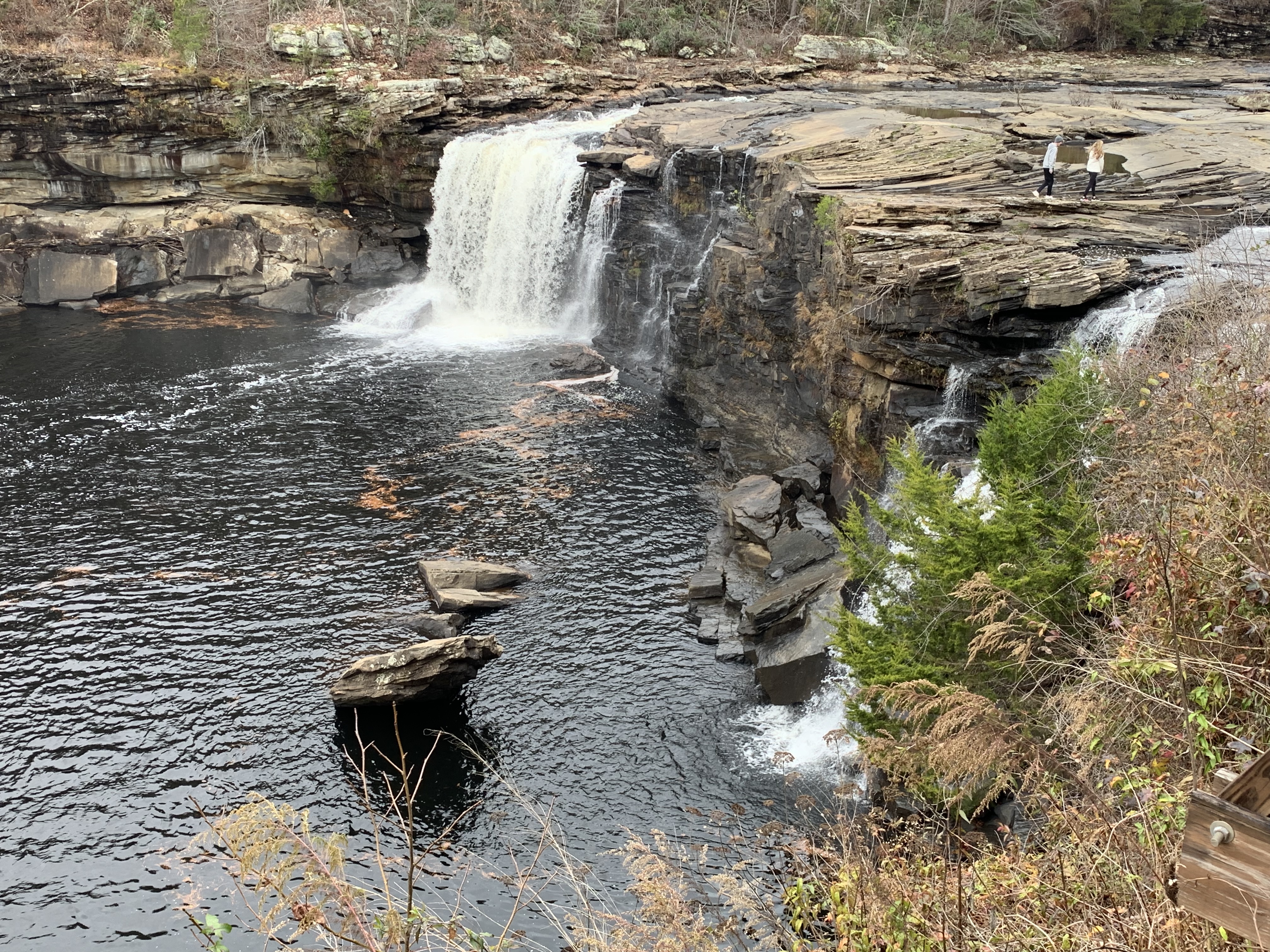
After their long history of interacting with the Spanish, French and British in the southeast, five tribes had become accustomed to European ways enough to be called “civilized”: the Choctaw, Chickasaw, Creek, Seminole and Cherokee. But the US government forcibly removed them to Oklahoma anyway. Most crossed the Mississippi near Memphis, as I did. The Cherokee were split into three groups: the old settlers who moved west before the removal, those forced to walk the Trail of Tears, and those who escaped removal and still live east of Great Smoky. Here, at a natural crossing point through the canyon palisades, the couple in the photo above walk on the Trail of Tears, near where Cherokee families were rounded up into a wooden palisade known as Fort Payne.

The park helps preserve that history, although the primary mission is to protect the many species that live in this important nature sanctuary. The canyon is known among rock climbers for the challenging cliffs, and if you hike downstream there’s a swimming hole near Martha’s Falls. The river isn’t runnable by amateurs, so stick to the scenic drive along the rim, admire the views from a half dozen overlooks and try not to miss the peak foliage like I did. The road isn’t wide enough for both bikes and cars, and, as usual, the former lose out. There’s a park film at the friendly visitor center and an Ol’ Tymer’s BBQ nearby.

Time for me to get back on the road. I passed through Muscle Shoals on my way here, but now I have Georgia on my mind. Places like this are bittersweet, when you reflect on the past or consider the future, but that’s what enriches travel. And our choices make a difference too. Supporting Native American businesses, for example, seems the least we should do to recognize past wrongs. And unless we stop our carbon pollution, these small sanctuaries will prove insufficient to preserve diverse species for any who may follow us.

Chickasaw National Recreation Area

While the Lake of the Arbuckles is popular for wasting gas zooming in circles on the water, I think the hiking is the best form of recreation here. The smaller Veterans Lake is reserved for paddling, but since you can see everything from the boat ramp, there’s no point. I hiked for a couple miles near the Travertine Nature Center through the ecotone that ranges from Redbud to Cactus, along the CCC developed creeks and mineral spring pools, admiring the foliage, the tall Sycamores and various Oaks, and I watched an armadillo digging around in the brush. There are half a dozen simple campgrounds, and when the water is flowing there are many small waterfalls and an old pavilion where they used to bathe in mineral waters. Once tourists observed bison wallowing in the muddy pools, but now the area suffers in man-made drought.

To prevent over-development, the Chickasaw and Choctaw nations sold the springs and surrounding forest to the Interior Department, hence the name. I very much recommend visiting the neighboring Chickasaw Cultural Center, which connects to the park by the pedestrian Inkana Bridge. There I observed a pair of Great Blue Herons, admired the pollinator gardens, toured the replica village, watched a stomp dance, and learned about the tribe in their beautiful museum. The history of the Chickasaw is tragic, fascinating and inspiring, including conflicts with the Spanish, French, British and the US. My trip to the southeast goes in the direction their ancestors traveled many centuries before the tribe was removed to Oklahoma.

Port Chicago Naval Magazine National Memorial

At 10:15 pm on 17 July 1944, 320 people were vaporized in a munitions explosion while loading two ships simultaneously. The blast registered 3.4 on the Richter scale, disintegrated the docks above, blew one ship into small pieces, threw other ships hundreds of yards away, and injured people on the other side of Suisun Bay above. Most of the victims were young African Americans, and the Navy blamed the poorly trained black workers rather than the white officers in charge. When 50 survivors refused to return to work, they were sentenced to 8 to 15 years in prison and others were threatened with firing squad for mutiny. Despite the efforts of Thurgood Marshall to defend them and focus the blame on the Navy’s negligence, the ‘mutineers’ spent the rest of the war in prison, and the story was lost to history until a Cal professor named Robert Allen found a pamphlet, interviewed a dozen survivors and wrote a book in 1989.

The story is powerful, and the ranger and volunteer did an excellent job of painting a detailed picture of racism, dereliction of duty (among the officers who bet on load rates), the lies that the enlisted workers were told (that the bombs were inert), and the trial. Photographs, oral accounts and actually visiting the spot where it happened, including touring the revetments where munitions were transferred from boxcars and out to the docks, bring the impact home. The volunteer, Diana, noted that the Navy suffered an even more deadly munitions loading accident less than 4 months later, when the USS Mt Hood exploded in New Guinea on 10 November 1944, obviously not learning the lessons of Port Chicago. The ranger, Eric, made a persuasive case that the negligence and racism uncovered and protested, while officially unpunished, likely prompted the Navy to be the first branch of the military to desegregate completely in February 1946, two years before the other branches.

This park unit is dedicated to preventing this unjust tragedy from being forgotten. Tours must be reserved at least two weeks in advance for Thursday through Saturday when the Army, who took over the base, allows visitors. Although the tour met at the Muir home, I was able to drive my EV to the site above. Fortunately, the park service is working on improving access by building a visitor center nearby.

John Muir National Historic Site

The view from the cupola of Muir’s father-in-law’s orchard estate upsets me. Between the palm trees, you can see smoke rising from the refineries in Martinez, and to the right across the street is a gas station. Muir never rode in cars, took horse carriages and preferred walking. In the house, there’s a print of the Muir Glacier in Alaska, now the Muir Inlet. He lived just long enough to lose the battle to prevent Hetch Hetchy Dam at Yosemite. Many of the giant sequoia groves at Sequoia have been destroyed by wildfires. And all his work with Teddy Roosevelt and the Sierra Club he helped found to protect millions of acres of wilderness is failing to protect nature from the man made climate crisis.

The battle for conservation will go on endlessly.
It is the universal warfare between right and wrong.

John Muir, 1896

At least he was happy in this house. Muir visited the owner, a Polish botanist who introduced varieties of fruit trees to the valley, and fell in love with his daughter, Louie. They married, settled here and inherited the orchards. They had children and also invited some of Muir’s siblings to join them, allowing John time to write. One of the oldest buildings in the area is the Martinez Adobe in the back of the property, which gave room for the Muir clan to stay and take care of the orchards. Influenced by Emerson, who he met later in life, Thoreau and Marsh, Muir continued traveling and became the most influential conservationist in the world, writing books, articles and letters to protect Yosemite, sequoia groves, glaciers and other natural wonders from human consumption. He would not forgive us for our fossil fuel pollution.