Aztec Ruins National Monument

Again, we keep using the wrong name for a national park site (like Montezuma’s Castle). The Aztecs had nothing to do with building this pueblo or reducing it to ruins. By now, I’ve had it. Even the park service uses the term “Indians”. Well, Indians are from India, and we’ve known for centuries that Columbus was wrong to believe the natives he encountered were from the Indies. Geographically, it’s difficult to find two places more diametrically opposed on our globe than India and New Mexico. It’s frankly insulting to keep referring to people by using a mistaken term for centuries. And it shows a profound and reckless disregard for addressing past mistakes and thinking about how to correct them, when we continue making the mistake every day. I’ve been using the term “Native Americans” to discuss the people who still live here and still practice their religion at sites like these. In Canada, the official term is “First People”, which is certainly an improvement in accuracy. Navajo use the term “Diné”. Unless we’re referring to the south Asian country of India, we need to stop saying “Indian” now.

Rant over. The ruins are primarily worth visiting in my opinion to see the spectacularly restored Kiva pictured above, as well as to duck through a long row of low doorways to explore the many rooms along the longest wall here. If you have time to visit a number of these native cultural sites in one trip, then you begin to get a fuller picture of the various migrations, trade routes and pueblos along the river valleys. Each park visit helps open my eyes to both the ancient people and their living descendants.

Canyon de Chelly National Monument

The canyon is sacred to the Navajo. As is too often the case with Native American places, the name is confusing. De Chelly (pronounced ‘du Shay’) is from a Spanish borrowing of a Navajo word meaning “canyon”. So, many people out there are mispronouncing a word in two languages in order to try to say “Canyon Canyon”. This is my favorite canyon.

I only made a brief stop at Antelope House Overlook on the north rim to get a photo of this spectacular canyon. Fortunately, I toured the canyon a few years ago with my kids. That’s really required to experience the history, culture and beauty. Our guide was a Navajo who explained some of the history and beliefs of her people who still live in the canyon. Although Kit Carson’s troops cut down the peach orchards and modern people have diverted water, the bottom of the canyon is still both productive land and a protected ecosystem. If you have the time and money, a horseback tour would be incomparable.

I don’t normally talk about traveling between park units, but the drive from the canyon to Farmington was spectacular. The combination of green forests, snow, and red & tan rock formations in the winding mountain pass is stunning, as was the view of Shiprock on the other side. I feel some sense of culture shock when passing through Navajo Nation, accentuated by the stark differences between communities on each side, and this time felt acute.

Hubbell Trading Post National Historic Site

The post is still in use today, selling jewelry, blankets and other handcrafted goods. Navajo Nation spans a large part of northeast Arizona, and its border extends into Utah and New Mexico. Note well that they follow daylight savings time (unlike the rest of Arizona).

In the 1860’s, US troops under Kit Carson “burned villages, slaughtered livestock, destroyed water sources” and force marched thousands of Navajo to internment camps in New Mexico. The Long Walk and subsequent re-education programs damaged Navajo culture, breaking ancient familial bonds of language and traditions.

America has not dealt with this tragic history nor its consequences. And I’m not talking about Kit Carson’s legacy or that his name is ubiquitous in the west. I mean the US government’s responsibility for ordering people like Carson to execute this atrocity, against his personal views. We need to understand the mistakes of the past, atone and choose more wisely in the future.

César E. Chávez National Monument

I returned here today to see the exhibits, as they were closed when I visited last year. The black & white photos of the Delano grape strike and Chávez’s hunger strike remarks are particularly moving. Pesticides were not regulated at all then, and labor was denied rights by growers. Chávez’s national boycott of grapes helped change both.

Today, growers drain rivers, lakes, wetlands and water tables, even as the western half of the country suffers in drought. In Kern County, where the Monument is, the Kern River no longer flows to the Kern Lake, due to diversion for agriculture. In order to sell more produce, growers are ruining the environment for fish, animals and people. Climate change and some farming practices also exacerbate Valley Fever, a deadly fungal infection spreading in California & Arizona.

Agriculture is a trillion dollar industry in the US, with $150 billion in exports. But Big Ag prefers to blame Democrats, rather than face the fundamental challenge of the climate crisis. Big Ag needs to convert farm equipment to electric, and they need to stop using fossil fuel to ship their produce around the world. They also need to cooperate to restore wetlands to sequester carbon.

César Chávez devoted his life to raise awareness and lead civil disobedience to make change. He acknowledged that in the struggle against the rich and powerful, poor people only have their lives “and the justice of our cause” on their side. Today, we need more people to be just as devoted to stop the climate crisis.

Wisteria, photographed in my previous visit in 2021.

Click to see my photos of all national park units in California, or click to read an updated site visit here.

Gila Cliff Dwellings National Monument

This park is surrounded by real wilderness, and any intelligent visitor would plan on camping overnight to take a longer hike or maybe even a trail ride on horseback. Of course, I drove through on my way back to Arizona, practicing my hairpin turns on mountain switchback roads. Well, at least I didn’t burn any species-ending fossil fuels on the drive.

The cliff dwellings are spectacular, with details like a wall mural and a pictogram, well worth the brief hike along the pretty creek and up the cliff side. Unlike Montezuma Castle NM, I was able to climb right into the main room and climb ladders to peer into the past. There was even a volunteer there who reminded me that pictograms are painted and petroglyphs are carved.

Click to see my photos of all national park units in New Mexico.

Petroglyph National Monument

Worth going to the visitor center first. They directed me to the trail with the most petroglyphs (400+) and no parking fee. Fascinating to see the signs those travelers left so long ago, preserved by the city of Albuquerque, right behind a residential neighborhood.

Another hiker pointed out a coyote, probably chasing the road-runner I saw too. I heard the distinctive “beep-beep”. They should make a cartoon about that.

Click to see my photos of all national park units in New Mexico.

Tonto National Monument

This cliff dwelling was protected by President Theodore Roosevelt, and the lake in the distance bears his name. My maternal grandfather used to read The Roosevelt Bears to me, and he loved the west, wildlife and birds in particular. So it was especially meaningful for me to wake up beside Apache Lake, spot a hooded oriole, and then drive up to the monument in the morning. Despite a wildfire and protective burns in 2019, the wildflowers were beautiful. Unlike Montezuma Castle, visitors can climb up to and stand in the main alcove to inspect the ruins.

Click to see my photos of all national park units in Arizona.

Wupatki National Monument

The lower part of the Wupatki Pueblo including ball court.

I have mad respect for the ancient people who built these pueblos and traversed this land for centuries. Their descendants are still here, and often they remind the rest of us to protect the land and the wildlife that lives here. Climate change is already creating environmental refugees, more each year. Fossil fuel firm executives continue to make millions, despite the incredible hardships they foist upon our futures. And yet most of us still refuse to take action.

Click to see my photos of all national park units in Arizona.

Walnut Canyon National Monument

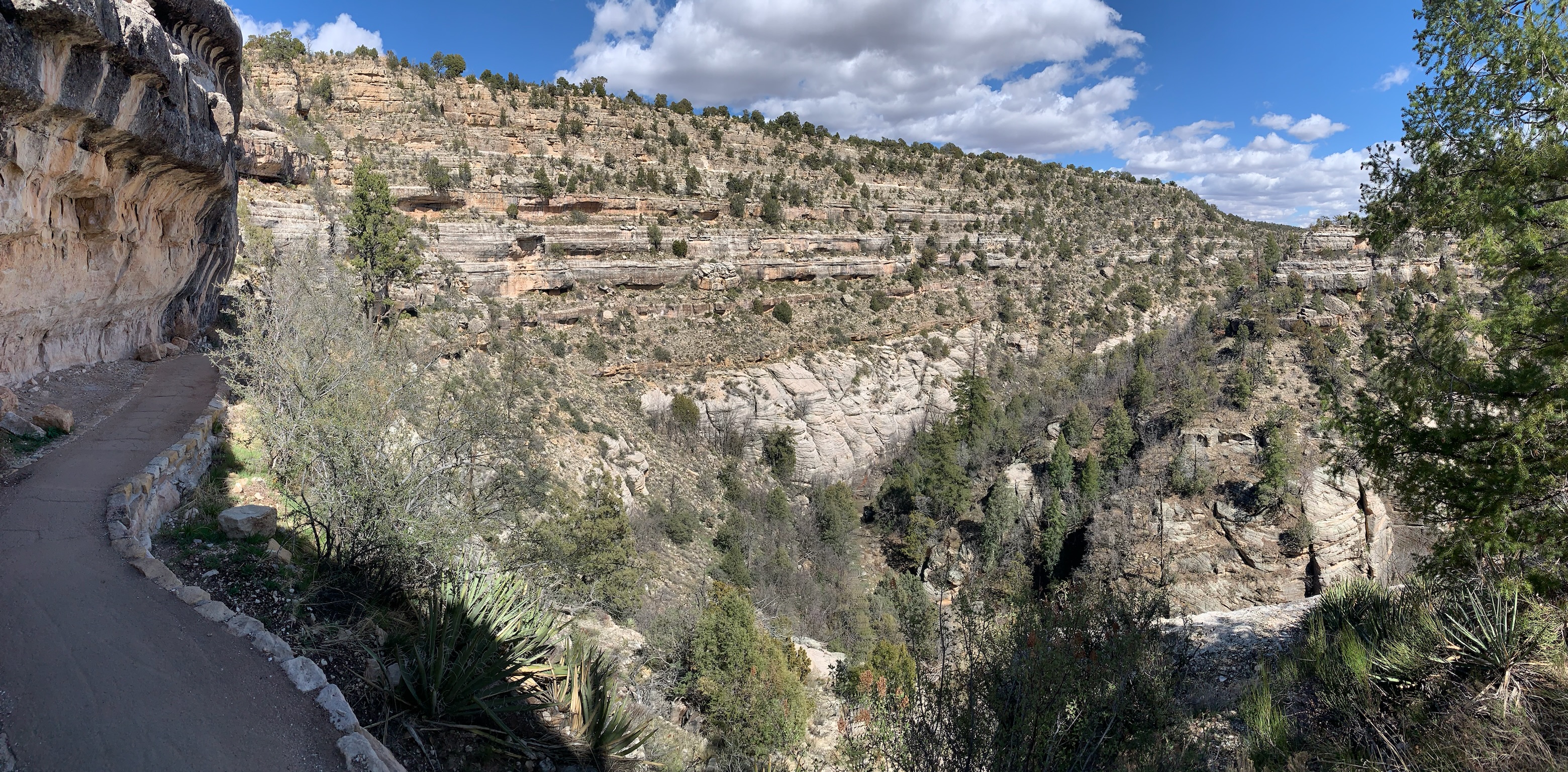
With a bit of hiking down into the canyon, you can walk right alongside many cliff dwellings and look across the canyon at more. The steps bring on a bit of vertigo and require extra breathing at around 6,500′, but the views are extraordinary. Plan ahead, since the Island Trail closes at 3:30 pm.

Both the alcoves along the trail and in the distance contain many cliff dwellings.

Click to see my photos of all national park units in Arizona.

Montezuma Castle National Monument

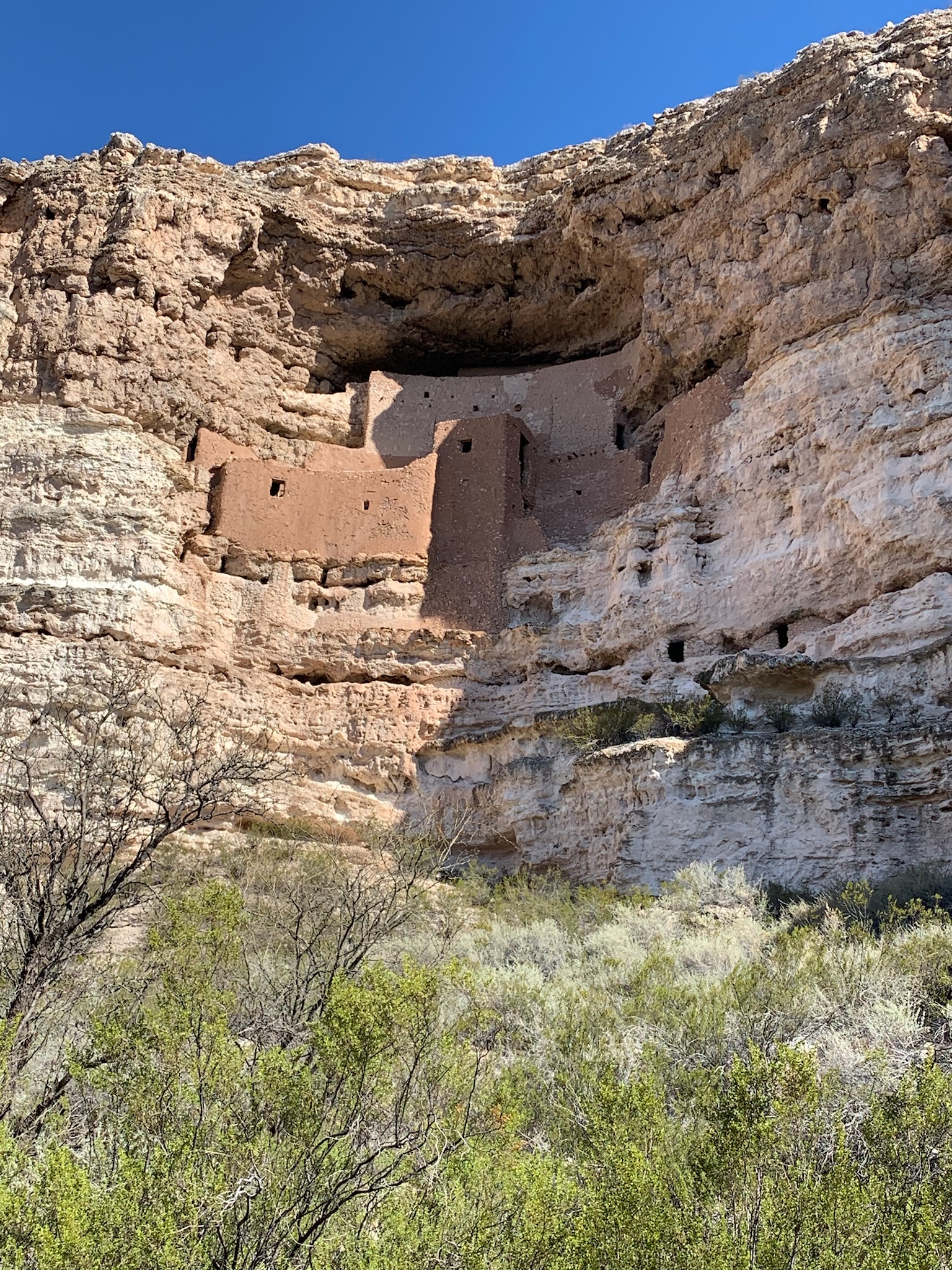
Montezuma was an Aztec who fought the Conquistadors in what is now Mexico. He had absolutely nothing to do with this place, which was built hundreds of years before he was born. Also, it was likely built for comfort and convenience, rather than war. Early tourists destroyed many cliff dwellings by taking home “souvenirs”, and many of the intact cliff dwellings show no signs of having ever been attacked by other tribes. The natural alcoves across the Southwest provided warmth in the winter, shelter from rain, coolness during summer, convenient places to cache items for trade and great hunting overlooks. I have to laugh at the so-called “mystery” of why early people built these cliff dwellings, especially considering the fancy modern hotels built into the canyons in Sedona. Why wouldn’t people want to stop when passing through, make themselves comfortable and move on when they wished?

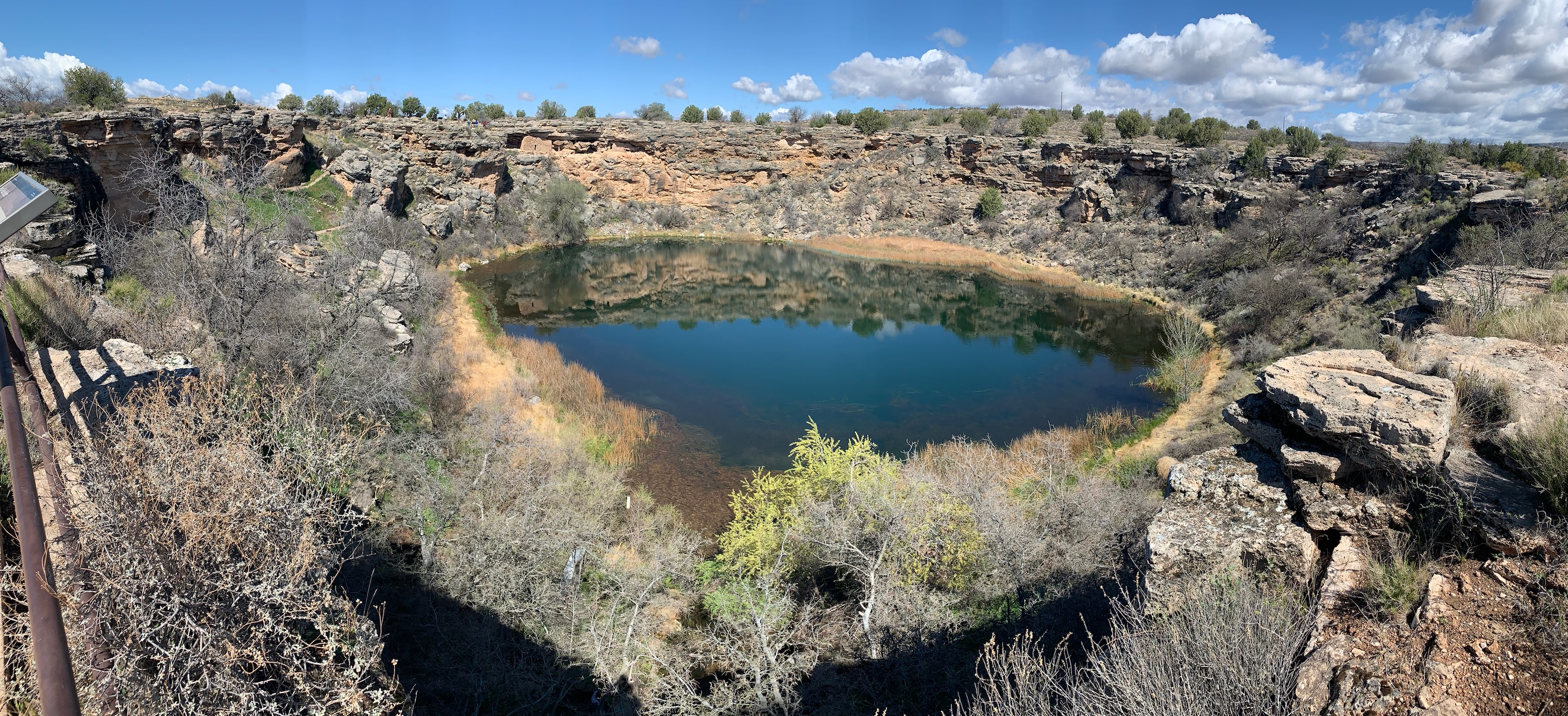
Montezuma’s Well is part of the same park unit and well worth a visit. There’s a closer view of the cliff dwellings, especially at the lower part of the well, ducks, and a still functioning irrigation channel.

Fed from underground, the well maintains a constant water level. Unfortunately, there are trace amounts of naturally occurring arsenic in the water, a reminder that nature never makes it too easy.

Click to see my photos of all national park units in Arizona.