I think the best way to explore here is to camp. Many of the most interesting rock formations are steps from the primitive campsites and the best views are after dawn and around sunset. I spent a quiet night here imagining what the California Trail settlers thought as they camped nearby. The hard granite offers many handholds and steps for novice scramblers. Of course, the site is also popular among technical rock climbers who can prep on Practice Rock before working their way up to more challenges.
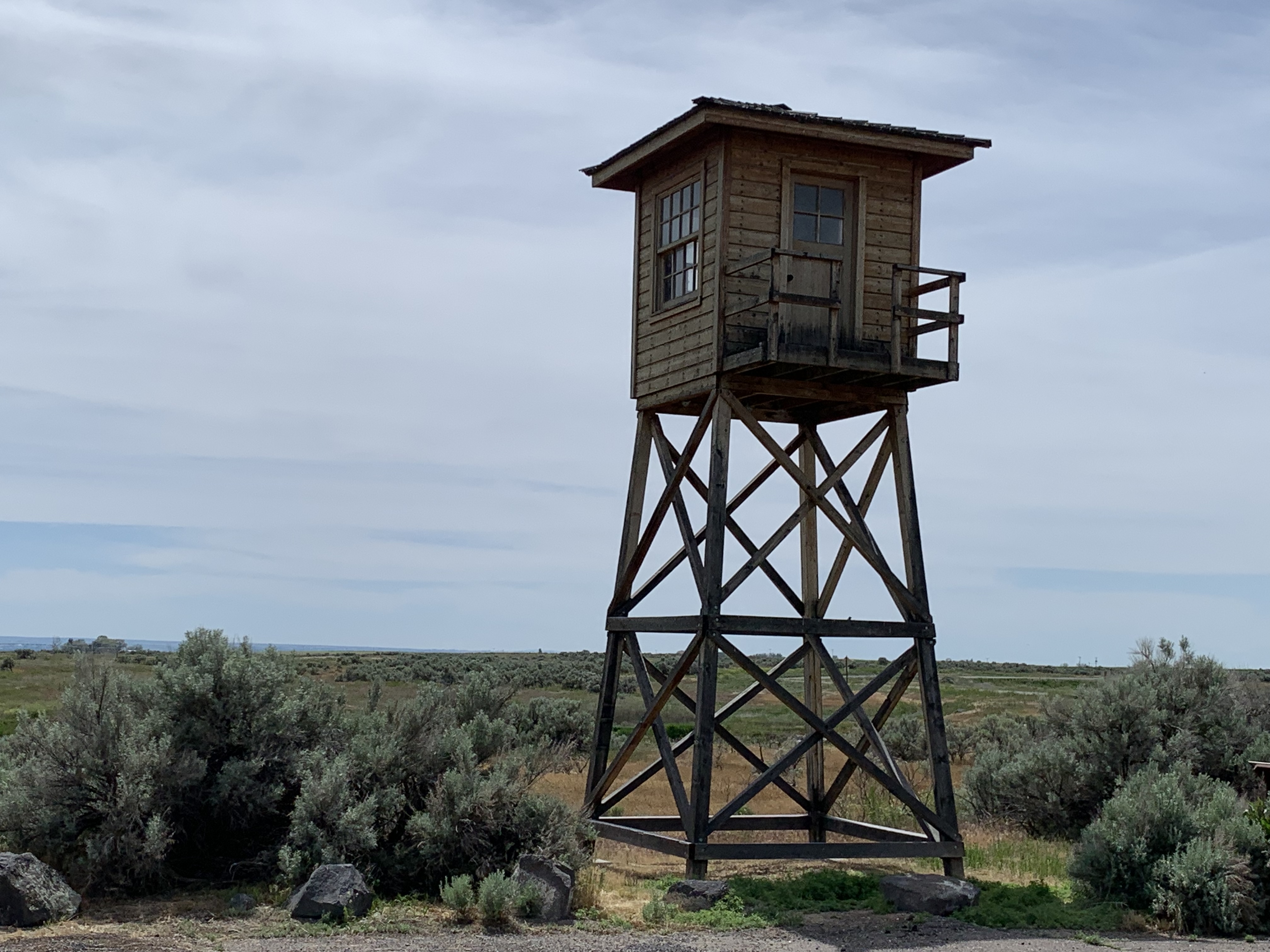
Named for the Dakota Sioux word for a spring, this concentration camp is along an irrigation canal, where the Japanese-American prisoners built a swimming hole and tried to fish. The sincere efforts to try to improve their confinement somehow make the circumstances even sadder. Thousands of Americans were cut off from their homes, neighbors and country, due to their national origin and race. Most German and Italian Americans were not incarcerated during WWII. Neither were most Japanese-Americans in Hawaii. Most of those kept here were from the Pacific Northwest and had lived in the US for a generation or more. Many also found their property had been stolen when they tried to go home. Under Carter and Reagan the survivors were paid $20,000 compensation for “race prejudice, war hysteria and a failure of political leadership”.
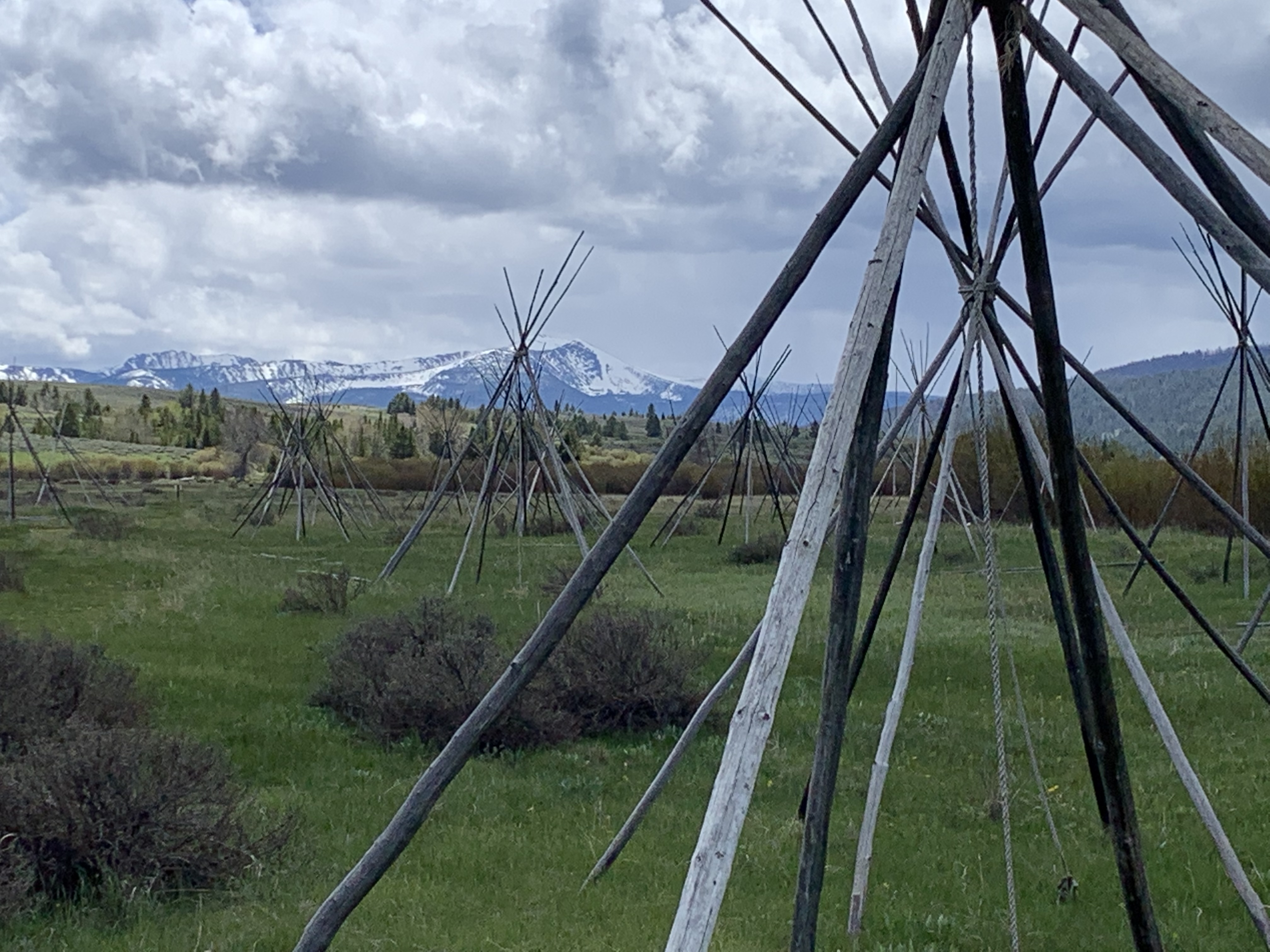
This uniquely tragic site in the War on Native America is also part of the Nez Perce National Historical Park, and it sits in the scenic Big Hole valley, right near the little town of Wisdom.
The US military was hunting down natives who refused to go to reservations and a few fugitives who had killed some settlers. They attacked the camp at night, burned the tipis and killed around 90 natives, mostly women and children, including babies bludgeoned to death. The warriors killed 31 soldiers in defense and then fled with the survivors. Some eventually escaped to Canada, but Chief Joseph later surrendered at Bear Paw with the rest.
Hail fell while I was at the Nez Perce cemetery above, and it felt appropriate, considering the terrible history here. I took some time after the film and walk to try to draw any wisdom, and all I could come up with was this.
No person can claim credit alone for greatness, as our existence is entirely due to the natural world that we evolved from, which sustained our ancestors and us. Yet a great idea, which is not limited by time and place, can inspire, destroy or outlast our civilizations, as long as there are still humans who understand it. So we must not think so much of ourselves. We must thank the natural world for everything it has given us. And we must try to cultivate thoughts, wisdom, moral judgements, insights, inspiration and kindness that may survive us and improve the future.
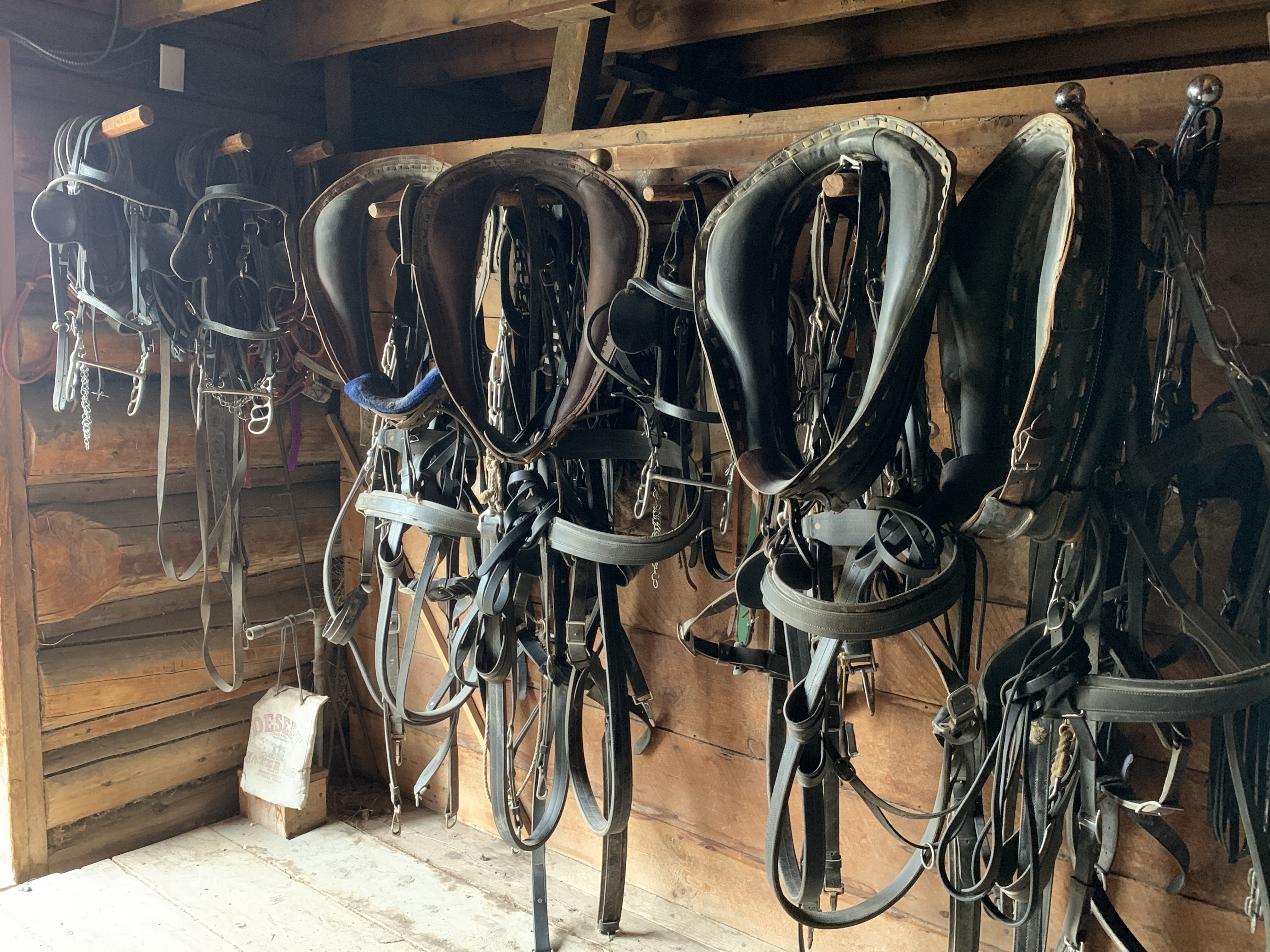
Before barbed wire many ranches raised cattle free range, meaning without fences, and cowboys would drive herds of cattle up to halfway across the country. This ranch helps preserve a few elements of that iconic way of life, as a working ranch with beaver-slide hay stackers (invented nearby) and a variety of animals. The displays depicting the cowboys put real faces on the young men whose lifestyle was romanticized by books, radio, TV and film.
When I stay in state park campgrounds, like Bannack near here, I’ve been reading Louis L’Amour’s books which helped mythologize the West. I often find I’m following the same routes and seeing the same places he did. One of his scripts could easily have come from the history of Bannack where a corrupt sheriff and his gang, ”the innocents”, killed over 100 people and robbed even more before the townspeople figured it out and hung him from his own gallows.
Another local site is the Anaconda copper mine smelting tower, site of a horrific pollution scandal. There’s still a large Superfund site cleaning up here. The mountains, valleys, forests and rivers here are stunning, but greed often drives men to devastate both their communities and their environment. We must look deeper than myths, see what’s going on behind the scenes and act before damage becomes irreparable.
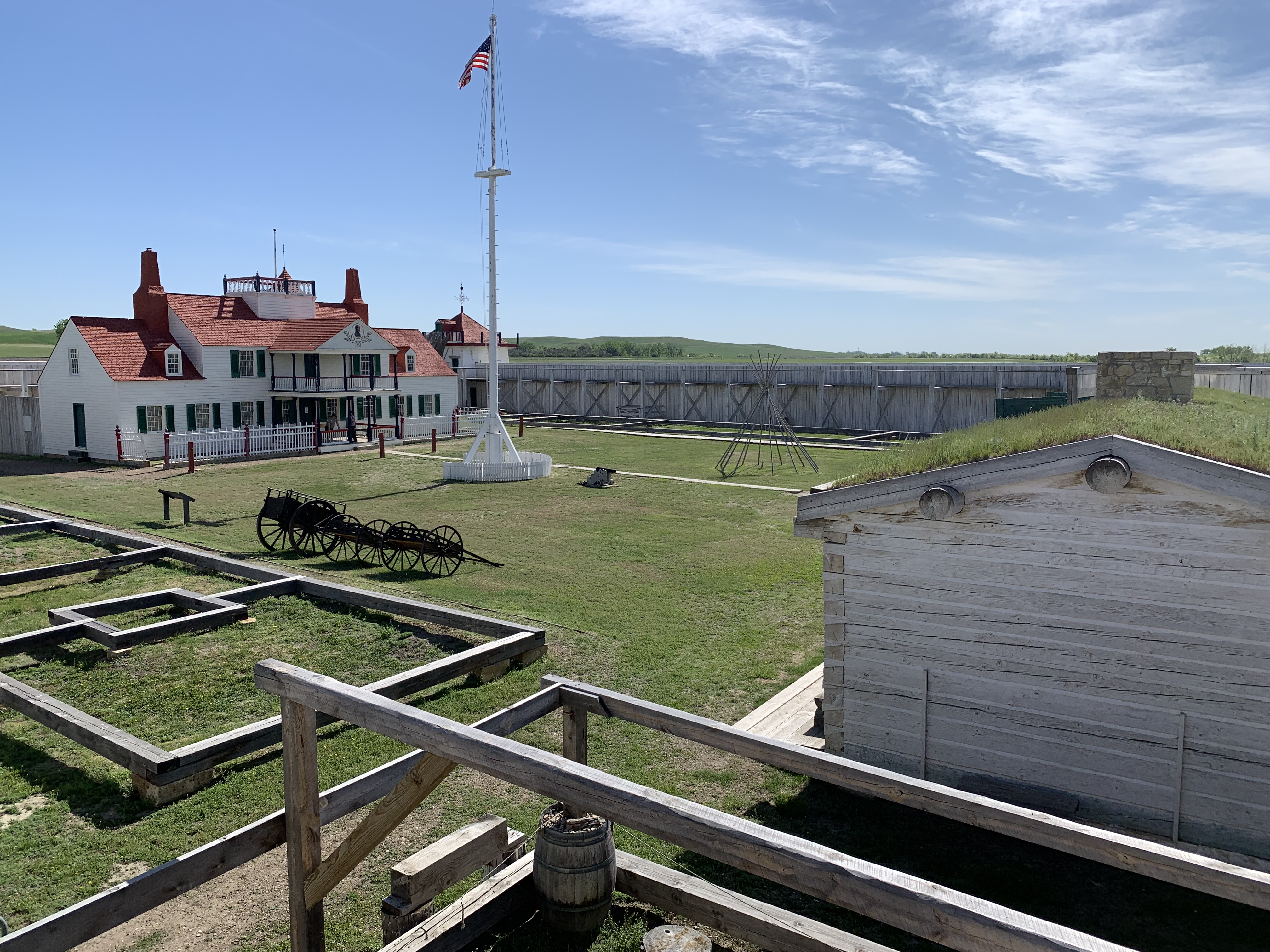
Not to be confused by the other Fort Union, this was strictly a trading post built for the fur trade at the invitation of the Assiniboine. The post was open for 40 years, peacefully and profitably trading with the Native Americans. Large numbers of natives brought stacks of furs, which were sorted and pressed outside the fort to determine payment, and then at a window they bought various goods, especially cloth. The large fur press outside the fort is basically a long pole on a fulcrum to measure fur stack thickness. Fort Vancouver in Oregon has one too, reconstructed from photos, but the rangers didn’t know what it was. (I showed them a picture and told them to call my favorite rangers here.)
Audubon came here to study mammals after finishing his bird book. Catlin came here to paint portraits of natives and portray their lives without the hateful bias that was common at the time, and he first suggested a series of national parks to protect the beautiful, historic and vanishing way of life in the West. The rangers here were among the best I’ve heard at bringing the old fort to life with engaging stories.
There’s also a small plaque, near where Lewis & Clark must have stopped, to a national parks founder named Mather, praising him for good works that “will never come to an end”. But if we lose the climate fight, many of our national parks will fail in their mission to protect nature and fail to pass that natural world on the future generations.
Certainly the highlight of my trip, the three units are connected by the Little Missouri River, which is the south unit oxbow on the left. The south unit also has bison, wild horses, a painted canyon, petrified logs, a prairie dog town, badlands, a replica of Teddy’s cabin, a ranch, camping, and lots more. The north unit has even better oxbow views on one of the best hikes I’ve ever done: Caprock Coulee 4 miles. Even the tiny Elkhorn Ranch unit, hemmed in by cattle fences and pumpjacks, had a pair of whooping cranes to amaze me. I’m honestly struggling for superlatives. Teddy used the phrase “grim beauty” which gets at the serious nature of the park. This is one of my favoritenational parks. Click here for more Teddy Roosevelt sites.
I would like to spend a week up here and ride a horse, but I’m already in Montana. For EV travelers who want to see all 3 units, I recommend charging overnight in state campgrounds before & after. There’s one next to the south unit and another not too far from the north.
I like Mount Rushmore, but it’s in the wrong place. The Presidents selected all had issues with Native Americans (although the Presidents were all long dead when the monument was sculpted). The sculptor was a KKK member who wanted to sculpt confederate leaders, but that’s just a side note. No, the problem is that the monument is carved into the sacred Black Hills which may be the most shamefully taken, fought over and litigated place in America. It doesn’t help that the surrounding area is filled with common tourist traps, and that the tourist dollars do not go to the tribes who legitimately (according to Court decision) should own the land. Even though they have Tesla chargers in the parking lot, I just can’t appreciate the site as I did years ago.
This is a great place to learn about earthlodges due to the continuous maintenance of traditional culture here. Videos tours are available online too. Clearly the lodges were multi-use, serving both daily needs and special ceremonies. Having seen various ruins of similar structures around the country, it is informative to view such a complete exhibit.
The other reason these particular villages are important is that Lewis & Clark landed here and added a few folks to their expedition, including a French trapper named Toussaint Charbonneau and his wife and their infant son. Since she acted as interpreter and guide, Sakakawea became the expedition’s most valuable player and is memorialized on a US $1 coin first minted in 2000. A hike down to the river is worth the short walk.
This diorama is one of the best I’ve seen, and it showcases all the major finds discovered here to date. The first fossil was found by James Cook on his ranch here at the headwaters of the Niobrara, but his collection of Native American art & artifacts rivals the attraction of the fossils. He was a great friend of Chief Red Cloud, and, unlike many of the original fossils which have gone on for display and study elsewhere, Cook insisted his gifts remain here. If that weren’t enough, there’s a lovely creek with wildlife on the trail up to where most of the fossils were found. This is one of my favorite fossil sites, although Dinosaur is better.
Like many folks, I grew up watching Westerns, so when I think of wagon trains of pioneers, I think of circling the wagons to defend against native attacks. But that’s another myth. More pioneers were killed by gun accidents than native raids. Pioneers traded peacefully with Native Americans as a rule. There was another school shooting recently, and the myth that guns make us safer is still being repeated today.
Of course, the main cause of death for the pioneers was cholera, so what actually protected them was coffee. Folks who drank “cowboy coffee” (strong enough to float a horseshoe) were saved by boiling water. I knew there was a reason I love espresso.
The park is beautiful, and many of our ancestors in the west walked (“prairie schooners” or wagons were for supplies) through the pass above. The rangers are both informative and engaging, and as always I learned more in a brief conversation than from any other source. Since I arrived early, I hiked up the Saddle Rock trail, but you can also drive up. The bluffs aren’t the highest or most brightly colored in the whole country, but they offer pleasant views of the historic trail.