Allegheny Portage Railroad National Historic Site

A fascinating feat of engineering, stationary locomotives dragged canal boats and cargo over the Allegheny Mountains between Philadelphia and Pittsburgh, cutting travel time from over three weeks to about 4 days. Now, the best way to travel through the scenic wooded hills is probably bicycle, on one of the many converted old railroad trails. Maybe next year. Today I drove the route in just a few hours on one electric charge.

Johnstown Flood National Memorial

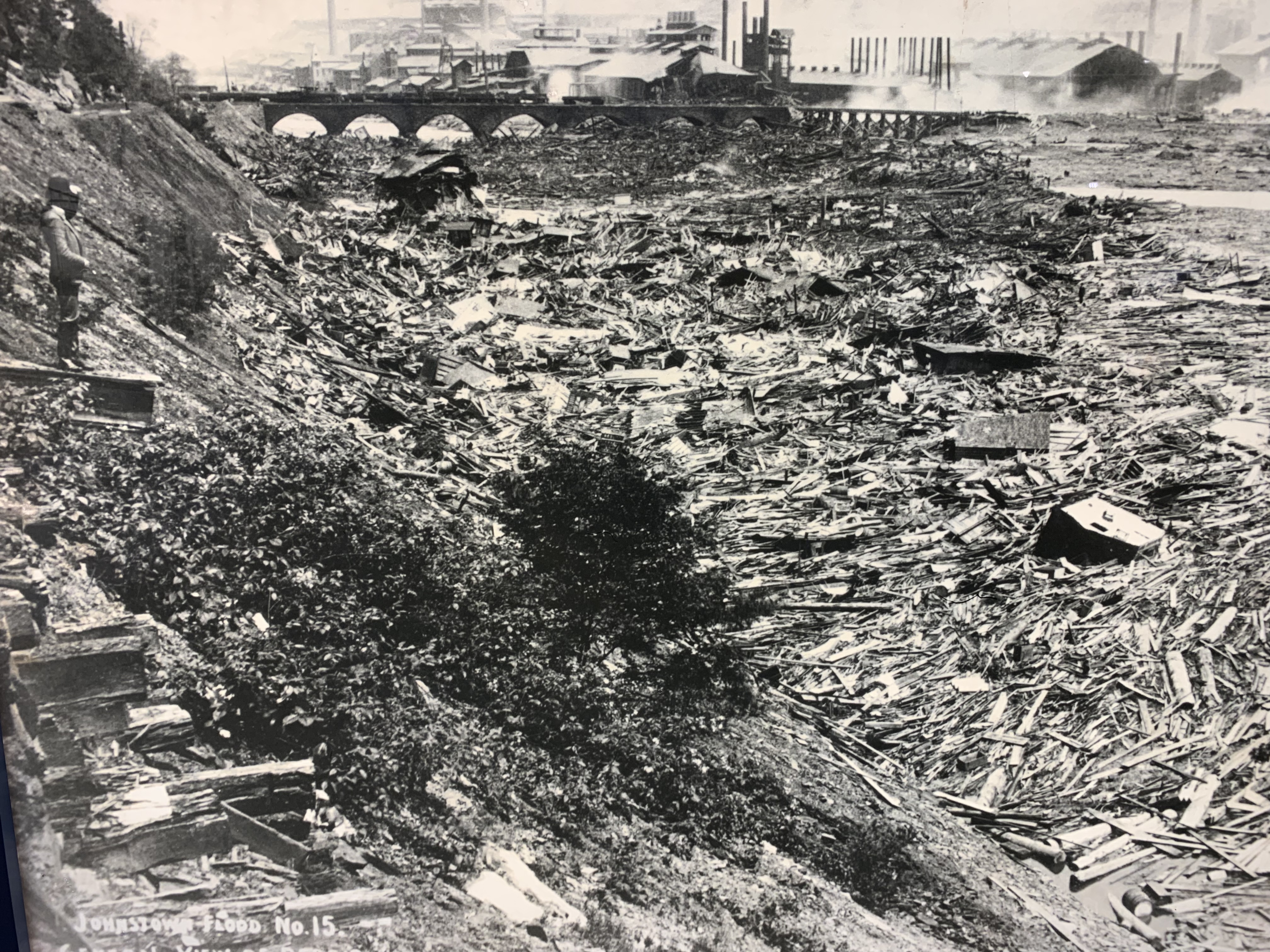
150 years ago, a few of the wealthiest men in the world (Carnegie, Mellon, Frick, et al.) enjoyed relaxing in their fishing & hunting club on the shores of their huge private lake. The lake was held back by raising a dam, but the industrialists ignored recommendations for spillways to avoid overflowing. In the smoky valley below, their workers lived in the fast growing industrial city of Johnstown. The rains came, the waters rose, warnings were issued too late and the dam failed. Over 2,200 people died in Johnstown and the neighboring towns.

As with the Climate Crisis today, people just went about their business and assumed their bosses would not carelessly risk their lives. By the time they realized the danger they were in, it was too late.

Flight 93 National Memorial

Rather than let the 9/11 terrorists use their plane against us, the passengers chose to fight back, preventing another attack on DC and becoming heroes in the war on terror. They are profiled in the visitor center exhibits, regular Americans who did not deserve to be killed by Al Qaeda.

I’m old enough to remember the events, but after my visit today, I felt the need to look up some details about what happened afterward. Turns out that Al Qaeda is still out there (although under new leadership after Seal Team 6 killed Bin Laden in 2011). Al Zawahiri was rumored to have died of natural causes in 2020, before finally being killed in a drone strike in August 2022. Iran and Syria have provided safe havens, and many of the senior members are reportedly Egyptian.

Remembering what happened that day is important for us and for future generations, and it is also important that we continue to bring justice to those responsible.

Hopewell Culture National Historical Park

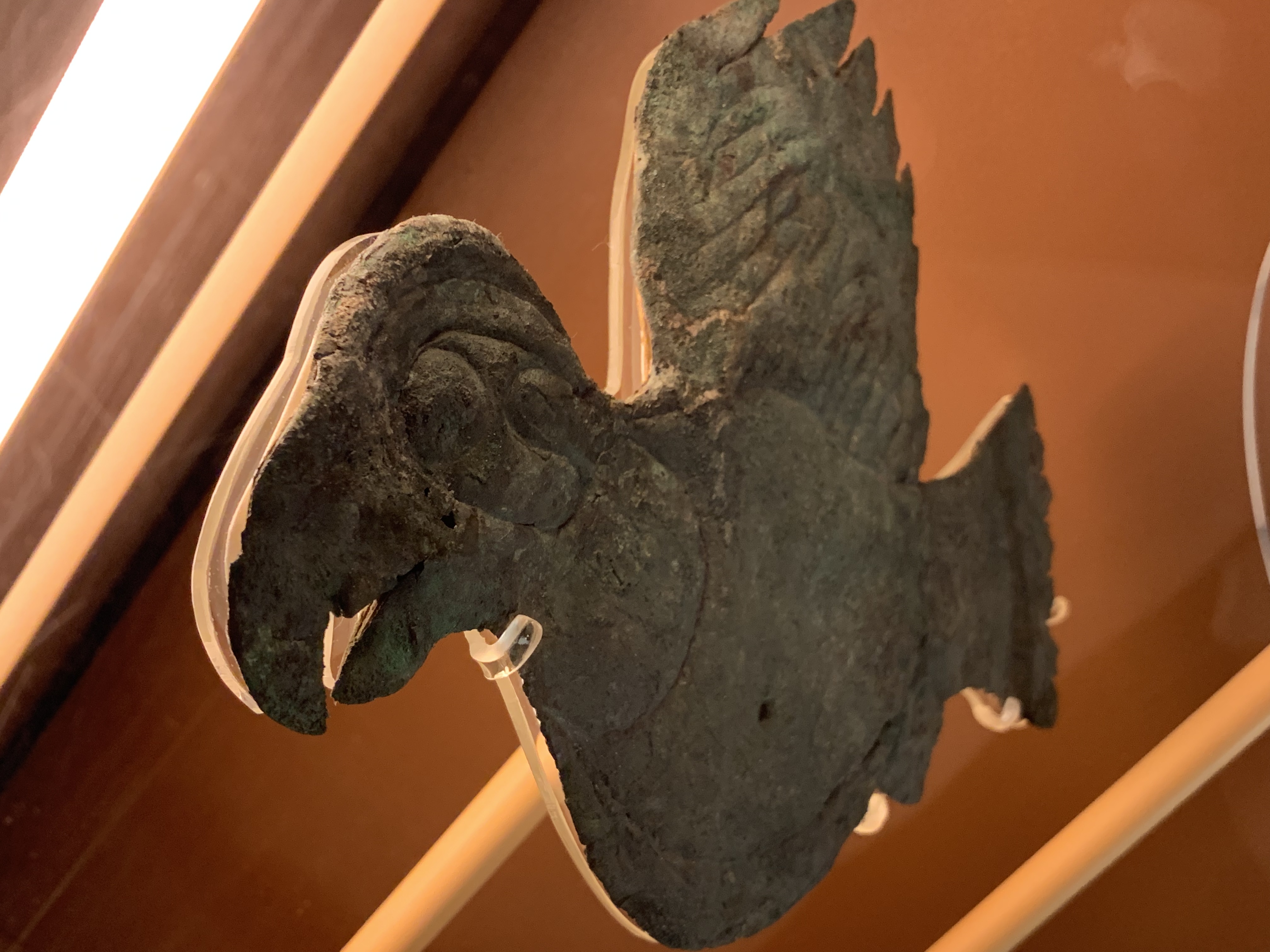
Does this bird look like a Peregrine Falcon or a parrot? I ask, because some of the folks at this Native American archaeological site suggested the former and seemed pretty insistent that the Eastern Woodlands people must have been “completely separate” from the Southwestern people who traded parrots widely at the time. Having just driven along the Canadian, Arkansas, Mississippi and Ohio Rivers, I can confirm that people who traveled by canoe could easily cover that distance. Of course, if it’s a Carolina Parakeet (now extinct), then it would have been native to both Ohio and Colorado.

Some archaeologists and anthropologists resist making obvious conclusions. Each native site focuses on its speciality, often avoiding drawing any connection between contemporaneous, sequential or geographically neighboring cultures. For me, it’s clear that the Paleo, Archaic, Woodland, Mississippian and Puebloan people are all related ancestors of today’s Native Americans. It’s silly to ask “what happened to the people who built these?” Because, as Native Americans universally answer, “we’re still here; they were our ancestors”. Pretending that an early Native American culture just magically popped up out of nowhere and then mysteriously disappeared (as the park film sort of suggests) is stupid and ignores the role of European-Americans who plowed over evidence of the early people after driving their descendants off their land.

Native Americans living in North & South America still travel and interact with each other, as they did for thousands of years spreading different ideas, crops, weapons, tools, and materials across our continents. The Alibates Flint Quarries, Russell Cave, and Ocmulgee Mounds parks units all show evidence of fairly continuous use over the entire 17,000 year period until Europeans began to encroach. Poverty Point, Hopewell and Chaco Culture sites all show extensive trade routes over thousands of miles. These people all built similar sites aligned with the sun and moon, in round and square shapes, at different times and in different places from 1500 BC to 1500 AD. Every site I have been to and every description I’ve read describes Native Americans as using feathers and bird figurines for ceremonies and adornment. The park service should make these connections, so visitors can appreciate the full scale of Native American culture. At least UNESCO is now recognizing Hopewell as a World Heritage Site in reflection of its importance as a religious pilgrimage and burial site for Native Americans across the continent.

William Howard Taft National Historic Site

Taft was a well-educated, hard-working, intelligent, admired, talented, ethical, moderate public service from a family of successful politicians, and he had an accomplished career as a judge, foreign administrator, and President. But what makes him unique among Presidents was that 100 years ago he also became Chief Justice of the Supreme Court. As he had in other jobs, he instituted important and intelligent reforms and improvements, such as focusing on only cases of national and constitutional importance and getting Congress to build the Supreme Court building. In particular, Taft tried to convince the other justices to join in unanimous or near unanimous decisions, to avoid having the Court lose popular respect by issuing sharply divided opinions. Imagine that!

Gateway Arch National Park

This park is the lynchpin of the nation. If it were removed, the whole country would fall apart.

OK, maybe not, but it is an important spot. The domed courthouse above heard the infamous Dred Scott case, which was used by the Supreme Court to take the country backwards, deny people their basic rights and help spark the Civil War. (How times change). The arch represents a gateway to western expansion, facilitated by Jefferson’s Louisiana Purchase in 1803 and subsequently explored by Lewis & Clark from here.

Many factors came together for the territory to wind up as ~12 US states. France traded with the Native Americans who lived there, and all along the rivers there were French communities, from Pittsburgh to St Louis and from Quebec to New Orleans. Shortly before we became independent, Britain declared war on France, used their ships to take Quebec and blockaded Spain from their colonies, and in exchange for peace, they took Canada and Florida, while France kept Haiti and Spain wound up with the Louisiana territory.

That peace treaty didn’t last long. The British heavily taxed the colonists to pay for that war (bad idea), the US declared independence (and won), the slaves in Haiti revolted (and won), Spain secretly gave Louisiana back to France, and France & Spain were preparing to invade England (and lose). Amidst this chaos, Napoleon wanted cash more than colonies that he couldn’t control, and Jefferson wanted to secure the Mississippi and expand our new country. Both sides approached each other to make a deal.

Oklahoma City National Memorial

Each of the chairs is etched with a name of one of the 168 victims of the bombing here on 19 April, 1995. The smaller chairs are for each of the 19 children killed.

The memorial is designed to achieve closure for this traumatic event, for the families, survivors and responders. The reflecting pool spans the 1 minute interval at 9:02 am ‘between innocence and healing’. There’s a statue of Jesus weeping with his back turned away. There’s a grand old elm that survived. And there’s graffiti, sprayed by a CSI bomb specialist working in the rubble, promising to seek Justice for the victims and for God.

For me, the decision not to delve into the cause of the bombing makes closure impossible. Neither the victims nor God could be satisfied that 27 years later our country is still under assault by violent anti-government white supremacists. The $15 museum (closed Sunday mornings) describes the investigation and trial (2nd floor), but the main film is on “personal responsibility” (GW Bush’s campaign theme).

The truth is that McVeigh (executed) and Nichols (life) were anti-semitic, white supremacists who believed that attacking the government and killing civilians is justified. They were heinous criminals, not patriots. Yet their hateful, militant and deadly beliefs have continued to grow into a powerful political movement that still threatens our democracy.

The memorial offers a powerful opportunity to teach people about overcoming bigotry, about non-violence and about true patriotism. The focus should be on the strengths of our democracy, including “liberty and justice for all” and our right to “peaceably assemble, and to petition the Government for a redress of grievances”. Instead, each memory is placed in a glass case, platitudes abound, Christianity is affirmed, extremism ignored, and our nation is left unable to come to terms with the issues that caused the bombing.

Alibates Flint Quarries National Monument

This little lady is an Eastern Collared Lizard, and she’s sitting on Alibates flint, which is an extremely hard and unusual type of flint used by Native Americans for sharp edged tools. These flints were used to hunt Mammoths (possibly to extinction) by the Clovis people over ten thousand years ago. (Clovis is the New Mexican town where they were studied). Successive groups of natives used these flints, notably the Antelope Creek tribe, who dug hundreds of quarry pits around here to dig out the best quality, unweathered flint, and traded them as far as Montana, California, Mexico and Alabama.

I’m not particularly interested in geology, but this was the funniest parks tour I’ve taken. The ranger, Ben, somehow got ten strangers roaring with laughter in ~100 degree heat while climbing a hill to look at rocks and taught us all lots of interesting facts along the way. He even got a Texas Horned Lizard (or “horned frog” or “horny toad”) to scramble in front of us, so we could all get a good look at the official lizard of the state. Actually, the only way into the park is by guided tour, and the only tour during the heat of summer is at 10am. Better to call and make a reservation.

If you are into geology, then this park is fascinating. There’s petrified algae, iron rich red beds, fossilized dolomite, salty gypsum, and of course the multi-colored, sometimes sparkly, agatized dolomite, known as Alibates flint. That name came from a cowboy guide named “Allie Bates”. Mysteriously, perhaps from Valles Caldera or Yellowstone volcanic activity, there was an abundance of silica-rich water that seeped into the dolomite and crystalized into a dense quartz along with an array of other colorful minerals. The flints have many of the rich colors and patterns of the mineralized trees found in the Petrified Forest.

I stayed the night in Palo Duro Canyon (2nd in size to the Grand Canyon) which is another great location for views of the colorful red, white, orange, and yellow rocks under a blue sky with lots of different green trees and plants. The night sky was also brilliant. Any recent rain can close roads though. There was a summer musical playing there for Texans about how wonderful the history of Texas is, but of course, it glosses over the theft of native lands and doesn’t mention slavery at all. It never occurred to me that Texans would be so insecure.

Andrew Johnson National Historic Site

Somebody has gone to a great deal of effort to rehabilitate disgraced President Andrew Johnson. The hagiographic film is narrated by the late Tennessee Senator (and actor) Fred Thompson. The exhibits extol Johnson’s fidelity to the Constitution against the “radical” views in Congress that African Americans should be granted full citizenship rights. This may be the worst site for informing people about history in the park service.

In fact, Johnson was an inveterate racist, a slave-owner who got a special exemption from Lincoln’s Emancipation Proclamation to extend slavery in Tennessee. After Lincoln’s demise, Johnson reversed Reconstruction and vetoed the Civil Rights Act, paving the way for a campaign of terror by the KKK (also from Tennessee in 1865) and the collapse of all efforts to let freed slaves participate fully in elections. He was impeached (148-27), but escaped conviction by one vote. Johnson’s presidency was such a threat to the nation that Grant was pressured to run “in order to save the Union again”. A long-time historical favorite of racists, modern historians generally rank Johnson among the worst presidents. Nowhere at this historic site could I find any acknowledgement that it was morally wrong and anti-democratic to deny freed slaves the right to vote.

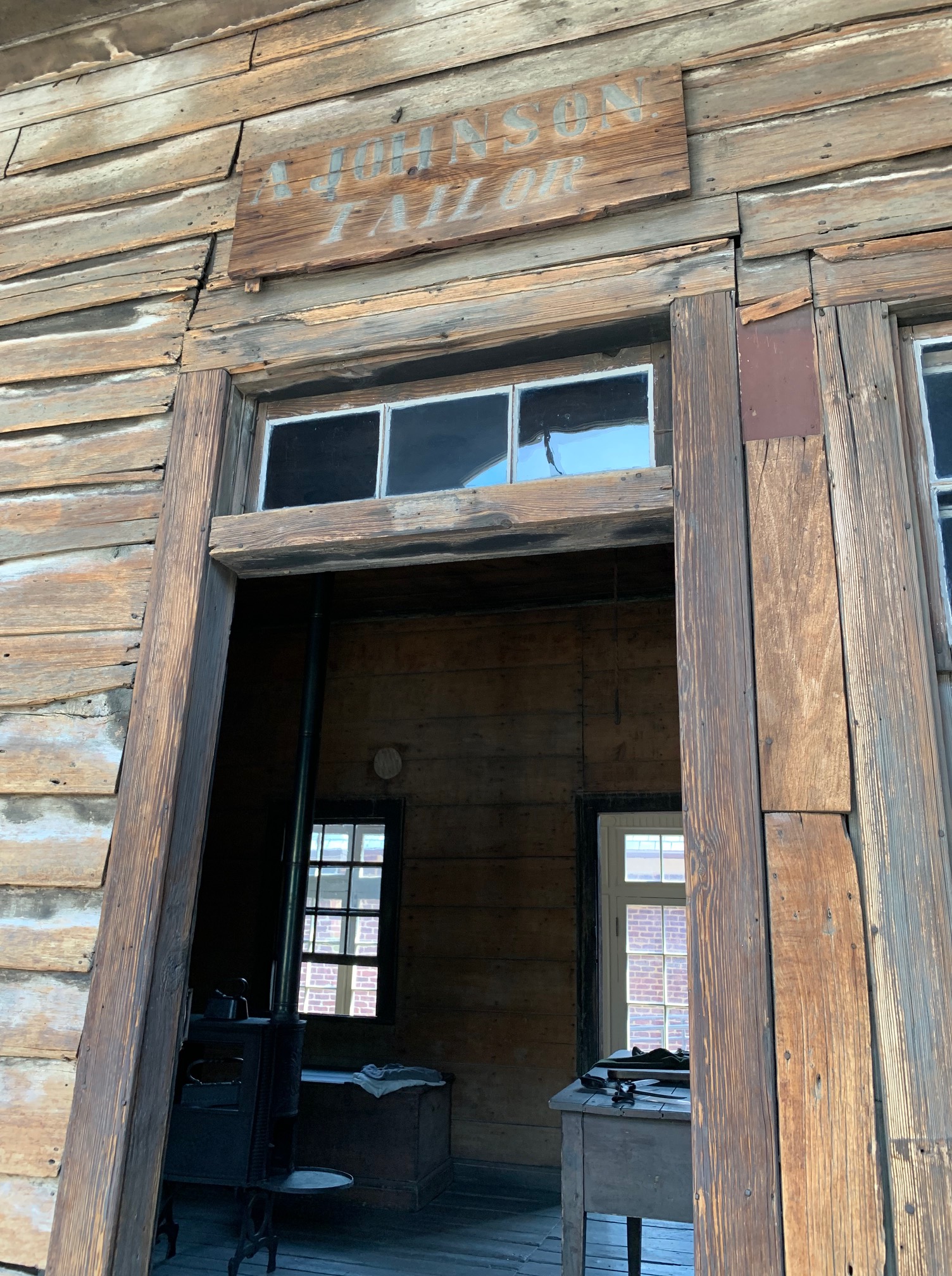
Johnson was a poorly-educated tailor who had the good fortune to be married by a relative of Abraham Lincoln.

Golden Spike National Historical Park

The two sides racing to complete the transcontinental railway actually went far past each other before they finally agreed to meet here. The celebration drew many, as did the centennial, but the location is fairly remote and sparsely populated. There’s a plaque honoring Chinese laborers who contributed, even though many were not allowed to remain in the US.

Many visitors come to see the old style trains shown periodically, but the site is most interesting as a historic symbol of a new age dawning. There’s a large solar array under construction nearby, and hopefully our next transportation revolution from fossil-fueled to electric vehicles can be as dramatic and sudden as the shift from horse to train and telegraph.