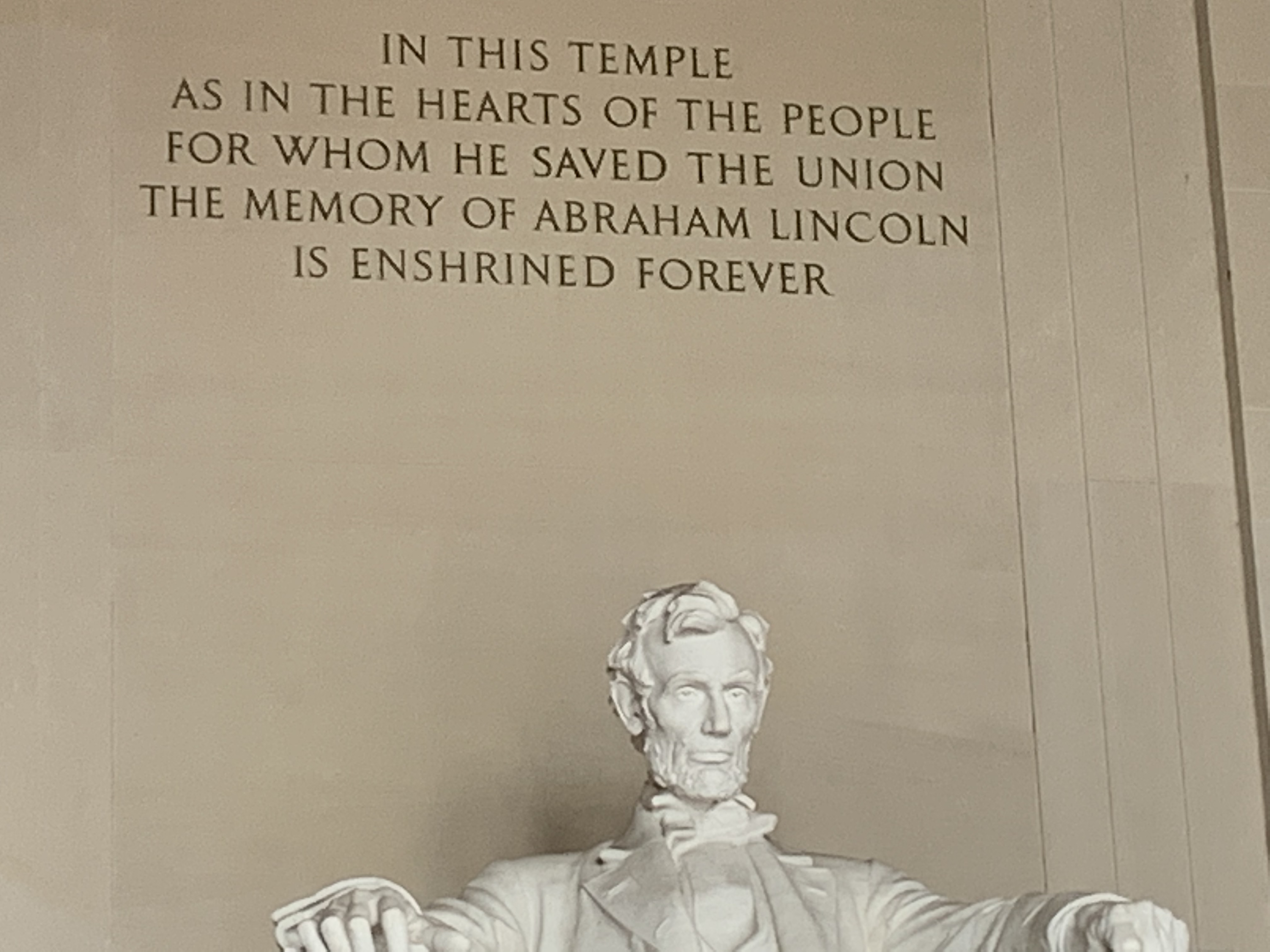
Carl Sandburg reported that Lincoln felt that the important monument was not the marble one but the “more enduring one in the hearts of those who love liberty, unselfishly, for all men.” Lincoln gave his life to extend our ideal of liberty, “that all men are created equal”, to all men. To understand Lincoln is to recognize his cause: to reform the Union to include African Americans equally. To misunderstand Lincoln is to ignore that this condition is required to participate in our Union.
In addition to the Gettysburg Address, the other inscription here is from his Second Inaugural Address. “With malice toward none with charity for all” are only two thirds of what Lincoln said were necessary to achieve peace. His next five words must not be ignored: “with firmness in the right”. He spoke before the war ended, saying that slavery was an offense against God and that paying the cost for that debt in blood was true and just. Lincoln did not act out of hatred, but, because those who fought for slavery were so absolutely, profoundly and unacceptably wrong morally, he was right to go to war against them.
Those who deny freedom to others, deserve it not for themselves
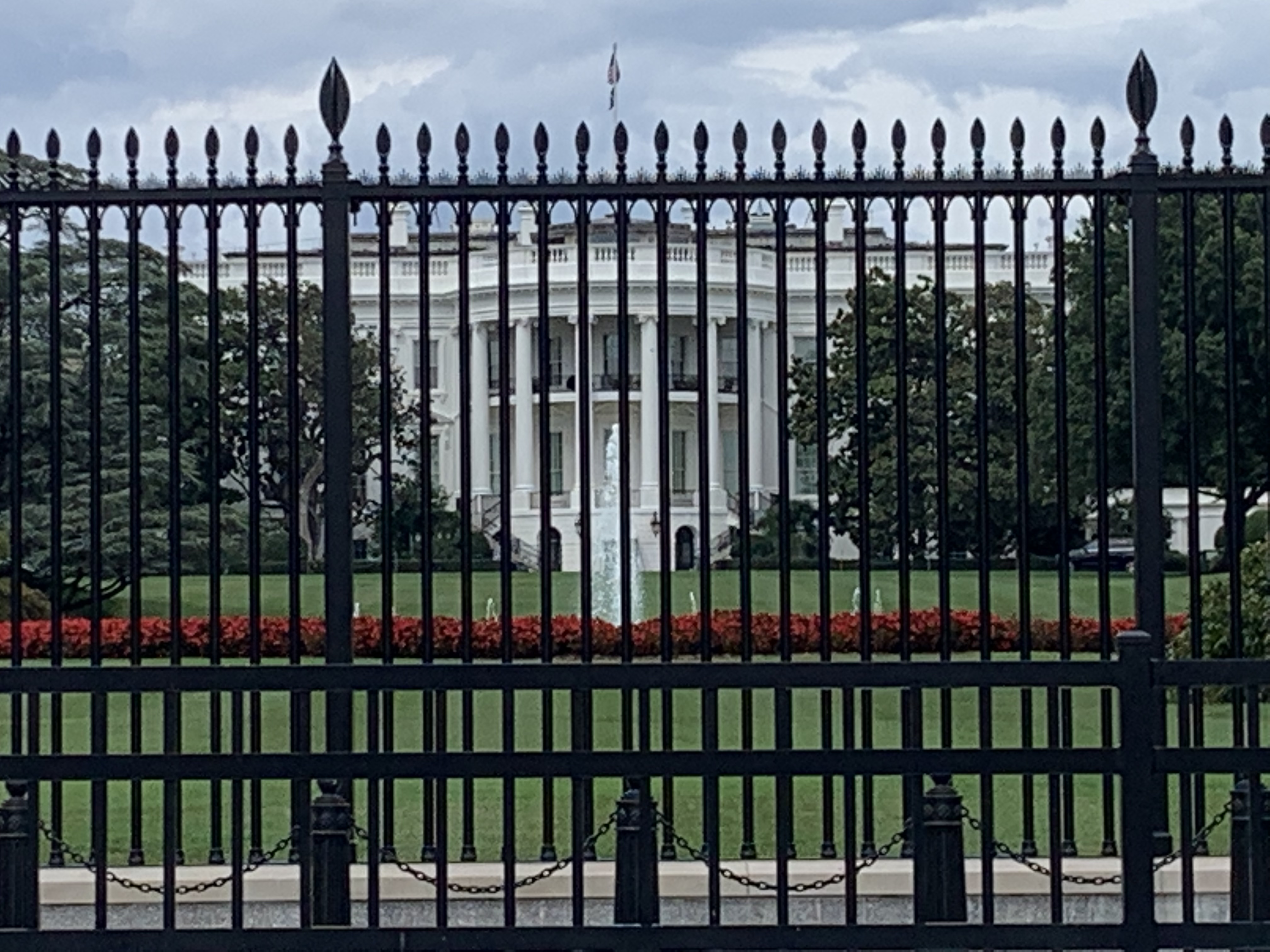
I’m not trying to be funny with this photo. As I was walking by, I heard people taking photos and complaining “it’s all fence”, so I took one too. The White House, or “President’s Park” as the park service has started calling it, is beautiful, with the fountains, roses, columns and beautiful lawns. On the other side (North) you can get a little closer, but security is tighter than it used to be. The trick is to contact your House member between 3 weeks and 3 months in advance of your visit, and hope for the best. If you’re lucky, you can get a tour. I’ve never been. But someday, I’d like to go inside. [Update: I made it!]
Yeah, the street is another park. The avenues named after states are typically important routes in DC, but this one, because it goes from the White House to the Capitol (above), is particularly significant. I took the photo from the top of the Old Post Office Tower, which is one of the tallest buildings in DC. The former owner recently sold it to the Waldorf Astoria, but the park service continues running tours.
I took the Metro to Federal Triangle, walked across the street, went around the corner of the hotel to the right, turned left down the steps, and found the entrance that takes you to the elevator to the top. There are helpful rangers there who know an awful lot about the city’s history. One let me know that Pennsylvania Avenue is on the Washington-Rochambeau Trail, since that’s part of the route that the British took when they burned the White House and other public buildings during the War of 1812. Fortunately, it’s very rare for violent people to march down Pennsylvania Avenue causing mayhem, death and disrupting our Democracy. Hopefully it won’t happen again.
Yeah, I don’t make the rules. This is an official park unit like Constitution Gardens within the National Mall and Memorials, and don’t ask me where the boundaries of each are, it’s very confusing. But I’ve walked all the way up and down the mall a few times, which counts as zero carbon travel. I’ve also seen the fireworks here on the 4th of July, visited the Smithsonian museums and been here during political demonstrations. The photo is from the edge of some side edifice of the Lincoln Memorial, which I took from this angle, so that you can see the Capitol behind the Washington Monument. There’s actually another smaller reflecting pool at that far end, but it’s not easy to approach.
Anyways, the Mall is moving, no matter how many times I visit. Here, people from all over the country (and world) come to see DC, the most important city on earth. Some may be here for work, to study, to visit a memorial, to see art, learn about science, for history, to protest or to celebrate. The Mall reminds us of our ideals, teaches us something new and gives us space to be free. It’s ours, but it’s also bigger than us. It symbolizes the past, the present and future. It’s what we argue about, what we make of it, and what we love or hope it will be. As frustrating as it can be sometimes, it’s a great country, and I encourage you to get out, explore and enjoy. And dream of a better world.
The memorial is open & under maintenance with climate driven flooding at the Tidal Basin. Tom’s face has some cobwebs, and his reputation is also ebbing, as the stain of his slave exploitation will never wash. So, let’s clear up why he has a monument. Among other things, Jefferson was Governor of Virginia, Ambassador to France, codifier of religious freedom, the primary author of the Declaration of Independence, proposer of the Bill of Rights, Washington’s Secretary of State, John Adams’ Vice President, 3rd President, purchaser of the Louisiana Territory, appointer of Lewis & Clark, President of the American Philosophical Society, founder of the University of Virginia, and classical architect whose memorial resembles his own work, Monticello.
Jefferson was also a racist who owned hundreds of slaves in his lifetime, fathered children with one beginning when Sally Hemmings was a teenager, and sold over 100 slaves at auction through his will. He opposed slavery in theory and condemned it in his original draft of the Declaration (edited out to placate Georgia and South Carolina). But despite his ideals, Jefferson feared a Haitian-style rebellion and believed there was too much animosity between people of different races to reconcile and live together in peace. As President, Jefferson began removing Native Americans from the southeast in return for “new” land around Oklahoma (which was already populated with Native Americans).
Recognizing what he did that was wrong, we need to imagine what he could have done better, beyond freeing all his slaves, and not just Sally and her children. Nationally he should done more to end slavery, As a slave-owning President who added the Louisiana Territory to our country, Jefferson was uniquely suited to end slavery and offer reparations to slaves by setting aside a significant portion of that territory for ex-slaves to homestead. Similarly, instead of removing Native Americans from their sacred homelands, Jefferson should have honored and signed more treaties protecting their land and culture, especially in the “new” territory.
I view Jefferson as having missed his opportunity to solve those great moral challenges. But I have little patience for people who criticize Jefferson for his moral failings, without considering whether they themselves are doing enough about the greatest moral challenge of our time. Jefferson hated the idea that people would live “under the barbarism of their ancestors”. Jefferson was a student of science who loved nature, so he would be appalled by our lack of action in stopping the climate crisis.
“I like the dreams of the future better than the history of the past.”
DC is confusing, park-wise. First of all, parks usually have a type (monument, memorial, etc.) but not this one. Second, there are overlapping layers. Constitution Gardens originally referred to a large area, including the National Mall, but now both parks are part of the National Mall and Memorial Parks, which is a grouping but not a park unit. In 1982 the area with a pond next to the Vietnam Veterans Memorial, was established as this park unit in tribute to the Constitution, and it’s signature feature (above) is the semicircle of stones on Signers Island. Which is nice, but, third, these are not signers of the Constitution but rather of the Declaration of Independence.
I know that, because I’m from Concord, Massachusetts and my father was a history major. So I went to the Massachusetts contingent where I saw five names I recognized. John Hancock, John and Sam Adams (yes, the beer guy was a real patriot) didn’t attend the convention. Robert Paine (unrelated to the guy who wrote Common Sense) wasn’t a delegate, and Elbridge Gerry (for whom Gerrymandering is named) was there as a delegate but didn’t sign the Constitution. Only 39 of the 55 delegates actually signed. The important thing was that they had enough votes to pass it and send to the states to ratify.
But, the garden-variety misnomer not withstanding, the signers of the Declaration of Independence did risk their lives, fortunes and sacred honor by signing that document. Their signatures on paper, here captured in stone, meant Treason against the King, punishable by death. 56 brave patriots, including Thomas Jefferson, Benjamin Franklin, Robert Morris, Thomas Stone and the others remembered in this garden signed, and we owe them all our thanks.
Welcome to Washington DC! I’m staying with my brother here for a few days, visiting monuments and park sites, on foot and by Metro (electric vehicles only). I won’t have time to see everything, so I’m planning a return trip next year. I’m trying to publish a post per day, so you’ll have something to read while I’m on my way home.
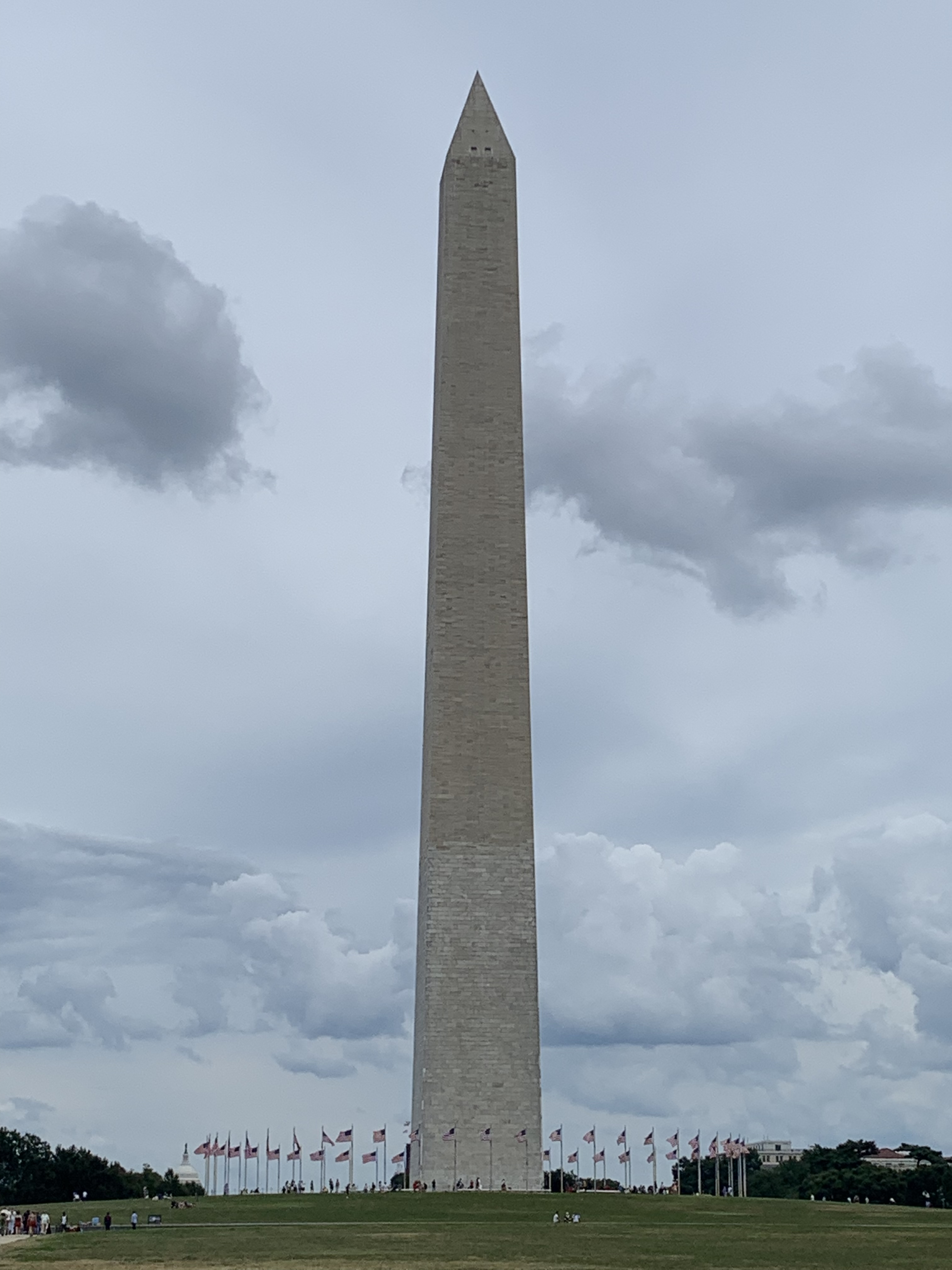
George’s imposing monument above is the tallest structure in the city, and it’s got a great view of the National Mall, from the Lincoln Monument to the Capitol. There are tickets to the top sold at 8:45 each morning, but for $1 per ticket you can reserve up to a month in advance. The windows are small, but it’s still the best way to get a sense of L’Enfant’s Plan. L’Enfant served with Washington as a military engineer, and Washington commissioned him to design the city. His bold vision for the city exceeded the initial instructions from Jefferson, and L’Enfant deserves credit for creating the bold public spaces that define the District of Columbia for both government and the people.
What anxiety or misgivings troubled me so incessantly today, I know not. Perhaps the unseasonable heatwaves dragging on interminably through the nights have robbed me of my wits by denying me the respite of unconsciousness, no matter how much gin I consumed. Even staying in the drafty old seaside cottage that I once played in as an eccentric child, only served to remind me of my age, my lack of gainful employment, my failed marriage, and the solitary road ahead of me. The storms of late have struck frequently with bizarre intensity, with lightning barrages casting ghoulish flashes on the faces of my now elderly acquaintances, as if to taunt me with signs of my own mortality.
The inexorable tides reach higher on the barnacled rocks with each passing year, and the great lawn, strained with drought, is over-crowded with groundhogs, rabbits and even passing deer seeking refuge, so desperate for food that they eat any flowering bud of beauty, no matter how small or hidden. I have long been tormented by the certainty of impending doom that renders me humorless and unappreciative of the banal social events that my family includes me in vain to soothe my awkward, sulking gloom. But now, some fiery rage is stoked in my soul, as avarice and willful neglect threaten all species with mass extinction while casual citizens busily immerse themselves in the capricious and mundane.
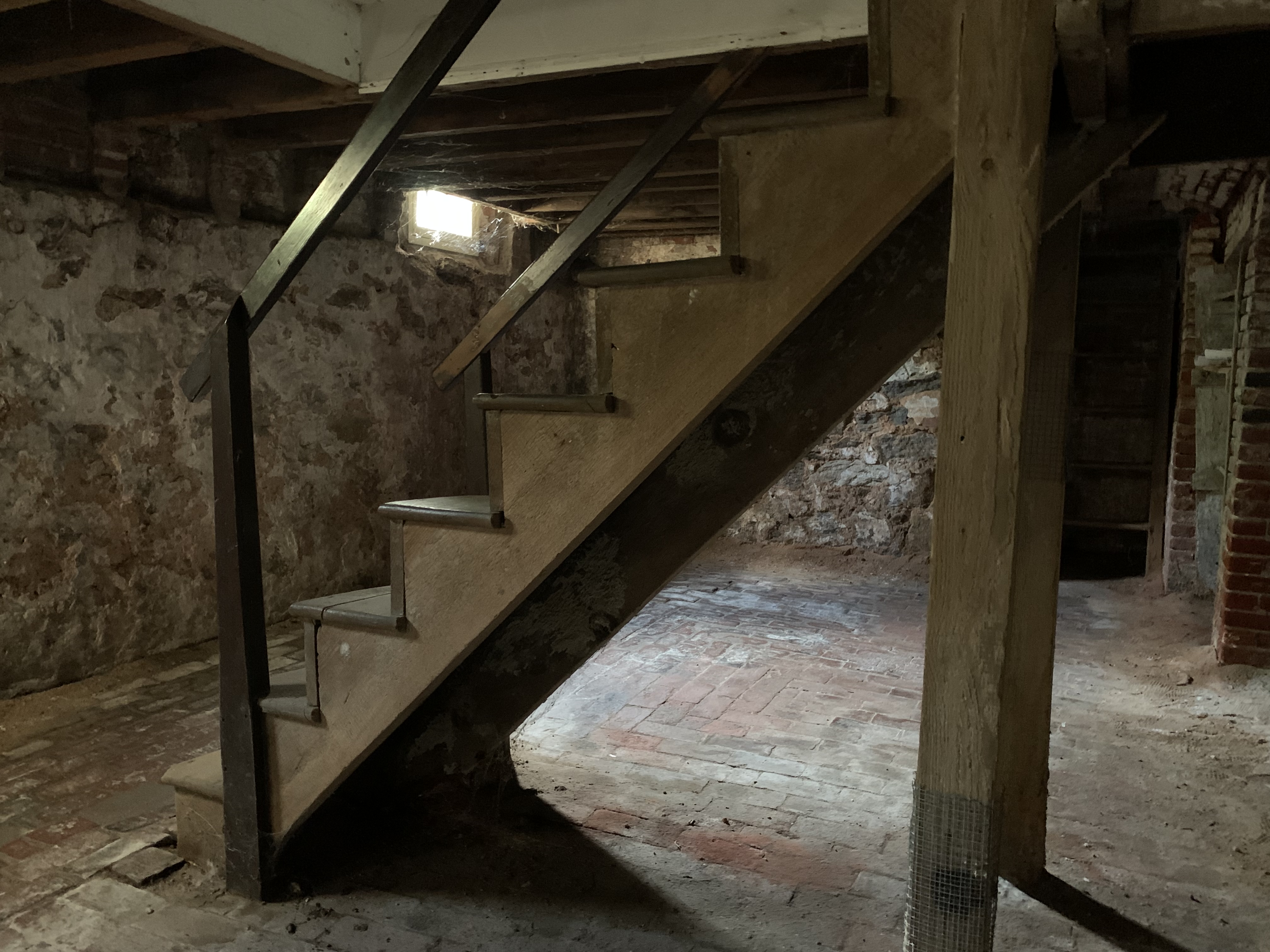
Certainly, knowing the tragic and unexplained death that befell the strange man whose steps I follow from Boston to Philadelphia weighs heavily on my brooding mood. A poet, critic and editor whose genius never quite paid the bills nor protected him from loss. His wife died of consumption at 24, perhaps pre-cognizant of her fate, visualizing her flower surroundings she would not smell. All of their furnishings of course are long gone, so there’s nothing left to do but study the cracks in the walls, read his disturbing writings and let your imagination call you into the basement, where his fevered dreams dwelled too long. The crazed rantings of his characters echo in the cobwebbed corners, some quietly creaking like the stairs too treacherous to climb and some screaming in my head like the gasoline fueled monstrosities on the roads outside. How was one genius able to create the Detective, Horror and Science Fiction genres, I wonder, before once again losing myself in the melancholic realization that our future may yet become a deviously difficult to solve dystopian hell-scape of our own pollution. This is one of my favorite sites, if only in my imagination.
Here’s the link to my visits to all parks in Pennsylvania.
As General, U.S. Grant won the Civil War, and as President, he saved the Union. He created the Justice Department, supported the 15th Amendment and fought the Ku Klux Klan. Over a million people gathered to watch his funeral procession in 1885, and his mausoleum became one of the top tourist destinations in the nation.
Racists like President Johnson were determined to resist letting African Americans vote, and Grant agreed to run for President in large part to protect those rights. This divide of bigotry, which festered after the Civil War, continues to divide our country. After Grant’s death, the descendants of traitors promulgated the big lie (known as the Lost Cause) that the confederates were honorable, benevolent to slaves, and were the moral victors of the Civil War. To do so, they maligned Grant as a drunk, ignoring his reform efforts and associating him with corrupt officials. The campaign was effective, and Grant was often ranked among the worst Presidents.
Grant’s Indian policy illustrates the problem. Grant appointed the first Native American to be Commissioner of Indian Affairs, and Grant pledged “proper treatment of the original occupants of this land—the Indians.” Supporting peaceful reconciliation, his administration allowed many Quakers and Episcopalians to “help” the natives, instead of continuing genocide. Grant was a firm believer in the separation of church and state, but the religious people believed that converting the Natives was the best way to help them and thus erased so much of their culture. And many people still wanted to take Native American land, so well-intended land policies were similarly corrupted.
Like most of the park rangers I’ve spoken with, I’m a fan of Grant. We believe he was, generally for his time, on the right side of history and does not deserve the vitriol he received in life and death from those on the wrong side of history. I wish he had better understood the depths of and had proposed better solutions against systemic racism, but he was an ally of the Americans who were denied their rights by many white Americans. The struggle to secure the voting rights of African Americans and to restore justice to Native American communities continues over 150 years later. Grant recognized both his own failures of judgement and the moral sins of our nation. But Grant also said victory goes to those who keep fighting.
“Nations, like individuals, are punished for their transgressions.”
Ulysses S. Grant
Here’s the link to my visits to all parks in New York.
The Roosevelts moved into New Amsterdam (NYC) around the 1640’s, buying 50 acres in the middle of Manhattan, entered politics in the next generation and soon split into what would become the Hyde Park Democratic Roosevelts and the Oyster Bay Republican Roosevelts. Teddy’s financially adept grandfather expanded the family’s fortunes, including gifting this home in Gramercy Park, and his grandmother instilled Quaker virtues of public service in the family. The home, which Teddy did not want preserved “as a shrine”, was rebuilt after his death by Teddy’s sisters who figured he couldn’t complain anymore, and mainly includes original family items, including his crib (on temporary display), mementos of his trip to Egypt, his Rough Riders uniform and the folded speech that helped block an assassin’s bullet.
Teddy lived here until age 14, and learned much from his family about politics, travel, natural history, charity and life. His parents were involved in many charitable works, including establishing the Natural History Museum, and Teddy set up his own “Roosevelt Natural History Museum” as a child with his cousins. A frail asthmatic child, Teddy was encouraged to exercise in a home gym, as his father said, “to do all you can with your mind, you must make your body match it”. Teddy was a dynamo at Harvard, was elected to the NY Assembly, and published Naval War of 1812. Unfortunately, on Valentine’s Day in 1884, both his wife and mother died of illnesses. Feeling cursed, Teddy abandoned politics and withdrew from city life, traveling to the Dakotas to mourn and recover.
I was introduced to Teddy Roosevelt through the beautifully illustrated, humorous tales of The Roosevelt Bears read by my grandfather. The Teddy Bear was invented in response to a true story where Teddy refused to shoot a cornered bear, believing it to be unsportsmanlike. President Roosevelt was a Progressive who fought for “a square deal” “for the plain people” “not politicians” and “not men of great wealth”. He challenged and broke the great monopolies of his day, and he was proudest of his work for conservation, reserving 150 million acres of forest. He credited his family upbringing for his achievements.
“Of all the questions which can come before this nation, short of the actual preservation of its existence in a great war, there is none which compares in importance with the great central task of leaving this land even a better land for our descendants than it is for us.”
Theodore Roosevelt
Here’s the link to my visits to all parks in New York.




 Zero Carbon Travel