In the center of the alcove across the canyon is the cliff dwelling of Betatakin. Due to Covid, the five mile guided hiking tour is currently suspended, but a 1.3 mile round trip hike to the the view above is open and beautiful. There’s also normally a 17 mile permitted hike to Keet Seel, a large and well preserved village, where guided tours are also currently suspended. Navajo Nation is taking a cautious approach to the pandemic, and masks are required. Please respect their wishes and culture.
Many visitors confuse this site with Monument Valley Navajo Tribal Park, which has been featured in many western films, but that site is northwest of here and run by Navajo Nation, not the park service. This park service site is in the Tsegi Canyon area and preserves Ancestral Puebloan dwellings, culture and homeland. As well as builders, they were great traders of tools, pottery, turquoise, shells, parrots and macaws. The Hopi, Navajo, Paiute and Zuni are some of the tribes that trace their roots back to this site. The visitor center has some trade items on exhibit and a gift store.
Hovenweep Castle to the right and the Square Tower in the middle were likely part of a connected, multi-story pueblo, part of a complex of buildings surrounding this small canyon. 750 years ago, the farmers who built and lived in this castle grew corn, beans, squash, amaranth and probably cotton. They kept domesticated turkeys in the canyon and built small dams to control flash floods and enrich soil. The 2 mile round trip Little Ruin Trail is easy to follow to photograph the varied ruins from different angles.
Maybe if I had come out west here before visiting Europe, I would not have told my host family that we don’t have any old stone castles in America. This is an extremely photogenic place, and I was happy to walk the loop in the morning, before others arrived. The drive through the Canyons of the Ancients National Monument (managed by the Bureau of Land Management) and on ‘reservation roads’ is worth doing slowly.
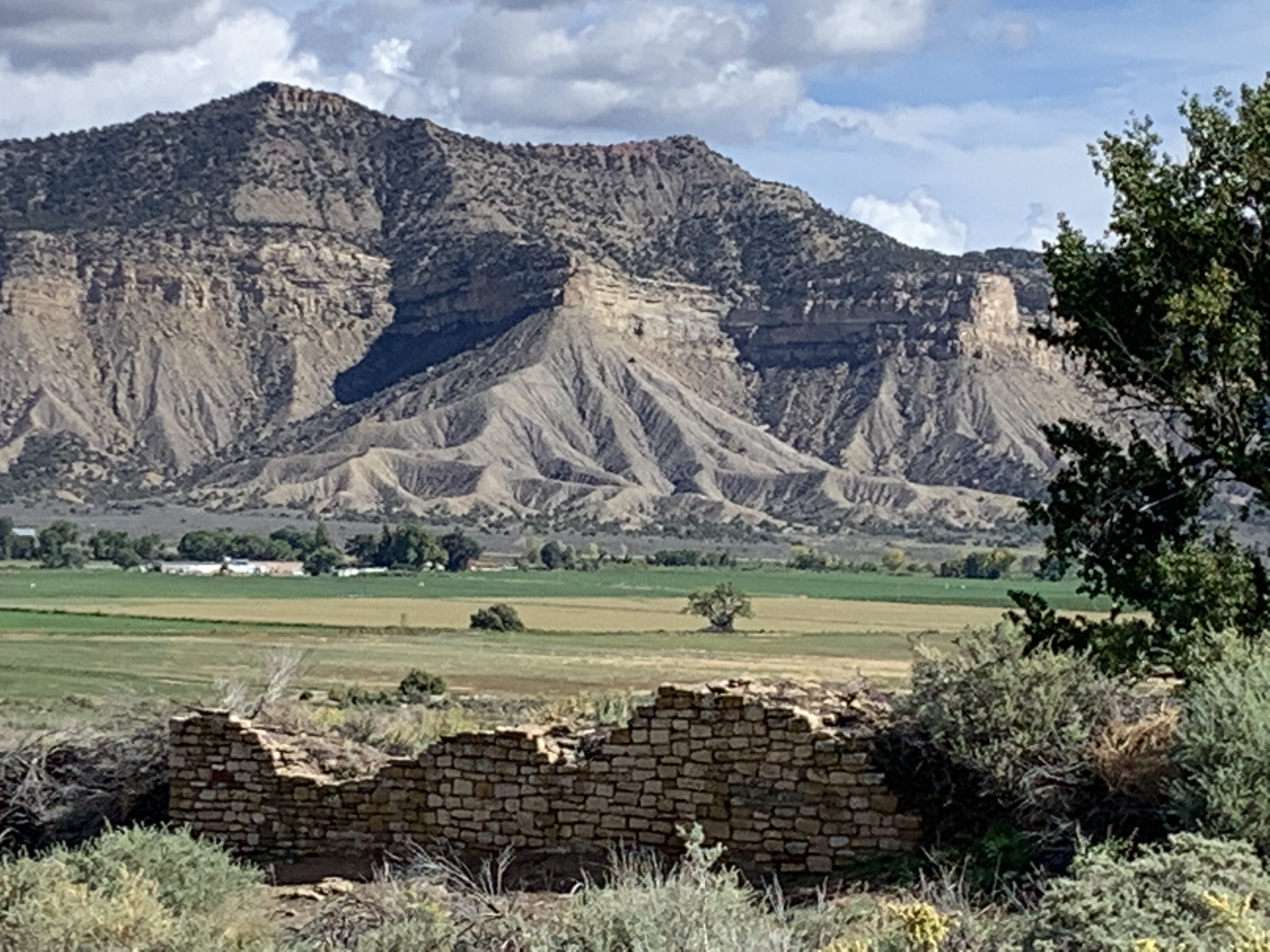
The rangers I asked discouraged me from visiting, because the reconstructed wall above and small mounds are all there is to see. But what makes this place special is that it is in the middle of the rich agricultural valley below Mesa Verde, and it wasn’t completely destroyed, vandalized or eroded away. Large pueblos, like this one with hundreds of rooms, used to be scattered across the region, but, as at Hopewell, the ones located in rich farming areas were often plowed under. This is actually one of the largest archaeological sites in southwest Colorado, recognized by researchers in the 1870’s, protected as a monument in 1919 (and by a bequest from the landowner at the request of an archaeologist) and protected unofficially by another landowner who donated an access route in 2002. Also unlike other sites, the archaeologists have mainly used less-invasive techniques in their research, saving the site for future generations.
This is Balcony House, which requires a reserved ticket, climbing cliff-side ladders and crawling though a short tunnel. It’s worth it. The dwelling is named for the intact, original balcony on the right side of the photo under two upper story windows. At other cliff dwellings across the southwest, typically only the beams remain, like those on the wall to the far left. This dwelling is also unusual for facing northeast, lacking fires in this section, and for the large flat floor with a low wall at the edge of the cliff. This place was used for important gatherings, but not in winter.
Mesa Verde is a huge, green high plateau, so start at Park Point Overlook, where you can see from Colorado’s snow-capped peaks to Shiprock, which I first saw after visiting Canyon de Chelly. From up here, you get a sense of the region as one greater community of interrelated tribes, trading and interacting with one another frequently, and not four separate arbitrarily bounded states.
This is my favorite park for cliff dwellings, so see as many as you can. The Cliff Palace is the largest in North America (reserve a ticket), and while you only walk along the bottom edge, you do get close enough to appreciate its extent and architecture. Spruce Tree House is only visible from an overlook, Long House was booked, and Step House was perfect to visit on my own first thing in the morning. The ranger talks are extremely informative, even after visiting many other Native American sites.
Finally, slow down here. The mesa has basically no Wi-Fi or cell signal (save a photo of your tickets). There are bus loads of tourists, so the few places to eat are crowded (Metate needs reservations). The Far View Lodge rooms don’t have TV, and it can be a peaceful place, if you try. My laptop finally stopped working, so I ended up sitting outside, saw a rabbit and thought long enough to reconsider my past and future. This World Heritage Site has already seen more recent devastating wildfires than they have cliff dwelling sites open to visit, so these moments in places like this are rare and diminishing rapidly.
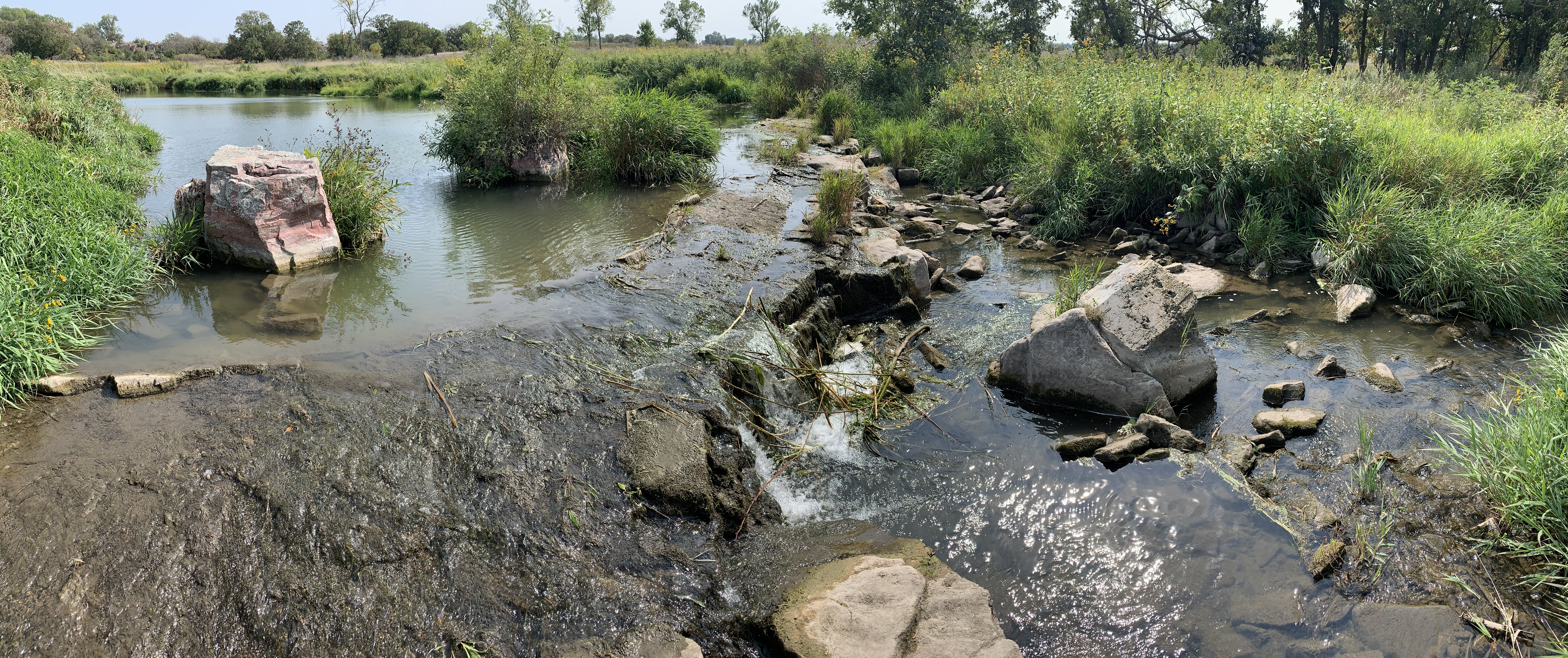
In some Native American mythology stories, the red pipestone comes from the blood of ancestors killed in floods. Similar to the story of Noah, prayers are heard and a few survive. The pipes send prayers to heaven. So this quarry has special religious and cultural significance, and the pipes are still formed using traditional techniques. There’s a great exhibition inside the visitor center, where native artisans answer questions while working and beautiful pipes are displayed. The film explains the importance of the local plants, including a field of red Smooth Sumac, used in making medicine and blends to smoke or hang in offering ties on sacred cottonwood trees where ceremonies like the Sun Dance are performed. The short circle trail up the creek past the small Lake Hiawatha leads through a beautiful hewn ravine of red pipestone across a footbridge and back around to an exhibit quarry.
On the Iowa side of the Mississippi River looking across from the high bluffs toward Wisconsin, there are over 200 hundred mounds, round, linear, bird and bear shaped. They are in clear lines straight out from the river, and they date back roughly 1,000 years, evidence of cultural traditions that continued for hundreds of years. Although these sites typically do not make the connection, there are similar sites along the Mississippi and other rivers at overlapping time periods with evidence of trade between them. Bird symbols in particular are found in both modern and ancient Native American culture. Many similar mounds were flattened and plowed under after the land was stolen.
The hiking here is excellent, with many overlooks, including Fire Point above and Third View which looks upriver. The hillock to the right of the path is one of the mounds, first in a long line into the woods. A pair of hawks soared high above. If you can make it a few miles, your chances of seeing deer and other wildlife improve. Since it is a sacred site, please stay on the trails and do not walk over the mounds.
Tens of thousands of Native Americans lived in this city 1,000 years ago, and it was the center of the Mississippian culture that thrived in the valley and as far as Ocmulgee in Georgia. In the distance from atop 100′ high Monks Mound (named for French Trappist Monk settlers), you can see Gateway Arch. This is the largest Native American mound north of Mexico, and it is still an impressive, tiered, geometric structure surrounded by 50 other smaller mounds of different shapes and sizes, for burials and as foundations for public buildings. There’s also an astrological calendar circle with wooden post markers, called “Woodhenge”.
Cahokia is actually both a state park and a UNESCO World Heritage Site but not a national park site. However, it is on the Lewis & Clark National Historic Trail, and Illinois’ Senators have asked President Biden to make it an official national park site. It’s simply too big to ignore, so, I stopped and climbed, even though the visitor center is closed.
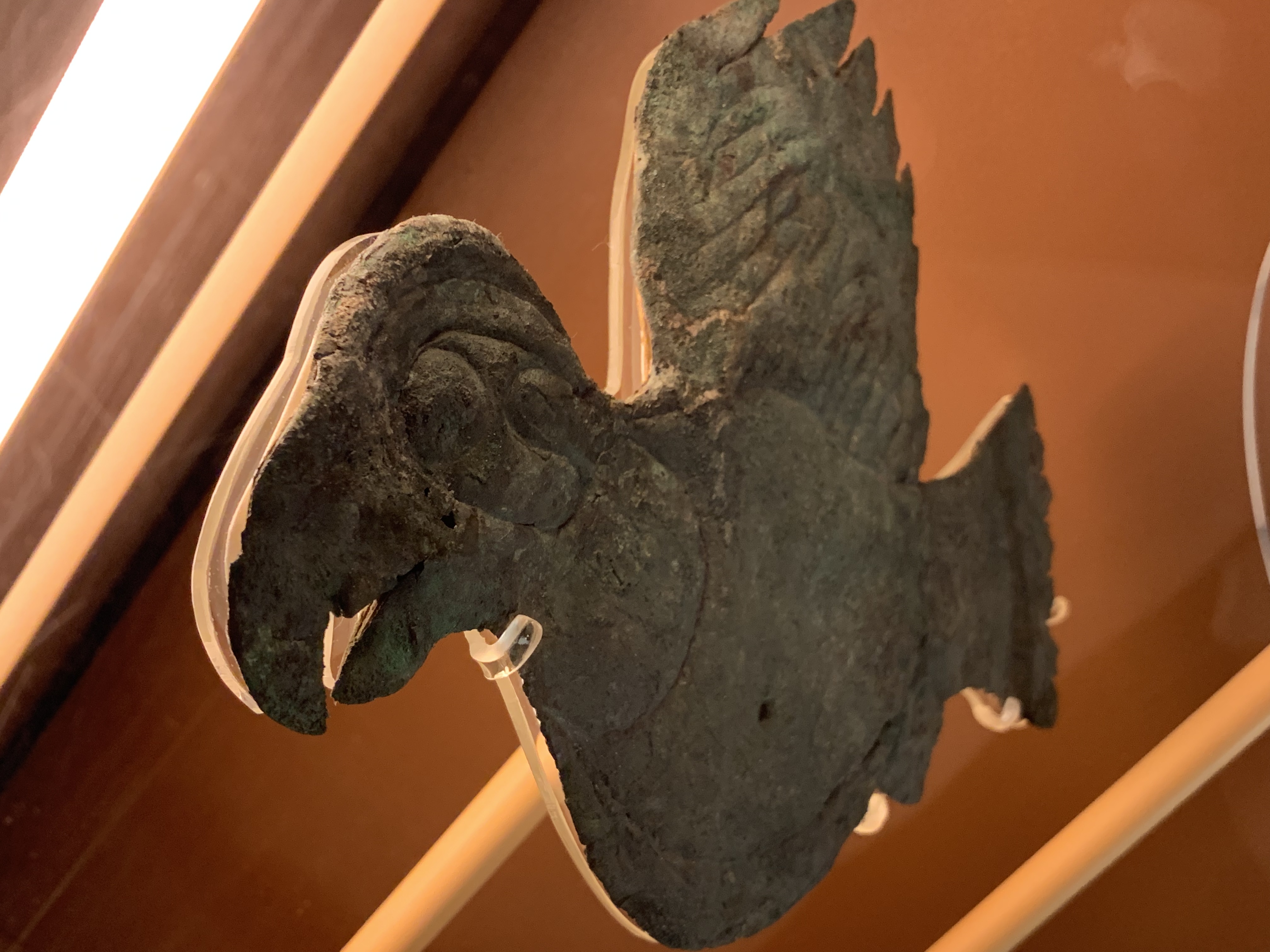
Does this bird look like a Peregrine Falcon or a parrot? I ask, because some of the folks at this Native American archaeological site suggested the former and seemed pretty insistent that the Eastern Woodlands people must have been “completely separate” from the Southwestern people who traded parrots widely at the time. Having just driven along the Canadian, Arkansas, Mississippi and Ohio Rivers, I can confirm that people who traveled by canoe could easily cover that distance. Of course, if it’s a Carolina Parakeet (now extinct), then it would have been native to both Ohio and Colorado.
Some archaeologists and anthropologists resist making obvious conclusions. Each native site focuses on its speciality, often avoiding drawing any connection between contemporaneous, sequential or geographically neighboring cultures. For me, it’s clear that the Paleo, Archaic, Woodland, Mississippian and Puebloan people are all related ancestors of today’s Native Americans. It’s silly to ask “what happened to the people who built these?” Because, as Native Americans universally answer, “we’re still here; they were our ancestors”. Pretending that an early Native American culture just magically popped up out of nowhere and then mysteriously disappeared (as the park film sort of suggests) is stupid and ignores the role of European-Americans who plowed over evidence of the early people after driving their descendants off their land.
Native Americans living in North & South America still travel and interact with each other, as they did for thousands of years spreading different ideas, crops, weapons, tools, and materials across our continents. The Alibates Flint Quarries, Russell Cave, and Ocmulgee Mounds parks units all show evidence of fairly continuous use over the entire 17,000 year period until Europeans began to encroach. Poverty Point, Hopewell and Chaco Culture sites all show extensive trade routes over thousands of miles. These people all built similar sites aligned with the sun and moon, in round and square shapes, at different times and in different places from 1500 BC to 1500 AD. Every site I have been to and every description I’ve read describes Native Americans as using feathers and bird figurines for ceremonies and adornment. The park service should make these connections, so visitors can appreciate the full scale of Native American culture. At least UNESCO is now recognizing Hopewell as a World Heritage Site in reflection of its importance as a religious pilgrimage and burial site for Native Americans across the continent.
This little lady is an Eastern Collared Lizard, and she’s sitting on Alibates flint, which is an extremely hard and unusual type of flint used by Native Americans for sharp edged tools. These flints were used to hunt Mammoths (possibly to extinction) by the Clovis people over ten thousand years ago. (Clovis is the New Mexican town where they were studied). Successive groups of natives used these flints, notably the Antelope Creek tribe, who dug hundreds of quarry pits around here to dig out the best quality, unweathered flint, and traded them as far as Montana, California, Mexico and Alabama.
I’m not particularly interested in geology, but this was the funniest parks tour I’ve taken. The ranger, Ben, somehow got ten strangers roaring with laughter in ~100 degree heat while climbing a hill to look at rocks and taught us all lots of interesting facts along the way. He even got a Texas Horned Lizard (or “horned frog” or “horny toad”) to scramble in front of us, so we could all get a good look at the official lizard of the state. Actually, the only way into the park is by guided tour, and the only tour during the heat of summer is at 10am. Better to call and make a reservation.
If you are into geology, then this park is fascinating. There’s petrified algae, iron rich red beds, fossilized dolomite, salty gypsum, and of course the multi-colored, sometimes sparkly, agatized dolomite, known as Alibates flint. That name came from a cowboy guide named “Allie Bates”. Mysteriously, perhaps from Valles Caldera or Yellowstone volcanic activity, there was an abundance of silica-rich water that seeped into the dolomite and crystalized into a dense quartz along with an array of other colorful minerals. The flints have many of the rich colors and patterns of the mineralized trees found in the Petrified Forest.
I stayed the night in Palo Duro Canyon (2nd in size to the Grand Canyon) which is another great location for views of the colorful red, white, orange, and yellow rocks under a blue sky with lots of different green trees and plants. The night sky was also brilliant. Any recent rain can close roads though. There was a summer musical playing there for Texans about how wonderful the history of Texas is, but of course, it glosses over the theft of native lands and doesn’t mention slavery at all. It never occurred to me that Texans would be so insecure.
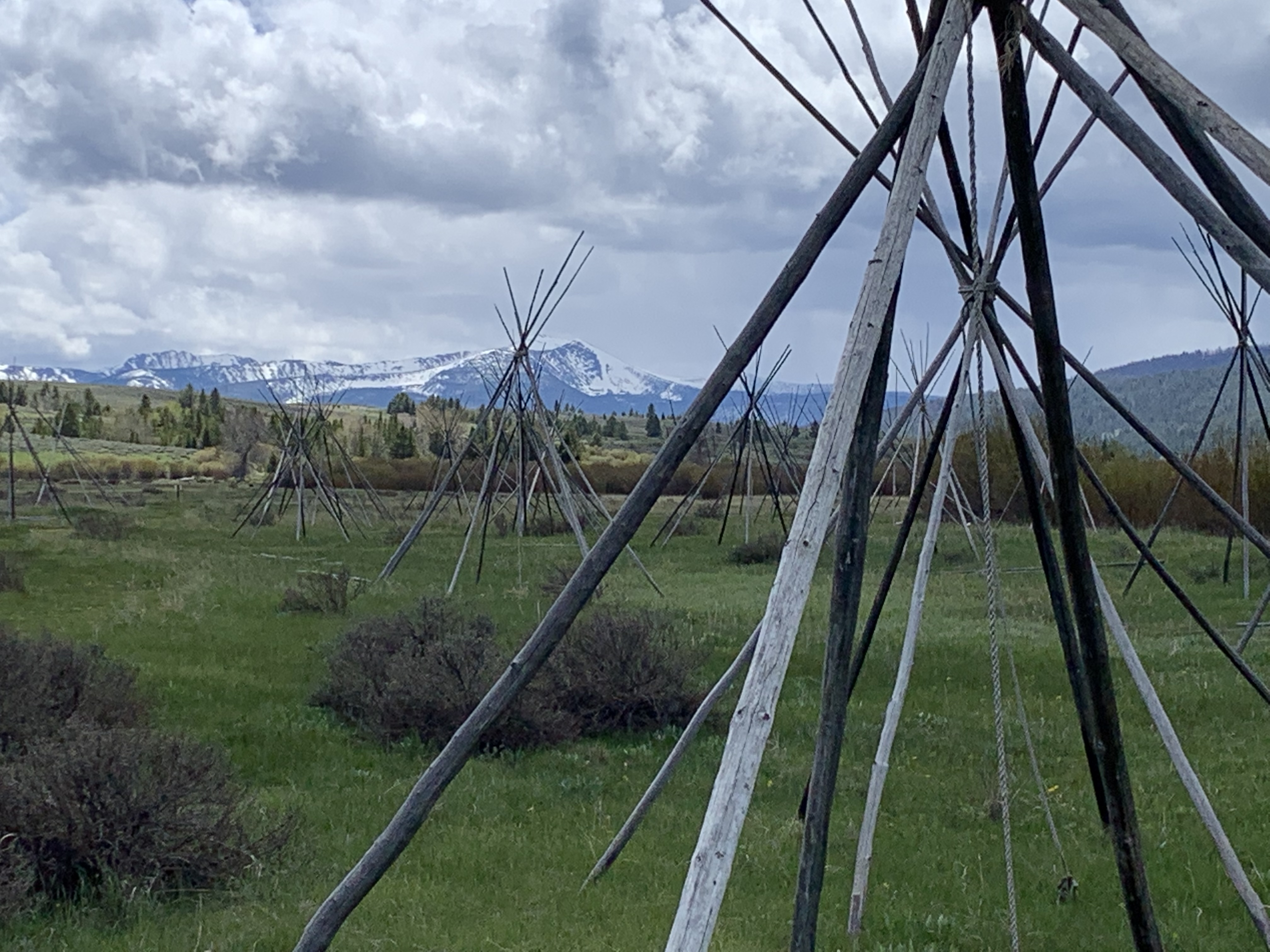
This uniquely tragic site in the War on Native America is also part of the Nez Perce National Historical Park, and it sits in the scenic Big Hole valley, right near the little town of Wisdom.
The US military was hunting down natives who refused to go to reservations and a few fugitives who had killed some settlers. They attacked the camp at night, burned the tipis and killed around 90 natives, mostly women and children, including babies bludgeoned to death. The warriors killed 31 soldiers in defense and then fled with the survivors. Some eventually escaped to Canada, but Chief Joseph later surrendered at Bear Paw with the rest.
Hail fell while I was at the Nez Perce cemetery above, and it felt appropriate, considering the terrible history here. I took some time after the film and walk to try to draw any wisdom, and all I could come up with was this.
No person can claim credit alone for greatness, as our existence is entirely due to the natural world that we evolved from, which sustained our ancestors and us. Yet a great idea, which is not limited by time and place, can inspire, destroy or outlast our civilizations, as long as there are still humans who understand it. So we must not think so much of ourselves. We must thank the natural world for everything it has given us. And we must try to cultivate thoughts, wisdom, moral judgements, insights, inspiration and kindness that may survive us and improve the future.






 Zero Carbon Travel