Pipe Spring National Monument

For millennia people had been using this spring to live, grow crops and travel through, but then the Mormons built a fort and walled it off. 80% of the Kaibab Paiute population died off between 1490 and 1860, many from starvation. The Mormons also enslaved the natives, technically 20 years of indentured servitude, after purchasing them from native slavers, a practice the natives learned from the Spanish.

On this trip I saw both the Green River at Dinosaur and the Colorado River in the Grand Canyon explored by John Wesley Powell, who employed Kaibab Paiute guides. Years later when Powell became director of the US Geologic Survey in DC, a Mormon missionary, translator and expedition member named Jacob Hamblin wrote to his old friend about how the Kaibab Paiutes were dying of starvation.

“The foothills that yielded hundreds of acres of sunflowers which produced quantities of rich seed, the grass also that grew so luxuriantly… the seed of which was gathered with little labor, and many other plants that produced food for the natives is all eat out by stock.”

Hamblin to Powell, 1880

Eventually, the US government intervened and gave the Kaibab Paiutes rights to 1/3 of the water, along with 1/3 to the perpetrators who were using the fort as a hideout for ‘plural families’, and 1/3 to the federal government. Like many wrongdoers, the Mormons at the time tried to justify their killing of the natives by saying that some natives had killed two Mormons, that they were bringing civilization to the natives and that they were more productive. I wasn’t interested in the Mormon pioneer fort or the old self-serving justifications, but the historic conflict over marriage rights seemed ironic, given the 2008 Mormon campaign against gay marriage in California. In any case, the native history is fascinating and helps explain why Utah is 1% Native American and over 2/3 Mormon. There’s a garden run by the local tribe that grows the three sisters (corn, beans & squash) along with Amaranth, which was a beautiful deep purple.

Overall, Utah does an exceptionally good job in managing its remarkable natural resources, but the climate crisis allows no time for delays. Today the spring above is full of toxic algal mats that can release deadly Cyanobacteria neurotoxins, which appears to be spreading as the climate warms. Civilization is destroying life on earth, via carbon pollution, so it hardly deserves the name.
Amache National Historic Site

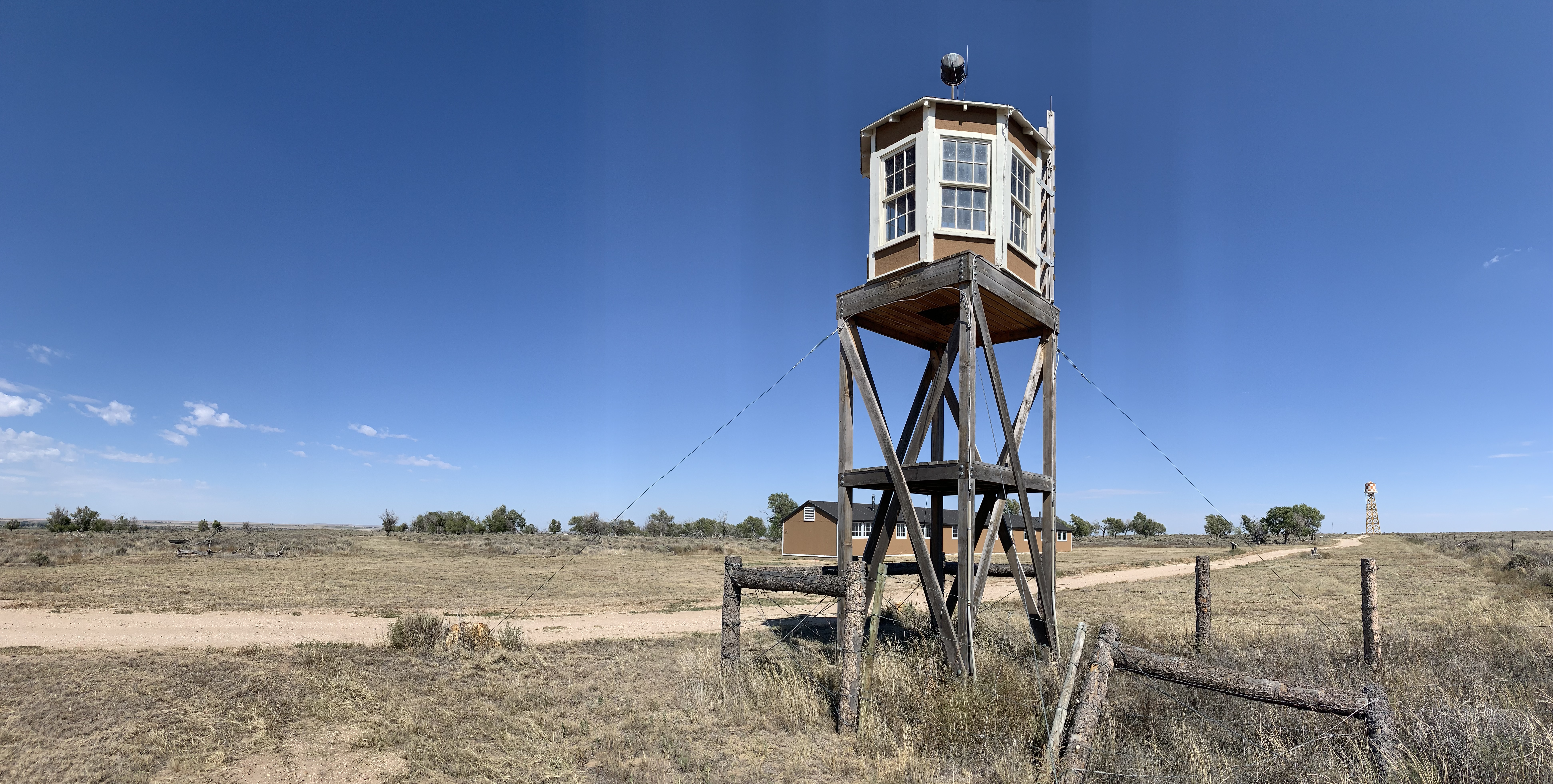
President Biden authorized this new park in March, but it will take time to become fully established. The local community is important in determining whether a park is created, how it will happen and when. In this case, the local Granada High School has been working on preserving the history here for many years and is largely responsible for the reconstruction of the guard tower above.

As with Manzanar and Minidoka, the image of a guard tower evokes the reality of the imprisonment of Japanese-American citizens during WWII. Each of the towers surrounding Amache was manned with a machine gun and a spotlight. But inside the camps, it is often the Japanese cultural touches that strike me, the rock gardens in Manzanar and the silk screen shop here. The silk screen shop was so good, that the incarcerated citizens made posters for the US Navy. Despite their incarceration and wrongful denial of their Constitutional rights, these citizens were proud of their country and many of the children joined the Boy Scouts and Girl Scouts here.

There are various monuments and markers remembering the 31 killed in action fighting for our country in Europe while their relatives were imprisoned, for the over 1,000 US military veterans from this camp including many interpreters, and for the over 100 inmates who died here, some before their time. While many were later reinterred elsewhere, a few graves remain in a Japanese styled cemetery, along with a memorial stone and a photo of the original epitaph, written in Japanese.

Interestingly, Colorado citizens of Japanese ancestry were not incarcerated, because the governor, Ralph Carr, correctly believed the program to be unconstitutional, arguing that once a majority violates the rights of a minority, “then you as a minority may be subjected to the same ill-will of the majority tomorrow.” His principles likely cost him his next election. (If the nearby town of Chivington wants to replace its shameful name, they could rename their town Carr).

But the Japanese [Americans] are protected by the same Constitution that protects us.
An American citizen of Japanese descent has the same rights as any other citizen. …
If you harm them, you must first harm me.
I was brought up in small towns where I knew the shame and dishonor of race hatred.
I grew to despise it, because it threatened the happiness of you and you and you.

Colorado Governor Ralph Carr to a hostile audience in 1942

Manzanar National Historic Site

Manzanar was the first of ten internment camps incarceration sites for Japanese-American citizens (and some non-citizens) to be recognized as a park unit in 1992, symbolizing the whole program fiasco. Minidoka was enacted in 2001, Tule Lake in 2008 and Amache in 2022.

Unconstitutional incarceration, while a Federal program ordered by FDR, varied by state: Hawaii incarcerated few and west coast states many. Rules regarding how much Japanese ancestry got a US citizen locked up without trial also varied by state. No other group was incarcerated en masse. Popular sentiment (racism) generally backed incarcerating Japanese-American US citizens during the war.

George Takei spent his “boyhood behind the barbed wire fences” in Arkansas. He remembers that after his family was imprisoned, his neighbors “came to our house and took everything”. He recounts how after Pearl Harbor, many young Japanese Americans tried to enlist, were refused and were incarcerated. His experiences were common, and in many cases homes and all belongings were permanently lost during internment.

It was an egregious violation of the American Constitution.
We were innocent American citizens, and we were imprisoned
simply because we happened to look like the people who bombed Pearl Harbor.
It shows us just how fragile our Constitution is.

George Takei

Many of the citizens imprisoned here were teachers, doctors, skilled craftsmen, farmers, community leaders and otherwise productive members of our society. (One was a Mexican-Irish-American who got locked up here in solidarity). They sued for their rights and in 1944, the Supreme Court declared that a loyal citizen could not be detained under the Constitution. The executive order was rescinded the next day.

In this blog, I try to encourage people to look at mistakes in history and imagine a better course of action, because if we can’t fix our mistakes, then we have no hope of solving the climate crisis. It’s morally wrong to visit this site and think, “well, I suppose there was no other way”. Some have argued that it was for the protection of Japanese Americans or to stop espionage. But there were better ways available at the time to accomplish those objectives.

FDR clearly failed in his oath as President when he did not uphold the Constitution and imprisoned these citizens without cause. He also suffered a failure of imagination. Instead of internment, FDR could have established voluntary Japanese-American citizens councils, led by Japanese Americans to meet regularly among themselves, with civil defense, local law enforcement, and with government representatives to propose ways of supporting their communities and the war effort. The councils could have addressed both safety and spying allegations.

Instead of being locked up, these citizens could have spent the war teaching, working in hospitals or factories, growing food and supporting our war effort. Instead of being an American example of “concentration camps” like those of our enemies, FDR missed his opportunity to stand up for the freedom of these Americans as a positive example of our Constitutional liberties for the world.

Lincoln Home National Historic Site

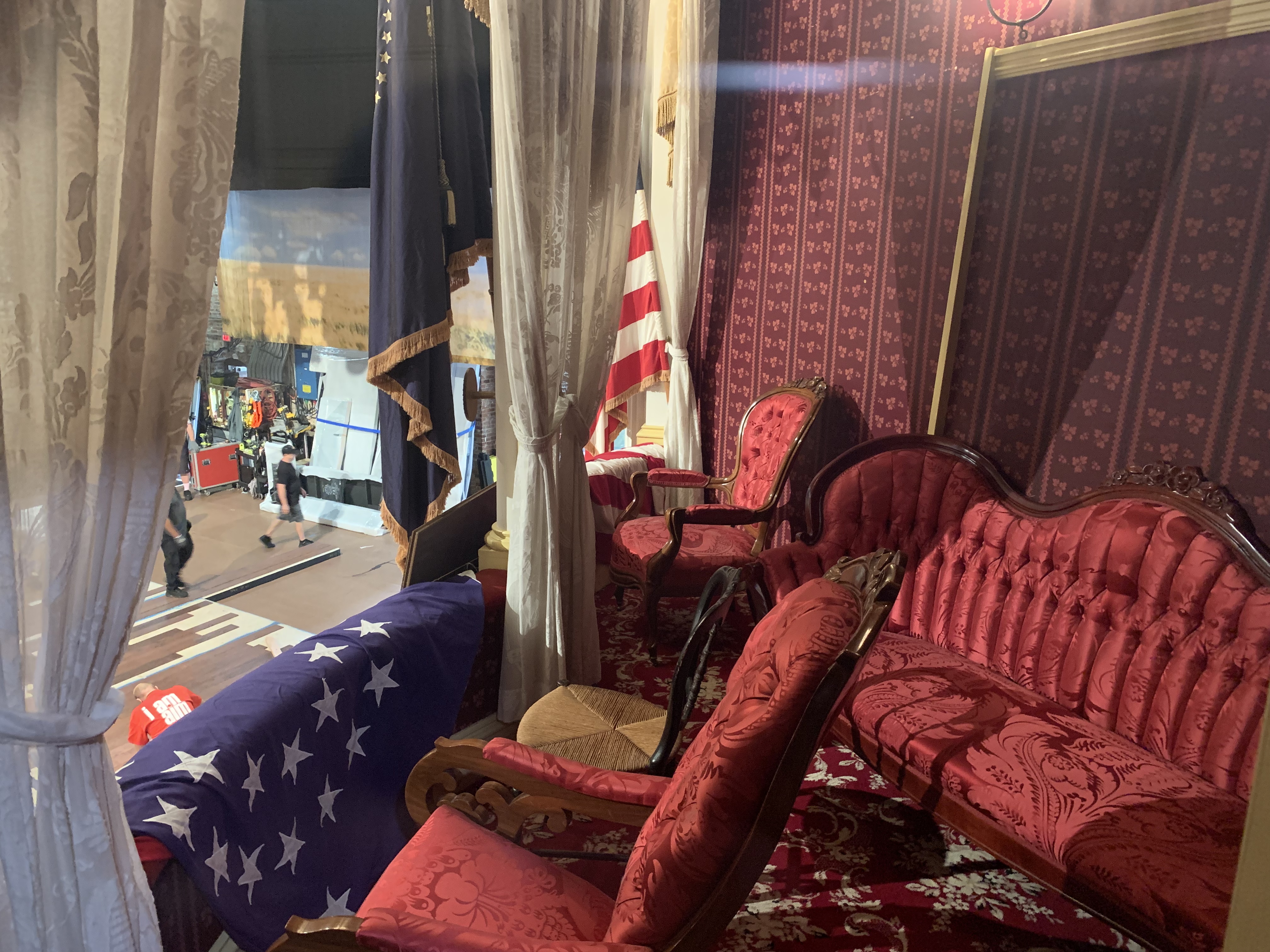
It’s not his hat, but the small desk is where Lincoln wrote his early speeches. In the parlor downstairs, he held the funeral service for his son, Edward, and years later was invited to be the Republican nominee for President. In this house, he refined his political views and his arguments against slavery. Lincoln drew from his early childhood and boyhood experiences to become the most powerful advocate for freedom.

“As I would not be a slave, so I would not be a master. This expresses my idea of democracy. Whatever differs from this, to the extent of the difference, is no democracy.”

Abraham Lincoln in 1858

Lincoln understood the fundamental flaw in our country, that the ideal of equality did not apply to all and that Democracy and slavery are absolutely incompatible. He knew that most voters held racist views and did not want war to bring about immediate equality. So he was careful, not always the loudest abolitionist, and he opposed John Brown’s raid. But Lincoln was determined to end slavery, crafted a greater variety of effective, convincing arguments against slavery, introduced legislation and used his arguments in debates against Douglas.

“That is the real issue. That is the issue that will continue in this country when these poor tongues of Judge Douglas and myself shall be silent. It is the eternal struggle between these two principles — right and wrong — throughout the world. They are the two principles that have stood face to face from the beginning of time; and will ever continue to struggle. The one is the common right of humanity and the other the divine right of kings. It is the same principle in whatever shape it develops itself. It is the same spirit that says, “You work and toil and earn bread, and I’ll eat it.” No matter in what shape it comes, whether from the mouth of a king who seeks to bestride the people of his own nation and live by the fruit of their labor, or from one race of men as an apology for enslaving another race, it is the same tyrannical principle.”

Final Lincoln-Douglas debate

Beyond the home tour, I found the neighborhood fascinating. One of the neighbors was a conductor on the Underground Railroad who gave the President-elect his inaugural ride to the depot. One was a Jewish family whose son helped build 5,000 Rosenwald schools to educate African Americans across the south. And one is currently being used as a local office for Senator Dick Durban. Springfield is all about Lincoln, and they have set aside 4 surrounding blocks of period houses, a short walk from the his Presidential Library and Museum. The museum there is modern, multi-media and includes an excellent map visualization of Civil War casualties over time. Explore the neighborhood, stay in an atmospheric B&B and eat at a fine restaurant. I did, at reasonable cost, and learned Springfield is on Route 66.

Harpers Ferry National Historical Park

Since each park is unique, I would never be able to say which is my favorite. But this one is.

Here, at the confluence of the Shenandoah and Potomac Rivers, in 1859 the abolitionist John Brown led 18 men to capture the armory, arsenal, and rifle factory here, killing three men, freeing slaves and taking the town’s leaders captive, before being captured by Col. Robert E. Lee and martyred after a brief trial, becoming the first person executed for treason in America. Brown believed he was right, did not intend for anyone to die and argued at trial that “had I interfered on behalf of the rich, the powerful… or any of that class… this court would have deemed it an act worthy of reward.”

Native Americans lost this land to European settlers during the 16th and 17th centuries. Washington explored the area for his canal project and recommended an armory be built here. The armory supplied Lewis & Clark’s expedition, and the arsenal supplied weapons for the Civil War. During which the town changed hands eight times including the destruction of the arsenal, the capture of 12,500 Union soldiers by Stonewall Jackson and the critical resistance to the confederate army marching on DC. Major Delaney, the only African American field officer in that war, came from here, alongside many USCT recruits. Frederick Douglass and W.E.B. DuBois organized and lectured here, where the Freedman’s School and Storer College educated the descendants of slaves.

Thomas Jefferson stood on a rocky overlook and said “this scene is worth a voyage across the Atlantic.” The mountains, rocky cliffs, rivers, swamps, and floodplains here support diverse wildlife, including three species of hawk, a harrier and the bald eagle. There are over 20 miles of hiking trails in the park, including part of the Appalachian Trail (park & hike). And the tavern in town serves a draft amber ale called Almost Heaven.

“Almost heaven, West Virginia
Blue Ridge Mountains, Shenandoah River”

John Denver

Martin Luther King, Jr. Memorial

“Injustice anywhere is a threat to justice everywhere.
We are caught in an inescapable network of mutuality,
tied in a single garment of destiny.
Whatever affects one directly, affects all indirectly.”

letter from a Birmingham jail

“Darkness cannot drive out darkness, only light can do that.
Hate cannot drive out hate, only love can do that.”

Strength to Love

“I believe that unarmed truth and unconditional love will have the final word in reality.
This is why right, temporarily defeated, is stronger than evil triumphant.”

Nobel Peace Prize acceptance speech

Arlington House

Arlington House is “a riddle, wrapped in a mystery, inside an enigma, but perhaps there is a key.” The key is slavery. The house belonged to the descendants of George Washington’s stepson, John P. Custis, and Robert E. Lee married John’s granddaughter. Lee was a veteran (Mexico) and West Point grad who put down John Brown’s abolitionist rebellion at Harper’s Ferry. Abraham Lincoln offered him command of the Union Army, but here Lee declined and chose treason.

While it would have been better if Lee had chosen morally, it was no surprise to his slaves here. When John Custis’ son G. W. P. Custis died, his will ordered his slaves freed, except that Lee didn’t free them and cracked down instead. Some slaves resisted, escaped, were caught, jailed and lashed.

Lee fought to dissolve the Union to preserve slavery and against those who fought to preserve the Union without slavery. The country split in half right near here, with Maryland staying with DC and the traitors set up their HQ nearby in Virginia. When Lee evacuated, his slaves were finally freed, and one, Selina Gray, personally handed the keys to the cellar over to the Union General in order to preserve George Washington’s personal relics (including his war tent now on display in the Museum of the American Revolution in Philadelphia).

Periodically, slavery-supporting “lost cause mythology” believers try to rehabilitate Lee’s reputation. After the war, Lee supported disarmament and peaceful reconciliation, but that doesn’t excuse either his own slave owning or his treason on behalf of slave owners. Still, there have been periodic political attempts to elevate Lee, especially in times when white nationalism is in vogue or politicians feel that “reconciling his legacy” would be worth a few votes. This house, previously known as the Custis-Lee House, became known as “Arlington House, The Robert E. Lee Memorial”, but there’s legislation pending to remove his name again.

The site is educational, especially the slave quarters exhibits with audio. There’s a metro stop in front of Arlington National Cemetery, and it’s a healthy walk from there, through security, past the idling gas-polluting buses, past the Military Women’s Memorial and up the hill on a path between the graves to the park site. Be sure to visit the Tomb of the Unknown Soldier and watch the Sentinels of the Old Guard change the Tomb Guard every hour every day. The Old Guard is the name General Winfield Scott gave to the 3rd U.S. Infantry Regiment, and only their most elite volunteers may serve as Sentinels.

“You have made the greatest mistake of your life,
but I feared it would be so.”

General Scott’s response to Lee on his refusal to fight for the US

Lincoln Memorial

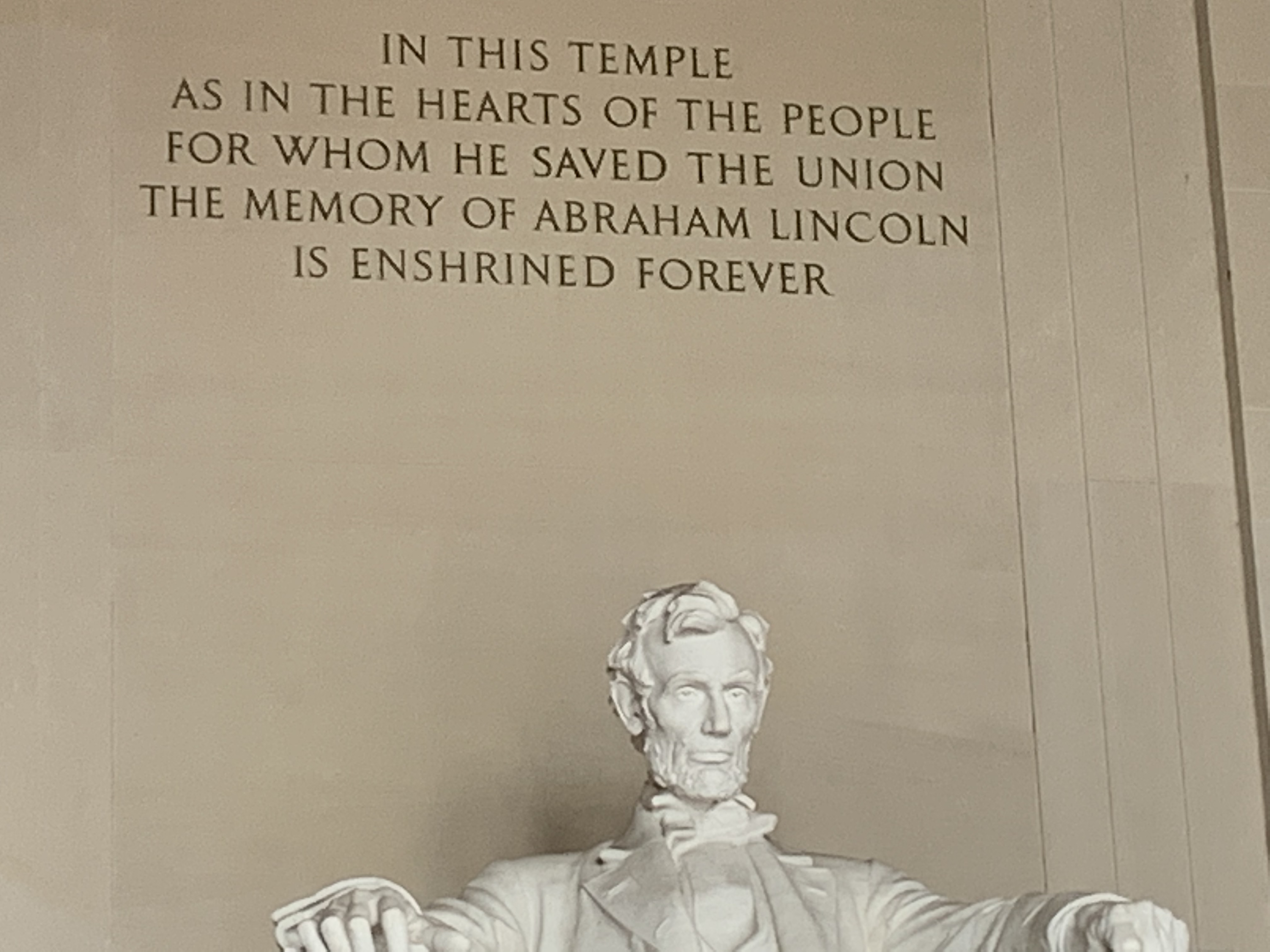
Carl Sandburg reported that Lincoln felt that the important monument was not the marble one but the “more enduring one in the hearts of those who love liberty, unselfishly, for all men.” Lincoln gave his life to extend our ideal of liberty, “that all men are created equal”, to all men. To understand Lincoln is to recognize his cause: to reform the Union to include African Americans equally. To misunderstand Lincoln is to ignore that this condition is required to participate in our Union.

In addition to the Gettysburg Address, the other inscription here is from his Second Inaugural Address. “With malice toward none with charity for all” are only two thirds of what Lincoln said were necessary to achieve peace. His next five words must not be ignored: “with firmness in the right”. He spoke before the war ended, saying that slavery was an offense against God and that paying the cost for that debt in blood was true and just. Lincoln did not act out of hatred, but, because those who fought for slavery were so absolutely, profoundly and unacceptably wrong morally, he was right to go to war against them.

Those who deny freedom to others,
deserve it not for themselves

Abraham Lincoln

National Mall

Yeah, I don’t make the rules. This is an official park unit like Constitution Gardens within the National Mall and Memorials, and don’t ask me where the boundaries of each are, it’s very confusing. But I’ve walked all the way up and down the mall a few times, which counts as zero carbon travel. I’ve also seen the fireworks here on the 4th of July, visited the Smithsonian museums and been here during political demonstrations. The photo is from the edge of some side edifice of the Lincoln Memorial, which I took from this angle, so that you can see the Capitol behind the Washington Monument. There’s actually another smaller reflecting pool at that far end, but it’s not easy to approach.

Anyways, the Mall is moving, no matter how many times I visit. Here, people from all over the country (and world) come to see DC, the most important city on earth. Some may be here for work, to study, to visit a memorial, to see art, learn about science, for history, to protest or to celebrate. The Mall reminds us of our ideals, teaches us something new and gives us space to be free. It’s ours, but it’s also bigger than us. It symbolizes the past, the present and future. It’s what we argue about, what we make of it, and what we love or hope it will be. As frustrating as it can be sometimes, it’s a great country, and I encourage you to get out, explore and enjoy. And dream of a better world.