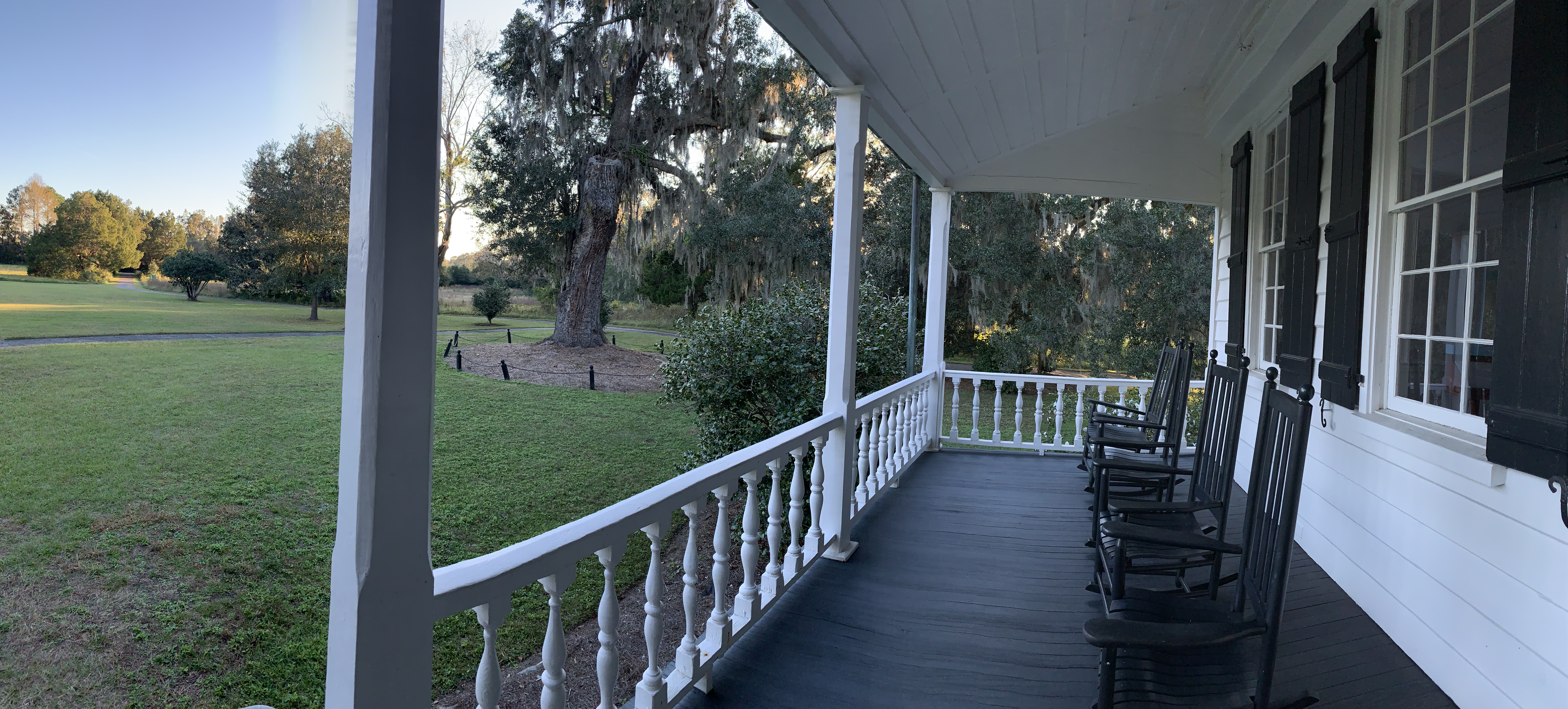
Harriet Tubman National Historical Park

Harriet lived in Auburn—when not on the road—from 1859 until her death in 1913. The photo above recently discovered locally is the youngest one on display here. One local visitor said that his grandmother used to visit her and sit in her lap, and he brought more photos. The long term docent, a Vietnam Vet, used to live in the Tubman house and helped lead the effort to raise money for the restoration. Tubman purchased seven acres here from William Seward, of ‘Seward’s Folly’ fame, and a few of her belongings are on display—including her bed, bible and sewing machine—in the old folks home she managed here.

The park rangers are in town, while the home tours are run by the AME Zion Church, an official park partner. Until the operating agreements are finalized, the partner organization runs the majority of the park with a small devoted staff of around one, and the park service runs the church in town which Harriet attended.

I highly recommend reserving the tour, given at 10 and 2. I believe the docent’s name is Paul Carter, and he is both extremely knowledgeable and an excellent storyteller. For example, many of the visitors had heard about secret messages hidden in quilts that supposedly were used to give directions on the Underground Railroad. But there is little to no evidence of this, and logically it isn’t clear how these messages would have been understood by plantation slaves.

When Harriet was seven, she was spotted eating a cube of sugar, which meant being whipped mercilessly. Instead, she hid for days in a pigsty, fighting for scraps to eat. As a teen she received the head injury which caused a type of epilepsy that she interpreted as giving her visions. This was in Maryland, where she feared being sold down to the Deep South where conditions were much worse.

Keenly aware of the brutality and deadly reality of slavery, she began organizing escapes for herself and her relatives. With support of Abolitionists on the Underground Railroad, she became its most legendary conductor, personally leading 13 missions of hundreds of miles from plantation to Canada on foot, often crossing the border near here, rescuing 70 directly, more indirectly and losing none. She gave away her own money, spoke to Abolitionist groups, and raised money to end slavery. During the Civil War she spied behind enemy lines and led troops into combat rescuing many hundreds more. Later in life she spoke in support of women’s suffrage, with her friends Frederick Douglass and Susan B. Anthony. This iconic American hero stood less than five feet tall, and she more than deserves her place on the $20 bill.

If you hear the dogs, keep going.
If you see the torches in the woods, keep going.
If there’s shouting after you, keep going.
Don’t ever stop. Keep going.
If you want a taste of freedom, keep going.

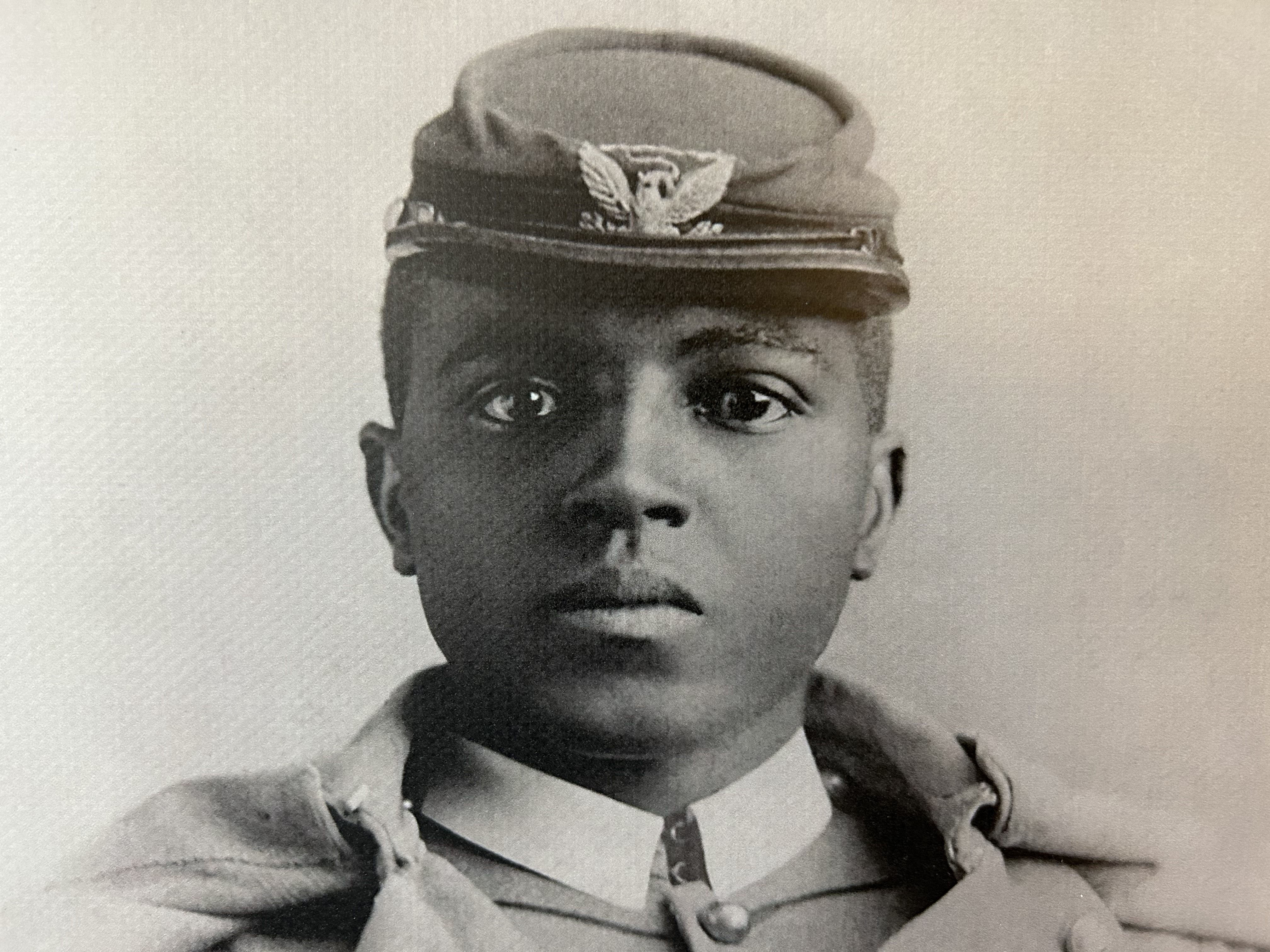
Harriet Tubman

Women’s Rights National Historical Park

Seneca Falls is a lovely town in the Finger Lakes region of New York, linked by canal to Lake Erie, Albany, New York and the St Lawrence Seaway. Frank Capra modeled his fictional town of Bedford Falls after here, and every Christmas they have events reminiscing about the make-believe story.

When the privileged Elizabeth Cady Stanton settled here with her Abolitionist lawyer husband, she found the real-life industrial mill town full of poor immigrant female laborers and found her own life filled with drudgery, taking care of her many children, while her husband’s career advanced. “How much I long to be free of housekeeping and children, so as to have time to think and read and write.” Starved of the intellectual community she had known in New York, Europe and Boston, she organized a ‘conversation club’ to discuss progressive social ideas, inviting Quakers like Lucretia Mott and Abolitionists like Frederick Douglass to her home above. One day, her friend Amelia Bloomer (who popularized the women’s pants) introduced Stanton to Susan B. Anthony, and together they changed history.

“It has been said that I forged the thunderbolts
and she fired them.”

Elizabeth C. Stanton of her co-author and friend Susan B. Anthony

At the Revolution, many women and people of color had the vote, which was determined by each state. Abigail Adams asked her husband to “remember the ladies” in 1776, but women’s rights were not included. The biggest barrier to voting was neither race nor gender, it was lack of property. White males disenfranchised others by taking control of land, businesses, marital assets, divorce settlements, bank accounts etc., and then requiring minimum amounts of property to vote. Then they started making gender discrimination official. In 1777, women in New York explicitly lost the right to vote. In 1780, Massachusetts women did too. In 1784, New Hampshire women were disenfranchised. When the Constitution was enacted in 1787, only New Jersey women kept the right to vote.

Native American women in upstate New York owned property and had other rights in their Haudenosaunee Confederacy. And African Americans also wanted voting rights. Elizabeth Stanton realized deeply what was happening in America: women were being systematically oppressed. She sought out allies among the Abolitionists, African Americans, Native Americans and immigrant activists, and they began organizing a movement. In London, her husband had been allowed to speak at the Anti-Slavery Convention, but the women were all excluded. In America, this new movement would be led by women. In 1848, at the Wesleyan Chapel, the First Women’s Rights Convention demanded equal rights, including the right to vote. And they began a campaign that continues to this day, from the American Woman Suffrage Association to the League of Women Voters. Many suffragettes went to prison to try to win rights for all women. The 19th Amendment finally passed in 1920, when the last holdout’s mother sent the Senator a telegram, causing him to flip.

The park unit does not do a good enough job of telling the story—with the notable exception of ranger Nicole above. On the plus side, the names and images of numerous women’s rights activists are presented, and many of the related issues are described in the text-heavy exhibits. Sojourner Truth demands inclusion for African American women, “I have borne 13 children, and seen them most all sold off to slavery, and when I cried out with my mother’s grief, none but Jesus hear me. And ain’t I a woman?” FEW Harper puts it well too, saying that white women “need to be lifted out of their airy nothings and selfishness.” There’s a single image of a women’s rights meeting that occurred in Persia (now Iran) one month before the convention here, with a quote from Táhirih, “You can kill me as soon as you like, but you cannot stop the emancipation of women.”

But the park film is no longer available, and replacing it “is difficult”. One of the largest photos shows a female African American military (ROTC?) recruit in front of a line of white uniformed men, without any information or ranger knowledge, thus forgetting the name and act of a woman who apparently broke both a gender and color barrier. More of the exhibits are about the Underground Railroad and fashion than to the right to vote. Frankly, I learned more about the direction and timeline of women’s voting rights from a small display in the parking lot of the XIX Cafe than from the official park exhibits. One of the local women described the whole park as “lame”. It took me two days walking all over town to piece together the story. It is frustrating to see such a missed opportunity to tell the story effectively about the extraordinary centuries long struggle for the basic rights of the majority of US citizens.

But go anyway. Ask to see the park film—they’re counting the number of people who complain. Ask how the history here relates to the loss of voting rights today. Ask about the Equal Rights Amendment. Ask about Lily Ledbetter. Ask about Trans rights and reproductive rights. Ask them to describe the Suffragettes who burned Wilson’s effigy in front of the White House. Make some noise, and don’t let manners hold you back. Don’t let this history die, or future generations will have to fight it all over again. The fight goes on!

Charles Young Buffalo Soldiers National Monument

Charles Young’s father was born into slavery, escaped and joined an African American heavy artillery regiment in the Civil War. His mother and grandmother were also born into slavery but were educated and taught Charles as a boy.

Charles Young was the third African American West Point graduate to become an officer, and in 1901 he became the first African American Captain in the Army. Young was also the first African American superintendent of a National Park, Sequoia, and he eventually became the first African American Colonel in our Army.

The park here reflects the community in Wilberforce, which is the site of the first University owned and operated by African Americans. Young taught military tactics and how to be a soldier. The University also employed luminaries including WEB DuBois, voting rights activist Hallie Q. Brown, and the poet Paul L. Dunbar, all of whom enjoyed the hospitality and vibrant discussions held regularly at the Young family home, once a stop on the Underground Railroad. The Young house is still in the midst of extensive renovations, and there’s a small exhibit inside a nearby seminary library.

Young was an excellent officer, who overcame great prejudices during his interesting career, but the site is also dedicated to the many African Americans who served with him and after him. In the west, these soldiers were known as Buffalo Soldiers, due to their curly black hair, and their service is recognized at 20 different national parks, including Forts Bowie, Davis, Larned, Point, Union and Vancouver. Tragically, much of their service was against Native Americans.

New Philadelphia National Historic Site

‘Free’ Frank McWorter mined saltpeter as a slave, purchased first his wife’s, then his and ultimately 14 more family members’ freedom and founded this town with 12 dozen plots in 1836, the first African American registered & surveyed town in America. It was a mixed race community as Frank sold lots to all, and it became an important stop on the Underground Railroad. Fugitive slaves were assisted across the rivers, hidden in wagons and at least one basement and were even accompanied to Canada. Unfortunately, at the end of the 19th century the actual railroad bypassed the town in favor of a white town, so eventually folks moved away.

None of the early buildings survive, but there are a few old buildings built on their foundations, providing years of fun for archaeologists. There are a dozen or so signs explaining whether the plot belonged to the shoemaker, wheelwright, carpenter, seamstress, physician, teacher, merchant, cabinet maker, the blacksmith or the Post Office (above). Many of those tradespeople provided invaluable services to fugitive slaves. I wasn’t able to load the VR app which superimposes cartoon pioneers on your screen to help you visualize, but I was fine without. This brand new park is not in the completely uninteresting town of New Philadelphia, Illinois, an hour north, but it is about 30 miles east of the interesting town of Hannibal, MO.

On April 22nd, the park film was screened in Springfield, and, being a park nerd, I attended the gala park service premiere (cookies were served). Several members of the community responsible for gaining recognition for the site were there. The film was produced mainly by staff from the Lincoln Home. Just as Lincoln’s presence here attracted freedom-seekers, the folks here are broadening out understanding of history.

Blackwell School National Historic Site

From 1889 to 1965, the school was segregated, separate but equal by ‘social pressure’ (i.e. racism) in Texas: Hispanic only. Our diversity is a great strength and should be celebrated, not used to divide us. When the Civil Rights movement integrated Marfa’s schools, Blackwell closed. Later some of the proud alumni organized to preserve their school building and grounds, and President Biden has now designated it an official park site, joining other schools in the system, such as Abiel Smith, Penn, Brown, and Little Rock, and joining César Chávez in covering modern Latino history.

[Updated] On 17 July 2024, Blackwell became the 430th park unit, after completing acquisition of property from Marfa’s school district. When I visited, Blackwell was only open noon to 4pm on weekends—not the same time zone as El Paso—, and restoration plans were being decided. Inside are personal photos that bring back the old days, describing Principal Blackwell, teachers, students, athletes and community events. Hopefully, future exhibits will help bring those stories to life with a park film.

In 1955, Hollywood came to Marfa to film James Dean, Elizabeth Taylor and Rock Hudson in Giant. Before that the biggest thing to happen in Marfa was their baseball team, the Indians, competing for the championship in ‘29 and ‘48. Nowadays, Marfa is known for eclectic art exhibits and UFO’s. Just outside of town is a Prada display by the roadside, and if you go the other way, people watch the mysterious lights on the horizon that just have to be aliens. (Really, there’s no other explanation possible!).

I passed nearby Marfa when visiting Fort Davis, and it’s fascinating to me that the original stone school here was built while the fort was still in operation. I recommend staying at one of the quirky campgrounds like El Cósmico which has Tesla engineer designed Jupe shelters and getting local wine and pizza at Para Llevar (to go en Español). And just wander around this weird town that defies becoming a ghost.

Reconstruction Era National Historical Park

Reconstruction began in November of 1861, when US Navy & Army forces destroyed two forts and took Port Royal, because when all the white planters fled in the Confederate retreat, 10,000 slaves took over their sea island plantations. Union policy at the time was to declare the former slaves “contraband” or illegal property seized by the military. But the pressure was on President Lincoln to resolve their status permanently. First, he quietly authorized the Union’s first black regiment—the 1st South Carolina Volunteer Infantry which by November of 1862 mustered 1000 men and engaged in battle—, and then he finalized his executive order to free the slaves.

“all persons held as slaves within any State…
in rebellion against the United States,
shall be then, thenceforward, and forever free”

Emancipation Proclamation of President Abraham Lincoln

Among the great mossy oaks here at Camp Saxton on the 1st day of January in 1863, our nation’s first black regiment gathered here with their friends and families to all become the first people freed by Lincoln’s Emancipation Proclamation. Then the 1st SC Volunteers received their regimental colors as proud soldiers of the Union Army, under the command of one of John Brown’s conspirators in the raid on Harpers Ferry. Harriet Tubman was also here as a volunteer spy and liberator, and in June she guided three gunboats and the 2nd SC Volunteers up the Combahee River 25 miles north in a dangerous raid that freed 700 slaves. Other African American regiments from Kansas, Massachusetts and other states in both the north and south soon followed, and by the end of the war, 200,000 African Americans enlisted to make up 10% of the Union Army.

As soon as Port Royal was liberated, Philadelphian abolitionists Laura Towne, Ellen Murray and Charlotte Forten, who was African American, arrived and began the most important part of reconstruction: teaching. While not the first African American school, in 1862 they founded the Penn School to teach people who had been denied formal education for generations. The Gullah Geechee people had created their own language and had kept many cultural traditions alive, including the delicious Lowcountry boil or Frogmore stew, and, when given the opportunity for formal education, they began learning basic, practical skills to live independently, everything from shoemaking and auto repair to cooking and nursing. At the Penn Center, I met a Gullah Geechee woman who still speaks the language and who was treated as a child by one of the first physicians to graduate from the Penn School.

The Gullah Geechee sea islands remained in Union hands throughout the war and became central to the Union “anaconda” naval blockade. The hero Robert Smalls (see Fort Sumter), after helping convince Lincoln to enlist African Americans, purchased the home of his previous owner here, using his congressionally awarded bounty for the Planter, and represented this district in Congress for five terms. The beautiful, historic neighborhoods of Beaufort were retained by the descendants of freed slaves by strict preservation laws, resulting in a sharp contrast with nearby predominantly white golfing communities like Hilton Head. In a historic echo, 100 years after the Union used Beaufort as a base to fight the Confederacy, the Reverend Dr Martin Luther King, Jr and the Southern Christian Leadership Conference chose the Penn Center as a base for their Civil Rights campaigns, including planning the March on Washington and the Poor People’s Campaign. Dr King wrote his I Have A Dream speech here in Gantt cabin on the Penn Center campus.

Plan your visit thoughtfully. To the west, Camp Saxton is hidden at the water’s edge between a navy base, the ruins of Fort Frederick and a residential neighborhood. In town, the visitor center in the historic zone’s old firehouse has very knowledgeable rangers who skillfully and kindly disabused me of my misconceptions. To the east, the Penn Center has exhibits (for a donation) on the school, the Gullah Geechee community and the important Civil Rights work done here. There are two dozen historic building on campus including a dock and a Rosenwald school. Many, such as the Brick Baptist Church, aren’t presently open to the public, but Darrah Hall is open with park staff, information and exhibits. A wonderful volunteer discussed whether the Reconstruction Era ever really ended. Plan more time for the Penn Center partner exhibits, less time for the downtown Beaufort visitor center and enough time at Camp Saxton to stand under the Emancipation Oaks (and take a better photo than I did).

Charles Pinckney National Historic Site

Charles was a son of privilege. His father educated him in the law at the family firm, made him an officer in his town militia unit, and cooperated with the British during the Revolution to save the family plantation for his heirs. Charles, having participated in the failed attempt to keep Charleston out of British hands, was considered a patriot and became a young and successful politician. He participated in the Constitutional Convention in Philadelphia, made numerous significant contributions and signed the document, and he remained in public service as an elected representative for decades.

Today, he is best remembered for being an outspoken advocate of slavery, for insisting that the southern states would not ratify a Constitution that prohibited slavery or the slave trade, and for suggesting the 3/5ths compromise, which counted slaves as 3/5ths of a person to boost southern white representation in Congress, while counting not at all in terms of black citizenship or representation. At the end of his career, Charles voted against the Missouri Compromise, correctly predicting that it would overturn the original truce on slavery between the northern and southern states and lead to bloody civil war.

For many years, this site was financially sponsored mainly by Senator Strom Thurmond, who served 48 years in the US Senate as its most notorious modern segregationist. According to the ranger, the exhibits were a hagiography of Pinckney’s contributions to our Constitution and whitewashed his devotion to the institution of slavery. Today, the exhibits are new and improved in comparison with the hagiography still in place at Andrew Johnson’s site. But there’s still much work to be done.

According to a volunteer at Darrah Hall in a Reconstruction Era site, white visitors sometimes tell the African Americans who work there that “you people need to get over slavery”. And yet, to this day, white political pressure denies teaching the truth of racism and slavery to our children, censors books from libraries and creates lies to hide painful truth, as they have since the Civil War. On this ZCT adventure, I have seen the Confederate battle flag flown from Utah to Pennsylvania, while the presumptive Presidential nominee from Florida signed legislation preventing teachers from criticizing racism. So clearly, it is white people who “need to get over slavery”.

Timucuan Ecological and Historic Preserve

Let’s catch up on where we were in Florida, at this fascinating, multilayered site that preserves not just nature but also native, colonial and freed slave cultures. As I learned here at Fort Caroline, which hosts the visitor center for the preserve, the Timucuan people either were killed, converted or escaped to join other tribes, after contact with the Spanish. But this was once their land (and water). And at the small exhibit in the Ribault Club, a partner site & wedding venue, I learned that thousands of years ago the Native Americans built shell mounds and large, complex rings of shell structures throughout these coastal islands, some of which remain here. So the preserve does help protect Native American archaeological sites, in addition to protecting critical breeding grounds and nurseries for fish, flyways for migrating birds, habitat for endangered wildlife and the plants which literally hold the land together. I saw many different birds on my hike in the Teddy Roosevelt area (above), including wood storks.

These islands (pictured) are the southern end of these low-lying coastal delta islands that run to Moores Creek in North Carolina. The whole area is now known as the Gullah Geechee Cultural Heritage Corridor, where some African traditions and culture survived, and a unique Creole was created, called Gullah in an echo of slave roots in Angola. That culture developed separately from the mainland, since some of the first Africans brought here were free, some slaves purchased their freedom (or their children’s) from the French, Spanish & British who allowed that, and some escaped. Unlike the larger plantations in the southeast, the coastal rice, cotton & indigo sea island plantations were run more loosely, with free time allowed after tasks were completed and many families kept intact.

The complexity of slavery in Florida is revealed in Anna’s story. She was born as Anta Ndaiye, a Senegalese royal, but was captured and sold into slavery at age 13. She was purchased in Havana in 1806 by a planter and trader who promptly impregnated her and brought her to Florida. Five years and three children later, the planter granted freedom to her and her biracial children. Florida was Spanish at the time, and she received her rights under their law. Her nominal husband owned other properties (and had other wives), so he left the management of the plantations near here to Anna. When US rebels tried to seize their property, she burned the plantation and was rewarded with new property by the Spanish. Anna ran the Kingsley plantation here for 25 years, overseeing 100 slaves. Her fourth child was born free. After Florida became a US territory, new laws were passed making interracial marriage illegal and jeopardizing the rights of Anna and her children. So her husband moved the family to Haiti, which had been free since the end of their revolution in 1804. After her husband died, Anna returned to the US to claim her inheritance, which was contested by her husband’s sister, who argued that Anna couldn’t own property in Florida. Anna argued that she was Spanish, since she had been recognized by the Spanish government as free (and a hero) and noted that the US government had promised to protect the rights of all Spanish citizens under the Florida treaty signed by John Q. Adams in 1819. Anna won. She fled to New York for the duration of the Civil War returning to Florida afterwards.

“To deny people their human rights is to challenge their very humanity.”

Nelson Mandela

Port Chicago Naval Magazine National Memorial

At 10:15 pm on 17 July 1944, 320 people were vaporized in a munitions explosion while loading two ships simultaneously. The blast registered 3.4 on the Richter scale, disintegrated the docks above, blew one ship into small pieces, threw other ships hundreds of yards away, and injured people on the other side of Suisun Bay above. Most of the victims were young African Americans, and the Navy blamed the poorly trained black workers rather than the white officers in charge. When 50 survivors refused to return to work, they were sentenced to 8 to 15 years in prison and others were threatened with firing squad for mutiny. Despite the efforts of Thurgood Marshall to defend them and focus the blame on the Navy’s negligence, the ‘mutineers’ spent the rest of the war in prison, and the story was lost to history until a Cal professor named Robert Allen found a pamphlet, interviewed a dozen survivors and wrote a book in 1989.

The story is powerful, and the ranger and volunteer did an excellent job of painting a detailed picture of racism, dereliction of duty (among the officers who bet on load rates), the lies that the enlisted workers were told (that the bombs were inert), and the trial. Photographs, oral accounts and actually visiting the spot where it happened, including touring the revetments where munitions were transferred from boxcars and out to the docks, bring the impact home. The volunteer, Diana, noted that the Navy suffered an even more deadly munitions loading accident less than 4 months later, when the USS Mt Hood exploded in New Guinea on 10 November 1944, obviously not learning the lessons of Port Chicago. The ranger, Eric, made a persuasive case that the negligence and racism uncovered and protested, while officially unpunished, likely prompted the Navy to be the first branch of the military to desegregate completely in February 1946, two years before the other branches.

This park unit is dedicated to preventing this unjust tragedy from being forgotten. Tours must be reserved at least two weeks in advance for Thursday through Saturday when the Army, who took over the base, allows visitors. Although the tour met at the Muir home, I was able to drive my EV to the site above. Fortunately, the park service is working on improving access by building a visitor center nearby.

Rosie the Riveter / World War II Home Front National Historical Park

FDR said, “we can’t afford to indulge in prejudice now”, and with that, the “Rosie” in the lower part of the collage above suddenly was able to qualify for a job that previously hired neither blacks nor women nor LGBTQ+ nor any other minority. Note that she is riveting aircraft grade aluminum while wearing lipstick, nail polish, a large wedding ring and a classic “Rosie” red bandana. Many women were surprised how easy riveting was and didn’t understand why men said they couldn’t do it. By 1944, women were about 1/3 of the workforce, and 10,000 African Americans worked here in Richmond during the war along with all other minorities (except Japanese Americans). Leadership is required to change society’s prejudices and discriminatory practices, and once the door was opened, many women decided to continue working after the war.

The visitor center is next to the Ford Assembly Plant, which is still full of industrial activity. Check in at the gate on Harbor, then drive around back and all the way down to the right. There are ChargePoint stations in the lot, and a good restaurant next to the visitor center. The factory used to make tanks, and across Marina Bay was Shipyard #2 which produced a new ship every 4 days, loaded with tanks and sent off immediately. Walk a bit of the SF Bay Trail along the waterfront to a fine memorial to the Rosies in Marina Bay Park, next to the yachts and fancy condos. Shipyards #1 and #4 were up the channel on the other side, along with the Prefab Yard. And Shipyard #3 still has the SS Red Oak Victory Ship, launched in November 1944, with worthwhile tours. This was the beating heart of America’s “Arsenal of Democracy”, and it was a unified effort of all hands on deck which changed the course of labor and civil rights overnight.